Archive for ‘Tasting’

My D.O. pin-up

January 13th, 2016 | Denomination

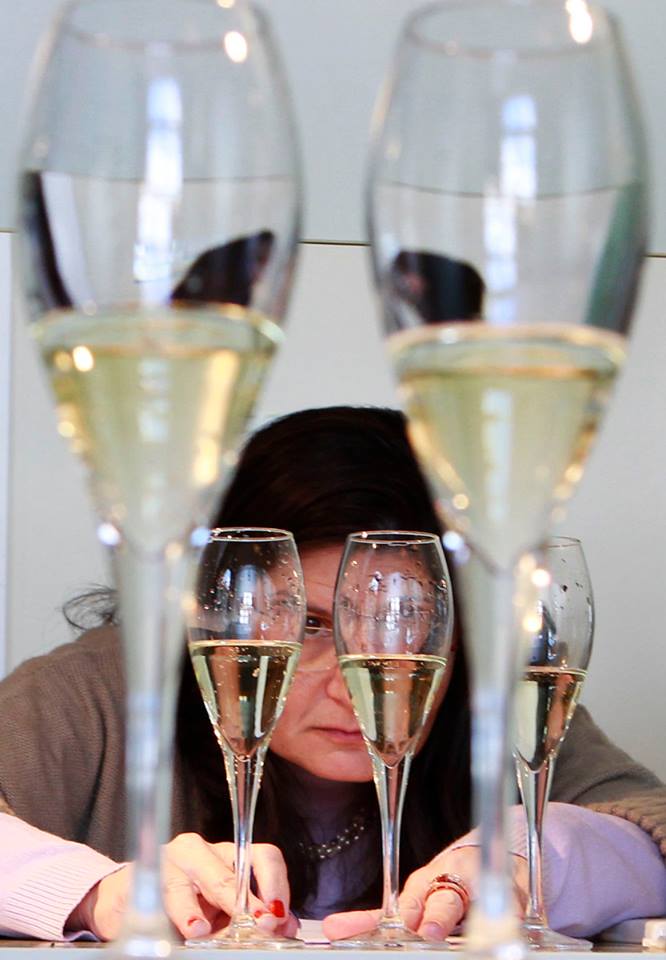
[:en]foto-espumososEvery month we receive a newsletter from our Consello Regulador, and for the second time in recent months I have opened the mail only to see the face of my wife staring back at me! Angela is a member of the official D.O. Rias Baixas tasting panel, that makes all the quality control tastings of every wine submitted for bottling (I made a detailed, 3 part post of this process back in November).

For some reason the Consello appears to have selected Angela as their ‘pin-up’ girl, as once again they have used her face of intense concentration in one of their mailings. Signed photos are available on request![:es]foto-espumososEvery month we receive a newsletter from our Consello Regulador, and for the second time in recent months I have opened the mail only to see the face of my wife staring back at me! Angela is a member of the official D.O. Rias Baixas tasting panel, that makes all the quality control tastings of every wine submitted for bottling (I made a detailed, 3 part post of this process back in November).

For some reason the Consello appears to have selected Angela as their ‘pin-up’ girl, as once again they have used her face of intense concentration in one of their mailings. Signed photos are available on request![:]

D.O.Official Tasting – Part 3

November 19th, 2015 | Denomination

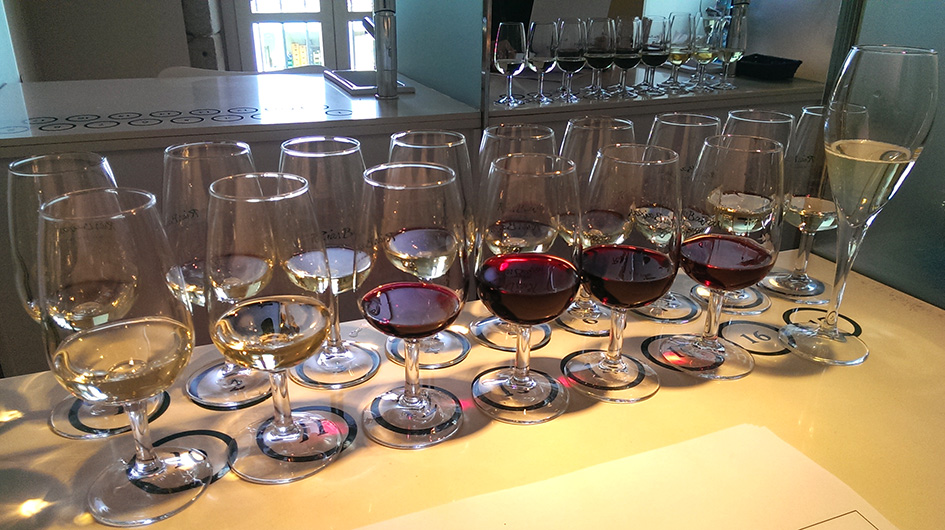
[:en]DO Part 3On a couple of occasions now I have been lucky enough to attend an official tasting – but purely as a guest with absolutely no input into the final outcome. It can be very “interesting”!

Now there was a time in my life as a buyer, that I was tasting different wines from around the globe on a daily basis – often in fairly copious amounts (without swallowing I hasten to add!) These days however, my tasting, although reasonably regular, is often restricted to our own wines, within our own cellar. Of course this might eventually distort the palate a little, as you become more accustomed to, and able to easily recognise your own style of wine. I’m afraid that the opportunity to taste overseas wine these days is fairly restricted as they are simply not available in Galician shops, albeit there are one or two online shops where I can find an odd bottle or two.

Prior to the start of the tasting the only information that you are given is the type, classification and vintage of the wine. When I say classification it can be any one of the following:

  1. Rias Baixas ALBARIÑO
  2. Rias Baixas CONDADO DO TEA
  3. Rias Baixas ROSAL
  4. Rias Baixas DO ULLA
  5. Rias Baixas SALNES
  6. Rias Baixas
  7. Rias Baixas BARRICA
  8. Rias Baixas TINTO
  9. Rias Baixas SPARKLING


I mentioned this in my last post but a wine can only be called albariño if it comprises 100% of that variety – any other blend, even if it only 1% of another grape can only be known as a Rias Baixas wine. Any wine can then also carry the name of its sub-zone if the bodega so chooses. (An albariño wine (100%) can also carry the name of its sub-zone).

Of course, the idea is not really to criticise or comment too much on any one wine, but simply to rate it on its technical merits and quality. The key is of course to remain objective and aloof, but when most of my tasting experience in the past has been comparative, judging one wine next to another to select the best, then this does not come easily, and it is only human nature, in these circumstances, to use your own wine as a yardstick.

On this occasion we were offered the maximum permitted of 15 wines – one sparkling, four tintos and the rest white, mostly 100% albariño. The selection included two 2015 wines, which I admit, came as quite a shock, barely more than one month after the last day of picking in our denomination.

Of course I cannot comment about specific wines, but suffice to say that it was a mixed bag – some good, some bad and at least one downright ugly! The white wines of 2014 were generally acceptable, whilst one of the 2015’s showed all the typical character of what I call a ‘primeur’ wine – vinified quickly, massively fruity, but I am sure with only a very short shelf life – drink now and enjoy while you can! It had a very exotic, almost banana, sweet pear drop fruit that I would normally associate with Beaujolais nouveau rather than a young albariño (very appropriate on today of all days)! This sensation probably originates from the same ester called isoamyl acetate (which is sometimes formed during low temperature fermentations and carbonic maceration depending on the type of yeast used).

The one ‘barrica’ wine on show was, erm…. poor, to say the least. Heaven only knows what type of wood was employed in the making of this wine, but I wrote in my notes that it had a bouquet of beetroot! (Not a usual attribute of albariño). Finally, the majority of reds on offer gave the impression of being a bit green and under-ripe, and thankfully I think the panel agreed with me as I don’t think that any single tinto passed the tasting.

It wasn’t my first D.O. tasting as a guest, and I hope it won’t be my last, but it certainly was a bit of an eye-opener.[:es]DO Part 3On a couple of occasions now I have been lucky enough to attend an official tasting – but purely as a guest with absolutely no input into the final outcome. It can be very “interesting”!

Now there was a time in my life as a buyer, that I was tasting different wines from around the globe on a daily basis – often in fairly copious amounts (without swallowing I hasten to add!) These days however, my tasting, although reasonably regular, is often restricted to our own wines, within our own cellar. Of course this might eventually distort the palate a little, as you become more accustomed to, and able to easily recognise your own style of wine. I’m afraid that the opportunity to taste overseas wine these days is fairly restricted as they are simply not available in Galician shops, albeit there are one or two online shops where I can find an odd bottle or two.

Prior to the start of the tasting the only information that you are given is the type, classification and vintage of the wine. When I say classification it can be any one of the following:

  1. Rias Baixas ALBARIÑO
  2. Rias Baixas CONDADO DO TEA
  3. Rias Baixas ROSAL
  4. Rias Baixas DO ULLA
  5. Rias Baixas SALNES
  6. Rias Baixas
  7. Rias Baixas BARRICA
  8. Rias Baixas TINTO
  9. Rias Baixas SPARKLING


I mentioned this in my last post but a wine can only be called albariño if it comprises 100% of that variety – any other blend, even if it only 1% of another grape can only be known as a Rias Baixas wine. Any wine can then also carry the name of its sub-zone if the bodega so chooses. (An albariño wine (100%) can also carry the name of its sub-zone).

Of course, the idea is not really to criticise or comment too much on any one wine, but simply to rate it on its technical merits and quality. The key is of course to remain objective and aloof, but when most of my tasting experience in the past has been comparative, judging one wine next to another to select the best, then this does not come easily, and it is only human nature, in these circumstances, to use your own wine as a yardstick.

On this occasion we were offered the maximum permitted of 15 wines – one sparkling, four tintos and the rest white, mostly 100% albariño. The selection included two 2015 wines, which I admit, came as quite a shock, barely more than one month after the last day of picking in our denomination.

Of course I cannot comment about specific wines, but suffice to say that it was a mixed bag – some good, some bad and at least one downright ugly! The white wines of 2014 were generally acceptable, whilst one of the 2015’s showed all the typical character of what I call a ‘primeur’ wine – vinified quickly, massively fruity, but I am sure with only a very short shelf life – drink now and enjoy while you can! It had a very exotic, almost banana, sweet pear drop fruit that I would normally associate with Beaujolais nouveau rather than a young albariño (very appropriate on today of all days)! This sensation probably originates from the same ester called isoamyl acetate (which is sometimes formed during low temperature fermentations and carbonic maceration depending on the type of yeast used).

The one ‘barrica’ wine on show was, erm…. poor, to say the least. Heaven only knows what type of wood was employed in the making of this wine, but I wrote in my notes that it had a bouquet of beetroot! (Not a usual attribute of albariño). Finally, the majority of reds on offer gave the impression of being a bit green and under-ripe, and thankfully I think the panel agreed with me as I don’t think that any single tinto passed the tasting.

It wasn’t my first D.O. tasting as a guest, and I hope it won’t be my last, but it certainly was a bit of an eye-opener.[:]

D.O. Official Tasting – Part 2

November 17th, 2015 | Denomination

DO Part 2Our D.O. office has a very nice, new tasting room. Light and airy, with individual booths, each with lamp (to aid in the visual phase) and a small sink for spitting – bottled water is also supplied. Every wine tasted has its own tasting sheet, and of course can be any type of wine recognised by the D.O. – 100% Albariño, blends of recognised white grapes (these are classified as Rias Baixas and cannot be called Albariño unless 100%), red wines, and the latest addition, sparkling wines. The maximum number of wines for any one tasting is 15.

Tasting sheets are divided into six sections – visual phase, orafactory phase (intensity + quality), tasting phase (intensity + quality), and finally ‘harmony’ or balance. Now this is where (in my opinion), the system is a bit whacky! The better the wine, the lower the score! A wine that is considered excellent in any phase actually scores zero points for that phase…. The scoring system varies from 0 points for excellent to a maximum of 27 points for a completely defective phase, with more points being allocated to the more important phases such as taste and balance. There is actually a column on the sheet whereby any wine can simply be eliminated out of hand, should it be so bad!

It’s a bit complicated to explain, but results in each wine having a final score – up to 62 points will pass the tasting, but anything higher will automatically fail, and can be submitted for re-tasting at a later date. (Two failures means that it cannot be sold as a D.O.wine) I should mention that wines can, and do sometimes fail the tasting, but the names of the wines that pass or fail are never given to the members of the tasting panel, even after the tasting is completed.

Assuming that the wine passes the tasting the ‘tirillas’ can be allocated. These are numbered consecutively, meaning that they can be traced back to the tank/bottles in question. However, for some reason they are not issued immediately, and by regulation the bodega has to wait a further three days before they can be collected – but wait….. this doesn’t mean that a bodega can simply grab the tirillas and start bottling at will. When the tank in question has passed and is finally ready, the bodega still needs to provide the D.O. office with 24 hours notice of intention to bottle! This then gives the D.O. the opportunity to organise an inspection (always at random) to finally ensure that the correct tank is being used, in conjunction  with the correct tirillas.

Simple.

D.O. Official Tasting – Part 1

November 13th, 2015 | Denomination

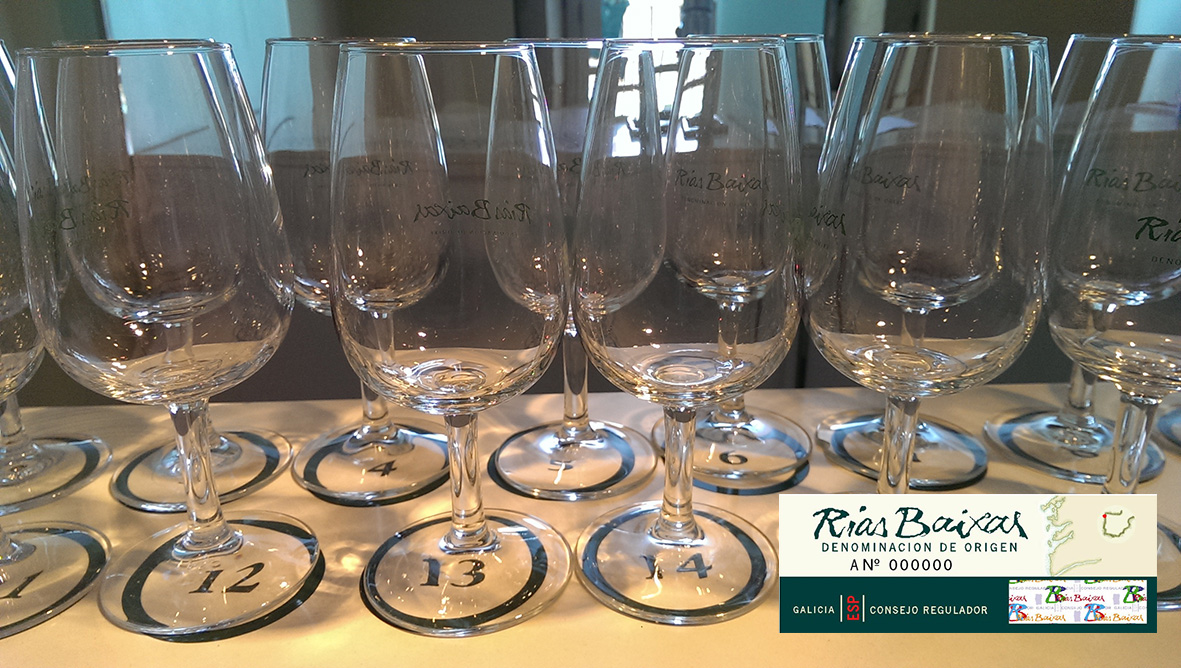
DO Part 1This three part posting, over the next few days is actually quite interesting…. I think! You may have noticed that every bottle we sell has the official Rias Baixas denomination sticker on the back, denoting that the wine has been tasted, and passed, by the official tasting committee of the D.O. Every tank of wine produced in our region has to undergo this process before it can be bottled, of course meaning that every single tank has to be tasted! I should perhaps mention that the official sticker is known locally as the ‘tirilla’, and I have inset an example in the corner of today’s photo. (Tirilla comes from the word tira, which means strip (as in label) or band – tirilla means small strip).

The process starts when a tank of wine is ready for bottling – but this has to be planned well in advance as the approval process can take up to 2 or 3 weeks (especially at busy times of year). The first step is that the bodega has to send a sample drawn from the tank to an official, government accredited laboratory for analysis. Depending on proximity of the cellar to the lab will determine how long this takes, but usually between 2 and 4 days. Once the bodega has the analysis in hand, it can then notify the D.O. office in Pontevedra, who will send a member of their technical team to draw six bottles from the tank to be tasted. When the sample is taken, a seal is put on the tank, as well as on the six bottles – one of the bottles is left in the bodega as a reference. Normally the D.O. will collect the sample within a few days of asking, but at peak times this can extend to one or two weeks. There is no doubt that the busiest time of year is during the build up to the harvest, simply because bodegas often need to empty tanks to accommodate the new wine coming in. Under normal circumstances the D.O. would hold one or two official tastings a week, but at harvest time, this can increase to daily tastings in order to keep up with the high demand.

When the sample bottles arrive at the D.O. office, a second sample is immediately sent to the official D.O. laboratory for analysis, and in this way it can be compared to the analysis supplied by the bodega, to ensure that they are indeed, one and the same! Once this is done the sample bottle can finally be put before the tasting panel.

All tasters on the panel are obviously experienced people (often Rias Baixas winemakers), but they are still tutored and have to undergo assessment to ensure that they are not only up to scratch, but also that they are completely objective, and rate all wines in a similar way, using the official tasting scale. There are always a minimum of 5 official tasters on each tasting panel, and as you may guess, the tasting is always conducted completely blind.DO Part 1This three part posting, over the next few days is actually quite interesting…. I think! You may have noticed that every bottle we sell has the official Rias Baixas denomination sticker on the back, denoting that the wine has been tasted, and passed, by the official tasting committee of the D.O. Every tank of wine produced in our region has to undergo this process before it can be bottled, of course meaning that every single tank has to be tasted! I should perhaps mention that the official sticker is known locally as the ‘tirilla’, and I have inset an example in the corner of today’s photo. (Tirilla comes from the word tira, which means strip (as in label) or band – tirilla means small strip).

The process starts when a tank of wine is ready for bottling – but this has to be planned well in advance as the approval process can take up to 2 or 3 weeks (especially at busy times of year). The first step is that the bodega has to send a sample drawn from the tank to an official, government accredited laboratory for analysis. Depending on proximity of the cellar to the lab will determine how long this takes, but usually between 2 and 4 days. Once the bodega has the analysis in hand, it can then notify the D.O. office in Pontevedra, who will send a member of their technical team to draw six bottles from the tank to be tasted. When the sample is taken, a seal is put on the tank, as well as on the six bottles – one of the bottles is left in the bodega as a reference. Normally the D.O. will collect the sample within a few days of asking, but at peak times this can extend to one or two weeks. There is no doubt that the busiest time of year is during the build up to the harvest, simply because bodegas often need to empty tanks to accommodate the new wine coming in. Under normal circumstances the D.O. would hold one or two official tastings a week, but at harvest time, this can increase to daily tastings in order to keep up with the high demand.

When the sample bottles arrive at the D.O. office, a second sample is immediately sent to the official D.O. laboratory for analysis, and in this way it can be compared to the analysis supplied by the bodega, to ensure that they are indeed, one and the same! Once this is done the sample bottle can finally be put before the tasting panel.

All tasters on the panel are obviously experienced people (often Rias Baixas winemakers), but they are still tutored and have to undergo assessment to ensure that they are not only up to scratch, but also that they are completely objective, and rate all wines in a similar way, using the official tasting scale. There are always a minimum of 5 official tasters on each tasting panel, and as you may guess, the tasting is always conducted completely blind.

You can taste (by) the sea!

October 27th, 2015 | Galicia

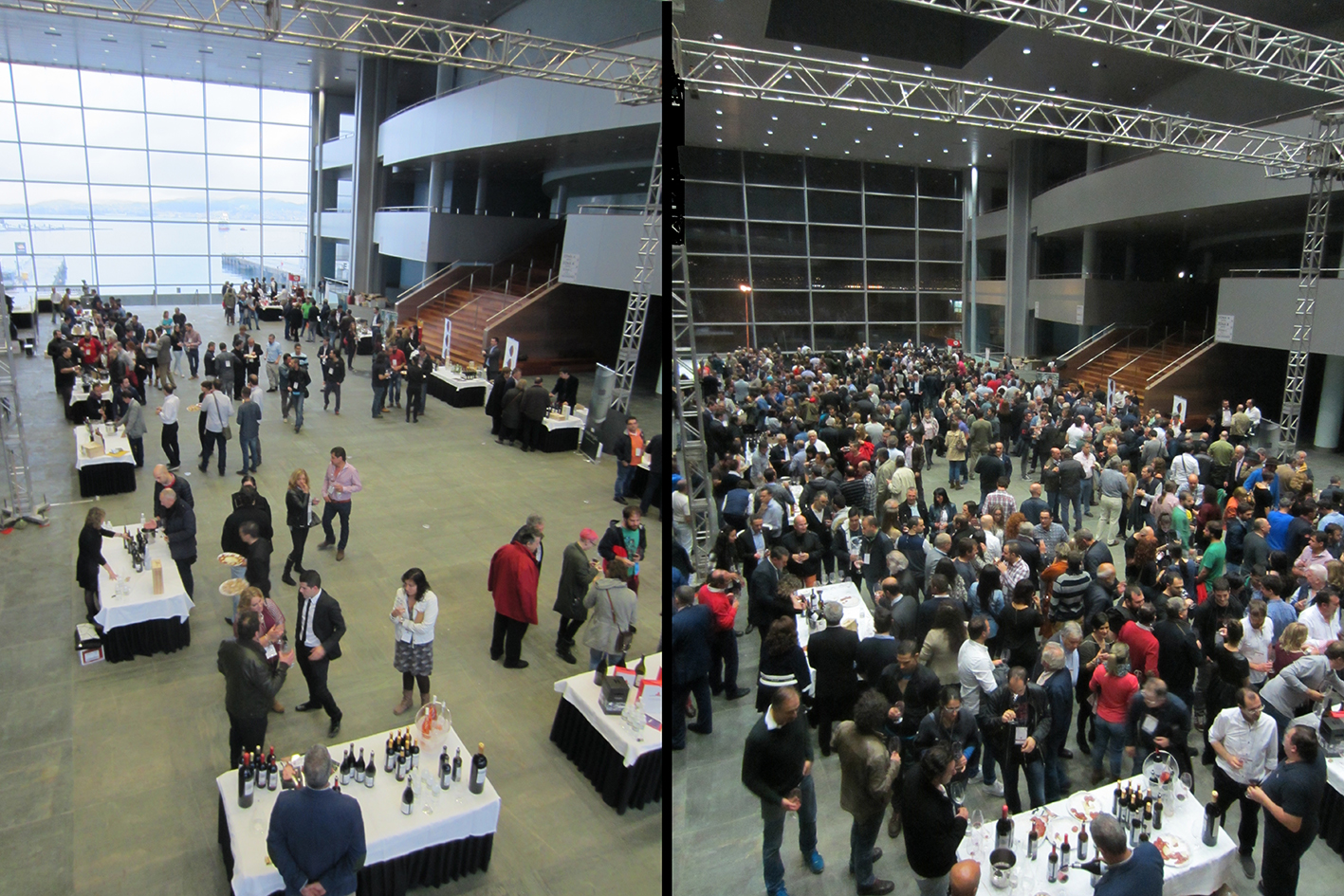
Oscar tastingYesterday, our new friend and distributor in southern Galicia, Oscar, invited us to his tasting in Vigo. It was an all day event, and, as always was pretty exhausting (apart from the break when he treated us all to a spectacular lunch). The morning session was dedicated to local local hotel schools, where our future potential customers (and consumers) had the chance to learn about different wines, and to taste, if they so wished. (Please remember that not everyone finds it fun to taste wine at 11 o’clock in the morning!)

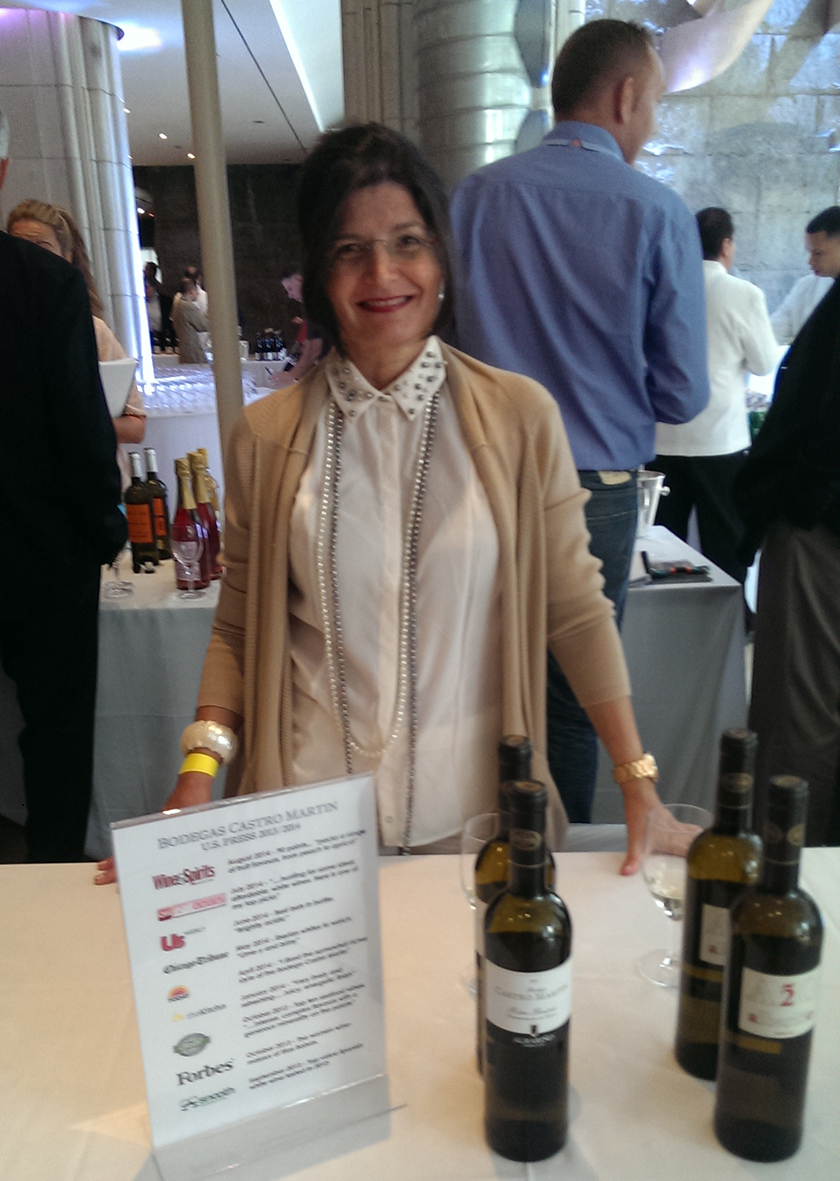
However, it was not until early evening when the proverbial floodgates opened and the large auditorium was packed with hoteliers, restaurateurs, sommeliers and any number of different professionals. Whilst this size of distributor tasting is quite commonplace in say London or New York, I confess that I have never seen anything on this scale at a local tasting in Galicia (or perhaps Spain for that matter). You can judge the turnout for yourself from today’s pictures. The daytime picture shows our proximity Port of Vigo at this tasting, and so when people say that you can taste the sea in our albariño, on this occasion our customers could almost certainly smell it! (Vigo is the largest fishing port in Spain and also one of the biggest in the world).Oscar tastingYesterday, our new friend and distributor in southern Galicia, Oscar, invited us to his tasting in Vigo. It was an all day event, and, as always was pretty exhausting (apart from the break when he treated us all to a spectacular lunch). The morning session was dedicated to local local hotel schools, where our future potential customers (and consumers) had the chance to learn about different wines, and to taste, if they so wished. (Please remember that not everyone finds it fun to taste wine at 11 o’clock in the morning!)

However, it was not until early evening when the proverbial floodgates opened and the large auditorium was packed with hoteliers, restaurateurs, sommeliers and any number of different professionals. Whilst this size of distributor tasting is quite commonplace in say London or New York, I confess that I have never seen anything on this scale at a local tasting in Galicia (or perhaps Spain for that matter). You can judge the turnout for yourself from today’s pictures. The daytime picture shows our proximity Port of Vigo at this tasting, and so when people say that you can taste the sea in our albariño, on this occasion our customers could almost certainly smell it! (Vigo is the largest fishing port in Spain and also one of the biggest in the world).

Return from New York

September 14th, 2014 | Tasting

New YorkYou may have noticed the lack of entries on this site over the last few days, and that’s simply because we’ve been travelling – a quick flit over to New York. With only days left to run before over 2014 harvest kicks off Angela and I made a flying visit to New York City for the annual tasting of our importer. It’s always a bit of a dilemma, deciding whether we should abandon the bodega at such a critical moment, but in reality during the last few days before picking there’s actually not a lot to do, except sit and wait (assuming that all the preparation work in the cellar has been done – cleaning, testing equipment, ordering supplies etc.)

If the truth is known I think that we also have an alternative motivation for wanting to go to the States…. to opportunity to visit a big, vibrant city with the added bonus of a bit of ‘retail therapy’. Suffice to say that we always leave Galicia with an extensive shopping list in hand, and have to add at least one extra day to our trip to accommodate our spending!

So, now that we’re back it’s time to refocus, and get on with the serious business of making wine. Until today the quality of fruit has been looking quite promising, but as we move into the final days, the forecasts are not looking too good – we can only hope that they’re wrong. 

New YorkYou may have noticed the lack of entries on this site over the last few days, and that’s simply because we’ve been travelling – a quick flit over to New York. With only days left to run before over 2014 harvest kicks off Angela and I made a flying visit to New York City for the annual tasting of our importer. It’s always a bit of a dilemma, deciding whether we should abandon the bodega at such a critical moment, but in reality during the last few days before picking there’s actually not a lot to do, except sit and wait (assuming that all the preparation work in the cellar has been done – cleaning, testing equipment, ordering supplies etc.)

If the truth is known I think that we also have an alternative motivation for wanting to go to the States…. to opportunity to visit a big, vibrant city with the added bonus of a bit of ‘retail therapy’. Suffice to say that we always leave Galicia with an extensive shopping list in hand, and have to add at least one extra day to our trip to accommodate our spending!

So, now that we’re back it’s time to refocus, and get on with the serious business of making wine. Until today the quality of fruit has been looking quite promising, but as we move into the final days, the forecasts are not looking too good – we can only hope that they’re wrong. 

Three Wine Men

July 22nd, 2014 | Press

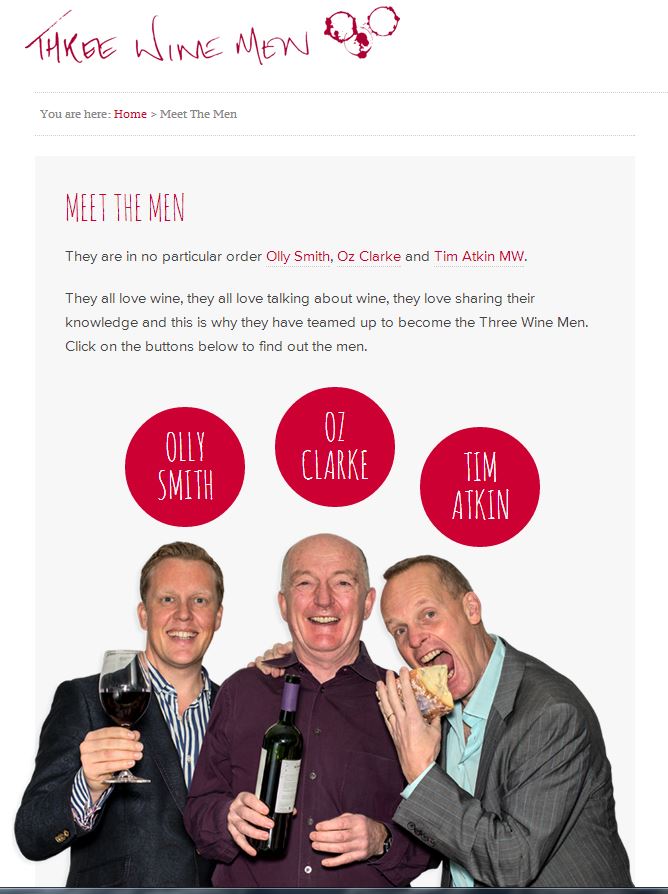
Three Wine MenOz Clarke, Tim Atkin (MW) and Olly Smith (aka ‘The Three Wine Men’), are all rated amongst the UK’s top wine writers. They recently held their annual summer tasting in Manchester, and were were very pleased to receive a mention for our Castro Martin wine that we sell to Marks & Spencer.

“Oz,  Tim and Olly made notes on their favourite wines from the event: Tim Atkin MW – Bodega Castro Martin ‘Sobre Lias’ 2012 ‘Lovely stone fruit aromas segue into a fresh, lime zesty palte with a crunchy mouth-watering finish.’’

Three Wine MenOz Clarke, Tim Atkin (MW) and Olly Smith (aka ‘The Three Wine Men’), are all rated amongst the UK’s top wine writers. They recently held their annual summer tasting in Manchester, and were were very pleased to receive a mention for our Castro Martin wine that we sell to Marks & Spencer.

“Oz,  Tim and Olly made notes on their favourite wines from the event: Tim Atkin MW – Bodega Castro Martin ‘Sobre Lias’ 2012 ‘Lovely stone fruit aromas segue into a fresh, lime zesty palte with a crunchy mouth-watering finish.’’

Secret silver

June 12th, 2014 | Competitions

IWC LondonThose of you who follow our site might already know my thoughts about wine competitions. I have very mixed views….. My opinion is that there are just so many variables involved that can ultimately affect the outcome.  The biggest problem can simply be how your wine performs in front of the judges. For example, it could be that you wine is recently bottled, recently sulphured, or perhaps it’s simply too young and not showing at its best. It’s position in the tasting line up can also influence how it is judged. If yours is a more subtle, elegant wine that finds itself in the middle of a selection of less subtle, more full-bodied, slightly sweeter, or perhaps even slightly more alcoholic wines, then it can quite easily be lost, or simply overpowered. The list of potential stumbling blocks goes on, so much so that in the end the result can become a bit of a lottery. Writing about a wine, offering the consumer a description and guiding them is one thing, but awarding medals based on a snapshot of how your wine shows at one precise moment in it’s life, well, that can sometimes be a bit misleading.

As a result of our frustrations with said competitions we simply chose to abstain completely from entering, but that’s not to say that our wines are never submitted. Of course it is the prerogative of our customers to decide whatever they chose to do in this respect, and of course we will always support their choice.

The other day I was surfing the internet, visiting a few wine websites (as I have been known to do on occasions), when I stumbled across a silver medal! It appears that our Bodega Castro Martin 2012 had won a silver medal at  the 2014 International Wine Challenge in London. We had no idea that it had won a prize, and didn’t even know that it had been entered – suffice to say that it came as quite a surprise…..

IWC LondonThose of you who follow our site might already know my thoughts about wine competitions. I have very mixed views….. My opinion is that there are just so many variables involved that can ultimately affect the outcome.  The biggest problem can simply be how your wine performs in front of the judges. For example, it could be that you wine is recently bottled, recently sulphured, or perhaps it’s simply too young and not showing at its best. It’s position in the tasting line up can also influence how it is judged. If yours is a more subtle, elegant wine that finds itself in the middle of a selection of less subtle, more full-bodied, slightly sweeter, or perhaps even slightly more alcoholic wines, then it can quite easily be lost, or simply overpowered. The list of potential stumbling blocks goes on, so much so that in the end the result can become a bit of a lottery. Writing about a wine, offering the consumer a description and guiding them is one thing, but awarding medals based on a snapshot of how your wine shows at one precise moment in it’s life, well, that can sometimes be a bit misleading.

As a result of our frustrations with said competitions we simply chose to abstain completely from entering, but that’s not to say that our wines are never submitted. Of course it is the prerogative of our customers to decide whatever they chose to do in this respect, and of course we will always support their choice.

The other day I was surfing the internet, visiting a few wine websites (as I have been known to do on occasions), when I stumbled across a silver medal! It appears that our Bodega Castro Martin 2012 had won a silver medal at  the 2014 International Wine Challenge in London. We had no idea that it had won a prize, and didn’t even know that it had been entered – suffice to say that it came as quite a surprise…..

Pear, apple and just a hint of mouse

May 22nd, 2014 | Tasting

MouseThere is a chemical compound that can sometimes develop in wine called 2-acetyltetrahydropyridine, or ACTPY for short. The aroma is described as being like “caged mice and cracker biscuits”, and believe it or not, it is actually very difficult to smell (simply because it is a basic compound). It is much more likely that you will detect it on your palate as it’s release will be triggered by your own pH. Wine is obviously acidic and it is only when you put the wine in your mouth that the pH increases and the compound returns to its aromatic form, allowing it to be tasted.

Owing to the time it takes for this reaction to take place the evolution of the mousey flavour can be delayed…it might take about 30 seconds or so to develop on your palate. If you taste it in a line up of several wines it is important to identify the right wine as the culprit, and make sure that this off flavour isn’t carried over from a previous wine! The sensation can also persist in your mouth for several minutes and therefore it can be difficult to taste other wines afterwards.

There are two main origins of this off-flavour– microbial and chemical. If it’s microbial, it comes from strains of lactic acid bacteria or yeast, and if its origin is chemical, it is associated with the process of hyperoxidation (when hydrogen peroxide is used to remove SO2 from juice or wine). Thankfully, the latter is not a process that we use at Castro Martin. At this time there are no methods for measuring the level of mousiness in wines, and detection is still reliant on tasters, sensitive to this off-flavour. The other bad news is  that there’s also no verified ways to remove the character, other than blending away the affected wine.

As with any microbial and chemical fault in wine, prevention is always better than cure!

MouseThere is a chemical compound that can sometimes develop in wine called 2-acetyltetrahydropyridine, or ACTPY for short. The aroma is described as being like “caged mice and cracker biscuits”, and believe it or not, it is actually very difficult to smell (simply because it is a basic compound). It is much more likely that you will detect it on your palate as it’s release will be triggered by your own pH. Wine is obviously acidic and it is only when you put the wine in your mouth that the pH increases and the compound returns to its aromatic form, allowing it to be tasted.

Owing to the time it takes for this reaction to take place the evolution of the mousey flavour can be delayed…it might take about 30 seconds or so to develop on your palate. If you taste it in a line up of several wines it is important to identify the right wine as the culprit, and make sure that this off flavour isn’t carried over from a previous wine! The sensation can also persist in your mouth for several minutes and therefore it can be difficult to taste other wines afterwards.

There are two main origins of this off-flavour– microbial and chemical. If it’s microbial, it comes from strains of lactic acid bacteria or yeast, and if its origin is chemical, it is associated with the process of hyperoxidation (when hydrogen peroxide is used to remove SO2 from juice or wine). Thankfully, the latter is not a process that we use at Castro Martin. At this time there are no methods for measuring the level of mousiness in wines, and detection is still reliant on tasters, sensitive to this off-flavour. The other bad news is  that there’s also no verified ways to remove the character, other than blending away the affected wine.

As with any microbial and chemical fault in wine, prevention is always better than cure!

Not quite so glamorous

April 9th, 2014 | Tasting

ZurichI exchanged a couple of e-mails with a customer yesterday, apologising for the delay in my reply, giving the explanation that Angela and I had been travelling on business during the previous week. “Somewhere nice, I hope”, came the reply. Well, in truth, the answer was yes, we had been somewhere nice – a couple of days for a presentation in Barcelona, followed quickly by a few days of tasting in Zurich. Of course, it’s quite natural to believe that travelling is a glamorous pastime, and it most certainly is when the journey is for leisure purposes, but when the aim is simply to stand behind a table (or in this case a barrel) pouring wine for two or three days, then not only do your legs start to ache, but also you don’t really get too much time to explore your surroundings anyway. The other slight downside was that these two trips also encroached upon two consecutive weekends, making our working week just that bit longer.

I know that I shouldn’t complain really – having the opportunity to travel is much better than have a regular ‘9 to 5’ sitting behind a desk all week, but I am simply saying that in the end it’s still work, albeit in a slightly different location.

Finally, I should add that we did have a really good time, thanks to the warm hospitality our good friends (and importers) in Switzerland. They certainly know how to look after their visitors, even if it was mainly for business purposes. Oh, and by the way, I think we did help to sell a bit of albariño too!

ZurichI exchanged a couple of e-mails with a customer yesterday, apologising for the delay in my reply, giving the explanation that Angela and I had been travelling on business during the previous week. “Somewhere nice, I hope”, came the reply. Well, in truth, the answer was yes, we had been somewhere nice – a couple of days for a presentation in Barcelona, followed quickly by a few days of tasting in Zurich. Of course, it’s quite natural to believe that travelling is a glamorous pastime, and it most certainly is when the journey is for leisure purposes, but when the aim is simply to stand behind a table (or in this case a barrel) pouring wine for two or three days, then not only do your legs start to ache, but also you don’t really get too much time to explore your surroundings anyway. The other slight downside was that these two trips also encroached upon two consecutive weekends, making our working week just that bit longer.

I know that I shouldn’t complain really – having the opportunity to travel is much better than have a regular ‘9 to 5’ sitting behind a desk all week, but I am simply saying that in the end it’s still work, albeit in a slightly different location.

Finally, I should add that we did have a really good time, thanks to the warm hospitality our good friends (and importers) in Switzerland. They certainly know how to look after their visitors, even if it was mainly for business purposes. Oh, and by the way, I think we did help to sell a bit of albariño too!

Monthly Archives

Categories

ARE YOU OF LEGAL AGE? This site is intended for those of legal drinking age. By entering, you confirm that you are of legal drinking age in the country where this site is being accessed. ¿ERES MAYOR DE EDAD? Este sitio está destinado a personas en edad legal para beber alcohol. Al ingresar, confirma que tiene la edad legal para beber en el país donde se accede a este sitio.