Archive for ‘Tasting’

A new tasting sensation

February 9th, 2017 | Odds & Sods

Wine slurpersThis week we have bottled a couple of tanks to replenish our depleted bottle stocks. At the start of every bottling I always take a sample directly from the machine just to make one final check on the quality of the wine. Today, however, I learned something quite new about tasting!

After many years as a buyer, and even more years in the wine business in general, I’m afraid to admit that I’m a bit of a slurper…. Well, what I actually mean is that when I taste wine I always draw in air over my tongue in order to oxygenate the wine a little and hopefully increase the taste sensation in my mouth. Other people are ‘rinsers’ (washing the wine around their mouth as they taste, rather like using a mouthwash), but I am very much a member of the Ancient Confrerie of Wine Slurpers. Of course the problem is that it becomes something of an occupational habit, and I have been known to do it, quite loudly, in the middle of a busy restaurant. Naturally, this can attract some rather odd stares from neighboring tables, who probably believe that I am just some sort of wine snob who wants to show off a bit (either that or I am having serious problems with my false teeth)!

So, what was so new about my tasting after all these years? Well, when I work on a bottling I normally wear special foam earplugs to protect against the noise. Eight hours of whiring machines and rattling bottles will more than likely give you a headache, or at the very least, ringing in your ears. Anyway, the point is that I forgot to take the earplugs out when I went to taste, and I can tell you that the noise was quite an eye opener (or should that be ear opener?) To be quite honest the loud slurping noises were very, very distracting and made it quite impossible to concentrate on the real job in hand. Suffice to say that I had to remove the plugs and start again. In conclusion this is not a tasting technique that I would recommend to anyone.

A failed marriage…..

February 6th, 2017 | Food & Wine

Wine marriageIn our business we often talk about the ‘marriage’ of food and wine, but I have always maintained that this is often a matter of personal taste. There can sometimes be an element of wine snobbery attached to pairing food and wine, but happily as consumers, we don’t always have to agree with the experts and so if we prefer, can make our own wine choices.

Don’t get me wrong, sommeliers do a fine job, and will often help consumers tiptoe their way through the minefield of an extensive wine list. Wine ‘flights’ were, and still are, another alternative (nearly always offered to accompany the chef’s own tasting menu). These are simply a selection of hand-picked wines, served by the glass, specifically chosen to ‘marry’ with each dish on the menu. Some selections will be International encompassing wines from around the world, whereas some might be a selection of local wines, chosen specifically to accompany a menu highlighting local produce.

Of course the beauty of a wine flight is that it offers the opportunity to taste several different wines, possibly every one a new experience, and not least of all, that each one will make the perfect accompaniment to the food. But what happens when they’re not??

A while ago I ate at a top Galician restaurant (which shall remain nameless for purposes of this story) and selected their best tasting menu. I was offered a choice of two different wine flights, one basic and one more ‘up-market’. I opted for the better one of the two, including five glasses of ‘superior quality’ Galician wines. Of the five wines I thought that two were very good and went well with the dishes. The third, a floral, honeyed white blend from the D.O. of Monterrei was served with a dark, rich, slow-braised cheek of beef. Sorry to say, but this selection was simply not a ‘marriage’ in any way, shape or form….

The final two wines were just….. well, poor and not very well made. A Rias Baixas red, made from a blend of Pedral, Souson and Espadeiro was just unripe and highly volatile – sour and unpleasant. Then finally a “dessert” wine (I use inverted commas deliberately), made I believe, from a late-harvest albariño. Only 9% alcohol, watery, hardly any concentration or viscosity and completely lacking body – ordinary at best, and certainly not memorable in any way. Oh dear!

On one final, more positive note, the food was outstanding and I will certainly be back there soon. It goes without saying however, that the next time I will be making my own wine selections!

The tasting calendar – fact or fiction?

January 30th, 2017 | Odds & Sods

[:en]BiodynamicA week or so ago I wrote about tasting the tanks of our 2016 wines, and the fact that that I had decided to taste them on a day determined by my 2017 Biodynamic tasting calendar. I have mentioned this calendar on previous occasions, but just to recap quickly, it suggests that wine will taste differently on different days of the month according to the phases of the moon. The best days are known as ‘fruit’ or ‘flower’ days, the bad days are ‘leaf’ or ‘root’.

I confess that I originally stumbled upon this idea more or less by accident, when I often imagined that our wines appeared to taste better on certain days of the week, but couldn’t really pinpoint the reason why. I subsequently read about the theory of tasting cycles and the biodynamic calendar, and despite remaining sceptical, decided to buy a copy. Of course, the power of suggestion is very strong, and we can all be influenced or have our perception changed by having a certain idea being offered to us in advance. Anyway, to cut a long story short, I find that this concept works for me, and the days that I chose to taste are now more often than not decided by a quick glance at the calendar. And I am not the only one – large organisations such as Tesco and Marks & Spencer, as well as important cellars such as Pol Roger and Maison Joseph Drouhin also use this calendar as a point of reference.

The reason that I am revisiting this subject now is simply because a New Zealand scientific study into the Biodynamic calendar has just been published. “The findings reported in the present study provide no evidence in support of the notion that how a wine tastes is associated with the lunar cycle,” the researchers concluded. The methodology was simple – 19 New Zealand wine professionals making blind tastings of 12 Pinot Noirs, four times, twice on a fruit day and twice on a root day, using 20 descriptors including  aroma, taste and mouthfeel. They concluded that the lunar cycle did not influence their perceptions. (I should mention that atmospheric pressure was also taken into account as some believe that this can also influence taste).

Perhaps the surprising point is that despite these findings, some wine professionals (including MW’s) say that they still retain their faith in support of the calendar… including me![:es]BiodynamicA week or so ago I wrote about tasting the tanks of our 2016 wines, and the fact that that I had decided to taste them on a day determined by my 2017 Biodynamic tasting calendar. I have mentioned this calendar on previous occasions, but just to recap quickly, it suggests that wine will taste differently on different days of the month according to the phases of the moon. The best days are known as ‘fruit’ or ‘flower’ days, the bad days are ‘leaf’ or ‘root’.

I confess that I originally stumbled upon this idea more or less by accident, when I often imagined that our wines appeared to taste better on certain days of the week, but couldn’t really pinpoint the reason why. I subsequently read about the theory of tasting cycles and the biodynamic calendar, and despite remaining sceptical, decided to buy a copy. Of course, the power of suggestion is very strong, and we can all be influenced or have our perception changed by having a certain idea being offered to us in advance. Anyway, to cut a long story short, I find that this concept works for me, and the days that I chose to taste are now more often than not decided by a quick glance at the calendar. And I am not the only one – large organisations such as Tesco and Marks & Spencer, as well as important cellars such as Pol Roger and Maison Joseph Drouhin also use this calendar as a point of reference.

The reason that I am revisiting this subject now is simply because a New Zealand scientific study into the Biodynamic calendar has just been published. “The findings reported in the present study provide no evidence in support of the notion that how a wine tastes is associated with the lunar cycle,” the researchers concluded. The methodology was simple – 19 New Zealand wine professionals making blind tastings of 12 Pinot Noirs, four times, twice on a fruit day and twice on a root day, using 20 descriptors including  aroma, taste and mouthfeel. They concluded that the lunar cycle did not influence their perceptions. (I should mention that atmospheric pressure was also taken into account as some believe that this can also influence taste).

Perhaps the surprising point is that despite these findings, some wine professionals (including MW’s) say that they still retain their faith in support of the calendar… including me![:]

Flu

January 19th, 2017 | Odds & Sods

BabesJust over a week ago (after consulting my new 2017 Biodynamic tasting calendar – more about that on another occasion), I made one of my regular tastings of the 2016 tanks. Obviously our 2016 wines are still sitting quietly on their lees, and so the purpose of tasting is to monitor progress, check for any potential faults, and eventually, to chose the optimum moment to rack them (remove them from their lees deposit into a clean tank). One of the possible faults that we look out for is reduction. To cut a long story short reduction is an ‘off’ smell caused by volatile sulphur compounds, which if detected, can usually be rectified by simply racking the wine. The problem is that the longer any reduction remains undetected, the more difficult it is to remove, which can result in the wine being tainted and possibly undrinkable, hence our regular tastings.

Happily, I can report that all of our wines are in good condition, and whilst they are still a long way from being the ‘finished article’, they are looking very promising. One of the characteristics of the vintage is quite simply the fruitiness. Yes, of course, we have fruit in our wines every year, but in 2016 (owing to the hot summer and very ripe fruit), the fruit flavours are very much at the forefront of the wine. We shall see….

The bad news is that, no sooner had I completed this tasting than I was stuck down with quite a virulent strain of flu. A week later, after a couple of days in bed and many days on the sofa, I am only now just starting to feel human again, which may help explain why I haven’t made any posts recently. Hopefully, by Monday, I will be back in the office, and normal service will be resumed!

Hello Joshua, shall we play a game?

December 19th, 2016 | Tasting

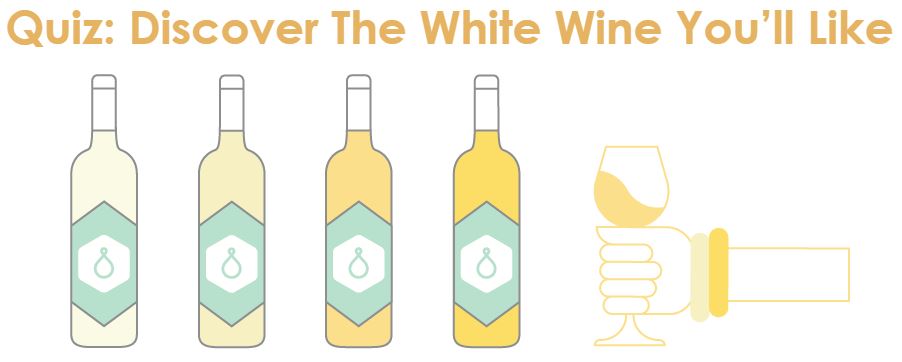
QuizI spend quite a lot of time browsing wine subjects on the web, and on Saturday I stumbled across a site claiming that, by answering a few simple questions, they could determine the type of white wine that I should drink. I put it to the test…. but in a slightly mischievous way – by working in reverse and trying to steer the quiz toward the answer that I wanted. In other words, to force the algorithm to recommend albariño as my wine of choice.

When you already know the character traits of a particular grape variety then it’s actually not that difficult. The quiz asks a series of questions with multiple choice answers, and at my very first attempt I managed to arrive at the following answer: “The wine you should try is Pinot Grigio. You like a crisp, refreshing white wine, and Pinot Grigio is the perfect fit. But you should also try Albariño from Spain”

Wine Apps are becoming more and more popular, in restaurants for example, offering consumers alternative advice to that of a sommelier. Also, by using a phone’s camera these Apps can recognise a wine label, and so feedback can be very quick and convenient (especially if you find yourself standing in the middle of a retail outlet struggling to make a decision). The only possible downside is that the database of many of these Apps is built up around customer recommendations in a similar way to Trip Advisor, so I guess that not all of the advice might agree with your own opinion or taste. In the end, as I always say, my best and only advice is to pull the cork and taste!

Tasting and the moon

November 15th, 2016 | Oddballs

Moon 1People who know me will also know that I can be quite conservative and traditional when it comes to certain aspects of wine making, tasting etc., but by way of contradiction there is one ‘off the wall’ hypothesis that I do actually subscribe to – the Biodynamic Calendar of wine tasting.

Wine tasting is certainly something that I have always taken very seriously, and consequently I still follow many strict rules on the days that I know I will be tasting – what I chose to eat (including the night before), not using strong mouthwash in the morning, and certainly not wearing aftershave! Of course there are also rules that apply to the tasting environment itself. OK, the inside of our tank room is hardly light and airy, but we can certainly make sure that it is odour free (some cleaning products, for example, can leave slight traces which can put you off the scent – pun intended).

With so many ‘controllable’ factors for a tasting, the Biodynamic Calendar is perhaps, therefore, something of a contradiction which on face value is not quite so logical or easy to explain….. To cut a long story short the theory is that tasting can be affected by the phases of the moon – some days are favourable and others are not, it’s as simple as that. The odd thing is that I do believe in it, but only because I have always thought that our own wines taste better on some days than others, and my experience shows that there is often a correlation with this calendar.

Only yesterday for example, I tasted the tanks of our new 2016 wines, which until now have shown great potential for the future and really excited me. At the end of an hour or so of tasting I was actually left a little deflated – perhaps I had simply overestimated the vintage? It troubled me for a while, and it was only then that I had the idea of consulting my little Biodynamic book.  It appeared that I could have simply chosen the wrong day to taste, and maybe it was yesterday’s ‘supermoon’ that had caused a bigger decline than usual? This is just my new theory, I will let you know!

Savagnin ~ the Australian albariño

August 29th, 2016 | Food & Wine

[:en]Jura - BornardSeveral years ago there was a big scandal in Australia when it was discovered that the ‘Albariño’ that they had planted, was not in fact albariño, but was actually the savagnin blanc grape variety most commonly found in the Jura region of northeast France. The error was committed by Australia’s very own wine research organisation, and was uncovered whilst we were visiting Australia back in 2009. As a result we unwittingly found ourselves at the centre of a good deal of media attention as the Australian wine press clamoured to get the oinion of some ‘authentic’ albariño producers!

The reason I mention this now is because we actually discovered a savagnin on the wine list of a local restaurant, and so, quite naturally we jumped at the chance to try it. The Côtes du Jura Savagnin ‘Les Marnes’ 2011, from Domaine Philippe Bornard, did not disappoint. It’s perhaps an odd thing to say, but this is a wine for Manzanilla and Fino sherry drinkers who enjoy the salty, nutty flavours originating from the flor that grows over the wine in sherry casks. In the Jura they call this the ‘sous voile’ method whereby a layer of yeast covering the wine produces a very similar end result. Although this wine is not completely ‘bright’, and has a rustic, slightly oxidative character, it is still absolutely delicious. Multi-layered – smoky, salty, nutty, but with plenty of stone fruit, a fresh acidity and just a touch of spice. It’s a wine that just keeps coming, is extremely complex, and to be fair, is probably something of an acquired taste that might not appeal to every palate. Suffice to say that we enjoyed it![:es]Jura - BornardSeveral years ago there was a big scandal in Australia when it was discovered that the ‘Albariño’ that they had planted, was not in fact albariño, but was actually the savagnin blanc grape variety most commonly found in the Jura region of northeast France. The error was committed by Australia’s very own wine research organisation, and was uncovered whilst we were visiting Australia back in 2009. As a result we unwittingly found ourselves at the centre of a good deal of media attention as the Australian wine press clamoured to get the oinion of some ‘authentic’ albariño producers!

The reason I mention this now is because we actually discovered a savagnin on the wine list of a local restaurant, and so, quite naturally we jumped at the chance to try it. The Côtes du Jura Savagnin ‘Les Marnes’ 2011, from Domaine Philippe Bornard, did not disappoint. It’s perhaps an odd thing to say, but this is a wine for Manzanilla and Fino sherry drinkers who enjoy the salty, nutty flavours originating from the flor that grows over the wine in sherry casks. In the Jura they call this the ‘sous voile’ method whereby a layer of yeast covering the wine produces a very similar end result. Although this wine is not completely ‘bright’, and has a rustic, slightly oxidative character, it is still absolutely delicious. Multi-layered – smoky, salty, nutty, but with plenty of stone fruit, a fresh acidity and just a touch of spice. It’s a wine that just keeps coming, is extremely complex, and to be fair, is probably something of an acquired taste that might not appeal to every palate. Suffice to say that we enjoyed it!


 [:]

Fiesta time!

August 5th, 2016 | Fiestas

Tunnel 2016It’s already that time of year again, as we celebrate the LXIV (64th I think) Annual Albariño Festival in our local town of Cambados. If you have read my posts over recent years you will probably know that I am not a great fan of the Festival itself, most especially in the evenings, when it tends to get a little boisterous (and that is being VERY polite). Great if your in your 20’s and want to test your drinking capacity, but certainly not what you would describe as a tasting. It’s just a party, or as some might prefer, celebration.

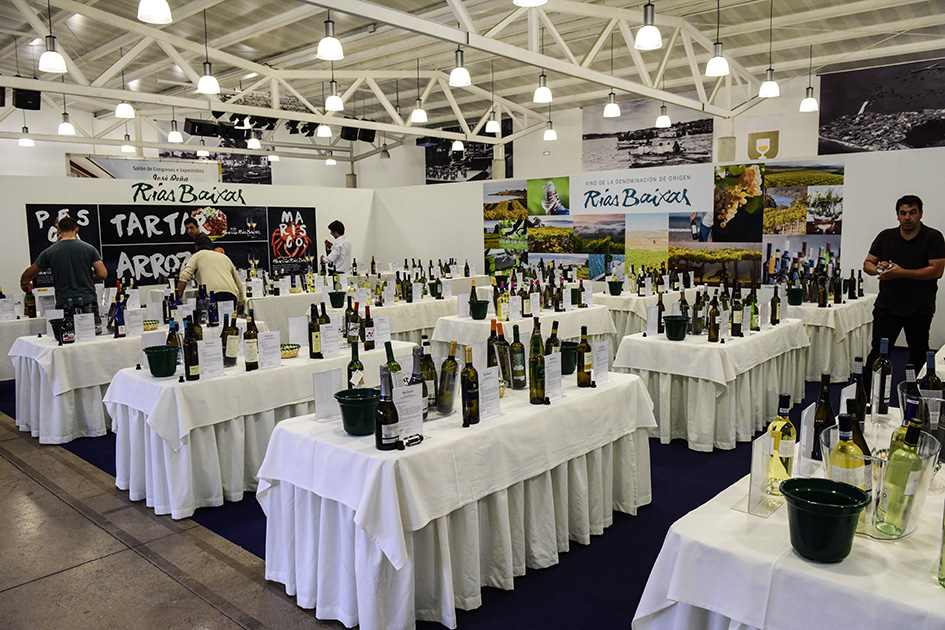
If you’re a serious professional and want to actually taste (or even just a consumer interested in knowing more and comparing wines), then the place for you is the Tunnel of Wine. Not so much a tunnel, but actually just tables laid out with the wines where you can taste as little or as much as you want, at your own pace. Held in the Salón José Peña in Cambados, it is open for the duration of the Festival, for a couple of hours in the morning and then a couple of hours each evening.

I know I probably say this every year, but for me at least, it is the best opportunity of the year to taste the vast majority of albariños of the vintage under one roof. Yesterday I tackled the first half of the room, about 70 odd wines in two hours, and today I will go back to finish the rest. Of course, the secret (as with all serious tastings), is to make copious notes of each individual wine, and secondly to spit! You might think that spitting is an obvious thing, but I can tell you that yesterday, in a room full of people, I don’t think I actually saw one other person spitting…. Enough said.

Spitting and making notes does however, attract attention, the result being that I was interviewed by one of our local papers, asking my opinion. They quoted me perfectly in this respect, that it is simply the best albariño tasting of the year.

Tasting the sea

April 11th, 2016 | Tasting

Sea saltA few days ago I read an article about the increasing use of the term ‘salty’ or ‘saline’ in wine tasting, It is something that crops up quite a lot in the description of albariño, and yet I don’t really recall reading too many articles regarding it’s origin. My first conscious memory of this term was from the 1980’s when Jancis Robinson use the expression ‘salt-lick’ to describe, of all things, a fresh, young Beaujolais. I must confess that I was quite puzzled at first, but over time I came to understand the sensation that she was attempting to describe – more like a salty tang than pure salt…..

I am not sure if there is any one definitive reason why some wines have a slightly saline taste, but it’s probably down to a combination of several different factors. The French would call it ‘terroir’, and in this case they wouldn’t be too far wrong – certainly geography, geology and climate come into play, but then of course there’s the grape variety itself. Certain grape varieties are known for their specific flavour profiles, for example, you might find a bit of peppery spice in a Grenache, but perhaps not too much salt. Our own variety of albariño is sometimes referred to as the ‘wine of the sea’, not only because it’s a perfect match for fish and seafood, but also because tasters often use phrases such as salty tang or salinity in their descriptions.

From our own experiences I think it would be fair to say that this particular attribute doesn’t occur in every wine, in every vintage, but is more prevalent when a combination of factors come into play. For example, it appears to be more noticeable in wines that have a mineral backbone (it is suggested that minerality and saltiness often go hand-in-hand), which is an attribute that comes from the geology and geography of the vineyard. Also, any hint of saltiness is usually more prevalent in our ‘normal’ or cooler vintages – if there is too much heat and the resulting wine is fat and fruity with a high glycerol content, then this tends to mask any salinity, and it is therefore much less apparent. Of course one final factor, that I haven’t mentioned until now, is our proximity to the Ocean. Not only are there salts present in our alluvial soils, but also the winds and rolling mists from the sea will have an effect on the physiology of the grapes. The actual amount of transference from ocean to grape is difficult to quantify, but it is obvious that there must be a connection between the two.

Winespeak

March 1st, 2016 | Tasting

Card 2014 2A little while ago I read a very interesting article in the Wall Street Journal, about the vocabulary that we use when describing wine. It occurred to me that, as a wine professional, there are probably some words that we use when describing wine which might not be fully understood by the average wine consumer. Thankfully we have wine journalists who are by far the most gifted when it comes to translating the taste of wine into words that we can all understand. It’s really not that easy, and even when we do it, there might still be some expressions that the amateur drinker might fail to comprehend completely, or at the very least misinterpret as something different.

One such, quite commonly used wine word, is ‘creamy’ (often used in association with the word buttery). Of course, in the context of wine it doesn’t mean that your glass will be opaque, but is actually used to describe a soft, ripe, rich, well-rounded white wine such as an oaked chardonnay. The lactic, dairy flavours (and mouth filling sensations) are the by-product of the wine-making process which produces an organic compound called diacetyl.

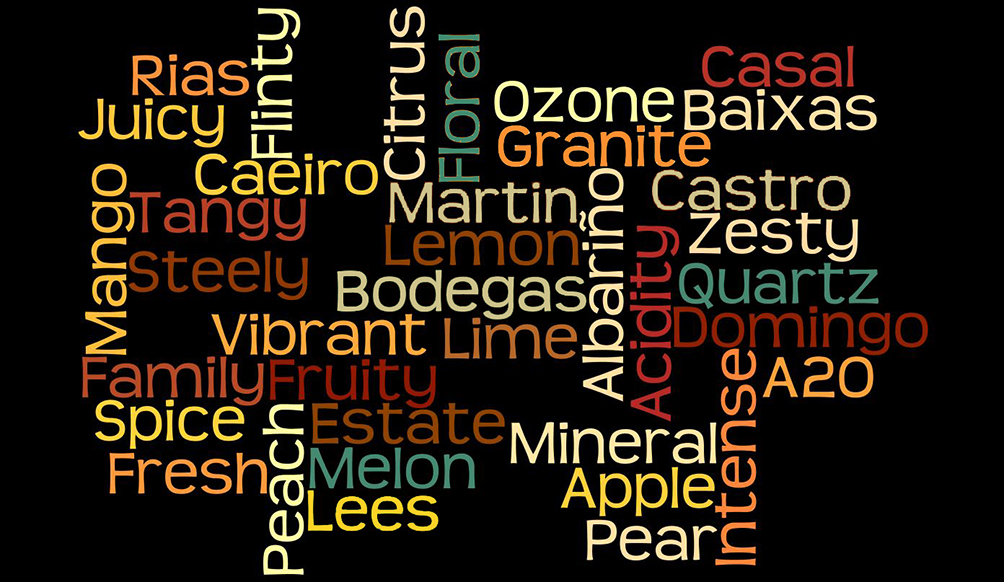
A word such as creamy is probably quite easy to grasp when compared to some of the others you might encounter, such as mousy, foxy, rancio, barnyard, gravel or flinty. Although, as in the case of creamy, the adjective used might not simply describe a taste, but might actually represent a sensation in the mouth – almost like a texture. I mentioned gravel and flint in my very short list of examples, and these are elements that we possibly do smell in day-today life, but simply don’t associate with wine. Of course, you could always wet a stone or a piece of flint and smell it, or even try licking it (if it’s clean!). Flinty, for example, is often used to describe a sharp, zippy, fresh, but dry white wine, perhaps with a good lick of acidity – wines such as Pouilly Fumé or perhaps a Chablis. These words come under a general heading that might be described as minerality. (A term that I nearly always use for our Castro Martin Family Estate albariño).

Other odd words include cat’s pee, iodine, leather, rubber, petrol, tar, and then others like chewy, fleshy, dumb, lifted – the list goes on, and that is without mentioning a few common wine faults – reduction, volatility, oxidation, maderisation, corkiness (TCA) and bretty (Brettanomyces).

It’s a whole new language!


Monthly Archives

Categories

ARE YOU OF LEGAL AGE? This site is intended for those of legal drinking age. By entering, you confirm that you are of legal drinking age in the country where this site is being accessed. ¿ERES MAYOR DE EDAD? Este sitio está destinado a personas en edad legal para beber alcohol. Al ingresar, confirma que tiene la edad legal para beber en el país donde se accede a este sitio.