

Archive for ‘Food & Wine’

A wine for our Easter lamb?

March 28th, 2016 | Food & Wine

[:en]Ruchottes
It is a tradition in many countries to eat lamb at Easter, possibly as it might be considered to be a symbol of re-birth – the first lamb of the new season appearing on the market in Spring. Alternatively, it could also be because it has always been considered to be a significant religious symbol – lamb and Christianity have close ties extending back to the book of Genesis.

In Spain lamb is more often eaten as ‘lechal’, which means suckling lamb, consumed when it is very, very young. There is no doubt that this young meat is quite tender, but to be honest, it is simply not to my personal taste – I prefer my lamb to be a little more mature (which actually makes it quite difficult to source in this country). Despite this fact, I did manage to find a nice leg of New Zealand lamb for Easter, albeit that I had to buy it frozen.

Cooked in a very traditional manner – perforated with garlic and fresh rosemary, oven roasted and served with a concentrated lamb ‘jus’, the correct choice of wine, as always, would add the finishing touch. A journey to the dark recesses of my cellar was required….

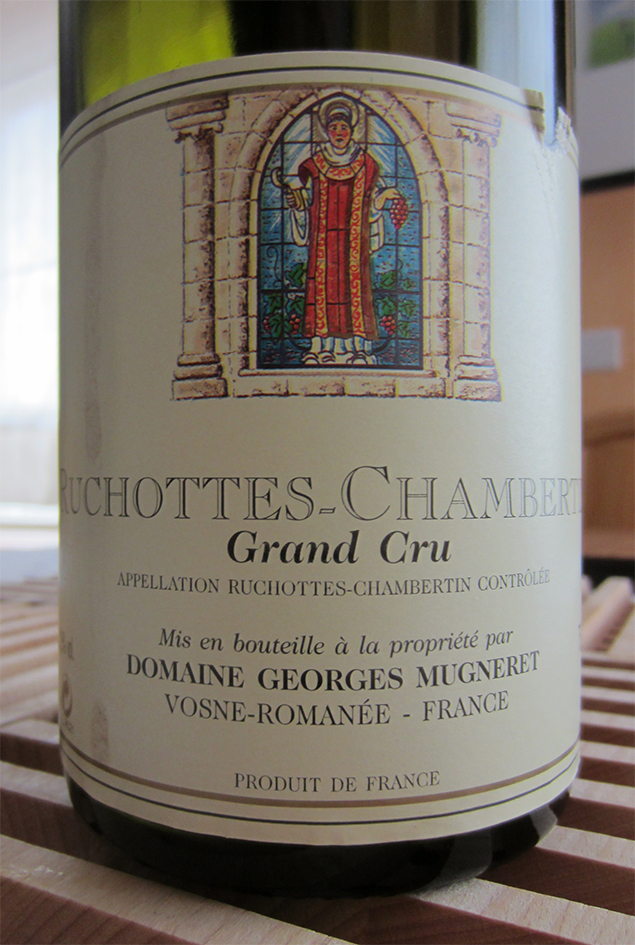
Brushing the dust off an old cardboard carton, I discovered a treasure, a remnant from my wine buying days – a Ruchottes Chambertin Grand Cru 1998, Domaine Mugneret-Gibourg, made by Madame Jacqueline Mugneret and her very talented daughters.

Now, it’s fair to say that 1998 was not the greatest ever Burgundy vintage but it still produced some very good red wines. After nearly 20 years in bottle this example simply confirmed to me how remarkable accomplished winemaking can be. The wine still had good colour and not the pale brick red that I had expected. On the nose it was soft, fragrant and showed its true class, whilst on the palate it was still quite succulent, gently oaky but with really good depth and style. Just a very fine wine. Delicious (as was the lamb)![:es]RuchottesIt is a tradition in many countries to eat lamb at Easter, possibly as it might be considered to be a symbol of re-birth – the first lamb of the new season appearing on the market in Spring. Alternatively, it could also be because it has always been considered to be a significant religious symbol – lamb and Christianity have close ties extending back to the book of Genesis.

In Spain lamb is more often eaten as ‘lechal’, which means suckling lamb, consumed when it is very, very young. There is no doubt that this young meat is quite tender, but to be honest, it is simply not to my personal taste – I prefer my lamb to be a little more mature (which actually makes it quite difficult to source in this country). Despite this fact, I did manage to find a nice leg of New Zealand lamb for Easter, albeit that I had to buy it frozen.

Cooked in a very traditional manner – perforated with garlic and fresh rosemary, oven roasted and served with a concentrated lamb ‘jus’, the correct choice of wine, as always, would add the finishing touch. A journey to the dark recesses of my cellar was required….

Brushing the dust off an old cardboard carton, I discovered a treasure, a remnant from my wine buying days – a Ruchottes Chambertin Grand Cru 1998, Domaine Mugneret-Gibourg, made by Madame Jacqueline Mugneret and her very talented daughters.

Now, it’s fair to say that 1998 was not the greatest ever Burgundy vintage but it still produced some very good red wines. After nearly 20 years in bottle this example simply confirmed to me how remarkable accomplished winemaking can be. The wine still had good colour and not the pale brick red that I had expected. On the nose it was soft, fragrant and showed its true class, whilst on the palate it was still quite succulent, gently oaky but with really good depth and style. Just a very fine wine. Delicious (as was the lamb)![:]
Spring is here!

March 20th, 2016 | Food & Wine

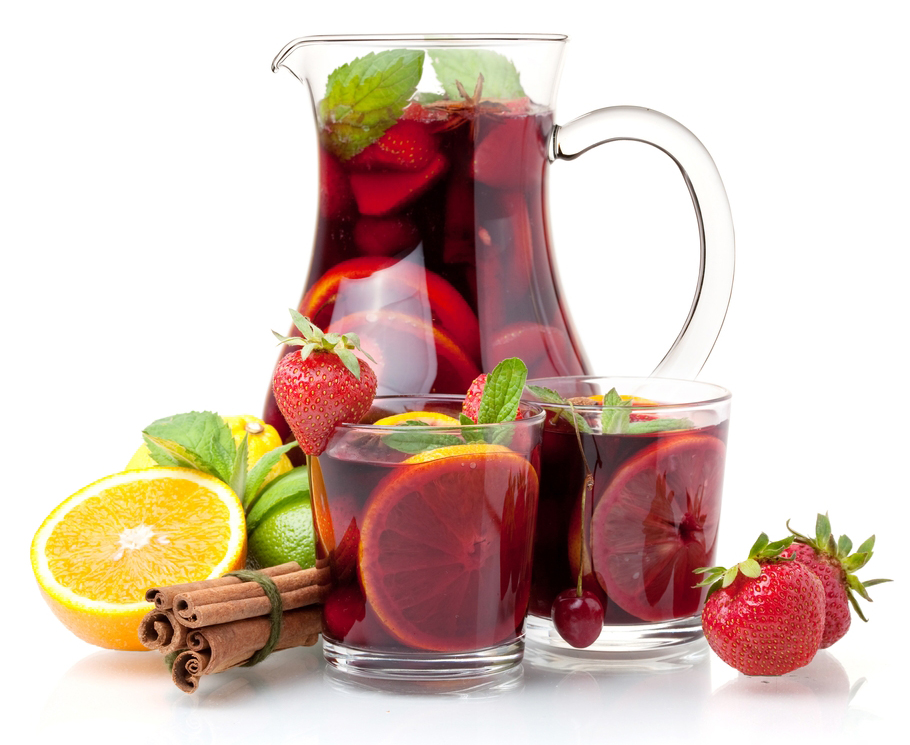
sangria (1)On the first official day of Spring, it’s maybe time to think about changing our drinking habits. Lock away the heavier, warming winter red wines and break out the lighter, fruity reds, or maybe even an odd summer white (including the Castro Martin of course!)

One of the other spring/summer options is Sangria, widely served in Spain and Portugal, but most probably first created by the Romans. As they expanded their Empire across Europe it seems that they may have used wine to sanitise their drinking water, and hence the first Sangria was created. Adding fruit and spices simply evolved out of boredom – centuries ago wine consumers didn’t have a wide selection of different varietals to chose from, and so adding fruits was merely a way of creating new flavours to enjoy.

The point is that there isn’t really any fixed ‘recipe’ for making Sangria, the only common ingredient being the wine. Of course our beloved EU paper pushers have now come up with an official definition – the simplified version is that it is an aromatised wine of less than 12% volume, that may be enhanced by natural fruit juices or extracts, and that it may be carbonised. The possibilities and permutations are therefore endless. The alcohol content can vary by anything from 4% to 12%, and in some countries it is actually made using white wine (although this might be considered odd as the word Sangria literally translates to ‘bloodletting’, which (rather grimly) implies that it is made from red wine).

In any event, Sangria provides a great way to test your ‘mixology’ this summer….

Big is beautiful? Maybe not…

January 18th, 2016 | Food & Wine

ChocolateI have lived in Galicia for more than a dozen years now, and one of my big frustrations (as a would-be chef) is the continued lack of variety in the range of fruit and veg on offer. It is very basic to say the least, and is certainly not expanding to include any ‘exotics’. When I originally left the UK, one of the big food shopping trends at that time was for ‘baby’ vegetables – everything was shrinking, albeit not in price! We were told that fruit and veg picked younger and fresher was simply more flavourful, and I think that in most instances, this was very probably true.

I’m afraid to say that here in Galicia, the exact opposite would seem to be the case – the bigger the better appears to be the general rule of thumb. Huge potatoes and carrots that are either ‘woody’or have little flavour (also potatoes are almost never sold by variety, and so exactly which ones to chose can be a bit of a lottery).

This obsession with size also seems to spill over into restaurants – Galician portion sizes can be huge. Indeed, I recently read a review on Trip Advisor whereby one consumer, sampling the ‘tasting menu’ at a local Michelin starred restaurant, complained about portion sizes, and demanded that he should be able to repeat certain courses. Obviously this was refused, and consequently the guy was completely scathing in his review.

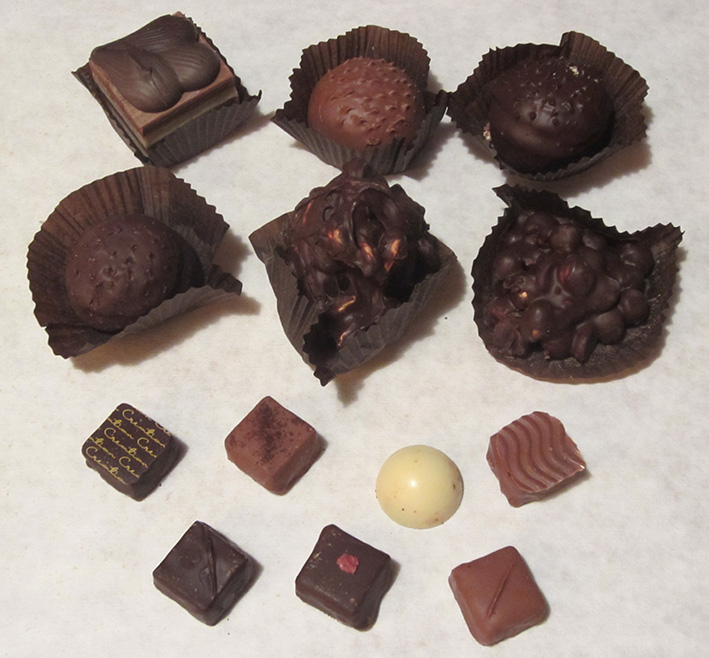
Finally hand-made chocolate. At Christmas we were lucky enough to receive a few gifts, including some had-made chocolates. One box was from a well-known producer in Catalunia, Spain, whilst a second box was from a chocolatier in Belgium. Both are shown in today’s photo – can you tell which chocolates are Spanish and which are Belgian?

Let’s celebrate!

January 6th, 2016 | Fiestas

MeatToday is yet another National Holiday in Spain – the day of the Magic Kings (Reyes Magos), known in other countries as Epiphany – the arrival of the Three Kings in the Nativity. It is celebrated in many villages, towns and cities with spectacular parades reenacting the arrival of the three kings, symbolised by the giving of sweets and small presents.

This year, certainly here in Galicia at least, it is possible that the celebrations could be a bit muted….. by the weather. Since the turn of the year we have experienced days of non-stop rain – dark, leaden skies, it has been thoroughly miserable (albeit that temperatures have been unseasonably mild). I seem to recall that this is in complete contrast to the Reyes holiday of last year, when we enjoyed sunny, blue skies during the day, but with temperatures below freezing at night.

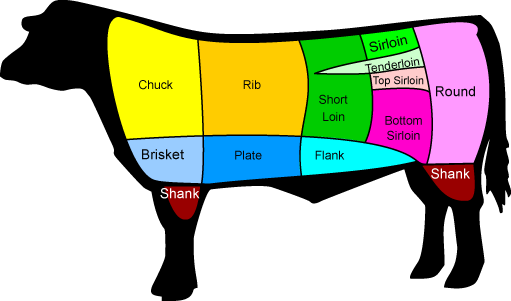
There is however, something very different that we could be celebrating at this time of year. In the U.S. it is National Meat Month. To be honest I’m not completely sure of the origins of this tradition, but it does afford Americans the excuse to enjoy even more meat than they usually do. With an average consumption of 270lbs (123kg) of meat per person per year, which is nearly three times more than the world average of just over 100lbs (46kg), you would be forgiven for thinking that the Americans are world leaders, whereas actually they take second place, behind…… Luxembourg (of all places)! In terms of the type of meat consumed in the U.S., beef and pork were tied throughout the 1950’s. Beef then became the dominant protein up until the turn of the millennium, until eventually chicken overtook it as the most consumed meat only a few years ago. No doubt Colonel Saunders will be quite thrilled!

Christmas wines

December 26th, 2015 | Food & Wine

Christmas winesIn the age of social media there appears to be a growing trend amongst wine lovers to post a photo of the wines that they have enjoyed over the Christmas holidays. I immediately thought to myself, why should I be any different? I guess it’s the time of year that you might dig around in your ‘cellar’, and dust off a couple of exceptional bottles to quaff with your special menu – wines that you generally don’t get to savour on a regular basis.

I know that I have recently preached about the virtues of albariño with turkey, so I think it only fair to point out that our Christmas lunch actually comprised a very nice sirloin of beef (with Yorkshire puddings of course), which is why we selected quite a voluptuous red wine to go with it. Roast beef is of course, far from being traditional at Christmas, but as it is not very common at all here in Spain, it therefore automatically becomes a special treat – perhaps a bit more for me than for Angela….

Cheers!

Turkey….. again!

December 14th, 2015 | Denomination

Pavo

It was only a couple of weeks ago that I wrote about the possibility of drinking Albariño with your holiday turkey – and now our denomination office appear to be sending the same message. Today they have changed the header on the official D.O. Facebook page. It is now resplendent with turkey…. Happy holidays to one and all!

Festive drinks

December 12th, 2015 | Fiestas

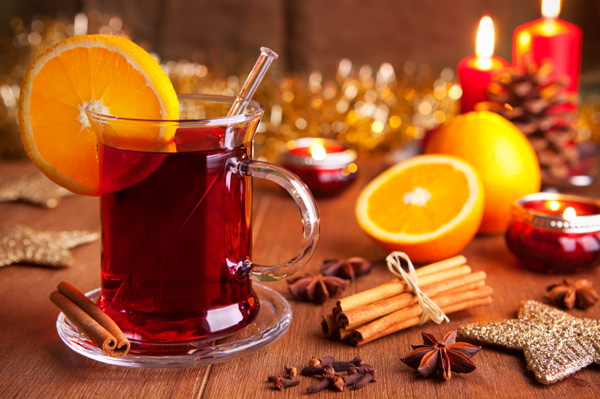
mulled wineThe choice of what you drink over the holidays may depend, to some extent, on what you are eating. Having said that I should add that I am actually a great believer in the idea of drinking the wines that you really enjoy drinking, regardless of whether they are considered the perfect match for your food. Personally, I always enjoy a nice glass of Champagne, not just over the holidays, but actually at any time of year. I don’t need an excuse…

My focus today however, is more to do with winter warmers rather than just wine, and so is perhaps aimed more at our northern hemisphere drinkers, rather than those enjoying their festive turkey bathed in warm sunshine. Those lucky enough to live in the mountains, or maybe just spending their holidays in the snow, might be sipping a hot gluhwein, or my personal favourite aprés-ski tipple, jagertee (black tea, wine, rum, brandy, orange juice & spices). Two cups of jagertee and I could conquer the Hahnenkamm!

The choice of winter drinks is endless, and is not restricted to just mulled or spiced wines – many of the recipes can also be applied to cider or ales, and then don’t forget your liqueur coffees or chocolate based drinks. The list goes on, for example you might easily be offered a choice of toddies, nogs, punches, cocktails, nordic glöggs or Olde English wassail.

Final reminders: You can still drink albariño over the holidays, and……. make sure you are stocked up on Alka Seltzer (or milk thistle)!

Festive food

December 10th, 2015 | Fiestas

[:en]Pork PieSo what will you be eating this Festive Season? Thanksgiving has come and gone, or “Turkey Day” as one of my American friends called it recently. Probably the most traditional festive lunch in the UK is still turkey, which not that long ago was considered as very much a luxury food item. Of course, these days it is much more widely available, and therefore consumers are always looking for something a bit more ‘luxurious’ to spice up this special time of year. An alternative that crops up more frequently now are the stuffed poultry variations, such as ‘turducken’ (turkey stuffed with duck and chicken). This idea, however, is not something new – in the 19th century the practice of using almost any combination of bird, stuffed one inside another, was not uncommon on the well-to-do dining tables of Europe. Anyway, as always, I digress a bit.

My point is that at this time of year we probably eat more than we should, and treat ourselves to foods and dishes that we wouldn’t normally eat during the rest of the year. For example, the British eat traditional festive desserts that can be pretty stodgy and probably quite unhealthy, consisting of heavy, almost black, treacly, steamed fruit puddings followed by equally heavy, black fruit cakes. They can feel like lead weights even before they enter the stomach!

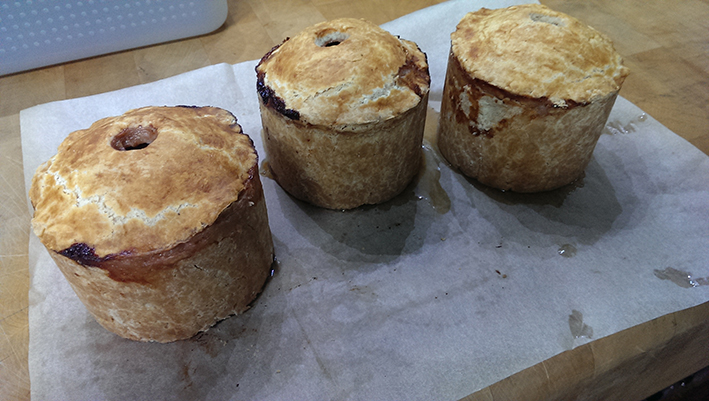
One of my own little treats (not especially associated with the festive period), is the British pork pie. Pork pie is a traditional meat pie consisting of roughly chopped pork sealed in a hot water crust pastry, and can be eaten cold as a snack or perhaps as part of a meal. As you might imagine such ‘specialist’ food items are impossible to find in Spain, and there is no Spanish equivalent that I can eat as an alternative. The only option therefore, is to make them myself. It’s a labour of love, but in my opinion, worth the effort…. My own personal Christmas treat![:es]Pork PieSo what will you be eating this Festive Season? Thanksgiving has come and gone, or “Turkey Day” as one of my American friends called it recently. Probably the most traditional festive lunch in the UK is still turkey, which not that long ago was considered as very much a luxury food item. Of course, these days it is much more widely available, and therefore consumers are always looking for something a bit more ‘luxurious’ to spice up this special time of year. An alternative that crops up more frequently now are the stuffed poultry variations, such as ‘turducken’ (turkey stuffed with duck and chicken). This idea, however, is not something new – in the 19th century the practice of using almost any combination of bird, stuffed one inside another, was not uncommon on the well-to-do dining tables of Europe. Anyway, as always, I digress a bit.

My point is that at this time of year we probably eat more than we should, and treat ourselves to foods and dishes that we wouldn’t normally eat during the rest of the year. For example, the British eat traditional festive desserts that can be pretty stodgy and probably quite unhealthy, consisting of heavy, almost black, treacly, steamed fruit puddings followed by equally heavy, black fruit cakes. They can feel like lead weights even before they enter the stomach!

One of my own little treats (not especially associated with the festive period), is the British pork pie. Pork pie is a traditional meat pie consisting of roughly chopped pork sealed in a hot water crust pastry, and can be eaten cold as a snack or perhaps as part of a meal. As you might imagine such ‘specialist’ food items are impossible to find in Spain, and there is no Spanish equivalent that I can eat as an alternative. The only option therefore, is to make them myself. It’s a labour of love, but in my opinion, worth the effort…. My own personal Christmas treat!


 [:]

Cooking by witchcraft

December 6th, 2015 | Equipment

Neff hob

I think it would be fair to say that one of my very favourite pastimes is cooking (which is quite common in the wine business). I find it not only very satisfying, but also quite therapeutic and relaxing, often listening to the radio with a glass of beer in hand.

It doesn’t how much experience you have or how many books you read on the subject, there are always new techniques to learn and new equipment to buy. In my kitchen for example, I often use a Sous Vide water bath which is really great way to preserve flavour and stop food from drying out.

Until recently I was a disciple of gas hobs and electric ovens as being the best possible combination (and to an extent I still do), but I have to confess that my head has now been turned by some powerful new witchcraft known as ‘induction’. I became frustrated by the poor layout and design of my gas hob, restricting the number, size and combination of pans that I could use – it defied logic and was very irritating. After extensive deliberation and much research, I finally decided to go induction!

It’s still early days with my new Neff hob, but wow! I have to say that I am just a little blown away. Clean, fast and responsive, I have opted for a model with two large cooking areas (that can be divided into smaller segments if needed), meaning that it works rather like a professional solid top oven range, or an Aga, whereby you more or less position pans exactly where you need them.

There is only one cautionary footnote to my tale of Seasonal joy – your pans need to be suitable for induction otherwise you will simply need to replace them……

Turkey with Albariño?

November 25th, 2015 | Fiestas

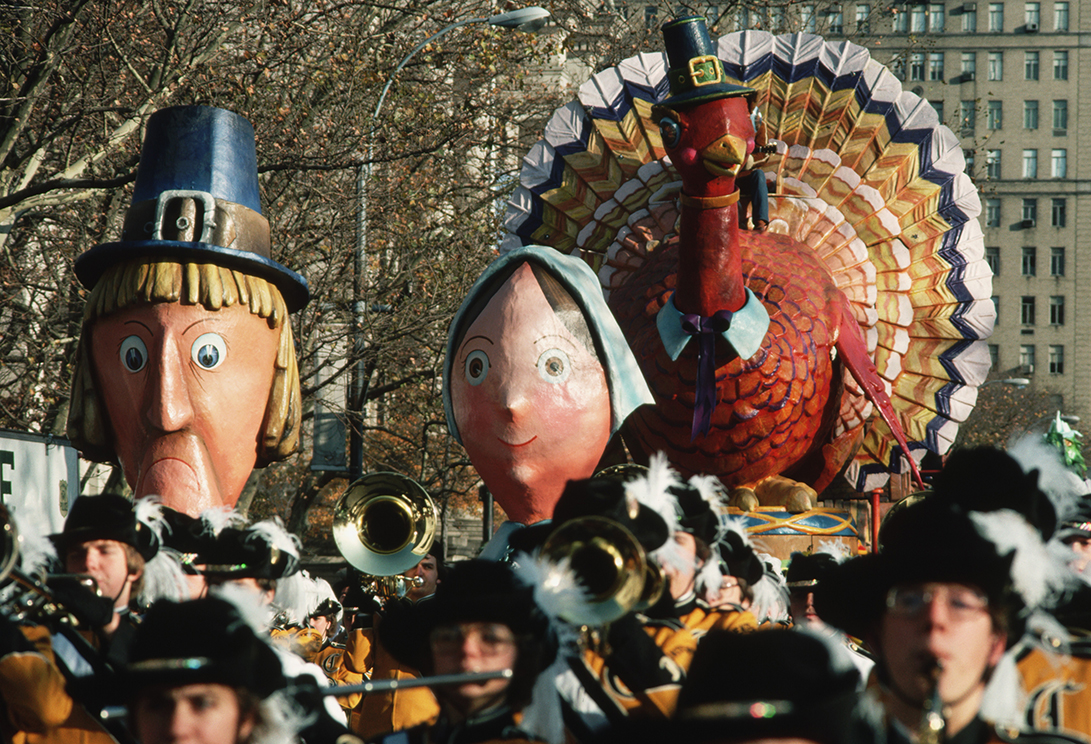
PilgrimsTomorrow is Thanksgiving, and so the obvious question arises, which wine should you drink with your turkey (or whilst watching the NFL)? Of course I could tell you that albariño is not bad with white meat, assuming that it is roasted in the traditional way and not served with some exotic sauce, but if I was to put my hand on my heart, I would have to admit that there could actually be better food/wine matches for turkey. Unfortunately, in our business, there are far too many producers who would swear blind that their particular wine is great with everything, including pumpkin pie, but I’m just not one of them!

It’s just a great pity (from our point of view) that today’s traditional Thanksgiving menu does not accurately reflect the menu of the very first Thanksgiving meal back in 1621. When the Pilgrims celebrated their first harvest and invited the local Native Americans to eat at their table, the foods on offer were almost certainly a little different, or so the historians would have us believe. Not only would they have consumed fowl such as duck, goose, swan or perhaps even turkey, but it is also suggested that they may have eaten deer that their Wampanoag guests offered up as an additional menu item. The very first harvest was apparently quite abundant and also provided the pilgrims with onions, beans, lettuce, spinach, cabbage, carrots, peas and perhaps some corn, but being in New England, it is also quite likely that some seafood might have been consumed. Mussels, lobster, bass, clams and oysters could also have been part of the feast, but regrettably not with any albariño, that didn’t arrive until a few centuries later!

Monthly Archives

Categories

ARE YOU OF LEGAL AGE? This site is intended for those of legal drinking age. By entering, you confirm that you are of legal drinking age in the country where this site is being accessed. ¿ERES MAYOR DE EDAD? Este sitio está destinado a personas en edad legal para beber alcohol. Al ingresar, confirma que tiene la edad legal para beber en el país donde se accede a este sitio.