Archive for ‘Food & Wine’

New Year Fizz

January 2nd, 2017 | Fiestas

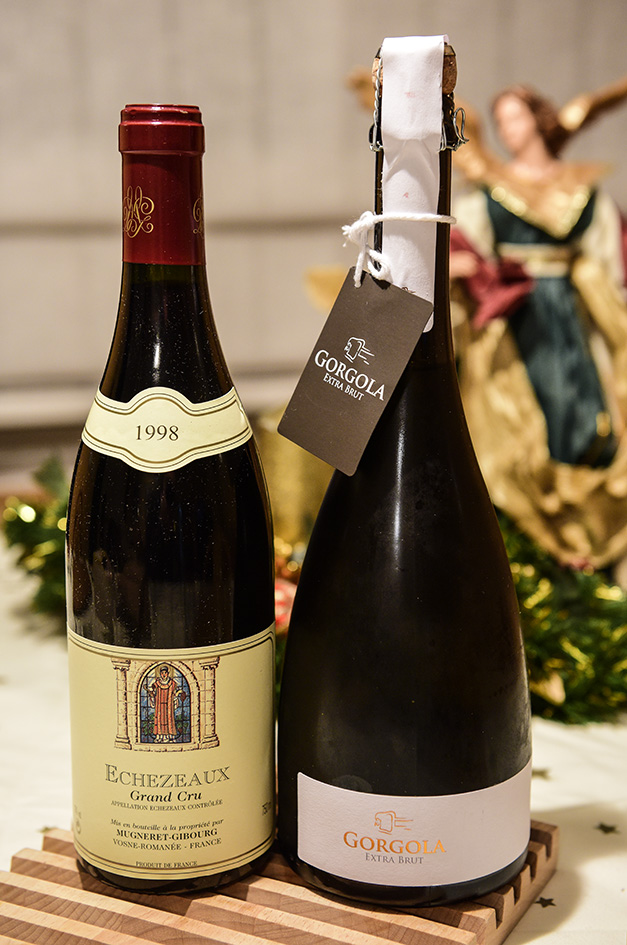
GorgolaI think it only appropriate that my first post of the New Year should be about sparkling wine, as it is very common to associate popping corks with this time of year. Without wanting to sound too arrogant I do consider myself to be something of a Champagne aficionado, and pretty much every Christmas and New Year for as long as I can remember, have always pulled the cork on a nice bottle – except for this year!

A few months ago whilst sampling a ‘wine flight’ in a good restaurant, I was served a glass of Albariño ‘espumoso’ as an aperitif. I have tasted (and actively disliked) almost every sparkling albariño that I have tried before, but I had now, finally, discovered an exception! A wine called Gorgola made by Cabana das Bolboretas. I believe that this Galician name could be something to do with the small bubbles that break the surface of the sea creating the foam (I will have to research this more).

Gorgola is made by hand, on a very small scale using very traditional Champagne methods. The bottle I tried was a 2013 ‘vintage’, made using only base wines of this single cosecha and using exclusively albariño grapes – this being the case no blending was required. It was disgorged in Spring 2016 after some 26 months of secondary fermentation/bottle ageing. Classified as ‘Extra Brut’, it was very dry (between 3g and 6g residual sugar), and so there was no discernible sweetness.

Technically a ‘Blanc de Blancs’, it had a dry, almost flinty, mineral fruit, but then a unique characteristic that made it quite recognisable as an albariño to the discerning palate. It had the typical salty zest on the tongue, that gave it a special character, and in my opinion, certainly worth giving a try.

(By the way, the Echezeaux 1998, Domaine Mugneret-Gibourg wasn’t too shabby either!)

Christmas wine

December 27th, 2016 | Fiestas

BatardFor the last few years I have always cooked something slightly less traditional for Christmas lunch – often a nice piece of roast beef, which is not a very common dish here in Spain. In a butcher’s shop for example, a piece of beef for roasting is often simply described as ‘rosbif’, and that is how you would order it. There would be no mention of the cut that you might require – rib, sirloin, rump etc., simply rosbif.

This year, as a nod to the British tradition, I decided to cook Turkey, albeit that I did cheat a little – my bird was pre-stuffed with chestnut and macadamia nuts (to be honest, I was quite surprised to find this option). Preceded by seafood and a bit of smoked salmon, the turkey actually turned out quite well, even if I say so myself!

OK, so what about wine? Quite naturally we would usually promote our albariño with turkey, but I’m afraid to say that special occasions sometimes require something a bit different. I recently found a very good sparkling albariño (the first that I have really enjoyed), but I will write more about that in the New Year. Meanwhile, a dusty corner of my cellar turned up a very old bottle white Burgundy, very much in danger of being well past its best. Bâtard-Montrachet, Domaine Paul Pernot 1990 – given to me by the man himself many years ago.

After a bit of surgery with the cork (finally removed completely intact), the wine, as one might imagine, was a deep yellow/gold…. but not one bit oxidised I’m happy to say. The nose was full and fat, dominated by a slightly caramelised, toasted oak and honey. On the palate one of the most surprising factors was that despite all the rich, full, honeyed fruit flavours, there was still an underlying touch of minerality. It supported my turkey ‘gravy’ very well, and I thought was especially good with the smoked salmon.

White wine with red meat?

December 12th, 2016 | Food & Wine

[:en]PavoI have long maintained that the enjoyment and appreciation of food and wine is very much a matter of personal taste. Thankfully we are not all the same and have differing opinions on many things, including how we judge different flavour combinations and how well they may or may not work together. Of course, there are no definitive rules about the ‘marriage’ of food and wine, and so the final decision always comes down to the individual palate.

Even if I don’t always agree with the recommendations that I am offered, or read about, I can often understand the logic and reasoning behind many suggestions. On occasions however, there are some ideas that simply leave me scratching my head in puzzlement.

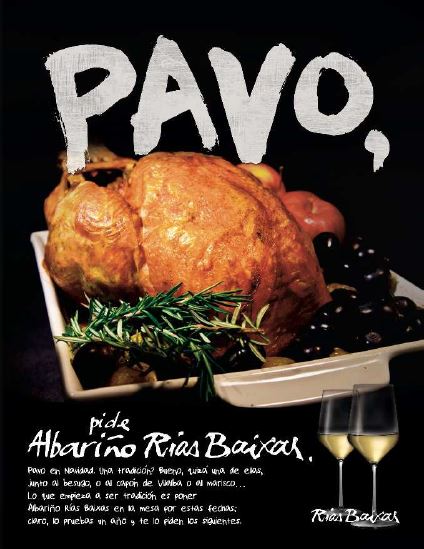
Our own Denomination for example, has been running a fabulous series of adverts highlighting the food types that can be recommended with our very own albariños. Some quite obvious, such as fish, seafood, sushi (and recently turkey). Others slightly less obvious, including meat and Mexican food. Finally, there is at least one that leaves me just a bit baffled – tartare. Initially, I had assumed that the recommendation was for a tartare of salmon and albariño combination, but on closer examination it proved that I was wrong – it is a tartare of red meat.

Only yesterday, on Facebook, I learned about a new book entitled “How to drink like a Billionaire”, in which the author Mark Oldman claims that “the weight of a richer style albariño stands up to the meaty goodness of a burger”. Well, that’s his opinion, and he’s entitled to it, but personally I don’t agree…. Perhaps he could be thinking about Californian albariño that weighs in at 13 or 14% alcohol – ripe, full bodied, with plenty of alcohol to provide extra mouth-feel? My own idea is however, that our own wines from Galicia could prove to be just a bit thin and acidic for this pairing. To be honest they simply lack the weight and intensity, but more importantly, the tannin to support a juicy red meat. It is, for example, the tannin in red wine that bonds with and softens the fat molecules in the meat helping to release the flavour. Albariño? I am not so sure.

On the other hand, I can confidently recommend Castro Martin albariño with your Christmas Turkey![:es]PavoI have long maintained that the enjoyment and appreciation of food and wine is very much a matter of personal taste. Thankfully we are not all the same and have differing opinions on many things, including how we judge different flavour combinations and how well they may or may not work together. Of course, there are no definitive rules about the ‘marriage’ of food and wine, and so the final decision always comes down to the individual palate.

Even if I don’t always agree with the recommendations that I am offered, or read about, I can often understand the logic and reasoning behind many suggestions. On occasions however, there are some ideas that simply leave me scratching my head in puzzlement.

Our own Denomination for example, has been running a fabulous series of adverts highlighting the food types that can be recommended with our very own albariños. Some quite obvious, such as fish, seafood, sushi (and recently turkey). Others slightly less obvious, including meat and Mexican food. Finally, there is at least one that leaves me just a bit baffled – tartare. Initially, I had assumed that the recommendation was for a tartare of salmon and albariño combination, but on closer examination it proved that I was wrong – it is a tartare of red meat.

Only yesterday, on Facebook, I learned about a new book entitled “How to drink like a Billionaire”, in which the author Mark Oldman claims that “the weight of a richer style albariño stands up to the meaty goodness of a burger”. Well, that’s his opinion, and he’s entitled to it, but personally I don’t agree…. Perhaps he could be thinking about Californian albariño that weighs in at 13 or 14% alcohol – ripe, full bodied, with plenty of alcohol to provide extra mouth-feel? My own idea is however, that our own wines from Galicia could prove to be just a bit thin and acidic for this pairing. To be honest they simply lack the weight and intensity, but more importantly, the tannin to support a juicy red meat. It is, for example, the tannin in red wine that bonds with and softens the fat molecules in the meat helping to release the flavour. Albariño? I am not so sure.

On the other hand, I can confidently recommend Castro Martin albariño with your Christmas Turkey![:]

Yet another Savagnin

October 28th, 2016 | Food & Wine

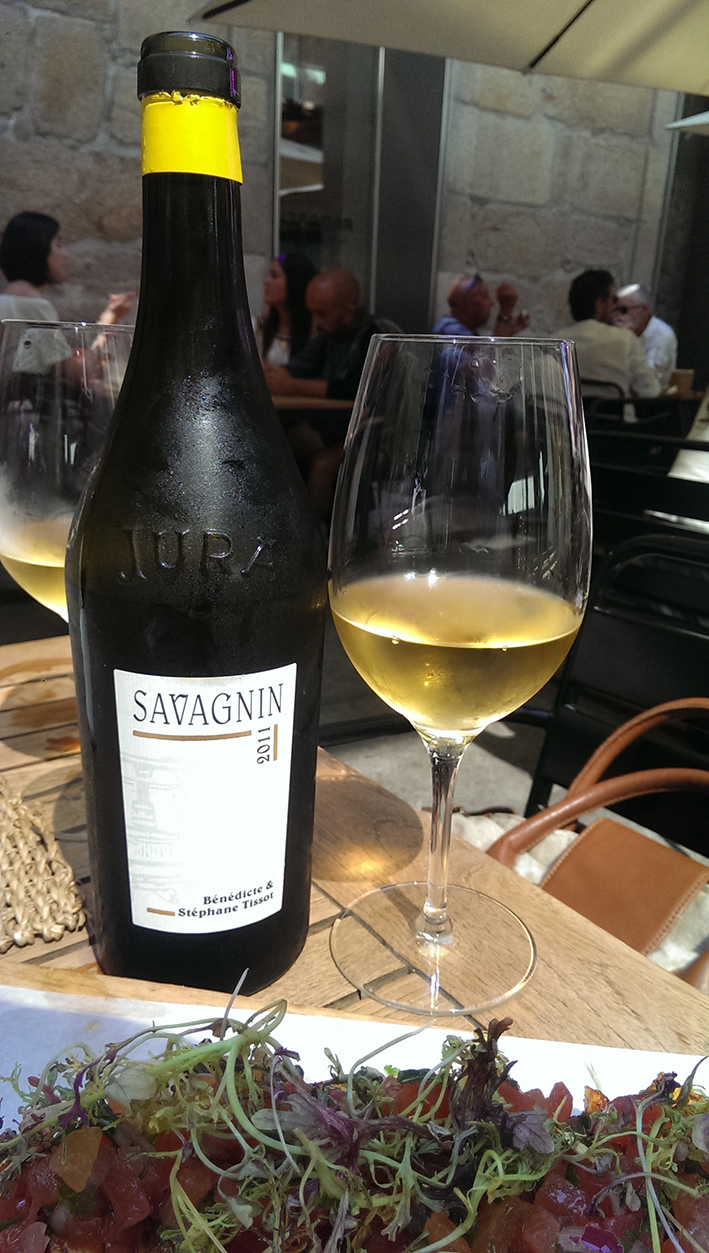
Jura - TissotSeveral weeks ago (before the harvest), I made a post about finding a Savagnin Blanc from the Jura region, here in a local Galician restaurant. It was fabulous, as regular sherry drinkers, we really enjoyed it. Imagine my surprise therefore, to find yet another restaurant in Pontevedra, selling the same wine, same vintage, but from a different producer. OK, so it was not a true comparative tasting, but I simply couldn’t resist the opportunity to taste another example. (Opportunities like this can be rare and have to be seized).

2011 Arbois Savagnin, Domaine Bénédicte & Stéphan Tissot: Certainly this wine was not quite as ‘rustic’ as the first example we tasted, perhaps being a bit more pure and refined. It still had a lovely concentrated, tangy fruit, again very much in a lively sherry style, with hints of walnut, but this time a more pronounced saline, salt-lick character. This is a lovely clean and very stylish wine.

Of course, there is one interesting thought arising from this. Normally, when we encounter this salty character (such as in our very own albariño or perhaps a fresh manzanilla from Sanlúcar de Barrameda), we usually attribute this to the proximity of the sea or ocean. In the Jura region of France this couldn’t be further from the truth (or perhaps I should say, further from the sea!). Completely land-locked between Burgundy and Switzerland it is miles from any salt water or ocean influence – the nearest sea is probably the Mediterranean which is some 350km (220 miles) south of the region. I guess therefore, that this apparent saltiness can only be attributed to a combination of factors – grape, soil and climate. In modern tasting vocabulary it is probably just a slight extension to the expression ‘minerality’.

Savagnin ~ the Australian albariño

August 29th, 2016 | Food & Wine

[:en]Jura - BornardSeveral years ago there was a big scandal in Australia when it was discovered that the ‘Albariño’ that they had planted, was not in fact albariño, but was actually the savagnin blanc grape variety most commonly found in the Jura region of northeast France. The error was committed by Australia’s very own wine research organisation, and was uncovered whilst we were visiting Australia back in 2009. As a result we unwittingly found ourselves at the centre of a good deal of media attention as the Australian wine press clamoured to get the oinion of some ‘authentic’ albariño producers!

The reason I mention this now is because we actually discovered a savagnin on the wine list of a local restaurant, and so, quite naturally we jumped at the chance to try it. The Côtes du Jura Savagnin ‘Les Marnes’ 2011, from Domaine Philippe Bornard, did not disappoint. It’s perhaps an odd thing to say, but this is a wine for Manzanilla and Fino sherry drinkers who enjoy the salty, nutty flavours originating from the flor that grows over the wine in sherry casks. In the Jura they call this the ‘sous voile’ method whereby a layer of yeast covering the wine produces a very similar end result. Although this wine is not completely ‘bright’, and has a rustic, slightly oxidative character, it is still absolutely delicious. Multi-layered – smoky, salty, nutty, but with plenty of stone fruit, a fresh acidity and just a touch of spice. It’s a wine that just keeps coming, is extremely complex, and to be fair, is probably something of an acquired taste that might not appeal to every palate. Suffice to say that we enjoyed it![:es]Jura - BornardSeveral years ago there was a big scandal in Australia when it was discovered that the ‘Albariño’ that they had planted, was not in fact albariño, but was actually the savagnin blanc grape variety most commonly found in the Jura region of northeast France. The error was committed by Australia’s very own wine research organisation, and was uncovered whilst we were visiting Australia back in 2009. As a result we unwittingly found ourselves at the centre of a good deal of media attention as the Australian wine press clamoured to get the oinion of some ‘authentic’ albariño producers!

The reason I mention this now is because we actually discovered a savagnin on the wine list of a local restaurant, and so, quite naturally we jumped at the chance to try it. The Côtes du Jura Savagnin ‘Les Marnes’ 2011, from Domaine Philippe Bornard, did not disappoint. It’s perhaps an odd thing to say, but this is a wine for Manzanilla and Fino sherry drinkers who enjoy the salty, nutty flavours originating from the flor that grows over the wine in sherry casks. In the Jura they call this the ‘sous voile’ method whereby a layer of yeast covering the wine produces a very similar end result. Although this wine is not completely ‘bright’, and has a rustic, slightly oxidative character, it is still absolutely delicious. Multi-layered – smoky, salty, nutty, but with plenty of stone fruit, a fresh acidity and just a touch of spice. It’s a wine that just keeps coming, is extremely complex, and to be fair, is probably something of an acquired taste that might not appeal to every palate. Suffice to say that we enjoyed it!


 [:]

In the middle of the Med

July 27th, 2016 | Business

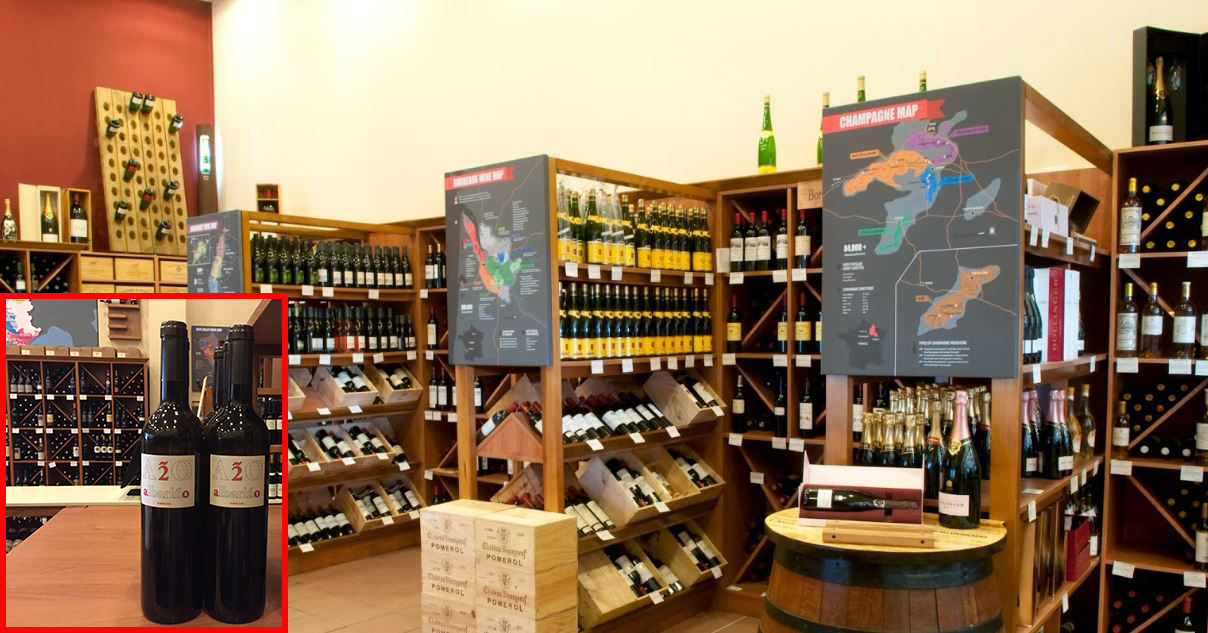
Farsons wine shopNot only do our wines appear on various cruise ships around the Mediterranean, but now they are also available on dry land, in the middle of the Med on the island of Malta. Historically one of Europe’s most strategic islands, located between Sicily and the North African coast. Over the centuries it has fallen under the rule of many a different regime and/or country including the Romans, Phoenecians. Moors, Spanish, French and the British, before finally achieving independence in 1964.

Our new customer – the Farsons Group, is not only a wine import company, but also owns a large brewery, manages some very well-known food franchises, and is an important food importer and distributor on the island. We are naturally quite delighted that such an important business has decided to represent our wines.

Of course , with it’s warm Mediterranean climate Malta is the perfect place to enjoy a chilled glass of albariño this summer (or any summer for that matter)!

Sad but true

June 27th, 2016 | Food & Wine

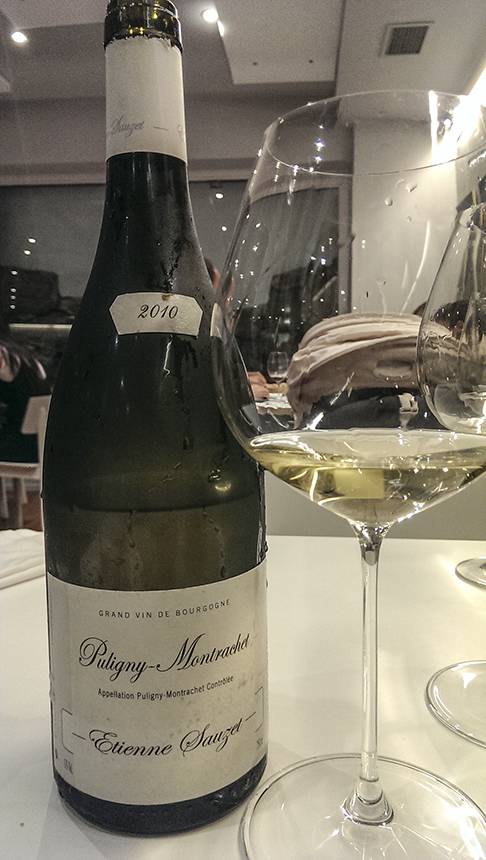
[:en]Sauzet 2010The other day I went out for lunch – not very exciting or unusual I have to admit….. but I went to a ‘Vinoteca’ in Pontevedra (our local town), and was more than delighted to discover a rather interesting wine list that immediately transported me back to my days as a wine buyer. Of course I have found one or two other places that offer a more varied selection than normal, but in this part of the world the are few and far between, which is why I feel compelled to write about them.

Under normal circumstances, and quite understandably, local restaurant wine lists are usually dominated by local wines (a fact quite common to many a wine producing area around the world). That’s fine if you’re a visitor and want to sample the local cuisine and accompanying wines, but if you’re a resident, it can become a little boring and predictable, and that’s why I get just a little excited when I discover something slightly unusual (it doesn’t take much these days!).

As I entered the restaurant there was a display of old (empty) bottles, including quite a few Burgundy producers that I knew, who’s Domaines I had visited, and who’s wines I had bought over the years. Michel Lafarge (Volnay), Etienne Sauzet (Puligny), Alain Michelot (Nuits St Georges), François Raveneau (Chablis), to name but a few. The memories came flooding back, even by just seeing the bottles!

By the time I made my selection, the cork had been pulled, and that first whiff of the bouquet – well, I had been transported to another planet. I had almost forgotten how good a well-made, mature white burgundy could be. As our menus are dominated by fish and seafood I had selected a simple, generic Puligny Montrachet 2010 from one of my favourite producers in the village, Domaine Etienne Sauzet (the others being Jean-Marc Boillot, Paul Pernot and Domaine Carillon). The 2010 vintage was perhaps overshadowed by 2009, but after a difficult flowering, a poor summer and consequently small harvest, the best producers still managed to make some excellent wines. In a classic white Burgundy style they have a firm acidity, are succulent and elegant without being over-concentrated – 2010 was perfectly suited to the style of Puligny (rather than say the slightly richer, fatter wines of Chassagne or Meursault).

I don’t even remember the food that I ate because I was so ‘lost’ in the wine (and a few memories)….[:es]Sauzet 2010The other day I went out for lunch – not very exciting or unusual I have to admit….. but I went to a ‘Vinoteca’ in Pontevedra (our local town), and was more than delighted to discover a rather interesting wine list that immediately transported me back to my days as a wine buyer. Of course I have found one or two other places that offer a more varied selection than normal, but in this part of the world the are few and far between, which is why I feel compelled to write about them.

Under normal circumstances, and quite understandably, local restaurant wine lists are usually dominated by local wines (a fact quite common to many a wine producing area around the world). That’s fine if you’re a visitor and want to sample the local cuisine and accompanying wines, but if you’re a resident, it can become a little boring and predictable, and that’s why I get just a little excited when I discover something slightly unusual (it doesn’t take much these days!).

As I entered the restaurant there was a display of old (empty) bottles, including quite a few Burgundy producers that I knew, who’s Domaines I had visited, and who’s wines I had bought over the years, Michel Lafarge (Volnay), Etienne Sauzet (Puligny), Alain Michelot (Nuits St Georges), François Raveneau (Chablis), to name but a few. The memories came flooding back, even by just seeing the bottles!

By the time I made my selection, the cork had been pulled, and that first whiff of the bouquet – well, I had been transported to another planet. I had almost forgotten how good a well-made, mature white burgundy could be. As our menus are dominated by fish and seafood I had selected a simple, generic Puligny Montrachet 2010 from one of my favourite producers in the village, Domaine Etienne Sauzet (the others being Jean-Marc Boillot, Paul Pernot and Domaine Carillon). The 2010 vintage was perhaps overshadowed by 2009, but after a difficult flowering, a poor summer and consequently small harvest, the best producers still managed to make some excellent wines. In a classic white Burgundy style they have a firm acidity, are succulent and elegant without being over-concentrated – 2010 was perfectly suited to the style of Puligny (rather than say the slightly richer, fatter wines of Chassagne or Meursault).

I don’t even remember the food that I ate because I was so ‘lost’ in the wine (and a few memories)….[:]

‘En rama’, sherry in the raw

June 22nd, 2016 | Food & Wine

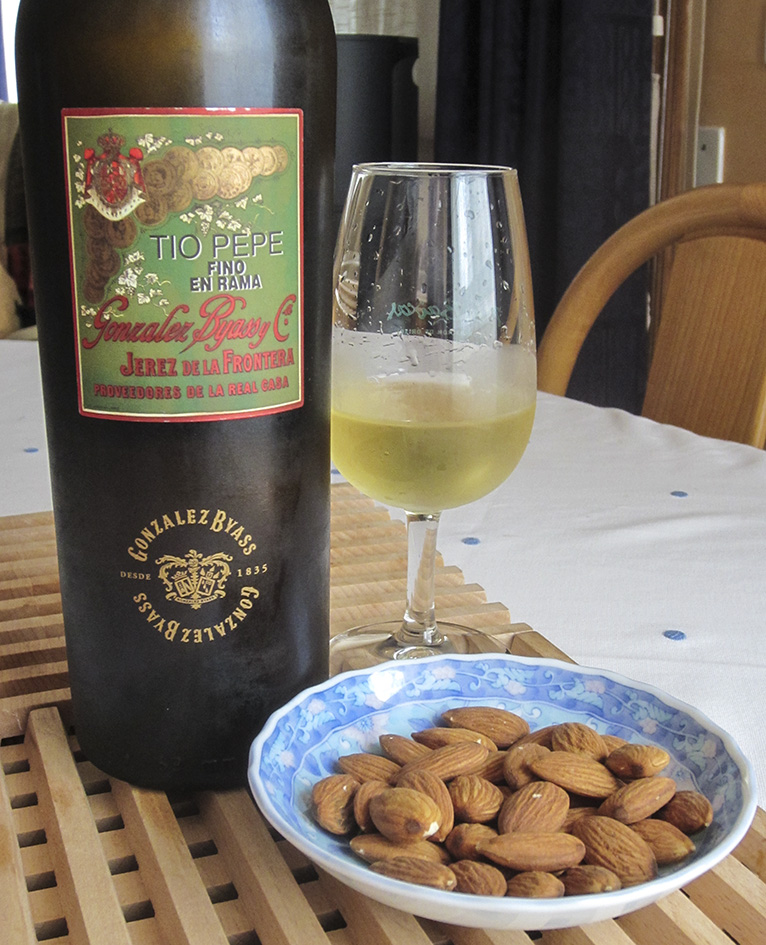
Tio Pepe en RamaAn old mate of mine, Joe Wadsack, recently visited Jerez, and was consequently waxing lyrical about some of the great wines that he’d tasted there – and quite right too. Sherry used to be considered the drink of the older generation – the sort of thing that your grandma might enjoy before her Christmas lunch. These days it’s become quite a bit more hip…..

Don’t get me wrong, sherry is still something of an acquired taste, and would not necessarily form a part of anyone’s introduction to wine drinking. It’s probably something that features later in a wine drinker’s career, when the palate has mellowed and become perhaps, well, a little more discerning.

From Fino to Palo Cortado, there’s a very wide range of styles and flavours to chose from, and the vocabulary used to describe them can be just as wide – salty, nutty, yeasty, bready, smoky, the list goes on.

Following the recommendation of one of Joe’s best friends, Victoria Moore (Daily Telegraph), I decided to buy a few bottles of a limited edition sherry from Gonzalez Byass. Their Tio Pepe Fino ‘en rama’ 2016 has just been released, and is completely delicious. Drawn straight from the barrel without fining or filtration, like many dry sherries it has to be drunk whilst it’s still young and fresh. It’s salty, it’s savoury, it’s yeasty, it’s nutty, it’s, well, superb and really needs to be tasted.

Of course, living in Spain makes access to the limited stock (of just 60 casks a year), just that bit easier, and dare I say, a whole lot cheaper. So if you can find it, then it’s certainly worth grabbing a bottle, or maybe two.

International Sushi Day

June 18th, 2016 | Food & Wine

[:en]Sushi DayToday is International Sushi Day! Grab that bottle of Castro Martin albariño – you won’t be disappointed….


 [:es]Sushi DayToday is International Sushi Day! Grab that bottle of Castro Martin albariño – you won’t be disappointed….[:]

Hot spice!

June 16th, 2016 | Food & Wine

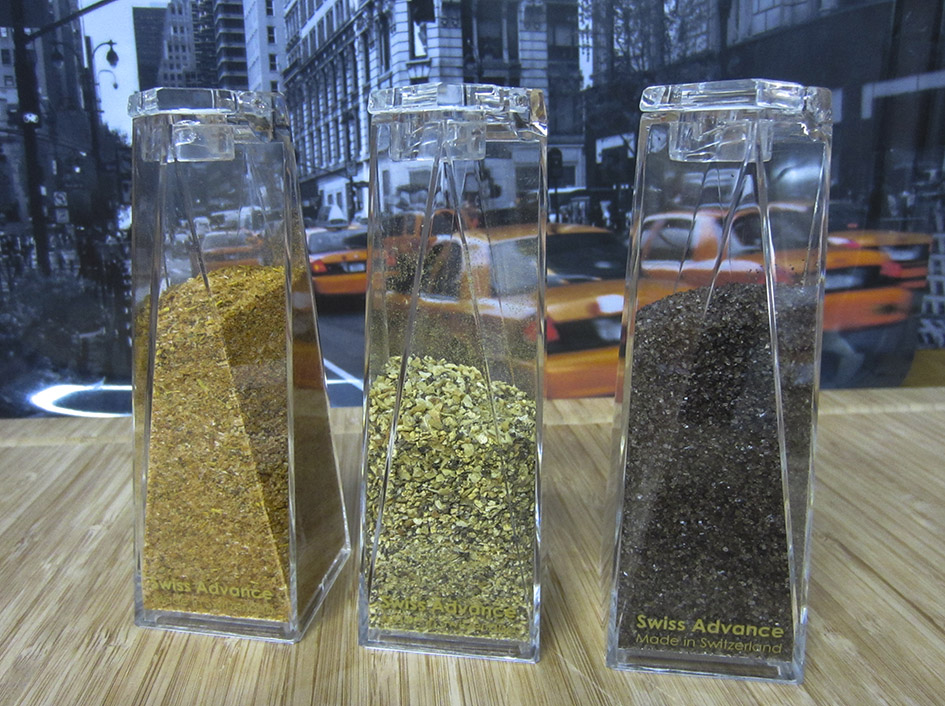
[:en]CondimentsOn our recent trip to Seattle we visited a diner (actually quite a good restaurant) called the Steelhead Diner, very near to the famous Pike’s market. Quite unusually these days, they had condiments on the table – salt and pepper – but not your run-of-the-mill salt and pepper. For a start the salt was darker in colour than the pepper, but fortunately both were clearly labelled. Smoked salt and garlic pepper (although that is not the full description which I’m afraid I don’t remember). They were both unusual and delicious, and fortunately both were available from a spice shop in the adjacent market. We bought a bag of each, wrapped them in several layers (as they were quite pungent), and packed them in our hand luggage. This was our first mistake….. Both in Seattle and New York the airport security picked them up on x-ray, bags were searched and we had to explain these mysterious powders to U.S. customs officers.

When we eventually arrived back in Spain I at least had the presence of mind to temporarily store them in air-tight glass containers, until I could find some suitable shakers for the table. Now, in Galicia we already have a humidity problem, whereby it’s virtually impossible to keep a pot of free running salt, and so I decided to buy something special, from Switzerland, in order to keep them dry and in good condition. Air tight condiment pots designed for mountain trekking and climbing – these should do the job!

When these fancy spice pots arrived I used a small funnel to fill them, but when one large grain of the pepper spilled onto the work surface I almost instinctively put it on my tongue to try it – mistake number two. This was the hottest thing that I had ever put in my mouth – and this is coming from someone who much prefers their Indian food ‘tear-inducingly’ hot. My mouth was on fire (I can only imagine like eating a super hot chilli), and so I rushed to the fridge and took several large swigs of cold milk direct from the bottle. Just as well that we had no tastings programmed because I  really couldn’t feel my tongue!

The final chapter of my spice story is that not only did we have to put the glass container (that I had used to store these condiments) through the dishwasher, but we also had to wash out the entire cupboard just to get rid of the smoked spice smell. Powerful stuff…..[:es]CondimentsOn our recent trip to Seattle we visited a diner (actually quite a good restaurant) called the Steelhead Diner, very near to the famous Pike’s market. Quite unusually these days, they had condiments on the table – salt and pepper – but not your run-of-the-mill salt and pepper. For a start the salt was darker in colour than the pepper, but fortunately both were clearly labelled. Smoked salt and garlic pepper (although that is not the full description which I’m afraid I don’t remember). They were both unusual and delicious, and fortunately both were available from a spice shop in the adjacent market. We bought a bag of each, wrapped them in several layers (as they were quite pungent), and packed them in our hand luggage. This was our first mistake….. Both in Seattle and New York the airport security picked them up on x-ray, bags were searched and we had to explain these mysterious powders to U.S. customs officers.

When we eventually arrived back in Spain I at least had the presence of mind to temporarily store them in air-tight glass containers, until I could find some suitable shakers for the table. Now, in Galicia we already have a humidity problem, whereby it’s virtually impossible to keep a pot of free running salt, and so I decided to buy something special, from Switzerland, in order to keep them dry and in good condition. Air tight condiment pots designed for mountain trekking and climbing – these should do the job!

When these fancy spice pots arrived I used a small funnel to fill them, but when one large grain of the pepper spilled onto the work surface I almost instinctively put it on my tongue to try it – mistake number two. This was the hottest thing that I had ever put in my mouth – and this is coming from someone who much prefers their Indian food ‘tear-inducingly’ hot. My mouth was on fire (I can only imagine like eating a super hot chilli), and so I rushed to the fridge and took several large swigs of cold milk direct from the bottle. Just as well that we had no tastings programmed because I  really couldn’t feel my tongue!

The final chapter of my spice story is that not only did we have to put the glass container (that I had used to store these condiments) through the dishwasher, but we also had to wash out the entire cupboard just to get rid of the smoked spice smell. Powerful stuff…..[:]

Monthly Archives

Categories

ARE YOU OF LEGAL AGE? This site is intended for those of legal drinking age. By entering, you confirm that you are of legal drinking age in the country where this site is being accessed. ¿ERES MAYOR DE EDAD? Este sitio está destinado a personas en edad legal para beber alcohol. Al ingresar, confirma que tiene la edad legal para beber en el país donde se accede a este sitio.