

Archive for ‘Bodega’

Harvest 2015 – Day 2

September 12th, 2015 | Bodega
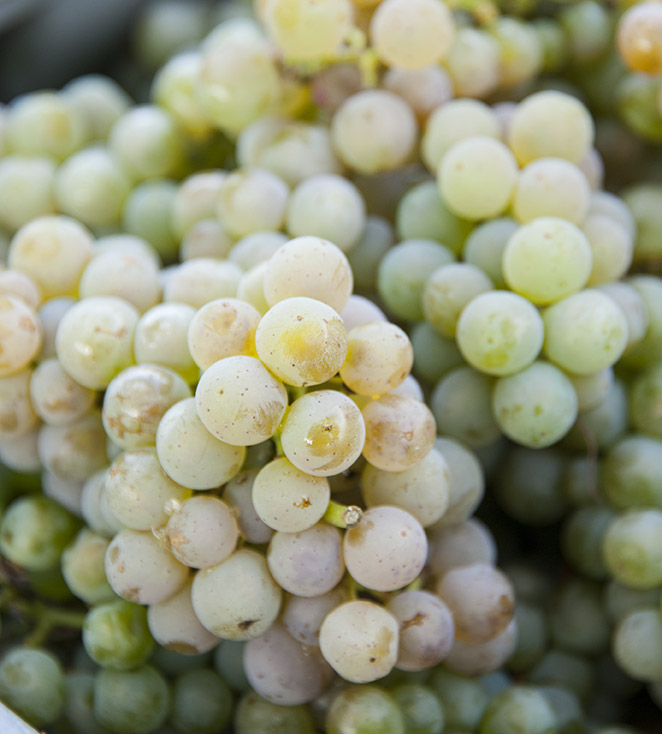
2015 healthy fruitFriday 11th September – Well, the good news today is that the sun was shining from the moment that it appeared over the horizon, but the question, as always was, how long would it last? The only thing we can do in these circumstances is to “make hay while the sun shines” and pick as much fruit as we can.

The first part of the day was not quite as ‘fluid’ (if you’ll pardon the pun) as the previous day had been, and somehow seemed a bit more disjointed – just not quite as smooth. However, by lunch we had already made a couple of pressings, and the pace and fluidity started to pick up from there. By early evening we had grapes arriving by the lorry load, and the presses were struggling to keep up with the flow, or perhaps I should say cascade. Our bodega team was working as hard as they could, but there was a brief moment, mid-evening, when we had to make suppliers wait to unload their vehicles – the reception was pretty much full to capacity.

By 10 or 11pm order had been restored, and all that remained was to clear the backlog of pressings – there was no doubt that this was going to a a long night…. and for good reason. If yesterday had been a record day for volume, then I was amazed to calculate that yesterday’s record had been smashed by as much as 20%! Fran and his team who work on the presses, will certainly deserve a good night’s sleep when they finish (or should that be day’s sleep?)2015 healthy fruitFriday 11th September – Well, the good news today is that the sun was shining from the moment that it appeared over the horizon, but the question, as always was, how long would it last? The only thing we can do in these circumstances is to “make hay while the sun shines” and pick as much fruit as we can.

The first part of the day was not quite as ‘fluid’ (if you’ll pardon the pun) as the previous day had been, and somehow seemed a bit more disjointed – just not quite as smooth. However, by lunch we had already made a couple of pressings, and the pace and fluidity started to pick up from there. By early evening we had grapes arriving by the lorry load, and the presses were struggling to keep up with the flow, or perhaps I should say cascade. Our bodega team was working as hard as they could, but there was a brief moment, mid-evening, when we had to make suppliers wait to unload their vehicles – the reception was pretty much full to capacity.

By 10 or 11pm order had been restored, and all that remained was to clear the backlog of pressings – there was no doubt that this was going to a a long night…. and for good reason. If yesterday had been a record day for volume, then I was amazed to calculate that yesterday’s record had been smashed by as much as 20%! Fran and his team who work on the presses, will certainly deserve a good night’s sleep when they finish (or should that be day’s sleep?)
Harvest 2015 – Day 1

September 11th, 2015 | Bodega

First grape mustThursday 10th September – When we opened our shutters this morning, the weather was pretty much as predicted – cloudy, cooler, but most importantly, dry. As I made my commute to the bodega, the temperature was registering about 15°C (59°F), and there was a mist hanging over much of the Salnés Valley. Of course I knew that this was only temporary, and that once the sun broke through, conditions would be good for harvesting.

By lunchtime the first two presses of the day had been loaded, as the grapes appeared to arrive faster than ever (all credit to our highly organised teams). Inevitably we couldn’t wait to taste the grape must as the first drops fell from the first pressing. Our suspicions surrounding the 2015 vintage seemed to be correct – quite a concentrated, viscose juice, with a lovely floral fruit and our usual piercing acidity to provide us with the required balance for a fabulous albariño.

Taking advantage of the good weather we decided to press as much fruit as we could handle, and consequently there was absolutely no break in the flow of fruit entering the cellar. Fortunately, by starting the presses early, our systems seemed to work quite well, and there were virtually no delays at any point of the day. The result was a record day of pressing – the biggest day in recent history (certainly since I started keeping my own records in 2002). Our plan is for another big day tomorrow to gather as much fruit as we can before any change in the weather.

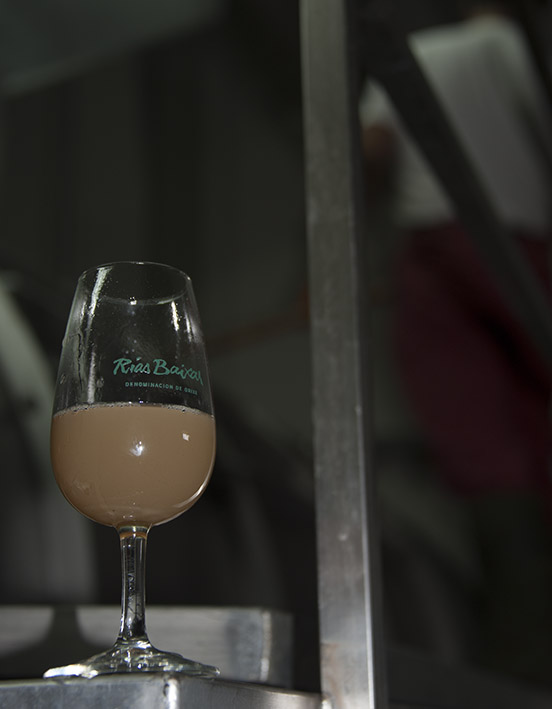
By the way, our picture shows the very first grape must of 2015 (and yes, it is really that colour when it is first pressed!)First grape mustThursday 10th September – When we opened our shutters this morning, the weather was pretty much as predicted – cloudy, cooler, but most importantly, dry. As I made my commute to the bodega, the temperature was registering about 15°C (59°F), and there was a mist hanging over much of the Salnés Valley. Of course I knew that this was only temporary, and that once the sun broke through, conditions would be good for harvesting.

By lunchtime the first two presses of the day had been loaded, as the grapes appeared to arrive faster than ever (all credit to our highly organised teams). Inevitably we couldn’t wait to taste the grape must as the first drops fell from the first pressing. Our suspicions surrounding the 2015 vintage seemed to be correct – quite a concentrated, viscose juice, with a lovely floral fruit and our usual piercing acidity to provide us with the required balance for a fabulous albariño.

Taking advantage of the good weather we decided to press as much fruit as we could handle, and consequently there was absolutely no break in the flow of fruit entering the cellar. Fortunately, by starting the presses early, our systems seemed to work quite well, and there were virtually no delays at any point of the day. The result was a record day of pressing – the biggest day in recent history (certainly since I started keeping my own records in 2002). Our plan is for another big day tomorrow to gather as much fruit as we can before any change in the weather.

By the way, our picture shows the very first grape must of 2015 (and yes, it is really that colour when it is first pressed!)

When is a holiday not a holiday?

August 23rd, 2015 | Bodega

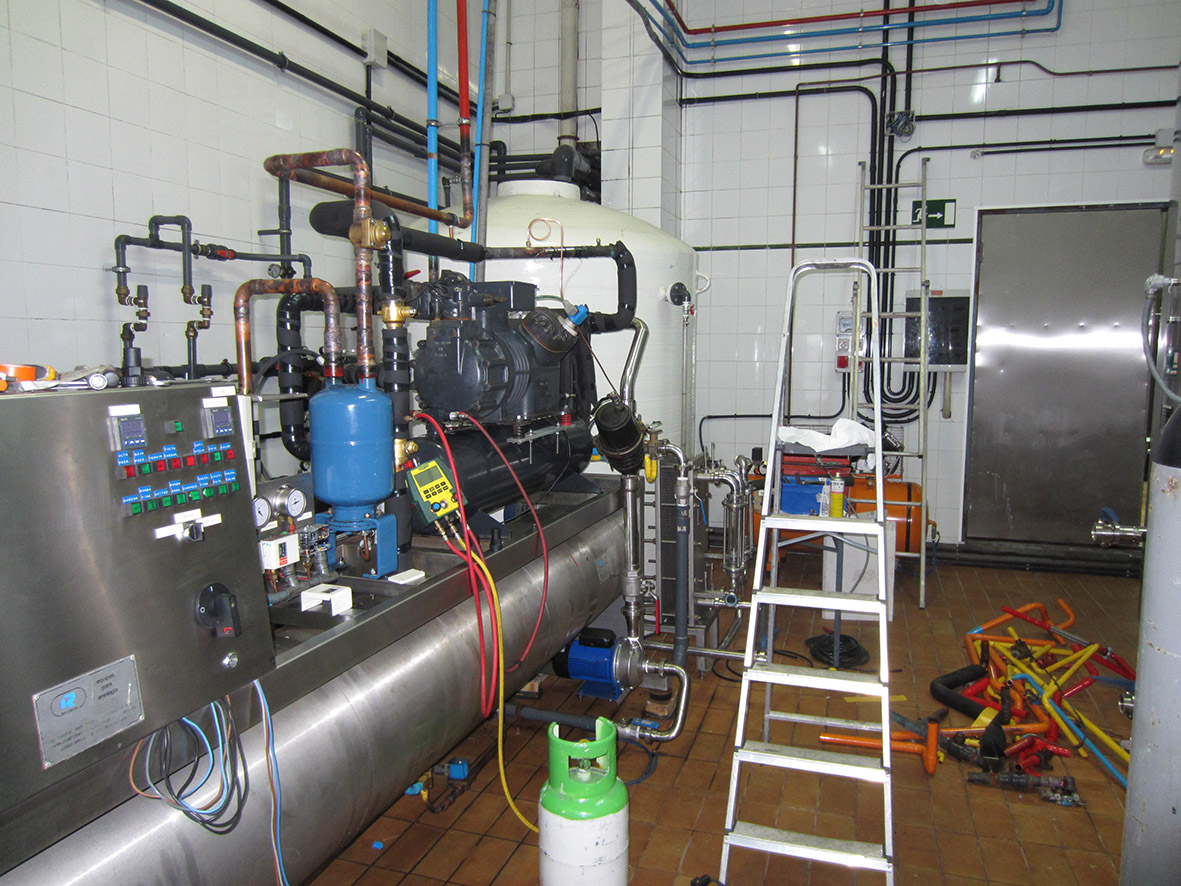
Cold machineLast week the bodega was closed for a short break before our busiest time of year. At this stage there is little that can be done in the vineyards, and so we take advantage to give our team a chance to re-charge their batteries before the main event – our harvest! Or at least that is the theory….. the reality is that most of our team were working.

It’s a bit of a convoluted story, and revolves around one very important piece of bodega equipment. Our ‘cold machine’. I suppose I should really call it our refrigeration unit, but in our daily conversations it is simply known as the cold machine. This super important piece of kit actually does two jobs: This is the machine that we use to chill the wine to below freezing for cold stabilisation (to prevent the formation of tartrate crystals in the finished wine), and most importantly (at this time of year), it forms the very heart of our temperature control system, without which the fermentation would simply career out of control. So, how does this relate to our holidays I hear you ask? Let me quickly explain.

In the period leading up to the harvest we have all our equipment serviced, including of course, the cold machine, and whilst we have refrigeration engineers here in Galicia, none of them really specialise in wine equipment. Probably the best company in Spain is based in Barcelona, and they are so highly sought after in the wine business that you don’t tell them when they should come, they tell you when they’re available. On this occasion the only time that they could come to Galicia was during our scheduled closure, and this left us with no choice – consequently many of our team have been working to accommodate them.

It transpires that we needed much, much more than a simple service. Many of the component parts and systems had been ‘cobbled together’ by different engineers over the years, so much so that our beloved machine was almost an accident waiting to happen! The result is that more than a week later the engineers are still here, and by the time they leave, we will almost have a completely new machine. Heaven only knows what all this will cost, but suffice to say that this piece of equipment is so central to our entire wine making process, that it is a simply a price that we have to pay.Cold machineLast week the bodega was closed for a short break before our busiest time of year. At this stage there is little that can be done in the vineyards, and so we take advantage to give our team a chance to re-charge their batteries before the main event – our harvest! Or at least that is the theory….. the reality is that most of our team were working.

It’s a bit of a convoluted story, and revolves around one very important piece of bodega equipment. Our ‘cold machine’. I suppose I should really call it our refrigeration unit, but in our daily conversations it is simply known as the cold machine. This super important piece of kit actually does two jobs: This is the machine that we use to chill the wine to below freezing for cold stabilisation (to prevent the formation of tartrate crystals in the finished wine), and most importantly (at this time of year), it forms the very heart of our temperature control system, without which the fermentation would simply career out of control. So, how does this relate to our holidays I hear you ask? Let me quickly explain.

In the period leading up to the harvest we have all our equipment serviced, including of course, the cold machine, and whilst we have refrigeration engineers here in Galicia, none of them really specialise in wine equipment. Probably the best company in Spain is based in Barcelona, and they are so highly sought after in the wine business that you don’t tell them when they should come, they tell you when they’re available. On this occasion the only time that they could come to Galicia was during our scheduled closure, and this left us with no choice – consequently many of our team have been working to accommodate them.

It transpires that we needed much, much more than a simple service. Many of the component parts and systems had been ‘cobbled together’ by different engineers over the years, so much so that our beloved machine was almost an accident waiting to happen! The result is that more than a week later the engineers are still here, and by the time they leave, we will almost have a completely new machine. Heaven only knows what all this will cost, but suffice to say that this piece of equipment is so central to our entire wine making process, that it is a simply a price that we have to pay.

Rack & Roll

June 18th, 2015 | Bodega

RackingAfter a couple of weeks out of the bodega, we have now embarked on an intense programme of ‘racking’ in our cellars. As I am sure I have explained before, every wine that we make undergoes and extended period of ageing ‘on the lees’ once the fermentation process has finished. The ageing period is always for a minimum of at least five or six months, but in all honesty, there is no fixed timescale attached to this, and sometimes it may be even longer. The way that we decide the optimum time to separate the finished wine from its ‘bed’ of lees, is quite simple, and is the way that we often make many of our wine making decisions in the bodega….. simply by tasting (and of course, our combined experience). If the wine is left for too long it can start to develop what is known as ‘reduction’, which, in layman’s terms, means that it can develop smelly forms of sulphur compounds. Whilst reduction at a low levels is not necessarily a bad thing, and is claimed can actually add complexity to the finished wine, it is certainly something that has to be monitored, and halted at the correct moment.

In the case of our 2014 wines, many of the tanks are being racked now, meaning that they have enjoyed almost 8 months of lees ageing. Once the racking programme is complete, it means that our 2014 wine is almost ready for sale – only the cold-stabilisation and a light filtration remains before bottling. Whilst a very little 2014 wine has already ‘leaked’ onto our domestic market, the vast majority of our stock will not start to hit the streets for perhaps another month or two – almost one year after the grapes were collected.RackingAfter a couple of weeks out of the bodega, we have now embarked on an intense programme of ‘racking’ in our cellars. As I am sure I have explained before, every wine that we make undergoes and extended period of ageing ‘on the lees’ once the fermentation process has finished. The ageing period is always for a minimum of at least five or six months, but in all honesty, there is no fixed timescale attached to this, and sometimes it may be even longer. The way that we decide the optimum time to separate the finished wine from its ‘bed’ of lees, is quite simple, and is the way that we often make many of our wine making decisions in the bodega….. simply by tasting (and of course, our combined experience). If the wine is left for too long it can start to develop what is known as ‘reduction’, which, in layman’s terms, means that it can develop smelly forms of sulphur compounds. Whilst reduction at a low levels is not necessarily a bad thing, and is claimed can actually add complexity to the finished wine, it is certainly something that has to be monitored, and halted at the correct moment.

In the case of our 2014 wines, many of the tanks are being racked now, meaning that they have enjoyed almost 8 months of lees ageing. Once the racking programme is complete, it means that our 2014 wine is almost ready for sale – only the cold-stabilisation and a light filtration remains before bottling. Whilst a very little 2014 wine has already ‘leaked’ onto our domestic market, the vast majority of our stock will not start to hit the streets for perhaps another month or two – almost one year after the grapes were collected.

Happy Families

May 14th, 2015 | Bodega

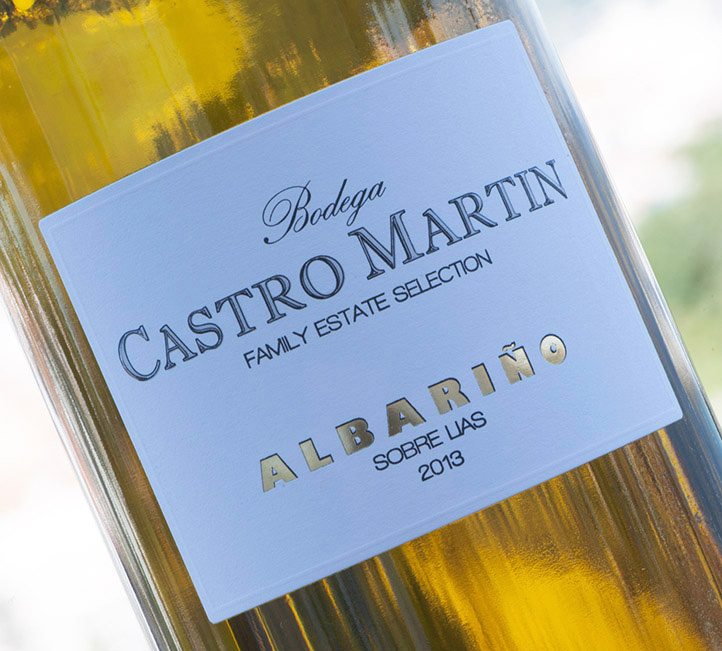
BCM 2013 - 2In the vocabulary of wine and wine making a word that crops up quite frequently is ‘tradition’. Whether it be used to describe a method of vinification handed down through the generations, or perhaps the ownership of a property that passes from father to son (or daughter), it appears quite frequently, and in many cases is promoted as a guarantee of quality. Of course from a wine making point of view, it’s also very important to respect traditions, despite the fact that they are often protected by the rules of Denomination or Appellation. Having said that, innovation is perhaps, equally as important – we can never afford to sit back on our laurels and let the rest of the (wine) world pass us by.

So, what about families? How important is it that you deal with the founders of a business or their descendants? In every country there are famous names, dynasties if you like – Antinori of Italy, Vega Sicilia and Torres of Spain, Château Mouton Rothschild, Famille Perrin and Joseph Drouhin of France and Egon Muller Scharzhof of Germany. The question is, do they really make better wines?

Perhaps family ownership is a bit of a romantic notion, but these days one of the harsh realities is that an increasing number of family estates are slowly and inexorably being swallowed up by the ‘big boys’ of the wine world. Without naming names, there are now quite a few mid to large-sized bodegas here in our own denomination that are owned by Companies from outside our region (many from Rioja), leaving very few that are owned and managed by the founding families. Of course Castro Martin is one such example of this, as Angela and I run this family business in a very ‘hands on’ style – never afraid to roll our sleeves up and get our hands dirty. During the harvest, we are right in the thick of it, and by the end of each campaign we really start to feel our age! Exhausted is another description.

I suppose the difference is, that in a family business (and yes, we do have a wine that we call Family Estate Selection), we treat every wine that we make as one of our children, watching it grow and evolve quite literally from bud to bottle. It gives us immense pleasure to prepare pallets to be delivered to different corners of the world knowing that thousands of different consumers, from many different walks of life, will hopefully be enjoying the ‘fruits’ of our labour.

Family tradition? Yes, it matters!BCM 2013 - 2In the vocabulary of wine and wine making a word that crops up quite frequently is ‘tradition’. Whether it be used to describe a method of vinification handed down through the generations, or perhaps the ownership of a property that passes from father to son (or daughter), it appears quite frequently, and in many cases is promoted as a guarantee of quality. Of course from a wine making point of view, it’s also very important to respect traditions, despite the fact that they are often protected by the rules of Denomination or Appellation. Having said that, innovation is perhaps, equally as important – we can never afford to sit back on our laurels and let the rest of the (wine) world pass us by.

So, what about families? How important is it that you deal with the founders of a business or their descendants? In every country there are famous names, dynasties if you like – Antinori of Italy, Vega Sicilia and Torres of Spain, Château Mouton Rothschild, Famille Perrin and Joseph Drouhin of France and Egon Muller Scharzhof of Germany. The question is, do they really make better wines?

Perhaps family ownership is a bit of a romantic notion, but these days one of the harsh realities is that an increasing number of family estates are slowly and inexorably being swallowed up by the ‘big boys’ of the wine world. Without naming names, there are now quite a few mid to large-sized bodegas here in our own denomination that are owned by Companies from outside our region (many from Rioja), leaving very few that are owned and managed by the founding families. Of course Castro Martin is one such example of this, as Angela and I run this family business in a very ‘hands on’ style – never afraid to roll our sleeves up and get our hands dirty. During the harvest, we are right in the thick of it, and by the end of each campaign we really start to feel our age! Exhausted is another description.

I suppose the difference is, that in a family business (and yes, we do have a wine that we call Family Estate Selection), we treat every wine that we make as one of our children, watching it grow and evolve quite literally from bud to bottle. It gives us immense pleasure to prepare pallets to be delivered to different corners of the world knowing that thousands of different consumers, from many different walks of life, will hopefully be enjoying the ‘fruits’ of our labour.

Family tradition? Yes, it matters!

Time to take stock

January 15th, 2015 | Bodega

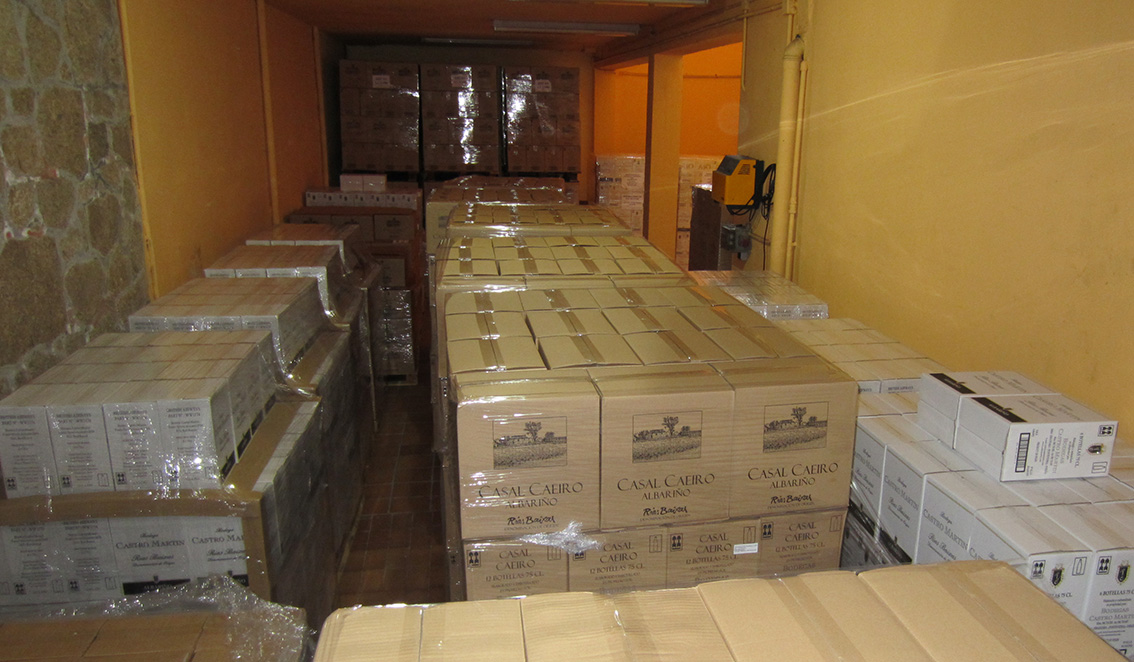
StockThe last couple of days have been quite frantic in our bodega, as we have conducted two consecutive days of bottling. The reason for this was quite simple – we were running very low on bottled stock. Of course this is perhaps the way that it should be at this time of year, cleaning out the cellar at Christmas and then starting the new year with fresh stock. Precise planning I think it’s called…. 

Being very honest we did cut it a bit fine at the end of last year, but I am pleased to say that at least we didn’t run out of any wine, and that every order was fulfilled in a timely fashion (something that we pride ourselves on). Having said that, it’s really just as well that we did replenish our stocks so early in the New Year – the new bottlings have arrived just as a number of importers also need to replenish their own cellars after the holidays. Anyone in our business who thought that there might be a lull in our January workload has been sadly mistaken, but happily for all the right reasons. Quite naturally we have our fingers crossed that this positive start will continue throughout 2015!

StockThe last couple of days have been quite frantic in our bodega, as we have conducted two consecutive days of bottling. The reason for this was quite simple – we were running very low on bottled stock. Of course this is perhaps the way that it should be at this time of year, cleaning out the cellar at Christmas and then starting the new year with fresh stock. Precise planning I think it’s called…. 

Being very honest we did cut it a bit fine at the end of last year, but I am pleased to say that at least we didn’t run out of any wine, and that every order was fulfilled in a timely fashion (something that we pride ourselves on). Having said that, it’s really just as well that we did replenish our stocks so early in the New Year – the new bottlings have arrived just as a number of importers also need to replenish their own cellars after the holidays. Anyone in our business who thought that there might be a lull in our January workload has been sadly mistaken, but happily for all the right reasons. Quite naturally we have our fingers crossed that this positive start will continue throughout 2015!

Christmas icing

December 12th, 2014 | Bodega

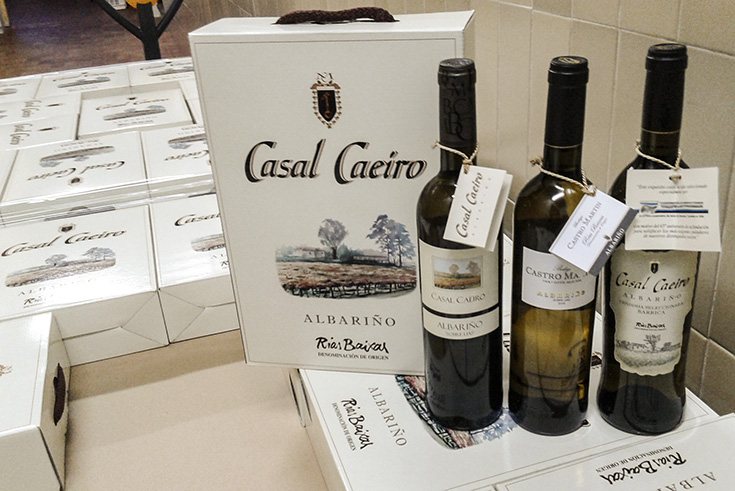
GiftI’m sorry that my posts have been a bit infrequent recently, we have been doing a bit of re-modelling at home that has been occupying rather a lot of time. A poor excuse I know, but if I tell you that the project was started in June, you might understand my desire to get it finished before the holidays. I should mention that the main delay was in waiting for bathroom furniture and fittings, manufactured by Roca, a well-known Spanish company – I will say no more!

Meanwhile back at the bodega, we have been quite busy preparing gifts packs for Christmas. Like many retailers, our gift pack business just helps to gift our year end sales a bit of a boost – the proverbial icing on the (Christmas) cake. Regrettably, many of these order are all a bit last-minute, and it’s quite time consuming to repack the bottles, but we still pride ourselves in turning them around quickly. 

Out in the vineyards, the long, difficult slog of pruning continues, come rain or shine.

GiftI’m sorry that my posts have been a bit infrequent recently, we have been doing a bit of re-modelling at home that has been occupying rather a lot of time. A poor excuse I know, but if I tell you that the project was started in June, you might understand my desire to get it finished before the holidays. I should mention that the main delay was in waiting for bathroom furniture and fittings, manufactured by Roca, a well-known Spanish company – I will say no more!

Meanwhile back at the bodega, we have been quite busy preparing gifts packs for Christmas. Like many retailers, our gift pack business just helps to gift our year end sales a bit of a boost – the proverbial icing on the (Christmas) cake. Regrettably, many of these order are all a bit last-minute, and it’s quite time consuming to repack the bottles, but we still pride ourselves in turning them around quickly. 

Out in the vineyards, the long, difficult slog of pruning continues, come rain or shine.

Into the 21st Century!

December 3rd, 2014 | Bodega

POS 2If I’m being honest ‘cellar door’ business does not represent a huge percentage of our annual sales – in fact we really don’t do very much at all. Part of the reason could be that we are not actively involved in any of the local wine tourism campaigns, and therefore do not receive too many potential customers at our door. This is not because we don’t want to participate in wine tourism, it’s simply an issue of time – we just don’t have enough people to host a stream of visitors turning up at random moments throughout the day.

Fortunately, we do however, receive visits from customers that come to buy our wines (sometimes because they’ve tried it somewhere and enjoyed it). Until now, one major drawback has been that all transactions were restricted to cash, as we could not accept cards. Of course it might not seem like a big deal in this day and age, but we have finally installed our very own POS machine to pay for goods. Obviously this means that our customers now don’t have to rush to the bank to draw cash, or organise time consuming bank transfers if they are ordering by phone (a very cumbersome system that is still widely used here in Spain).

A giant leap into the 21st century for Castro Martin…. Who knows what will come next – telephones without cables or perhaps cameras that don’t require any film?

POS 2If I’m being honest ‘cellar door’ business does not represent a huge percentage of our annual sales – in fact we really don’t do very much at all. Part of the reason could be that we are not actively involved in any of the local wine tourism campaigns, and therefore do not receive too many potential customers at our door. This is not because we don’t want to participate in wine tourism, it’s simply an issue of time – we just don’t have enough people to host a stream of visitors turning up at random moments throughout the day.

Fortunately, we do however, receive visits from customers that come to buy our wines (sometimes because they’ve tried it somewhere and enjoyed it). Until now, one major drawback has been that all transactions were restricted to cash, as we could not accept cards. Of course it might not seem like a big deal in this day and age, but we have finally installed our very own POS machine to pay for goods. Obviously this means that our customers now don’t have to rush to the bank to draw cash, or organise time consuming bank transfers if they are ordering by phone (a very cumbersome system that is still widely used here in Spain).

A giant leap into the 21st century for Castro Martin…. Who knows what will come next – telephones without cables or perhaps cameras that don’t require any film?

The silent killer

October 3rd, 2014 | Bodega

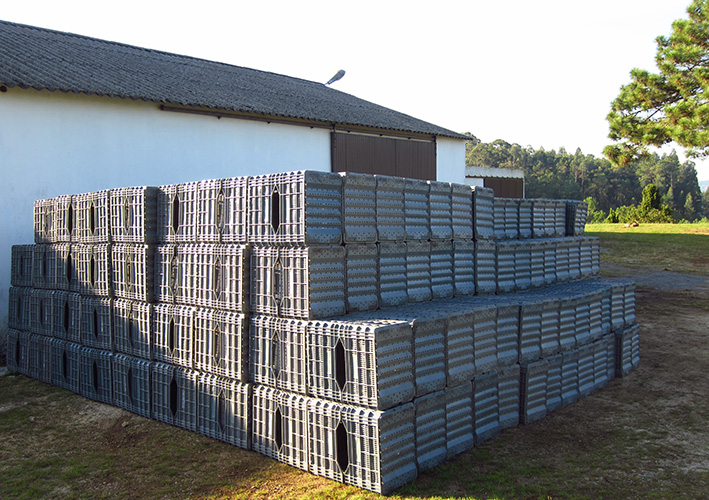
CajasThe dreaded chore of cleaning is well under way, and there are areas of the bodega that are already returning to their more usual appearance – clean and well ordered. The space that bears the initial brunt of the annual harvest onslaught, our grape reception, is already clean, albeit that the 2,000 odd plastic cases we use for gathering our fruit are still piled high at the back of the building, awaiting their turn to be blasted with our jet washers. These cases and our grape reception actually have one thing in common – they are both only used for about one week out of every year, the rest of the time they simply gather dust!

Meanwhile, inside the winery, more tanks have now been seeded at the start of their alcoholic fermentation. As we all know, this is the process that converts the grape juice into wine, but one of the things that we cannot afford to forget is that winemaking not only creates alcohol, but also produces significant amounts of carbon dioxide. For this reason, our bodega is fitted with a powerful extraction system that blows air through the cellar at a rate of knots – once switched on the constant background hum of their motors serves as a subliminal reminder that fermentation is in progress. They are not switched off until the last tank has finished its transformation. Of course carbon dioxide at these levels, is a killer, and very occasionally, even putting your face too close to the top of a fermenting tank will take your breath away, and leave you gasping for air. Perhaps in a slightly more sinister fashion, concentrations of as little as 7% to 10% (which are largely odourless) can cause eventual suffocation. Symptoms begin with slight dizziness and headache, leading to visual and hearing dysfunction, and finally unconsciousness. This can all happen in less than an hour, which is why we have to remain very vigilant throughout.

TRAGIC FOOTNOTE: This is really quite odd, and extremely distressing. Only a few hours after posting this story I have learned of the tragic death of a young winemaker, caused by carbon dioxide suffocation. In the D.O. of Bierzo (which borders on Galicia), 25 year old Nerea Pérez died when she was overcome by this odourless gas and fell into the vat. She was discovered by her uncle, himself a well-known winemaker from the region, but unfortunately she could not be saved. We send our deepest sympathies to her family.

CajasThe dreaded chore of cleaning is well under way, and there are areas of the bodega that are already returning to their more usual appearance – clean and well ordered. The space that bears the initial brunt of the annual harvest onslaught, our grape reception, is already clean, albeit that the 2,000 odd plastic cases we use for gathering our fruit are still piled high at the back of the building, awaiting their turn to be blasted with our jet washers. These cases and our grape reception actually have one thing in common – they are both only used for about one week out of every year, the rest of the time they simply gather dust!

Meanwhile, inside the winery, more tanks have now been seeded at the start of their alcoholic fermentation. As we all know, this is the process that converts the grape juice into wine, but one of the things that we cannot afford to forget is that winemaking not only creates alcohol, but also produces significant amounts of carbon dioxide. For this reason, our bodega is fitted with a powerful extraction system that blows air through the cellar at a rate of knots – once switched on the constant background hum of their motors serves as a subliminal reminder that fermentation is in progress. They are not switched off until the last tank has finished its transformation. Of course carbon dioxide at these levels, is a killer, and very occasionally, even putting your face too close to the top of a fermenting tank will take your breath away, and leave you gasping for air. Perhaps in a slightly more sinister fashion, concentrations of as little as 7% to 10% (which are largely odourless) can cause eventual suffocation. Symptoms begin with slight dizziness and headache, leading to visual and hearing dysfunction, and finally unconsciousness. This can all happen in less than an hour, which is why we have to remain very vigilant throughout.

TRAGIC FOOTNOTE: This is really quite odd, and extremely distressing. Only a few hours after posting this story I have learned of the tragic death of a young winemaker, caused by carbon dioxide suffocation. In the D.O. of Bierzo (which borders on Galicia), 25 year old Nerea Pérez died when she was overcome by this odourless gas and fell into the vat. She was discovered by her uncle, himself a well-known winemaker from the region, but unfortunately she could not be saved. We send our deepest sympathies to her family.

2014 – The aftermath

October 2nd, 2014 | Bodega

BagazoAlthough we breath a big sigh of relief once the picking has finished, this is of course, only the first part of the process, but I’m not going to stand, hands on hip, and boldly declare “mission accomplished” like one famous politician that we all know and love (or not)! There are now two very big, and equally important jobs that follow: cleaning and winemaking.

I have to be honest and say that I know that cleaning is not one of the most popular jobs, but it’s just one of those things that has to be done – roll your sleeves up and get on with it. As I have described many times before, it’s all about the must – the thick, sticky grape juice gets everywhere, and when it does, then boy does it stick. The worst of all is when it appears in an exposed place where it can be ‘baked on’ by the sun; then it simply dries like a coat of varnish. Take for example, the pathways and loading area in front of the Bodega. In today’s photo you can see the containers of ‘bagazo’ (skins and stalks left after pressing) lined up waiting to be collected by the distillery, to be made into aguardiente (grappa or eau-de-vie). It doesn’t matter how careful you are, they always leave a trail of juice and skins behind when you move them. The big problem is that the front of our Bodega faces due south, and so this trail becomes baked on to the terracotta pavement. It can only be removed with pressure washing machines.

Meanwhile, in the cellar, the first step of the winemaking process has already begun, as we seed the very first tanks with yeast. In another week or two we will actually have wine – but still a very long way from being finished. More on that as we go along.

BagazoAlthough we breath a big sigh of relief once the picking has finished, this is of course, only the first part of the process, but I’m not going to stand, hands on hip, and boldly declare “mission accomplished” like one famous politician that we all know and love (or not)! There are now two very big, and equally important jobs that follow: cleaning and winemaking.

I have to be honest and say that I know that cleaning is not one of the most popular jobs, but it’s just one of those things that has to be done – roll your sleeves up and get on with it. As I have described many times before, it’s all about the must – the thick, sticky grape juice gets everywhere, and when it does, then boy does it stick. The worst of all is when it appears in an exposed place where it can be ‘baked on’ by the sun; then it simply dries like a coat of varnish. Take for example, the pathways and loading area in front of the Bodega. In today’s photo you can see the containers of ‘bagazo’ (skins and stalks left after pressing) lined up waiting to be collected by the distillery, to be made into aguardiente (grappa or eau-de-vie). It doesn’t matter how careful you are, they always leave a trail of juice and skins behind when you move them. The big problem is that the front of our Bodega faces due south, and so this trail becomes baked on to the terracotta pavement. It can only be removed with pressure washing machines.

Meanwhile, in the cellar, the first step of the winemaking process has already begun, as we seed the very first tanks with yeast. In another week or two we will actually have wine – but still a very long way from being finished. More on that as we go along.

Monthly Archives

Categories

ARE YOU OF LEGAL AGE? This site is intended for those of legal drinking age. By entering, you confirm that you are of legal drinking age in the country where this site is being accessed. ¿ERES MAYOR DE EDAD? Este sitio está destinado a personas en edad legal para beber alcohol. Al ingresar, confirma que tiene la edad legal para beber en el país donde se accede a este sitio.