

Most obvious scam ever?

September 8th, 2015 | Odds & Sods

Worst scamWe have all received these hilarious mails (many originating from Nigeria or other parts of the African continent), telling us that if we pay a few thousand Dollars/Euros into the bank account of a complete stranger, then we will be showered with wealth beyond our wildest dreams. Well, sometimes these scams are aimed specifically at certain types of business.

For example, wineries sometimes receive enquiries from scammers posing as wine importers, or perhaps supermarkets, in an attempt to ship vast amounts of stock on credit. Some scammers even go as far as setting up fake websites, mirroring existing companies, but including some very subtle differences. Quite sophisticated…..

I think it’s fair to say that today’s picture shows one of the less sophisticated attempts – a three or four line mail, with the opening salutation “We are ASDA” (one of the UK’s largest supermarkets, owned by Walmart). No banners, no headers or footers, no logos, and using an e-mail address that clearly has nothing to do with the legitimate company.

I am insulted to think that the perpetrator thinks, even for one second, that we might fall for this – do they really believe that we are terminally stupid? (That’s a rhetorical question!)Worst scamWe have all received these hilarious mails (many originating from Nigeria or other parts of the African continent), telling us that if we pay a few thousand Dollars/Euros into the bank account of a complete stranger, then we will be showered with wealth beyond our wildest dreams. Well, sometimes these scams are aimed specifically at certain types of business.

For example, wineries sometimes receive enquiries from scammers posing as wine importers, or perhaps supermarkets, in an attempt to ship vast amounts of stock on credit. Some scammers even go as far as setting up fake websites, mirroring existing companies, but including some very subtle differences. Quite sophisticated…..

I think it’s fair to say that today’s picture shows one of the less sophisticated attempts – a three or four line mail, with the opening salutation “We are ASDA” (one of the UK’s largest supermarkets, owned by Walmart). No banners, no headers or footers, no logos, and using an e-mail address that clearly has nothing to do with the legitimate company.

I am insulted to think that the perpetrator thinks, even for one second, that we might fall for this – do they really believe that we are terminally stupid? (That’s a rhetorical question!)

Corc evolution

September 4th, 2015 | Technical

Bio ClosureThere has always been a certain stigma attached to synthetic closures, not necessarily because of the way they perform, but usually more to do with the way they look. Don’t worry, at this point I’m not going to launch into one of my long lectures about the pro’s and con’s of our corcs (with a ‘c’), but merely wanted to point out that their evolution continues.

As you will probably know, the Nomacorc product that we already use is the World’s first zero carbon footprint wine closure, made entirely from renewable, plant-based polymers. They are also manufactured using 100% renewable energy and the process uses only minimal amounts of water, making them ideal for sustainable wine producers.

To address the problem of their appearance Nomacorc have now released a new design, that we have just used for the first time this week. Today’s picture shows the old design on the right, and our modified, new design on the left. My guess is that without giving our new corc a very close inspection the vast majority of consumers will not even notice that it’s synthetic!Bio ClosureThere has always been a certain stigma attached to synthetic closures, not necessarily because of the way they perform, but usually more to do with the way they look. Don’t worry, at this point I’m not going to launch into one of my long lectures about the pro’s and con’s of our corcs (with a ‘c’), but merely wanted to point out that their evolution continues.

As you will probably know, the Nomacorc product that we already use is the World’s first zero carbon footprint wine closure, made entirely from renewable, plant-based polymers. They are also manufactured using 100% renewable energy and the process uses only minimal amounts of water, making them ideal for sustainable wine producers.

To address the problem of their appearance Nomacorc have now released a new design, that we have just used for the first time this week. Today’s picture shows the old design on the right, and our modified, new design on the left. My guess is that without giving our new corc a very close inspection the vast majority of consumers will not even notice that it’s synthetic!

Percebes – Goose barnacles

September 2nd, 2015 | Food & Wine

Goose barnaclesPercebes, or goose barnacles are a highly sought-after local delicacy, perhaps at the very pinnacle of Galicia’s wide selection of crustaceans, molluscs and other seafoods. The name ‘goose barnacle’ (or sometimes gooseneck barnacle) is surrounded by many a curious tale. Quite obviously they are named after the barnacle goose, as their shape and colour was thought to resemble the head of this Arctic/North Atlantic bird. As these birds were not native to the UK, and no one had ever seen their nest, it was originally believed that the goose was actually spawned from the barnacles and actually grew on the hull of the old wooden ships! The church was delighted to decree that because this particular species of goose was not born out of flesh, but of the sea, that they could not only be eaten on Fridays, but also throughout the period of Lent. A convenient truth?

If you have no idea as to how difficult (and dangerous) it is to find percebes, then this link is a very good illustration, as celebrity chef Gordon Ramsay risks life and limb, absailing down a sheer cliff face in Galicia in an attempt to harvest a mere handful of these tasty treats. It is in the shadow of these cliffs and rocky outcrops where the roaring surf crashes in, that the largest and fattest percebes (the ones that bring in the most money), will develop. The fishermen can make up to €300 per kilo at auction, and, with luck, they can earn €1,000 in a day. But the stakes they play for are high; this is a dangerous way to make a living – on average five people per year will lose their lives gathering these rare, but delicious delicacies. Unlike their near neighbours, the mussels, these crustaceans have resisted all attempts to be bred in a controlled environment. Scientists suspect that they need the tides and crashing waves to survive, which of course, serves only to make them even more expensive.

Tasting goose barnacles for the first time is quite an experience, as the super intense flavour of the sea bursts on your tongue. Then, of course, you next mouthful has to be from a chilled glass of albariño. Perfect.Goose barnaclesPercebes, or goose barnacles are a highly sought-after local delicacy, perhaps at the very pinnacle of Galicia’s wide selection of crustaceans, molluscs and other seafoods. The name ‘goose barnacle’ (or sometimes gooseneck barnacle) is surrounded by many a curious tale. Quite obviously they are named after the barnacle goose, as their shape and colour was thought to resemble the head of this Arctic/North Atlantic bird. As these birds were not native to the UK, and no one had ever seen their nest, it was originally believed that the goose was actually spawned from the barnacles and actually grew on the hull of the old wooden ships! The church was delighted to decree that because this particular species of goose was not born out of flesh, but of the sea, that they could not only be eaten on Fridays, but also throughout the period of Lent. A convenient truth?

If you have no idea as to how difficult (and dangerous) it is to find percebes, then this link is a very good illustration, as celebrity chef Gordon Ramsay risks life and limb, absailing down a sheer cliff face in Galicia in an attempt to harvest a mere handful of these tasty treats. It is in the shadow of these cliffs and rocky outcrops where the roaring surf crashes in, that the largest and fattest percebes (the ones that bring in the most money), will develop. The fishermen can make up to €300 per kilo at auction, and, with luck, they can earn €1,000 in a day. But the stakes they play for are high; this is a dangerous way to make a living – on average five people per year will lose their lives gathering these rare, but delicious delicacies. Unlike their near neighbours, the mussels, these crustaceans have resisted all attempts to be bred in a controlled environment. Scientists suspect that they need the tides and crashing waves to survive, which of course, serves only to make them even more expensive.

Tasting goose barnacles for the first time is quite an experience, as the super intense flavour of the sea bursts on your tongue. Then, of course, you next mouthful has to be from a chilled glass of albariño. Perfect.

August – a month of two halves

August 31st, 2015 | Harvest

D.O. GlassNo sooner had I mentioned that our Galician summer had been very dry, than the rain started. The good news so far, is that the amounts have not been catastrophic, and have only served to give our vineyards the watering that they so desperately needed.

I’m sure I have mentioned before that Spanish holidaymakers tend to take their holidays in “quincenas” – fortnights in English. This in itself does  not appear to be so unusual, except that they tend to stick to a very rigid timetables – either taking the first two weeks of August, or the second two weeks, and rarely exploring outside this format. Clearly holidaymakers taking the first two weeks of August 2015 have fared much better than those taking the second. In fact, from a sunbathing point of view, the second quincena has been more or less a total wash-out, not that it’s been raining all the time, but more that the sun has not appeared too much. The temperature has also dropped during the last couple of weeks – the average daytime temperature has been hovering between 20° and 25°C (68° – 77°F).

To finish on a more positive note, our fruit is still healthy, and the forecast is good for the beginning of September. We believe that if the forecast warm, dry weather continues, then we have quite high hopes for the vintage.D.O. GlassNo sooner had I mentioned that our Galician summer had been very dry, than the rain started. The good news so far, is that the amounts have not been catastrophic, and have only served to give our vineyards the watering that they so desperately needed.

I’m sure I have mentioned before that Spanish holidaymakers tend to take their holidays in “quincenas” – fortnights in English. This in itself does  not appear to be so unusual, except that they tend to stick to a very rigid timetables – either taking the first two weeks of August, or the second two weeks, and rarely exploring outside this format. Clearly holidaymakers taking the first two weeks of August 2015 have fared much better than those taking the second. In fact, from a sunbathing point of view, the second quincena has been more or less a total wash-out, not that it’s been raining all the time, but more that the sun has not appeared too much. The temperature has also dropped during the last couple of weeks – the average daytime temperature has been hovering between 20° and 25°C (68° – 77°F).

To finish on a more positive note, our fruit is still healthy, and the forecast is good for the beginning of September. We believe that if the forecast warm, dry weather continues, then we have quite high hopes for the vintage.

Food fiestas…. Oh dear!

August 26th, 2015 | Fiestas

Delicious worms!The months of July and August are probably ‘peak’ fiesta season here in Galicia (and around Spain) – there are fireworks and rockets exploding nearly every night around around our home. (This is perhaps the moment to mention that I am always just a bit shocked when I see the men setting off these huge, exploding rockets…. launching them from their hands! Not something that is recommended to try at home).

I have written on many previous occasions about food fiestas, not because I don’t think they’re a great idea, but mostly because of the way that they are publicised. Of course, these local fiestas need to be supported and encouraged, as I have no doubt whatsoever that a huge amount of work goes into organising them. I do feel however, that all the effort is not necessarily augmented by the advertising, and the latest example of this is for a celebration starting tomorrow in the municipio de Valga – the Eel and Aguardiente festival. Unfortunately, once again, the photo that they have chosen to publicise the event is possibly not the most attractive or mouth watering…..

Now I’m sure that the eels are actually quite delicious, but what is it they say? It’s all in the presentation, and that we also ‘eat with our eyes’, but to be brutally honest if I was undecided as to where to spend my day out, I wouldn’t necessarily be attracted by this publicity shot. I think that they look like large grey worms, or is that just me?Delicious worms!The months of July and August are probably ‘peak’ fiesta season here in Galicia (and around Spain) – there are fireworks and rockets exploding nearly every night around around our home. (This is perhaps the moment to mention that I am always just a bit shocked when I see the men setting off these huge, exploding rockets…. launching them from their hands! Not something that is recommended to try at home).

I have written on many previous occasions about food fiestas, not because I don’t think they’re a great idea, but mostly because of the way that they are publicised. Of course, these local fiestas need to be supported and encouraged, as I have no doubt whatsoever that a huge amount of work goes into organising them. I do feel however, that all the effort is not necessarily augmented by the advertising, and the latest example of this is for a celebration starting tomorrow in the municipio de Valga – the Eel and Aguardiente festival. Unfortunately, once again, the photo that they have chosen to publicise the event is possibly not the most attractive or mouth watering…..

Now I’m sure that the eels are actually quite delicious, but what is it they say? It’s all in the presentation, and that we also ‘eat with our eyes’, but to be brutally honest if I was undecided as to where to spend my day out, I wouldn’t necessarily be attracted by this publicity shot. I think that they look like large grey worms, or is that just me?

Social media explained

August 25th, 2015 | Social Media

Social media explainedEverything you need to know….Social media explainedEverything you need to know….

When is a holiday not a holiday?

August 23rd, 2015 | Bodega

Cold machineLast week the bodega was closed for a short break before our busiest time of year. At this stage there is little that can be done in the vineyards, and so we take advantage to give our team a chance to re-charge their batteries before the main event – our harvest! Or at least that is the theory….. the reality is that most of our team were working.

It’s a bit of a convoluted story, and revolves around one very important piece of bodega equipment. Our ‘cold machine’. I suppose I should really call it our refrigeration unit, but in our daily conversations it is simply known as the cold machine. This super important piece of kit actually does two jobs: This is the machine that we use to chill the wine to below freezing for cold stabilisation (to prevent the formation of tartrate crystals in the finished wine), and most importantly (at this time of year), it forms the very heart of our temperature control system, without which the fermentation would simply career out of control. So, how does this relate to our holidays I hear you ask? Let me quickly explain.

In the period leading up to the harvest we have all our equipment serviced, including of course, the cold machine, and whilst we have refrigeration engineers here in Galicia, none of them really specialise in wine equipment. Probably the best company in Spain is based in Barcelona, and they are so highly sought after in the wine business that you don’t tell them when they should come, they tell you when they’re available. On this occasion the only time that they could come to Galicia was during our scheduled closure, and this left us with no choice – consequently many of our team have been working to accommodate them.

It transpires that we needed much, much more than a simple service. Many of the component parts and systems had been ‘cobbled together’ by different engineers over the years, so much so that our beloved machine was almost an accident waiting to happen! The result is that more than a week later the engineers are still here, and by the time they leave, we will almost have a completely new machine. Heaven only knows what all this will cost, but suffice to say that this piece of equipment is so central to our entire wine making process, that it is a simply a price that we have to pay.Cold machineLast week the bodega was closed for a short break before our busiest time of year. At this stage there is little that can be done in the vineyards, and so we take advantage to give our team a chance to re-charge their batteries before the main event – our harvest! Or at least that is the theory….. the reality is that most of our team were working.

It’s a bit of a convoluted story, and revolves around one very important piece of bodega equipment. Our ‘cold machine’. I suppose I should really call it our refrigeration unit, but in our daily conversations it is simply known as the cold machine. This super important piece of kit actually does two jobs: This is the machine that we use to chill the wine to below freezing for cold stabilisation (to prevent the formation of tartrate crystals in the finished wine), and most importantly (at this time of year), it forms the very heart of our temperature control system, without which the fermentation would simply career out of control. So, how does this relate to our holidays I hear you ask? Let me quickly explain.

In the period leading up to the harvest we have all our equipment serviced, including of course, the cold machine, and whilst we have refrigeration engineers here in Galicia, none of them really specialise in wine equipment. Probably the best company in Spain is based in Barcelona, and they are so highly sought after in the wine business that you don’t tell them when they should come, they tell you when they’re available. On this occasion the only time that they could come to Galicia was during our scheduled closure, and this left us with no choice – consequently many of our team have been working to accommodate them.

It transpires that we needed much, much more than a simple service. Many of the component parts and systems had been ‘cobbled together’ by different engineers over the years, so much so that our beloved machine was almost an accident waiting to happen! The result is that more than a week later the engineers are still here, and by the time they leave, we will almost have a completely new machine. Heaven only knows what all this will cost, but suffice to say that this piece of equipment is so central to our entire wine making process, that it is a simply a price that we have to pay.

A hot, dry summer…

August 11th, 2015 | Harvest

Sanxenxo AugustIt’s almost exactly two years since I wrote about ‘green harvesting’, and the summer of 2015 is no different. Over the last few weeks our guys have been out in the vineyards removing excess bunches. The reasoning behind this is quite simple – the lower the yield, the better the quality. Removing a few bunches on each vine helps to concentrate the energy of the plant into the remaining fruit – a big harvest is rarely a beautiful harvest.

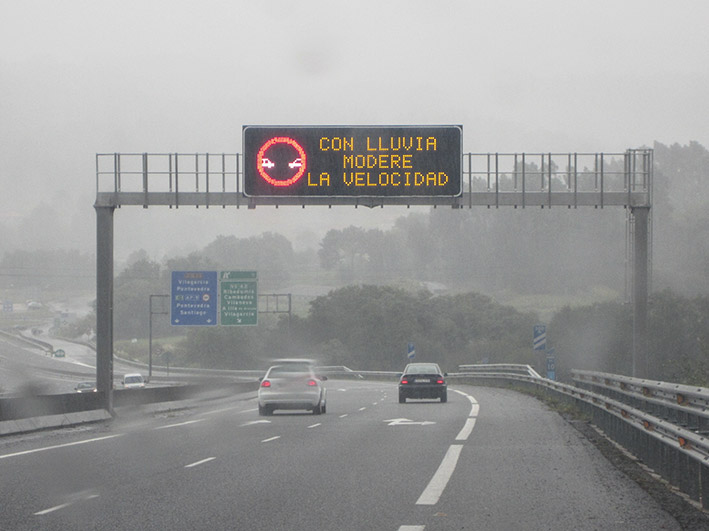
To date the 2015 growing season has been quite favourable, with plenty of warm sunny weather. August is proving to be a few degrees cooler than July, when temperatures often hovered in the upper 20’s C (between 77° and 86°F). Having said that, the one thing they both have in common is the lack of rainfall. I think it’s true to say that the last prolonged period of ‘real’ rain (as opposed to light drizzle) was back in mid-May, nearly three months ago. On our local motorways the signs above the carriageways warn of the high risk of forest fires, whilst our local tourist industry benefits from the crowds packing onto our beautiful beaches.Sanxenxo AugustIt’s almost exactly two years since I wrote about ‘green harvesting’, and the summer of 2015 is no different. Over the last few weeks our guys have been out in the vineyards removing excess bunches. The reasoning behind this is quite simple – the lower the yield, the better the quality. Removing a few bunches on each vine helps to concentrate the energy of the plant into the remaining fruit – a big harvest is rarely a beautiful harvest.

To date the 2015 growing season has been quite favourable, with plenty of warm sunny weather. August is proving to be a few degrees cooler than July, when temperatures often hovered in the upper 20’s C (between 77° and 86°F). Having said that, the one thing they both have in common is the lack of rainfall. I think it’s true to say that the last prolonged period of ‘real’ rain (as opposed to light drizzle) was back in mid-May, nearly three months ago. On our local motorways the signs above the carriageways warn of the high risk of forest fires, whilst our local tourist industry benefits from the crowds packing onto our beautiful beaches.

You can’t judge a wine by it’s colour!

August 5th, 2015 | Food & Wine

Blue wineI have just read a very interesting article about the importance of colour in food production. For example, the hue of orange juice is carefully measured, and in the United States there is even a juice colour standard for producers (or should that be color?). In terms of colour standards it would appear that fruit and vegetables are at the top of our list, and I’m sure that it’s true to say that our purchasing choices are often dictated by what we see – those bright red strawberries, vibrant orange carrots or perhaps that head of vivid green broccoli. If the colours were slightly washed out, or perhaps even completely wrong, would we then still buy the goods? For instance, I think I am correct in saying that when carrots were first introduced they were not orange, but white, and that they still exist in colours such as red, purple or yellow. But would we buy a yellow carrot? I’m not so sure. Now, this fact leads me fact leads me quite neatly to the real point of my post….. Does the colour change your perception of taste?

Tests carried out seem to suggest that it does. It appears that a type of ‘taste expectation’ from what we see, can actually determine what we perceive in our mouth. For example, in a taste test, when a lime-flavored drink was coloured orange, nearly half of participants thought it was flavoured orange, and when blindfold, hardly any identified the taste at all! But then it appears that colour can actually play an even bigger role when we change either the presentation or even the receptacle used. Respondents said that strawberry mousse tasted better from a white round plate than it did from a black square one, and that coffee in a white mug tasted less sweet than in a transparent or blue mug! The hypothesis goes further, whereby even the strength or hue of lighting can have an influence on taste…..

So how does this concept extend to wine? If you add red colouring to a white wine, will it taste different? Or if you can’t see it at all, will you even be able to determine if it’s red or white? I would certainly like to think that I could tell, but I’m sure that there still exists an opportunity for confusion. We certainly have a tendency to prejudge a wine by what we see. When seeing a white wine with a very deep colour or orange hue, we might immediately start to imagine that it could be either sweet, or perhaps oxidised, even before we have got it anywhere near our nose or mouth. Colouring our taste expectation you might call it.

Of course we would normally drink wine from a white clear glass, as the first, visual phase of the tasting process is extremely important, but imagine if the wine glass was opaque, or perhaps even coloured, how much would that influence what you taste? Certainly food (or wine) for thought.Blue wineI have just read a very interesting article about the importance of colour in food production. For example, the hue of orange juice is carefully measured, and in the United States there is even a juice colour standard for producers (or should that be color?). In terms of colour standards it would appear that fruit and vegetables are at the top of our list, and I’m sure that it’s true to say that our purchasing choices are often dictated by what we see – those bright red strawberries, vibrant orange carrots or perhaps that head of vivid green broccoli. If the colours were slightly washed out, or perhaps even completely wrong, would we then still buy the goods? For instance, I think I am correct in saying that when carrots were first introduced they were not orange, but white, and that they still exist in colours such as red, purple or yellow. But would we buy a yellow carrot? I’m not so sure. Now, this fact leads me fact leads me quite neatly to the real point of my post….. Does the colour change your perception of taste?

Tests carried out seem to suggest that it does. It appears that a type of ‘taste expectation’ from what we see, can actually determine what we perceive in our mouth. For example, in a taste test, when a lime-flavored drink was coloured orange, nearly half of participants thought it was flavoured orange, and when blindfold, hardly any identified the taste at all! But then it appears that colour can actually play an even bigger role when we change either the presentation or even the receptacle used. Respondents said that strawberry mousse tasted better from a white round plate than it did from a black square one, and that coffee in a white mug tasted less sweet than in a transparent or blue mug! The hypothesis goes further, whereby even the strength or hue of lighting can have an influence on taste…..

So how does this concept extend to wine? If you add red colouring to a white wine, will it taste different? Or if you can’t see it at all, will you even be able to determine if it’s red or white? I would certainly like to think that I could tell, but I’m sure that there still exists an opportunity for confusion. We certainly have a tendency to prejudge a wine by what we see. When seeing a white wine with a very deep colour or orange hue, we might immediately start to imagine that it could be either sweet, or perhaps oxidised, even before we have got it anywhere near our nose or mouth. Colouring our taste expectation you might call it.

Of course we would normally drink wine from a white clear glass, as the first, visual phase of the tasting process is extremely important, but imagine if the wine glass was opaque, or perhaps even coloured, how much would that influence what you taste? Certainly food (or wine) for thought.

Festa do Albariño

August 2nd, 2015 | Denomination

LXIII FiestaI have been in the UK for a week, and unfortunately I have missed one of my favourite tastings of the year. The tunnel of wine tasting at this year’s albariño festival, where nearly all the wines of our denomination are lined up under one roof. For me, this is by far the best opportunity to assess the quality of the latest vintage. Of course you can read all the reviews, recommendations and ratings that you like, but the only real way to know is to taste for yourself! To be quite honest, I don’t always agree with the official ratings anyway, quite apart from the fact that they can only provide a very generalised overview, whereas a detailed tasting can reveal good and bad in every vintage.

The tunnel of wine is by far the most civilised way to taste wine during the five day festival, and offers a much more comprehensive selection than the festival area itself. As I have mentioned in previous years, the festival area can become very ‘animated’ in the evenings, and is certainly not a suitable location for serious wine tasting. So the conclusion is quite simple – serious tasters and professionals should use the tunnel – drinkers and party-goers the festival area.

By the way, this years festival could go down as the longest in history. The official website actually advertises the festival as running from 29th June to 2nd August (instead of 29th July to 2nd August)!!LXIII FiestaI have been in the UK for a week, and unfortunately I have missed one of my favourite tastings of the year. The tunnel of wine tasting at this year’s albariño festival, where nearly all the wines of our denomination are lined up under one roof. For me, this is by far the best opportunity to assess the quality of the latest vintage. Of course you can read all the reviews, recommendations and ratings that you like, but the only real way to know is to taste for yourself! To be quite honest, I don’t always agree with the official ratings anyway, quite apart from the fact that they can only provide a very generalised overview, whereas a detailed tasting can reveal good and bad in every vintage.

The tunnel of wine is by far the most civilised way to taste wine during the five day festival, and offers a much more comprehensive selection than the festival area itself. As I have mentioned in previous years, the festival area can become very ‘animated’ in the evenings, and is certainly not a suitable location for serious wine tasting. So the conclusion is quite simple – serious tasters and professionals should use the tunnel – drinkers and party-goers the festival area.

By the way, this years festival could go down as the longest in history. The official website actually advertises the festival as running from 29th June to 2nd August (instead of 29th July to 2nd August)!!

Monthly Archives

Categories

ARE YOU OF LEGAL AGE? This site is intended for those of legal drinking age. By entering, you confirm that you are of legal drinking age in the country where this site is being accessed. ¿ERES MAYOR DE EDAD? Este sitio está destinado a personas en edad legal para beber alcohol. Al ingresar, confirma que tiene la edad legal para beber en el país donde se accede a este sitio.