

Archive for ‘Winemaking’

This tasting is a ‘must’!

October 14th, 2016 | Bodega
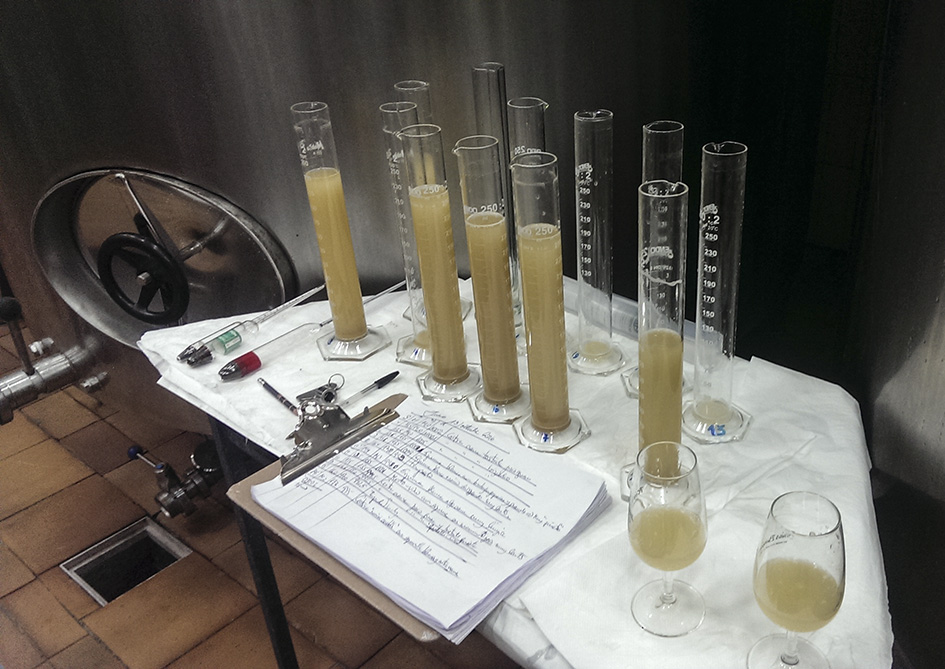
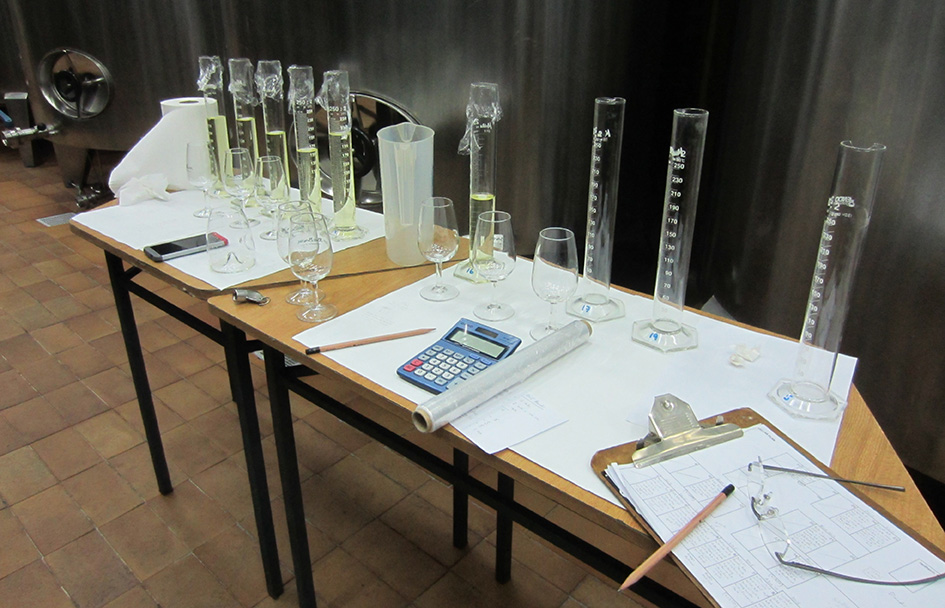
Must tastingIn all my years as a wine buyer, I still maintain that one of the most difficult tastings of all was that of a raw wine – a wine that was either still fermenting, had just finished fermenting, or was perhaps undergoing its malolactic fermentation. This is the moment when any wine buyer worth his or her salt, would have to rely on their crystal ball – to look into and predict the future of what the finished wine might look like. I can tell you that it is no easy task which in the end, simply comes down to experience.

In the case of our own wine cellar it is not quite so complicated, as effectively, we only have one wine (or at least one grape variety). The main difference being, from my point of view, that there is no major buying decision hanging in the balance! Even so, tasting a raw white wine, especially from a variety with high acidity, still requires a pretty strong constitution.

As our wines approach the end of fermentation (they can now officially be called wine rather than must), we can finally start to assess the true potential of the vintage. Of course, at the very beginning, the grape juice itself is always a pretty accurate indicator, but it is only now that we can begin to really see how the finished wines might really look.

Our tank tastings so far have revealed almost exactly what we had anticipated – extremely fruity wines with good weight and structure, but whilst still retaining their fresh albariño acidity. An alcohol of about 12.5% also provides additional mouthfeel. And so all we have to do now is wait – another 6 to 8 months resting on their lees, and then we can pass our final judgement.
Harvest Report 2016

October 4th, 2016 | Harvest

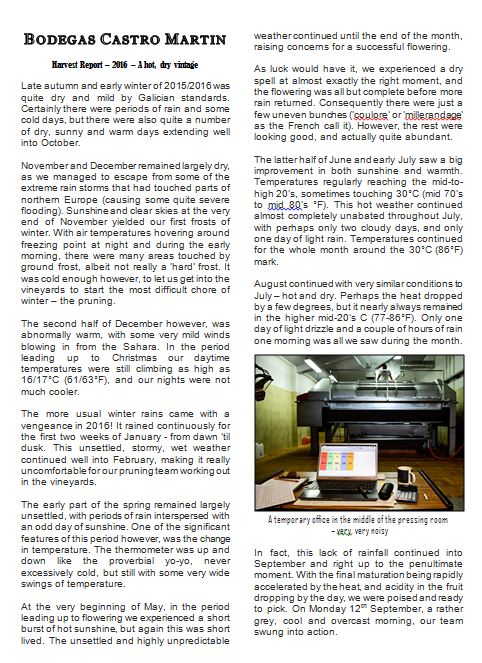
Vintage Report 2016This might seem like a slightly odd post to make on our blog, but it’s only to make you aware of an addition to our ‘DOWNLOADS’ section of this website. If you click on the download menu you can find the new 2016 Harvest Report in full (but so far, only in English – the Spanish translation will appear soon). This is really intended as a supplement to all my harvest posts of the last couple of weeks, and gives much more information about the growing season prior to the picking itself.

Of course, I can’t claim that it makes great bedtime reading, but it might just help you to get to sleep!

Dr House? Or should that be Dr Bodega?

September 27th, 2016 | Bodega

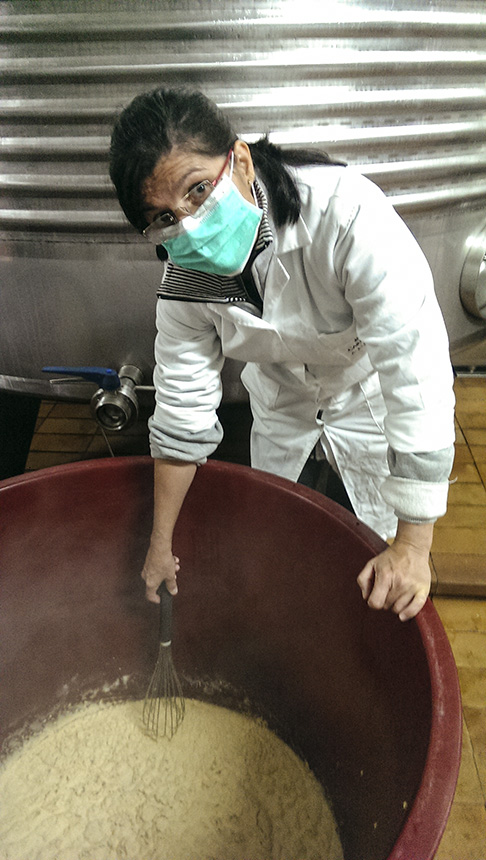
MixFinally, all of our fermentations are under way – it always appears to be such a long drawn-out process, but at least everything is looking really good as far as quality is concerned (fingers crossed). Having said that, we are still a very long way from the end of the wine making operation, there are still another good three or four weeks of work to do.

As I think I mentioned before, at various stages during the fermentation we have to make additions to the tanks, and once added these products require a thorough mixing, or ‘pumping over’ as we call it. This pumping over process can take hours depending on the size of the tank.

The other notable thing about these tank additions are the products themselves (by the way, none of them are cheap!). At least two or three of them come in the form of a very fine powder, and have to be mixed with grape must before they can be added to the tanks. We do all the mixing by hand (as you can see in today’s picture), and initially, regardless of how much care we take, there is always a cloud of fine, almost choking dust. So the protective masks that we wear are not intended to make us look more like doctors, but are, in fact, worn for a very practical reason.

Post Harvest 2016

September 26th, 2016 | Bodega

the-dars-32So let’s talk tank space and yields. It’s actually quite a complicated story that begins as much as six or seven months before we even consider picking our first grapes.

Owing to our policy of only selling wines with an extended period of lees ageing it means that when we start our harvest, around mid/late September, we might still have around half of our previous year’s harvest in tank. Although these wines have been removed from their lees long before the new harvest begins, they still occupy valuable tank space (until such time as they are finally bottled).

So then we have to ask ourselves two crucial questions. Firstly, how much wine do we expect (or want) to make, and how many empty tanks will that require? Secondly, how might the weather affect the yields during the growing cycle? Never having any definitive answers so early in the year, we simply have to use our best judgement and get to work. For example, over the summer months we embark on a programme of bottling that will hopefully leave us with just enough tank space to accommodate the new harvest. That might sound fairly straight forward, but that’s why yields can be so fundamental, requiring us to allow at least some leeway in our calculations.

Of course the other significant consideration when calculating tank space, is that during fermentation we are never working will completely full tanks. Some of the additions that we make at this time can cause quite a dramatic reaction, and so we need to allow a little ‘overflow’ space in every tank to allow for this. It’s all in the planning!

Post Harvest 2016

September 23rd, 2016 | Bodega

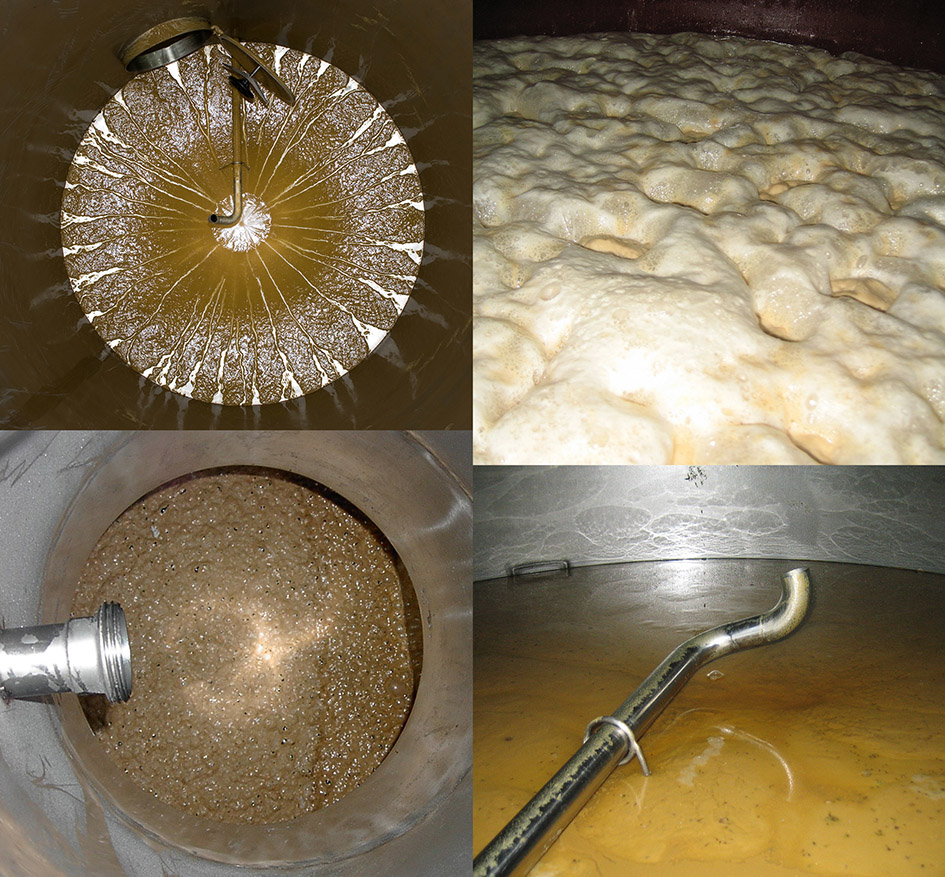
Tank collageIf anyone ever gave you the impression that once the grape picking had stopped, that we have time to relax and put our feet up, then think again. Whilst it’s true that the hours might not be quite as long, and we might even manage to get a full nights sleep every day, the bodega work is just as exhausting. After a period of cold settling the must has to be racked into clean tanks. We then wait for a short time until the temperature of the tank recovers sufficiently to enable seeding, when we add the yeast for fermentation. During the period of fermentation, not only do we have to monitor the density (measuring the remaining levels of sugar/increase in alcohol) and control the temperature to ensure a smooth transition from must to wine, but then there are quite a number of additions that we make – the most notable of these being the bentonite, that we use as a fining agent.

It is quite a drawn out process that takes the best part of a month to complete (including weekends – fermentations wait for no man, or woman). At this busy time I will do my best to keep the updates coming, but I can tell you that on some occasions it can be really tough to find a few moments to even look at my computer keyboard. Yesterday, for example, was just such a day, when I spent much of my morning preparing for an inspection by our D.O. Nothing too sinister, they simply needed to know the final count in litres of must. The kilos of fruit collected during the harvest itself are entered onto a special D.O. website on a daily basis, but the tanks of grape must can only be measured and counted physically, on site.

Today’s photo montage shows some of the current processes: Top left and bottom right are the residues left after the cold settling period. Top right is the process of re-hydrating the yeast, and bottom left shows the very start of fermentation (looking into the tank from above).

Normal service is resumed

May 17th, 2016 | Bodega

LeesYou may know that a couple of weeks ago we returned from quite an extensive tour of the United States, and whilst we always try to stay on top of things, inevitably we always face a backlog of work. No sooner had we started on this, than I received some devastating news from the UK. The tragic loss of my mother. Without wishing to dwell on this subject, the inevitable result was that I had to spend a further ten days away from our business, and as if that was not enough, I have now returned from England with a heavy cold.

So much has happened over the last few weeks that I really don’t know what to write about first, but perhaps the most significant event, from a bodega point of view, is the racking of the first tanks of our 2015 wines. It was pretty much decided before we went to America (already a month ago) that at least some tanks would be ready to remove from their lees. In today’s photo you might notice a few bubbles on the surface of the sediment, these are from the natural CO2 trapped inside the tank, and also the crystal deposits that leave the inside of the tank stained brown….. but nothing that a good cleaning won’t remove. As I have written many times before the timing of racking our wines is ultimately decided simply by a combination of tasting and experience – not really a high-tech methodology I’m afraid.

The new wine that we are preparing now still needs to be cold-stabilised, filtered and submitted to the Denomination tasting panel before it can finally be bottled. This whole process will take another month before we can even consider selling a bottle into the domestic market here in Spain. Oh, and by the way, I forgot to mention that the 2015 wines are actually quite good!

The winemaker’s art

April 5th, 2016 | Post Harvest

BlendingCrushing grapes and fermentation are only the early steps in our extended wine making adventure. Since the harvest, more than six months ago, our tanks have been resting quietly on their lees, and it is only now that we first contemplate how the finished 2015 wines might look. After regular tasting during this ageing period we pretty much know the distinct ‘personality’ of each and every tank. You would be forgiven for thinking that they are all pretty much the same, and whilst that is partly true (they all share their distinctive Salnés character), in the end, no two tanks are ever exactly the same. This is where another invaluable winemaking skill comes to the fore…….blending.

Again, it might seem odd, that in a winery which only cultivates one grape variety, that any blending would be required. However, the objective of this practice is not only to produce the style of wine that our customers have come to recognise, but also to provide continuity of that style for the duration of the vintage. By blending several tanks together we can produce much greater uniformity, in order that when we bottle our tanks throughout the year, the only discernible difference will be the actual maturity of the wine, and not our signature Castro Martin character.

This first blending exercise was merely to give us a snapshot of what might be, and was by no means the definitive selection. With 20 tanks of new wine to chose from the permutations are almost infinite, but nevertheless it is still one of the most satisfying jobs in the cellar. I compare our tanks to the ingredients in a kitchen, and the blending to creating a new recipe. A great deal of trial and error but still very rewarding when the completed ‘dish’ reaches the table.

New flavours for 2015 vintage

April 1st, 2016 | April Fools

E. CASTRO MARTIN FICHAWe have noticed over recent years the growing influence of the up-and-coming young winemakers in our denomination – many from outside the region. With them comes, not only new, updated winemaking techniques, but also new ideas of what an albariño should be. It seems that the latest trend in Rias Baixas is actually to do with the manipulation of the flavour profile of the finished wine, giving it a much riper, more exotic, almost tropical fruit. Of course, Galicia is almost as far removed from the tropics as you can get (especially at this time of year), but at least now our wines are going to reflect a bit more of a ‘sunshine personality’ in the future.

So how do we achieve this new style? Well, the answer is quite simple, and has actually been available to us for many years now. It’s down to the strain of yeast that we use during the alcoholic fermentation. I always mention to our visitors that the salesmen who arrive at our door these days, selling our wine making products, now offer up a complete catalogue of different active dried yeast each with it’s own distinct flavour profile. For white wines the choice is quite extensive and includes apple, pear, grapefruit, pineapple, butter (more for chardonnay based wines I think) and even banana. It would appear that the taste of the grape variety is almost secondary to the equation these days!

So, after much soul searching, and a couple of years of experimentation, Angela and I have finally succumbed to this new market trend. From the 2015 vintage we will be offering a range of three new fruit flavours – grapefruit, pineapple or another that we will simply call ‘tropical fruit’ (made from a blend of different tanks). I should add that we drew the line at banana flavour, which, whilst it had a certain appeal, was probably too far removed from our traditional albariño.

Over the next few weeks we will be in contact with our customers to get an idea of their preferences before we start our first bottlings, probably in May.

Natural Wines

March 14th, 2016 | Odds & Sods

future-libraryA few days ago I posted some comments about the different categories of ‘Eco friendly’ wine. Shortly after making this post I read a great tongue-in-cheek article written by Ron Washam, ex-award winning sommelier and contributor to the website of my friend Tim Atkin MW.

The premise of the article is that it is written in the year 2095 whilst visiting the World’s Greatest Wine Library.

“Many of you may be old enough to remember Natural Wines. Natural Wines were wines said to be better because they were made using minimally invasive techniques. In the United States, the same techniques were used for what were later called “Natural Wars,” like in Syria and Afghanistan. But the concept of Natural Wine began in the late 20th Century, and seems to have been a reaction to the degradation of the planet. Climate change was just being acknowledged, and fossil fuels were king. It was a primitive time, when elephants actually walked the Earth. So we can excuse the Natural Wine writers their ignorance.

I thumbed through the collected papers of Alice Feiring. Was it me, or did the papers smell vaguely of reduction? Feiring’s work speaks often of biodynamics, the system of agriculture expounded by the 20th Century Austrian lunatic Rudolf Steiner (Austria was the birth place of many famous lunatics of the 20th century, a fact which also explains why so much Grüner Veltliner was planted there). Steiner, and his Natural Wine disciples, believed that different energies and lunar cycles were important factors in grape growing. We know now that it wasn’t biodynamics that improved the biomass of the vineyards, but that it was actually the proponents’ poor personal hygiene.

Right next to the Feiring library are the translated works of Nicolas Joly. Joly was the most vocal winemaker on the subject of biodynamics, and the World’s Greatest Wine Library has dozens of copies of Joly’s books translated into English from his native language, Space Alien.”

If you read Ron’s website (The Hosemaster of Wine) on a regular basis, you will understand that it is not necessarily his intention to insult, but he simply puts a very irreverent spin on wine matters that we all often take far too seriously. After all, wine is fun and here to be enjoyed, not endlessly over-analysed.

Home brew

March 9th, 2016 | Odds & Sods

Home brewIt’s quite a romantic idea to serve a wine made by your own fair hand, and even more so if your name appears on the label. I guess that this could be why a handful of celebrities have invested their millions into producing their very own wine…… ‘Pretentious’ I think it’s called. The reality though, is somewhat different to the dream – it’s quite hard work to grow grapes and make wine, even more difficult to sell it, and quite impossible to make a profit (OK, that last part is not strictly true, except to say that there are a lot of bodegas in Galicia struggling to make ends meet at the moment).

On a much smaller scale you could of course, buy a wine kit and make your own wine in the comfort of your own kitchen. Admittedly not quite as romantic an idea, but potentially a lot more fun (assuming that it works!). I believe that there are many different ways of doing it, although I confess that I have never tried, and I am sure that some kits will achieve better results than others. I did however, see a rather elaborate kit that caught my eye, the only downside being the price – $239 to make 1 gallon of wine. By my calculations that translates to about $63 a litre, or $47 a bottle (75cl)! You could buy a pretty decent bottle for that amount of money, and so you would hope that the result is at least drinkable, otherwise you might end up with a wine making kit that simply resembles a fairly expensive chemistry set.

This particular wine kit is available in different flavours (I am reluctant to say grape varieties), Chilean Merlot, Cabernet Sauvignon, Pinot Noir, Moscato, Australian Chardonnay and Italian Pinot Grigio. The world of wine is at your feet, but only if you are prepared to forego a wonderful Spanish albariño…. Castro Martin – not available in any wine kit!

Monthly Archives

Categories

ARE YOU OF LEGAL AGE? This site is intended for those of legal drinking age. By entering, you confirm that you are of legal drinking age in the country where this site is being accessed. ¿ERES MAYOR DE EDAD? Este sitio está destinado a personas en edad legal para beber alcohol. Al ingresar, confirma que tiene la edad legal para beber en el país donde se accede a este sitio.