Archive for ‘Vineyards’

Harvest 2016 – Day 1

September 13th, 2016 | Bodega

Bagazo 2016As I mentioned yesterday, after a long, dry, hot sunny period, our more familiar harvest weather arrived in the region. Cooler, grey and overcast – no rain to date, but with showers forecast for the next two days. A few light showers would not be a problem, but the conditions that we really don’t need are prolonged periods of heavy rain.

This year we organised have more people to harvest and more vehicles to collect grapes, and so consequently, by mid-morning, we were already loading the first presses. This continuous flow simply never stopped, with grapes entering at a furious rate, but more importantly, of high quality fruit. Healthy grapes with a good degree (potential alcohol) and just the correct balance of acidity. The juice was thick and concentrated as we had anticipated, but as far as yields are concerned we have yet to make a definitive calculation – having said that it will as though it could be reduced owing to the lack of rainfall over the summer.

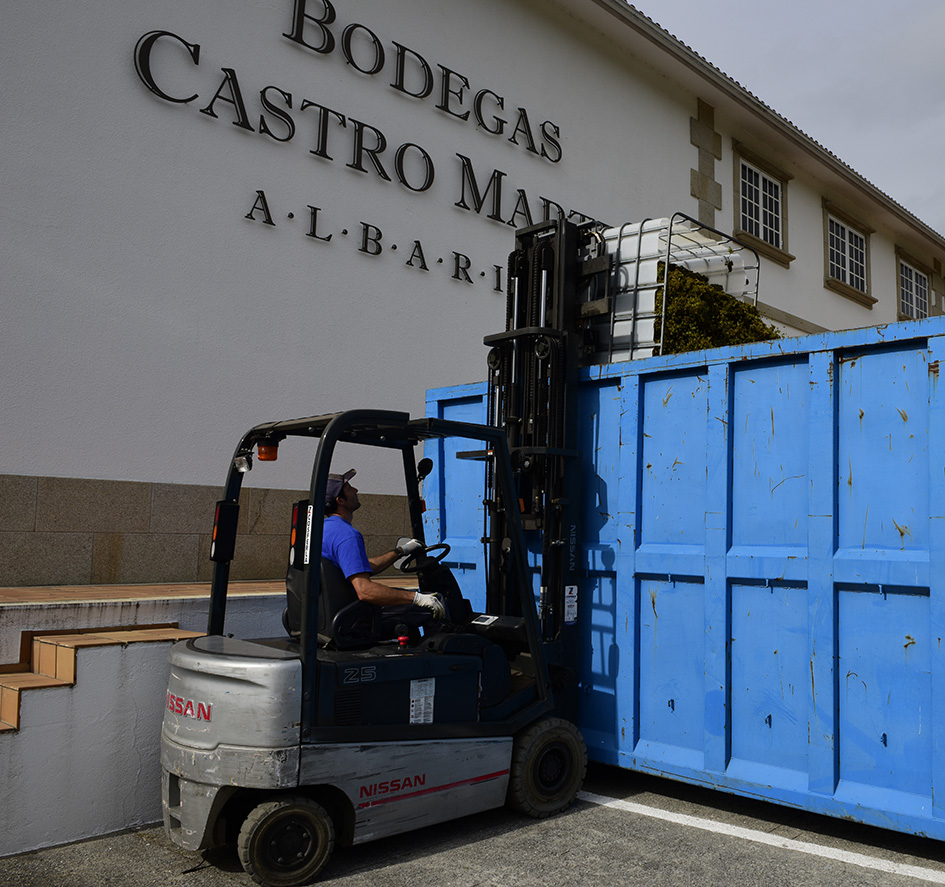
OK, so the secret of Big Blue, as you can see from today’s photo is quite simple. Instead of using hundreds of small containers to collect the bagazo  (grape skins and stalks – or ‘marc’ as it is known in France), we are using much bigger containers in conjunction with a special tipping forklift. Our bagazo, as you will know, is collected for our local distillery to be made into aguardiente (eau-de-vie or grappa).

At the end of the day, we had picked some serious volumes, the only downside being that as we closed our doors for the night, so the heavens opened. Heavy rain had arrived, including a bit of thunder and lightning – Let’s see what tomorrow brings.

A long, hot summer….so far

August 22nd, 2016 | Vineyards

Vuelta 2016The summer months are usually occupied with controlling he canopy in the vineyards. In case you don’t understand the expression ‘canopy management’, the very simplified explanation is that we trim the vines, cut back some of the leading shoots, remove leaves, and if necessary, remove some bunches (green harvesting). If allowed to grow, the leading shoot of each vine will grow unabated, producing more leaves (not bunches), and simply draining energy from the plant. By trimming them this simply re-directs more energy to the fruit, and therefore should help increase sugar levels. Removing leaves is, believe it or not, slightly more complicated – it is super important to remove the right leaves, in the right places and in the right quantities. Obviously the objective of this ‘thinning’ is to give fruit a better exposure by allowing more light to pass through the canopy. The only danger is that if too many leaves are removed, then during a hot summer, over exposure can actually ‘cook’ the fruit (even when using factor 50 – sorry, that is just my warped sense of humour). Also, if during prolonged periods of excessive heat too few leaves will only add to the stress on the plant.

The reason I mention this is that since the middle of June the weather in Rias Baixas has been very hot and almost completely dry. For more than two months our average daily temperatures have remained in the mid-to-high 20’s C (mid 70’s to mid 80’s F). During July we regularly experienced daytime temperatures of 30°C (86°F) and sometimes even higher. As far as rainfall is concerned, there has been very little. July, only a couple of cloudy days and one day of drizzle – August, one day of drizzle, and only one other wet morning.

It’s still a little early to know how this extended hot weather will effect the vintage, in all honesty, an odd day of rain at this stage, wouldn’t hurt too much.

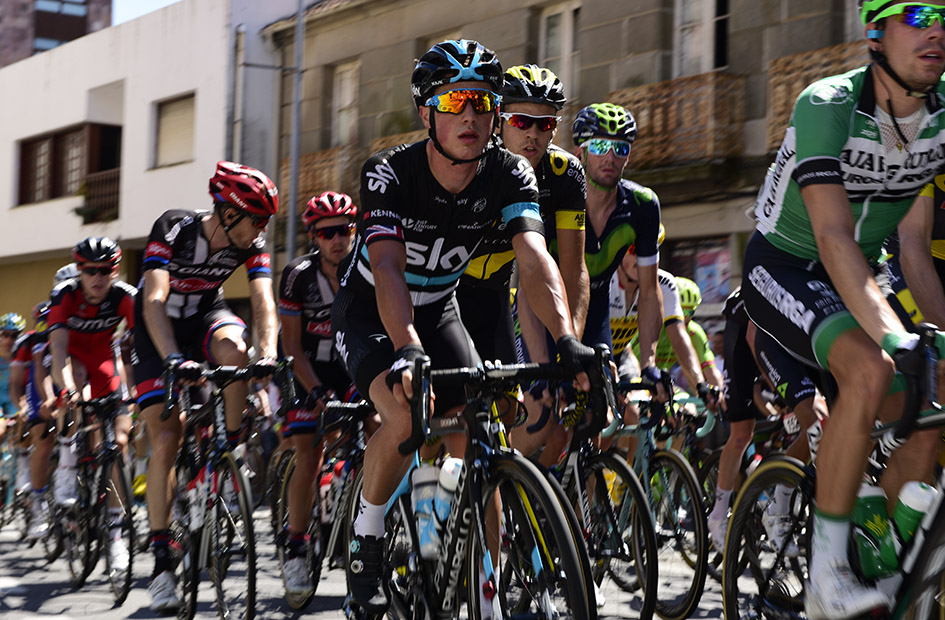
(By the way, it’s obvious that my photo today has nothing to do with vines, or the weather for that matter, except to say that the Vuelta a España passed through Galicia today – in 31°C of heat!)

Fire in the finca!

July 1st, 2016 | Local News

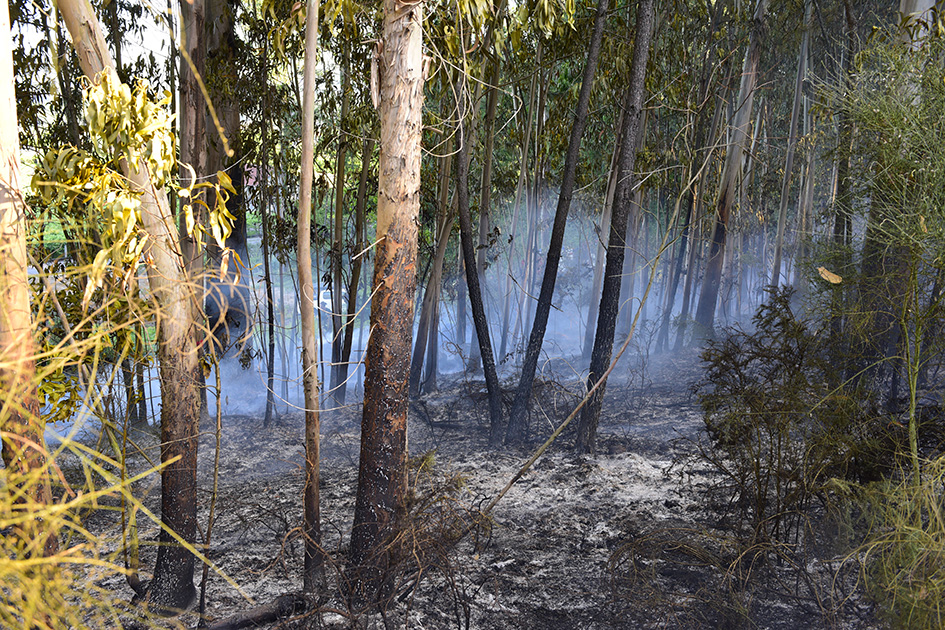
Brush fireLast weekend we had a small but dramatic event in our village, but more significantly, almost in our bodega vineyard…. a brush fire! A week or two ago I wrote about a small area of forest clearance at the back of our bodega, restoring our view of the Atlantic Ocean after some years of being masked by trees. Well, the bad news is that a different area of eucalyptus forest immediately adjacent to this (forming a boundary with our vineyard) was left untouched. Under Spanish law it is the responsibility of every land owner to keep undergrowth in a forested area well trimmed and under control, precisely for the reason of reducing fire risk. Unfortunately, in the case of this forest, it had not been done.

In the early hours of the Monday morning we received a call from our neighbours, living next to the bodega, to say that firefighters wanted access to the back of our property – the forest was alight! The good news is that the blaze was bought under control quite quickly before it managed to really take hold, and in the end was more or less confined to the undergrowth. Had the trees themselves gone up in flames, then it is actually quite possible that it would have spread to our vineyard, and so we have to be quite thankful to our local fire fighters for their prompt and effective actions.

If the fire taken place later in the summer then it is possible that our fruit could have been tainted by the smoke, but I think that this fire took place early enough in the growth cycle to have very little or no effect whatsoever. I once recall tasting a wine which had become tainted by smoke and I can tell you that it is nothing like the toasted oak effect that comes from a barrel, it is simply quite unpleasant. I am happy to report that, in our case, the only temporary damage might be to my t-shirt that reeks of smoke after I ventured into to the forest to take a few photos!

Spring weather – a lucky break

June 13th, 2016 | Vineyards

2016 FloweringI am aware that I am always preaching on about the vagaries of our Ocean affected climate, but so far, 2016 has been more unpredictable than ever. After a fairly dry autumn, 2016 started with incessant rain, and this stormy, wet weather continued well into the month of February. The early part of spring saw very little in the way of dry, sunny weather, but one of the most notable features of the first trimester was the widely varying temperatures. It was not uncommon to see temperature swings of 8-10°C (12-15°F) from one day to the next.

By early May things had not really improved, and as the flowering period approached, our anxiety started to grow. With the cool, wet weather continuing and temperatures barely reaching the low 20°C mark (68°F), this could spell potential disaster for the 2016 vintage. As we reached the middle of the month, something of a minor miracle occured – it stopped raining and the sun came out. There was a marked change, and for the first time it felt like summer was finally on our doorstep – people even started to appear on our local beaches! By now, with the temperatures touching the mid-20’s (75-77°F), the vineyards really started to react. By the beginning of June flowering was already under way, and despite an odd light shower, the conditions were generally favourable. It looked very much like we had been saved!

Of course, flowering only represents the first significant hurdle in our growing cycle, and we have little idea what the rest of the summer will bring, but at least now we can be a little more optimistic that our vines will at least yield a reasonable crop.

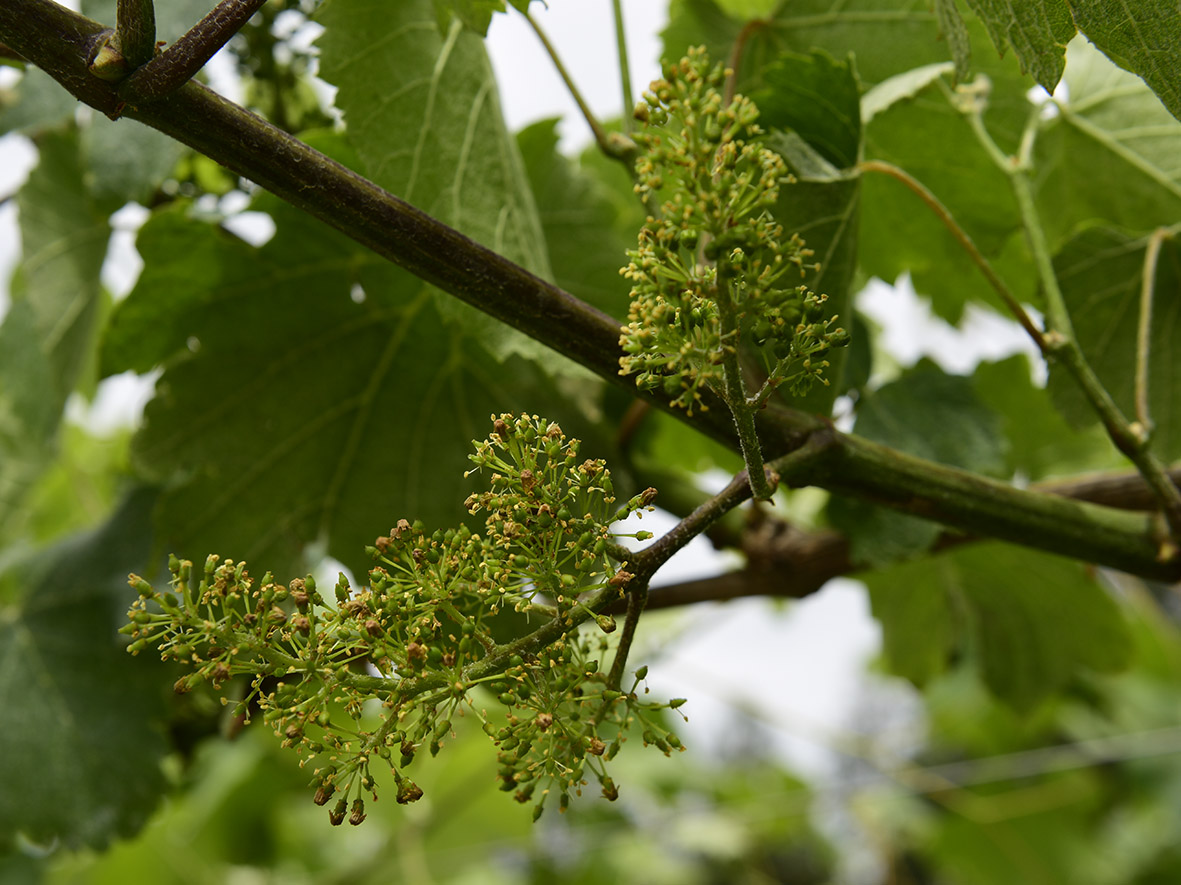
Once again (as in previous years), I apologise for today’s photo that shows the flowering, but only on the basis that there is not really very much to see. The truth is that I was just testing my new camera, although I had to reduce the resolution of this shot considerably before I could post it (for any photo geeks the original RAW file of this picture, shot at 36 megapixels, was over 40MB).

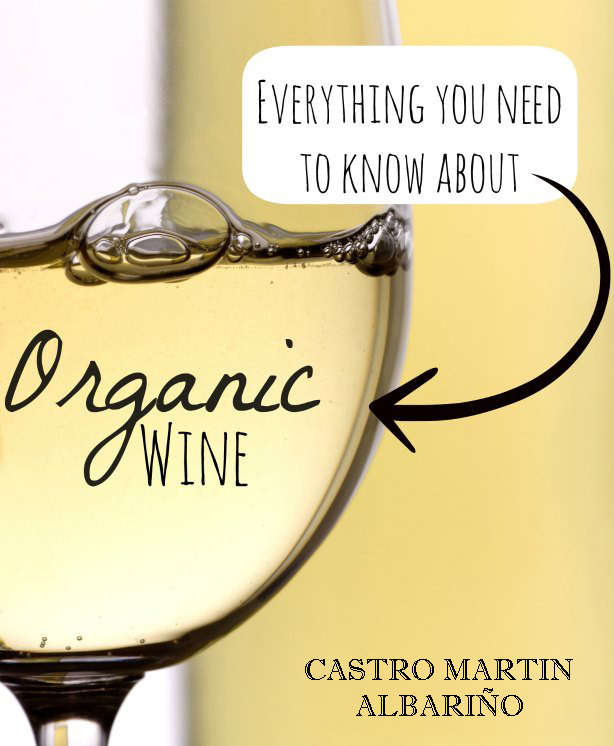
Biodynamic, organic or sustainable?

March 7th, 2016 | Technical

[:en]White wineBiodynamic, organic or sustainable? What’s the difference? This is a question that causes quite a few headaches, not only for the wine industry in general, but also, more importantly, for the poor confused consumer buying the finished wine. It is also one of the questions that we are most frequently asked by our own importers and customers, and it is a question that we always answer truthfully (even when we know that being economical with the truth might help to widen our potential consumer base).

By far the most complicated to achieve is biodynamic, and for most producers in Rias Baixas is an unattainable status, mostly owing to the damp conditions that we endure in this corner of Spain. To be fully biodynamic doesn’t just mean farming grapes without chemicals, but actually treats the vineyard as an ecosystem, taking into account astrological influences and lunar cycles etc. A true biodynamic wine is also made without any of the common manipulations such as yeast additions or acidity adjustments. Just one obvious reason why Rias Baixas cannot really produce biodynamic wine is because albariño’s naturally occurring yeast flora, by itself, simply cannot sustain a complete alcoholic fermentation.

In the category of organic, there are two types of wine. Those made from organically grown grapes that don’t use any synthetic additives or treatments, or the higher level of completely ‘organic wine’ that uses organic grapes but also doesn’t add sulphites to the wine (although it can include any naturally occurring sulphites).

Sustainable wine (such as our own Castro Martin wines), are made using a range of practices that are not only ecologically sound, but also economically viable and socially responsible. We adopt many of the practices that will be used in organic or biodynamic farming but have a little flexibility to include practices that suit our individual needs. Clearly, we are not going to sit back and watch our fruit rot on the vines if we can take steps to prevent it from happening….. Sustainability also means that we focus on things like water and energy conservation, as well as the use of renewable resources.

As far as selecting your wine is concerned, the simple rule is – if in doubt, read the label![:es]White wineBiodynamic, organic or sustainable? What’s the difference? This is a question that causes quite a few headaches, not only for the wine industry in general, but also, more importantly, for the poor confused consumer buying the finished wine. It is also one of the questions that we are most frequently asked by our own importers and customers, and it is a question that we always answer truthfully (even when we know that being economical with the truth might help to widen our potential consumer base).

By far the most complicated to achieve is biodynamic, and for most producers in Rias Baixas is an unattainable status, mostly owing to the damp conditions that we endure in this corner of Spain. To be fully biodynamic doesn’t just mean farming grapes without chemicals, but actually treats the vineyard as an ecosystem, taking into account astrological influences and lunar cycles etc. A true biodynamic wine is also made without any of the common manipulations such as yeast additions or acidity adjustments. Just one obvious reason why Rias Baixas cannot really produce biodynamic wine is because albariño’s naturally occurring yeast flora, by itself, simply cannot sustain a complete alcoholic fermentation.

In the category of organic, there are two types of wine. Those made from organically grown grapes that don’t use any synthetic additives or treatments, or the higher level of completely ‘organic wine’ that uses organic grapes but also doesn’t add sulphites to the wine (although it can include any naturally occurring sulphites).

Sustainable wine (such as our own Castro Martin wines), are made using a range of practices that are not only ecologically sound, but also economically viable and socially responsible. We adopt many of the practices that will be used in organic or biodynamic farming but have a little flexibility to include practices that suit our individual needs. Clearly, we are not going to sit back and watch our fruit rot on the vines if we can take steps to prevent it from happening….. Sustainability also means that we focus on things like water and energy conservation, as well as the use of renewable resources.

As far as selecting your wine is concerned, the simple rule is –  if in doubt, read the label![:]

A hot, dry summer…

August 11th, 2015 | Harvest

Sanxenxo AugustIt’s almost exactly two years since I wrote about ‘green harvesting’, and the summer of 2015 is no different. Over the last few weeks our guys have been out in the vineyards removing excess bunches. The reasoning behind this is quite simple – the lower the yield, the better the quality. Removing a few bunches on each vine helps to concentrate the energy of the plant into the remaining fruit – a big harvest is rarely a beautiful harvest.

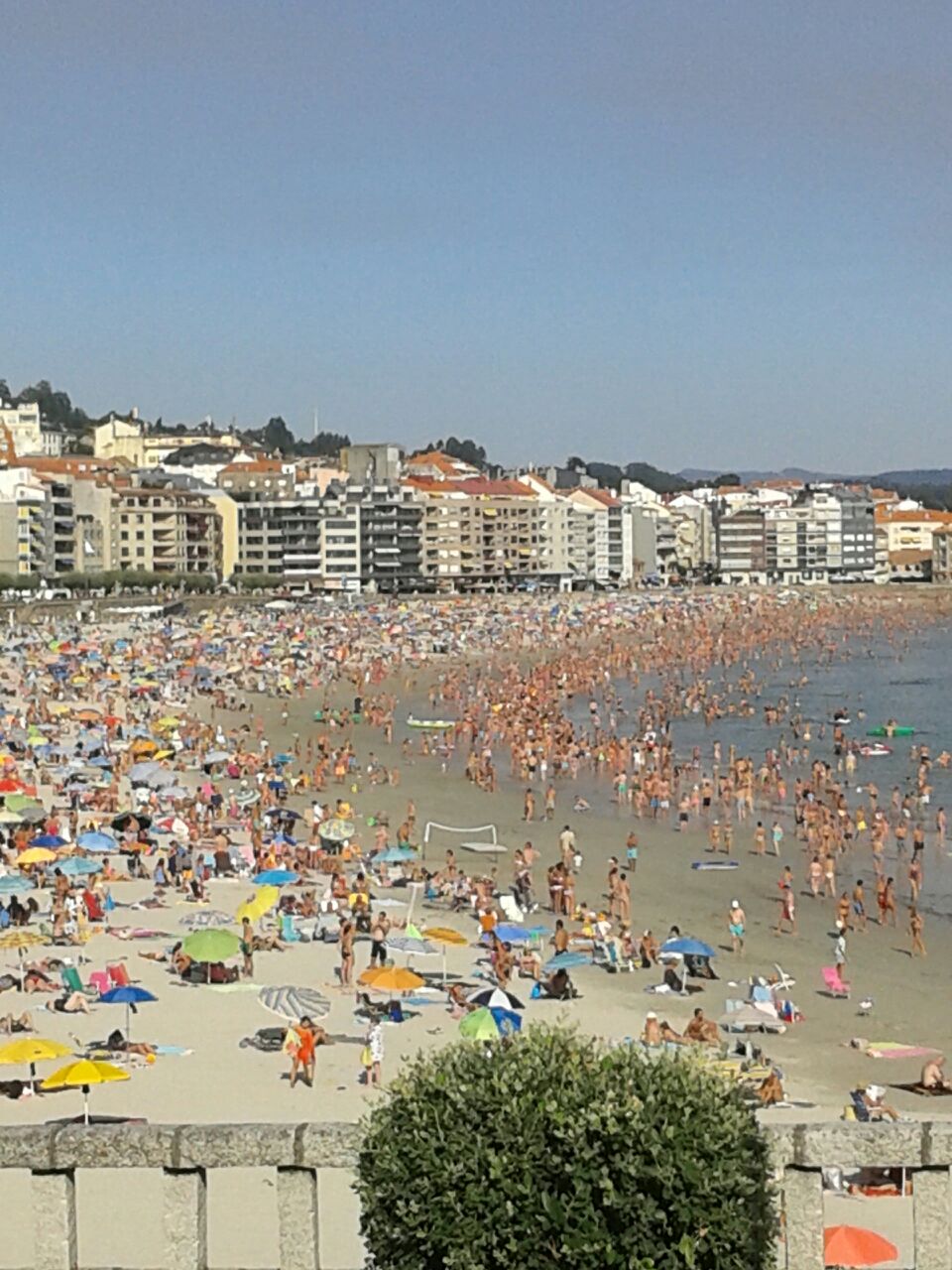
To date the 2015 growing season has been quite favourable, with plenty of warm sunny weather. August is proving to be a few degrees cooler than July, when temperatures often hovered in the upper 20’s C (between 77° and 86°F). Having said that, the one thing they both have in common is the lack of rainfall. I think it’s true to say that the last prolonged period of ‘real’ rain (as opposed to light drizzle) was back in mid-May, nearly three months ago. On our local motorways the signs above the carriageways warn of the high risk of forest fires, whilst our local tourist industry benefits from the crowds packing onto our beautiful beaches.Sanxenxo AugustIt’s almost exactly two years since I wrote about ‘green harvesting’, and the summer of 2015 is no different. Over the last few weeks our guys have been out in the vineyards removing excess bunches. The reasoning behind this is quite simple – the lower the yield, the better the quality. Removing a few bunches on each vine helps to concentrate the energy of the plant into the remaining fruit – a big harvest is rarely a beautiful harvest.

To date the 2015 growing season has been quite favourable, with plenty of warm sunny weather. August is proving to be a few degrees cooler than July, when temperatures often hovered in the upper 20’s C (between 77° and 86°F). Having said that, the one thing they both have in common is the lack of rainfall. I think it’s true to say that the last prolonged period of ‘real’ rain (as opposed to light drizzle) was back in mid-May, nearly three months ago. On our local motorways the signs above the carriageways warn of the high risk of forest fires, whilst our local tourist industry benefits from the crowds packing onto our beautiful beaches.

Gone with the wind

May 7th, 2015 | Vineyards

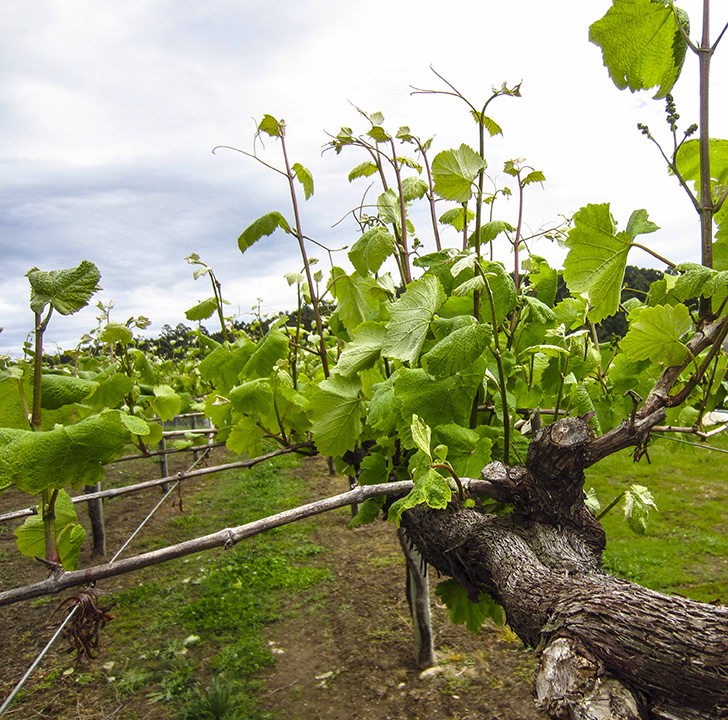
New shootsOne of the problems of using the pergola system for training vines is that at certain stages of the growing cycle, the plants can be left a little exposed. As the new shoots are suspended on wires about 2 metres (6-7ft) above the ground, it leaves them completely open to the elements. As our vineyards are located only a few km from the Atlantic Ocean, one of those elements is the wind, and if you vineyard happens to be in an exposed location (which is great for maximising sunshine hours), then it can be even more vulnerable when the wind howls in off the sea.

At this point in their development the new shoots are still too short to be attached to the wires (see today’s photo), but unfortunately they are just long enough to be snapped off by gale force winds. The day before yesterday (for the first time in a while), the weather was extremely windy – I have no idea of the exact wind speed, but it was certainly strong enough to cause a small amount of damage to our vines. Of course it is very early days in the vine cycle, and as such we have no real way of calculating how many (potential) bunches may have been lost – suffice to say that it is not the end of the world, and is simply one of the harsh realities that we face as fruit farmers….New shootsOne of the problems of using the pergola system for training vines is that at certain stages of the growing cycle, the plants can be left a little exposed. As the new shoots are suspended on wires about 2 metres (6-7ft) above the ground, it leaves them completely open to the elements. As our vineyards are located only a few km from the Atlantic Ocean, one of those elements is the wind, and if you vineyard happens to be in an exposed location (which is great for maximising sunshine hours), then it can be even more vulnerable when the wind howls in off the sea.

At this point in their development the new shoots are still to short to be attached to the wires (see today’s photo), but unfortunately they are just long enough to be snapped off by gale force winds. The day before yesterday (for the first time in a while), the weather was extremely windy – I have no idea of the exact wind speed, but it was certainly strong enough to cause a small amount of damage to our vines. Of course it is very early days in the vine cycle, and as such we have no real way of calculating how many (potential) bunches may have been lost – suffice to say that it is not the end of the world, and is simply one of the harsh realities that we face as fruit farmers….

Spring at last?

March 26th, 2015 | Vineyards

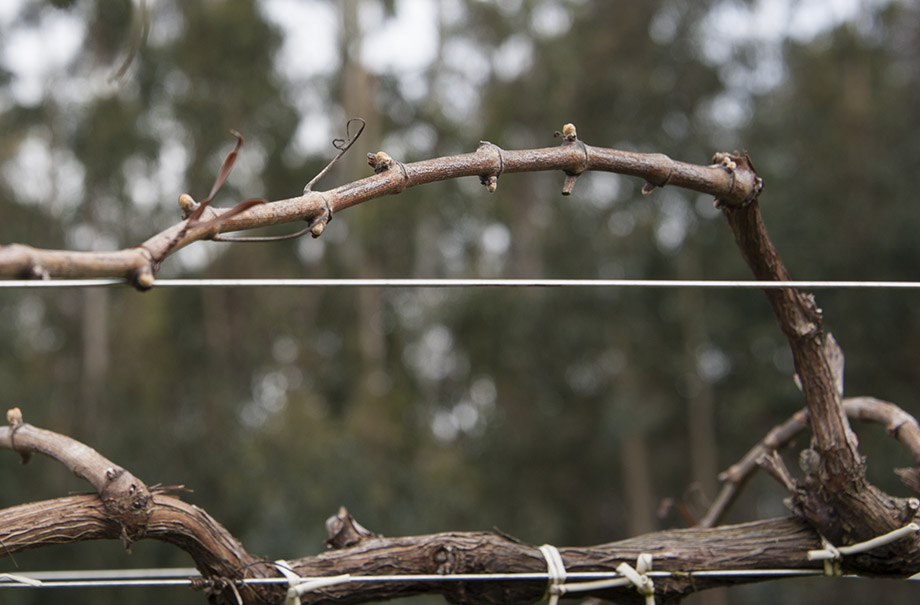
Bud break 2015One of the biggest chores of the year is pretty much behind us, as we come to the end of the pruning period – and not a moment too soon. In the last couple of weeks the weather has certainly picked up, and recent days have been largely fine and sunny. In the early part of the month the thermometer actually touched the 20°C (68°F) mark during the day, but since then the average has been closer to 15/16°C (60°F). The forecast for the coming week is for warmer weather, as our weather experts predict temperatures up to the mid-20’s C (around 75°F) – quite warm for this time of year.

Of course, with this warmer weather comes the first sign of life in the vineyard. The buds on the vines are just starting to break, and no doubt when the warm weather arrives next week, this small movement will be accelerated. Now that we have some growth, we have our fingers crossed that the winter frosts are behind us – certainly being so close to the sea does help to regulate our temperatures, meaning that we usually don’t suffer from extremes of temperature either in summer or in winter.Bud break 2015One of the biggest chores of the year is pretty much behind us, as we come to the end of the pruning period – and not a moment too soon. In the last couple of weeks the weather has certainly picked up, and recent days have been largely fine and sunny. In the early part of the month the thermometer actually touched the 20°C (68°F) mark during the day, but since then the average has been closer to 15/16°C (60°F). The forecast for the coming week is for warmer weather, as our weather experts predict temperatures up to the mid-20’s C (around 75°F) – quite warm for this time of year.

Of course, with this warmer weather comes the first sign of life in the vineyard. The buds on the vines are just starting to break, and no doubt when the warm weather arrives next week, this small movement will be accelerated. Now that we have some growth, we have our fingers crossed that the winter frosts are behind us – certainly being so close to the sea does help to regulate our temperatures, meaning that we usually don’t suffer from extremes of temperature either in summer or in winter.

Overdressed for the vineyard?

September 6th, 2014 | Business

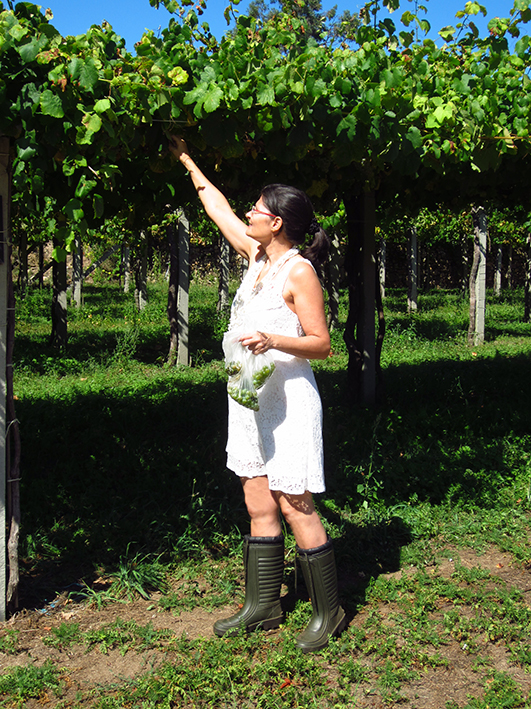
DressOne of the problems of running a small, family-owned bodega is that we all have to be very flexible in the many and varied rolls that we have to cover. Angela, for example, is not only our oenologist, but she is also our vineyard specialist (with degrees in both Biology and Viticulture) and also the administrator of the business. So the question arises, if you have an appointment with your solicitor in the morning, and then need to collect samples in the vineyard during the afternoon, what do you wear for work? Angela’s solution to this dilemma was simply a change of shoes – as you can clearly see in today’s photo! Now, it’s not uncommon these days to see celebs wearing shorts or dresses accessorised with oversized boots….. but a pair of wellies?! Who knows, this could be the start of a new trend.

On a more serious note, Angela was actually out collecting grape samples to check on the progress of our crop. She was quite pleased with her early analysis, albeit we still have a little way to go before the fruit will be ripe for picking. Perhaps another 10 days or so before we kick off the 2014 harvest.

DressOne of the problems of running a small, family-owned bodega is that we all have to be very flexible in the many and varied rolls that we have to cover. Angela, for example, is not only our oenologist, but she is also our vineyard specialist (with degrees in both Biology and Viticulture) and also the administrator of the business. So the question arises, if you have an appointment with your solicitor in the morning, and then need to collect samples in the vineyard during the afternoon, what do you wear for work? Angela’s solution to this dilemma was simply a change of shoes – as you can clearly see in today’s photo! Now, it’s not uncommon these days to see celebs wearing shorts or dresses accessorised with oversized boots….. but a pair of wellies?! Who knows, this could be the start of a new trend.

On a more serious note, Angela was actually out collecting grape samples to check on the progress of our crop. She was quite pleased with her early analysis, albeit we still have a little way to go before the fruit will be ripe for picking. Perhaps another 10 days or so before we kick off the 2014 harvest.

The loneliness of the long distance sprayer

June 16th, 2014 | People

Long distance sprayerWith all the recent rainfall, and now a blast of hot sunshine, we have perfect conditions in our vineyards for disease. Local growers are rushing out to treat their vines before the humidity takes its toll. 

People say that the vineyards of Burgundy are fragmented, but when you examine the ‘stats’ here in Galicia, I think we can give them a good run for their money….. In our denomination there are just over 4,000 hectares (about 10,000 acres) in total. This is divided between more than 6,700 registered grape growers, meaning that the average would be about 0.6 hectares (1.5 acres), except that some people have much more than the average. For example, we have 11 hectares (27 acres), meaning that many of the smallest growers have much less than the average. And this is not the end of the story – there are some 23,400 individual vineyard sites, so you can perhaps begin to imagine how fragmented we are as a wine producing area!

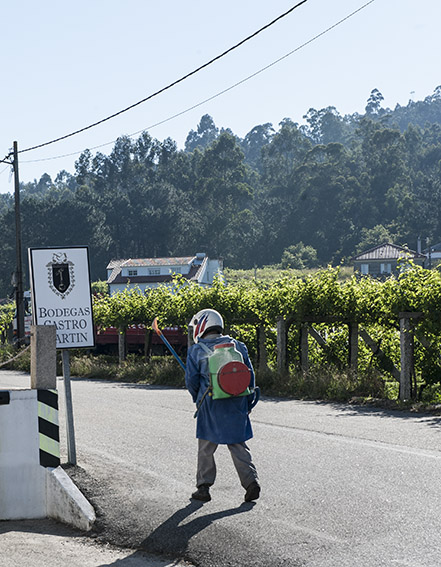
Anyway, back to my original point. With such small vineyard holdings much of the work is carried out by the owners and their family, and not using any hi-tech equipment either – it’s very much a hands on regime in which everyone has to play their part. Take, for example, this young man, in today’s photo, sent out in the early morning to spray his family’s plot using just a small back pack. His protective equipment?…. A blue work coat and a motorcycle helmet. Better than nothing I guess (but only just).

Long distance sprayerWith all the recent rainfall, and now a blast of hot sunshine, we have perfect conditions in our vineyards for disease. Local growers are rushing out to treat their vines before the humidity takes its toll. 

People say that the vineyards of Burgundy are fragmented, but when you examine the ‘stats’ here in Galicia, I think we can give them a good run for their money….. In our denomination there are just over 4,000 hectares (about 10,000 acres) in total. This is divided between more than 6,700 registered grape growers, meaning that the average would be about 0.6 hectares (1.5 acres), except that some people have much more than the average. For example, we have 11 hectares (27 acres), meaning that many of the smallest growers have much less than the average. And this is not the end of the story – there are some 23,400 individual vineyard sites, so you can perhaps begin to imagine how fragmented we are as a wine producing area!

Anyway, back to my original point. With such small vineyard holdings much of the work is carried out by the owners and their family, and not using any hi-tech equipment either – it’s very much a hands on regime in which everyone has to play their part. Take, for example, this young man, in today’s photo, sent out in the early morning to spray his family’s plot using just a small back pack. His protective equipment?…. A blue work coat and a motorcycle helmet. Better than nothing I guess (but only just).

Monthly Archives

Categories

ARE YOU OF LEGAL AGE? This site is intended for those of legal drinking age. By entering, you confirm that you are of legal drinking age in the country where this site is being accessed. ¿ERES MAYOR DE EDAD? Este sitio está destinado a personas en edad legal para beber alcohol. Al ingresar, confirma que tiene la edad legal para beber en el país donde se accede a este sitio.