

Archive for ‘Tasting’

A question of timing…

July 3rd, 2013 | Tasting
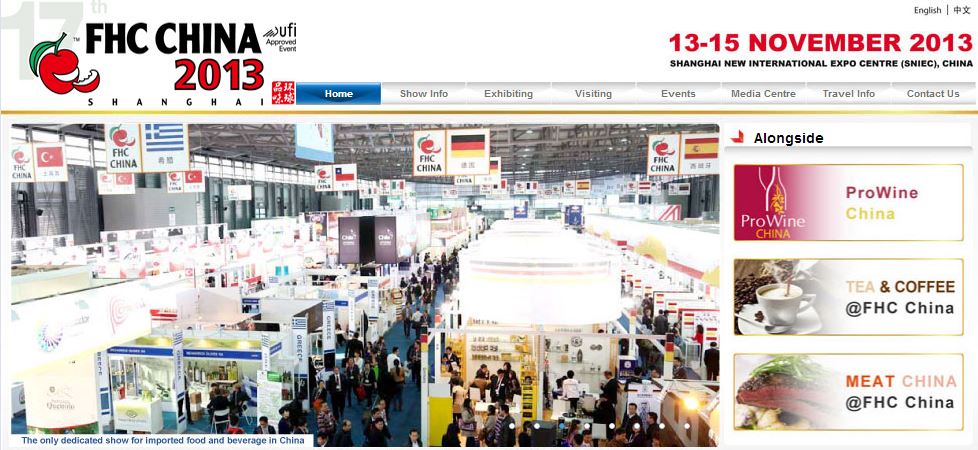
FHC 2013I had a feeling that I had already written about today’s subject once before, but looking back through my archives I can’t find anything, so I thought that today I would have a little moan about wine fairs. Well, not so much the wine fairs themselves (although we are very selective about those that we chose to attend), but more about the time of year that they are held. The problem is to do with the size of our wine cellar…. I will explain.

Bodegas Castro Martin is a comparatively small, family run bodega – we have only a handful of employees, and the day-today management is shared pretty much between Angela and myself. This means that we have a hand in everything, from managing the vineyards (Angela’s speciality), to making the wine, and then marketing and selling it. This also includes handling any customer or press visits and attending tastings and wine fairs – and thereby lies the problem.

Any wine fair that falls around harvest time, or in the month or two immediately after, is completely impossible for us to attend. It is a direct conflict, and it goes without saying that our harvest and wine making must always come first. From September through November we are tied to Ribadumia, and at some points during that period we are almost living in the bodega (by the way, we don’t have bedrooms).

The significance of our size therefore, is quite simple. If we were a larger business or perhaps decided to be less ‘hands on’, then we would probably employ a fully suited and booted sales manager who could attend these events on our behalf, without any detriment to either the harvest or the finished wine. The truth is that we love the personalised service that we are able to offer our customers – our wines are our children and we don’t allow them to go anywhere without us!

FHC 2013I had a feeling that I had already written about today’s subject once before, but looking back through my archives I can’t find anything, so I thought that today I would have a little moan about wine fairs. Well, not so much the wine fairs themselves (although we are very selective about those that we chose to attend), but more about the time of year that they are held. The problem is to do with the size of our wine cellar…. I will explain.

Bodegas Castro Martin is a comparatively small, family run bodega – we have only a handful of employees, and the day-today management is shared pretty much between Angela and myself. This means that we have a hand in everything, from managing the vineyards (Angela’s speciality), to making the wine, and then marketing and selling it. This also includes handling any customer or press visits and attending tastings and wine fairs – and thereby lies the problem.

Any wine fair that falls around harvest time, or in the month or two immediately after, is completely impossible for us to attend. It is a direct conflict, and it goes without saying that our harvest and wine making must always come first. From September through November we are tied to Ribadumia, and at some points during that period we are almost living in the bodega (by the way, we don’t have bedrooms).

The significance of our size therefore, is quite simple. If we were a larger business or perhaps decided to be less ‘hands on’, then we would probably employ a fully suited and booted sales manager who could attend these events on our behalf, without any detriment to either the harvest or the finished wine. The truth is that we love the personalised service that we are able to offer our customers – our wines are our children and we don’t allow them to go anywhere without us!

Choosing your wine

March 19th, 2013 | Retail

Morrisons

Whether you find yourself in a shop, a supermarket, or in a posh restaurant, making your selection of wine is not only a very, very daunting task, but it is also, of course, purely subjective. The wines that I like or recommend could very easily be hated by someone else. I know this from experience, as in my previous life as a wine buyer the question that I was most often asked was “what wine should I drink”? My reply was always the same….. “drink what you enjoy” – in other words no one can tell you what you should or shouldn’t like.

The next problem might be that if you do find yourself in an expensive restaurant then your situation becomes even more complicated. Firstly, you don’t want to make what could be a very costly mistake, and secondly you don’t want to choose something that is repulsive with your food – hence the fact that there should be an experienced sommelier to help you. If they know their job properly then they should be able to guide you safely through the minefield that is their wine list, and make the appropriate recommendations.

So what do you do in a supermarket? Buy the same wine week-in week-out just to be on the safe side? On a supermarket shelf the two bottles adjacent to each other might be from the same country, but they could be wildly different in style. So what’s the answer?

One UK supermarket chain has at least come up with an original idea – to arrange their display by wine style rather than just by simple geographical origin (as most do). Instead the signs in their aisles will direct you to Fresh, Smooth, Sweet or Intense wines. The supermarket in question, William Morrisons, have also taken the idea one step further…. they have devised a test to help guide you to a specific category of wine that you might enjoy. Perhaps a bit too sophisticated an idea for your average supermarket shopper, but an idea that breaks the mould and for that reason alone, has to be applauded. Incidentally, I took the test myself and was just a little perplexed by the result, telling me that my preference was for sweet wine (which is actually not the case), so if you want to play along just click here and take the test yourself. It’s simple, it’s fun and it’s actually quite well made even if you don’t agree with the result.

Morrisons

Whether you find yourself in a shop, a supermarket, or in a posh restaurant, making your selection of wine is not only a very, very daunting task, but it is also, of course, purely subjective. The wines that I like or recommend could very easily be hated by someone else. I know this from experience, as in my previous life as a wine buyer the question that I was most often asked was “what wine should I drink”? My reply was always the same….. “drink what you enjoy” – in other words no one can tell you what you should or shouldn’t like.

The next problem might be that if you do find yourself in an expensive restaurant then your situation becomes even more complicated. Firstly, you don’t want to make what could be a very costly mistake, and secondly you don’t want to choose something that is repulsive with your food – hence the fact that there should be an experienced sommelier to help you. If they know their job properly then they should be able to guide you safely through the minefield that is their wine list, and make the appropriate recommendations.

So what do you do in a supermarket? Buy the same wine week-in week-out just to be on the safe side? On a supermarket shelf the two bottles adjacent to each other might be from the same country, but they could be wildly different in style. So what’s the answer?

One UK supermarket chain has at least come up with an original idea – to arrange their display by wine style rather than just by simple geographical origin (as most do). Instead the signs in their aisles will direct you to Fresh, Smooth, Sweet or Intense wines. The supermarket in question, William Morrisons, have also taken the idea one step further…. they have devised a test to help guide you to a specific category of wine that you might enjoy. Perhaps a bit too sophisticated an idea for your average supermarket shopper, but an idea that breaks the mould and for that reason alone, has to be applauded. Incidentally, I took the test myself and was just a little perplexed by the result, telling me that my preference was for sweet wine (which is actually not the case), so if you want to play along just click here and take the test yourself. It’s simple, it’s fun and it’s actually quite well made even if you don’t agree with the result.

Wine flavoured drink

February 10th, 2013 | Tasting

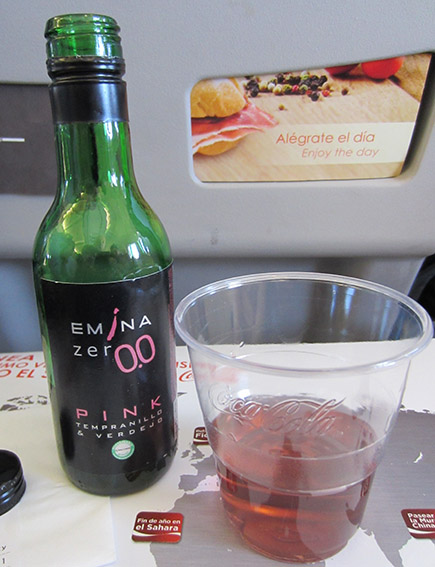
We have just got back from a short overseas trip – hence the fact that our blog has been silent for the last few days. On our outward flight we again discovered an alcohol-free “wine” on the in-flight menu, but this time the airline actually had it in stock. We ordered a small plastic bottle…. served with a small plastic glass.

Whilst it is actually advertised as wine, technically, as it has no alcohol, it is not actually wine but merely a wine flavoured soft drink. Of course, packing any drink into an 18cl screw top plastic bottle is never going to be the best way of preserving freshness, and this particular beverage only served to confirm that theory. The nose was a combination of oxidised, volatile acetones – hardly making it an attractive proposition for drinking. And the palate? Well, what can I say? Not really much better. To be brutally honest it simply tasted like flavoured water, the type that you might buy in litre bottles in a supermarket, flavoured with peach, or perhaps a hint of summer fruits.

The question must therefore be, why bother? Or at the very least, why advertise it as alcohol-free wine and not just as a flavoured soft drink? Sorry, I just don’t see the point and certainly can’t recommend it.

We have just got back from a short overseas trip – hence the fact that our blog has been silent for the last few days. On our outward flight we again discovered an alcohol-free “wine” on the in-flight menu, but this time the airline actually had it in stock. We ordered a small plastic bottle…. served with a small plastic glass.

Whilst it is actually advertised as wine, technically, as it has no alcohol, it is not actually wine but merely a wine flavoured soft drink. Of course, packing any drink into an 18cl screw top plastic bottle is never going to be the best way of preserving freshness, and this particular beverage only served to confirm that theory. The nose was a combination of oxidised, volatile acetones – hardly making it an attractive proposition for drinking. And the palate? Well, what can I say? Not really much better. To be brutally honest it simply tasted like flavoured water, the type that you might buy in litre bottles in a supermarket, flavoured with peach, or perhaps a hint of summer fruits.

The question must therefore be, why bother? Or at the very least, why advertise it as alcohol-free wine and not just as a flavoured soft drink? Sorry, I just don’t see the point and certainly can’t recommend it.

The £1 million tongue

January 9th, 2013 | Tasting

I’ve heard various anecdotes about celebrities and professionals insuring parts of their body for huge amounts of money before, but I don’t really recall a story of anyone insuring their tongue….. until now. I recently read about a young lady, not in the wine business, but who works as a taster in the baby food industry. (When you think about it there must be tasters for pretty much every product that we eat and drink, and I think I even recall hearing about a man who tastes pet foods for a living!) Anyway, the significance of this story is that this lady has recently had her tongue insured for £1 million (about $1.6 million).

I have claimed in the past that my own sense of taste/smell is perhaps more acute than many people that I know, simply because in my line of work as a buyer, I used it much more than the average person, and therefore, over time, it was simply ‘educated’ to become more sensitive. (The human sense of smell is, generally speaking, highly underutilised and can be trained over time). In the case of this baby food taster however, this young lady was actually born with a more sensitive tongue, with double the number of taste receptors. Obviously this is quite a rare genetic condition, having 10,000 taste buds on her tongue, instead of the more usual 5,000, and it goes without saying that her sense of taste is very highly tuned. She can detect extremely small and subtle differences in the flavours of food – her tongue is therefore the primary tool of her job and is no doubt why it is so valuable to her.

Of course there are many similarities between her work and that of a wine taster. As a part of her daily routine she will avoid eating foods with strong flavours, such as curry or garlic, and drinking coffee before a tasting session. In my own case I would also avoid wearing aftershave and other less obvious things like trying to ensure a good gap between cleaning my teeth and tasting my first wine of the day. Indeed, it’s probably best to taste two or three wines to get your palate tuned before you make any definitive judgements.

I’ve heard various anecdotes about celebrities and professionals insuring parts of their body for huge amounts of money before, but I don’t really recall a story of anyone insuring their tongue….. until now. I recently read about a young lady, not in the wine business, but who works as a taster in the baby food industry. (When you think about it there must be tasters for pretty much every product that we eat and drink, and I think I even recall hearing about a man who tastes pet foods for a living!) Anyway, the significance of this story is that this lady has recently had her tongue insured for £1 million (about $1.6 million).

I have claimed in the past that my own sense of taste/smell is perhaps more acute than many people that I know, simply because in my line of work as a buyer, I used it much more than the average person, and therefore, over time, it was simply ‘educated’ to become more sensitive. (The human sense of smell is, generally speaking, highly underutilised and can be trained over time). In the case of this baby food taster however, this young lady was actually born with a more sensitive tongue, with double the number of taste receptors. Obviously this is quite a rare genetic condition, having 10,000 taste buds on her tongue, instead of the more usual 5,000, and it goes without saying that her sense of taste is very highly tuned. She can detect extremely small and subtle differences in the flavours of food – her tongue is therefore the primary tool of her job and is no doubt why it is so valuable to her.

Of course there are many similarities between her work and that of a wine taster. As a part of her daily routine she will avoid eating foods with strong flavours, such as curry or garlic, and drinking coffee before a tasting session. In my own case I would also avoid wearing aftershave and other less obvious things like trying to ensure a good gap between cleaning my teeth and tasting my first wine of the day. Indeed, it’s probably best to taste two or three wines to get your palate tuned before you make any definitive judgements.

Albariño Fizz

December 4th, 2012 | Local News

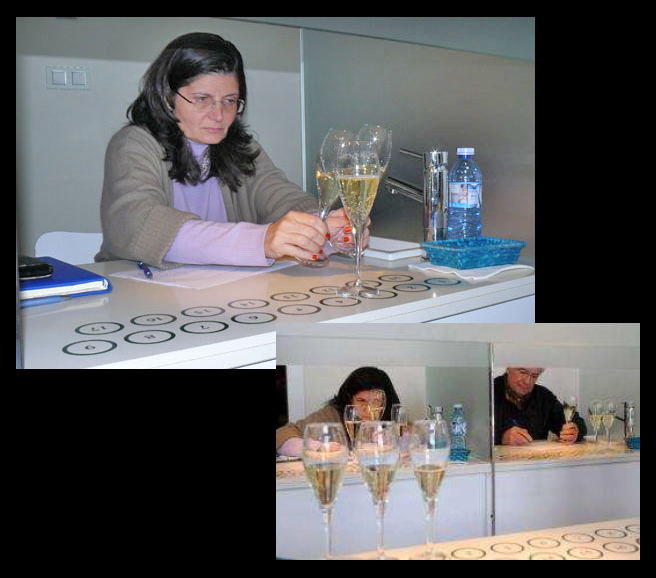
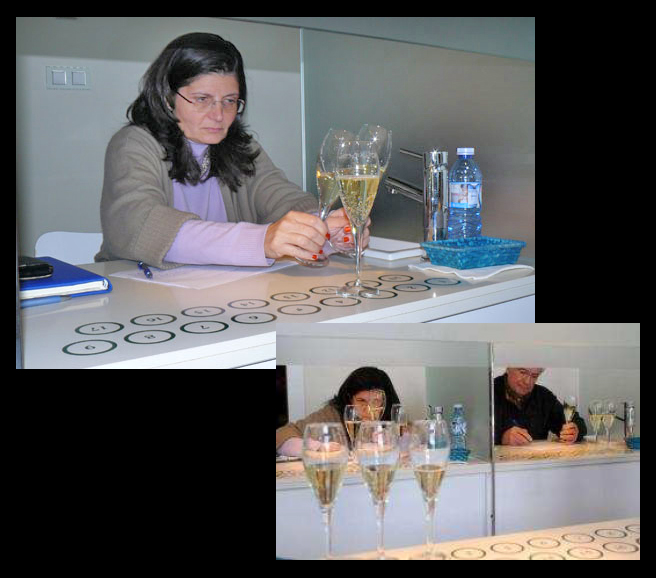
Today’s picture shows my happy little taster….. Angela! Actually, I shouldn’t make fun as it’s quite clear that she’s concentrating and being the consummate professional in her role as an a taster on the official D.O. tasting committee. Just in case you didn’t already know, every tank that we bottle has to be submitted in advance to this committee to be judged for quality. Those wines that pass the tasting will then be given their official ‘tirilla’ – the small, numbered strip label found on the back of every bottle, bearing the logo of Rias Baixas.

Anyway, last weeks tasting included a brand new product for our D.O., sparkling Rias Baixas, and just in time for Christmas! These new sparkling wines will be made by only a handful of Bodegas in our region, and will be made from a blend of the permitted varietals of our denomination (red and white). Bodegas will be required to use the traditional ‘methode champenoise’ with a minimum ageing of 9 months. I understand that the degree of sweetness will also be controlled using the traditional method and that the wines will be classified in the same way as Champagne – Brut Nature (sometimes known as Brut Zero, with no sugar at all), Extra Brut, Extraseco, Seco, Semiseco and Dulce (sweet). The head coach of our denomination Lake Augustine explained that Bodegas will not be required to show a vintage on the label, nor will they be required to disclose the grape varieties that they have used in the blend, which seems a bit odd.

(By the way, the technical director (not head coach) of our D.O. is called Agustin Lago, but I just loved the way that Google translated his name and job title – sorry, I couldn’t resist!)

Today’s picture shows my happy little taster….. Angela! Actually, I shouldn’t make fun as it’s quite clear that she’s concentrating and being the consummate professional in her role as an a taster on the official D.O. tasting committee. Just in case you didn’t already know, every tank that we bottle has to be submitted in advance to this committee to be judged for quality. Those wines that pass the tasting will then be given their official ‘tirilla’ – the small, numbered strip label found on the back of every bottle, bearing the logo of Rias Baixas.

Anyway, last weeks tasting included a brand new product for our D.O., sparkling Rias Baixas, and just in time for Christmas! These new sparkling wines will be made by only a handful of Bodegas in our region, and will be made from a blend of the permitted varietals of our denomination (red and white). Bodegas will be required to use the traditional ‘methode champenoise’ with a minimum ageing of 9 months. I understand that the degree of sweetness will also be controlled using the traditional method and that the wines will be classified in the same way as Champagne – Brut Nature (sometimes known as Brut Zero, with no sugar at all), Extra Brut, Extraseco, Seco, Semiseco and Dulce (sweet). The head coach of our denomination Lake Augustine explained that Bodegas will not be required to show a vintage on the label, nor will they be required to disclose the grape varieties that they have used in the blend, which seems a bit odd.

(By the way, the technical director (not head coach) of our D.O. is called Agustin Lago, but I just loved the way that Google translated his name and job title – sorry, I couldn’t resist!)

Monopoly update

October 21st, 2012 | International News

No, of course I am not talking about the famous board game made by Hasbro, but actually about the bodies that control the sale of alcohol in Canada and most of Scandinavia. Anyone who has ever tried to work with a monopoly will tell you that it can be a very frustrating experience, and whilst we all recognise that control is required, some might view these organisations as perhaps a little old fashioned or maybe even draconian (especially in a 21st century free market environment).

Monopolies work on a system of tenders – if they are looking for a specific wine, then they will invite producers (perhaps from a specific reason such as Rias Baixas), to submit their samples. Quite fair you might think, and of course this part is. I have always been an advocate of selling on the basis of quality and value for money, and so in this sense my belief is always “may the best man (or wine) win”.

The monopolies always specify the range of ex-cellar price that they are looking for, and again, no problem, but then they also add a tasting note of what they believe the wine should taste like. Being a former buyer myself I understand completely the necessity to find a ‘typical’ wine – typical of its denomination that is. However, in these circumstances you have to make sure that your description is accurate and reflects the differing styles that may exist within a specific region. For example, in tenders for albariño I have seen expressions such as ‘generous’ and ‘full-bodied’ being used, which, to be honest, are not descriptions that I would use myself.

I guess the problem is that if you become too specific about the wine style, type of closure or perhaps even the alcohol content that you are looking for, then it is possible that you will automatically exclude some very good wines from your tasting before you have even pulled a cork! I was always trained to keep a completely open mind, and to expect to taste 20, 50 or even 100 wines before I found the one that I was looking for…… tasting, tasting, tasting – there are no shortcuts.

Having said all that my biggest frustration with monopolies was that of continuity. Monopolies might hold three of four tastings a year from within one specific denomination. For a bodega this means quite a number of samples not to mention a huge UPS bill. The problem was that even when successful in one particular tasting, this would not be any guarantee of a long-term listing – quite the opposite in fact. Speaking from our own experience, our wine was selected, listed and sold in a very short space of time (picking up some very favourable press reviews along the way), but despite this apparent success, the wine was never re-ordered. They simply started the whole process again from the very beginning requesting yet more samples!

The good news is that in Sweden at least, they are changing the system. I’m not sure of the exact details, but I am given to understand that they are now looking for more ‘permanent’ listings. Not only is this good news for their would-be suppliers, but also for the Swedish consumer. Imagine walking into one of their State run shops, finding a wine that you really like, and then never being able to buy it again. Far from the perfect system (bolaget)!

No, of course I am not talking about the famous board game made by Hasbro, but actually about the bodies that control the sale of alcohol in Canada and most of Scandinavia. Anyone who has ever tried to work with a monopoly will tell you that it can be a very frustrating experience, and whilst we all recognise that control is required, some might view these organisations as perhaps a little old fashioned or maybe even draconian (especially in a 21st century free market environment).

Monopolies work on a system of tenders – if they are looking for a specific wine, then they will invite producers (perhaps from a specific reason such as Rias Baixas), to submit their samples. Quite fair you might think, and of course this part is. I have always been an advocate of selling on the basis of quality and value for money, and so in this sense my belief is always “may the best man (or wine) win”.

The monopolies always specify the range of ex-cellar price that they are looking for, and again, no problem, but then they also add a tasting note of what they believe the wine should taste like. Being a former buyer myself I understand completely the necessity to find a ‘typical’ wine – typical of its denomination that is. However, in these circumstances you have to make sure that your description is accurate and reflects the differing styles that may exist within a specific region. For example, in tenders for albariño I have seen expressions such as ‘generous’ and ‘full-bodied’ being used, which, to be honest, are not descriptions that I would use myself.

I guess the problem is that if you become too specific about the wine style, type of closure or perhaps even the alcohol content that you are looking for, then it is possible that you will automatically exclude some very good wines from your tasting before you have even pulled a cork! I was always trained to keep a completely open mind, and to expect to taste 20, 50 or even 100 wines before I found the one that I was looking for…… tasting, tasting, tasting – there are no shortcuts.

Having said all that my biggest frustration with monopolies was that of continuity. Monopolies might hold three of four tastings a year from within one specific denomination. For a bodega this means quite a number of samples not to mention a huge UPS bill. The problem was that even when successful in one particular tasting, this would not be any guarantee of a long-term listing – quite the opposite in fact. Speaking from our own experience, our wine was selected, listed and sold in a very short space of time (picking up some very favourable press reviews along the way), but despite this apparent success, the wine was never re-ordered. They simply started the whole process again from the very beginning requesting yet more samples!

The good news is that in Sweden at least, they are changing the system. I’m not sure of the exact details, but I am given to understand that they are now looking for more ‘permanent’ listings. Not only is this good news for their would-be suppliers, but also for the Swedish consumer. Imagine walking into one of their State run shops, finding a wine that you really like, and then never being able to buy it again. Far from the perfect system (bolaget)!

Neal Martin flies in

September 26th, 2012 | Rias Baixas

At the beginning of last month I wrote about the scandal surrounding the former Master of Wine Pancho Campo and his relationship with Jay Miller, writer for the Wine Advocate. Whatever the definitive truth behind this story, Jay Miller eventually resigned from his post as a contributor for Robert Parker Jr. and has since been replaced by the English writer Neal Martin.

Shortly before Mr Miller resigned we received notice that he would be visiting the offices of our denomination to make an extensive tasting of our Rias Baxias wines. At first the tasting was postponed, until it was eventually cancelled completely later in the year. We were never given any official explanation and heard nothing more until now – a new tasting would be conducted by a new taster, or ’emissary’ as he was described in our local press.

From my days in the UK trade I am fortunate to know many English wine writers on a personal basis, but I have to confess that Neal Martin is a name that is new to me. After working in Japan, Mr Martin discovered wine more or less by accident, working for a Japanese export company where one of the commodities on their export list just happened to be wine. After completing various courses with the WSET he set up his own wine blog wine-journal.com, and then, just a few short years later was approached by Robert Parker Jr. to become a contributor to the Wine Advocate, covering Spain and parts of South America. He is also a keen music lover.

At the beginning of last month I wrote about the scandal surrounding the former Master of Wine Pancho Campo and his relationship with Jay Miller, writer for the Wine Advocate. Whatever the definitive truth behind this story, Jay Miller eventually resigned from his post as a contributor for Robert Parker Jr. and has since been replaced by the English writer Neal Martin.

Shortly before Mr Miller resigned we received notice that he would be visiting the offices of our denomination to make an extensive tasting of our Rias Baxias wines. At first the tasting was postponed, until it was eventually cancelled completely later in the year. We were never given any official explanation and heard nothing more until now – a new tasting would be conducted by a new taster, or ’emissary’ as he was described in our local press.

From my days in the UK trade I am fortunate to know many English wine writers on a personal basis, but I have to confess that Neal Martin is a name that is new to me. After working in Japan, Mr Martin discovered wine more or less by accident, working for a Japanese export company where one of the commodities on their export list just happened to be wine. After completing various courses with the WSET he set up his own wine blog wine-journal.com, and then, just a few short years later was approached by Robert Parker Jr. to become a contributor to the Wine Advocate, covering Spain and parts of South America. He is also a keen music lover.

BCM in NYC

September 17th, 2012 | Tasting

You may have wondered why I did not make the post about our Olympic success the very moment that the Paralympic Games finished last week. The reason is quite simply that first thing last Monday morning I was on a flight to New York – one of my favourite cities on earth. To be honest I’m not sure that I would actually like to live there, but an occasional visit to the Big Apple once in a while certainly gives me a bit of a lift, and provides a stark contrast to rural life here in Galicia.

With our harvest looming it was hardly the best time to be jetting off, but we deem it very important to support our importers whenever we can, and an annual tasting is always a very difficult invitation to decline. I may have mentioned this in previous years, but as Angela was unable to accompany me (owing to her vineyard commitments), she compensated by sending me with an enormous shopping list! Consequently any free moment was spent rushing around Manhattan from shop to shop….

I’m pleased to say that our 2011 wines were very well received, and the new presentation of our A2O label certainly created some interest. A tiring few days perhaps, but worth the effort I think. 


You may have wondered why I did not make the post about our Olympic success the very moment that the Paralympic Games finished last week. The reason is quite simply that first thing last Monday morning I was on a flight to New York – one of my favourite cities on earth. To be honest I’m not sure that I would actually like to live there, but an occasional visit to the Big Apple once in a while certainly gives me a bit of a lift, and provides a stark contrast to rural life here in Galicia.

 With our harvest looming it was hardly the best time to be jetting off, but we deem it very important to support our importers whenever we can, and an annual tasting is always a very difficult invitation to decline. I may have mentioned this in previous years, but as Angela was unable to accompany me (owing to her vineyard commitments), she compensated by sending me with an enormous shopping list! Consequently any free moment was spent rushing around Manhattan from shop to shop….

 I’m pleased to say that our 2011 wines were very well received, and the new presentation of our A2O label certainly created some interest. A tiring few days perhaps, but worth the effort I think.

Wine flavour capsules

August 24th, 2012 | Tasting

Wine aroma kits have been around for some time, indeed I remember buying my first ‘Nez du Vin’ roughly 20 years ago. The kit consisted of small vials of oils impregnated with some of the more common fragrances found in wine. Indeed some of the kits were actually regionalised, and you could buy one that represented a specific (French) wine region – in other words the smells associated with the grape varieties of that particular region. Nicely packaged, with colour pictures (like large playing cards) explaining each individual aroma. They were not cheap, and also did not last that long once they had been opened for the first time – like fine perfumes they would eventually age and start to fade.

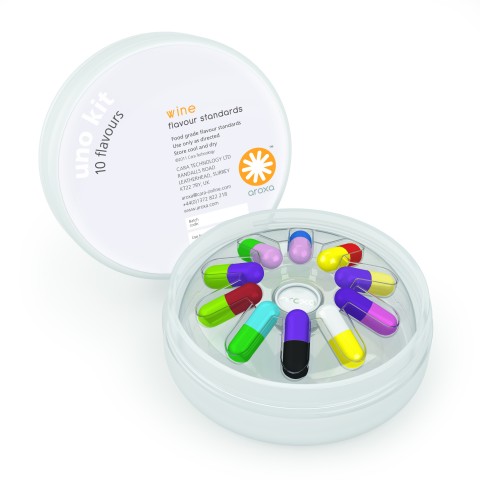
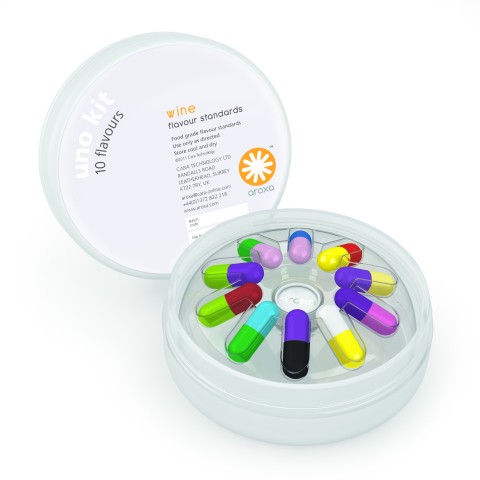
However, there is now a new kid on the aroma block – the Aroxa sensory kit. The way that this kit performs is completely different to its predecessors, and aimed more at the profession wine taster who wants to train his or her palate. The system contains a series of capsules, each one containing a purified form of the molecule responsible for some of the more common flavours and taints found in wine. To use them you quite simply break the capsule and pour it into a wine. The capsules are not actually given the name of a particular smell such as honey, violet or vanilla, but they are give the chemical name of the molecule instead e.g. ethyl phenylacetate, β-ionone or vanillin (the latter example being the most obvious of the three). The system’s creator, Dr Bill Simpson, thinks that his method will help to unify the way in which wines are described, replacing the current somewhat vague, but elegantly crafted prose. For example, one person might say grapefruit, whilst another will say citrus, but then using Dr Simpson’s system, both would be trained to say ‘linalool’. Accurate perhaps, but certainly not quite as lyrical…. Dr Simpson argues that a professional taster should first know the real name of the compound, and then find a way to convey it to their own particular target audience.

The real beauty of this Aroxa kit is that it allows trainers to actually test the sensitivity of any given group of students, and their ability to detect particular aromas. As the molecules are actually added to the wines then it also allows them to be tasted blind, giving a much more objective result.

The downside? Price! Ten small capsules for a single tasting will set you back £69 (approx $110). A kit of eight flavours for a group tasting of ten people (viable for only 20 hours), is a ‘snip’ at only £499 (nearly $800), but at least it does include free shipping! It’s on my Christmas list….. 

Wine aroma kits have been around for some time, indeed I remember buying my first ‘Nez du Vin’ roughly 20 years ago. The kit consisted of small vials of oils impregnated with some of the more common fragrances found in wine. Indeed some of the kits were actually regionalised, and you could buy one that represented a specific (French) wine region – in other words the smells associated with the grape varieties of that particular region. Nicely packaged, with colour pictures (like large playing cards) explaining each individual aroma. They were not cheap, and also did not last that long once they had been opened for the first time – like fine perfumes they would eventually age and start to fade.

However, there is now a new kid on the aroma block – the Aroxa sensory kit. The way that this kit performs is completely different to its predecessors, and aimed more at the profession wine taster who wants to train his or her palate. The system contains a series of capsules, each one containing a purified form of the molecule responsible for some of the more common flavours and taints found in wine. To use them you quite simply break the capsule and pour it into a wine. The capsules are not actually given the name of a particular smell such as honey, violet or vanilla, but they are give the chemical name of the molecule instead e.g. ethyl phenylacetate, β-ionone or vanillin (the latter example being the most obvious of the three). The system’s creator, Dr Bill Simpson, thinks that his method will help to unify the way in which wines are described, replacing the current somewhat vague, but elegantly crafted prose. For example, one person might say grapefruit, whilst another will say citrus, but then using Dr Simpson’s system, both would be trained to say ‘linalool’. Accurate perhaps, but certainly not quite as lyrical…. Dr Simpson argues that a professional taster should first know the real name of the compound, and then find a way to convey it to their own particular target audience.

The real beauty of this Aroxa kit is that it allows trainers to actually test the sensitivity of any given group of students, and their ability to detect particular aromas. As the molecules are actually added to the wines then it also allows them to be tasted blind, giving a much more objective result.

The downside? Price! Ten small capsules for a single tasting will set you back £69 (approx $110). A kit of eight flavours for a group tasting of ten people (viable for only 20 hours), is a ‘snip’ at only £499 (nearly $800), but at least it does include free shipping! It’s on my Christmas list….. 

No smoke without fire

August 1st, 2012 | International News

I have been meaning to write about the Wine Advocate Spanish wine ‘scandal’ for some time now. It’s possible that you might not even be aware of what’s been going on, but over the last year or so there has been many a libelous accusation flying about, bismerching the integrity of Mr Robert Parker’s beloved publication.

The problem really began when the number of wine regions covered by this most famous publication became simply too big for one single palate to handle. The solution, in the case of Spain, was to delegate responsibility for the tastings to Mr Parker’s personal friend and colleague, Jay Miller. When you consider the considerable influence wielded by the Wine Advocate around the world it was perhaps a slightly puzzling choice when you consider that Jay Miller had only limited professional experience and had never set foot in Spain in his life!

Armed only with this limited experience Mr Miller enlisted the help of Spain’s only MW, Pancho Campo (no relation to Sancho Panza who was quite a different type of  sidekick!), to be his guide and perhaps translator. To cut a very long story short, it soon became apparent that Mr Campo actually started to auction off the services of Mr Miller to the highest paying denominations. For example, 40,000 euros for a two day visit to a wine region, and then an additional 6,000 euros per winery to secure a visit and “unbiased” tasting of their wines.

Mr Parker claimed that his own code of ethics demanded those tasting on his behalf declare all hospitality, and that expenses for these trips would be borne by the Wine Advocate itself – there was never any mention of visits being funded by the wine regions, let alone by the Bodegas themselves. It is perhaps difficult to comprehend how Parker’s organisation, in a subsequent investigation, continued to deny all knowledge of these practices, but did at least admit that arrangements in Spain created “an appearance of impropriety”. (Carefully worded by a lawyer no doubt).

Suffice to say that the visit of Jay Miller to our own denomination scheduled for April 2011 never took place, and that he subsequently left the Wine Advocate ‘of his own accord’. Sancho Panza? Well, in typical Latin style (a Chilean National) he too denied everything, but resigned as a Master of Wine under the threat of an investigation by this well respected organisation.

As the saying goes, “there’s no smoke without fire”.

I have been meaning to write about the Wine Advocate Spanish wine ‘scandal’ for some time now. It’s possible that you might not even be aware of what’s been going on, but over the last year or so there has been many a libelous accusation flying about, bismerching the integrity of Mr Robert Parker’s beloved publication.

The problem really began when the number of wine regions covered by this most famous publication became simply too big for one single palate to handle. The solution, in the case of Spain, was to delegate responsibility for the tastings to Mr Parker’s personal friend and colleague, Jay Miller. When you consider the considerable influence wielded by the Wine Advocate around the world it was perhaps a slightly puzzling choice when you consider that Jay Miller had only limited professional experience and had never set foot in Spain in his life!

Armed only with this limited experience Mr Miller enlisted the help of Spain’s only MW, Pancho Campo (no relation to Sancho Panza who was quite a different type of sidekick!), to be his guide and perhaps translator. To cut a very long story short, it soon became apparent that Mr Campo actually started to auction off the services of Mr Miller to the highest paying denominations. For example, 40,000 euros for a two day visit to a wine region, and then an additional 6,000 euros per winery to secure a visit and “unbiased” tasting of their wines.

Mr Parker claimed that his own code of ethics demanded those tasting on his behalf declare all hospitality, and that expenses for these trips would be borne by the Wine Advocate itself – there was never any mention of visits being funded by the wine regions, let alone by the Bodegas themselves. It is perhaps difficult to comprehend how Parker’s organisation, in a subsequent investigation, continued to deny all knowledge of these practices, but did at least admit that arrangements in Spain created “an appearance of impropriety”. (Carefully worded by a lawyer no doubt).

Suffice to say that the visit of Jay Miller to our own denomination scheduled for April 2011 never took place, and that he subsequently left the Wine Advocate ‘of his own accord’. Sancho Panza? Well, in typical Latin style (a Chilean National) he too denied everything, but resigned as a Master of Wine under the threat of an investigation by this well respected organisation.

As the saying goes, “there’s no smoke without fire”.

Monthly Archives

Categories

ARE YOU OF LEGAL AGE? This site is intended for those of legal drinking age. By entering, you confirm that you are of legal drinking age in the country where this site is being accessed. ¿ERES MAYOR DE EDAD? Este sitio está destinado a personas en edad legal para beber alcohol. Al ingresar, confirma que tiene la edad legal para beber en el país donde se accede a este sitio.