

Archive for ‘Post Harvest’

2014 – The aftermath

October 2nd, 2014 | Bodega

BagazoAlthough we breath a big sigh of relief once the picking has finished, this is of course, only the first part of the process, but I’m not going to stand, hands on hip, and boldly declare “mission accomplished” like one famous politician that we all know and love (or not)! There are now two very big, and equally important jobs that follow: cleaning and winemaking.

I have to be honest and say that I know that cleaning is not one of the most popular jobs, but it’s just one of those things that has to be done – roll your sleeves up and get on with it. As I have described many times before, it’s all about the must – the thick, sticky grape juice gets everywhere, and when it does, then boy does it stick. The worst of all is when it appears in an exposed place where it can be ‘baked on’ by the sun; then it simply dries like a coat of varnish. Take for example, the pathways and loading area in front of the Bodega. In today’s photo you can see the containers of ‘bagazo’ (skins and stalks left after pressing) lined up waiting to be collected by the distillery, to be made into aguardiente (grappa or eau-de-vie). It doesn’t matter how careful you are, they always leave a trail of juice and skins behind when you move them. The big problem is that the front of our Bodega faces due south, and so this trail becomes baked on to the terracotta pavement. It can only be removed with pressure washing machines.

Meanwhile, in the cellar, the first step of the winemaking process has already begun, as we seed the very first tanks with yeast. In another week or two we will actually have wine – but still a very long way from being finished. More on that as we go along.

BagazoAlthough we breath a big sigh of relief once the picking has finished, this is of course, only the first part of the process, but I’m not going to stand, hands on hip, and boldly declare “mission accomplished” like one famous politician that we all know and love (or not)! There are now two very big, and equally important jobs that follow: cleaning and winemaking.

I have to be honest and say that I know that cleaning is not one of the most popular jobs, but it’s just one of those things that has to be done – roll your sleeves up and get on with it. As I have described many times before, it’s all about the must – the thick, sticky grape juice gets everywhere, and when it does, then boy does it stick. The worst of all is when it appears in an exposed place where it can be ‘baked on’ by the sun; then it simply dries like a coat of varnish. Take for example, the pathways and loading area in front of the Bodega. In today’s photo you can see the containers of ‘bagazo’ (skins and stalks left after pressing) lined up waiting to be collected by the distillery, to be made into aguardiente (grappa or eau-de-vie). It doesn’t matter how careful you are, they always leave a trail of juice and skins behind when you move them. The big problem is that the front of our Bodega faces due south, and so this trail becomes baked on to the terracotta pavement. It can only be removed with pressure washing machines.

Meanwhile, in the cellar, the first step of the winemaking process has already begun, as we seed the very first tanks with yeast. In another week or two we will actually have wine – but still a very long way from being finished. More on that as we go along.
The sweet smell of winemaking

October 19th, 2013 | Post Harvest

The noseIn the world of wine we rely on our noses much more than the vast majority of other industries, and as I think I have said before, the more we use our sense of smell, the more sensitive it becomes. During the wine making process we witness a whole range of different aromas many of which are unique to grapes, wine and the fermentation process.

Naturally, the first real smell emerges as we start to press the grapes. It’s probably a bit obvious to say but the scent that dominates is an intense fruit, which at this very early stage does not vary to much from year to year – the factor which perhaps varies the most according to the vintage is the floral, perfumed element. I am please to say that the 2013 grapes were both fruity and floral, so all we have to do now is capture that in the bottle!

I think one of our favourite smells, which is always a very ‘homely, welcoming’ aroma when we open the cellar door in the morning is the yeast. It’s sometimes more like opening the door of a bakery than a wine cellar. They say that if you’re ever trying to sell your home, there are three things that you can do to improve your chances when people come to view – light a fire (assuming that you have a fire place!), brew some fresh coffee (even if you don’t like coffee), or bake some bread. Yeast is such a great smell, but in wine making it should never really be allowed to dominate the nose of your finished product. Anyway, I digress a little….

Unfortunately this wonderful yeasty smell only lasts for a few days during the seeding of the tanks, and even more unfortunately, it is replaced by something far more sinister – the silent killer – carbon dioxide. Of course this is not a smell at all,which is what it makes it so dangerous. Once the fermentation kicks in, we have to make sure that our ventilators are working at full power to remove this dangerous gas, one of the by-products of wine making (together with the alcohol). If you forget for even a second and try to put your head near an open tank to see what is happening, it will, quite literally, take your breath away, but not in a good way.

The noseIn the world of wine we rely on our noses much more than the vast majority of other industries, and as I think I have said before, the more we use our sense of smell, the more sensitive it becomes. During the wine making process we witness a whole range of different aromas many of which are unique to grapes, wine and the fermentation process.

Naturally, the first real smell emerges as we start to press the grapes. It’s probably a bit obvious to say but the scent that dominates is an intense fruit, which at this very early stage does not vary to much from year to year – the factor which perhaps varies the most according to the vintage is the floral, perfumed element. I am please to say that the 2013 grapes were both fruity and floral, so all we have to do now is capture that in the bottle!

I think one of our favourite smells, which is always a very ‘homely, welcoming’ aroma when we open the cellar door in the morning is the yeast. It’s sometimes more like opening the door of a bakery than a wine cellar. They say that if you’re ever trying to sell your home, there are three things that you can do to improve your chances when people come to view – light a fire (assuming that you have a fire place!), brew some fresh coffee (even if you don’t like coffee), or bake some bread. Yeast is such a great smell, but in wine making it should never really be allowed to dominate the nose of your finished product. Anyway, I digress a little….

Unfortunately this wonderful yeasty smell only lasts for a few days during the seeding of the tanks, and even more unfortunately, it is replaced by something far more sinister – the silent killer – carbon dioxide. Of course this is not a smell at all,which is what it makes it so dangerous. Once the fermentation kicks in, we have to make sure that our ventilators are working at full power to remove this dangerous gas, one of the by-products of wine making (together with the alcohol). If you forget for even a second and try to put your head near an open tank to see what is happening, it will, quite literally, take your breath away, but not in a good way.

How dense is your wine?

October 17th, 2013 | Post Harvest

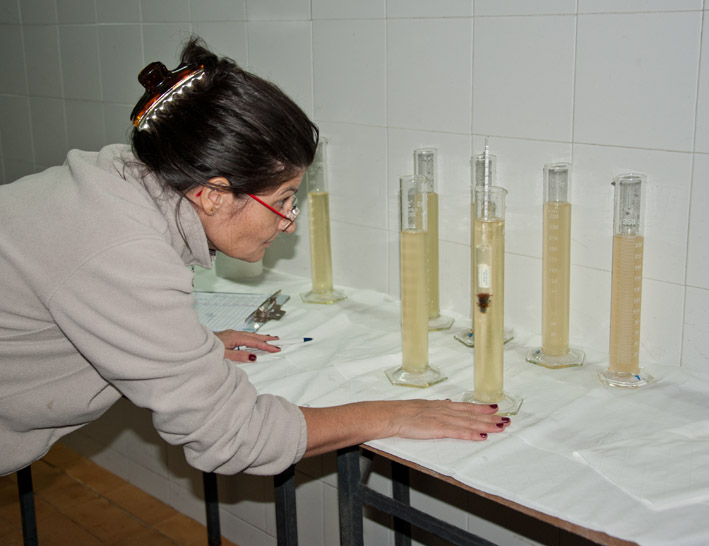
DensitiesNow that most of the seeding of the tanks is done, we have to carefully monitor the progress of the new wine. The way that we do this during fermentation is by measuring the density or specific gravity. The principle is quite simple – as the grape must starts to ferment the amount of sugar in the solution decreases and the amount of ethanol increases – ethanol solution is less dense than sugar solution, so all we have to do is monitor the change using a hydrometer. Two or three times a day (seven days a week) we take a sample of fermenting juice from each tank in a graduated cylinder (see photo). We then allow the hydrometer to float in the liquid and take a reading from the scale etched onto the stem of the instrument. This reading tells us the amount of sugar still remaining, and from this we can calculate the progress of the fermentation process.

There are two main factors that will dictate how quickly the fermentation advances – the strain of yeast used, and of course, the temperature. Some yeasts are very vigorous and will work well in a wide variety of temperatures, whilst others are much more delicate and will only survive during slightly warmer fermentations. As you may well already know, the simple rule is – the warmer the temperature the shorter the fermentation, which is why we are always obsessed by strict temperature control. Here at Castro Martin we prefer a long, slow controlled fermentation, that takes roughly 3 to 4 weeks to complete. Patience is a virtue, and, good things come to those who wait, to coin a couple of well-worn phrases…..

DensitiesNow that most of the seeding of the tanks is done, we have to carefully monitor the progress of the new wine. The way that we do this during fermentation is by measuring the density or specific gravity. The principle is quite simple – as the grape must starts to ferment the amount of sugar in the solution decreases and the amount of ethanol increases – ethanol solution is less dense than sugar solution, so all we have to do is monitor the change using a hydrometer. Two or three times a day (seven days a week) we take a sample of fermenting juice from each tank in a graduated cylinder (see photo). We then allow the hydrometer to float in the liquid and take a reading from the scale etched onto the stem of the instrument. This reading tells us the amount of sugar still remaining, and from this we can calculate the progress of the fermentation process.

There are two main factors that will dictate how quickly the fermentation advances – the strain of yeast used, and of course, the temperature. Some yeasts are very vigorous and will work well in a wide variety of temperatures, whilst others are much more delicate and will only survive during slightly warmer fermentations. As you may well already know, the simple rule is – the warmer the temperature the shorter the fermentation, which is why we are always obsessed by strict temperature control. Here at Castro Martin we prefer a long, slow controlled fermentation, that takes roughly 3 to 4 weeks to complete. Patience is a virtue, and, good things come to those who wait, to coin a couple of well-worn phrases…..

Looks like Guiness – tastes like Albariño

October 15th, 2013 | Post Harvest

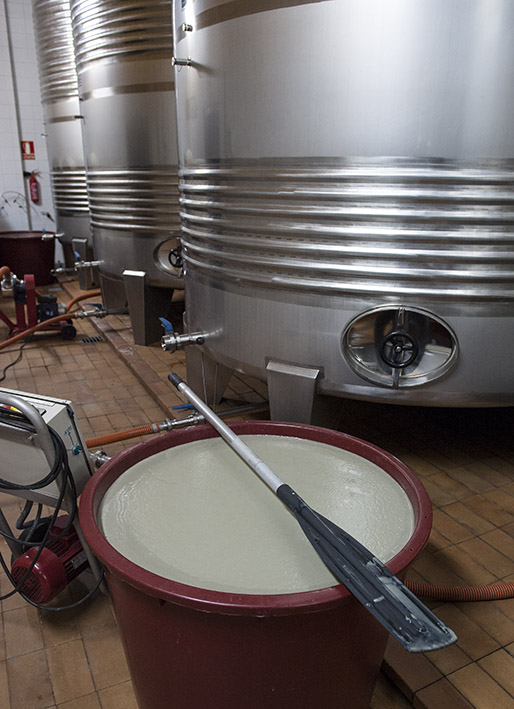
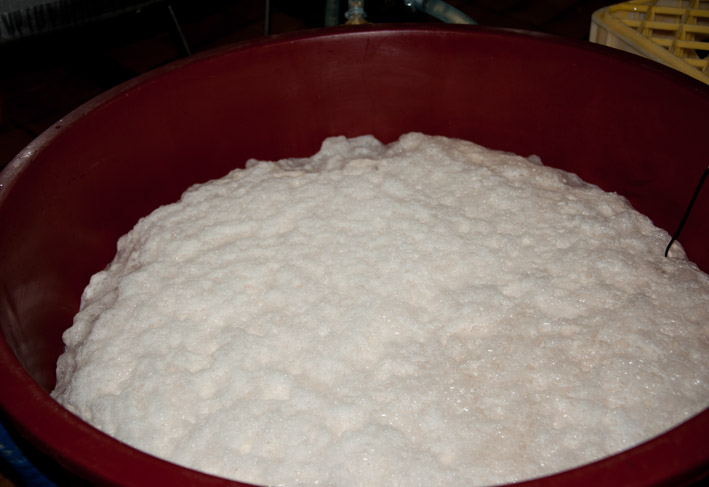
Guiness_OK, so at this point in the wine making the must doesn’t really taste like albariño, but my point is simply that the yeast makes a lot of foam when we mix it with the juice ready for seeding. Preparing yeast to make wine is not a secret process – first we hydrate it using warm water (usually around body temperature 38°C or 100°F), and then, over an extended period, we add grape juice from the tank to ‘equalise’ the temperature between the yeast mixture and the juice in tank. For example, if the tank temperature is 15°C and then we add the yeast at 38°C the shock of the sudden change in temperature would simply kill most, if not all, of the yeast. The method therefore is to reduce the temperature of the yeast solution in increments – 5 degrees at a time. We do this by adding juice from the tank, waiting for the yeast to ‘acclimatise’, and then adding more juice – it’s quite a long process. Once the yeast solution is within a few degrees of the tank temperature we can finally add the mixture and start to make some wine!

Of course the other part of the equation is the strain of yeast that we actually chose for seeding. These days there are so many new and different yeasts, all claiming to enhance your wine in different ways. When the salesman arrives with his catalogue of yeasts he more or less asks “what flavour do you want?”. In these circumstances our answer is always the same – we want the flavour of albariño please! In other words we normally chose a fairly neutral yeast in order that the character of our grape variety shines through (otherwise there would be little point!) Having said that, there are some new strains of yeast that claim to enhance this varietal character, and in this case we always make one or two tanks using these to see if they really do match the claims of their manufacturers. In recent years we haven’t found one…. but we always keep and open mind.

Guiness_OK, so at this point in the wine making the must doesn’t really taste like albariño, but my point is simply that the yeast makes a lot of foam when we mix it with the juice ready for seeding. Preparing yeast to make wine is not a secret process – first we hydrate it using warm water (usually around body temperature 38°C or 100°F), and then, over an extended period, we add grape juice from the tank to ‘equalise’ the temperature between the yeast mixture and the juice in tank. For example, if the tank temperature is 15°C and then we add the yeast at 38°C the shock of the sudden change in temperature would simply kill most, if not all, of the yeast. The method therefore is to reduce the temperature of the yeast solution in increments – 5 degrees at a time. We do this by adding juice from the tank, waiting for the yeast to ‘acclimatise’, and then adding more juice – it’s quite a long process. Once the yeast solution is within a few degrees of the tank temperature we can finally add the mixture and start to make some wine!

Of course the other part of the equation is the strain of yeast that we actually chose for seeding. These days there are so many new and different yeasts, all claiming to enhance your wine in different ways. When the salesman arrives with his catalogue of yeasts he more or less asks “what flavour do you want?”. In these circumstances our answer is always the same – we want the flavour of albariño please! In other words we normally chose a fairly neutral yeast in order that the character of our grape variety shines through (otherwise there would be little point!) Having said that, there are some new strains of yeast that claim to enhance this varietal character, and in this case we always make one or two tanks using these to see if they really do match the claims of their manufacturers. In recent years we haven’t found one…. but we always keep and open mind.

Preparing the must

October 14th, 2013 | Post Harvest

RackingWith our grape must now racked into clean tanks, it’s almost the moment to start the fermentations. The problem is that as it stands, all the tanks are different – filled to different levels, with differing sugar levels and acidities etc. Of course some will remain unchanged – for example, the musts from our Estate vineyards that are used to make our Castro Martin wine, will not be blended in any way. The rest will be moved around to bring all the differing elements closer together in an attempt to give us slightly more uniformity. At this moment in time this seemingly simple job is, logistically, actually quite difficult as we do’t have too much space to work with, and so what follows is like a huge game of chess, but with grape juice.

Once all the movements are completed, and the temperatures correct for fermentation, we can start the seeding. We don’t seed all the tanks at once, as this would create problems further down the line, so by controlling the temperatures we add the yeast to only a handful of tanks per day. Slow, controlled and systematic, that is the key….

RackingWith our grape must now racked into clean tanks, it’s almost the moment to start the fermentations. The problem is that as it stands, all the tanks are different – filled to different levels, with differing sugar levels and acidities etc. Of course some will remain unchanged – for example, the musts from our Estate vineyards that are used to make our Castro Martin wine, will not be blended in any way. The rest will be moved around to bring all the differing elements closer together in an attempt to give us slightly more uniformity. At this moment in time this seemingly simple job is, logistically, actually quite difficult as we do’t have too much space to work with, and so what follows is like a huge game of chess, but with grape juice.

Once all the movements are completed, and the temperatures correct for fermentation, we can start the seeding. We don’t seed all the tanks at once, as this would create problems further down the line, so by controlling the temperatures we add the yeast to only a handful of tanks per day. Slow, controlled and systematic, that is the key….

Post harvest hangover

October 11th, 2013 | Post Harvest

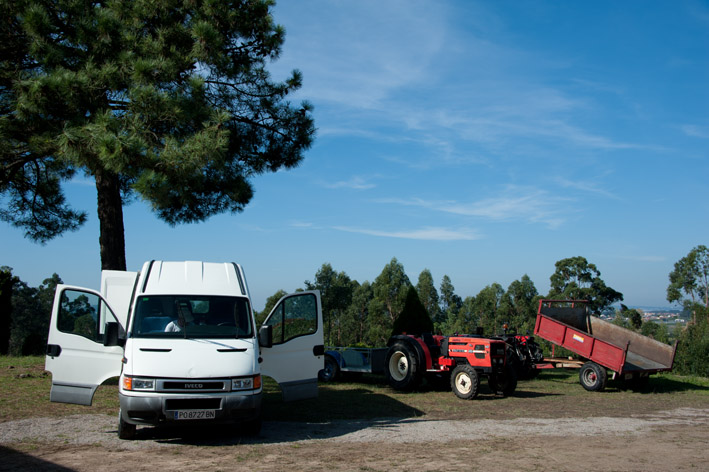
Cleaning vehiclesDuring the harvest, and more especially towards the end, we are all functioning on adrenalin – there is a certain buzz about the place, and every individual is focused on the job in hand, rather like a hive of bees (the word buzz was not intended as a pun). The problem is that the minute that we stop and we have time to go home and relax, we simply end up with a rather deflated feeling and struggle to regain the momentum. This probably has a lot to do with the first task that we face after picking….. to clean the bodega – and let’s face it, nobody really likes cleaning.

If you’ve never been to a wine cellar during harvest the thing that you may not realise is that every surface becomes sticky. The grape juice and pressed grape skins get everywhere, and even into one or two quite inexplicable places! Imagine dropping a bottle of fruit concentrate on your kitchen floor, leaving it for a couple of days to dry a little, and then walking through it into the other rooms of your house. This is more or less what it is like – suffice to say, difficult to clean.

So, we start with the vehicles first, then the grape reception on the upper level of the cellar and work downwards from there. One of the most horrible jobs is cleaning the presses, and the only real way to do this is to climb inside, which is not an enviable task for the person that has to do it. Finally, when the building is clean, there is the small matter of pressure washing about 2,000 plastic cases that we use for collecting the grapes. Whilst these are cleaned during the harvest as they are re-used over and over again, we always give them one major deep clean before they are put into storage for next year. To be done properly takes three people a few days to complete.

Of course, running simultaneously to this, we have the most important work of all – making our wine, but that is another story that I will cover in the coming days.

Cleaning vehiclesDuring the harvest, and more especially towards the end, we are all functioning on adrenalin – there is a certain buzz about the place, and every individual is focused on the job in hand, rather like a hive of bees (the word buzz was not intended as a pun). The problem is that the minute that we stop and we have time to go home and relax, we simply end up with a rather deflated feeling and struggle to regain the momentum. This probably has a lot to do with the first task that we face after picking….. to clean the bodega – and let’s face it, nobody really likes cleaning.

If you’ve never been to a wine cellar during harvest the thing that you may not realise is that every surface becomes sticky. The grape juice and pressed grape skins get everywhere, and even into one or two quite inexplicable places! Imagine dropping a bottle of fruit concentrate on your kitchen floor, leaving it for a couple of days to dry a little, and then walking through it into the other rooms of your house. This is more or less what it is like – suffice to say, difficult to clean.

So, we start with the vehicles first, then the grape reception on the upper level of the cellar and work downwards from there. One of the most horrible jobs is cleaning the presses, and the only real way to do this is to climb inside, which is not an enviable task for the person that has to do it. Finally, when the building is clean, there is the small matter of pressure washing about 2,000 plastic cases that we use for collecting the grapes. Whilst these are cleaned during the harvest as they are re-used over and over again, we always give them one major deep clean before they are put into storage for next year. To be done properly takes three people a few days to complete.

Of course, running simultaneously to this, we have the most important work of all – making our wine, but that is another story that I will cover in the coming days.

All quiet for Halloween

October 31st, 2012 | Post Harvest

It’s nearly a month since the end of the harvest and the majority of fermentations are either finished or nearing an end. As far as we are concerned this means that life in the bodega will pretty much return to normal for at least another 10 or 11 months. I probably mention it every year, but one of the major differences that we notice will be the silence that falls over the bodega….. it truly is golden. 

During the harvest itself we have the constant drone of the presses, as they work for most of the day and into the night. Following this (once the fermentations get under way), we have the persistent humming of the extraction fans as they circulate fresh air throughout the bodega. Just in case you had forgotten, one of the most significant (and dangerous) by-products of the fermentation process is carbon dioxide, which falls quickly from the open tanks and settles at ground level. Without the fans constantly moving the air we would be overcome very quickly. Sometimes simply standing near an open tank can take your breath away as you inhale a little CO2 – it can be an unsettling experience when you take a breath and there is simply no oxygen to fill your lungs.

It is perhaps quite fitting that on All Hallow’s Eve and tomorrow, the Day of the Dead (1st November), that the Bodega will be eerily silent once more.

It’s nearly a month since the end of the harvest and the majority of fermentations are either finished or nearing an end. As far as we are concerned this means that life in the bodega will pretty much return to normal for at least another 10 or 11 months. I probably mention it every year, but one of the major differences that we notice will be the silence that falls over the bodega….. it truly is golden. 

During the harvest itself we have the constant drone of the presses, as they work for most of the day and into the night. Following this (once the fermentations get under way), we have the persistent humming of the extraction fans as they circulate fresh air throughout the bodega. Just in case you had forgotten, one of the most significant (and dangerous) by-products of the fermentation process is carbon dioxide, which falls quickly from the open tanks and settles at ground level. Without the fans constantly moving the air we would be overcome very quickly. Sometimes simply standing near an open tank can take your breath away as you inhale a little CO2 – it can be an unsettling experience when you take a breath and there is simply no oxygen to fill your lungs.

It is perhaps quite fitting that on All Hallow’s Eve and tomorrow, the Day of the Dead (1st November), that the Bodega will be eerily silent once more.

Good as new

October 23rd, 2012 | Equipment

For most of the year the team of people who work for us are fully occupied, and usually there are only a couple of moments in the calendar when we can play ‘catch up’, and do the jobs that we have been meaning to do for a while. A couple of our guys are currently working full time to thoroughly clean (with pressure washers) the baskets that we use for collecting grapes. Obviously they are washed as we go along, during the harvest itself, but when we have finished we give them one final clean before they go back into hibernation for another 51 weeks. (The cases that is, not the guys that are washing them!)

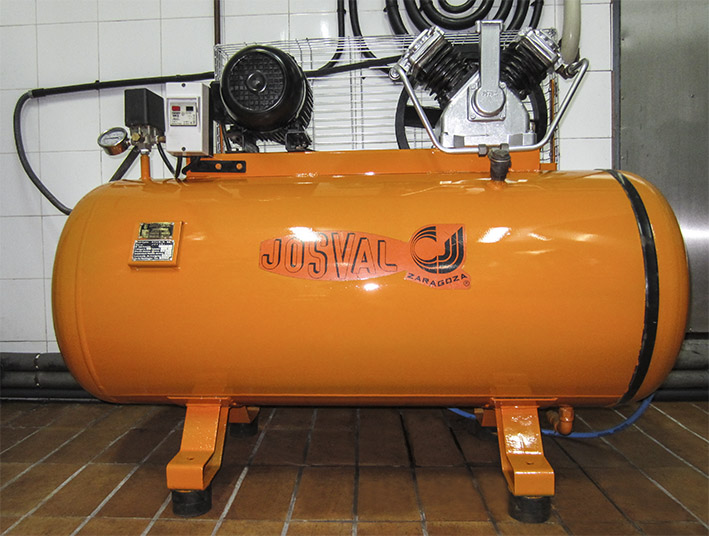
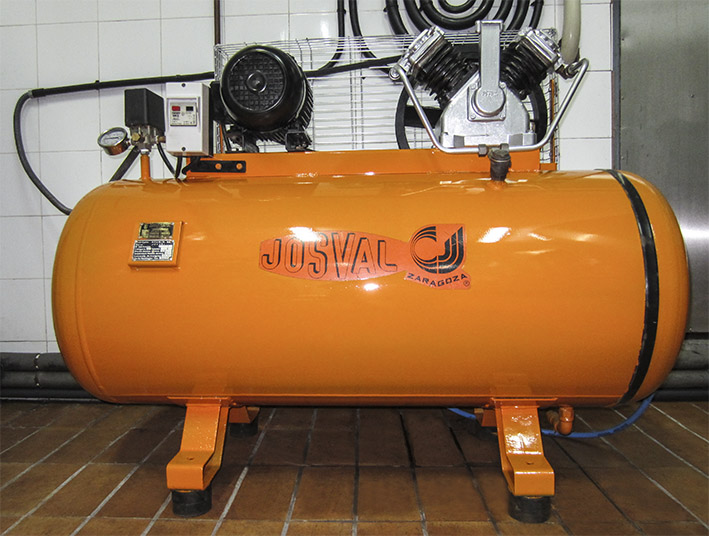
In the cellar the fermentations are well under way, and in the case of some tanks, perhaps only a few more days from their conclusion. (Strangely not all tanks progress at the same speed despite the fact that they are seeded at the same time, with the same yeasts, and then maintained at similar temperatures). Whilst we wait, our handyman Fran has been taking advantage of the slight lull in proceedings….. This time he has completely stripped our compressor, painted it, replaced many parts, and then put it back together again, with only a few pieces left over at the end (I am joking about the last part). The result is that we now have a compressor that looks like new, even though it is nearly as old as our wine cellar.

The compressor is a vital piece of kit, and is used for many different functions, perhaps the most important of which is during the bottling – many of the functions on the bottling line are powered by compressed air, and without it we would be sticking labels and putting capsules on by hand. 

With my recent (ongoing) back injury perhaps I could ask Fran to strip me down and give me a few replacement parts (but maybe not the orange paint, I don’t want to end up looking like George Hamilton)!

For most of the year the team of people who work for us are fully occupied, and usually there are only a couple of moments in the calendar when we can play ‘catch up’, and do the jobs that we have been meaning to do for a while. A couple of our guys are currently working full time to thoroughly clean (with pressure washers) the baskets that we use for collecting grapes. Obviously they are washed as we go along, during the harvest itself, but when we have finished we give them one final clean before they go back into hibernation for another 51 weeks. (The cases that is, not the guys that are washing them!)

In the cellar the fermentations are well under way, and in the case of some tanks, perhaps only a few more days from their conclusion. (Strangely not all tanks progress at the same speed despite the fact that they are seeded at the same time, with the same yeasts, and then maintained at similar temperatures). Whilst we wait, our handyman Fran has been taking advantage of the slight lull in proceedings….. This time he has completely stripped our compressor, painted it, replaced many parts, and then put it back together again, with only a few pieces left over at the end (I am joking about the last part). The result is that we now have a compressor that looks like new, even though it is nearly as old as our wine cellar.

The compressor is a vital piece of kit, and is used for many different functions, perhaps the most important of which is during the bottling – many of the functions on the bottling line are powered by compressed air, and without it we would be sticking labels and putting capsules on by hand. 

With my recent (ongoing) back injury perhaps I could ask Fran to strip me down and give me a few replacement parts (but maybe not the orange paint, I don’t want to end up looking like George Hamilton)!

2012 – a difficult year all around

October 19th, 2012 | Post Harvest

With nearly 42 million kilos picked in 2011 (for the whole of our denomination), the latest vintage has seen a dramatic fall in overall volume. We do not have the official figure for 2012 yet, but we do know that in the case of our own bodega, the total kilos picked was roughly half that of last year. So what actually caused such a dramatic difference? My own opinion is that it was possibly a combination of factors.

For example, it is possible that after such a huge vintage in 2011 the vines themselves were simply exhausted, and would have produced much less no matter what the weather. The quantity that we produce varies from vintage to vintage, and even if our weather was stable and predictable, we would almost certainly end up with a different volume every year. I am not a biologist, merely an interested observer, and perhaps Angela would be able to explain this particular phenomena much better than me, but plants simply do not yield the same amount of fruit year-in year-out.

It is still obvious that by far the biggest single factor in this dramatic reduction was the weather. I had mentioned before that the flowering period in Galicia this year was unsettled, and this is where the problems started. Uneven pollination or perhaps none at all during this cool, damp period led to either smaller bunches, bunches suffering from ‘millerandage’ (where some berries in an individual bunch develop and other don’t), or no bunches at all.

However, the fruit that survived this poor flowering period was still under threat. Again the cooler temperatures and frequent rain of early summer provided perfect conditions for oidium (powdery mildew) and downy mildew. Unfortunately the only effective prevention for these diseases is to spray the crop with different treatments. Of course, we cannot spray when it’s raining, or when the vines are wet, and so it then becomes a question of finding the right moment to intervene. If you miss this window of opportunity you can potentially lose everything. 

Indeed, we did have one or two of our smaller grape suppliers who did not bring us any fruit in 2012 – their crop was so small that it was actually not viable. (Please remember that in our area of tiny vineyards the amount sold to us by some producers is measured in 100’s of kilos rather than 1,000’s).

The fact that we were only 50% down on last year is therefore something of an achievement, as in other parts of Europe their losses have been even greater. Some parts of Burgundy for example, have lost nearly all their crop to hail, and England’s largest wine producer Nyetimber (430 acres/174 hectares), has scrapped their 2012 vintage altogether!

With nearly 42 million kilos picked in 2011 (for the whole of our denomination), the latest vintage has seen a dramatic fall in overall volume. We do not have the official figure for 2012 yet, but we do know that in the case of our own bodega, the total kilos picked was roughly half that of last year. So what actually caused such a dramatic difference? My own opinion is that it was possibly a combination of factors.

For example, it is possible that after such a huge vintage in 2011 the vines themselves were simply exhausted, and would have produced much less no matter what the weather. The quantity that we produce varies from vintage to vintage, and even if our weather was stable and predictable, we would almost certainly end up with a different volume every year. I am not a biologist, merely an interested observer, and perhaps Angela would be able to explain this particular phenomena much better than me, but plants simply do not yield the same amount of fruit year-in year-out.

It is still obvious that by far the biggest single factor in this dramatic reduction was the weather. I had mentioned before that the flowering period in Galicia this year was unsettled, and this is where the problems started. Uneven pollination or perhaps none at all during this cool, damp period led to either smaller bunches, bunches suffering from ‘millerandage’ (where some berries in an individual bunch develop and other don’t), or no bunches at all.

However, the fruit that survived this poor flowering period was still under threat. Again the cooler temperatures and frequent rain of early summer provided perfect conditions for oidium (powdery mildew) and downy mildew. Unfortunately the only effective prevention for these diseases is to spray the crop with different treatments. Of course, we cannot spray when it’s raining, or when the vines are wet, and so it then becomes a question of finding the right moment to intervene. If you miss this window of opportunity you can potentially lose everything. 

Indeed, we did have one or two of our smaller grape suppliers who did not bring us any fruit in 2012 – their crop was so small that it was actually not viable. (Please remember that in our area of tiny vineyards the amount sold to us by some producers is measured in 100’s of kilos rather than 1,000’s).

The fact that we were only 50% down on last year is therefore something of an achievement, as in other parts of Europe their losses have been even greater. Some parts of Burgundy for example, have lost nearly all their crop to hail, and England’s largest wine producer Nyetimber (430 acres/174 hectares), has scrapped their 2012 vintage altogether!

The wine making continues

October 16th, 2012 | Post Harvest

As our fermentations progress there are a number of additions that we have to make to our tanks during this busy wine making period. Possibly one of the most important is the ‘fining agent’, added to clarify and stabilise the finished wine. There are a number of different fining agents available, and these are usually applied according to the type of wine or perhaps even the characteristics of a particular grape variety. For example, egg whites are commonly used for red wines as they have the effect of reducing harsh tannins, and some even claim, add a certain silkiness. Another common fining agent in gelatine, which not only clarifies wine, but can also reduce astringency – this is often used in conjunction with kieselsol, that can also help to reduce bitterness.Of course the downside of both egg whites and gelatine is that it renders the finished wine unsuitable for vegetarians.

At Castro Martin we chose perhaps the most commonly used fining agent – Bentonite. Many deposits of this volcanic clay material are found in the USA, especially in Wyoming. Indeed, the name itself is derived from Fort Benton where an American geologist discovered the first deposits around 100 years ago. In Europe, bentonite occurs and is mined in the Mediterranean region and in Lower Bavaria, Germany.

The dried bentonite powder is mixed into a thick, smooth paste and then diluted with a little fermenting grape juice before being added back to the tank. It is then mixed thoroughly with the developing wine. At this point the fermenting must carries a lot of suspended matter (such as dead yeast cells and grape fragments) that would potentially render the finished wine dull or even cloudy. The bentonite forms an ionic bond with these suspended particles, in effect weighing them down, so that over time they will gradually fall by gravity and settle at the bottom of the tank. (This deposit, containing the yeast cells, is known as the ‘lees’). Not only does this leave the wine clean and bright, but bentonite also absorbs some of the proteins and bacteria that can be harmful to the future development of the wine. For example, some proteins can cause haziness if the wine is exposed to a higher temperature after bottling.

As you can see, there is quite a bit of science involved in the wine making process….. much more than simply adding a bit of yeast and hoping for the best!

As our fermentations progress there are a number of additions that we have to make to our tanks during this busy wine making period. Possibly one of the most important is the ‘fining agent’, added to clarify and stabilise the finished wine. There are a number of different fining agents available, and these are usually applied according to the type of wine or perhaps even the characteristics of a particular grape variety. For example, egg whites are commonly used for red wines as they have the effect of reducing harsh tannins, and some even claim, add a certain silkiness. Another common fining agent in gelatine, which not only clarifies wine, but can also reduce astringency – this is often used in conjunction with kieselsol, that can also help to reduce bitterness.Of course the downside of both egg whites and gelatine is that it renders the finished wine unsuitable for vegetarians.

At Castro Martin we chose perhaps the most commonly used fining agent – Bentonite. Many deposits of this volcanic clay material are found in the USA, especially in Wyoming. Indeed, the name itself is derived from Fort Benton where an American geologist discovered the first deposits around 100 years ago. In Europe, bentonite occurs and is mined in the Mediterranean region and in Lower Bavaria, Germany.

The dried bentonite powder is mixed into a thick, smooth paste and then diluted with a little fermenting grape juice before being added back to the tank. It is then mixed thoroughly with the developing wine. At this point the fermenting must carries a lot of suspended matter (such as dead yeast cells and grape fragments) that would potentially render the finished wine dull or even cloudy. The bentonite forms an ionic bond with these suspended particles, in effect weighing them down, so that over time they will gradually fall by gravity and settle at the bottom of the tank. (This deposit, containing the yeast cells, is known as the ‘lees’). Not only does this leave the wine clean and bright, but bentonite also absorbs some of the proteins and bacteria that can be harmful to the future development of the wine. For example, some proteins can cause haziness if the wine is exposed to a higher temperature after bottling.

As you can see, there is quite a bit of science involved in the wine making process….. much more than simply adding a bit of yeast and hoping for the best!

Monthly Archives

Categories

ARE YOU OF LEGAL AGE? This site is intended for those of legal drinking age. By entering, you confirm that you are of legal drinking age in the country where this site is being accessed. ¿ERES MAYOR DE EDAD? Este sitio está destinado a personas en edad legal para beber alcohol. Al ingresar, confirma que tiene la edad legal para beber en el país donde se accede a este sitio.