

Archive for ‘Bodega’

Ready for the off….

September 10th, 2019 | Bodega

The last few days before harvest is always a bit nerve-racking. Anticipating the work to come, whilst also constantly checking that everything is in place and no detail has been overlooked…. even down to the purchase of paper rolls.

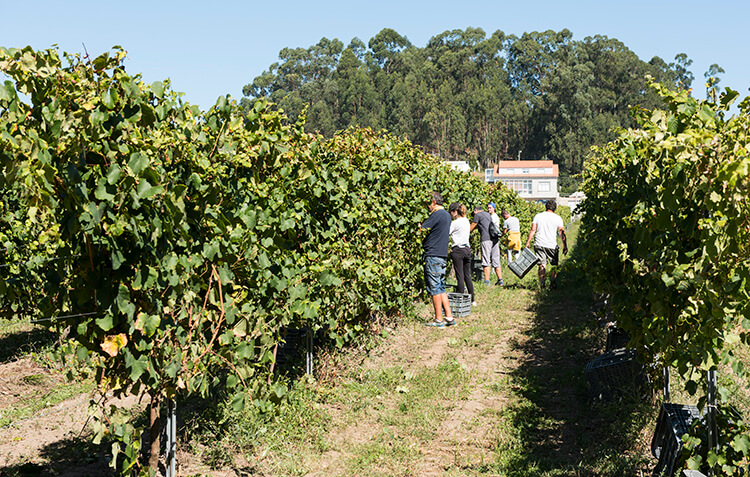
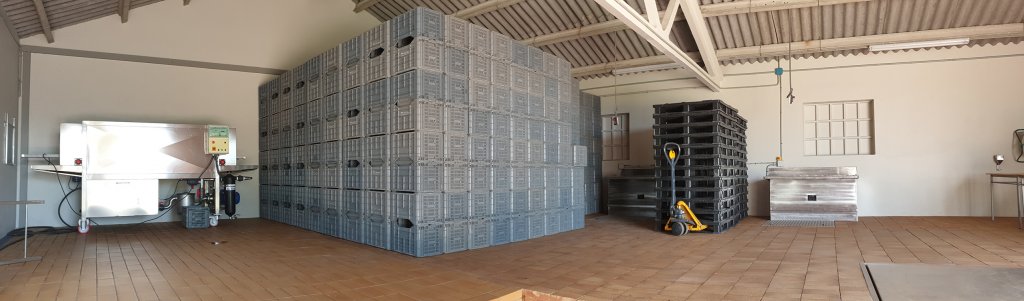
The grape reception, which is only used once a year, has been cleaned, and nearly half of our mountain of harvest cases have already been distributed.

We are analysing fruit on a daily basis, and watching it edge closer and closer to the best possible balance (between sugar, acidity and pH). Only then will we begin the 2019 harvest.

Of course, whilst monitoring the fruit, we are also keeping a close eye on the weather. At the moment the weather is set fair (at least for the next few days), but as I have said many times before, here on the Atlantic coast this can change in a heartbeat.

The harvest is nigh!

September 4th, 2019 | Bodega

I mentioned in my last post that summer could be at an end. I was wrong! For the last few days (and apparently for the coming days), we are experiencing some of the best weather of this summer. Daytime temperatures are now hitting 30°C (86°F), and we have even enjoyed one or two ‘balmy’ evenings. Inevitably this is having an effect in the vineyards.

When I tasted one or two grapes last week, the sugar was only just apparent, and there was still quite a dominant amount of acidity. The bunches were tightly packed with small berries (not too unusual for albariño), but with surprisingly thin skins, which could be down to the lack of intense heat. As the berries are small, and there has been little or no rain for the last month or two, our yields could well be reduced, and the final quality? Well, we will just have to wait and see.

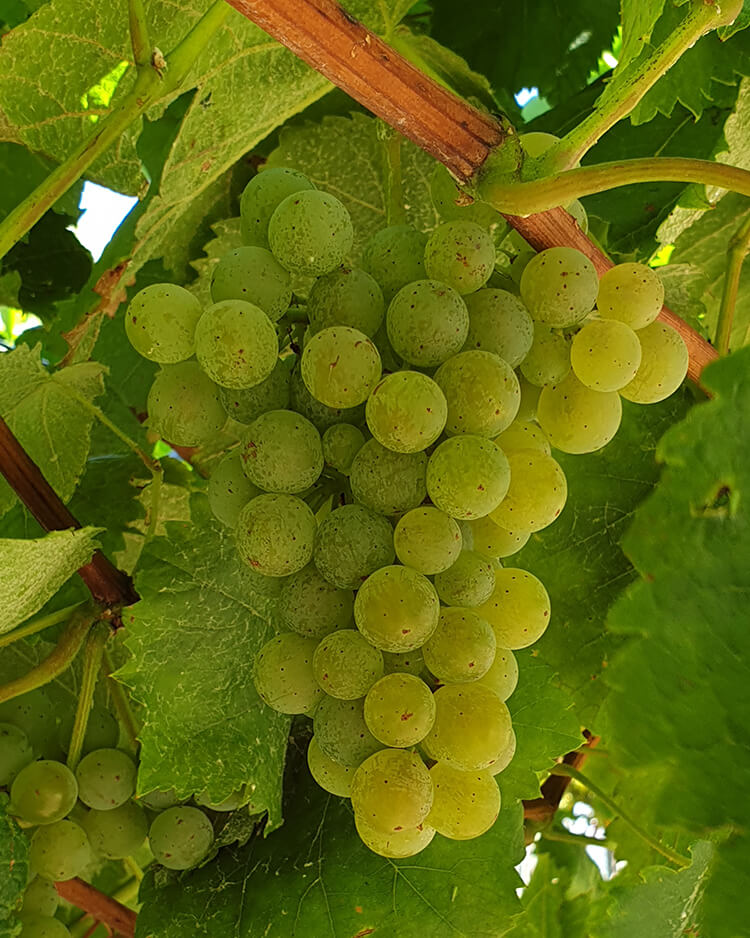
When I re-tasted our fruit today, there was quite an evolution within the space of one week. The bunches have started to change colour – from a verdant green they are now showing hints of gold (as you might just notice in today’s photo). The most significant change however, is the amount of sugar, which is now much more prominent, coupled with a corresponding drop in acidity, now much more in the background.

Analysis of the fruit is taking place as I write, but if this hot weather persists, then we could be less than a week from harvest. Vamos a ver!

Harvest Prep

August 13th, 2019 | Bodega

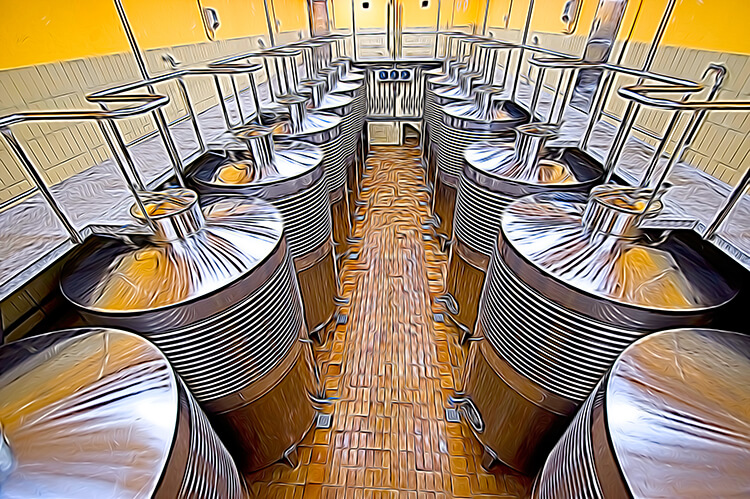
Work in the vineyard is now complete – between now and the harvest (in about four or five weeks time) there is almost nothing more that we can do. Nature will run its course until the time that we pick. In this way our attention now turns to the preparation of the bodega, not only scrubbing the tanks inside and out, but making sure that every wall, every floor and every piece of equipment is as clean as it can be.

In a way, preparation in our tank room has been underway for months. The movement of every wine is calculated and choreographed to ensure that, not only is the wine moved as little as possible (to avoid potential oxidation), but also that it ends up in the right place, as we systematically vacate tanks in the areas designated for the arrival of this year’s new grape must.

Over the last few days, the deep cleaning process has begun, albeit that later this week we will be closing the bodega for a short 10 day break. This will be the last opportunity for our team to rest their bones, and weather permitting, take a bit of sun, before our 2019 campaign gets underway. Of course, there will still be a huge amount of preparation work to undertake when we re-open but at least we have made a start.

In today’s picture you can see our tanks gleaming, almost ‘Van Gogh stylie’…… (thanks PhotoShop!)


The cracks are appearing….

July 23rd, 2019 | Bodega

It’s not only wine making that we do here at Castro Martin, occasionally we have to catch up on a bit of maintenance as well. At times our guys are spread pretty thinly as we move from one chore to the next. One day they could be in the vineyard, the next could be bottling, or a bit of building work, or a bit pf painting – and so on. I think it would be fair to say that no two days are ever quite the same.

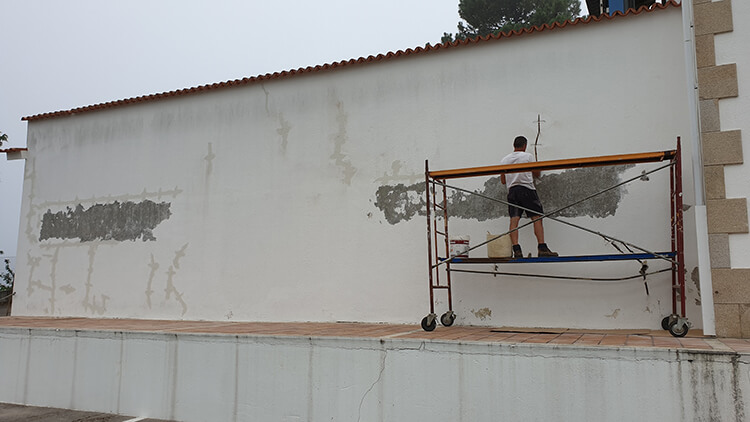
Over the last months, possibly year or so, cracks have appeared in one of our walls, that could, in some way, be attributed to the extreme temperatures that are ‘captured’ by the front of our building. I say captured simply because it’s a real sun trap. Facing directly south, with no shade at all, and with our white walls focusing the heat, the outside temperature can easily hit 40°C (104°F) on some summer days. And don’t even mention the temperature of our cars. The door handles and steering wheel can almost be too hot to touch! So this heat could certainly be one of the contributory factors in creating our cracks…

Yesterday we started on a few repairs, as this wall needed repainting anyway. Cutting channels (that looked a little like Frankenstein’s monster), and ‘stapling’ it to stop the cracks from spreading further….. simple! Once complete, we will paint with a special, weather resistant paint. Job complete, and on to the next.

End of an era

July 1st, 2019 | Bodega

We’ve been working on updating our ‘salon’ (meeting room, tasting area) for some time now. As two or three of our own team are already highly-skilled builders we made a decision to keep the work in-house. The only downside to this is that these same guys have to simultaneously continue with their normal chores, both in the vineyards and the bodega. This means, of course, that the work has not progressed as quickly as if we had used outside contractors. However, on the plus side, we know that they are doing a good job (quite unlike some of the shoddy workmanship that we have uncovered during these alterations)!

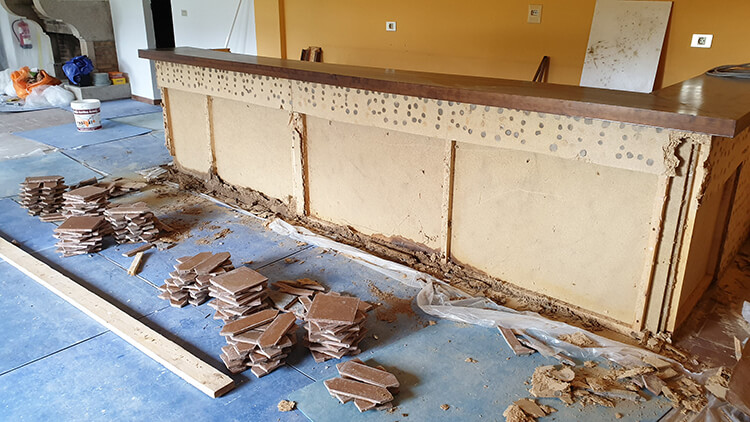
Take our tasting bar for example. It seems that we have dismantled it just in time – before it actually fell down of it’s own accord! The tiled surface on the front and sides was actually glued to very poor quality chipboard, that we now know was completely rotten and crumbling. Indeed, when we removed the tiles, they were already more or less falling off by themselves!

So, after more than 30 years of tastings and probably thousands of opened bottles, the old bar is no more, and we are currently working on several design options for it’s eventual replacement. Watch this space….

Destination Middle East!

May 27th, 2019 | Bodega

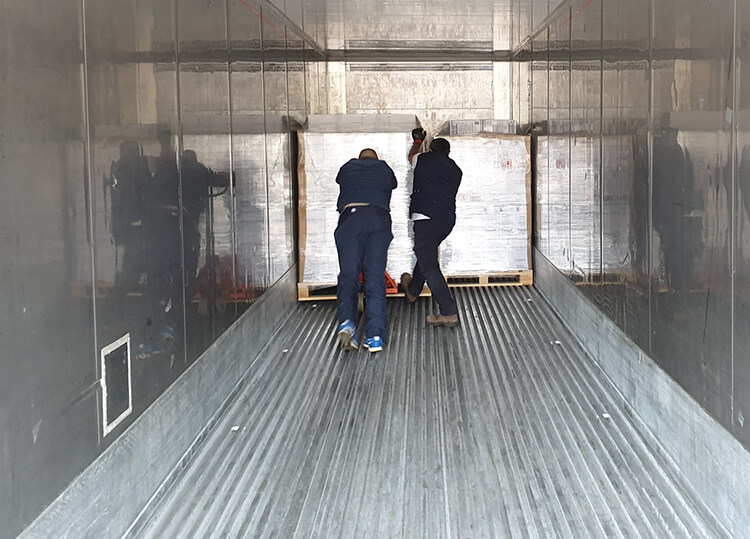
At the very end of last week we loaded a full container bound for the Middle East! Of course, it was a refrigerated container, as it will almost certainly cross the Mediterranean before navigating the Suez Canal on it’s route. Who knows what exterior temperatures it might encounter, but at least we know the wine will be quite safe inside, preserved at a cool 10°C (50°F).

The other really ‘cool’ part of the journey (pun intended) is that we will be able to track it’s progress online. We have the name of the ship, and by visiting marinetraffic.com we will be able to follow our container mile by mile along it’s route. The technology is amazing as always!

It has taken some time to get this order co-ordinated and ready to go, especially as we have learned that they have strict rules about the documentation – every ‘i’ has to be dotted and every ‘t’ crossed (and also certified officially by the local Chamber of Commerce). Having said that, it was a very good order and so all the effort has been well worth it!

Ageing is at an end….

May 7th, 2019 | Bodega

As though we could ever forget, wine making is an annual cycle, and often, when I am writing our posts, I feel as though I am repeating myself (which is clearly the case, and not simply down to my old age!).

For example, we have today started to rack the first of our 2018 wines. After around 8 months resting quietly on their lees, we have finally started to transfer the first few tanks – leaving the lees at the bottom, and effectively skimming the clean wine off the top and moving it to clean tanks. Once this process has been completed, then these clean tanks will not be touched or moved again until we prepare them for bottling. The objective being, as always, to restrict the movement and  handling to the absolute minimum, which is of course, fundamental in a white wine cellar (reducing the risk of oxidation as much as humanly possible).

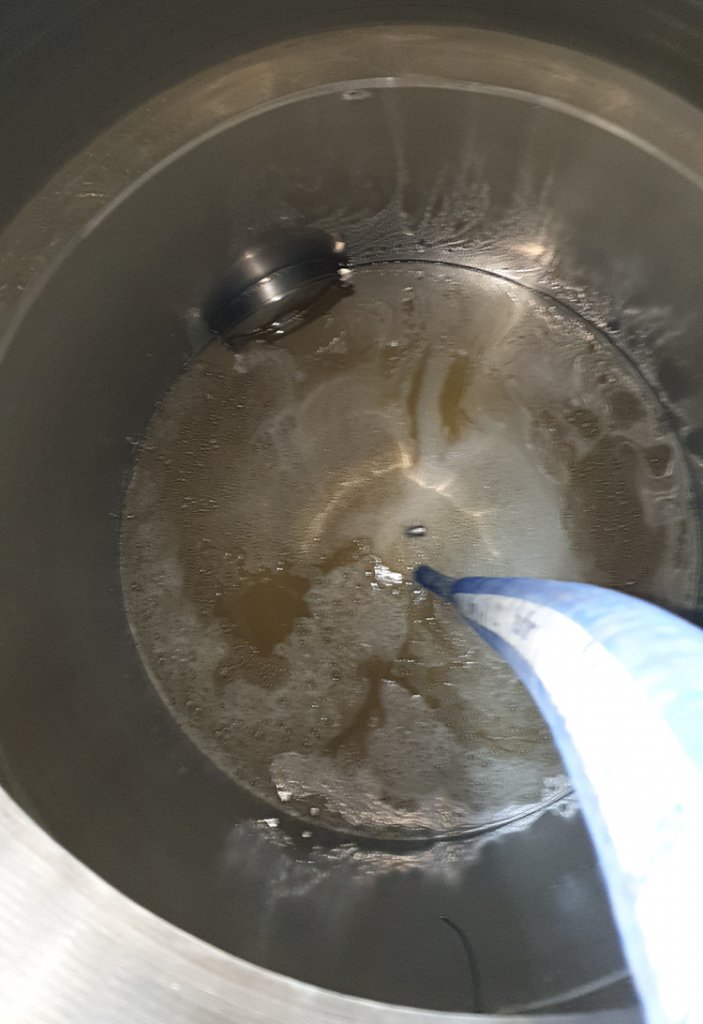
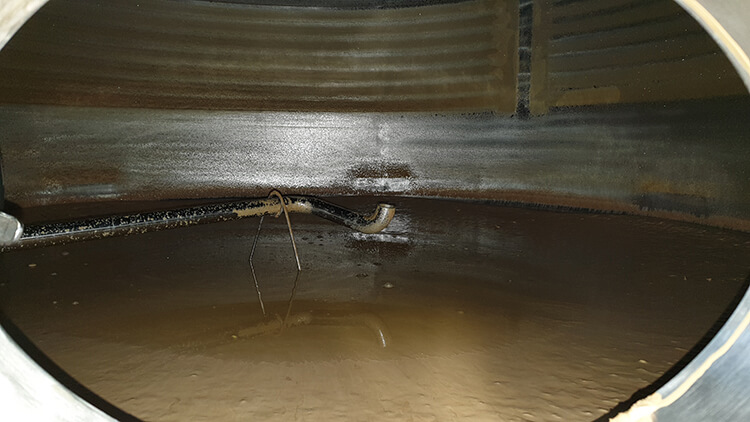
Today’s photo (just in case you had not seen this before), shows the lees left at the bottom of the tank – not pretty and not particularly drinkable either! Despite the fact that it takes the form of a brown/grey sludge with quite a thick consistency, it’s usefulness is still not at an end. This sludge will be collected in containers and sent to our local distillery to be used for making aguardiente. As you may gather, almost nothing is wasted, and everything is re-cycled or re-used wherever possible.

By the way, that is not dirt or rust on the inner walls of the tank, these are simply the tartrate crystals (potassium bitartrate) formed by the cold temperatures used during fermentation and ageing.

Natural wine (and food) – conclusions

March 11th, 2019 | Bodega

In all honesty, we will probably never be able to produce biological, biodynamic or completely ‘natural’ wines here at Castro Martin. Having said that, we do, and always have, used minimal intervention in our entire fruit growing and wine making processes, for as many years as I have been here (and probably long before that). As always, there are two main factors that stop us from overcoming the final obstacles in achieving official certification. Our weather, and at least a few of the controls imposed by our denomination.

For example, no commercially minded person is going to sit back and watch their fruit rot on the vines if there is something that they can do to prevent it – simply for the sake of preserving their biological or biodynamic status. On the one hand, and in certain vintages, it could be a viable option, but year-on-year it would probably be difficult to sustain. (By coincidence I have just introduced a key word – sustainable, and that is exactly how we are classified). We are sustainable producers, in other words we practice ‘mindful winemaking’ – always. always, always with one eye fixed firmly on the environment, and what we can do (within reason), to preserve it.

Of course, I also mentioned the controls of our denomination. By this I mean that if we were to produce a wine completely without filtration (to retain more texture), then if the wine should any single trace of cloudiness or was not crystal clear, then it simply would pass the control tasting and could not be sold as a Rias Baixas wine. This is just one example of the many controls that guide our wine making process.

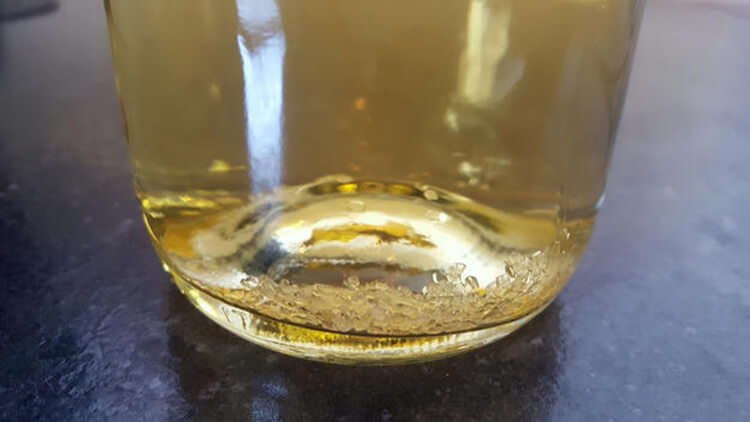
Apart from only using a very light filtration, one of the steps that we could (and might) take to enhance our wine is to eliminate cold-stabilisation completely. We do this stabilisation to eliminate tartrate, that can, potentially, be precipitated by the tartaric acid in the wine to form (unsightly) tartrate crystals in the bottle. Unfortunately, most people don’t understand that this is actually the very same substance as the cream of tatar that we use in cooking – completely natural and completely harmless. Many consumers simply do not recognise this and could possibly return the bottle as being faulty. Just one of the downsides of minimal intervention.

In the end, it is just not as straightforward as some might think – we can only strive to do our best, whilst respecting the controls and the climate that we have to live with!

Natural wine (and food) – Part 5

March 4th, 2019 | Bodega

Of course, I should have pointed out from the offset, that there is no official recognition or certification for the category of ‘natural wine’ – but clearly, as the name implies, they are simply made in the most natural way possible, with nothing added and as little as possible taken away. As I have mentioned before, the downside can be that the wines themselves are inherently unstable. For example, a natural wine might have no sulphur added (leaving them prone to oxidation), they might not be fined to remove proteins (leading to protein instability and cloudiness in the wine). They are also largely unfiltered – a process that cleans the wine, but also removes body and flavour (according to the type and level of filtration used). In the case of natural white wines, they will certainly not be cold-stabilised (and can therefore develop tartrate crystals in the bottle). If the consumer is happy with this, and accepts a multitude of potential flaws, then why not?

To be honest, all wines are ‘natural’ – certainly they will be manipulated by technology or perhaps ‘chemically’ at some point, but never to the extent where flavourings or colourants would be added. For example, some commercial wines (in some wine growing areas) might allow the addition of grape concentrate to sweeten, or tartaric acid to correct the balance, but even these additions are strictly controlled and limited. (I should add that in the case of albariño, we never need to add acidity – the balance in our wine is simply achieved by chosing the optimum moment to harvest).

Perhaps the only way in which the ‘flavour profile’ of a wine can be manipulated is by the choice of yeast added. For example, in some extreme cases, exotic fruit flavours can be infused into a wine by the use of certain yeasts (which can either mask the natural fruit completely or distort it, almost beyond recognition). At Castro Martin, whilst we are obliged to seed our wines with yeast, we always select a very neutral strain that allows the albariño fruit to shine through. OK, we add yeast, but the flavour of our wine is still natural.

Over my last few posts I have broadly outlined many of the steps that we already take to keep our wine as natural as possible, and in my next post I will talk about possible future developments that we are considering.

What’s in a name?

February 27th, 2019 | Bodega

The oldest brand that we have in our portfolio (which is almost exclusively sold within Spain), is Casal Caeiro. We decided not to use it too much in export as some people struggle a little with the pronunciation of Caeiro. (It should be Kye-yeh-roh, more or less). This name dates back to the time when the current bodega was built in 1981, on a site in the municipality of Ribadumia called O’Caeiro. Coincidentally, there’s another place only a few kilometres from the Bodega called O’Casal, but that is not the origin of the name in this instance. Casal also means large house, so in effect, the wine is named after a large house on the site of Caeiro.

This rather old looking, new map shows all the old, local names.

Monthly Archives

Categories

ARE YOU OF LEGAL AGE? This site is intended for those of legal drinking age. By entering, you confirm that you are of legal drinking age in the country where this site is being accessed. ¿ERES MAYOR DE EDAD? Este sitio está destinado a personas en edad legal para beber alcohol. Al ingresar, confirma que tiene la edad legal para beber en el país donde se accede a este sitio.