

New York Supporters

October 30th, 2012 | International News

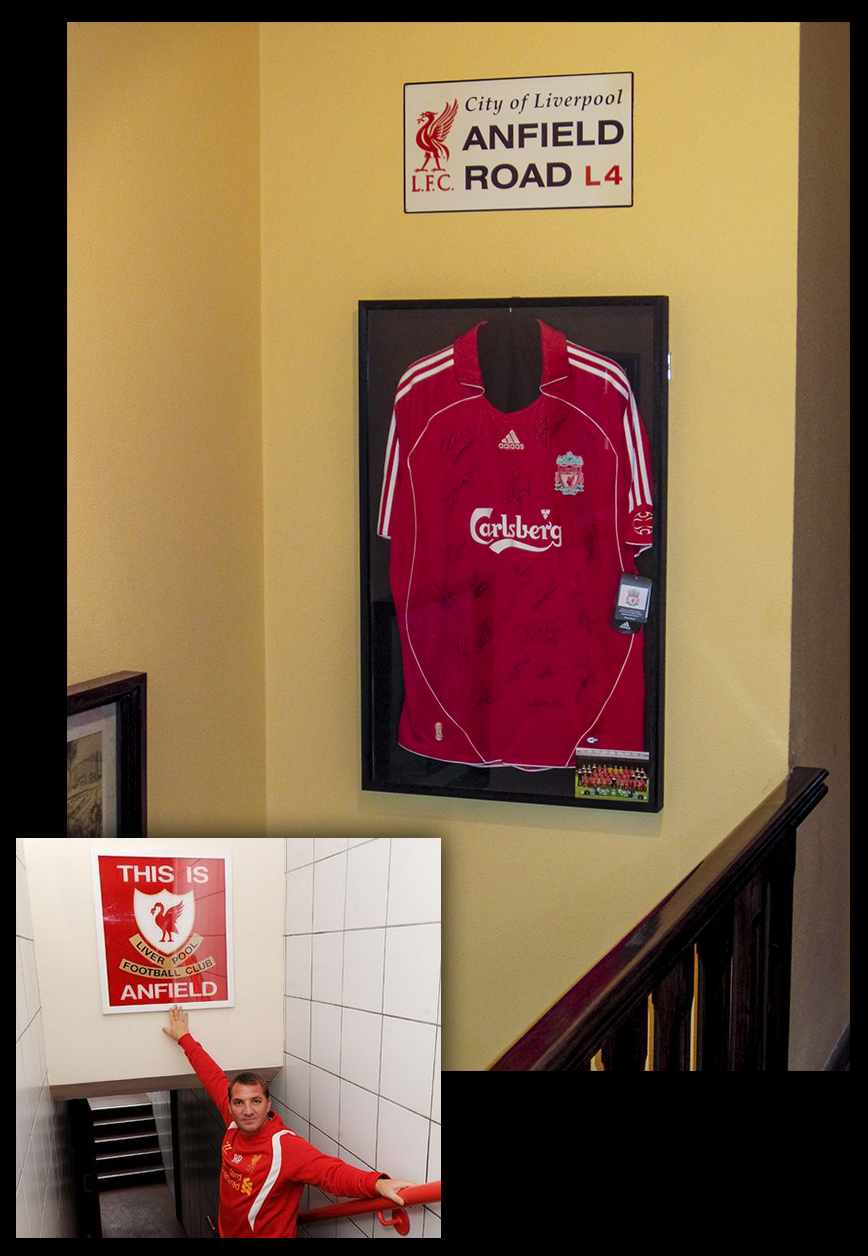
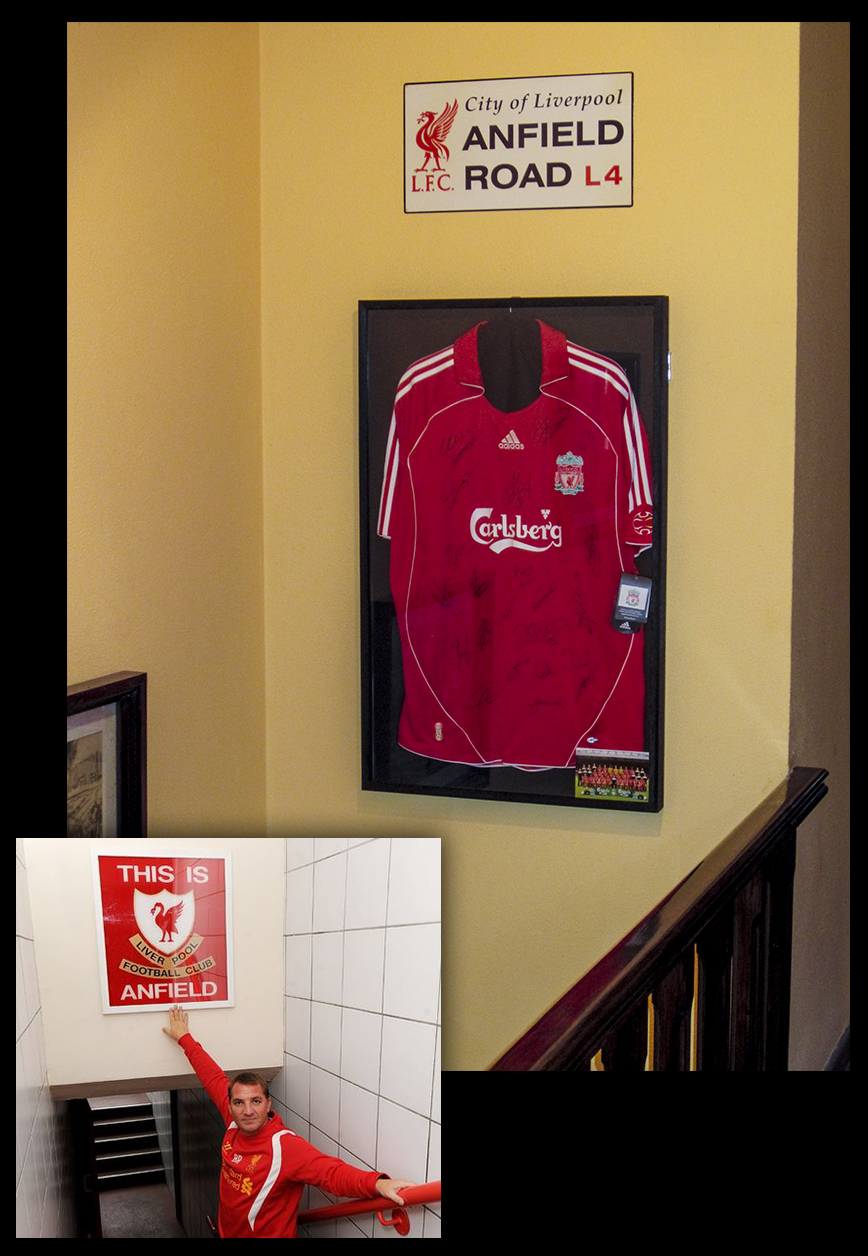
As Hurricane Sandy wreaks havoc down the east coast of the United States, we just want to let all our friends and customers over there that we are thinking of you. There is nothing much that we can do or say to help as we are completely overwhelmed by the power of nature. Our only message can be –  please stay safe.

There might be a few people out there who will understand this….. YNWA 

As Hurricane Sandy wreaks havoc down the east coast of the United States, we just want to let all our friends and customers over there that we are thinking of you. There is nothing much that we can do or say to help as we are completely overwhelmed by the power of nature. Our only message can be –  please stay safe.

There might be a few people out there who will understand this….. YNWA 

Germany – inventors of fast food…

October 28th, 2012 | Odds & Sods

I’m ashamed to say that I discovered something the other day that I really should have known before….. the origin of the humble hamburger. I heard somebody asking “shouldn’t a hamburger be made out of ham (as the name would imply), rather than beef?” An obvious question perhaps, but one to which I did not know the answer. Being the foodie that I am, I thought that I should really know, so I decided to look it up. I was shocked by what I found!

Although the origin of the hamburger that we know today is still disputed (no, it wasn’t invented by Ronald McDonald), it seems likely that the name at least came from the minced ‘Hamburg’ steak eaten by German immigrants in New York towards the end of the 19th century. At that time the concept of mincing any type of meat was not common, but may have been introduced into Germany by the Russians who arrived in the country with their recipe for steak tartare. The common link that brought all these elements together was shipping – the Russians frequently traded with Hamburg, and Hamburg served as a major hub for Northern European emigrants to the United States. This probably explains how the original recipe found its way across the Atlantic, but the final step of putting the Hamburg steak between slices of bread, creating the Hamburg sandwich, is still disputed to this day.

Following this revelation there are absolutely no prizes for guessing the origin of the Frankfurter sausage (hot-dog). Yep, of course, it was invented by Mr Gray, the Papaya King!….. That’s a lie – the humble pork sausage in bread comes from Frankfurt, where centuries ago it was served as a delicacy at Imperial Coronations. (By the way, the expression ‘wiener’ refers to the Austrian capital Vienna, whose German name is ‘Wien’, home to a sausage made of a mixture of pork and beef).

For those who don’t understand my previous reference, Gray’s Papaya is a very famous hot dog ‘restaurant’ in New York (actually not so much a restaurant, but more a shop that sells hot dogs over the counter). It is revered by many an American actor and has appeared in films and TV shows throughout the States. Indeed the place is so ‘hyped’ that Angela and I once made a special pilgrimage uptown to savour one of their famous dogs. All I can tell you is that it was a simple hot dog, and really nothing special. I can’t imagine how New Yorkers might react should they ever visit Germany and taste a real Frankfurter Würstchen.

I’m ashamed to say that I discovered something the other day that I really should have known before….. the origin of the humble hamburger. I heard somebody asking “shouldn’t a hamburger be made out of ham (as the name would imply), rather than beef?” An obvious question perhaps, but one to which I did not know the answer. Being the foodie that I am, I thought that I should really know, so I decided to look it up. I was shocked by what I found!

Although the origin of the hamburger that we know today is still disputed (no, it wasn’t invented by Ronald McDonald), it seems likely that the name at least came from the minced ‘Hamburg’ steak eaten by German immigrants in New York towards the end of the 19th century. At that time the concept of mincing any type of meat was not common, but may have been introduced into Germany by the Russians who arrived in the country with their recipe for steak tartare. The common link that brought all these elements together was shipping – the Russians frequently traded with Hamburg, and Hamburg served as a major hub for Northern European emigrants to the United States. This probably explains how the original recipe found its way across the Atlantic, but the final step of putting the Hamburg steak between slices of bread, creating the Hamburg sandwich, is still disputed to this day.

Following this revelation there are absolutely no prizes for guessing the origin of the Frankfurter sausage (hot-dog). Yep, of course, it was invented by Mr Gray, the Papaya King!….. That’s a lie – the humble pork sausage in bread comes from Frankfurt, where centuries ago it was served as a delicacy at Imperial Coronations. (By the way, the expression ‘wiener’ refers to the Austrian capital Vienna, whose German name is ‘Wien’, home to a sausage made of a mixture of pork and beef).

For those who don’t understand my previous reference, Gray’s Papaya is a very famous hot dog ‘restaurant’ in New York (actually not so much a restaurant, but more a shop that sells hot dogs over the counter). It is revered by many an American actor and has appeared in films and TV shows throughout the States. Indeed the place is so ‘hyped’ that Angela and I once made a special pilgrimage uptown to savour one of their famous dogs. All I can tell you is that it was a simple hot dog, and really nothing special. I can’t imagine how New Yorkers might react should they ever visit Germany and taste a real Frankfurter Würstchen.

Is Iraq ready for albariño?

October 26th, 2012 | Wine Fairs

Do the Agriculture and Food & Beverages sectors in Iraq represent a strategic market for your organization? This is the question raised by a recent e-mail. To be brutally honest I have to say that in this instance my answer would probably have to be an emphatic “no”!

We regularly get invited to food and wine fairs around the world, some in the Middle East, others on the African continent, where they are often described as ’emerging markets’. Of course we would like to support some of these countries as they struggle to find new economic growth, but are they really ready for albariño?….. I think not.

Even in more established wine drinking markets albariño does not exactly fly off the shelves, indeed, I often describe it as a ‘hand-sale’, as would be consumers really have to be steered towards our slightly obscure grape variety. Having said that, the beauty of our humble grape is that once these new consumers are hooked, then they will usually come back for more. It’s the first sale that is always the tough one.

In the case of these emerging markets, that are just discovering wine consumption for the first time, then we find ourselves very much at the back of the queue. The charge is often led by the French, especially the more famous wine growing regions such as Bordeaux and Burgundy. As the demand grows these new students of wine might experiment with a few other wine regions, and might even venture outside the borders of France, into maybe Italy, Chile or Australia (depending on their budget). Perhaps only then is Spain discovered as a wine producer, and then usually with a bit of Rioja or Ribero del Duero – the key point being that new drinkers nearly always start with red wine. (Perhaps they have heard that red wine, in moderation, can be good for your health?).

The other slight problem is that Spain is not really renowned for its white wine, and so anybody searching for a new experience might well start with one of the better known noble grape varieties such as chardonnay or sauvignon blanc (albariño coming well down the list of possible alternatives). It’s really for this reason that in the first instance we chose to divert our energies toward the more mature wine drinking nations.

Iraq? I think we will leave it to the French to break the ice first.

Do the Agriculture and Food & Beverages sectors in Iraq represent a strategic market for your organization? This is the question raised by a recent e-mail. To be brutally honest I have to say that in this instance my answer would probably have to be an emphatic “no”!

We regularly get invited to food and wine fairs around the world, some in the Middle East, others on the African continent, where they are often described as ’emerging markets’. Of course we would like to support some of these countries as they struggle to find new economic growth, but are they really ready for albariño?….. I think not.

Even in more established wine drinking markets albariño does not exactly fly off the shelves, indeed, I often describe it as a ‘hand-sale’, as would be consumers really have to be steered towards our slightly obscure grape variety. Having said that, the beauty of our humble grape is that once these new consumers are hooked, then they will usually come back for more. It’s the first sale that is always the tough one.

In the case of these emerging markets, that are just discovering wine consumption for the first time, then we find ourselves very much at the back of the queue. The charge is often led by the French, especially the more famous wine growing regions such as Bordeaux and Burgundy. As the demand grows these new students of wine might experiment with a few other wine regions, and might even venture outside the borders of France, into maybe Italy, Chile or Australia (depending on their budget). Perhaps only then is Spain discovered as a wine producer, and then usually with a bit of Rioja or Ribero del Duero – the key point being that new drinkers nearly always start with red wine. (Perhaps they have heard that red wine, in moderation, can be good for your health?).

The other slight problem is that Spain is not really renowned for its white wine, and so anybody searching for a new experience might well start with one of the better known noble grape varieties such as chardonnay or sauvignon blanc (albariño coming well down the list of possible alternatives). It’s really for this reason that in the first instance we chose to divert our energies toward the more mature wine drinking nations.

Iraq? I think we will leave it to the French to break the ice first.

Good as new

October 23rd, 2012 | Equipment

For most of the year the team of people who work for us are fully occupied, and usually there are only a couple of moments in the calendar when we can play ‘catch up’, and do the jobs that we have been meaning to do for a while. A couple of our guys are currently working full time to thoroughly clean (with pressure washers) the baskets that we use for collecting grapes. Obviously they are washed as we go along, during the harvest itself, but when we have finished we give them one final clean before they go back into hibernation for another 51 weeks. (The cases that is, not the guys that are washing them!)

In the cellar the fermentations are well under way, and in the case of some tanks, perhaps only a few more days from their conclusion. (Strangely not all tanks progress at the same speed despite the fact that they are seeded at the same time, with the same yeasts, and then maintained at similar temperatures). Whilst we wait, our handyman Fran has been taking advantage of the slight lull in proceedings….. This time he has completely stripped our compressor, painted it, replaced many parts, and then put it back together again, with only a few pieces left over at the end (I am joking about the last part). The result is that we now have a compressor that looks like new, even though it is nearly as old as our wine cellar.

The compressor is a vital piece of kit, and is used for many different functions, perhaps the most important of which is during the bottling – many of the functions on the bottling line are powered by compressed air, and without it we would be sticking labels and putting capsules on by hand. 

With my recent (ongoing) back injury perhaps I could ask Fran to strip me down and give me a few replacement parts (but maybe not the orange paint, I don’t want to end up looking like George Hamilton)!

For most of the year the team of people who work for us are fully occupied, and usually there are only a couple of moments in the calendar when we can play ‘catch up’, and do the jobs that we have been meaning to do for a while. A couple of our guys are currently working full time to thoroughly clean (with pressure washers) the baskets that we use for collecting grapes. Obviously they are washed as we go along, during the harvest itself, but when we have finished we give them one final clean before they go back into hibernation for another 51 weeks. (The cases that is, not the guys that are washing them!)

In the cellar the fermentations are well under way, and in the case of some tanks, perhaps only a few more days from their conclusion. (Strangely not all tanks progress at the same speed despite the fact that they are seeded at the same time, with the same yeasts, and then maintained at similar temperatures). Whilst we wait, our handyman Fran has been taking advantage of the slight lull in proceedings….. This time he has completely stripped our compressor, painted it, replaced many parts, and then put it back together again, with only a few pieces left over at the end (I am joking about the last part). The result is that we now have a compressor that looks like new, even though it is nearly as old as our wine cellar.

The compressor is a vital piece of kit, and is used for many different functions, perhaps the most important of which is during the bottling – many of the functions on the bottling line are powered by compressed air, and without it we would be sticking labels and putting capsules on by hand. 

With my recent (ongoing) back injury perhaps I could ask Fran to strip me down and give me a few replacement parts (but maybe not the orange paint, I don’t want to end up looking like George Hamilton)!

Monopoly update

October 21st, 2012 | International News

No, of course I am not talking about the famous board game made by Hasbro, but actually about the bodies that control the sale of alcohol in Canada and most of Scandinavia. Anyone who has ever tried to work with a monopoly will tell you that it can be a very frustrating experience, and whilst we all recognise that control is required, some might view these organisations as perhaps a little old fashioned or maybe even draconian (especially in a 21st century free market environment).

Monopolies work on a system of tenders – if they are looking for a specific wine, then they will invite producers (perhaps from a specific reason such as Rias Baixas), to submit their samples. Quite fair you might think, and of course this part is. I have always been an advocate of selling on the basis of quality and value for money, and so in this sense my belief is always “may the best man (or wine) win”.

The monopolies always specify the range of ex-cellar price that they are looking for, and again, no problem, but then they also add a tasting note of what they believe the wine should taste like. Being a former buyer myself I understand completely the necessity to find a ‘typical’ wine – typical of its denomination that is. However, in these circumstances you have to make sure that your description is accurate and reflects the differing styles that may exist within a specific region. For example, in tenders for albariño I have seen expressions such as ‘generous’ and ‘full-bodied’ being used, which, to be honest, are not descriptions that I would use myself.

I guess the problem is that if you become too specific about the wine style, type of closure or perhaps even the alcohol content that you are looking for, then it is possible that you will automatically exclude some very good wines from your tasting before you have even pulled a cork! I was always trained to keep a completely open mind, and to expect to taste 20, 50 or even 100 wines before I found the one that I was looking for…… tasting, tasting, tasting – there are no shortcuts.

Having said all that my biggest frustration with monopolies was that of continuity. Monopolies might hold three of four tastings a year from within one specific denomination. For a bodega this means quite a number of samples not to mention a huge UPS bill. The problem was that even when successful in one particular tasting, this would not be any guarantee of a long-term listing – quite the opposite in fact. Speaking from our own experience, our wine was selected, listed and sold in a very short space of time (picking up some very favourable press reviews along the way), but despite this apparent success, the wine was never re-ordered. They simply started the whole process again from the very beginning requesting yet more samples!

The good news is that in Sweden at least, they are changing the system. I’m not sure of the exact details, but I am given to understand that they are now looking for more ‘permanent’ listings. Not only is this good news for their would-be suppliers, but also for the Swedish consumer. Imagine walking into one of their State run shops, finding a wine that you really like, and then never being able to buy it again. Far from the perfect system (bolaget)!

No, of course I am not talking about the famous board game made by Hasbro, but actually about the bodies that control the sale of alcohol in Canada and most of Scandinavia. Anyone who has ever tried to work with a monopoly will tell you that it can be a very frustrating experience, and whilst we all recognise that control is required, some might view these organisations as perhaps a little old fashioned or maybe even draconian (especially in a 21st century free market environment).

Monopolies work on a system of tenders – if they are looking for a specific wine, then they will invite producers (perhaps from a specific reason such as Rias Baixas), to submit their samples. Quite fair you might think, and of course this part is. I have always been an advocate of selling on the basis of quality and value for money, and so in this sense my belief is always “may the best man (or wine) win”.

The monopolies always specify the range of ex-cellar price that they are looking for, and again, no problem, but then they also add a tasting note of what they believe the wine should taste like. Being a former buyer myself I understand completely the necessity to find a ‘typical’ wine – typical of its denomination that is. However, in these circumstances you have to make sure that your description is accurate and reflects the differing styles that may exist within a specific region. For example, in tenders for albariño I have seen expressions such as ‘generous’ and ‘full-bodied’ being used, which, to be honest, are not descriptions that I would use myself.

I guess the problem is that if you become too specific about the wine style, type of closure or perhaps even the alcohol content that you are looking for, then it is possible that you will automatically exclude some very good wines from your tasting before you have even pulled a cork! I was always trained to keep a completely open mind, and to expect to taste 20, 50 or even 100 wines before I found the one that I was looking for…… tasting, tasting, tasting – there are no shortcuts.

Having said all that my biggest frustration with monopolies was that of continuity. Monopolies might hold three of four tastings a year from within one specific denomination. For a bodega this means quite a number of samples not to mention a huge UPS bill. The problem was that even when successful in one particular tasting, this would not be any guarantee of a long-term listing – quite the opposite in fact. Speaking from our own experience, our wine was selected, listed and sold in a very short space of time (picking up some very favourable press reviews along the way), but despite this apparent success, the wine was never re-ordered. They simply started the whole process again from the very beginning requesting yet more samples!

The good news is that in Sweden at least, they are changing the system. I’m not sure of the exact details, but I am given to understand that they are now looking for more ‘permanent’ listings. Not only is this good news for their would-be suppliers, but also for the Swedish consumer. Imagine walking into one of their State run shops, finding a wine that you really like, and then never being able to buy it again. Far from the perfect system (bolaget)!

2012 – a difficult year all around

October 19th, 2012 | Post Harvest

With nearly 42 million kilos picked in 2011 (for the whole of our denomination), the latest vintage has seen a dramatic fall in overall volume. We do not have the official figure for 2012 yet, but we do know that in the case of our own bodega, the total kilos picked was roughly half that of last year. So what actually caused such a dramatic difference? My own opinion is that it was possibly a combination of factors.

For example, it is possible that after such a huge vintage in 2011 the vines themselves were simply exhausted, and would have produced much less no matter what the weather. The quantity that we produce varies from vintage to vintage, and even if our weather was stable and predictable, we would almost certainly end up with a different volume every year. I am not a biologist, merely an interested observer, and perhaps Angela would be able to explain this particular phenomena much better than me, but plants simply do not yield the same amount of fruit year-in year-out.

It is still obvious that by far the biggest single factor in this dramatic reduction was the weather. I had mentioned before that the flowering period in Galicia this year was unsettled, and this is where the problems started. Uneven pollination or perhaps none at all during this cool, damp period led to either smaller bunches, bunches suffering from ‘millerandage’ (where some berries in an individual bunch develop and other don’t), or no bunches at all.

However, the fruit that survived this poor flowering period was still under threat. Again the cooler temperatures and frequent rain of early summer provided perfect conditions for oidium (powdery mildew) and downy mildew. Unfortunately the only effective prevention for these diseases is to spray the crop with different treatments. Of course, we cannot spray when it’s raining, or when the vines are wet, and so it then becomes a question of finding the right moment to intervene. If you miss this window of opportunity you can potentially lose everything. 

Indeed, we did have one or two of our smaller grape suppliers who did not bring us any fruit in 2012 – their crop was so small that it was actually not viable. (Please remember that in our area of tiny vineyards the amount sold to us by some producers is measured in 100’s of kilos rather than 1,000’s).

The fact that we were only 50% down on last year is therefore something of an achievement, as in other parts of Europe their losses have been even greater. Some parts of Burgundy for example, have lost nearly all their crop to hail, and England’s largest wine producer Nyetimber (430 acres/174 hectares), has scrapped their 2012 vintage altogether!

With nearly 42 million kilos picked in 2011 (for the whole of our denomination), the latest vintage has seen a dramatic fall in overall volume. We do not have the official figure for 2012 yet, but we do know that in the case of our own bodega, the total kilos picked was roughly half that of last year. So what actually caused such a dramatic difference? My own opinion is that it was possibly a combination of factors.

For example, it is possible that after such a huge vintage in 2011 the vines themselves were simply exhausted, and would have produced much less no matter what the weather. The quantity that we produce varies from vintage to vintage, and even if our weather was stable and predictable, we would almost certainly end up with a different volume every year. I am not a biologist, merely an interested observer, and perhaps Angela would be able to explain this particular phenomena much better than me, but plants simply do not yield the same amount of fruit year-in year-out.

It is still obvious that by far the biggest single factor in this dramatic reduction was the weather. I had mentioned before that the flowering period in Galicia this year was unsettled, and this is where the problems started. Uneven pollination or perhaps none at all during this cool, damp period led to either smaller bunches, bunches suffering from ‘millerandage’ (where some berries in an individual bunch develop and other don’t), or no bunches at all.

However, the fruit that survived this poor flowering period was still under threat. Again the cooler temperatures and frequent rain of early summer provided perfect conditions for oidium (powdery mildew) and downy mildew. Unfortunately the only effective prevention for these diseases is to spray the crop with different treatments. Of course, we cannot spray when it’s raining, or when the vines are wet, and so it then becomes a question of finding the right moment to intervene. If you miss this window of opportunity you can potentially lose everything. 

Indeed, we did have one or two of our smaller grape suppliers who did not bring us any fruit in 2012 – their crop was so small that it was actually not viable. (Please remember that in our area of tiny vineyards the amount sold to us by some producers is measured in 100’s of kilos rather than 1,000’s).

The fact that we were only 50% down on last year is therefore something of an achievement, as in other parts of Europe their losses have been even greater. Some parts of Burgundy for example, have lost nearly all their crop to hail, and England’s largest wine producer Nyetimber (430 acres/174 hectares), has scrapped their 2012 vintage altogether!

The wine making continues

October 16th, 2012 | Post Harvest

As our fermentations progress there are a number of additions that we have to make to our tanks during this busy wine making period. Possibly one of the most important is the ‘fining agent’, added to clarify and stabilise the finished wine. There are a number of different fining agents available, and these are usually applied according to the type of wine or perhaps even the characteristics of a particular grape variety. For example, egg whites are commonly used for red wines as they have the effect of reducing harsh tannins, and some even claim, add a certain silkiness. Another common fining agent in gelatine, which not only clarifies wine, but can also reduce astringency – this is often used in conjunction with kieselsol, that can also help to reduce bitterness.Of course the downside of both egg whites and gelatine is that it renders the finished wine unsuitable for vegetarians.

At Castro Martin we chose perhaps the most commonly used fining agent – Bentonite. Many deposits of this volcanic clay material are found in the USA, especially in Wyoming. Indeed, the name itself is derived from Fort Benton where an American geologist discovered the first deposits around 100 years ago. In Europe, bentonite occurs and is mined in the Mediterranean region and in Lower Bavaria, Germany.

The dried bentonite powder is mixed into a thick, smooth paste and then diluted with a little fermenting grape juice before being added back to the tank. It is then mixed thoroughly with the developing wine. At this point the fermenting must carries a lot of suspended matter (such as dead yeast cells and grape fragments) that would potentially render the finished wine dull or even cloudy. The bentonite forms an ionic bond with these suspended particles, in effect weighing them down, so that over time they will gradually fall by gravity and settle at the bottom of the tank. (This deposit, containing the yeast cells, is known as the ‘lees’). Not only does this leave the wine clean and bright, but bentonite also absorbs some of the proteins and bacteria that can be harmful to the future development of the wine. For example, some proteins can cause haziness if the wine is exposed to a higher temperature after bottling.

As you can see, there is quite a bit of science involved in the wine making process….. much more than simply adding a bit of yeast and hoping for the best!

As our fermentations progress there are a number of additions that we have to make to our tanks during this busy wine making period. Possibly one of the most important is the ‘fining agent’, added to clarify and stabilise the finished wine. There are a number of different fining agents available, and these are usually applied according to the type of wine or perhaps even the characteristics of a particular grape variety. For example, egg whites are commonly used for red wines as they have the effect of reducing harsh tannins, and some even claim, add a certain silkiness. Another common fining agent in gelatine, which not only clarifies wine, but can also reduce astringency – this is often used in conjunction with kieselsol, that can also help to reduce bitterness.Of course the downside of both egg whites and gelatine is that it renders the finished wine unsuitable for vegetarians.

At Castro Martin we chose perhaps the most commonly used fining agent – Bentonite. Many deposits of this volcanic clay material are found in the USA, especially in Wyoming. Indeed, the name itself is derived from Fort Benton where an American geologist discovered the first deposits around 100 years ago. In Europe, bentonite occurs and is mined in the Mediterranean region and in Lower Bavaria, Germany.

The dried bentonite powder is mixed into a thick, smooth paste and then diluted with a little fermenting grape juice before being added back to the tank. It is then mixed thoroughly with the developing wine. At this point the fermenting must carries a lot of suspended matter (such as dead yeast cells and grape fragments) that would potentially render the finished wine dull or even cloudy. The bentonite forms an ionic bond with these suspended particles, in effect weighing them down, so that over time they will gradually fall by gravity and settle at the bottom of the tank. (This deposit, containing the yeast cells, is known as the ‘lees’). Not only does this leave the wine clean and bright, but bentonite also absorbs some of the proteins and bacteria that can be harmful to the future development of the wine. For example, some proteins can cause haziness if the wine is exposed to a higher temperature after bottling.

As you can see, there is quite a bit of science involved in the wine making process….. much more than simply adding a bit of yeast and hoping for the best!

Seeding without seeds

October 11th, 2012 | Post Harvest

With the 2012 fruit safely gathered in our focus of attention now moves inside, with the small matter of trying to make some decent wine. As you may have read in my harvest posts, despite a relatively poor summer, we are more than satisfied with the quality of our grapes, and believe that this year might yield a very good wine. There is certainly quite a contrast between this and last year’s harvest, not only in terms of the grape quality, but also relating to the actual volume produced. However, before we start to make any comparison we should not forget that 2011 was a record harvest by some distance, yielding 10 million kilos more than the next biggest vintages of 2010 and 2006 – a huge difference for our tiny denomination (currently standing at around 4,000 hectares in total). Taking this into account, the fact that at our own volume this year is roughly half that of 2011, should not come as too much of a surprise.

Now that the tanks have been ‘racked’, separating the clean juice from the ‘fangos’ (residue of skins, pips, stalks etc.), it’s finally time to seed the tanks. Seeding is quite an interesting term, as of course, there are actually no seeds involved as such. In this case we are actually referring to the process of adding our selected yeasts to the grape must in order to initiate the fermentation. My guess is that we use the term ‘seeding’ simply because we are supplying the nutrients required to help our new wine evolve. Also, I have deliberately used the term ‘selected’ yeast as there are so many to chose from. These days wine makers can select from a catalogue of different strains, each imparting their own characteristics and flavour profile. It’s a matter of experience and personal taste…. we deliberately select very neutral yeasts so that the character of our own fantastic grape variety will dominate the finished wine.

Finally, I am pleased to tell you that our 2012 vintage report is now complete and already posted on this website (click on our download menu).

With the 2012 fruit safely gathered in our focus of attention now moves inside, with the small matter of trying to make some decent wine. As you may have read in my harvest posts, despite a relatively poor summer, we are more than satisfied with the quality of our grapes, and believe that this year might yield a very good wine. There is certainly quite a contrast between this and last year’s harvest, not only in terms of the grape quality, but also relating to the actual volume produced. However, before we start to make any comparison we should not forget that 2011 was a record harvest by some distance, yielding 10 million kilos more than the next biggest vintages of 2010 and 2006 – a huge difference for our tiny denomination (currently standing at around 4,000 hectares in total). Taking this into account, the fact that at our own volume this year is roughly half that of 2011, should not come as too much of a surprise.

Now that the tanks have been ‘racked’, separating the clean juice from the ‘fangos’ (residue of skins, pips, stalks etc.), it’s finally time to seed the tanks. Seeding is quite an interesting term, as of course, there are actually no seeds involved as such. In this case we are actually referring to the process of adding our selected yeasts to the grape must in order to initiate the fermentation. My guess is that we use the term ‘seeding’ simply because we are supplying the nutrients required to help our new wine evolve. Also, I have deliberately used the term ‘selected’ yeast as there are so many to chose from. These days wine makers can select from a catalogue of different strains, each imparting their own characteristics and flavour profile. It’s a matter of experience and personal taste…. we deliberately select very neutral yeasts so that the character of our own fantastic grape variety will dominate the finished wine.

Finally, I am pleased to tell you that our 2012 vintage report is now complete and already posted on this website (click on our download menu).

Small but beautiful – Day 7

October 5th, 2012 | Harvest

One of the features of the 2012 harvest (which I think I mentioned on day one), is that it is clear that the volume of wine that we produce will be significantly less than last year. The original forecasts of local Consello office claimed that we would be down by 50%, which at the time seemed a little over dramatic. The odd thing is that, despite our presses working flat out, as they always do, we simply do not appear to be filling that many tanks! It would appear therefore, that this forecast might not be too wide of the mark.

On this, the seventh day, with the traumas of our cooling system finally behind us and only a few thousand kilos left to pick, the end was clearly in sight. After the huge crop last year, the campaign of 2012 provided quite a contrast, and in the end the Consello prediction actually proved to be quite accurate, almost half the number of pressings and roughly half the number of kilos. However, before starting any panic regarding a ‘short’ vintage I should quickly remind customers that we are saying 50% down when compared to 2011 – a vintage that broke all records by some distance. So yes, this is a smallish vintage, but it is by no means a disaster, and from our tastings of the must, we should be compensated with a very good wine. As any good wine maker will tell you, a low yield nearly always produces higher quality.

By lunch time the final press was loaded and running, and by early evening the 2012 vintage was finally declared complete (or at least the picking element). As always we are now excited to see what we can create in the cellar!

One of the features of the 2012 harvest (which I think I mentioned on day one), is that it is clear that the volume of wine that we produce will be significantly less than last year. The original forecasts of local Consello office claimed that we would be down by 50%, which at the time seemed a little over dramatic. The odd thing is that, despite our presses working flat out, as they always do, we simply do not appear to be filling that many tanks! It would appear therefore, that this forecast might not be too wide of the mark.

On this, the seventh day, with the traumas of our cooling system finally behind us and only a few thousand kilos left to pick, the end was clearly in sight. After the huge crop last year, the campaign of 2012 provided quite a contrast, and in the end the Consello prediction actually proved to be quite accurate, almost half the number of pressings and roughly half the number of kilos. However, before starting any panic regarding a ‘short’ vintage I should quickly remind customers that we are saying 50% down when compared to 2011 – a vintage that broke all records by some distance. So yes, this is a smallish vintage, but it is by no means a disaster, and from our tastings of the must, we should be compensated with a very good wine. As any good wine maker will tell you, a low yield nearly always produces higher quality.

By lunch time the final press was loaded and running, and by early evening the 2012 vintage was finally declared complete (or at least the picking element). As always we are now excited to see what we can create in the cellar!

Almost there! – Day 6

October 4th, 2012 | Harvest

As always, we attack or vineyards in the order of ripeness, albeit that this year we do not have too many problems in this respect. As you can see from yesterday’s photo the fruit is wonderfully mature, and acid levels are exactly where we would want them to be. Our problems during the 2012 campaign have certainly not originated from the vineyard, and thankfully have been restricted to within the bodega itself. Speaking of which, the temporary repair to our cooling system is still working, and we hope that by tomorrow the new circuits will be ready to install. We have our fingers (and everything else) firmly crossed….

When we first looked out of our window this morning the skies were heavy and overcast – there had been a little overnight rain, but certainly not enough to cause us any problems. Within an hour or so, and more or less at the moment we started to pick, the sun broke through and the clouds disappeared over the horizon. The forecast reassures us that this will be the last of the bad weather for the next few days at least, by which time our harvest will be long finished. It’s all plain sailing from now on!

Our last grapes will be collected from our own ‘El Pazo’ vineyard. This vineyard is more or less split down the middle, into an upper part and a lower part. Every year the fruit in the upper part is always slightly more mature than the fruit in the lower part, and consequently the Pazo is usually picked at two different times. We picked the first part a couple of days ago, and will finish our harvest with the lower part.

Despite my prediction of yesterday, we did not quite make it to the end of the harvest on day six, but if it had not been for lost time, we might well have finished in five full days. The reason for finishing so quickly is the small harvest, and low yields, but more of that tomorrow.

As always, we attack or vineyards in the order of ripeness, albeit that this year we do not have too many problems in this respect. As you can see from yesterday’s photo the fruit is wonderfully mature, and acid levels are exactly where we would want them to be. Our problems during the 2012 campaign have certainly not originated from the vineyard, and thankfully have been restricted to within the bodega itself. Speaking of which, the temporary repair to our cooling system is still working, and we hope that by tomorrow the new circuits will be ready to install. We have our fingers (and everything else) firmly crossed….

When we first looked out of our window this morning the skies were heavy and overcast – there had been a little overnight rain, but certainly not enough to cause us any problems. Within an hour or so, and more or less at the moment we started to pick, the sun broke through and the clouds disappeared over the horizon. The forecast reassures us that this will be the last of the bad weather for the next few days at least, by which time our harvest will be long finished. It’s all plain sailing from now on!

Our last grapes will be collected from our own ‘El Pazo’ vineyard. This vineyard is more or less split down the middle, into an upper part and a lower part. Every year the fruit in the upper part is always slightly more mature than the fruit in the lower part, and consequently the Pazo is usually picked at two different times. We picked the first part a couple of days ago, and will finish our harvest with the lower part.

Despite my prediction of yesterday, we did not quite make it to the end of the harvest on day six, but if it had not been for lost time, we might well have finished in five full days. The reason for finishing so quickly is the small harvest, and low yields, but more of that tomorrow.

Monthly Archives

Categories

ARE YOU OF LEGAL AGE? This site is intended for those of legal drinking age. By entering, you confirm that you are of legal drinking age in the country where this site is being accessed. ¿ERES MAYOR DE EDAD? Este sitio está destinado a personas en edad legal para beber alcohol. Al ingresar, confirma que tiene la edad legal para beber en el país donde se accede a este sitio.