A different pouring technique

May 25th, 2013 | Other

Sidra from AsturiasWe have just returned from a couple of days visiting a distributor in Asturias, our neighbouring Province just east of us, along the northern coast of Spain. With it’s lush green pastures it is known as the nation’s capital of beef and dairy produce which includes an impressive selection of regional cheeses. It is however, also famous for another product, perhaps a little more closely related to our own….. apple cider. I should start by saying that this is nothing to do with the ‘refined’ sparkling, sometimes sweet, cider that is consumed in other parts of the world. This natural cider is flat, opaque, acidic and nearly always completely dry. Sounds delicious!

The same as our own albariño, the production of cider in Asturias is strictly controlled by its very own Denomination of Origin, which dictates not only how it is produced, but also the list of approved apples that can be used. This natural cider is bottled in spring each year and usually varies between 4% and 6% alcohol.

The ‘Siderias’ or cider bars where this traditional beverage is served are instantly recognisable by the odour of apple juice that hits you the moment you step in through the door. Of course this could be something to do with the way it is ‘thrown’ into the glasses. Once you uncork a bottle of natural cider it has to be finished in one sitting as, like the apple itself, the juice will oxidise very quickly, but then the way it is served is quite unique.

Natural cider is flat and has to be aerated, this is done by ‘throwing’ the juice into the glass from a distance – in other words pouring it from a height of about one or two metres. This might appear to be just a bit of showmanship but it does actually carbonate the cider and adds to the bouquet. The downside of this process is that by pouring the liquid from such a distance when it hits the glass it simply splashes everywhere, and, as a result, the floors of the Siderias are always damp with a covering of  juice. Also, if there is any deposits in your glass, then you can either consume them or simply dump them out on the floor – some Siderias have special drains for this and that’s why a Sideria has such a strong odour when you first walk in.

Sidra from AsturiasWe have just returned from a couple of days visiting a distributor in Asturias, our neighbouring Province just east of us, along the northern coast of Spain. With it’s lush green pastures it is known as the nation’s capital of beef and dairy produce which includes an impressive selection of regional cheeses. It is however, also famous for another product, perhaps a little more closely related to our own….. apple cider. I should start by saying that this is nothing to do with the ‘refined’ sparkling, sometimes sweet, cider that is consumed in other parts of the world. This natural cider is flat, opaque, acidic and nearly always completely dry. Sounds delicious!

The same as our own albariño, the production of cider in Asturias is strictly controlled by its very own Denomination of Origin, which dictates not only how it is produced, but also the list of approved apples that can be used. This natural cider is bottled in spring each year and usually varies between 4% and 6% alcohol.

The ‘Siderias’ or cider bars where this traditional beverage is served are instantly recognisable by the odour of apple juice that hits you the moment you step in through the door. Of course this could be something to do with the way it is ‘thrown’ into the glasses. Once you uncork a bottle of natural cider it has to be finished in one sitting as, like the apple itself, the juice will oxidise very quickly, but then the way it is served is quite unique.

Natural cider is flat and has to be aerated, this is done by ‘throwing’ the juice into the glass from a distance – in other words pouring it from a height of about one or two metres. This might appear to be just a bit of showmanship but it does actually carbonate the cider and adds to the bouquet. The downside of this process is that by pouring the liquid from such a distance when it hits the glass it simply splashes everywhere, and, as a result, the floors of the Siderias are always damp with a covering of  juice. Also, if there is any deposits in your glass, then you can either consume them or simply dump them out on the floor – some Siderias have special drains for this and that’s why a sideria has such a strong odour when you first walk in.

Let the flowering begin

May 22nd, 2013 | Vineyards

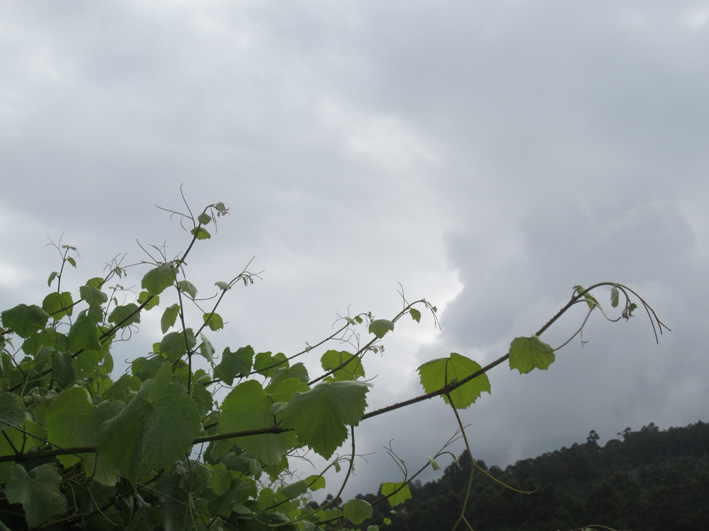
FloweringToday we have sun, and hopefully the forecast predicts that we should have sun for the next week or two – we need it for the flowering! The weather here has been quite unusual for the last few months as, although we’ve enjoyed a bit of sunshine recently, the temperatures still stubbornly refuse to break the 20°C (68°F) barrier. I can recall years when we’ve reached these temperatures as early as February or March, albeit that this is not necessarily a good thing either…. I think our problem lies with the cold northerly winds which are quite unusual at this time of year, by now we should really be drawing our weather systems (and winds) from the west or south west.

The truth is that in the context of the vine cycle this is a very critical time of year where we really need a period of warm, dry, settled weather. The tiny, delicate grape flowers can be dislodged by rain, wind or excessive cold, and is they are not allowed to self-pollenate or ‘set’ to form the grape berries then a significant percentage of the year’s crop can be lost. Cold, unsettled weather can also result in what the French call ‘Millerandage’  (I think this is known as ‘Corrimiento’ in Spanish), which is when we end up with berries of different sizes within each bunch – where some berries have matured, and others have not. These bunches are largely unusable and the resultant crop can be quite poor.

As always we have our fingers crossed that nature will be kind to us.

FloweringToday we have sun, and hopefully the forecast predicts that we should have sun for the next week or two – we need it for the flowering! The weather here has been quite unusual for the last few months as, although we’ve enjoyed a bit of sunshine recently, the temperatures still stubbornly refuse to break the 20°C (68°F) barrier. I can recall years when we’ve reached these temperatures as early as February or March, albeit that this is not necessarily a good thing either…. I think our problem lies with the cold northerly winds which are quite unusual at this time of year, by now we should really be drawing our weather systems (and winds) from the west or south west.

The truth is that in the context of the vine cycle this is a very critical time of year where we really need a period of warm, dry, settled weather. The tiny, delicate grape flowers can be dislodged by rain, wind or excessive cold, and is they are not allowed to self-pollenate or ‘set’ to form the grape berries then a significant percentage of the year’s crop can be lost. Cold, unsettled weather can also result in what the French call ‘Millerandage’  (I think this is known as ‘Corrimiento’ in Spanish), which is when we end up with berries of different sizes within each bunch – where some berries have matured, and others have not. These bunches are largely unusable and the resultant crop can be quite poor.

As always we have our fingers crossed that nature will be kind to us.

Please don’t shout…

May 18th, 2013 | Odds & Sods

NoiseI am ashamed to admit that when it comes to learning languages the Brits can be pretty lazy…. and the reason? We simply expect that everyone else in the world should speak English. No matter which country you are visiting a common scenario is to overhear a Brit speaking (in English) to a local person, and then, when the local person doesn’t understand, repeat the same words again but in a much louder voice! It’s all a bit embarrassing really.

Having said that, when it comes to speaking in loud voices, then the Spanish should probably lead the world. In a recent study commissioned by the World Health Organisation Spain was declared  the world’s second noisiest country, beaten only by Japan. I rather suspect that one of the main differences between Spain and Japan might be that the Japanese people themselves are quite quiet and reserved by nature, the noise in their country really originates from the traffic, building works, electronic machinery and night life. In Spain a recent poll carried out by AECOR (the Spanish Association for Acoustic Quality) it was revealed that the biggest noise-related nuisance for people are their neighbours, with 90 per cent blaming the poor noise insulation of their homes!

In a restaurant scenario for example, you might be forgiven for thinking that a large table of Spanish diners might be having a wholesale argument with one another, whereas they are, in fact, simply holding several loud conversations all at the same time! Only 60 km from our door, in Portugal, the difference is quite noticeable – you can enjoy a meal in relative calm and quiet without the highly animated pandemonium of Spain!

A possible explanation is that approximately two million Spaniards suffer from hearing loss, which could be why everyone appears to be shouting all the time. I know for example that Angela suffers from slightly impaired hearing and I often find myself complaining that she shouts when using the telephone in our office. In the future this could get even worse as the so-called ‘i-pod generation’ are already being forced to visit hearing specialists, and are likely to suffer hearing loss around 20 years before their parents or grandparents ever did! A sobering thought.

NoiseI am ashamed to admit that when it comes to learning languages the Brits can be pretty lazy…. and the reason? We simply expect that everyone else in the world should speak English. No matter which country you are visiting a common scenario is to overhear a Brit speaking (in English) to a local person, and then, when the local person doesn’t understand, repeat the same words again but in a much louder voice! It’s all a bit embarrassing really.

Having said that, when it comes to speaking in loud voices, then the Spanish should probably lead the world. In a recent study commissioned by the World Health Organisation Spain was declared  the world’s second noisiest country, beaten only by Japan. I rather suspect that one of the main differences between Spain and Japan might be that the Japanese people themselves are quite quiet and reserved by nature, the noise in their country really originates from the traffic, building works, electronic machinery and night life. In Spain a recent poll carried out by AECOR (the Spanish Association for Acoustic Quality) it was revealed that the biggest noise-related nuisance for people are their neighbours, with 90 per cent blaming the poor noise insulation of their homes!

In a restaurant scenario for example, you might be forgiven for thinking that a large table of Spanish diners might be having a wholesale argument with one another, whereas they are, in fact, simply holding several loud conversations all at the same time! Only 60 km from our door, in Portugal, the difference is quite noticeable – you can enjoy a meal in relative calm and quiet without the highly animated pandemonium of Spain!

A possible explanation is that approximately two million Spaniards suffer from hearing loss, which could be why everyone appears to be shouting all the time. I know for example that Angela suffers from slightly impaired hearing and I often find myself complaining that she shouts when using the telephone in our office. In the future this could get even worse as the so-called ‘i-pod generation’ are already being forced to visit hearing specialists, and are likely to suffer hearing loss around 20 years before their parents or grandparents ever did! A sobering thought.

To Tweet or not to Tweet?

May 15th, 2013 | Social Media

Twitter

To Tweet or not to Tweet, that is the question? (Doesn’t have quite the same cadence to it as the Bard’s original version I’m afraid)…..

It is claimed that one of the most effective ways of marketing these days is via social media. Indeed, I heard only the other day from another wine professional based in the U.S., that the importance of wine publications and their points systems are starting to diminish as their influence on consumers is now being surpassed by different forms of social media. Here at Castro Martin we’ve been blogging for years, and quite recently have added a Facebook page where we regularly update the news and gossip in and around our own locality.

Maybe it’s just an age thing, but of all the different forms of social media I’m afraid that I’m not too convinced about the value of Twitter to our particular business. I’ve heard that some of the comments, or tweets should I say, can be a bit inane, and whilst there are always things happening in the bodega, I’m not sure if I feel inclined to comment about what’s going on every five minutes. Once every couple of days seems quite sufficient to me, and with a blog and a Facebook page, I think that this pretty much covers the bases. Certainly if we were a fast moving business where news was developing on minute-by-minute basis then I might be inclined to join in, but it’s simply that I just don’t want to allow technology take over my life completely. (It’s already bad enough that Angela sometimes sends me text messages from within the same house!)

I read somewhere that messaging and using a mobile phone can be contagious, and I’m afraid to admit that this might just be true – how often have you seen someone using a mobile, and then suddenly felt inclined to check your own messages? Believe me, it happens…..

“An honest tale speeds best, being plainly told.” ~ Richard III, Act IV, Scene IV

Twitter

To Tweet or not to Tweet, that is the question? (Doesn’t have quite the same cadence to it as the Bard’s original version I’m afraid)…..

It is claimed that one of the most effective ways of marketing these days is via social media. Indeed, I heard only the other day from another wine professional based in the U.S., that the importance of wine publications and their points systems are starting to diminish as their influence on consumers is now being surpassed by different forms of social media. Here at Castro Martin we’ve been blogging for years, and quite recently have added a Facebook page where we regularly update the news and gossip in and around our own locality.

Maybe it’s just an age thing, but of all the different forms of social media I’m afraid that I’m not too convinced about the value of Twitter to our particular business. I’ve heard that some of the comments, or tweets should I say, can be a bit inane, and whilst there are always things happening in the bodega, I’m not sure if I feel inclined to comment about what’s going on every five minutes. Once every couple of days seems quite sufficient to me, and with a blog and a Facebook page, I think that this pretty much covers the bases. Certainly if we were a fast moving business where news was developing on minute-by-minute basis then I might be inclined to join in, but it’s simply that I just don’t want to allow technology take over my life completely. (It’s already bad enough that Angela sometimes sends me text messages from within the same house!)

I read somewhere that messaging and using a mobile phone can be contagious, and I’m afraid to admit that this might just be true – how often have you seen someone using a mobile, and then suddenly felt inclined to check your own messages? Believe me, it happens…..

“An honest tale speeds best, being plainly told.” ~ Richard III, Act IV, Scene IV

Albariño – The Next Generation

May 13th, 2013 | Technical

Vines - The Next GenerationI think it would be fair to say that there is almost never a quiet moment in the calendar of the vigneron – it’s pretty much non-stop, there’s always something going on, even in winter. Usually, once the harvest is completed, the wine making takes over, and often before this has even finished we have to start on the pruning. By the time we finish all the pruning and tying the shoots to the wires, the growing season has started once again, and so the cycle continues….

At the end of the pruning, once the wires have been cleaned up ready for the new growth, this is really the best (and only) moment to carry out repairs and general ‘rejuvenation’ of the vineyards. A week or two ago I wrote about the repair of broken wires, but probably the most important of all the spring chores is the replanting/replacement of any damaged, broken or diseased vine plants. Very regrettably some of the vines that we have to replace are simply the ones which have reached the end of their productive life cycle. The dilemma is that as the vine gets very old so the yield of the plant is greatly reduced, but this will often produce the very best quality grapes of the entire vineyard. This is why many wineries make a special ‘Old Vines’ Cuvée (always at a premium price) – a very low yield wine, but of very high quality and with great concentration.

The best solution to this ‘old vine’ conundrum, is therefore something of a compromise. To replace vines almost on a ‘rolling’ basis whereby we never arrive in a situation where we have to replace large sections of any one vineyard at any one time. The best permutation is always to have a good cross-section of mature vines, producing good quality fruit, whilst always maintaining a viable working volume.

Today’s photo shows some of our latest new arrivals – our next generation of fruit producers direct from the nursery. Not any old nursery I should tell you, but an officially registered producer of vines, where every plant is certified and comes with its own complete traceability. We are however, still able to select from a handful of different clones, and our choice is of course based on both experience and the style that we want to achieve in our finished wine – the results of which will only be seen several years down the line.

Vines - The Next GenerationI think it would be fair to say that there is almost never a quiet moment in the calendar of the vigneron – it’s pretty much non-stop, there’s always something going on, even in winter. Usually, once the harvest is completed, the wine making takes over, and often before this has even finished we have to start on the pruning. By the time we finish all the pruning and tying the shoots to the wires, the growing season has started once again, and so the cycle continues….

At the end of the pruning, once the wires have been cleaned up ready for the new growth, this is really the best (and only) moment to carry out repairs and general ‘rejuvenation’ of the vineyards. A week or two ago I wrote about the repair of broken wires, but probably the most important of all the spring chores is the replanting/replacement of any damaged, broken or diseased vine plants. Very regrettably some of the vines that we have to replace are simply the ones which have reached the end of their productive life cycle. The dilemma is that as the vine gets very old so the yield of the plant is greatly reduced, but this will often produce the very best quality grapes of the entire vineyard. This is why many wineries make a special ‘Old Vines’ Cuvée (always at a premium price) – a very low yield wine, but of very high quality and with great concentration.

The best solution this ‘old vine’ conundrum, is therefore something of a compromise. To replace vines almost on a ‘rolling’ basis whereby we never arrive in a situation where we have to replace large sections of any one vineyard at any one time. The best permutation is always to have a good cross-section of mature vines, producing good quality fruit, whilst always maintaining a viable working volume.

Today’s photo shows some of our latest new arrivals – our next generation of fruit producers direct from the nursery. Not any old nursery I should tell you, but an officially registered producer of vines, where every plant is certified and comes with its own complete traceability. We are however, still able to select from a handful of different clones, and our choice is of course based on both experience and the style that we want to achieve in our finished wine – the results of which will only be seen several years down the line.

It’s Albariño Day!

May 9th, 2013 | Fiestas

Albariño Day PartyIt was only quite recently that I discovered the existence of Albariño Day….. This could be because it was not the invention of our local Denomination office, but rather was created by an American marketing company to coincide with an albariño tasting in Chicago, held on 9th May last year. I’m afraid that there’s no romantic story or special historical significance attached to this date – just the tasting, which for me at least, is just a little disappointing. Looking back at the brief history of the D.O. Rias Baixas I feel sure that there must be at least one or two notable dates that would have perhaps provided a better excuse for a celebration. Having said that we should probably just be grateful that someone has made the effort and wants to dedicate this day and pay homage to our wonderful wines. I raise my glass to you!

As far as I am aware Albariño Day is only celebrated in the United States, albeit that there is definitely the potential to extend this into a worldwide event. Certainly it is my intention to join in next year, and I for one, will be mailing my customers around the world with ideas and materials to help promote the day (and sell them more wine). I’m afraid that my relatively late discovery of the date left me insufficient time to organise myself for the 2013 event. So I guess that we will just have to sit quietly at home, pull a cork, and observe the day in our own humble way….. until next year!

Albariño Day PartyIt was only quite recently that I discovered the existence of Albariño Day….. This could be because it was not the invention of our local Denomination office, but rather was created by an American marketing company to coincide with an albariño tasting in Chicago, held on 9th May last year. I’m afraid that there’s no romantic story or special historical significance attached to this date – just the tasting, which for me at least, is just a little disappointing. Looking back at the brief history of the D.O. Rias Baixas I feel sure that there must be at least one or two notable dates that would have perhaps provided a better excuse for a celebration. Having said that we should probably just be grateful that someone has made the effort and wants to dedicate this day and pay homage to our wonderful wines. I raise my glass to you!

As far as I am aware Albariño Day is only celebrated in the United States, albeit that there is definitely the potential to extend this into a worldwide event. Certainly it is my intention to join in next year, and I for one, will be mailing my customers around the world with ideas and materials to help promote the day (and sell them more wine). I’m afraid that my relatively late discovery of the date left me insufficient time to organise myself for the 2013 event. So I guess that we will just have to sit quietly at home, pull a cork, and observe the day in our own humble way….. until next year!

Ronaldo McDonaldo

May 8th, 2013 | Odds & Sods

ronaldo mcdonaldoPlease forgive me, this is nothing to do with wine…

Last Saturday night after scoring two goals for his Real Madrid team, the footballer Cristiano Ronaldo went out for a meal with his girlfriend. On his journey home at about 01.30am on Sunday morning Ronaldo, in his brand new Audi R8, was stopped by the police during a routine check of driver and vehicle documents.

For some reason (which was not made entirely clear) Ronaldo didn’t have his paperwork in the car, and instead turned to the policeman and said “Do you know who I am?”

The policeman allegedly returned to his vehicle, radioed his headquarters and said “Quick! Please send an ambulance, there’s a guy here who doesn’t know who he is!”

Well, actually, the last part is what should have happened, but the reality was actually much more mundane. Apparently Ronaldo made a call and simply waited an hour until someone arrived with his documents, although I have to say that I think I prefer my ending!

ronaldo mcdonaldoPlease forgive me, this is nothing to do with wine…

Last Saturday night after scoring two goals for his Real Madrid team, the footballer Cristiano Ronaldo went out for a meal with his girlfriend. On his journey home at about 01.30am on Sunday morning Ronaldo, in his brand new Audi R8, was stopped by the police during a routine check of driver and vehicle documents.

For some reason (which was not made entirely clear) Ronaldo didn’t have his paperwork in the car, and instead turned to the policeman and said “Do you know who I am?”

The policeman allegedly returned to his vehicle, radioed his headquarters and said “Quick! Please send an ambulance, there’s a guy here who doesn’t know who he is!”

Well, actually, the last part is what should have happened, but the reality was actually much more mundane. Apparently Ronaldo made a call and simply waited an hour until someone arrived with his documents, although I have to say that I think I prefer my ending!

A2O – Fruktkonsentrasjon!

May 7th, 2013 | Press

NorwayA2O Albarino, Sobre Lias 2011, Spania, Rias Baixas (Lagres 0-5 år)

Mosten har ligget minimum fem måneder på bunnfall. Rik, slank og syrefrisk vin med spenstig syre og flott fruktkonsentrasjon. Hint av mineraler, epler og urter.

So, how is your Norwegian? Probably as good as mine! Thankfully our Norwegian importer was able to help us….. This article appeared last week in Adresseavisen, a daily newspaper centred around Trondheim, a city renowned for its famous Trondheimsfjord, Norway’s third largest fjord. I’m happy to report that our Albariño was well received there by the wine journalist Ulf Dalheim, and his comment (translated) is as follows: “The wine has been on lees for minimum 5 months. Rich, fresh with nice acidity and great fruit concentration. Hint of minerals, apples and herbs”. 

NorwayA2O Albarino, Sobre Lias 2011, Spania, Rias Baixas (Lagres 0-5 år)

Mosten har ligget minimum fem måneder på bunnfall. Rik, slank og syrefrisk vin med spenstig syre og flott fruktkonsentrasjon. Hint av mineraler, epler og urter.

So, how is your Norwegian? Probably as good as mine! Thankfully our Norwegian importer was able to help us….. This article appeared last week in Adresseavisen, a daily newspaper centred around Trondheim, a city renowned for its famous Trondheimsfjord, Norway’s third largest fjord. I’m happy to report that our Albariño was well received there by the wine journalist Ulf Dalheim, and his comment (translated) is as follows: “The wine has been on lees for minimum 5 months. Rich, fresh with nice acidity and great fruit concentration. Hint of minerals, apples and herbs”. 

Champagne is good for you!

May 6th, 2013 | Wine & Health

Deutz ChampagneGreat news!…. This time researchers have found that three glasses of Champagne a day could help ward off brain disorders such as dementia and Alzheimer’s disease. (Four glasses and you might start not to remember anything!) Unfortunately, for lovers of Blanc de Blancs Champagne, this is unlikely to produce the same benefits as the compound responsible for improving memory is only found in the black grapes – Pinot Noir and Pinot Meunier.

It is not the first time scientists have identified health benefits in champagne. A year or two ago the same team found that it was as good for the heart as cocoa or red wine polyphenol antioxidants, which are believed to reduce the effects of cell-damaging free radicals in the body. The memory aid found in champagne is actually a different compound, phenolic acid, and in this latest study, researchers found that it provoked a noticeable boost to spatial memory.

Having said that I believe that most of the tests carried out so far have been restricted to laboratory rats, but the scientists now hope to conduct a trial on up to 60 pensioners who will be asked to drink champagne for three years. My guess is that there might be no shortage of volunteers!

A spokesman for the Alzheimer’s Society in the UK said: “This is an interesting study, especially for those who enjoy a glass of bubbly. However, people should not start celebrating just yet. This is the first time a link between champagne and dementia risk reduction has been found. A lot more research is needed.”

Deutz ChampagneGreat news!…. This time researchers have found that three glasses of Champagne a day could help ward off brain disorders such as dementia and Alzheimer’s disease. (Four glasses and you might start not to remember anything!) Unfortunately, for lovers of Blanc de Blancs Champagne, this is unlikely to produce the same benefits as the compound responsible for improving memory is only found in the black grapes – Pinot Noir and Pinot Meunier.

It is not the first time scientists have identified health benefits in champagne. A year or two ago the same team found that it was as good for the heart as cocoa or red wine polyphenol antioxidants, which are believed to reduce the effects of cell-damaging free radicals in the body. The memory aid found in champagne is actually a different compound, phenolic acid, and in this latest study, researchers found that it provoked a noticeable boost to spatial memory.

Having said that I believe that most of the tests carried out so far have been restricted to laboratory rats, but the scientists now hope to conduct a trial on up to 60 pensioners who will be asked to drink champagne for three years. My guess is that there might be no shortage of volunteers!

A spokesman for the Alzheimer’s Society in the UK said: “This is an interesting study, especially for those who enjoy a glass of bubbly. However, people should not start celebrating just yet. This is the first time a link between champagne and dementia risk reduction has been found. A lot more research is needed.”

Our sugar cane wine closures

April 30th, 2013 | Green Issues

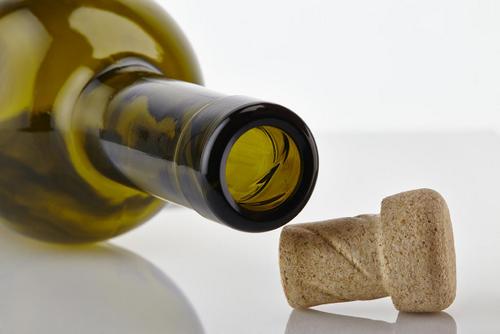
Select Bio Bottle2Over recent weeks you may have noticed that I have been writing (with a certain amount of passion) about one of my ‘pet’ subjects….. wine closures. You may also know we spend a huge amount of time and energy researching the subject, and as I mentioned only the other day our supplier, Nomacorc, was about to make a significant addition to their product range.

The news is that they are about to start making the world’s first closure made with zero carbon footprint! Whilst we do not qualify as a bio-dynamic producer we do take a number of measures both in the vineyard and the bodega to reduce our level of  ‘intervention’ to the bare minimum. We also re-cycle as many materials as we possibly can (please see the ‘environment’ and ‘green policy’ pages on our website for more details). In the packaging of our wines we also use an ‘Eco’ bottle, and from next year this will almost certainly be supplemented by this new ‘Bio’ closure (assuming that our supplier offers us a competitive price). The new ‘Bio’ closures will also be 100 percent recyclable and will be made using renewable, plant-based materials.

Remembering that our carton already comprises a high percentage of re-cycled paper, perhaps the only thing we lack now is a wine label hand-knitted by Angela’s mother (using only the natural wool from our own sheep of course)!

Select Bio Bottle2Over recent weeks you may have noticed that I have been writing (with a certain amount of passion) about one of my ‘pet’ subjects….. wine closures. You may also know we spend a huge amount of time and energy researching the subject, and as I mentioned only the other day our supplier, Nomacorc, was about to make a significant addition to their product range.

The news is that they are about to start making the world’s first closure made with zero carbon footprint! Whilst we do not qualify as a bio-dynamic producer we do take a number of measures both in the vineyard and the bodega to reduce our level of  ‘intervention’ to the bare minimum. We also re-cycle as many materials as we possibly can (please see the ‘environment’ and ‘green policy’ pages on our website for more details). In the packaging of our wines we also use an ‘Eco’ bottle, and from next year this will almost certainly be supplemented by this new ‘Bio’ closure (assuming that our supplier offers us a competitive price). The new ‘Bio’ closures will also be 100 percent recyclable and will be made using renewable, plant-based materials.

Remembering that our carton already comprises a high percentage of re-cycled paper, perhaps the only thing we lack now is a wine label hand-knitted by Angela’s mother (using only the natural wool from our own sheep of course)!

Monthly Archives

Categories

ARE YOU OF LEGAL AGE? This site is intended for those of legal drinking age. By entering, you confirm that you are of legal drinking age in the country where this site is being accessed. ¿ERES MAYOR DE EDAD? Este sitio está destinado a personas en edad legal para beber alcohol. Al ingresar, confirma que tiene la edad legal para beber en el país donde se accede a este sitio.