Storm damage

October 25th, 2013 | Weather

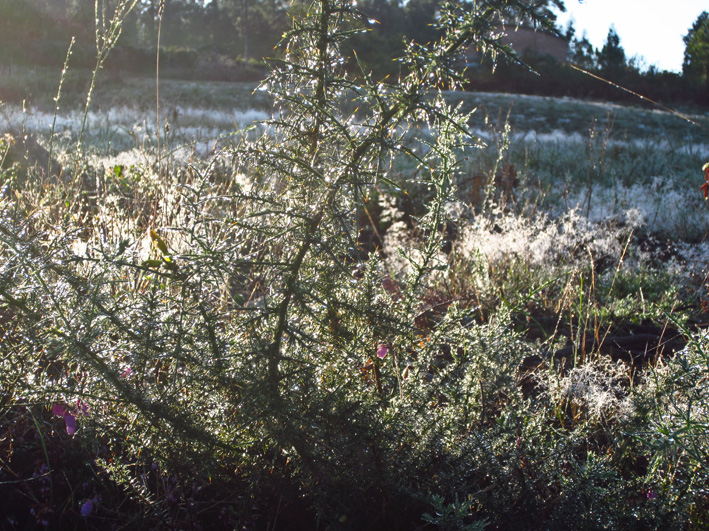
Trees 2We are lucky that our 2013 fruit is now safely in the cellar, as the weather has taken a decided turn for the worse…. in the last few days it has become very unsettled and stormy! Don’t forget that our tiny denomination is situated more or less on the corner of Spain where the Atlantic Ocean meets the Bay of Biscay – a notorious area for stormy weather, and on these occasions we find ourselves quite exposed to the elements.

Many of our vineyard locations are bordered by trees, that form a beautiful, rural backdrop during the summer months, but maybe not quite so beautiful when the very same trees fall on top of our vines! It goes without saying that persistent heavy rain eventually undermines the ground that supports the tree, which, combined with strong winds straight off the ocean, will eventually bring down even the most well established specimen. Unfortunately this is exactly what happened in our El Pazo vineyard this week. Of course we have to be thankful that no one was hurt, and remember that whilst being very inconvenient, the broken posts and wires of the pergola can be replaced.

Just another item to add to the list of jobs for the winter months.

Trees 2We are lucky that our 2013 fruit is now safely in the cellar, as the weather has taken a decided turn for the worse…. in the last few days it has become very unsettled and stormy! Don’t forget that our tiny denomination is situated more or less on the corner of Spain where the Atlantic Ocean meets the Bay of Biscay – a notorious area for stormy weather, and on these occasions we find ourselves quite exposed to the elements.

Many of our vineyard locations are bordered by trees, that form a beautiful, rural backdrop during the summer months, but maybe not quite so beautiful when the very same trees fall on top of our vines! It goes without saying that persistent heavy rain eventually undermines the ground that supports the tree, which, combined with strong winds straight off the ocean, will eventually bring down even the most well established specimen. Unfortunately this is exactly what happened in our El Pazo vineyard this week. Of course we have to be thankful that no one was hurt, and remember that whilst being very inconvenient, the broken posts and wires of the pergola can be replaced.

Just another item to add to the list of jobs for the winter months.

Top seafood wine

October 24th, 2013 | Press

GayotThere is a website in the United States called Gayot (guy-OH) which is dedicated to the ‘Good Life’, posting reviews of hotels, restaurants, food and wine – it apparently gets 320,000 hits per month. I have to be honest and say that until very recently I had never heard of it! The reason that I have heard of it now is simply because they have rated our 2012 Castro Martin ‘Family Estate Selection’ as one of their Top Ten Seafood Wines – not only the only albariño in the top ten, but actually the only Spanish white in this category.

They said:  “The vineyards from which this Albariño was produced are on average 50 years old, lending the grapes intense, complex flavors. Having aged “on the lees” for five to six months, the wine also picked up yeasty aromas and flavors. A fine Albariño featuring white fruit aromas, it reveals peach, pear and lemon flavors with a generous minerality on the palate. Fresh white fish, oysters or sashimi would make excellent pairings.”

Naturally, we are quite happy with this recommendation.

GayotThere is a website in the United States called Gayot (guy-OH) which is dedicated to the ‘Good Life’, posting reviews of hotels, restaurants, food and wine – it apparently gets 320,000 hits per month. I have to be honest and say that until very recently I had never heard of it! The reason that I have heard of it now is simply because they have rated our 2012 Castro Martin ‘Family Estate Selection’ as one of their Top Ten Seafood Wines – not only the only albariño in the top ten, but actually the only Spanish white in this category.

They said:  “The vineyards from which this Albariño was produced are on average 50 years old, lending the grapes intense, complex flavors. Having aged “on the lees” for five to six months, the wine also picked up yeasty aromas and flavors. A fine Albariño featuring white fruit aromas, it reveals peach, pear and lemon flavors with a generous minerality on the palate. Fresh white fish, oysters or sashimi would make excellent pairings.”

Naturally, we are quite happy with this recommendation.

Library tasting

October 22nd, 2013 | Bodega

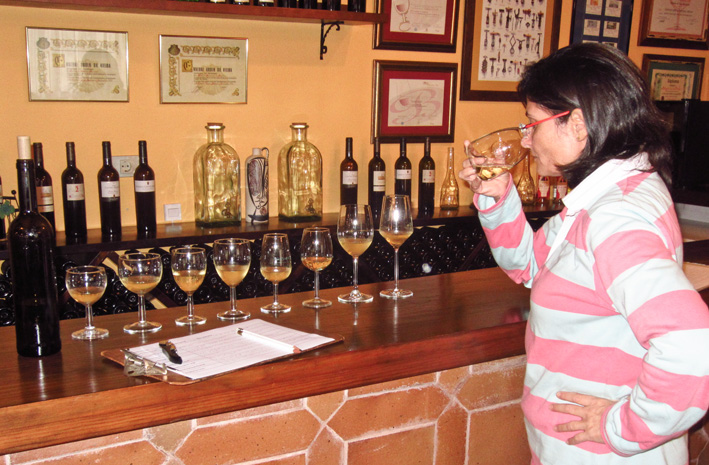
Library tasting2Today we have been working flat out on the wine making, but in the days before our 2013 harvest, whilst we were waiting for a suitable break in the horrible, wet weather, Angela and I decided to hold a private tasting…. and what an interesting tasting it proved to be! Each time we bottle a tank of our albariño we are obliged to send several sample bottles to our denomination office for tasting and analysis – once approved we get our tirilla (the small Rias Baixas sticker on the back of every bottle). At the same time we also send our own independent sample to our local, accredited laboratory, in order that we have two separate analyses to compare. Finally, during the bottling itself we also take random samples that we mark carefully and keep for reference (and also in case of any future problem). By the time all these samples have been taken it’s a wonder that there’s any wine left in the tank for our customers!

The range of these ‘reference’ samples that we keep extends back for several years and so, now and again, it’s really interesting to pull out a few and taste them to find out how they have evolved. This latest tasting was for wines bottled during 2011 – a selection of 2009 and 2010 vintages.

The first thing that I have to tell you, hand on heart, is that there was not one oxidised bottle. One or two were starting to show their age, and there were certainly a few secondary aromas developing, but every bottle was still quite drinkable. Not bad for wines bottled up to three years ago. Please remember that wines stored in tank will always keep much better and remain much fresher than those in bottle, singularly the most important reason that we only bottle tanks as and when they are required. (In tank there is virtually no oxygen present as our wines are stored under nitrogen). Specially selected, older ‘vendimia’ wines sold by a few other bodegas in our region are made this way – stored in tank for several years, and then only bottled just before being released into the market (in a similar way to RD champagne). Of course it would be fairly simple for us to make selected wines such as this, but then I remind myself that our production is already complicated enough when I think of the legal label requirements of our different export markets.

In tasting older albariños there are several new words that can appear in the tasting vocabulary – of course this, like all wine tasting, is purely subjective. For example, looking at my notes from this latest tasting you will find words such as honey, toffee, caramel, sour cream, ripe apple, vegetal, mature fruit – but without one mention of oxidation. Please don’t forget, it was Robert Joseph who once wrote about our albariño “would not disappoint Burgundy drinkers”, and if you taste a more mature example you might begin to understand exactly what he meant by this.

Library tasting2Today we have been working flat out on the wine making, but in the days before our 2013 harvest, whilst we were waiting for a suitable break in the horrible, wet weather, Angela and I decided to hold a private tasting…. and what an interesting tasting it proved to be! Each time we bottle a tank of our albariño we are obliged to send several sample bottles to our denomination office for tasting and analysis – once approved we get our tirilla (the small Rias Baixas sticker on the back of every bottle). At the same time we also send our own independent sample to our local, accredited laboratory, in order that we have two separate analyses to compare. Finally, during the bottling itself we also take random samples that we mark carefully and keep for reference (and also in case of any future problem). By the time all these samples have been taken it’s a wonder that there’s any wine left in the tank for our customers!

The range of these ‘reference’ samples that we keep extends back for several years and so, now and again, it’s really interesting to pull out a few and taste them to find out how they have evolved. This latest tasting was for wines bottled during 2011 – a selection of 2009 and 2010 vintages.

The first thing that I have to tell you, hand on heart, is that there was not one oxidised bottle. One or two were starting to show their age, and there were certainly a few secondary aromas developing, but every bottle was still quite drinkable. Not bad for wines bottled up to three years ago. Please remember that wines stored in tank will always keep much better and remain much fresher than those in bottle, singularly the most important reason that we only bottle tanks as and when they are required. (In tank there is virtually no oxygen present as our wines are stored under nitrogen). Specially selected, older ‘vendimia’ wines sold by a few other bodegas in our region are made this way – stored in tank for several years, and then only bottled just before being released into the market (in a similar way to RD champagne). Of course it would be fairly simple for us to make selected wines such as this, but then I remind myself that our production is already complicated enough when I think of the legal label requirements of our different export markets.

In tasting older albariños there are several new words that can appear in the tasting vocabulary – of course this, like all wine tasting, is purely subjective. For example, looking at my notes from this latest tasting you will find words such as honey, toffee, caramel, sour cream, ripe apple, vegetal, mature fruit – but without one mention of oxidation. Please don’t forget, it was Robert Joseph who once wrote about our albariño “would not disappoint Burgundy drinkers”, and if you taste a more mature example you might begin to understand exactly what he meant by this.

The sweet smell of winemaking

October 19th, 2013 | Post Harvest

The noseIn the world of wine we rely on our noses much more than the vast majority of other industries, and as I think I have said before, the more we use our sense of smell, the more sensitive it becomes. During the wine making process we witness a whole range of different aromas many of which are unique to grapes, wine and the fermentation process.

Naturally, the first real smell emerges as we start to press the grapes. It’s probably a bit obvious to say but the scent that dominates is an intense fruit, which at this very early stage does not vary to much from year to year – the factor which perhaps varies the most according to the vintage is the floral, perfumed element. I am please to say that the 2013 grapes were both fruity and floral, so all we have to do now is capture that in the bottle!

I think one of our favourite smells, which is always a very ‘homely, welcoming’ aroma when we open the cellar door in the morning is the yeast. It’s sometimes more like opening the door of a bakery than a wine cellar. They say that if you’re ever trying to sell your home, there are three things that you can do to improve your chances when people come to view – light a fire (assuming that you have a fire place!), brew some fresh coffee (even if you don’t like coffee), or bake some bread. Yeast is such a great smell, but in wine making it should never really be allowed to dominate the nose of your finished product. Anyway, I digress a little….

Unfortunately this wonderful yeasty smell only lasts for a few days during the seeding of the tanks, and even more unfortunately, it is replaced by something far more sinister – the silent killer – carbon dioxide. Of course this is not a smell at all,which is what it makes it so dangerous. Once the fermentation kicks in, we have to make sure that our ventilators are working at full power to remove this dangerous gas, one of the by-products of wine making (together with the alcohol). If you forget for even a second and try to put your head near an open tank to see what is happening, it will, quite literally, take your breath away, but not in a good way.

The noseIn the world of wine we rely on our noses much more than the vast majority of other industries, and as I think I have said before, the more we use our sense of smell, the more sensitive it becomes. During the wine making process we witness a whole range of different aromas many of which are unique to grapes, wine and the fermentation process.

Naturally, the first real smell emerges as we start to press the grapes. It’s probably a bit obvious to say but the scent that dominates is an intense fruit, which at this very early stage does not vary to much from year to year – the factor which perhaps varies the most according to the vintage is the floral, perfumed element. I am please to say that the 2013 grapes were both fruity and floral, so all we have to do now is capture that in the bottle!

I think one of our favourite smells, which is always a very ‘homely, welcoming’ aroma when we open the cellar door in the morning is the yeast. It’s sometimes more like opening the door of a bakery than a wine cellar. They say that if you’re ever trying to sell your home, there are three things that you can do to improve your chances when people come to view – light a fire (assuming that you have a fire place!), brew some fresh coffee (even if you don’t like coffee), or bake some bread. Yeast is such a great smell, but in wine making it should never really be allowed to dominate the nose of your finished product. Anyway, I digress a little….

Unfortunately this wonderful yeasty smell only lasts for a few days during the seeding of the tanks, and even more unfortunately, it is replaced by something far more sinister – the silent killer – carbon dioxide. Of course this is not a smell at all,which is what it makes it so dangerous. Once the fermentation kicks in, we have to make sure that our ventilators are working at full power to remove this dangerous gas, one of the by-products of wine making (together with the alcohol). If you forget for even a second and try to put your head near an open tank to see what is happening, it will, quite literally, take your breath away, but not in a good way.

How dense is your wine?

October 17th, 2013 | Post Harvest

DensitiesNow that most of the seeding of the tanks is done, we have to carefully monitor the progress of the new wine. The way that we do this during fermentation is by measuring the density or specific gravity. The principle is quite simple – as the grape must starts to ferment the amount of sugar in the solution decreases and the amount of ethanol increases – ethanol solution is less dense than sugar solution, so all we have to do is monitor the change using a hydrometer. Two or three times a day (seven days a week) we take a sample of fermenting juice from each tank in a graduated cylinder (see photo). We then allow the hydrometer to float in the liquid and take a reading from the scale etched onto the stem of the instrument. This reading tells us the amount of sugar still remaining, and from this we can calculate the progress of the fermentation process.

There are two main factors that will dictate how quickly the fermentation advances – the strain of yeast used, and of course, the temperature. Some yeasts are very vigorous and will work well in a wide variety of temperatures, whilst others are much more delicate and will only survive during slightly warmer fermentations. As you may well already know, the simple rule is – the warmer the temperature the shorter the fermentation, which is why we are always obsessed by strict temperature control. Here at Castro Martin we prefer a long, slow controlled fermentation, that takes roughly 3 to 4 weeks to complete. Patience is a virtue, and, good things come to those who wait, to coin a couple of well-worn phrases…..

DensitiesNow that most of the seeding of the tanks is done, we have to carefully monitor the progress of the new wine. The way that we do this during fermentation is by measuring the density or specific gravity. The principle is quite simple – as the grape must starts to ferment the amount of sugar in the solution decreases and the amount of ethanol increases – ethanol solution is less dense than sugar solution, so all we have to do is monitor the change using a hydrometer. Two or three times a day (seven days a week) we take a sample of fermenting juice from each tank in a graduated cylinder (see photo). We then allow the hydrometer to float in the liquid and take a reading from the scale etched onto the stem of the instrument. This reading tells us the amount of sugar still remaining, and from this we can calculate the progress of the fermentation process.

There are two main factors that will dictate how quickly the fermentation advances – the strain of yeast used, and of course, the temperature. Some yeasts are very vigorous and will work well in a wide variety of temperatures, whilst others are much more delicate and will only survive during slightly warmer fermentations. As you may well already know, the simple rule is – the warmer the temperature the shorter the fermentation, which is why we are always obsessed by strict temperature control. Here at Castro Martin we prefer a long, slow controlled fermentation, that takes roughly 3 to 4 weeks to complete. Patience is a virtue, and, good things come to those who wait, to coin a couple of well-worn phrases…..

Looks like Guiness – tastes like Albariño

October 15th, 2013 | Post Harvest

Guiness_OK, so at this point in the wine making the must doesn’t really taste like albariño, but my point is simply that the yeast makes a lot of foam when we mix it with the juice ready for seeding. Preparing yeast to make wine is not a secret process – first we hydrate it using warm water (usually around body temperature 38°C or 100°F), and then, over an extended period, we add grape juice from the tank to ‘equalise’ the temperature between the yeast mixture and the juice in tank. For example, if the tank temperature is 15°C and then we add the yeast at 38°C the shock of the sudden change in temperature would simply kill most, if not all, of the yeast. The method therefore is to reduce the temperature of the yeast solution in increments – 5 degrees at a time. We do this by adding juice from the tank, waiting for the yeast to ‘acclimatise’, and then adding more juice – it’s quite a long process. Once the yeast solution is within a few degrees of the tank temperature we can finally add the mixture and start to make some wine!

Of course the other part of the equation is the strain of yeast that we actually chose for seeding. These days there are so many new and different yeasts, all claiming to enhance your wine in different ways. When the salesman arrives with his catalogue of yeasts he more or less asks “what flavour do you want?”. In these circumstances our answer is always the same – we want the flavour of albariño please! In other words we normally chose a fairly neutral yeast in order that the character of our grape variety shines through (otherwise there would be little point!) Having said that, there are some new strains of yeast that claim to enhance this varietal character, and in this case we always make one or two tanks using these to see if they really do match the claims of their manufacturers. In recent years we haven’t found one…. but we always keep and open mind.

Guiness_OK, so at this point in the wine making the must doesn’t really taste like albariño, but my point is simply that the yeast makes a lot of foam when we mix it with the juice ready for seeding. Preparing yeast to make wine is not a secret process – first we hydrate it using warm water (usually around body temperature 38°C or 100°F), and then, over an extended period, we add grape juice from the tank to ‘equalise’ the temperature between the yeast mixture and the juice in tank. For example, if the tank temperature is 15°C and then we add the yeast at 38°C the shock of the sudden change in temperature would simply kill most, if not all, of the yeast. The method therefore is to reduce the temperature of the yeast solution in increments – 5 degrees at a time. We do this by adding juice from the tank, waiting for the yeast to ‘acclimatise’, and then adding more juice – it’s quite a long process. Once the yeast solution is within a few degrees of the tank temperature we can finally add the mixture and start to make some wine!

Of course the other part of the equation is the strain of yeast that we actually chose for seeding. These days there are so many new and different yeasts, all claiming to enhance your wine in different ways. When the salesman arrives with his catalogue of yeasts he more or less asks “what flavour do you want?”. In these circumstances our answer is always the same – we want the flavour of albariño please! In other words we normally chose a fairly neutral yeast in order that the character of our grape variety shines through (otherwise there would be little point!) Having said that, there are some new strains of yeast that claim to enhance this varietal character, and in this case we always make one or two tanks using these to see if they really do match the claims of their manufacturers. In recent years we haven’t found one…. but we always keep and open mind.

Preparing the must

October 14th, 2013 | Post Harvest

RackingWith our grape must now racked into clean tanks, it’s almost the moment to start the fermentations. The problem is that as it stands, all the tanks are different – filled to different levels, with differing sugar levels and acidities etc. Of course some will remain unchanged – for example, the musts from our Estate vineyards that are used to make our Castro Martin wine, will not be blended in any way. The rest will be moved around to bring all the differing elements closer together in an attempt to give us slightly more uniformity. At this moment in time this seemingly simple job is, logistically, actually quite difficult as we do’t have too much space to work with, and so what follows is like a huge game of chess, but with grape juice.

Once all the movements are completed, and the temperatures correct for fermentation, we can start the seeding. We don’t seed all the tanks at once, as this would create problems further down the line, so by controlling the temperatures we add the yeast to only a handful of tanks per day. Slow, controlled and systematic, that is the key….

RackingWith our grape must now racked into clean tanks, it’s almost the moment to start the fermentations. The problem is that as it stands, all the tanks are different – filled to different levels, with differing sugar levels and acidities etc. Of course some will remain unchanged – for example, the musts from our Estate vineyards that are used to make our Castro Martin wine, will not be blended in any way. The rest will be moved around to bring all the differing elements closer together in an attempt to give us slightly more uniformity. At this moment in time this seemingly simple job is, logistically, actually quite difficult as we do’t have too much space to work with, and so what follows is like a huge game of chess, but with grape juice.

Once all the movements are completed, and the temperatures correct for fermentation, we can start the seeding. We don’t seed all the tanks at once, as this would create problems further down the line, so by controlling the temperatures we add the yeast to only a handful of tanks per day. Slow, controlled and systematic, that is the key….

Post harvest hangover

October 11th, 2013 | Post Harvest

Cleaning vehiclesDuring the harvest, and more especially towards the end, we are all functioning on adrenalin – there is a certain buzz about the place, and every individual is focused on the job in hand, rather like a hive of bees (the word buzz was not intended as a pun). The problem is that the minute that we stop and we have time to go home and relax, we simply end up with a rather deflated feeling and struggle to regain the momentum. This probably has a lot to do with the first task that we face after picking….. to clean the bodega – and let’s face it, nobody really likes cleaning.

If you’ve never been to a wine cellar during harvest the thing that you may not realise is that every surface becomes sticky. The grape juice and pressed grape skins get everywhere, and even into one or two quite inexplicable places! Imagine dropping a bottle of fruit concentrate on your kitchen floor, leaving it for a couple of days to dry a little, and then walking through it into the other rooms of your house. This is more or less what it is like – suffice to say, difficult to clean.

So, we start with the vehicles first, then the grape reception on the upper level of the cellar and work downwards from there. One of the most horrible jobs is cleaning the presses, and the only real way to do this is to climb inside, which is not an enviable task for the person that has to do it. Finally, when the building is clean, there is the small matter of pressure washing about 2,000 plastic cases that we use for collecting the grapes. Whilst these are cleaned during the harvest as they are re-used over and over again, we always give them one major deep clean before they are put into storage for next year. To be done properly takes three people a few days to complete.

Of course, running simultaneously to this, we have the most important work of all – making our wine, but that is another story that I will cover in the coming days.

Cleaning vehiclesDuring the harvest, and more especially towards the end, we are all functioning on adrenalin – there is a certain buzz about the place, and every individual is focused on the job in hand, rather like a hive of bees (the word buzz was not intended as a pun). The problem is that the minute that we stop and we have time to go home and relax, we simply end up with a rather deflated feeling and struggle to regain the momentum. This probably has a lot to do with the first task that we face after picking….. to clean the bodega – and let’s face it, nobody really likes cleaning.

If you’ve never been to a wine cellar during harvest the thing that you may not realise is that every surface becomes sticky. The grape juice and pressed grape skins get everywhere, and even into one or two quite inexplicable places! Imagine dropping a bottle of fruit concentrate on your kitchen floor, leaving it for a couple of days to dry a little, and then walking through it into the other rooms of your house. This is more or less what it is like – suffice to say, difficult to clean.

So, we start with the vehicles first, then the grape reception on the upper level of the cellar and work downwards from there. One of the most horrible jobs is cleaning the presses, and the only real way to do this is to climb inside, which is not an enviable task for the person that has to do it. Finally, when the building is clean, there is the small matter of pressure washing about 2,000 plastic cases that we use for collecting the grapes. Whilst these are cleaned during the harvest as they are re-used over and over again, we always give them one major deep clean before they are put into storage for next year. To be done properly takes three people a few days to complete.

Of course, running simultaneously to this, we have the most important work of all – making our wine, but that is another story that I will cover in the coming days.

Harvest 2013 – Day 6

October 10th, 2013 | Harvest

Evening deliveriesAfter five days of working at more or less full capacity we have finally reached our ‘mopping-up’ day – gathering in all the last parcels of grapes. I have not mentioned this before, but it goes without saying that we do not chose where to start picking our fruit at random, everything is carefully calculated, and our different locations are collected in a specific order to ensure that each one is picked at the optimum moment. Today we are working in the lower section of our ‘Pazo’ vineyard, and these will be the last grapes of the 2013 campaign.

Besides the obvious activity in the vineyard and the pressing room, there is also a lot of work going on behind the scenes, as the racking of the grape must continues on a day-by-day basis. This might sound quite simple, but at this time of year, whilst we still have a good deal of 2012 wine in the cellar, then towards the end of the harvest our spare tank capacity is very, very limited. Today I even suggested to someone that in case of emergency we might have to use their swimming pool as an overflow!

By early afternoon the last grapes were safely in the cellar, and within a couple of hours our presses finally fell silent (which comes as quite a relief as the incessant noise reverberates around almost the entire building). The total quantity of grapes processed in 2013 was only slightly below that of 2010, but this year’s work was completed in only 5 1/2 days as compared to 7 full days three years ago. A super-human effort by the whole Castro Martin team.

Taking advantage of a comparatively early night, time to go home, make a cup of tea, and sit with our feet up for a while……

Evening deliveriesAfter five days of working at more or less full capacity we have finally reached our ‘mopping-up’ day – gathering in all the last parcels of grapes. I have not mentioned this before, but it goes without saying that we do not chose where to start picking our fruit at random, everything is carefully calculated, and our different locations are collected in a specific order to ensure that each one is picked at the optimum moment. Today we are working in the lower section of our ‘Pazo’ vineyard, and these will be the last grapes of the 2013 campaign.

Besides the obvious activity in the vineyard and the pressing room, there is also a lot of work going on behind the scenes, as the racking of the grape must continues on a day-by-day basis. This might sound quite simple, but at this time of year, whilst we still have a good deal of 2012 wine in the cellar, then towards the end of the harvest our spare tank capacity is very, very limited. Today I even suggested to someone that in case of emergency we might have to use their swimming pool as an overflow!

By early afternoon the last grapes were safely in the cellar, and within a couple of hours our presses finally fell silent (which comes as quite a relief as the incessant noise reverberates around almost the entire building). The total quantity of grapes processed in 2013 was only slightly below that of 2010, but this year’s work was completed in only 5 1/2 days as compared to 7 full days three years ago. A super-human effort by the whole Castro Martin team.

Taking advantage of a comparatively early night, time to go home, make a cup of tea, and sit with our feet up for a while……

Harvest 2013 – Day 5

October 9th, 2013 | Harvest

Cases in El PazoSuffice to say that today’s weather is still fine and sunny, and with all set fair we started our presses earlier than ever. The first load was under way at shortly after 11am, which is just about as early as we can manage. The picking team swoop in at 9.30am (once the fruit has lost any overnight humidity), they load their 20kg baskets, and these are whisked away without any delay to the bodega – a perfect start to the day, until…… Yes, the inevitable technical problem, but this year not one that we would normally anticipate. The large industrial scale that we use for weighing the pallets of grapes as they are unloaded, decided to start giving us completely nonsensical readings – for example, according to the system I now weigh minus 3kg (the new diet must be working better than I thought!). This weighing system is connected directly to the computer that checks in every single load, and whilst we could read the sugar, the pH and the acidity, the weight of each basket remained a total mystery. Time to call the engineer and wait for a response.

Of course the inevitable result of any such delay is the dreaded backlog – once the pressing process is stopped at any point whilst the grapes are still arriving then things, quite literally, begin to pile up. Thankfully the engineer responded pretty quickly, and within a couple of hours we were back up and running. The grape reception area needed some sorting out as the pallets were lined up for weighing, but eventually order was restored, and we carried on on our cool, calm and collected way….. (well, that last part might be a bit of an exaggeration). 

To end the day Angela had one minor disaster of her own – preparing some tank treatments in the laboratory her Blackberry slipped out of the breast pocket of her white coat and landed straight in a bucket of sugary grape must – I think that’s what you have to classify a ‘sticky end’, but if you could chose, I guess it’s not such a bad way to end your working life!

Cases in El PazoSuffice to say that today’s weather is still fine and sunny, and with all set fair we started our presses earlier than ever. The first load was under way at shortly after 11am, which is just about as early as we can manage. The picking team swoop in at 9.30am (once the fruit has lost any overnight humidity), they load their 20kg baskets, and these are whisked away without any delay to the bodega – a perfect start to the day, until…… Yes, the inevitable technical problem, but this year not one that we would normally anticipate. The large industrial scale that we use for weighing the pallets of grapes as they are unloaded, decided to start giving us completely nonsensical readings – for example, according to the system I now weigh minus 3kg (the new diet must be working better than I thought!). This weighing system is connected directly to the computer that checks in every single load, and whilst we could read the sugar, the pH and the acidity, the weight of each basket remained a total mystery. Time to call the engineer and wait for a response.

Of course the inevitable result of any such delay is the dreaded backlog – once the pressing process is stopped at any point whilst the grapes are still arriving then things, quite literally, begin to pile up. Thankfully the engineer responded pretty quickly, and within a couple of hours we were back up and running. The grape reception area needed some sorting out as the pallets were lined up for weighing, but eventually order was restored, and we carried on on our cool, calm and collected way….. (well, that last part might be a bit of an exaggeration). 

To end the day Angela had one minor disaster of her own – preparing some tank treatments in the laboratory her Blackberry slipped out of the breast pocket of her white coat and landed straight in a bucket of sugary grape must – I think that’s what you have to classify a ‘sticky end’, but if you could chose, I guess it’s not such a bad way to end your working life!

Monthly Archives

Categories

ARE YOU OF LEGAL AGE? This site is intended for those of legal drinking age. By entering, you confirm that you are of legal drinking age in the country where this site is being accessed. ¿ERES MAYOR DE EDAD? Este sitio está destinado a personas en edad legal para beber alcohol. Al ingresar, confirma que tiene la edad legal para beber en el país donde se accede a este sitio.