

If it’s good enough for the Pope…

July 18th, 2019 | International News

The relationship between the church and wine making is, of course, common knowledge. When the Popes themselves were installed in Avignon in the 14th Century they had a great fondness for the wines of Burgundy, and it wasn’t too long before the they established their own, slightly more local vineyards, around the newly constructed castle of Châteauneuf, mid-way between Avignon and Orange. By 1936 Châteauneuf-du-Pape became the first official wine-making Appellation (AOC) of France. This was done not only to improve quality, but also to protect the name and the reputation of their wines from fraudulent copies.

Today there is still a wine made in the region (by Château Sixtine) called Cuvée du Vatican. and it is no secret that the current Pope, Pope Francis, is quite fond of an odd glass of wine (also sustainable coffee), although we can’t confirm any personal leanings toward the wines of Rias Baxias. He recently said “Water is needed to live, but wine expresses the abundance of the banquet and joy of the celebration,” and later concluding, “Wine is necessary for the celebration.”

It is a sentiment that certainly has my blessing!

So WHY did the chicken cross the road?

July 11th, 2019 | Oddballs

…..To buy a really good Castro Martin albariño of course!

A few days ago we welcomed a rather unexpected visitor to our door, actually quite ready to step inside if we hadn’t stopped him (or was it her?) It was the proverbial chicken, quite literally crossing the road in front of our bodega – perhaps just to get to the other side, or maybe in an attempt to escape the oven? (Sorry, that’s a very cruel thing to say, even if possibly true). Subsistence farming is still very common practice in many rural parts of Galicia. The good news is that we simply returned this poor lost soul to the coop.

Meanwhile, it seems that summer could be here! As I have mentioned before, we managed to escape completely from the recent freak heatwave that gripped the rest of Europe for a while. Indeed, we actually experienced a few cool cloudy days over this period. However, we now have sun and temperatures approaching 30°C (86°F), or at least we do for the rest of this week. Who knows what next week might bring?

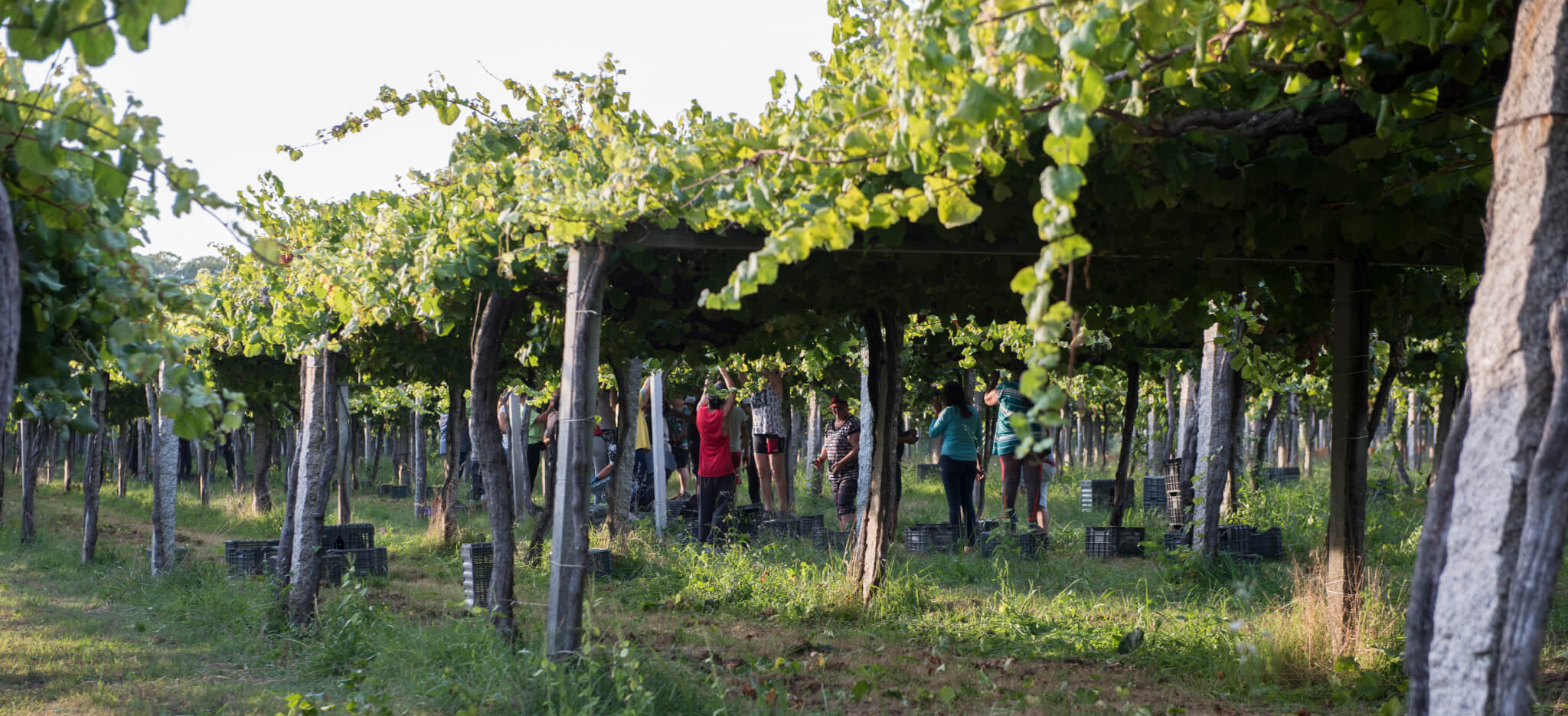
In the vineyards our fruit is actually quite healthy, despite the changeable conditions, and is well into it’s growing cycle. The next month or two will therefore, be focused on ‘canopy management’ – thinning the leaves where necessary to give the bunches the correct amount of sunlight.

France is frying!

July 4th, 2019 | International News

Last weekend we braced ourselves for a blast of super-hot weather, swept up from Africa. Whilst many parts of Europe were experiencing record temperatures for the month of June, Galicia escaped almost completely unscathed with temperatures only reaching the mid-20’s C. In some parts of the South of France however, the thermometer hit an incredible 45.9°C (114.6°F), not only posing a threat to human life, but also quite devastating for farmers, including the local grape/wine producers.

When tasting wine we sometimes refer to it having a ‘cooked’ or overripe flavour, which can often originate from exposure to excessive sunshine. It is irreversible – once the fruit is burnt, it’s burnt, and if these grapes are used in making a wine, they can and will produce a marked flavour (which is usually quite unpleasant). For example, cooked or burnt Syrah grapes will produce a smoky, black, rubbery taste.

So whilst grapes require heat and sunshine to reach the correct maturity, these periods of excessive temperature will only serve to damage the vineyards.

End of an era

July 1st, 2019 | Bodega

We’ve been working on updating our ‘salon’ (meeting room, tasting area) for some time now. As two or three of our own team are already highly-skilled builders we made a decision to keep the work in-house. The only downside to this is that these same guys have to simultaneously continue with their normal chores, both in the vineyards and the bodega. This means, of course, that the work has not progressed as quickly as if we had used outside contractors. However, on the plus side, we know that they are doing a good job (quite unlike some of the shoddy workmanship that we have uncovered during these alterations)!

Take our tasting bar for example. It seems that we have dismantled it just in time – before it actually fell down of it’s own accord! The tiled surface on the front and sides was actually glued to very poor quality chipboard, that we now know was completely rotten and crumbling. Indeed, when we removed the tiles, they were already more or less falling off by themselves!

So, after more than 30 years of tastings and probably thousands of opened bottles, the old bar is no more, and we are currently working on several design options for it’s eventual replacement. Watch this space….

Congratulations!

June 26th, 2019 | Business

The aviation research firm Skytrax announced its 2019 ranking of the best airlines in the world on Tuesday.

In first place was our newest customer – Qatar Airways, where our Castro Martin wine will very soon be served in their First Class cabins. We send them our warmest congratulations!

It goes without saying that we have offered our own services at any time to conduct free in-flight tutored tastings!

90’s all ’round

June 24th, 2019 | Press

For once, when I say that we are “in the 90’s”, I don’t mean our weather, but rather our wines!

As you must know by now, I have never been a great fan of wine awards and the Parker point system. Indeed, it would appear that I am not alone in this new way of thinking. Only this week the well-known and respected food and wine critic of the New York Times, Eric Asimov wrote (and I quote verbatim): “Dreary scores and tasting notes are of little long-term use to consumers. What they need most are inspiration and liberation”. On my part, when people ask me what wines they should drink, my advice has always been the same. Drink what you enjoy; and I say that simply because I know that everyone’s palate is different. And of course, that’s just one of the joys of wine – don’t be afraid to pull a few corks and judge for yourself! (Don’t let someone else judge for you).

Meantime, back at the tastings, we actually submitted three wines to this year’s Guia Peñin 2020. It’s not so much that we are desperate for points or publicity, but it’s merely a yardstick for us, to see where we stand. We didn’t do too badly either. All three wines, Castro Martin Family Estate, A2O and Casal Caeiro emerged with 90 points – consistent if nothing else! The interesting point is, that when comparing the price points of the other wines at 90 points or above, our wines were by far the best value for money. And that’s what it’s all about…. great quality at a fair price.


Savagnin (No, not a spelling mistake!)

June 18th, 2019 | Uncategorized

Savagnin is actually the grape that was confused by the Australians for a number of years as being Albariño. I should add that it was not their fault – the vine cuttings were supplied to growers by their own Commonwealth Scientific and Industrial Research Organisation back in the 1980’s, and were actually mistakenly identified as Albariño. It wasn’t until 2009 that the mistake was discovered and confirmed by DNA testing.

Following this discovery, subsequent wines produced from these vines could only be labelled as Savagnin or Traminer… not quite the same.

Of course, Savagnin is better known for some of the wonderful wine of the Jura region of France.

Please read this very interesting Decanter article to learn more.

Goodbye Miguel

June 10th, 2019 | Weather

I am not sure which changes faster – the weather forecast, or the weather itself, but I do know that the forecasters for Galicia often have problems keeping up. The weather here can change in a heartbeat, the problem being that it is not always predicted.

At the beginning of last week our forecast was for clear skies and sunshine, but then, almost within hours, this prediction had changed to include the possibility of some rain. By the time it finally arrived it had transformed itself into a full-blown (named), storm, with driving rain and high winds. Storm ‘Miguel’, blew in during Thursday afternoon, a little earlier than predicted, with high winds and torrential downpours, but then blew out, almost as quickly as it had appeared. Within hours ‘Miguel’ had vanished, leaving behind our current period of unsettled weather, as it tracked off towards the UK. (Today’s image is a screenshot showing precipitation over Galicia at the peak of the storm).

Thankfully, our flowering period was already behind us, and so this Spanish storm has caused no lasting damage to our vineyards.

Sulphur top-up

June 3rd, 2019 | Technical

These days, a number of people have strong views about the use of sulphur in wine making, indeed, some people have a very low tolerance to it and can suffer side-effects as a consequence. Of course, used at the correct dosage, it is a very effective way to protect wine, preventing oxidation, which is why it has been widely accepted for so long in our industry. The key is using the correct amount. Too little and it won’t really be effective, whilst too much can more or less ‘kill’ a wine completely, so much so that it may never recover.

The presence is always most noticeable when it has just been added. I have no doubt that many a consumer will have received a quick waft of sulphur immediately after pulling the cork. However, given a little time this will dissipate (assuming that the wine hasn’t been over-sulphured)!

A week or two ago we ‘racked’ a few wines from their lees, and transferred them to clean tanks. Any time a wine is moved around the cellar, not only can it lose aroma, but it will also lose a few grams of sulphur too – thereby losing protection at the time it most needs it (during a period of tank storage).

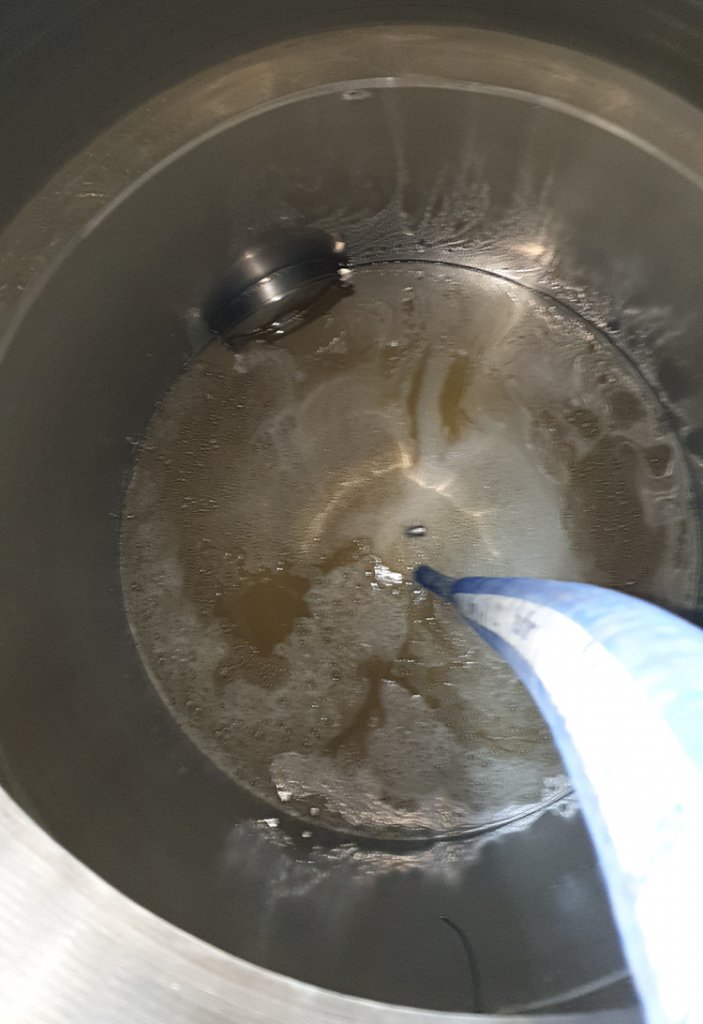
Sulphur is available in a few different forms – one is pure sulphur, which is delivered in tanks and is extremely dangerous. Another is a diluted liquid solution. Usually when a wine requires a significant dose (at the end of fermentation for example) we will use the pure gas form. Whereas when the wine has just been moved and only requires a very small top-up, in this case we prefer the solution form, when we can really be more accurate (the unit of measurement is ppm – parts per million). To put this into perspective, sometimes we may only be adding a few millilitres of sulphur solution to a tank containing 9 or 10,000 litres of wine to move the level by one or two ppm!

Champions of Europe!!

June 2nd, 2019 | International News

MY TEAM – NO WORDS!!!

Monthly Archives

Categories

ARE YOU OF LEGAL AGE? This site is intended for those of legal drinking age. By entering, you confirm that you are of legal drinking age in the country where this site is being accessed. ¿ERES MAYOR DE EDAD? Este sitio está destinado a personas en edad legal para beber alcohol. Al ingresar, confirma que tiene la edad legal para beber en el país donde se accede a este sitio.