Author Archive

You can taste (by) the sea!

October 27th, 2015 | Galicia

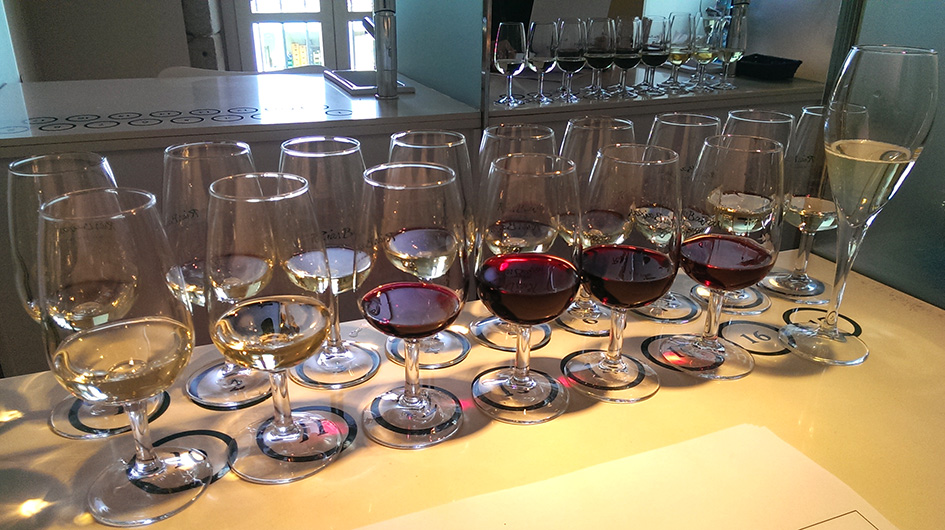
Oscar tastingYesterday, our new friend and distributor in southern Galicia, Oscar, invited us to his tasting in Vigo. It was an all day event, and, as always was pretty exhausting (apart from the break when he treated us all to a spectacular lunch). The morning session was dedicated to local local hotel schools, where our future potential customers (and consumers) had the chance to learn about different wines, and to taste, if they so wished. (Please remember that not everyone finds it fun to taste wine at 11 o’clock in the morning!)

However, it was not until early evening when the proverbial floodgates opened and the large auditorium was packed with hoteliers, restaurateurs, sommeliers and any number of different professionals. Whilst this size of distributor tasting is quite commonplace in say London or New York, I confess that I have never seen anything on this scale at a local tasting in Galicia (or perhaps Spain for that matter). You can judge the turnout for yourself from today’s pictures. The daytime picture shows our proximity Port of Vigo at this tasting, and so when people say that you can taste the sea in our albariño, on this occasion our customers could almost certainly smell it! (Vigo is the largest fishing port in Spain and also one of the biggest in the world).Oscar tastingYesterday, our new friend and distributor in southern Galicia, Oscar, invited us to his tasting in Vigo. It was an all day event, and, as always was pretty exhausting (apart from the break when he treated us all to a spectacular lunch). The morning session was dedicated to local local hotel schools, where our future potential customers (and consumers) had the chance to learn about different wines, and to taste, if they so wished. (Please remember that not everyone finds it fun to taste wine at 11 o’clock in the morning!)

However, it was not until early evening when the proverbial floodgates opened and the large auditorium was packed with hoteliers, restaurateurs, sommeliers and any number of different professionals. Whilst this size of distributor tasting is quite commonplace in say London or New York, I confess that I have never seen anything on this scale at a local tasting in Galicia (or perhaps Spain for that matter). You can judge the turnout for yourself from today’s pictures. The daytime picture shows our proximity Port of Vigo at this tasting, and so when people say that you can taste the sea in our albariño, on this occasion our customers could almost certainly smell it! (Vigo is the largest fishing port in Spain and also one of the biggest in the world).

We have wine!

October 21st, 2015 | Bodega

VenezuelaWell, roughly a month after the first grape was picked in anger, we have tanks that have completed their fermentation and can now clearly be called wine, rather than must or grape juice. Of course they are not ready for sale by some distance, as there are many processes that they have to undergo, not least of all a period of lees ageing. Fine lees are the exhausted yeast cells left over from fermentation that help to intensify our wines by adding richness, flavour and aroma complexity. Specific proteins are released naturally during lees contact, and it is these that create a creamy, silky smooth mouthfeel, and texture to the body of the wine. The lees also enhance stability and increase the ageing potential of our wines.

So now it is time for the tanks to simply rest, and the only time that they will be disturbed over the coming months is when we taste them on a regular basis. I will give more details on their progress, and of course my tasting notes, in the coming weeks, but as they have just been sulphured, now is not really a good time to pass judgement.

One of the unique events that took place during this year’s harvest, were a couple of PR/customer visits. Under normal circumstances we are far too busy, and the cellar is in far too much disarray to welcome people through our doors, but this year we made a couple of exceptions. The first was a small group of sommeliers and shop managers from the UK, a visit set up by our D.O. office by way of PR and education. Second was our very long-standing importer from Venezuela. Of course it could be that we made these two exceptions as the visitors were from Angela and my respective home countries, or maybe that is just a coincidence…. Suffice to say that we hope both groups enjoyed their time with us. (By the way, Angela doesn’t normally wear a baseball cap in the bodega, but the cap is actually designed in the colours of her National flag!)VenezuelaWell, roughly a month after the first grape was picked in anger, we have tanks that have completed their fermentation and can now clearly be called wine, rather than must or grape juice. Of course they are not ready for sale by some distance, as there are many processes that they have to undergo, not least of all a period of lees ageing. Fine lees are the exhausted yeast cells left over from fermentation that help to intensify our wines by adding richness, flavour and aroma complexity. Specific proteins are released naturally during lees contact, and it is these that create a creamy, silky smooth mouthfeel, and texture to the body of the wine. The lees also enhance stability and increase the ageing potential of our wines.

So now it is time for the tanks to simply rest, and the only time that they will be disturbed over the coming months is when we taste them on a regular basis. I will give more details on their progress, and of course my tasting notes, in the coming weeks, but as they have just been sulphured, now is not really a good time to pass judgement.

One of the unique events that took place during this year’s harvest, were a couple of PR/customer visits. Under normal circumstances we are far too busy, and the cellar is in far too much disarray to welcome people through our doors, but this year we made a couple of exceptions. The first was a small group of sommeliers and shop managers from the UK, a visit set up by our D.O. office by way of PR and education. Second was our very long-standing importer from Venezuela. Of course it could be that we made these two exceptions as the visitors were from Angela and my respective home countries, or maybe that is just a coincidence…. Suffice to say that we hope both groups enjoyed their time with us. (By the way, Angela doesn’t normally wear a baseball cap in the bodega, but the cap is actually designed in the colours of her National flag!)

Keeping it cool

October 7th, 2015 | Bodega

DensityThis may well be my last post relating to the 2015 harvest – not because our fermentations are complete, but mostly because there is not much more that can be said about the winemaking process. At this point we are merely observers, monitoring progress by measuring the density of the must/wine, and then, according to what we see, perhaps making one or two subtle adjustments to the temperature control. The idea is that we have a slow, smooth transition from grape juice into wine and at this point the only form of control that we have is temperature. If the fermentation starts to move too quickly then by reducing the temperature by a decimal place or two, then we can slow things down just a touch. Conversely, if the fermentation looks as though it might be sticking, putting too much stress on the yeast, then we can help it along by increasing the temperature. Once all the sugar has been consumed and the fermentation has come to an end, we simply add a good dose of SO2 to inhibit spoilage and kill any unwanted bacteria (e.g. malolactic bacteria). Et voila, done!

The first tanks that we seeded are not too far from completion now and are almost at a point where they are starting to reveal the true character of the vintage. Until now the natural fruit sugar has been quite dominant, albeit that by tasting we can still judge the concentration, style and overall balance of the developing wine. The result is that we are quietly confident that this year’s wine will be very good, and the fact that we started with some excellent quality, healthy fruit was certainly an essential element in this outcome.DensityThis may well be my last post relating to the 2015 harvest – not because our fermentations are complete, but mostly because there is not much more that can be said about the winemaking process. At this point we are merely observers, monitoring progress by measuring the density of the must/wine, and then, according to what we see, perhaps making one or two subtle adjustments to the temperature control. The idea is that we have a slow, smooth transition from grape juice into wine and at this point the only form of control that we have is temperature. If the fermentation starts to move too quickly then by reducing the temperature by a decimal place or two, then we can slow things down just a touch. Conversely, if the fermentation looks as though it might be sticking, putting too much stress on the yeast, then we can help it along by increasing the temperature. Once all the sugar has been consumed and the fermentation has come to an end, we simply add a good dose of SO2 to inhibit spoilage and kill any unwanted bacteria (e.g. malolactic bacteria). Et voila, done!

The first tanks that we seeded are not too far from completion now and are almost at a point where they are starting to reveal the true character of the vintage. Until now the natural fruit sugar has been quite dominant, albeit that by tasting we can still judge the concentration, style and overall balance of the developing wine. The result is that we are quietly confident that this year’s wine will be very good, and the fact that we started with some excellent quality, healthy fruit was certainly an essential element in this outcome.

Meet Alberto

October 2nd, 2015 | Bodega

AlbertoThe good news is that all the hard physical work of the wine making is now finished, all the tank additions are done and pumping over (to mix them thoroughly) has been completed. All that remains are a few cleaning jobs – clearly we can’t do any real cleaning in the tank room until the fermentations are complete, and all the tanks are tightly sealed. It might be obvious to most, but the tanks have to be left open at this stage to allow carbon dioxide to escape (a by-product of the fermentation). Consequently, our blowers and extractors have to work overtime to remove all the extremely dangerous CO2 and replace it with fresh air. We are now reaching a point when we can start to talk about our 2015 ‘wine’, as the grape sugar is slowly transformed into alcohol, although it is still months away from being the finished article.

On a couple of occasions during the wine making process we have found the need to call upon the services of Alberto. Now, Alberto is not our secret wine maker or special advisor, but is actually a machine! And why do we call him Alberto? Quite simply because he is liquid counter – measuring the amount of liquid that we move between tanks. OK, so you have to be a cycling enthusiast to understand this one….. The Spanish for counter is ‘contador’, so his name is Alberto Contador (a very famous Spanish cyclist)!AlbertoThe good news is that all the hard physical work of the wine making is now finished, all the tank additions are done and pumping over (to mix them thoroughly) has been completed. All that remains are a few cleaning jobs – clearly we can’t do any real cleaning in the tank room until the fermentations are complete, and all the tanks are tightly sealed. It might be obvious to most, but the tanks have to be left open at this stage to allow carbon dioxide to escape (a by-product of the fermentation). Consequently, our blowers and extractors have to work overtime to remove all the extremely dangerous CO2 and replace it with fresh air. We are now reaching a point when we can start to talk about our 2015 ‘wine’, as the grape sugar is slowly transformed into alcohol, although it is still months away from being the finished article.

On a couple of occasions during the wine making process we have found the need to call upon the services of Alberto. Now, Alberto is not our secret wine maker or special advisor, but is actually a machine! And why do we call him Alberto? Quite simply because he is liquid counter – measuring the amount of liquid that we move between tanks. OK, so you have to be a cycling enthusiast to understand this one….. The Spanish for counter is ‘contador’, so his name is Alberto Contador (a very famous Spanish cyclist)!

Before & After

September 30th, 2015 | Bodega

Rot cropIt seems a little strange that we have some tanks in our cellars that are more or less half way through their fermentation, whilst out in the vineyards some other bodegas are only just gathering the last of their fruit. Of course this is the difference between those who picked before the storm, and the many who didn’t even start to pick until after. The only consolation is that the weather since the storm has been good, but then the obvious downside is that the warmth of the sun only helps to promote rot. Despite this burst of late sunshine it will not really help the overall concentration of the must caused by the volume of water absorbed by the fruit (which was quite considerable).

To prove my point, we did manage to take a few photos in a neighbouring vineyard (see today’s picture) after the rains, and the damage caused by rain and subsequent humidity is plain to see. Even if the bodega concerned uses a sorting table in their grape reception, they are going to be losing a considerable percentage of fruit. It must be soul destroying to see half of your year’s work end up in the bin….. Thank goodness it wasn’t Castro Martin!Rot cropIt seems a little strange that we have some tanks in our cellars that are more or less half way through their fermentation, whilst out in the vineyards some other bodegas are only just gathering the last of their fruit. Of course this is the difference between those who picked before the storm, and the many who didn’t even start to pick until after. The only consolation is that the weather since the storm has been good, but then the obvious downside is that the warmth of the sun only helps to promote rot. Despite this burst of late sunshine it will not really help the overall concentration of the must caused by the volume of water absorbed by the fruit (which was quite considerable).

To prove my point, we did manage to take a few photos in a neighbouring vineyard (see today’s picture) after the rains, and the damage caused by rain and subsequent humidity is plain to see. Even if the bodega concerned uses a sorting table in their grape reception, they are going to be losing a considerable percentage of fruit. It must be soul destroying to see half of your year’s work end up in the bin….. Thank goodness it wasn’t Castro Martin!

Supermoon? What supermoon?

September 28th, 2015 | Bodega

Super moonIn today’s post I feel like I should be saying “Move along, nothing to see”, as the police might do at the scene of an accident. The reason I say this is because whilst we are supremely busy in the bodega, the jobs that we are doing don’t really lend themselves to very interesting photographs. At the moment we are systematically adding bentonite to the tanks, which involves some re-hydration (bentonite comes in sacks of dull, grey, dry granules), and then adding this to the tanks and mixing it for an hour or two. It would make a very boring video, just a shot of pumps and hoses spread around the floor, thereby leaving me scratching my head wondering what picture I could use to illustrate today’s task. In the end I have opted for something completely different.

Yesterday night there was a lot of interest in the supermoon or blood moon, which, owing to the vagaries of the Galician weather, I didn’t see. Apparently the skies were clear, but regrettably on the Ria where I live, we were shrouded in thick fog…. typical! Indeed, my only glimpse of said ‘supermoon’ occurred when I arrived at the bodega early this morning (see photo) – what a disappointment, I guess I’ll have to wait another generation to get a better view!Super moonIn today’s post I feel like I should be saying “Move along, nothing to see”, as the police might do at the scene of an accident. The reason I say this is because whilst we are supremely busy in the bodega, the jobs that we are doing don’t really lend themselves to very interesting photographs. At the moment we are systematically adding bentonite to the tanks, which involves some re-hydration (bentonite comes in sacks of dull, grey, dry granules), and then adding this to the tanks and mixing it for an hour or two. It would make a very boring video, just a shot of pumps and hoses spread around the floor, thereby leaving me scratching my head wondering what picture I could use to illustrate today’s task. In the end I have opted for something completely different.

Yesterday night there was a lot of interest in the supermoon or blood moon, which, owing to the vagaries of the Galician weather, I didn’t see. Apparently the skies were clear, but regrettably on the Ria where I live, we were shrouded in thick fog…. typical! Indeed, my only glimpse of said ‘supermoon’ occurred when I arrived at the bodega early this morning (see photo) – what a disappointment, I guess I’ll have to wait another generation to get a better view!

Cellar time!

September 24th, 2015 | Bodega

2 Yeast tasting!I am not quite sure why, but now that the actual picking is finished, we seem to be working harder than ever. OK, the hours are not quite as long, as we can accomplish most of what we need to do within ‘normal’ opening hours, but the physical demands are quite exhausting. We seem to spend most of our day on the staircase between the lower and mid levels of the bodega – in other words, between the top of the tanks and the bottom of the tanks. And then there is the seemingly back breaking job of seeding the tanks. I say back breaking because of the system that we use for preparing the yeast – all done very carefully by hand. We use large 300 litre containers, firstly to re-hydrate the yeast, and subsequently to add grape must to the mixture to slowly lower the temperature, until it is cool enough to add back to the tank. For example, the yeast is re-hydrated at body temperature, around 38°C, whilst the temperature of the must at this time is nearer to 15°C. If we simply poured the warm yeast mixture into the cold must, then the shock alone would probably kill most of the yeast and render it useless. That’s why we have to reduce the temperature of the yeast mixture in a very slow, controlled fashion, and all the time bending over what is essentially, a big bucket!

As I mentioned in a previous post, owing to the two breaks that we had during the picking, this year’s cellar ‘routine’ will also be disrupted. Usually there is pretty much a natural ‘flow’ as our attention moves from one tank to the next, but this year it is already much more disjointed, and obviously will be spread over a longer period. Today we have just finished the last of the seeding, and will shortly start on adding Bentonite for protein stabilisation and to clarify the wine (although technically it not wine as yet). As you can see from today’s photo, Angela is quite partial to tasting the yeast, although her stomach is not quite as keen!2 Yeast tasting!I am not quite sure why, but now that the actual picking is finished, we seem to be working harder than ever. OK, the hours are not quite as long, as we can accomplish most of what we need to do within ‘normal’ opening hours, but the physical demands are quite exhausting. We seem to spend most of our day on the staircase between the lower and mid levels of the bodega – in other words, between the top of the tanks and the bottom of the tanks. And then there is the seemingly back breaking job of seeding the tanks. I say back breaking because of the system that we use for preparing the yeast – all done very carefully by hand. We use large 300 litre containers, firstly to re-hydrate the yeast, and subsequently to add grape must to the mixture to slowly lower the temperature, until it is cool enough to add back to the tank. For example, the yeast is re-hydrated at body temperature, around 38°C, whilst the temperature of the must at this time is nearer to 15°C. If we simply poured the warm yeast mixture into the cold must, then the shock alone would probably kill most of the yeast and render it useless. That’s why we have to reduce the temperature of the yeast mixture in a very slow, controlled fashion, and all the time bending over what is essentially, a big bucket!

As I mentioned in a previous post, owing to the two breaks that we had during the picking, this year’s cellar ‘routine’ will also be disrupted. Usually there is pretty much a natural ‘flow’ as our attention moves from one tank to the next, but this year it is already much more disjointed, and obviously will be spread over a longer period. Today we have just finished the last of the seeding, and will shortly start on adding Bentonite for protein stabilisation and to clarify the wine (although technically it not wine as yet). As you can see from today’s photo, Angela is quite partial to tasting the yeast, although her stomach is not quite as keen!

Post Harvest – Into the kitchen

September 20th, 2015 | Bodega

Wine for dinnerUnder normal circumstances our harvest would be divided into two distinct and separate phases – out in the vineyards collecting the fruit, and then moving inside to convert our fruit into delicious albariño. This year however, has been a little different, mainly thanks to our fleeting brush with hurricane Henri.

Whilst we picked for only five days, the time lapse between our first day and the last actually extended to a period of nine days, with two breaks in between. The result being that the first grape must was ready for fermentation even before the last grapes had entered our door. I guess that, depending on the size of the property, or perhaps the number of different grape varieties involved, this might be common practice for many bodegas, but in the case of Castro Martin there is usually very little, or no overlap between the two different phases. Often it is more or less like a cascade effect, meaning that once we start seeding our first tanks we continue, without a break, until the last one is completed. This year our ‘cascade’ will not be quite as regular – more of a stop, start affair.

In my opinion winemaking is by far the most interesting part of the year – we have our raw material that will ultimately determine the quality, but our winemaking will certainly dictate the style of albariño that we make. I liken it to cooking, when the chef shows his skill and creativity using the ‘ingredients’ that nature has provided, making a ‘dish’ using his or her own interpretation. Thankfully, not all albariños taste the same!Wine for dinnerUnder normal circumstances our harvest would be divided into two distinct and separate phases – out in the vineyards collecting the fruit, and then moving inside to convert our fruit into delicious albariño. This year however, has been a little different, mainly thanks to our fleeting brush with hurricane Henri.

Whilst we picked for only five days, the time lapse between our first day and the last actually extended to a period of nine days, with two breaks in between. The result being that the first grape must was ready for fermentation even before the last grapes had entered our door. I guess that, depending on the size of the property, or perhaps the number of different grape varieties involved, this might be common practice for many bodegas, but in the case of Castro Martin there is usually very little, or no overlap between the two different phases. Often it is more or less like a cascade effect, meaning that once we start seeding our first tanks we continue, without a break, until the last one is completed. This year our ‘cascade’ will not be quite as regular – more of a stop, start affair.

In my opinion winemaking is by far the most interesting part of the year – we have our raw material that will ultimately determine the quality, but our winemaking will certainly dictate the style of albariño that we make. I liken it to cooking, when the chef shows his skill and creativity using the ‘ingredients’ that nature has provided, making a ‘dish’ using his or her own interpretation. Thankfully, not all albariños taste the same!

Harvest 2015 – Day 5

September 19th, 2015 | Bodega

Sunset over CambadosFriday 18th September – First thing this morning it felt like autumn had arrived. A beautiful clear blue sky, mist hanging over the valley (as in yesterday’s photo), and only 10°C or 50°F. Good conditions for mopping up our last few thousand kilos.

When the first grapes entered at the end of the morning, it quickly became apparent that the quality was not the same as those we had already collected. In our first pressing the grape must was much thinner and just not as rich as the first four days (just as well that we had gathered nearly all of our fruit in the four days prior to the rain). Of course we do compensate for this slight dilution in the cellar, by using a much, much shorter and more gentle pressing cycle – not quite ‘first run’ juice, but pretty close to this. Also, as I mentioned in one of my previous posts, there is no way that this juice will be blended with the rest of our crop.

The really incredible fact is that the vast majority of other bodegas decided to wait, and had not gathered one single grape before the storm. I believe that our Consello revealed that only 10% of the denominations wine had been gathered in, and I cannot, for the life of me, understand why. Whilst it is true that our alcohol might be a bit lower this year (probably just under 12%), at least our own wine should have a good concentration and balance – in my book far better than a thin, acidic albariño.

By early evening the final grapes were in, and very soon loaded into the presses. The curtain had finally fallen on yet another vintage – a healthy volume taken in record time. I have to say that at Castro Martin we are extremely happy with the fruits of our labour this year (every pun intended), but buyer beware, it will certainly be a vintage of two halves – those who picked before the rain, and those who picked after.Sunset over CambadosFriday 18th September – First thing this morning it felt like autumn had arrived. A beautiful clear blue sky, mist hanging over the valley (as in yesterday’s photo), and only 10°C or 50°F. Good conditions for mopping up our last few thousand kilos.

When the first grapes entered at the end of the morning, it quickly became apparent that the quality was not the same as those we had already collected. In our first pressing the grape must was much thinner and just not as rich as the first four days (just as well that we had gathered nearly all of our fruit in the four days prior to the rain). Of course we do compensate for this slight dilution in the cellar, by using a much, much shorter and more gentle pressing cycle – not quite ‘first run’ juice, but pretty close to this. Also, as I mentioned in one of my previous posts, there is no way that this juice will be blended with the rest of our crop.

The really incredible fact is that the vast majority of other bodegas decided to wait, and had not gathered one single grape before the storm. I believe that our Consello revealed that only 10% of the denominations wine had been gathered in, and I cannot, for the life of me, understand why. Whilst it is true that our alcohol might be a bit lower this year (probably just under 12%), at least our own wine should have a good concentration and balance – in my book far better than a thin, acidic albariño.

By early evening the final grapes were in, and very soon loaded into the presses. The curtain had finally fallen on yet another vintage – a healthy volume taken in record time. I have to say that at Castro Martin we are extremely happy with the fruits of our labour this year (every pun intended), but buyer beware, it will certainly be a vintage of two halves – those who picked before the rain, and those who picked after.

Almost ready to restart

September 17th, 2015 | Bodega

Salnes ValleyThursday 17th September – Despite a cool, bright, sunny morning (only 12°C or 54°F), we decided to sit it out for another 24 hours. Our grapes were very healthy before the recent rain, and so we will make one final push tomorrow, thus avoiding the danger of rot having the time to take hold. The forecast for Friday is good, and so we have our fingers crossed that on this occasion the prediction might be accurate! Of course we will almost certainly have to handle the last few thousand kilos of grapes differently to the fruit picked before the rain, as there is no doubt that the must will be slightly dilute. Indeed, these few grapes will be separated completely from the rest of the harvest, and we will wait to see how they turn out once they have been converted into finished wine.

Meanwhile, inside the wine cellar, we have now started the first of our fermentations, seeding the first tanks during the morning. Clearly, with all the breaks we have had so far this year, there is no doubt that the period of seeding and fermentation is going to be more protracted than usual, the only compensation being that we started to pick a little earlier than in many previous vintages.

Today’s picture shows the Salnes Valley at about 9am this morning, with the mist still hanging in the air above the vineyards.Salnes ValleyThursday 17th September – Despite a cool, bright, sunny morning (only 12°C or 54°F), we decided to sit it out for another 24 hours. Our grapes were very healthy before the recent rain, and so we will make one final push tomorrow, thus avoiding the danger of rot having the time to take hold. The forecast for Friday is good, and so we have our fingers crossed that on this occasion the prediction might be accurate! Of course we will almost certainly have to handle the last few thousand kilos of grapes differently to the fruit picked before the rain, as there is no doubt that the must will be slightly dilute. Indeed, these few grapes will be separated completely from the rest of the harvest, and we will wait to see how they turn out once they have been converted into finished wine.

Meanwhile, inside the wine cellar, we have now started the first of our fermentations, seeding the first tanks during the morning. Clearly, with all the breaks we have had so far this year, there is no doubt that the period of seeding and fermentation is going to be more protracted than usual, the only compensation being that we started to pick a little earlier than in many previous vintages.

Today’s picture shows the Salnes Valley at about 9am this morning, with the mist still hanging in the air above the vineyards.

Monthly Archives

Categories

ARE YOU OF LEGAL AGE? This site is intended for those of legal drinking age. By entering, you confirm that you are of legal drinking age in the country where this site is being accessed. ¿ERES MAYOR DE EDAD? Este sitio está destinado a personas en edad legal para beber alcohol. Al ingresar, confirma que tiene la edad legal para beber en el país donde se accede a este sitio.