

Archive for ‘Tasting’

2018 Vintage

July 29th, 2019 | Tasting

Now that the 2018 vintage has been fully launched into the market, I thought that it might be a good time to write a few follow up notes about the finished wines that we are now selling. Of course, it’s true that we’re not too far away from picking the 2019, but obviously, owing to our extended lees contact, the 2018 wines are only just out there.

I especially wanted to write about our 2018 albariño because it is, in many ways, an a-typical wine – not a bad wine, just a bit different from the ‘norm’. In this case the difference stems entirely from the weather in the period leading up to picking. After a comparatively poor early summer, the months of August and September turned a potentially average vintage into something quite different (and unexpected). The hot weather accelerated ripening of the fruit, so much so that the finally maturation was super-quick and the window for optimum harvesting was actually quite short. Indeed, it was every man (and his dog), out picking as quickly as humanly possible. Despite these super-human efforts, the harvested fruit was still extremely ripe, with a slightly higher potential alcohol and marginally lower acidity than normal.

In my own textbook, the ideal range of alcohol for an albariño would be between 11.5% and 12.5%. In 2018 we have around 13%. The first impression when tasting our 2018 wine is ripe, concentrated fruit, with perhaps a bit more weight and body than we have come to expect. From this ripeness comes a sensation of sweetness, but this is simply an illusion. Analysis reveals that our finished 2018 wines have between 2 and 5g/l of residual sugar (normally considered to be dry). The albariño grape naturally has a very intense fruit, which in more typical vintages would be very ‘focused’ and is not usually described as being as rich. In this vintage the apparent richness comes, of course, from the elevated alcohol, giving the wine a touch more viscosity and greater ‘mouthfeel’. Despite these slightly a-typical characteristics the wine still has a good, fresh acidity on the finish, albeit slightly shrouded by the ripeness of the fruit.

In summary, our 2018 wines are very good, easy drinking and quite approachable from the very beginning of their life-cycle. In some vintages, when the wines are a less ripe (and more typical), they can have a slightly ‘angular’ edge to them, which can sometimes take a little time in bottle to ’round off’ and soften. In 2018 this is not the case.
 

90’s all ’round

June 24th, 2019 | Press

For once, when I say that we are “in the 90’s”, I don’t mean our weather, but rather our wines!

As you must know by now, I have never been a great fan of wine awards and the Parker point system. Indeed, it would appear that I am not alone in this new way of thinking. Only this week the well-known and respected food and wine critic of the New York Times, Eric Asimov wrote (and I quote verbatim): “Dreary scores and tasting notes are of little long-term use to consumers. What they need most are inspiration and liberation”. On my part, when people ask me what wines they should drink, my advice has always been the same. Drink what you enjoy; and I say that simply because I know that everyone’s palate is different. And of course, that’s just one of the joys of wine – don’t be afraid to pull a few corks and judge for yourself! (Don’t let someone else judge for you).

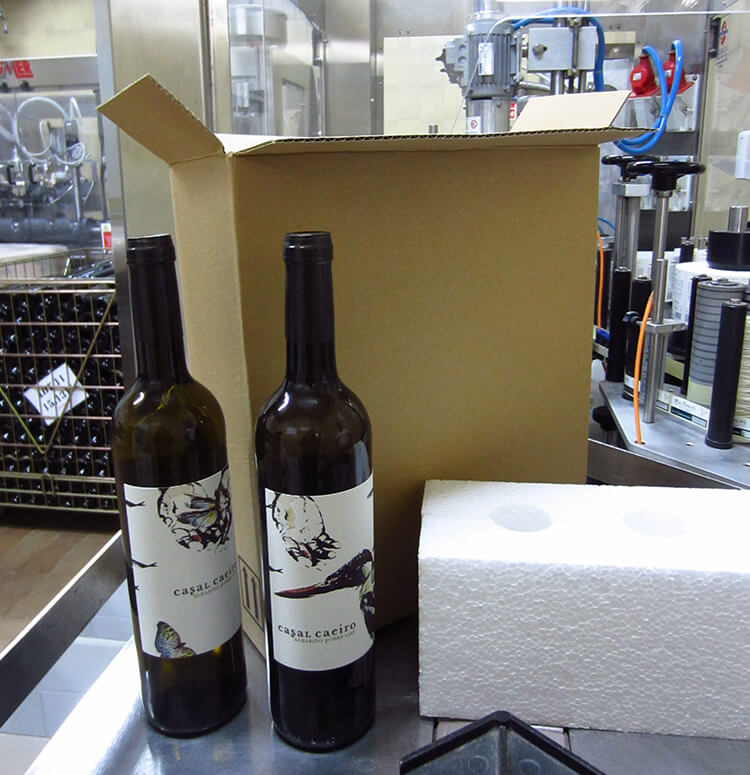
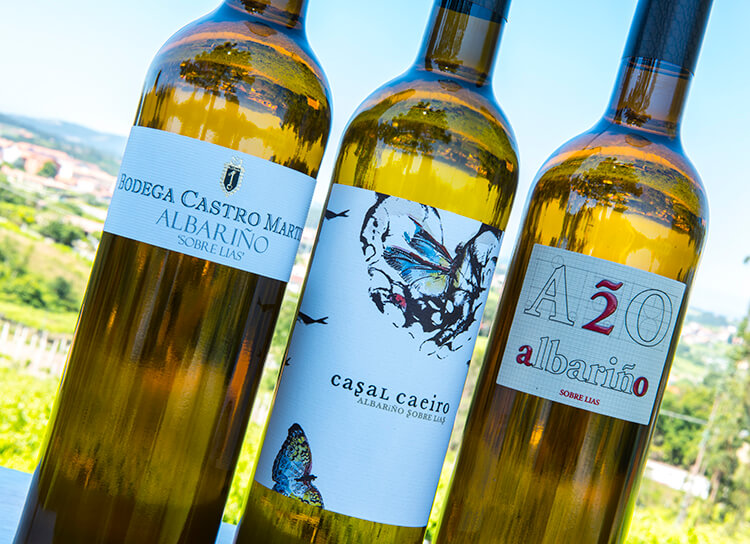
Meantime, back at the tastings, we actually submitted three wines to this year’s Guia Peñin 2020. It’s not so much that we are desperate for points or publicity, but it’s merely a yardstick for us, to see where we stand. We didn’t do too badly either. All three wines, Castro Martin Family Estate, A2O and Casal Caeiro emerged with 90 points – consistent if nothing else! The interesting point is, that when comparing the price points of the other wines at 90 points or above, our wines were by far the best value for money. And that’s what it’s all about…. great quality at a fair price.


Natural wine (and food) – Part 4 – Sulphites

February 25th, 2019 | Bodega

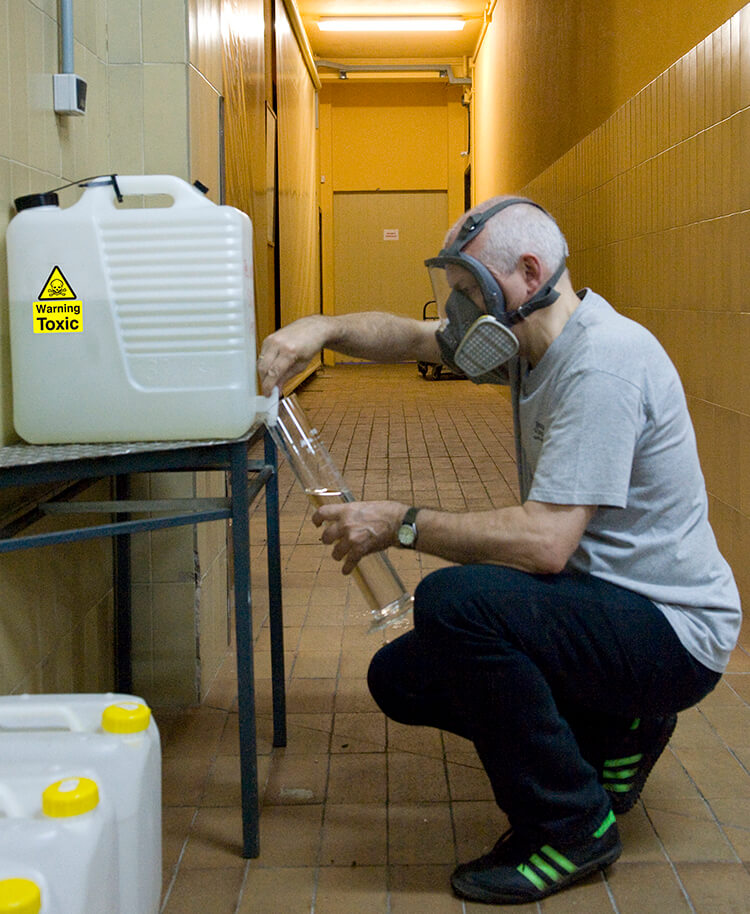
A couple of weeks ago we attended a very interesting seminar – ‘Making wines with low SO2 (sulphur dioxide) content’.

One of the most defining characteristics of a ‘natural’ wine is that it will certainly be low in sulphur – sometimes with no added SO2 whatsoever. Added sulphur has two roles to play in a finished wine: Firstly, it acts as a microbicide, killing bacteria or any remaining yeasts that could eventually lead to spoilage. Secondly, it prevents oxidation of the wine, by preventing or reducing interaction of wine with oxygen.

During fermentation yeast will naturally produce a very small amount of SO2 (and so it will always be present), the question is – is this enough to protect a wine in the medium to long-term? For example, it’s worth noting that premature oxidation is actually a very common fault in ‘natural’ wines.

Our seminar talked of this, and offered alternative solutions, products to be used in the grape must to replace SO2, yeast strains that produce very little natural SO2, and pre-bottling additives – all apparently quite natural. We tasted two Spanish white wines from the 2018 vintage made using the low-sulphur products….

When I was a wine buyer, one of the most important issues for me was not only the quality, but mainly the longevity of the wine – looking into its future and trying to imagine how it might evolve. (Bearing in mind that many of my purchasing decisions were made in the producers cellar, tasting raw wine from tanks and barrels). If a wine tasted ready for drinking from the first sip, then the likely hood was that it would not last the course. It is rare that a good or great wine will show it’s true colours during its infancy – and that is where the buyers judgement comes into play.

I say this because of the two 2018 wines in the tasting. They were fine for drinking NOW, very commercial styles, but simply ready to give a bit of ‘instant gratification’. Perhaps perfect for the two wines in question, but not really for our albariño, which can often be consumed two or three years down the road. I’m sorry to say, that we will almost certainly continue with our current policy of adding a little pre-bottling SO2, simply because it works for us, and our export customers (who require an extended shelf-life).


Natural wine (and food) – Part 2

February 12th, 2019 | Food & Wine

In a number of countries the latest trends in what we drink can be determined by fashion – what style or varietal is hot, and what are the journalists and influencers writing about? For example, in recent years we have witnessed the success of Prosecco, and the resurgence of rosé wines, and also the steady, unerring growth of natural, organic or biodynamic wines.

As wine producers we obviously have to be aware of these developments, and do what we can to react to the market. Of course, there is always a limit to how much we are able to react as there are always controls, rules and laws that we have to respect. In our case, for example, we can’t make rosé wine from a white grape, but it we look closely perhaps there are some small adjustments that we can make to produce wines that are as ‘natural’ as possible.

In the vineyards we already do almost as much as we can, or as much as nature and our climate will allow, but to be brutally honest it’s highly unlikely that we would ever be able to do enough to achieve fully certified organic or biodynamic status. Indeed, there are exactly ZERO wine cellars in our denomination that are certified as such. It’s really dictated by the vagaries of our wet, cool, humid climate – great for making a fresh, zesty, cool climate albariño, but not much help at all for making biological or biodynamic wine.

So what can we do?…. It’s really all about intervention – the less intervention that we make, the more natural the process. In order to achieve this we can simply examine every step that we take both inside and outside the bodega, and then decide what techniques we can adjust, or possibly eliminate completely. It’s a delicate balance between art and science!

In my next installment I will explain in more detail what we already do, and some of the options and innovations that are open to us.

Tasting samples

January 28th, 2019 | Competitions

Over the course of a year, we use/send out quite a lot of samples. Many are sent to wine fairs and tastings organised by our own D.O. office, for tastings either here in Spain, or in International Wine Fairs. Others are sent to existing customers who possibly want taste a new vintage. Then of course there are potential customers, who will almost certainly request samples before making any buying decisions.

In Canada and a number of Scandinavian countries, wine import is still government controlled. The State owned shops  will usually send out two or three tenders a year for albariño. This entails much form filling and the sending out of yet more samples for their tasting committees. (The downside is that there is usually only one winner, and no prize at all for coming second).

Wine competitions are by far the biggest sample consumers (assuming that you play the game). The problem is that there are now dozens and dozens of International Wine Competitions – some apparently organised in small, obscure villages in the middle of nowhere, but still claiming to be “International”. The high cost of sending samples is quite apart from the fact that you also have to pay to have your wines tasted (often 100-150€ per entry).

I do often wonder how ‘legit’ some of these competitions and would-be importers really are? Just imagine the scam of writing to hundreds of wine cellars requesting 3 or 4 sample bottles from each, perhaps using the facade of a fake website. That could result in one huge garage sale or maybe just one hell of a party!

Tasting rediscovered!

December 28th, 2018 | Festivo

As we start to recover from the upheaval of the holiday period (and perhaps a little over indulgence – in my case turkey saturation), we are now putting our feet up for a few days. Our cellar doors still remain closed, taking full advantage of the usual seasonal lull in business.

The other good news is that over the Christmas holidays I have rediscovered wine tasting! Tasting had been such a big part of my life for so many years that I had really started to take it for granted – until earlier this year. In March I embarked on a course of dental treatment, which (I didn’t realise at the time), would extend for a period of more that 8 months. The real problem was that it entailed living with a mouthful of plastic for the duration, unfortunately making tasting much more challenging, and even slightly awkward. Not completely impossible, just difficult.

Shortly before the Christmas break, I received a phone call, just as I was leaving the bodega. Within 20 minutes I was in the dentist’s chair, having the final procedure carried out and the plastic finally removed from my mouth. Normality had been restored, and thankfully, just in time for the holidays!

Once again, I can fully appreciate the nuances of wine, but now with a newly invigorated enthusiasm.

‘El Canario’ returns!

October 27th, 2018 | People

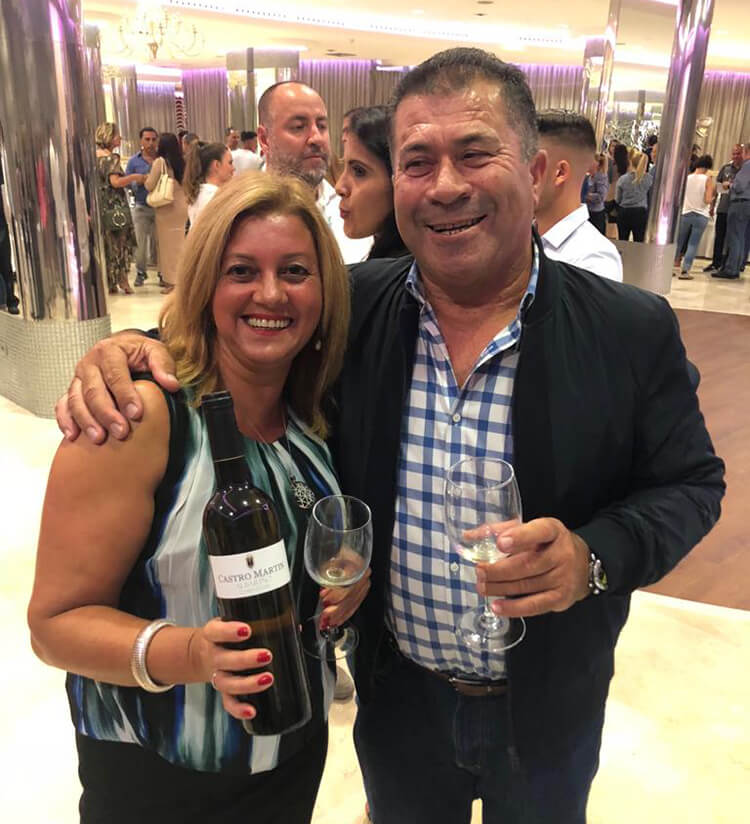
Earlier this week there were two tastings in the Canary Islands, the first in Gran Canaria and the second in Tenerife. The special significance for us is that Gran Canaria was the birthplace and home city of Angela’s father, Don Domingo Martin, the man responsible for building our current wine cellar, and also the creator of our original brand ‘Casal Caeiro’.

Of course the family still has connections there, and so it was only natural that invitations were sent to friends and contacts, to give them the opportunity to sample the very best albariños of Rias Baixas (Castro Martin and Casal Caeiro).

I should mention that even now, many years after the sad death of Don Domingo, our bodega is still known as the bodega of ‘El Canario’…..

LXVI Albariño Festival

August 3rd, 2018 | Denomination

The first weekend of August signals the start of the annual Albariño Festival in Cambados. There are pretty much two completely different ways to approach the weekend’s celebrations. For the majority it is simply a case of visiting the numerous stands set up in the town centre, each representing a specific wine cellar, where you can buy a chilled glass of albariño to drink at your leisure. There is a lunch session, which is quite quiet and civilised, and an evening session with can be really, really busy and very boisterous – this ‘evening’ session will usually extend long into the night. Personally, this is not the option that I take.

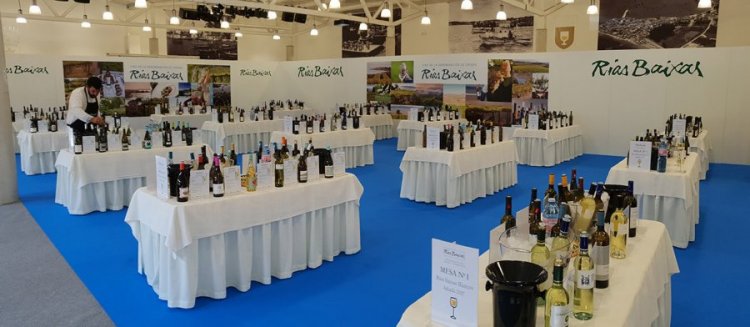
The second way to enjoy the festival is the ‘tunnel of wine’ – approximately 160 wines from more than 60 bodegas, set up as a huge tasting, and much more suited to wine professionals and also visitors that want to see a real cross section of the wines from our denomination. This is probably my favourite tasting of the year. Each wine is accompanied by it’s own technical sheet, so it is easy to focus, and taste in a quiet and calm environment. With 160 samples on offer, I taste everything, but over a two day period – even a hardened professional really couldn’t do it all in one hit!

2017 typicity?

July 23rd, 2018 | Tasting

We have only just started to sell our 2017 vintage, and once again it is officially classified as ‘Very Good’ – but is is typical?
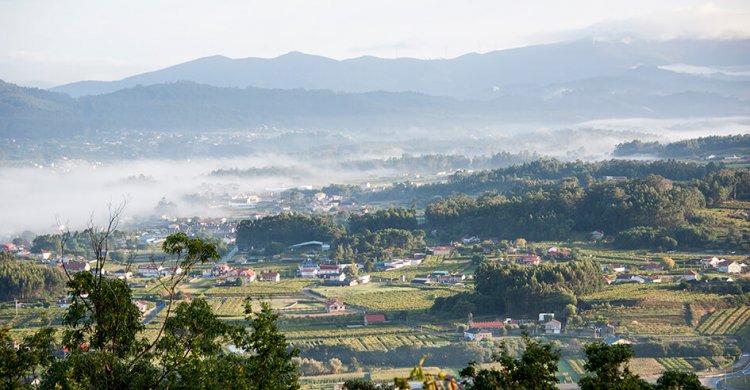
Every few weeks we taste every tank in the cellar, and a few days ago we re-tasted the 2017’s. These are my observations:

The first thing to say is that the 2017’s are very good wines, full stop. The only question I ask myself is “are they typical of the albariños we normally see?” For example, I would never usually consider an albariño to be full-bodied, and whilst that is still true, this year’s wines are certainly quite a mouthful. Of course, we had already recognised at harvest that the potential alcohol was a shade higher, an average between 12.5% and 13% (normally between 12.0 and 12.5%), and that the grape must was concentrated and viscous. These factors alone would tend to suggest a very rich wine with more glycerol and therefore a greater mouthfeel that will linger on the palate.

Our 2017 wine is intense, some people might describe it as being ‘fruit driven’, which is true – notes of peach, apricot and other ripe fruits dominate. However, the most important factor is that these concentrated fruit flavours are still nicely balanced with the level of acidity that we would normally associate with albariño (the slight difference being that the acidity is slightly masked and not quite as prominent). Having said all this, the wines are still well-structured, and owing to the depth and concentration have a long, complex finish. I have no doubt that they will be well received by our customers whatever my personal ideas might be!

How do you like your albariño?

July 16th, 2018 | Rias Baixas

The other day my UK journalist friend Tim Atkin wrote an article about typicity. In the context of wine, this simply means the typical characteristics that you would expect to find in a particular type of wine – a combination of factors typical of the denomination, of the grape variety, all ultimately influenced by the local climate and/or vintage.

In Rias Baixas the definition of a typical albariño will certainly vary according to the sub-zone. Although there is only 60km seperating the north from the south of the denomination, climatic and soil variations can already produce some widely differing styles. These days, unfortunately, flavour profiles can also be manipulated by the use of cultured yeasts whereby a wine’s typicity can be can be rendered almost unrecognisable. At Castro Martin however, we always opt for a very ‘neutral’ yeast, doing our very best to preserve and protect the delicate aromas of the albariño grape. Our extended lees ageing period helps not only to enhance this, but also adds further to the complexity of the finished wine.

In our view an albariño should always have a delicate fruit, perhaps slightly floral nose, sometimes offering a hint of salinity. On the palate flavours are often piercing and intense – a lively sweet and sour mixture. Notes of freshly cut fruit dominate – citrus, green apple, pear  and can include more exotic fruits such as melon, apricot and white peach. On the finish is can have a ‘nervous’, granitic edge and a streak of a salt-lick zestiness. It sounds like a real mouthful – but this is exactly what the typical albariño should be.

Monthly Archives

Categories

ARE YOU OF LEGAL AGE? This site is intended for those of legal drinking age. By entering, you confirm that you are of legal drinking age in the country where this site is being accessed. ¿ERES MAYOR DE EDAD? Este sitio está destinado a personas en edad legal para beber alcohol. Al ingresar, confirma que tiene la edad legal para beber en el país donde se accede a este sitio.