

Archive for ‘Rias Baixas’

Túnel vision!

August 9th, 2023 | Denomination
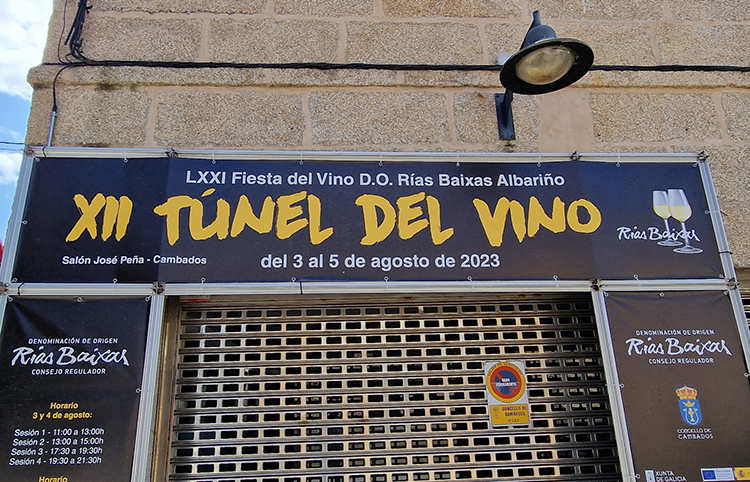
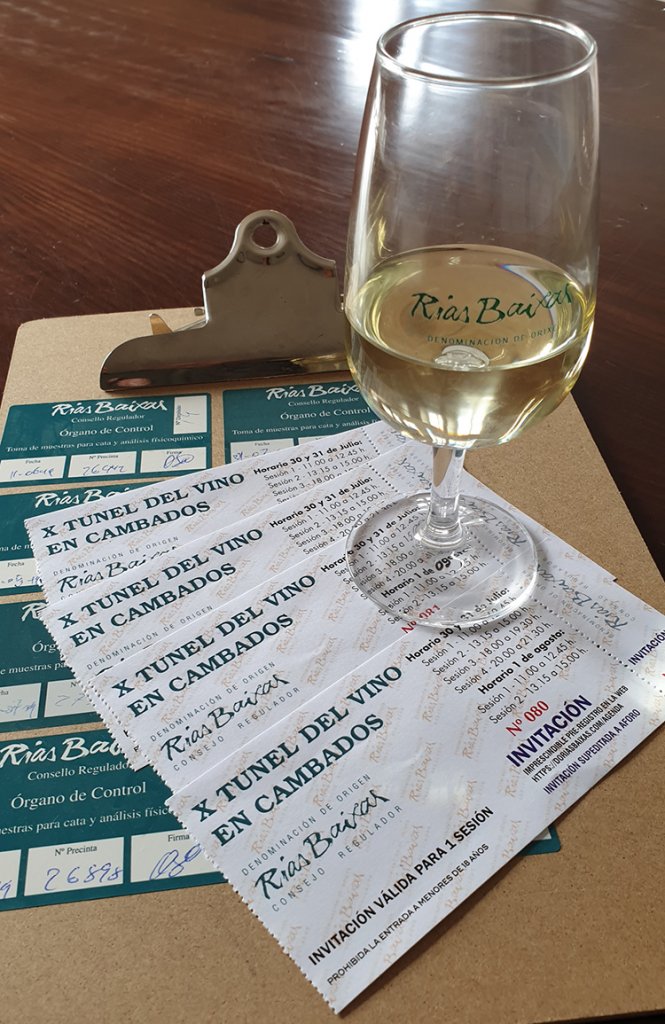
Well, last weekend we celebrated the annual Albariño Festival here in Galicia, or in Cambados to be more precise. The programme of events included one of my very favourite tastings of the year, when it is possible to taste more than 150 wines (mostly albariño) under one roof. It is known as the Tunnel of Wine, and has grown in popularity over the last 12 years, since the idea was originally conceived. Entry is now controlled to a maximum number of tasters during each session, but for me the solution is, and always has been, to arrive early and start at 11am prompt when the doors open. In this way I can normally taste in relative peace and quite for the first hour or so, and by that time I usually completed a few tables and so am well away from the entrance door.

I think that I have always said, since my very first taste of the tanks, that I consider the 2022 vintage to be pretty good, and this was indeed reflected in my notes. Overall the standard of 2022 wines is quite a bit higher than 2021 (which, after all, had proved to be quite a difficult vintage), and I believe that there were quite a few potential stars in the making – including our own Castro Martin wines, of course!

As more and more consumers are coming to realise, albariño wines from the Rias Baixas denomination can, and do improve with age, albeit some much better than others (it really depends on the producer and the style of wine they make). I fully believe however, that our own Family Estate wine could evolve into something really exceptional over the next year or two. Only time will tell.
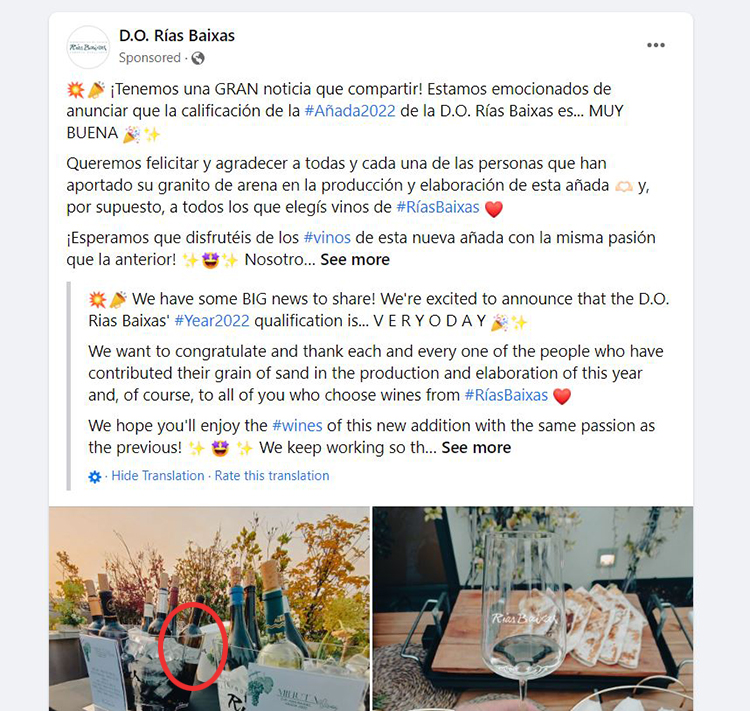
Our 2022 vintage is officially “Veryoday”

July 3rd, 2023 | Denomination

I think that I have probably commented before about the vagaries of Google translate. Sometimes the translations are accurate, sometimes they are vague, sometimes they are funny and other times they are just plain jibberish.
 
Today our D.O. posted the official rating of our 2022 vintage. The most frequently used rating would seem to be “Very Good”, and 2022 was no exception. The 2022 wines of our region have been classified as very good. The odd thing is that on many occasions when they use this rating I don’t agree with it, often because I feel that they are being a bit too generous. However, in 2022 I believe that the opposite is probably true, as I think that our wines are excellent. Apparently, it would seem that Google Translate don’t agree with this rating either. Translating from the original (according to them), our 2022 wines are officially “Veroday” (whatever that means).
 
By coincidence, in the same D.O. posting, there is a photo of one of our wines (circled in red). OK it might not be too clear, but it shows our Castro Martin Family Estate being offered at a tasting at the Ritz Mandarin Oriental in Madrid.

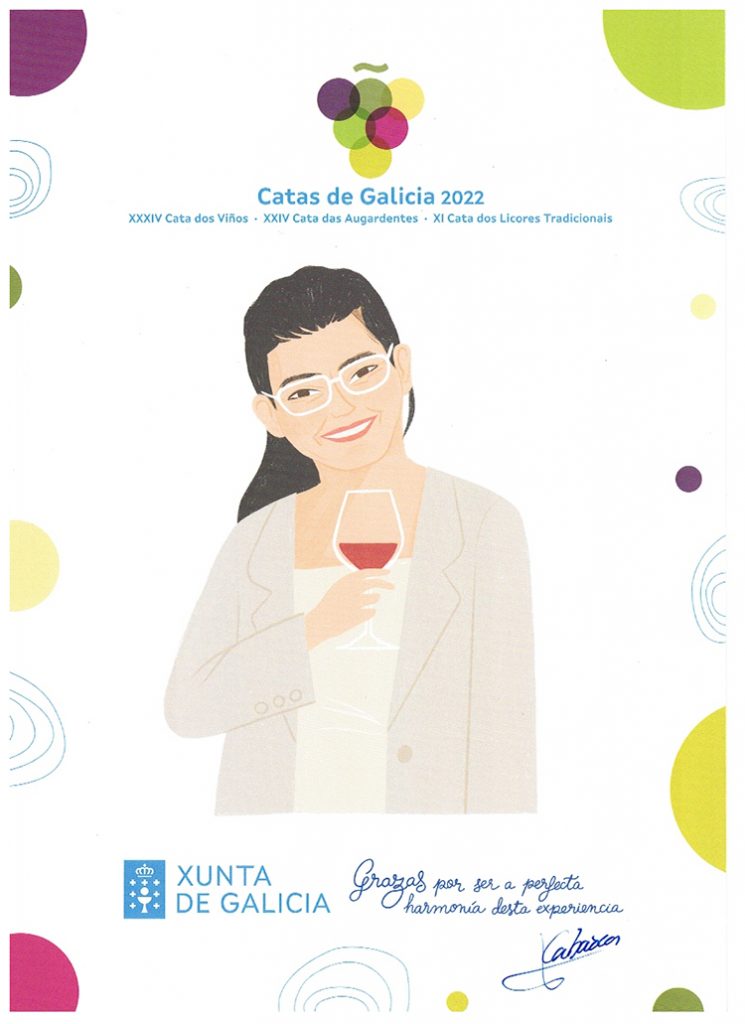
Catas de Galicia 2022

June 16th, 2022 | Competitions

Back in April the process for selecting Galicia’s best wines was launched by the Xunta de Galicia. Wineries from every Denomination Ribeiro, Valdeorras, Rías Baixas, Monterrei and Ribeira Sacra, were invited to submit their wines, as well as the ‘Viños da Terra’ from other Galician communities. There were special categories for small, boutique wineries, oak-aged wines, sparkling wines, ecological wines and even ‘toasted’ wines (although I have to admit that I am not entirely clear as to what that last category actually represents, I usually associate this with oak-aged).

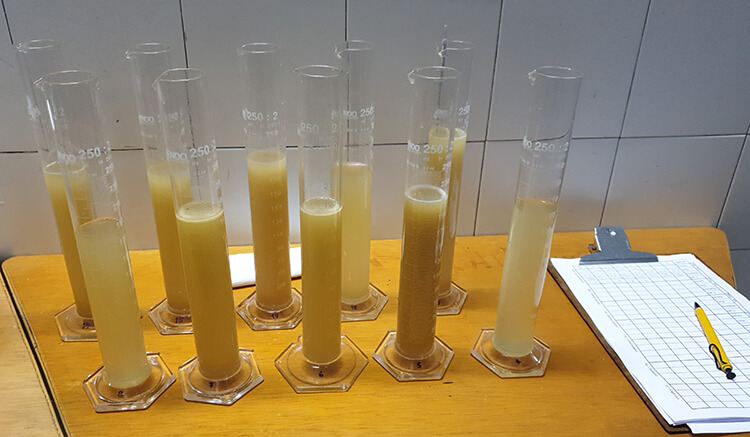
A blind tasting of the 405 entries was held in Santiago de Compostela last week, judged by a panel of some 20 experts, including our very own winemaker, Angela. As a member of the official tasting panel of the D.O. Rias Baixas Angela was invited to adjudicate at the event, over a period of 4 days. Naturally each session was divided into regions and categories, and each session comprised of between 20 and 30 samples.

Tastings like this might sound like a fairly glamorous experience, but I can tell you, from my previous life as a buyer, intense tastings like this is actually very demanding, both physically and mentally. To do the job well, and professionally, requires total concentration from the very first wine, to the very last – every wine must be given a fair and equal opportunity, even if your palate starts to feel a little jaded.

THE 2021 STORY – Part 2

October 20th, 2021 | Bodega

The story of the 2021 vintage really starts with the 2019 and 2020 vintages. In my last post I mentioned the style of these wines, but the other significant factor was the volume produced – they were not big vintages at all.

A few months after the onset of Covid-19 albariño producers really started to feel the effects. Hotels and restaurants closed, and with it the on-trade business dried up completely. The only sector that appeared to benefit was the supermarket sector (small wine shops and liquor stores were also locked down). As consumers were not able to eat or drink outside their homes, so the supermarket business took off…. but regrettably, at a cost. Whilst trading with supermarkets proved lucrative, it was much more to do with volume than profit. Cellars were simply happy to see wine going out, not knowing how long the Covid crisis would last.

By May/June 2021 the on-trade tentatively started to re-open, but once it did start up, then what followed was something of a cascade. It appeared that restaurant customers were making up for lost time, and consequently orders were flying out of our door almost as quickly as we could prepare them! Having resisted the temptation to flirt with supermarkets, we still had stock, whilst those that had succumbed to the temptation suddenly had a crisis on their hands. By August 2021, many cellars (including many big players) were simply running out of wine – a month or two before the new vintage was even ready to be picked.

A mad scramble ensued. Cellars were desperate to buy tanks of wine at almost any price, and, as a result, the vintage 2021 problem started to emerge. In a small wine region that still relies heavily on buying grapes from producers, Pandora’s Box had well and truly been opened. 2021 was destined to become the year of grape ‘ransom’ (regardless of quality)!

By the River of Umia

January 14th, 2021 | Denomination

People who drink albariño may already know that our denomination gets its name from the ‘Rias’ (River Estuaries) of Galicia. The Rias Altas (Upper Estuaries) in the North, between La Coruña and Santiago de Compostela, and the Rias Baixas (Lower Estuaries), between Santiago and the Portuguese border in the south.

Within the denomination there are five sub-zones and Castro Martin can be found in the Salnés Valley. Salnés is often described as the heart, the birthplace, or the cradle of albariño. It’s true to say that the wine region evolved with Salnés at it’s very core and even today our zone still accounts for more than 65% of all albariño production in the demonination.

Salnés itself is bordered in the south by the Ría of Pontevedra, and in the north by the Ría de Arousa. Naturally, you would be forgiven for asking, “so what about the Salnés river?”. If Castro Martin is located in the Salnés Valley, then surely there should be a river of that name? But no…. the name is actually a ‘comarca’, which is simply a group of municipalities lying within the province of Pontevedra. Pontevedra itself being one of the provinces that makes up the autonomy of Galicia. To make this even more complicated our own village of Barrantes is in the municipality of Ribadumia (which is in the province of Pontevedra, in the autonomy of Galicia… in Spain!) Simple!

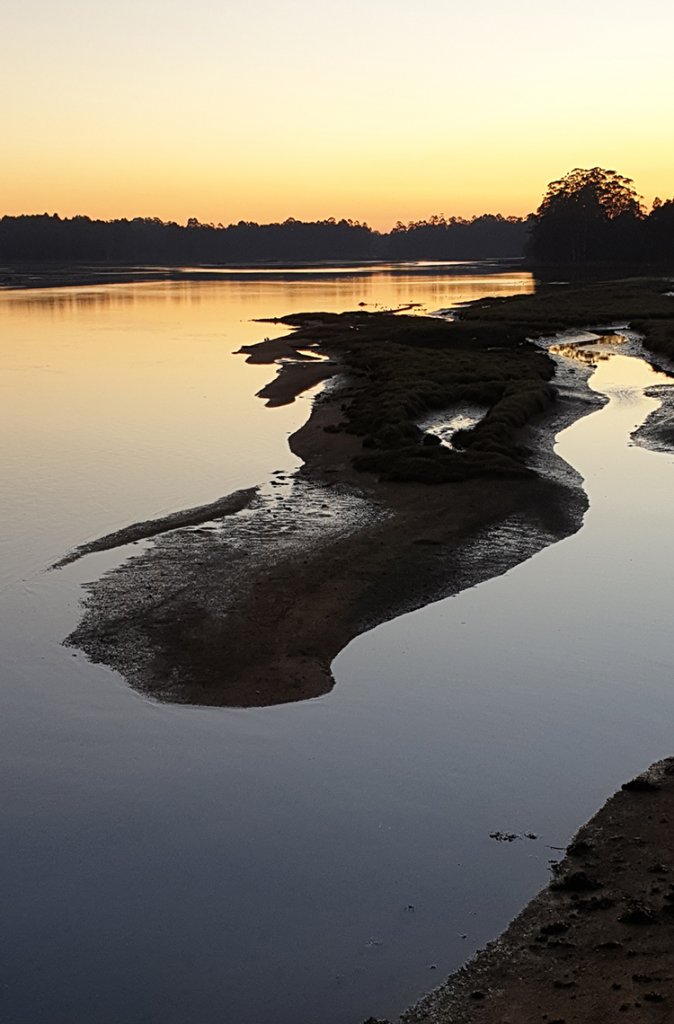
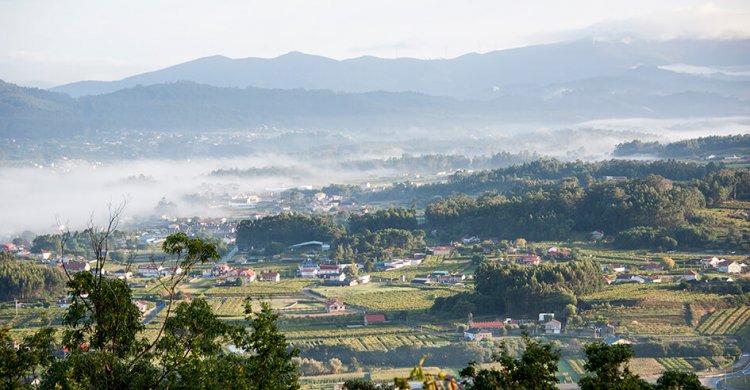
I am happy to say that Ribadumia actually does get it’s name from a small river – the River Umia, which runs through the valley of Salnés, and flows into the Ría de Arousa near the town of Cambados. Geography lesson now over, I leave you with a beautiful picture of the Umia.

Adapting to Covid

November 13th, 2020 | Covid 19

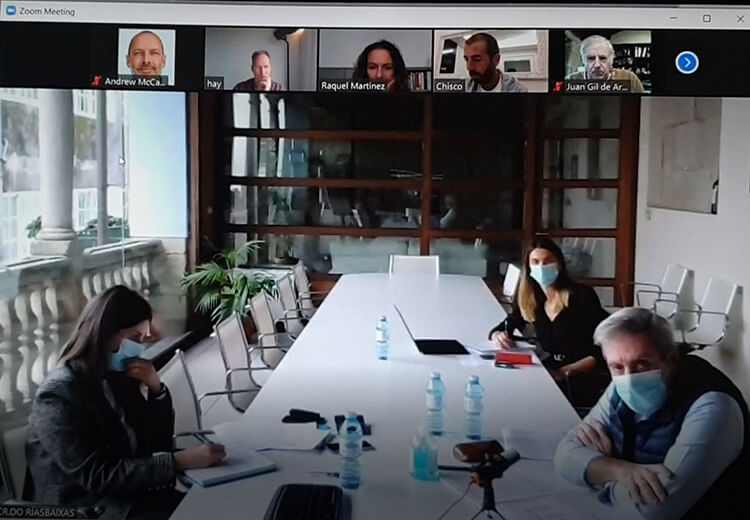
A few weeks ago we were perhaps beginning to believe that the worst of the pandemic was behind us. Of course, we were wrong as parts of Galicia are once again facing varying degrees of lockdown. One of the affected areas is the city of Pontevedra where the headquarters of our Denomination is based.

This week we joined one of the first virtual Denomination meetings (via Zoom) to review the export business of our region and to discuss the marketing plans for 2021. Of course, the possibility of staging many of the planned events will still, almost entirely, be determined by virus. For example, the vast majority of events, and nearly all of the biggest wine exhibitions were cancelled this year. It goes without saying that tasting and selecting wine is really something that has to be done in person, and simply does not work in a virtual world!

Of course, contracting Covid could be devastating for a wine buyer (with the loss of smell and taste), and so until the technology exists to replace them, we must still rely on these senses.

Albariño Festival 2020

July 28th, 2020 | Fiestas

This week the town of Cambados would normally be bracing itself for the start of the Annual Albariño Festival…. but not this year. At great economic cost to the town, the vast majority of events have been cancelled, for obvious reasons. The centrepiece, and biggest money-spinner, would normally be the Festival itself, whereby the town square would be lined with stands from the various bodegas offering the chance to sample their wares (albeit ‘sample’ is perhaps something of a euphemism that others might describe as more of a ‘binge’).

The tasting competition is still happening, although the big celebration lunch and presentation of prizes, normally held at the end of the festival, has also fallen victim.

One of the few surviving events is the tunnel of wine, for me at least, the most worthwhile part of the whole festival. An opportunity to taste a large number of albariños all under one roof, in a relatively peaceful environment.

Now, how a large tasting will work under social distancing rules is another matter, but I will let you know next week. The only thing that I can say for sure is that I will have to remove my mask for tasting (although it is now compulsory for us to wear masks in all public places, subject to strict on-the-spot fines for non-compliance)!

The ‘flour’ of Galicia

September 10th, 2018 | Local News

There is something a little less savoury that they don’t tell you in the guidebooks about Galicia – that it is a major entry point for drugs, not only for Spain, but for the whole of Europe. The same little idyllic beaches, hidden coves and inviting ‘Rias’ also provide the perfect landing grounds for the small boats of the international drugs trade. To the naked eye there is very little evidence of this, apart from the occasional road blocks on our local roads and motorways. Traffic is filtered down to a walking pace as you are obliged to weave your way through hoards of police vehicles, whilst being surveyed by heavily armed police (some wearing face masks). All a bit sinister….

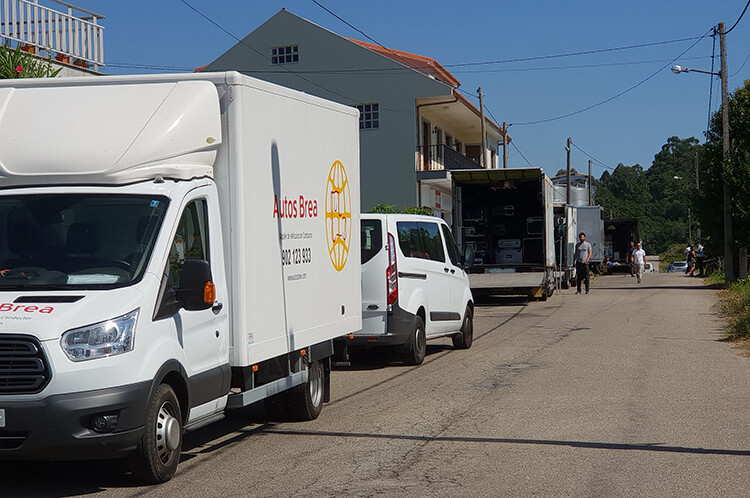
This local ‘trade’ is so widely acknowledged that the Spanish TV channel Antenna 3 actually makes a highly acclaimed drama series about it – Fariña (which means ‘flour’ in Gallego – the slang word for cocaine). Obviously it is set, and filmed in Galicia, using almost exclusively Galician actors. In fact, it is so local that they were actually filming in our own street last Friday. The road was closed intermittently for periods of the day, and to be honest it was a bit of a struggle to stop them filling our bodega car park with their vehicles.

Unfortunately, they did not film immediately in front of our building, and so the hours that I spent applying make-up were completely wasted!

How do you like your albariño?

July 16th, 2018 | Rias Baixas

The other day my UK journalist friend Tim Atkin wrote an article about typicity. In the context of wine, this simply means the typical characteristics that you would expect to find in a particular type of wine – a combination of factors typical of the denomination, of the grape variety, all ultimately influenced by the local climate and/or vintage.

In Rias Baixas the definition of a typical albariño will certainly vary according to the sub-zone. Although there is only 60km seperating the north from the south of the denomination, climatic and soil variations can already produce some widely differing styles. These days, unfortunately, flavour profiles can also be manipulated by the use of cultured yeasts whereby a wine’s typicity can be can be rendered almost unrecognisable. At Castro Martin however, we always opt for a very ‘neutral’ yeast, doing our very best to preserve and protect the delicate aromas of the albariño grape. Our extended lees ageing period helps not only to enhance this, but also adds further to the complexity of the finished wine.

In our view an albariño should always have a delicate fruit, perhaps slightly floral nose, sometimes offering a hint of salinity. On the palate flavours are often piercing and intense – a lively sweet and sour mixture. Notes of freshly cut fruit dominate – citrus, green apple, pear  and can include more exotic fruits such as melon, apricot and white peach. On the finish is can have a ‘nervous’, granitic edge and a streak of a salt-lick zestiness. It sounds like a real mouthful – but this is exactly what the typical albariño should be.

Where to plant?

May 30th, 2018 | Galicia

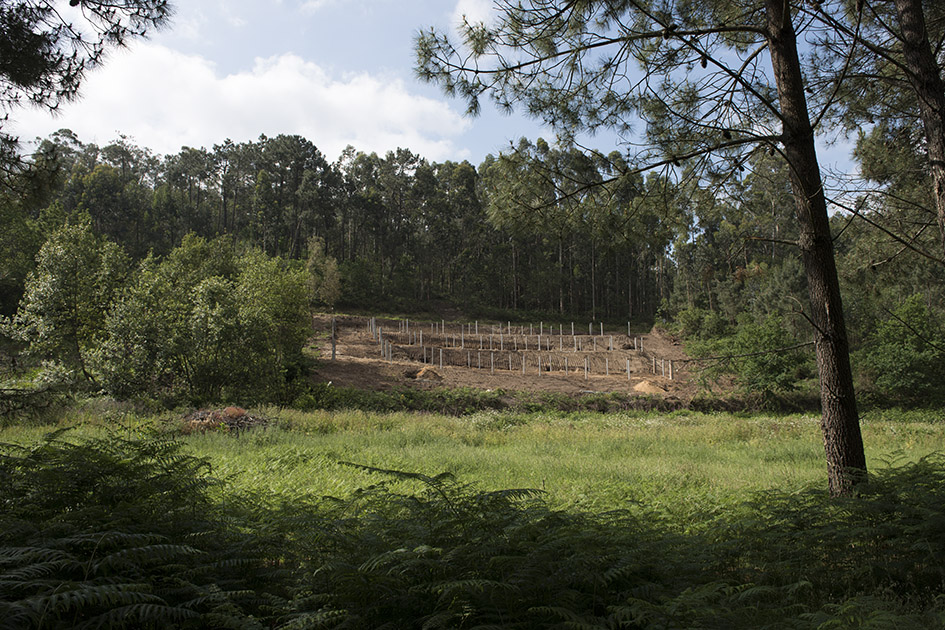
A few weeks ago I took a photo of a guy in the middle of a forest, close to our bodega, cutting trees and making a clearing. Little did I know at that moment that his plan was to plant a small vineyard – but it did start me thinking. Was there any logic whatsoever behind the site that he selected, or was it just a small plot of land where he fancied growing a few grapes? I rather suspect it was the latter.

I have asked myself this question many times, about the seemingly random situation of many of our Rias Baixas vineyards, and how they actually come to be selected. My guess is that, for the vast majority, it is more about convenience than making any type of detailed study to find the best site. This could explain why, in a denomination of only 4,000 hectares, there are nearly 22,000 different vineyard sites!

In the wine business we talk about ‘Terroir’, which many think is simply related to the soil on which a vine is planted, but I can tell you that it is actually much, much more complex than that. Terroir is a combination of factors, including nearly every physical aspect of a vineyard location that you can think of – soil, soil type, drainage, aspect, sun exposure, local rainfall, protection/shade, wind, sea mists etc., etc. All of the individual components that will ultimately determine why the quality of one grape varies from another (assuming that they have been properly cared for).

My photo shows this new planting, bathed in a bit of early morning sun. But what the photo doesn’t tell you is that this location is one of the coldest corners of Ribadumia. The vineyard is on a north facing slope, and apart from this brief touch of sun, it will spend the rest of the day shrouded by trees, with almost no direct sunlight and very little warmth. In a few years I will be interested to explore what it produces.

Monthly Archives

Categories

ARE YOU OF LEGAL AGE? This site is intended for those of legal drinking age. By entering, you confirm that you are of legal drinking age in the country where this site is being accessed. ¿ERES MAYOR DE EDAD? Este sitio está destinado a personas en edad legal para beber alcohol. Al ingresar, confirma que tiene la edad legal para beber en el país donde se accede a este sitio.