

Archive for ‘Local News’

Albariño Fizz

December 4th, 2012 | Local News

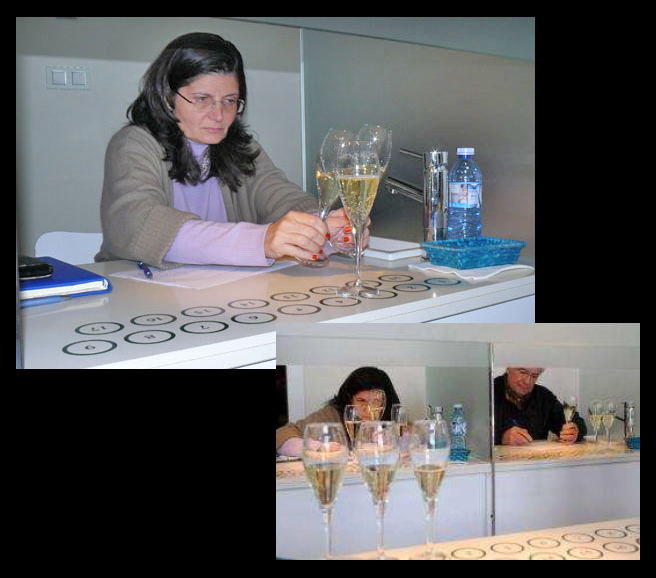
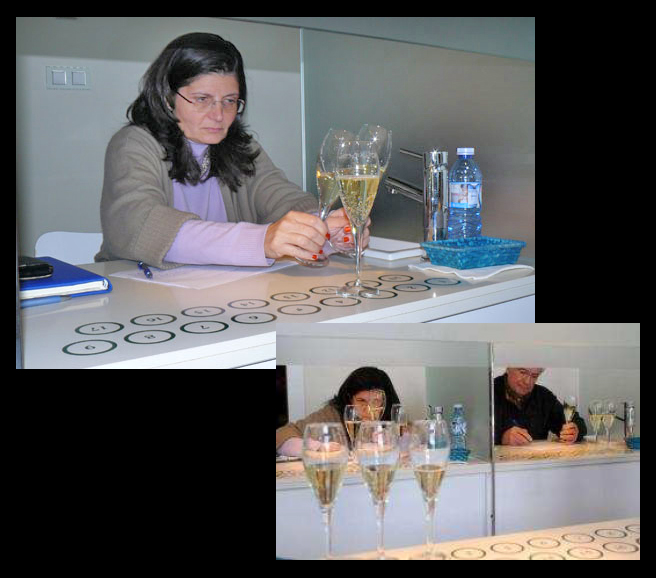
Today’s picture shows my happy little taster….. Angela! Actually, I shouldn’t make fun as it’s quite clear that she’s concentrating and being the consummate professional in her role as an a taster on the official D.O. tasting committee. Just in case you didn’t already know, every tank that we bottle has to be submitted in advance to this committee to be judged for quality. Those wines that pass the tasting will then be given their official ‘tirilla’ – the small, numbered strip label found on the back of every bottle, bearing the logo of Rias Baixas.

Anyway, last weeks tasting included a brand new product for our D.O., sparkling Rias Baixas, and just in time for Christmas! These new sparkling wines will be made by only a handful of Bodegas in our region, and will be made from a blend of the permitted varietals of our denomination (red and white). Bodegas will be required to use the traditional ‘methode champenoise’ with a minimum ageing of 9 months. I understand that the degree of sweetness will also be controlled using the traditional method and that the wines will be classified in the same way as Champagne – Brut Nature (sometimes known as Brut Zero, with no sugar at all), Extra Brut, Extraseco, Seco, Semiseco and Dulce (sweet). The head coach of our denomination Lake Augustine explained that Bodegas will not be required to show a vintage on the label, nor will they be required to disclose the grape varieties that they have used in the blend, which seems a bit odd.

(By the way, the technical director (not head coach) of our D.O. is called Agustin Lago, but I just loved the way that Google translated his name and job title – sorry, I couldn’t resist!)

Today’s picture shows my happy little taster….. Angela! Actually, I shouldn’t make fun as it’s quite clear that she’s concentrating and being the consummate professional in her role as an a taster on the official D.O. tasting committee. Just in case you didn’t already know, every tank that we bottle has to be submitted in advance to this committee to be judged for quality. Those wines that pass the tasting will then be given their official ‘tirilla’ – the small, numbered strip label found on the back of every bottle, bearing the logo of Rias Baixas.

Anyway, last weeks tasting included a brand new product for our D.O., sparkling Rias Baixas, and just in time for Christmas! These new sparkling wines will be made by only a handful of Bodegas in our region, and will be made from a blend of the permitted varietals of our denomination (red and white). Bodegas will be required to use the traditional ‘methode champenoise’ with a minimum ageing of 9 months. I understand that the degree of sweetness will also be controlled using the traditional method and that the wines will be classified in the same way as Champagne – Brut Nature (sometimes known as Brut Zero, with no sugar at all), Extra Brut, Extraseco, Seco, Semiseco and Dulce (sweet). The head coach of our denomination Lake Augustine explained that Bodegas will not be required to show a vintage on the label, nor will they be required to disclose the grape varieties that they have used in the blend, which seems a bit odd.

(By the way, the technical director (not head coach) of our D.O. is called Agustin Lago, but I just loved the way that Google translated his name and job title – sorry, I couldn’t resist!)

Solidarity or intimidation?

November 14th, 2012 | Local News

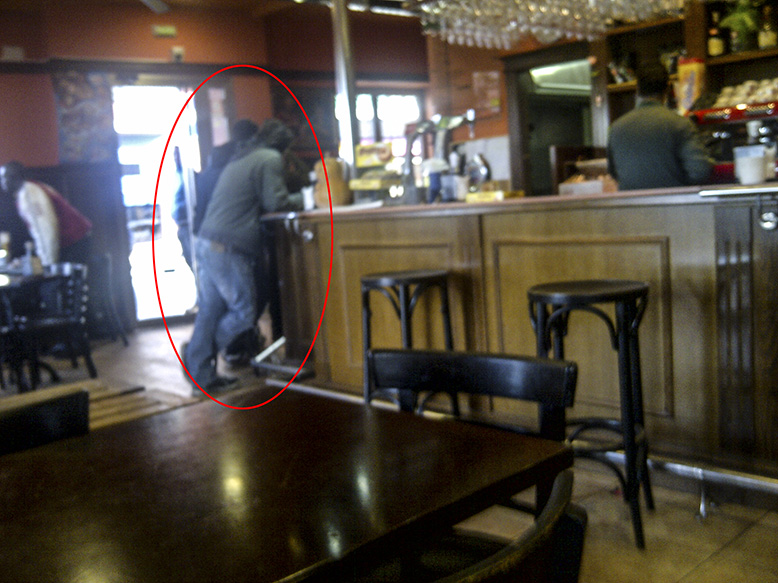
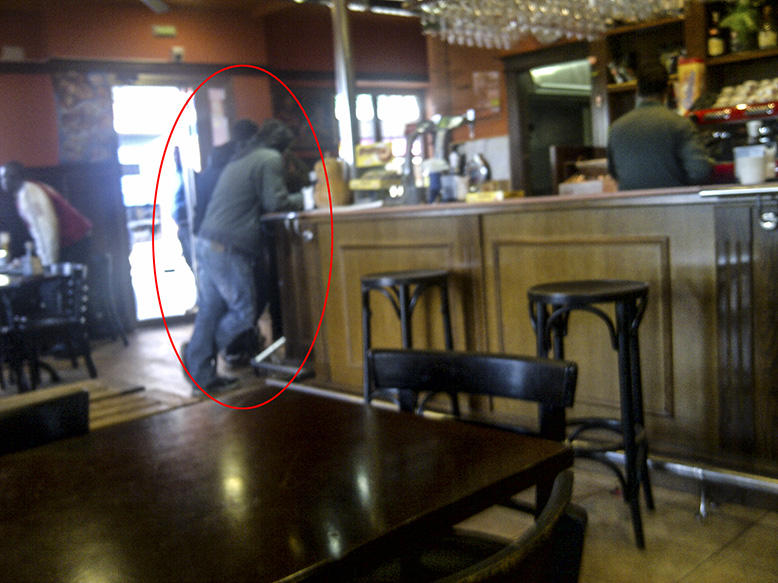
Today’s photo is not the best quality that I have ever posted on our blog. The reason? It is a ‘covert’ photo taken very discreetly using my mobile phone – I shall explain why…..

I confess that I had not realised as I woke up this morning that Spain was in the grip of a national strike – a protest against the austerity measures being systematically introduced across the country. Without becoming too political I am convinced that these measures are being imposed out of necessity rather than by choice, as the Government struggles to balance its books and get its financial house in order. Of course Spain is not alone in this predicament, and so the strike was apparently organised not only as a national event, but as an international event, covering the whole of Europe.

I had to attend a hospital appointment in the local town of Vilagarcia (as a follow up to my spine injury) and upon entering the town we noticed that some shops were indeed closed, but that others were opening their doors for normal business. No doubt, in the midst of a deep recession, they had decided that bills still need to be paid and that they could not afford the loss of income. Being a little early for the appointment we decided to have a cup of coffee, and after a long search finally found a cafe/bar that had ignored the strike and opened its doors. On walking around we had also noticed small groups of four or five rather unsavoury looking characters hanging around on street corners – it soon became apparent who they were.

No sooner had we sat down with our coffee, when one of these groups entered. Perhaps not just a coincidence that they were rather large, slightly imposing looking men, who immediately confronted the poor woman in charge of the bar. After several minutes of discussion the woman pulled down her shutters, waited until we had finished our drinks, and then closed her bar. By the time we left the town, we could not see one business which had remained open – those which had braved the strike were now closed.

I’m sorry, but I had always believed that the whole point of a democracy is that we are free to make our own choices. I am not quite sure what gives these ‘pickets’ the right to impose their views upon the small business owners, obviously trying to make an honest living and keep their heads above water in difficult economic times.

Today’s photo is not the best quality that I have ever posted on our blog. The reason? It is a ‘covert’ photo taken very discreetly using my mobile phone – I shall explain why…..

I confess that I had not realised as I woke up this morning that Spain was in the grip of a national strike – a protest against the austerity measures being systematically introduced across the country. Without becoming too political I am convinced that these measures are being imposed out of necessity rather than by choice, as the Government struggles to balance its books and get its financial house in order. Of course Spain is not alone in this predicament, and so the strike was apparently organised not only as a national event, but as an international event, covering the whole of Europe.

I had to attend a hospital appointment in the local town of Vilagarcia (as a follow up to my spine injury) and upon entering the town we noticed that some shops were indeed closed, but that others were opening their doors for normal business. No doubt, in the midst of a deep recession, they had decided that bills still need to be paid and that they could not afford the loss of income. Being a little early for the appointment we decided to have a cup of coffee, and after a long search finally found a cafe/bar that had ignored the strike and opened its doors. On walking around we had also noticed small groups of four or five rather unsavoury looking characters hanging around on street corners – it soon became apparent who they were.

No sooner had we sat down with our coffee, when one of these groups entered. Perhaps not just a coincidence that they were rather large, slightly imposing looking men, who immediately confronted the poor woman in charge of the bar. After several minutes of discussion the woman pulled down her shutters, waited until we had finished our drinks, and then closed her bar. By the time we left the town, we could not see one business which had remained open – those which had braved the strike were now closed.

I’m sorry, but I had always believed that the whole point of a democracy is that we are free to make our own choices. I am not quite sure what gives these ‘pickets’ the right to impose their views upon the small business owners, obviously trying to make an honest living and keep their heads above water in difficult economic times.

2012 – Official numbers

November 5th, 2012 | Harvest

Our local denomination office has finally released the official figures for the 2012 campaign. Taking into account the five sub-zones of Rias Baixas, and including all the permitted grape varieties of the region, a total of 17,567,877 kg was collected. They confirm that area under vine now exceeds 4,000 Ha, standing at 4,048 Ha. Apparently only 167 Bodegas participated in this years harvest, which, if I am not mistaken, means that some Bodegas did not make a 2012 vintage. Over the last year or so the number of Bodegas in our denomination has diminished slightly as some have sadly fallen by the wayside, closing their doors, but even so this number of 167 would appear to indicate that a few simply did not pick.

The total of Albariño grapes picked was 16,873,304 kg (96% of the region’s total), confirming that this number was well below that of 2011. The Consello also add that the grapes picked were in a very good toilet, sorry, sanitary state (I will have to stop using Google translate!)

Our local denomination office has finally released the official figures for the 2012 campaign. Taking into account the five sub-zones of Rias Baixas, and including all the permitted grape varieties of the region, a total of 17,567,877 kg was collected. They confirm that area under vine now exceeds 4,000 Ha, standing at 4,048 Ha. Apparently only 167 Bodegas participated in this years harvest, which, if I am not mistaken, means that some Bodegas did not make a 2012 vintage. Over the last year or so the number of Bodegas in our denomination has diminished slightly as some have sadly fallen by the wayside, closing their doors, but even so this number of 167 would appear to indicate that a few simply did not pick.

The total of Albariño grapes picked was 16,873,304 kg (96% of the region’s total), confirming that this number was well below that of 2011. The Consello also add that the grapes picked were in a very good toilet, sorry, sanitary state (I will have to stop using Google translate!)

Wine monopoly

June 28th, 2012 | Local News

Over the last couple of months there has been a lot of work going on in one particular local Café-Bar. Located in the village of Barrantes the bar is actually owned by Angela’s family, albeit that they chose not to manage it on a daily basis. Between tenants it was decided to give the place a quick lick of paint, but this rapidly developed into a full blown refurbishment. The interior of the place was completely ripped apart and then rebuilt.

As part of the redecoration the family decided that at least one of the long walls (5½ metres) might make a suitable location for another photo montage, similar to the one that we created in the entrance hall of the Bodega. However, this time, instead of a vineyard and wine making theme, the photos would be chosen to represent the local countryside and people. However, on this occasion I didn’t even need to get my camera out, simply because my computer was already packed with the thousands of photos that I have taken in Galicia over the last 10 years – the difficult part would be to sift through them all and chose some of the best.

The advantage of owning the place is that as part of the contract one of the fundamental conditions imposed by the family on any potential tenant is that the only albariño served must be supplied by our bodega (in the same way that a brewery would impose its beer in one of their properties). As part of the decoration this gave us yet another opportunity to showcase our range. In the picture you can see a display of some of the wines that we sell, but you should take note that the bottles we use are in fact empty, otherwise the temptation for some might be too great!

Over the last couple of months there has been a lot of work going on in one particular local Café-Bar. Located in the village of Barrantes the bar is actually owned by Angela’s family, albeit that they chose not to manage it on a daily basis. Between tenants it was decided to give the place a quick lick of paint, but this rapidly developed into a full blown refurbishment. The interior of the place was completely ripped apart and then rebuilt.

As part of the redecoration the family decided that at least one of the long walls (5½ metres) might make a suitable location for another photo montage, similar to the one that we created in the entrance hall of the Bodega. However, this time, instead of a vineyard and wine making theme, the photos would be chosen to represent the local countryside and people. However, on this occasion I didn’t even need to get my camera out, simply because my computer was already packed with the thousands of photos that I have taken in Galicia over the last 10 years – the difficult part would be to sift through them all and chose some of the best.

The advantage of owning the place is that as part of the contract one of the fundamental conditions imposed by the family on any potential tenant is that the only albariño served must be supplied by our bodega (in the same way that a brewery would impose its beer in one of their properties). As part of the decoration this gave us yet another opportunity to showcase our range. In the picture you can see a display of some of the wines that we sell, but you should take note that the bottles we use are in fact empty, otherwise the temptation for some might be too great!

A bridge too far

May 21st, 2012 | Local News

I think we should have a competition to see how many old film titles I have used as a ‘header’ to our blog over the years – I can certainly think of a few, and today is of course, a further addition to that list. I wanted to finish the story of our new bridge here in Pontevedra that I started a couple of months ago – not so much a case of the ‘Bridges of Madison County’ (oops, there I go again), but more the ‘Bridges of Pontevedra Province’.

Architecturally, we have a real potpourri of bridges in our city, from the extremely old, to the elegant, to the downright ugly (and I think I already know what category this new bridge belongs to!) Probably the ugliest of all is the huge concrete motorway bridge which spans the Lérez river nearest to the sea. I believe that it is know as a rigid frame bridge, built in large concrete sections and then simply hoisted into place using different types of concrete supports – hardly the most attractive or imaginative design, and pretty ugly at the same time.

Next comes the rather charming La Barca bridge, an open-spandrel deck arch, suspended high above the river – this is probably the busiest of the local traffic bridges, and is by far the biggest bottleneck at peak times. No doubt it is the reason behind this latest construction, in an attempt to spread the traffic load.

The new bridge (I don’t know if it has a name yet), comes between La Barca and the old Roman bridge, the Burgo, which as I mentioned in an earlier post, helped put the ‘Ponte’ in the name Pontevedra. This is a simple Roman stone arch bridge, and yet its simplicity is also a part of its beauty.

The next, quite nondescript bridge, is just a busy workhorse, that might even be busier than La Barca, but does certainly not experience the same level of queuing. It is a low, wide cantilever span bridge, which I think is called the Santiago bridge, simply as it links the old road to Santiago.

Finally, we have the Tirantes bridge, which must be the most visually attractive, or at least most original in its design. It is a single tower, cable-stay suspension bridge, with a very dramatic, sweeping design – illuminated at night it is certainly quite a visual landmark for our city.

So, this brings me back to the new bridge. It is a solid ribbed, tied arch bridge, which looks like it came in a self-assembly kit from Ikea! (Actually that comment probably does a disservice to Ikea). Suffice to say that I think it’s a bit of an eyesore that stands out for the wrong reasons. Firstly, because of the lack of imagination in its construction, and secondly because…. well, it’s just plain ugly and simply doesn’t fit in. In my photo you can actually see the contrasting, old Roman Burgo bridge in the background. I will allow you to judge for yourselves…..

I think we should have a competition to see how many old film titles I have used as a ‘header’ to our blog over the years – I can certainly think of a few, and today is of course, a further addition to that list. I wanted to finish the story of our new bridge here in Pontevedra that I started a couple of months ago – not so much a case of the ‘Bridges of Madison County’ (oops, there I go again), but more the ‘Bridges of Pontevedra Province’.

Architecturally, we have a real potpourri of bridges in our city, from the extremely old, to the elegant, to the downright ugly (and I think I already know what category this new bridge belongs to!) Probably the ugliest of all is the huge concrete motorway bridge which spans the Lérez river nearest to the sea. I believe that it is know as a rigid frame bridge, built in large concrete sections and then simply hoisted into place using different types of concrete supports – hardly the most attractive or imaginative design, and pretty ugly at the same time.

Next comes the rather charming La Barca bridge, an open-spandrel deck arch, suspended high above the river – this is probably the busiest of the local traffic bridges, and is by far the biggest bottleneck at peak times. No doubt it is the reason behind this latest construction, in an attempt to spread the traffic load.

The new bridge (I don’t know if it has a name yet), comes between La Barca and the old Roman bridge, the Burgo, which as I mentioned in an earlier post, helped put the ‘Ponte’ in the name Pontevedra. This is a simple Roman stone arch bridge, and yet its simplicity is also a part of its beauty.

The next, quite nondescript bridge, is just a busy workhorse, that might even be busier than La Barca, but does certainly not experience the same level of queuing. It is a low, wide cantilever span bridge, which I think is called the Santiago bridge, simply as it links the old road to Santiago.

Finally, we have the Tirantes bridge, which must be the most visually attractive, or at least most original in its design. It is a single tower, cable-stay suspension bridge, with a very dramatic, sweeping design – illuminated at night it is certainly quite a visual landmark for our city.

So, this brings me back to the new bridge. It is a solid ribbed, tied arch bridge, which looks like it came in a self-assembly kit from Ikea! (Actually that comment probably does a disservice to Ikea). Suffice to say that I think it’s a bit of an eyesore that stands out for the wrong reasons. Firstly, because of the lack of imagination in its construction, and secondly because…. well, it’s just plain ugly and simply doesn’t fit in. In my photo you can actually see the contrasting, old Roman Burgo bridge in the background. I will allow you to judge for yourselves…..

Putting the ‘Ponte’ in Pontevedra

February 17th, 2012 | Local News

It’s never simply by accident that important cities around the world are built on the banks of major rivers, which obviously harks back to the days when the world’s trade was dominated by ships and shipping. In those days there may well have been less traffic congestion, but at least they did not suffer too much from one of today’s major headaches – the huge bottlenecks that occur at river crossing points. It’s now a known fact that millions of man hours are wasted every single day as commuters wait patiently (or often not) simply to make their obligatory river crossing.

Having lived in London myself for at least 20 years, I know that this was a great frustration for a huge number of commuters, and successive governments were always seeking solutions and considering new river crossings.

Here in Spain our own Provincial capital, Pontevedra, actually derives it’s name from a river crossing. A part Latin, part Galician translation gives us Ponte Vetera, meaning ‘old bridge’. In modern day Pontevedra old bridge refers to an existing Roman bridge that crosses the Lérez river (now known as the Burgos bridge).

Now I’m not implying for one second that Pontevedra’s traffic problems are on a par with London or New York, but we do, sometimes, have as many as six cars waiting to cross the river at peak times (just joking, it’s actually seven!) A few years ago, when our local govenments still had money to spend, they did not really need an excuse to plan new building projects, and so a new bridge for Pontevedra was born. Despite recent cuts in government spending the construction was already well under way, and we are now at a point where the road deck almost meets in the middle. What difference it will make to traffic flow only time will tell. I will update my blog when we have the answer…..

It’s never simply by accident that important cities around the world are built on the banks of major rivers, which obviously harks back to the days when the world’s trade was dominated by ships and shipping. In those days there may well have been less traffic congestion, but at least they did not suffer too much from one of today’s major headaches – the huge bottlenecks that occur at river crossing points. It’s now a known fact that millions of man hours are wasted every single day as commuters wait patiently (or often not) simply to make their obligatory river crossing.

Having lived in London myself for at least 20 years, I know that this was a great frustration for a huge number of commuters, and successive governments were always seeking solutions and considering new river crossings.

Here in Spain our own Provincial capital, Pontevedra, actually derives it’s name from a river crossing. A part Latin, part Galician translation gives us Ponte Vetera, meaning ‘old bridge’. In modern day Pontevedra old bridge refers to an existing Roman bridge that crosses the Lérez river (now known as the Burgos bridge).

Now I’m not implying for one second that Pontevedra’s traffic problems are on a par with London or New York, but we do, sometimes, have as many as six cars waiting to cross the river at peak times (just joking, it’s actually seven!) A few years ago, when our local govenments still had money to spend, they did not really need an excuse to plan new building projects, and so a new bridge for Pontevedra was born. Despite recent cuts in government spending the construction was already well under way, and we are now at a point where the road deck almost meets in the middle. What difference it will make to traffic flow only time will tell. I will update my blog when we have the answer…..

Angela Martin – as seen on TV!

January 13th, 2012 | Local News

As if I don’t already see enough of my dear wife on a day-to-day basis, she’s now appearing on my TV screen as well….

As I mentioned in an earlier post Angela appeared on our local Rias Baixas TV channel a few weeks ago. For those who cannot receive this channel (which is certainly the vast majority of you) simply click here to see the full 9 minute interview.

Obviously it is conducted entirely in Spanish, but if I can eventually get my head around the technology, I might attempt to add English subtitles at a later date. (At the speed my wife speaks that will require some very fast typing!) In the meantime, if you don’t speak Spanish, just sit back and enjoy a few nice shots of the bodega.

As if I don’t already see enough of my dear wife on a day-to-day basis, she’s now appearing on my TV screen as well…..

As I mentioned in an earlier post Angela appeared on our local Rias Baixas TV channel a few weeks ago. For those who cannot receive this channel (which is certainly the vast majority of you) simply click here to see the full 9 minute interview.

Obviously it is conducted entirely in Spanish, but if I can eventually get my head around the technology, I might attempt to add English subtitles at a later date. (At the speed my wife speaks that will require some very fast typing!) In the meantime, if you don’t speak Spanish, just sit back and enjoy a few nice shots of the bodega.

At the table of the ‘English Court’

December 5th, 2011 | Business

We are proud in the knowledge that our wines often find themselves on some of the very best restaurant tables around the world, and it makes us even happier when customers decide to make them a central feature of their dining room.

El Corte Ingles is a very well-known chain of department stores situated throughout Spain, and nearly all have dining facilities for their customers in the shape of either cafeterias and/or restaurants. One of the best restaurants to be found here in Galicia is in Vigo, where our Casal Caeiro albariño has been served for more than 25 years (longer than the denomination of Rias Baixas itself has even existed).

Naturally they serve many a great fish dish on their menu, and it goes without saying that our wine offers the perfect compliment. During a recent campaign, our wines, Casal Caeiro, Casal Caeiro Barrica and Aguardiente were all featured, not only on the menu, but also in an extensive display at the door of the restaurant.

We are proud in the knowledge that our wines often find themselves on some of the very best restaurant tables around the world, and it makes us even happier when customers decide to make them a central feature of their dining room.

El Corte Ingles is a very well-known chain of department stores situated throughout Spain, and nearly all have dining facilities for their customers in the shape of either cafeterias and/or restaurants. One of the best restaurants to be found here in Galicia is in Vigo, where our Casal Caeiro albariño has been served for more than 25 years (longer than the denomination of Rias Baixas itself has even existed).

Naturally they serve many a great fish dish on their menu, and it goes without saying that our wine offers the perfect compliment. During a recent campaign, our wines, Casal Caeiro, Casal Caeiro Barrica and Aguardiente were all featured, not only on the menu, but also in an extensive display at the door of the restaurant.

15 minutes of fame

November 27th, 2011 | Local News

It was Andy Wahol who once said that everyone would experience at least 15 minutes of fame at some point during their lifetime. In the age of pop culture, fly-on-the-wall TV and YouTube, my guess is this notion has even more chance of becoming a reality. Indeed the whole concept of true fame and stardom has become seriously eroded over recent years as would-be “celebrities” clamour to appear on our screens (either computer or TV) – but that’s another story…..

Over the years, Angela and I have both been interviewed on TV and radio at least a couple of times, but always in a professional capacity, rather than for some perculiar hidden talent. Our last main encounter with the press was actually in Australia where, by pure chance, we happened to arrive on a visit at the exact moment that the authorities discovered that the ‘Albariño’ grape that they had planted, was not in fact Albariño at all! Of course this was big news in a serious wine producing country, and so when the press heard that we were in town, it was quite natural that they came knocking at our door looking for comment and interviews.

This week it was the turn of our local TV channel here in the Rias Baixas region – simply looking to do a short feature on our bodega. No particular reason other than, they had no doubt heard, that we were fabulous people making fabulous wines – and above all else, modest too!

It was Andy Wahol who once said that everyone would experience at least 15 minutes of fame at some point during their lifetime. In the age of pop culture, fly-on-the-wall TV and YouTube, my guess is this notion has even more chance of becoming a reality. Indeed the whole concept of true fame and stardom has become seriously eroded over recent years as would-be “celebrities” clamour to appear on our screens (either computer or TV) – but that’s another story…..

Over the years, Angela and I have both been interviewed on TV and radio at least a couple of times, but always in a professional capacity, rather than for some perculiar hidden talent. Our last main encounter with the press was actually in Australia where, by pure chance, we happened to arrive on a visit at the exact moment that the authorities discovered that the ‘Albariño’ grape that they had planted, was not in fact Albariño at all! Of course this was big news in a serious wine producing country, and so when the press heard that we were in town, it was quite natural that they came knocking at our door looking for comment and interviews.

This week it was the turn of our local TV channel here in the Rias Baixas region – simply looking to do a short feature on our bodega. No particular reason other than, they had no doubt heard, that we were fabulous people making fabulous wines – and above all else, modest too!


Blood on the streets

September 27th, 2011 | Local News

Galicia is of course, more famous for its white wines, but that does not mean to say that there are not a couple of reds too.

For example, within the denomination of Ribera Sacra (on the beautiful River Sil) they make a half decent red from the Mencia grape variety. It is usually a vibrant, youthful red wine, slightly reminiscent of a Beaujolais, but with just a hint of peppery spice.

Quite often the red grapes of  Galicia struggle to reach full maturity in our cool maritime climate and can sometimes be a little ‘green’. However, in good vintages, and with careful wine making, you can still find one or two excellent examples.

Very locally to us there is the famous (or should that be infamous) Tinto de Barrantes, which I have written about on a few previous occasions. A bright purple, tooth-staining ‘wine’, rarely reaching more than 10° of alcohol and brimming with lovely volatile acidity! You can see what these tinto grapes have done to the road surface outside our bodega, so just imagine what they might do to your insides!


Galicia is of course, more famous for its white wines, but that does not mean to say that there are not a couple of reds too.

For example, within the denomination of Ribera Sacra (on the beautiful River Sil) they make a half decent red from the Mencia grape variety. It is usually a vibrant, youthful red wine, slightly reminiscent of a Beaujolais, but with just a hint of peppery spice.

Quite often the red grapes of  Galicia struggle to reach full maturity in our cool maritime climate and can sometimes be a little ‘green’. However, in good vintages, and with careful wine making, you can still find one or two excellent examples.

Very locally to us there is the famous (or should that be infamous) Tinto de Barrantes, which I have written about on a few previous occasions. A bright purple, tooth-staining ‘wine’, rarely reaching more than 10° of alcohol and brimming with lovely volatile acidity! You can see what these tinto grapes have done to the road surface outside our bodega, so just imagine what they might do to your insides!

Monthly Archives

Categories

ARE YOU OF LEGAL AGE? This site is intended for those of legal drinking age. By entering, you confirm that you are of legal drinking age in the country where this site is being accessed. ¿ERES MAYOR DE EDAD? Este sitio está destinado a personas en edad legal para beber alcohol. Al ingresar, confirma que tiene la edad legal para beber en el país donde se accede a este sitio.