

Archive for ‘Galicia’

2026 – Off to a wet start

January 5th, 2026 | Galicia
The last couple of months of 2025 were quite damp, to say the least, but January 2026 was Wet (with a capital W)! OK, we do not have the flooding that they have suffered in the UK, nor do we have the severe cold that swept across Texas and the Eastern Seaboard of the U.S., but we have still had our fair share of precipitation….. and, there are no real signs of it letting up anytime soon.

The first month of any year is traditionally a quiet period, after the Christmas rush. Thankfully we still have a few orders rolling in and our guys are very thankful as it gives them a break from pruning, meaning that they can work inside the bodega for a while, out of the rain! Pruning is absolutely the most miserable job you can imagine when the rain is pouring incessantly.

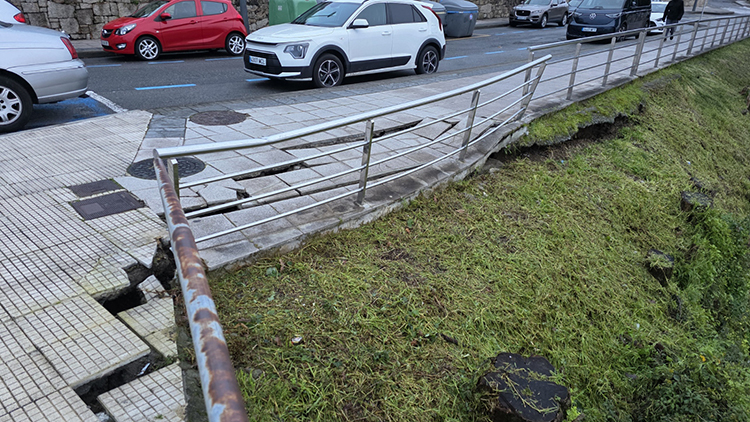
In the town of Sanxenxo, regarded as one of Galicia’s most exclusive seaside resorts, there was a bit of excitement when a small section of pavement started to slip towards the sea when the ground became totally saturated. In the general scheme of things this was pretty much a non-event, simply the movement of a few paving slabs, but with fairly extensive local press and TV coverage you would be forgiven for thinking that there had been a earthquake, or something similar!
The heat goes on….

July 30th, 2025 | Galicia

The weather in Rias Baixas has been largely dry since the middle of May. Yes, there have been odd days of rain, but nothing very significant. In mid-June we experienced the first real heat, with temperatures into the low 30’s°C (86°F) and apart from one cooler, grey week during July, the hot summer weather has continued. The protracted wet conditions during spring 2025 has meant that our vines are not showing any signs of stress as yet, but if these 30°+ temperatures continue unabated, then we might start to have a few problems. Small berries, high sugar (alcohol) and low acidity.

In the meantime, this extended dry spell, with little moisture at all, means that Galicia’s extensive forests are tinder dry, and only need on small spark to set them off. About 30% of our forests are actually eucalyptus (which is not indigenous to this part of the world, and was only introduced in the 19th Century). The big problem with eucalyptus is that it is a ‘pyrophyte’ species, and needs fire to survive and reproduce. They grow very quickly, survive fire (which many other species do not) and the vegetation, bark and branches that fall provide perfect fuel for any flame or spark. The oil in the eucalyptus trees mean that fires can burn and spread twice as fast as those burning in other forests. They are now so prevalent (and durable), that it would be quite impossible to replant and replace them.

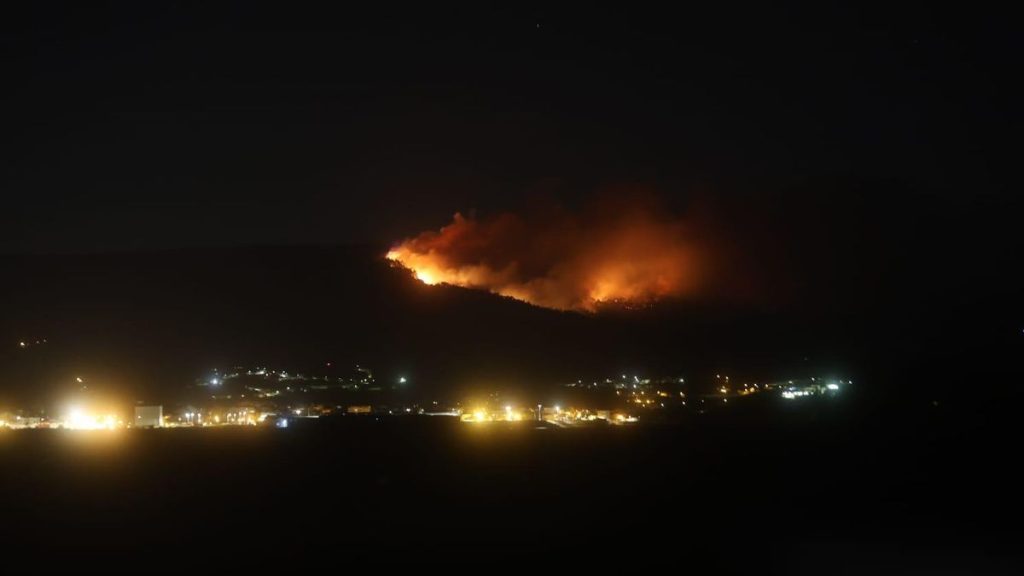
In the last few days we have seen a significant fire burning break out in the Meano area, only a few kilometres from our bodega, shrouding some local towns and villages in smoke… thankfully it was contained reasonably quickly, but still serves as a warning.

In the dark

May 1st, 2025 | Galicia

At 11.30am on a regular Monday morning the lights suddenly went out (which is not an unusual occurrence in this part of the world). Little did we know, this time it was to be very different; it was not just local, but a National power cut! At that point nobody knew what had caused it, or how long it was likely to last.

As it became known that the outage was likely to take several hours to restore, businesses that had not already stopped trading, soon decided to close their doors and call it a day. Shop tills were down, goods could not be scanned, and paying by card or mobile became impossible. So much for a cashless society!

After a few hours the mobile network also started to collapse. Communication was almost completely compromised, and the resultant sense of isolation almost reminiscent of the dark days of Covid. FM radio (battery operated, of course) was the only real source of information.

We had hoped that power might be restored by evening, but as darkness fell there was little else to do but have an early night.

The following morning it was not until 07.30 that the grid was reconnected, some 20 hours after the initial failure. However, the mobile network and internet was not restored until much later, the phone signal was spasmodic, and it was not until late evening that full service was resumed. It was a difficult day all round.

Spanish weather

November 6th, 2024 | Galicia

The Spanish news channels are, quite naturally, filled with the tragic story of the devastating floods in Valencia. Storms that arrived almost without warning that can almost certainly be attributed to some of the many changes brought about by global warming. It is all very worrying, and also appears to be getting more extreme with every year that passes.

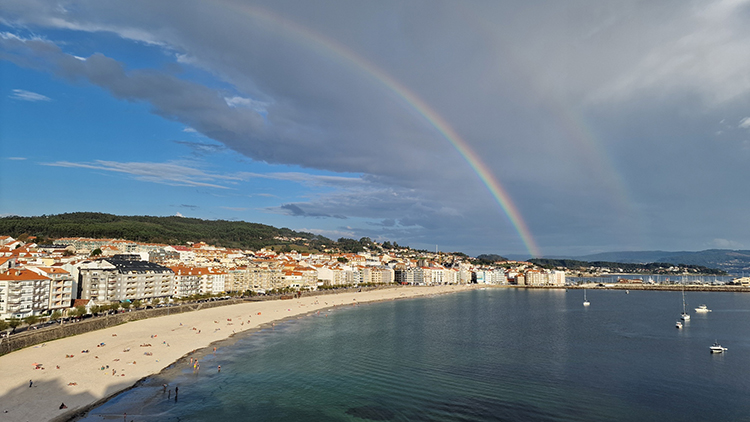
Here in Galicia we must consider ourselves lucky that we have not really suffered any extreme weather events to date, although we are still witnessing some fairly abnormal conditions. Since the harvest our weather has been changeable, a wet, stormy period well into October, now followed by days of unseasonably warm weather. During the first days of November many people took to our local beaches to catch the hot sun, and then yesterday, as I left the bodega (in completely overcast conditions) the outside air temperature was as high as 23°C (73°F). (Today’s slightly surreal photo shows one local beach this past weekend, with people sunbathing under a rainbow!)

Finally, on a much more serious note, our thoughts and prayers remain firmly with the people of Valencia.

Harvest 2024 Days 9, 10, 11

September 23rd, 2024 | Bodega

On Thursday evening I suffered a problem with my computer – at first it was simply a problem in uploading pictures to our social media, and then, by Friday, I had no access to social media at all, and needed to wait until today for IT support. Whatever the problem it has now been resolved and so I will make a quick summary of the last few days.

Friday 20th – Day 9

Not the best day weather wise. We started the morning with a heavy fog/sea mist which, during the morning deteriorated into a fine drizzle of rain. As we were nearing the finish line, and the rain was barely enough to penetrate the canopy, we decided to continue. In the end it proved to be a good decision, in that, as the day progressed, the weather dried up completely. Despite these slightly complicated conditions, the fruit was still good quality, and was not affected by the recent downturn in conditions.

Saturday 21st – Day 10

A washout! The morning started with rain, albeit not heavy. As our teams were all beginning to tire, we decided not to pick at all. During the afternoon the rain stopped and the sky cleared, meaning that the last fruit would at least be dry for the following day.

Sunday 22nd – Day 11

Our last day, collecting the final grapes of our 2024 harvest, and thankfully the weather is dry and sunny! (Just as well, the forecast for the coming days is rain, rain and more rain!). It seems that this year we will probably end up with a slightly larger harvest than last year, and despite all the difficulties earlier in the year (and in the final days before we started), it seems that we will probably end up with a good quantity of good quality fruit (albeit that I never like to pre-judge at this early stage). Clearly, with our tanks now rapidly filling, or already full, the balance of our workload is now shifting indoors, towards the bodega itself.

In the coming days I will comment more about our winemaking, as the grapes finally start to reveal their 2024 character and potential.

Harvest 2024 – Day 8

September 21st, 2024 | Bodega

Today started off a little bit brighter and got progressively more sunny as the day went on. I can only assume that the fires have subsided a little (we hope), or perhaps it was simply a change of wind direction. Actually, on the subject of the Portuguese fires, I have since discovered that there are serious fires in the North of Portugal, near Braga, and much nearer to the Galician border, and so maybe the smoke didn’t travel quite as far as I thought yesterday (but still around 150km).

We are now picking in ‘El Pazo’ vineyard (as I mentioned yesterday), where many of the vines are very old (70 years+). Of course, this is why we consider it to be one of our very best sites, the fruit being used in our ‘Family Estate’ wine. So why are old vines considered better? Well, it’s almost counter-intuitive really, but the simple explanation is that the older a vine get, the less fruit it produces, but with this lower yield so comes a much higher quality with better concentration of flavours. This also explains why, sometimes, in July, we will make a ‘green harvest’ (when the vine produces too many bunches we remove some of the excess). At the same time we may also remove some of the excess foliage in the ‘canopy’ of the vineyard. By cutting away these leaves and bunches the plant than then simply direct more energy towards the remaining bunches, which, in turn, will produce better quality, more flavourful fruit. Of course, removing bunches will remove the overall amount of wine produced, but we are re-assured in that the fruit we have remaining will be better. This is also the reason that a D.O. in Spain, or an A.O.C. in France will control the maximum yield in their rules and regulations – to stop overproduction of mediocre quality wines. This is measured in Hectolitres per Hectare – the maximum amount of fruit is calculated for each vineyard site by surface area.

I digress, again! The point is the bigger volume is by no means better quality – quite the reverse in fact, which is why old vines are so revered (and often sold as a separate, premium wine). Having said that, there does come a point when the are no longer really viable, and little by little, over time, they will be replaced.

Today, we picked until daylight faded as the predicted threat of rain loomed large.

(Posted one day late, picture added later owing to a technical issue)

Harvest 2024 – Day 7

September 19th, 2024 | Bodega

Wednesday started with what looked like a cloudy, overcast day. Later we were to discover that it wasn’t actually cloud, but smoke generated by the terrible forest fires raging in Portugal (see today’s photo). Perhaps the most shocking consideration is that these fires are actually located south of Lisbon, more than 600km south of our location! Our thoughts and prayers are with the people of Portugal at this terrible time.

Yesterday I mentioned yeasts, which is significant in that seeding of the tanks is already underway. The choice of yeast is interesting, as there are so many different products available, each claiming to be more suitable that the other. Certainly the choice of yeast can, and does change the profile of the finished wine, and so the choice is very much down to the individual winemaker, and the style of albariño that they want to produce. At Castro Martin we always tend use the most ‘neutral’ yeasts, in other words a yeast that does not dominate or change the flavour of the albariño grape. On it’s own, our variety is so fresh and has such a piercing fruit, that we have no reason to want to modify it. That is not to say that we are closed minded, as every year we do make one or two small tanks using a different alternative, to see if the suppliers claim has any legitimacy. In the end, we nearly always come back to our old faithfuls.

Meanwhile, back at the harvest it was yet another uneventful day, a steady flow of quality grapes and a team well versed in how to process them efficiently.

2024 Harvest – Day 6

September 18th, 2024 | Bodega

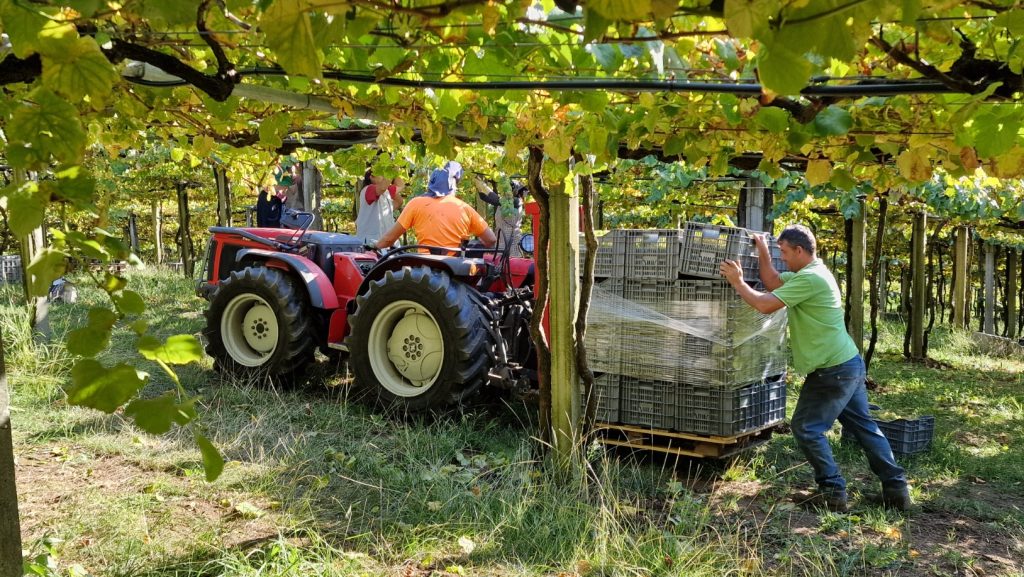
Although the forecast said that today would be partly cloudy, they were wrong! Wall-to-wall hot sunshine! As mentioned yesterday today we are working in our ‘Caeiro’ vineyard that surrounds the bodega. Effectively this means that the grapes are moved from vine to press sometimes in a matter of minutes, and the flow is constant. OK, many of our vineyards are located within a few kilometres, but picking alongside the bodega is really a luxury that makes life so much easier. Instead of being loaded on trucks or vans, the tractors deliver straight to the cellar door.

Meanwhile, in the bodega, there is also a lot of movement as tanks that were filled a day or two ago with fresh grape must are now moved to clean tanks (after cold settling) where they will await seeding and fermentation. We are often asked about yeast, and whether, for example, we can ferment simply using the natural yeast that exists on the skin of the fruit. Much as we would like to do this, the wild yeast would be enough to provoke a spontaneous fermentation, but unfortunately not enough to complete the whole fermentation, which therefore means that these wild yeasts need some assistance. To an extent this is again down to our climate. If we were able to grow fully organic fruit, then it is possible that the population of wild yeast would be greater, and could possibly do the job on it’s own (albeit I would still have a few doubts). A ‘stuck fermentation’ would probably mean that a tank of wine would still need to be seeded in order to help it fully ferment, and so by seeding from the offset the final result is simply a bit more predictable.

At the end of the day, with our bodega vineyard all but finished, tomorrow we will move on to one our best, and oldest vineyards – ‘El Pazo’ (also in our home village of Barrantes).


Harvest 2024 – Day 5

September 17th, 2024 | Bodega

When we opened our shutters we discovered yet another fine, sunny morning, but with one significant development….. rain had suddenly appeared on the weather radar (albeit still a few days away). Our teams are already working at top speed, but we still have significant areas to cover, including one of our biggest vineyard sites that we refer to as ‘El Pazo’. Of course, weather forecasts for our immediate area are notoriously inaccurate, in that they can (and often do), change at a moments notice. Having said all that, we will, of course, do our level best to step it up a gear!

Today we are harvesting one of our smaller, local vineyards – Cunchidos. This is a small, one hectare vineyard located in our home village of Barrantes. The fruit from this location is usually slightly lower alcohol and a touch higher acidity than some others, due to a combination of the soils and the aspect (slightly more sheltered). This, however, provides us with a very useful element that we can use during the blending process. (After fermentation several tanks are blended to produce a wine that represents our ‘house’ style – excluding our Castro Martin ‘Family Estate’ which is not blended and comes from just two very specific vineyards).

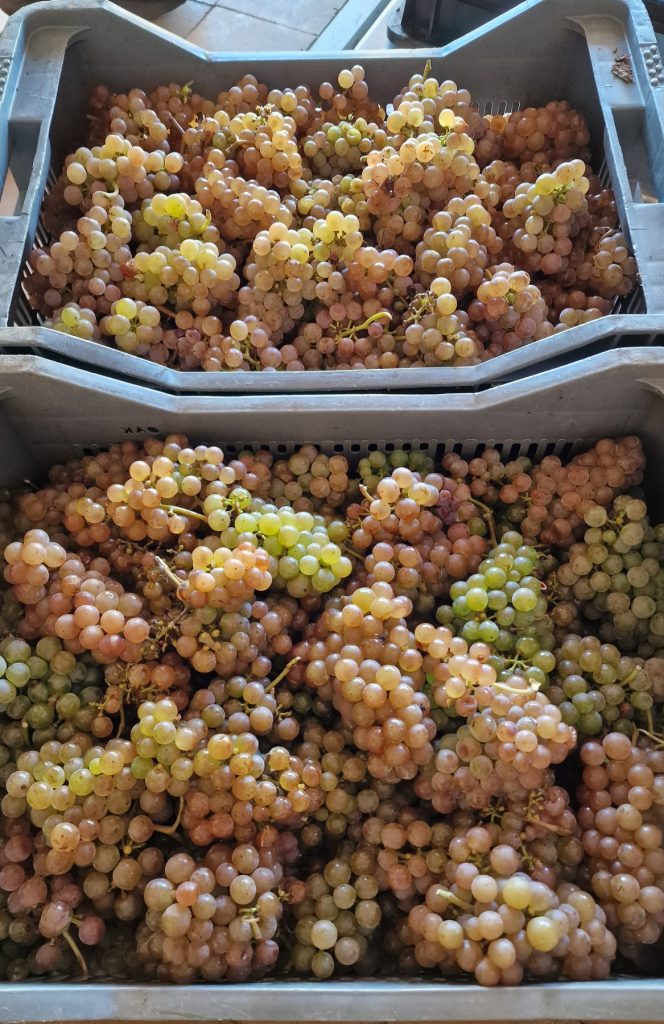
In recent years, due to the effects of global warming, the average alcoholic degree of albariño from Rias Baixas has been slowly creeping up, and so vineyards such as Cunchidos can often help us to maintain a better balanced wine. On the other extreme, we have fruit which when ripe turns a deep gold colour, and other grapes that take on not only a golden hue, but actually something of a pink hue (see today’s photo).

By the end of the day Cunchidos was completed without any fuss or incident, and tomorrow we will move on to our ‘Caeiro’ vineyard that surrounds the bodega.

Harvest 2024 – Day 4

September 16th, 2024 | Bodega

Some of our cellar team

Another sunny day here in paradise! Yes, the sun is shining and it looks like it will be a hot one – temperature pushing, or even maybe exceeding, 30°C (86°F). In these conditions we have to keep the whole team, both inside and outside the bodega, well watered. (They also enjoy an occasional ice cream break, all managed by Angela’s sister Elizabeth (or Beby to her friends)).

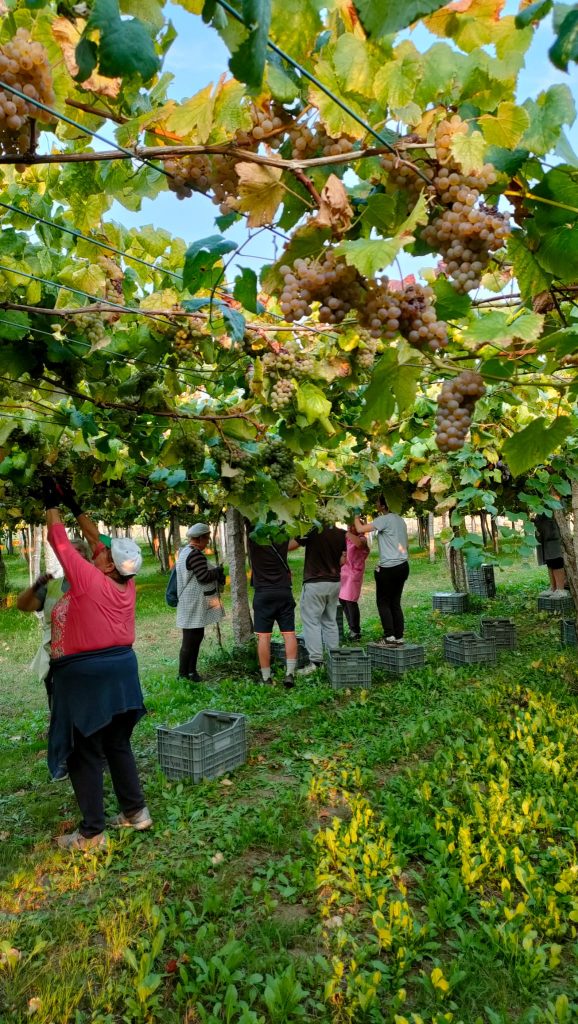
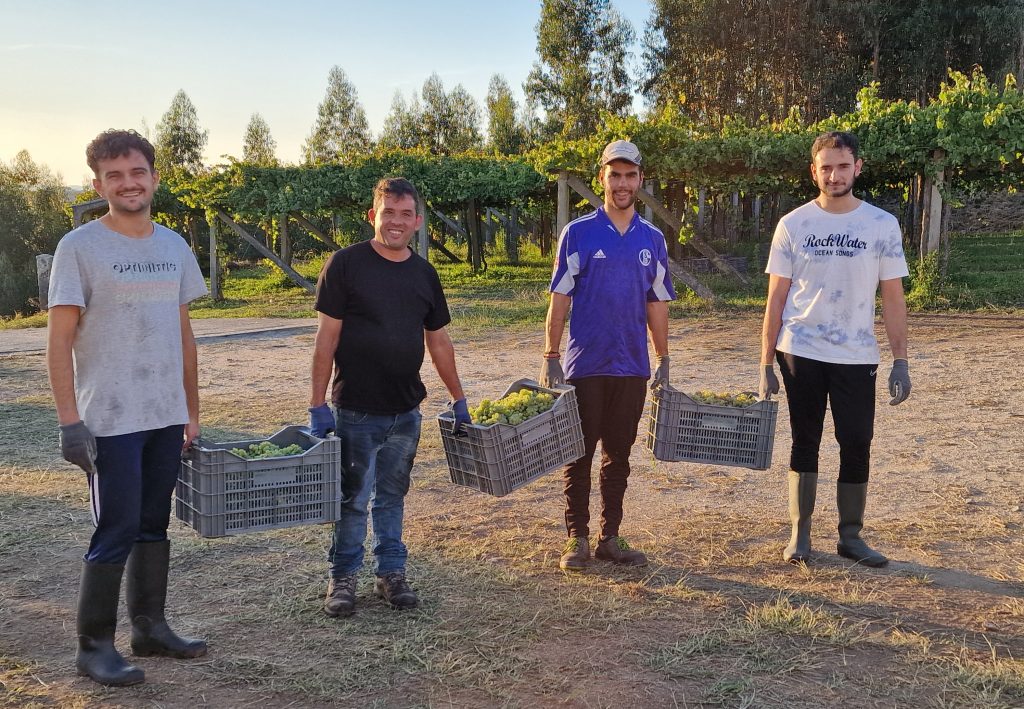
Indeed, everyone involved works extremely hard during the whole harvest period of normally about a week. Non-stop picking outside, whilst our cellar guys have to multi-task, unloading and palletising grapes, loading the presses, and then washing the empty cases – 2.000 cases in a small wash basin – not bad! (Actually I am lying about the wash basin, we do in fact have a machine for washing cases, albeit, fed by hand at one end, and then clean cases re-stacked at the other). I imagine that many larger (more industrial) cellars might well be more automated than Castro Martin, which is why we always explain to people that there is a lot of manual labour involved in the making of more traditional albariño. Made by hand…. with love!

Sunday, is always a complicated day for collecting grapes, some people are eager to gather fruit whilst they have more family members available (assuming that they are willing), and others would rather have a day with the family, quietly without working. My guess is that it largely depends on the weather forecast, people are more relaxed if they know that the weather is set fair, and are more motivated if it is not. Having said all that this particular Sunday ended up being a very routine day, the main difference being that we are now working both inside and outside the bodega. Hence a rest day only for the lucky few!


Monthly Archives

Categories

ARE YOU OF LEGAL AGE? This site is intended for those of legal drinking age. By entering, you confirm that you are of legal drinking age in the country where this site is being accessed. ¿ERES MAYOR DE EDAD? Este sitio está destinado a personas en edad legal para beber alcohol. Al ingresar, confirma que tiene la edad legal para beber en el país donde se accede a este sitio.