Archive for ‘Food & Wine’

Castro Martin @ Hispania

April 10th, 2014 | Food & Wine

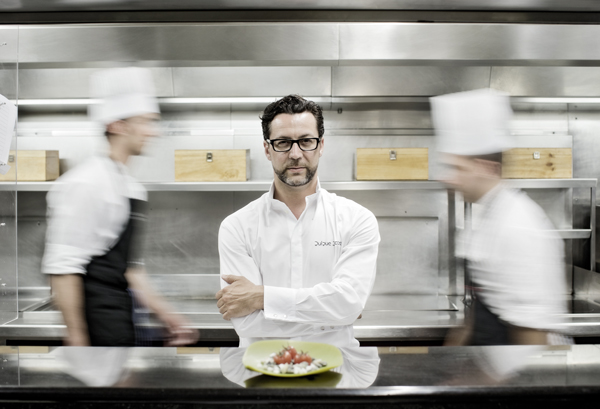
Quique-DacostaHispania is a restaurant built on the ground floor of the historical building of Lloyds Bank in the heart of London’s financial district. Indeed, to call it simply a restaurant is probably something of an understatement, with two floors dedicated to exhibiting the very best of Spain, it holds a  license to operate as a restaurant, bar, shop and take-away. With a very accomplished kitchen brigade of it’s own, it recently played host to one of Spain’s top chefs, Quique Dacosta, who holds three Michelin stars for his own restaurant in Alicante. At a special 16 course dinner the guest list was not only studded with luminaries from the UK wine and food press (the BBC, The Observer, The Daily Telegraph, Restaurant, Food & Travel, The Times), but also included representatives from the Spanish corporate and institutional community, including ambassadors, executives from Santander, BBVA, Ferrovial and O2. Suffice to say that it was quite well attended…..

Obviously we were completely thrilled that our very own Castro Martin Family Estate 2012 wine was selected to accompany one of the fish courses, and was subsequently described by a journalist from The Spectator as “as good an Albariño as I have ever tasted”. Quite honestly we were just happy to have our wine served to such an illustrious audience.

Quique-DacostaHispania is a restaurant built on the ground floor of the historical building of Lloyds Bank in the heart of London’s financial district. Indeed, to call it simply a restaurant is probably something of an understatement, with two floors dedicated to exhibiting the very best of Spain, it holds a  license to operate as a restaurant, bar, shop and take-away. With a very accomplished kitchen brigade of it’s own, it recently played host to one of Spain’s top chefs, Quique Dacosta, who holds three Michelin stars for his own restaurant in Alicante. At a special 16 course dinner the guest list was not only studded with luminaries from the UK wine and food press (the BBC, The Observer, The Daily Telegraph, Restaurant, Food & Travel, The Times), but also included representatives from the Spanish corporate and institutional community, including ambassadors, executives from Santander, BBVA, Ferrovial and O2. Suffice to say that it was quite well attended…..

Obviously we were completely thrilled that our very own Castro Martin Family Estate 2012 wine was selected to accompany one of the fish courses, and was subsequently described by a journalist from The Spectator as “as good an Albariño as I have ever tasted”. Quite honestly we were just happy to have our wine served to such an illustrious audience.

Lacón con grelos en Cuntis

March 5th, 2014 | Fiestas

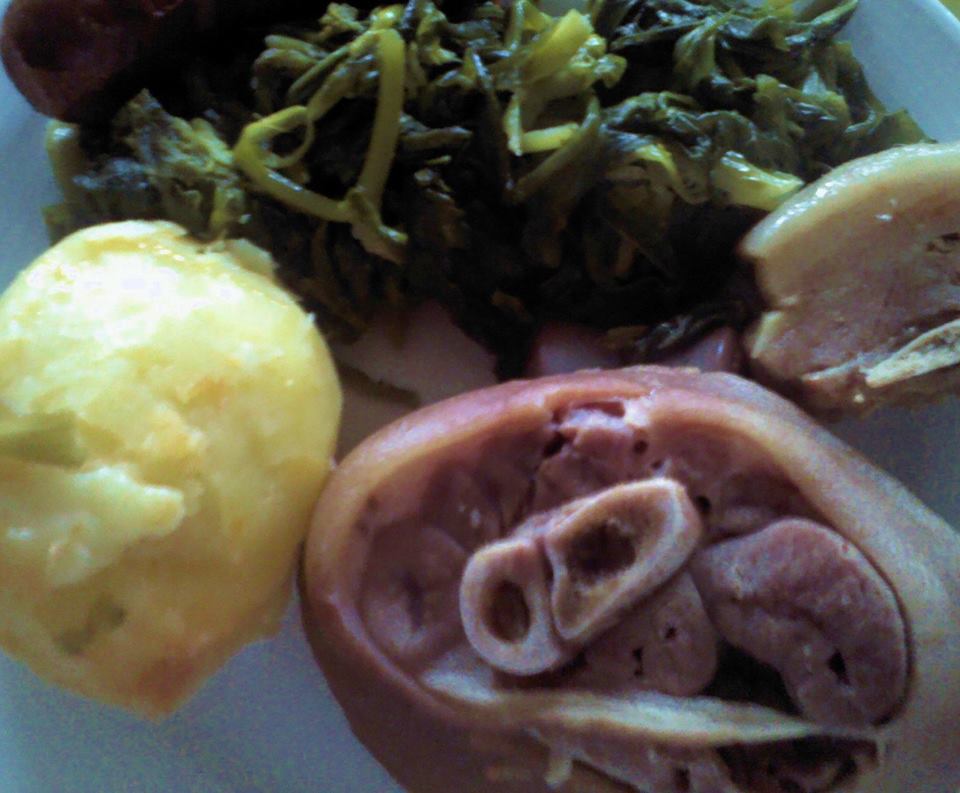
Lacon con grelosAnother day, another food festival, but same old problem – poor advertising photography! Maybe, it’s just me, but I don’t really find this picture very appealing and it certainly wouldn’t attract me into joining the party. Whether you actually like lacón con grelos is another thing, but suffice to say that here in Galicia it s considered a bit of a local delicacy. The lacon (cured ham) I can just about manage to eat, but the grelos (the leaves of a turnip) I find quite stringy and bitter. It’s all just a matter of personal taste.

By the way, just in case you were wondering, Cuntis is the place where the festival is being held. I will not be rushing there…..

Lacon con grelosAnother day, another food festival, but same old problem – poor advertising photography! Maybe, it’s just me, but I don’t really find this picture very appealing and it certainly wouldn’t attract me into joining the party. Whether you actually like lacón con grelos is another thing, but suffice to say that here in Galicia it s considered a bit of a local delicacy. The lacon (cured ham) I can just about manage to eat, but the grelos (the leaves of a turnip) I find quite stringy and bitter. It’s all just a matter of personal taste.

By the way, just in case you were wondering, Cuntis is the place where the festival is being held. I will not be rushing there…..

Selling by variety

February 10th, 2014 | Food & Wine

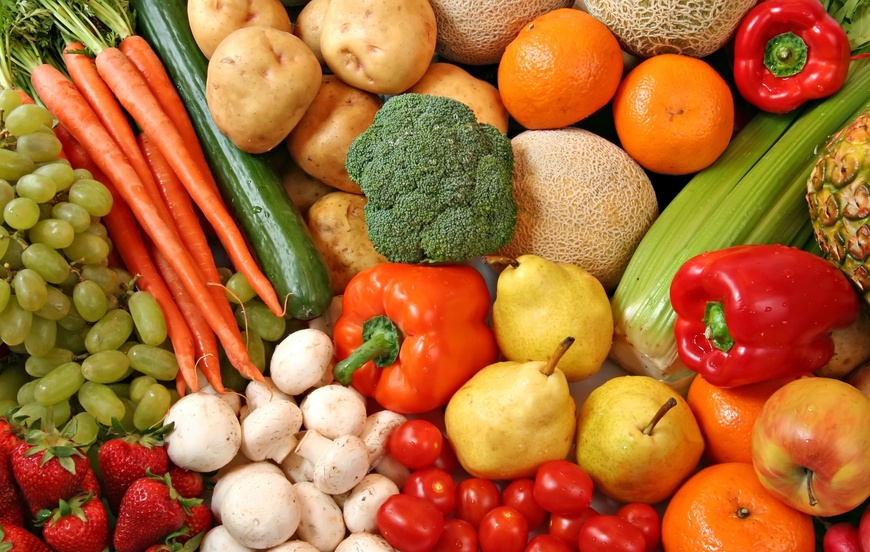
fruit and vegetable varietyYesterday I ate a tomato that had no taste whatsoever and it started me thinking…… In the wine trade, we make, market and sell wine by variety, so why doesn’t this approach apply to every fruit and vegetable – growing and selling them according to their variety, and more importantly, their flavour. Now I know there will be people who will jump on this apparent generalisation, and I do acknowledge that there are already many shops and supermarkets that clearly advertise both the variety and their provenance, but this is not a worldwide concept.

Imagine for a moment that you walked into your favourite wine shop, and the only way you could identify your selection was by the colour, as though it was assumed that every white wine, and every red wine tasted the same (and that the variety of grape really didn’t matter). This thought brings me neatly back to my tomatoes. Why shouldn’t I be able to walk into my local supermarket and knowingly select the variety of tomato that I like and prefer to buy? Why does it have to be a secret?

Of course, I already know the answer to that question – many fruits and veg are grown simply because they are prolific, and not necessarily because they have the best taste (there is even a variety of tomato called ‘moneymaker’). Now, I am not saying for one moment that we should stop growing these abundant croppers, but I am simply saying help us to identify them, and let us make the choice. As with my wine selections, I for one would not mind paying a few cents extra to buy a fruit or veg that I know I am going to appreciate….. it just makes more sense.

For example, in many countries it is very common to display the category of potato that we buy, depending on whether it is required for boiling, baking or frying etc. – but unfortunately not here in Galicia (ironically a big potato producing area). Yes, I can buy bags that are marked ‘for frying’, ‘for boiling’ etc., but the problem is that I do not agree with their selections! I end up with limp, soggy french fries, or hard, waxy boiled potatoes – I can never find what I really want. Very fortunately, I can at least buy my apples and pears by variety, but nearly everything else is pot luck!

OK, so I’ve had my little rant and got it off my chest, but if you stop to think about it for a moment, why shouldn’t the consumer be able to chose, or at least have more information so that they can make an informed selection? It wouldn’t cost any more to tell us what we’re buying…..

fruit and vegetable varietyYesterday I ate a tomato that had no taste whatsoever and it started me thinking…… In the wine trade, we make, market and sell wine by variety, so why doesn’t this approach apply to every fruit and vegetable – growing and selling them according to their variety, and more importantly, their flavour. Now I know there will be people who will jump on this apparent generalisation, and I do acknowledge that there are already many shops and supermarkets that clearly advertise both the variety and their provenance, but this is not a worldwide concept.

Imagine for a moment that you walked into your favourite wine shop, and the only way you could identify your selection was by the colour, as though it was assumed that every white wine, and every red wine tasted the same (and that the variety of grape really didn’t matter). This thought brings me neatly back to my tomatoes. Why shouldn’t I be able to walk into my local supermarket and knowingly select the variety of tomato that I like and prefer to buy? Why does it have to be a secret?

Of course, I already know the answer to that question – many fruits and veg are grown simply because they are prolific, and not necessarily because they have the best taste (there is even a variety of tomato called ‘moneymaker’). Now, I am not saying for one moment that we should stop growing these abundant croppers, but I am simply saying help us to identify them, and let us make the choice. As with my wine selections, I for one would not mind paying a few cents extra to buy a fruit or veg that I know I am going to appreciate….. it just makes more sense.

For example, in many countries it is very common to display the category of potato that we buy, depending on whether it is required for boiling, baking or frying etc. – but unfortunately not here in Galicia (ironically a big potato producing area). Yes, I can buy bags that are marked ‘for frying’, ‘for boiling’ etc., but the problem is that I do not agree with their selections! I end up with limp, soggy french fries, or hard, waxy boiled potatoes – I can never find what I really want. Very fortunately, I can at least buy my apples and pears by variety, but nearly everything else is pot luck!

OK, so I’ve had my little rant and got it off my chest, but if you stop to think about it for a moment, why shouldn’t the consumer be able to chose, or at least have more information so that they can make an informed selection? It wouldn’t cost any more to tell us what we’re buying…..

Lunchtime drinking

January 27th, 2014 | Food & Wine

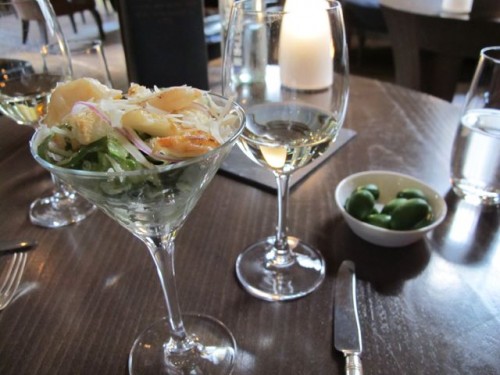
Lunch wineThe other day we went to our favourite restaurant for lunch. Personally speaking I much prefer dining out  at lunch time, especially as, since moving to Spain, I find it increasingly difficult to cope with their restaurant opening hours. Dinner, in this country, will commonly start at around 10pm, and perhaps finish in the early hours of the morning – far too late to digest a good meal properly. Eating at lunchtime does, however, leave me with a slightly different dilemma….. what to drink? Apart from the obvious consideration of food pairing, the next question is possibly how much alcohol you want to take on board in the middle of the day. This can certainly be a factor the style of wine that you might select. 

For example, a month or two ago, I found myself tempted by a  Marques de Griñon, Dominio de Valdepusa Petit Verdot at lunch time. (I am particularly fond of this wine having shared a bottle with its maker, Don Carlos Falco, on his estate several years ago.) The only downside of this deliciously ripe, rich, concentrated wine is the alcohol – pushing close to 15%. At this degree it is probably far too powerful to enjoy as luncheon wine simply because it can leave you reeling, or at the very least, feeling quite soporific. Suffice to say that either working or driving may well be out of the question after quaffing such a bottle.

When I started to write this post it wasn’t really intended to be an advertisement for albariño, but it is true to say that lower alcohol wines, such as ours, are probably far better suited to drink at lunch time than their more alcoholic counterparts.


Lunch wineThe other day we went to our favourite restaurant for lunch. Personally speaking I much prefer dining out  at lunch time, especially as, since moving to Spain, I find it increasingly difficult to cope with their restaurant opening hours. Dinner, in this country, will commonly start at around 10pm, and perhaps finish in the early hours of the morning – far too late to digest a good meal properly. Eating at lunchtime does, however, leave me with a slightly different dilemma….. what to drink? Apart from the obvious consideration of food pairing, the next question is possibly how much alcohol you want to take on board in the middle of the day. This can certainly be a factor the style of wine that you might select. 

For example, a month or two ago, I found myself tempted by a  Marques de Griñon, Dominio de Valdepusa Petit Verdot at lunch time. (I am particularly fond of this wine having shared a bottle with its maker, Don Carlos Falco, on his estate several years ago.) The only downside of this deliciously ripe, rich, concentrated wine is the alcohol – pushing close to 15%. At this degree it is probably far too powerful to enjoy as luncheon wine simply because it can leave you reeling, or at the very least, feeling quite soporific. Suffice to say that either working or driving may well be out of the question after quaffing such a bottle.

When I started to write this post it wasn’t really intended to be an advertisement for albariño, but it is true to say that lower alcohol wines, such as ours, are probably far better suited to drink at lunch time than their more alcoholic counterparts.


Our Christmas aperitif

December 27th, 2013 | Food & Wine

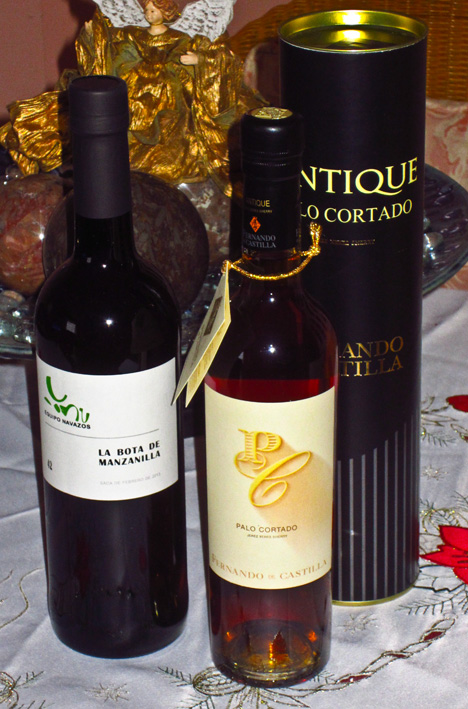
SherriesNot that many years ago to admit that you enjoyed a glass of sherry would probably have labelled you as an old fuddy-duddy, and was maybe even a pastime that you would have to carry out on your own, secreted in a darkened room – ‘in the closet’ some might say. But that was then….. 

Happily, in recent years, all this has changed, and sipping a glass of Manzanilla or Oloroso is now actually considered to be almost ‘de rigueur’. Having said that, it is probably still true to say that some sherries can be an acquired taste and there are styles that might even repulse the average wine drinker. Perhaps it’s a sweeping generalisation to say that the sweeter styles are often more approachable, whilst others might be a bit too dry for some people (after all, it is a fact that the palate can easily be ‘seduced’ by a bit of sugar!)

Whatever style we chose, the best attribute of sherry is probably the depth and complexity that it offers – layer upon layer of subtle flavour and aroma, available in a widely contrasting range of styles. There’s pretty much something for everyone!

This year Angela and I opted for two dryer styles for our Christmas aperitif – a fine, dry, saline Manzanilla with huge depth and intensity (Equipo Navazos La Bota de Manzanilla No. 42), and a wonderful single solera Palo Cortado, with a slightly smoky, nutty richness and a hint of fig that leans just a touch more towards the Oloroso style  (Fernando de Castilla Palo Cortado Antique). Believe it or not Fernando de Castilla is owned by a Norwegian, Jan Pettersen, who, like all the best winemakers and proprietors, is a purist and passionate about his wines. 

SherriesNot that many years ago to admit that you enjoyed a glass of sherry would probably have labelled you as an old fuddy-duddy, and was maybe even a pastime that you would have to carry out on your own, secreted in a darkened room – ‘in the closet’ some might say. But that was then….. 

Happily, in recent years, all this has changed, and sipping a glass of Manzanilla or Oloroso is now actually considered to be almost ‘de rigueur’. Having said that, it is probably still true to say that some sherries can be an acquired taste and there are styles that might even repulse the average wine drinker. Perhaps it’s a sweeping generalisation to say that the sweeter styles are often more approachable, whilst others might be a bit too dry for some people (after all, it is a fact that the palate can easily be ‘seduced’ by a bit of sugar!)

Whatever style we chose, the best attribute of sherry is probably the depth and complexity that it offers – layer upon layer of subtle flavour and aroma, available in a widely contrasting range of styles. There’s pretty much something for everyone!

This year Angela and I opted for two dryer styles for our Christmas aperitif – a fine, dry, saline Manzanilla with huge depth and intensity (Equipo Navazos La Bota de Manzanilla No. 42), and a wonderful single solera Palo Cortado, with a slightly smoky, nutty richness and a hint of fig that leans just a touch more towards the Oloroso style  (Fernando de Castilla Palo Cortado Antique). Believe it or not Fernando de Castilla is owned by a Norwegian, Jan Pettersen, who, like all the best winemakers and proprietors, is a purist and passionate about his wines. 

Your Christmas menu?

December 18th, 2013 | Food & Wine

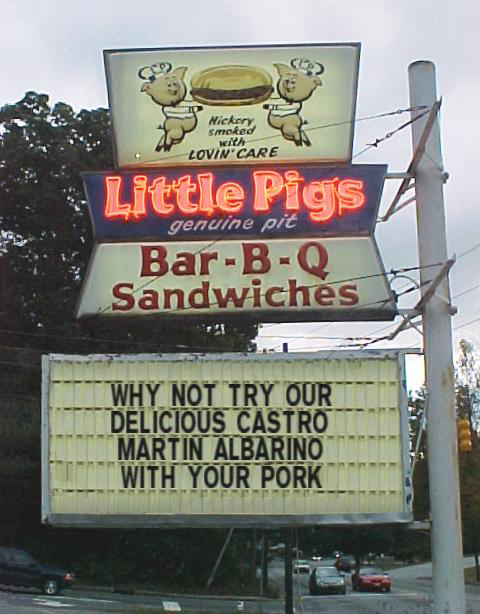
BAR-B-QSo what’s on your holiday menu this year? I guess the answer to that question rather depends on where you live. Different countries obviously have different traditions, some more rigidly observed than others. My own experience here in Galicia has perhaps been tainted a little by the fact that there is a strong Venezuelan influence in the Martin household, and perhaps the menu is not quite as Spanish as in other homes. However, the inescapable tradition is of course the seafood – the table almost groans under the weight of fresh crab, prawn, shrimp etc., as the first course provides the perfect foil for our beloved albariño grape. In other parts of Spain typical starters might include Ibérico hams and charcuterie products or perhaps a platter of Spanish cheeses, and can be washed down with wines such as cava or sherry.

The main course, I have to say, is perhaps less clearly defined, as in the years I have lived here we have enjoyed a variety of dishes such as turkey, lamb or hare. In other regions a typical menu might include beef dishes, baked hams, lamb or perhaps even fish. To accompany this the choice of wine is also very varied, albeit that the selection is always Spanish – wines from Rioja, Ribera del Duero, Priorat and every denomination, including our very own Rias Baxias wines – not to mention the king of them all – a zesty, refreshing albariño…. the perfect choice for all your Christmas seafood dishes (not forgetting the turkey too).

And as for our own menu? Well, this year we are going British (now there’s a surprise I hear you say). Actually, the surprise is that although our menu is British, it does not include the very traditional Christmas turkey! We will be having a simple but delicious menu of wild smoked Scottish salmon followed by a roast Rib of Beef (with Yorkshire Pudding, for those who know what they are). As for the wine selection? Certainly a Castro Martin Family Estate with the salmon – possibly 2010 or 2011, and then a good red wine with the beef, which I doubt very much will be Spanish – probably Bordeaux or Burgundy.

Cheers!

BAR-B-QSo what’s on your holiday menu this year? I guess the answer to that question rather depends on where you live. Different countries obviously have different traditions, some more rigidly observed than others. My own experience here in Galicia has perhaps been tainted a little by the fact that there is a strong Venezuelan influence in the Martin household, and perhaps the menu is not quite as Spanish as in other homes. However, the inescapable tradition is of course the seafood – the table almost groans under the weight of fresh crab, prawn, shrimp etc., as the first course provides the perfect foil for our beloved albariño grape. In other parts of Spain typical starters might include Ibérico hams and charcuterie products or perhaps a platter of Spanish cheeses, and can be washed down with wines such as cava or sherry.

The main course, I have to say, is perhaps less clearly defined, as in the years I have lived here we have enjoyed a variety of dishes such as turkey, lamb or hare. In other regions a typical menu might include beef dishes, baked hams, lamb or perhaps even fish. To accompany this the choice of wine is also very varied, albeit that the selection is always Spanish – wines from Rioja, Ribera del Duero, Priorat and every denomination, including our very own Rias Baxias wines – not to mention the king of them all – a zesty, refreshing albariño…. the perfect choice for all your Christmas seafood dishes (not forgetting the turkey too).

And as for our own menu? Well, this year we are going British (now there’s a surprise I hear you say). Actually, the surprise is that although our menu is British, it does not include the very traditional Christmas turkey! We will be having a simple but delicious menu of wild smoked Scottish salmon followed by a roast Rib of Beef (with Yorkshire Pudding, for those who know what they are). As for the wine selection? Certainly a Castro Martin Family Estate with the salmon – possibly 2010 or 2011, and then a good red wine with the beef, which I doubt very much will be Spanish – probably Bordeaux or Burgundy.

Cheers!

Wine pairing menus

November 8th, 2013 | Food & Wine

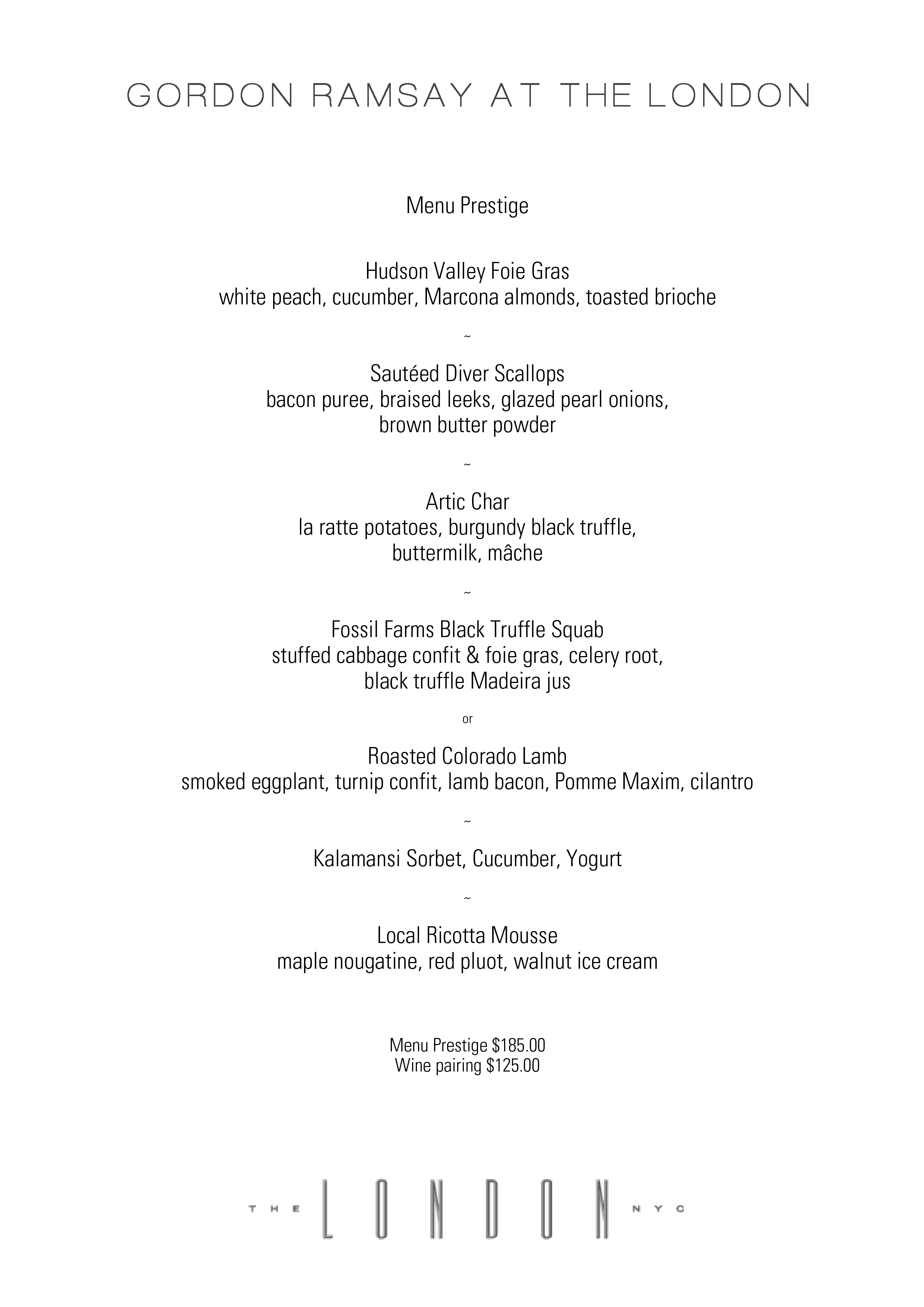
Gordon RamsayEating and drinking are the great loves of my life (as well as my wife and family, I hasten to add). I consider myself very fortunate that I have been able to combine these passions with my profession, starting my working life in the hospitality industry (hotel management), evolving over the years into my career in wine.

I confess that I sometimes spend far too much money when eating out, on special occasions perhaps to excess. I am also guilty of sometimes spending more on wines than I do on the meal itself (which in top restaurants is not too difficult to do). I consider myself  privileged that, during my lifetime, I have had the opportunity to eat in many of the world’s top restaurants, where on occasions I have been confronted with wine lists that look more like old-fashioned telephone directories, offering an overwhelming selection of very fine wines.

These days, when visiting unfamiliar restaurants, more often than not I will opt for the chef’s tasting menu. Usually this type of menu will showcase the specialities of the chef, highlighting local produce as well as the local cuisine. The only downside to these menus is that the dishes can be so diverse that it makes it quite impossible to make a wine selection that will harmonise with everything. (The only possible exception to this might be an old, biscuity champagne that I will drink happily with anything!). Quite naturally this is where wine pairing comes into its own – putting yourself in the hands of a (hopefully) very skilled sommelier, who will be able to offer a sample wine to match every course. Ceding this amount of power to a sommelier, I must confess, is something that I still find extraordinarily difficult to do!

On the occasions that I have opted for this it has worked well, perhaps once or twice, even too well. I remember once (through a slight haze) being poured into a taxi upon leaving one of Sydney’s top eateries. The problem was that knowing who we were they simply kept asking us to sample more wines, on top of the already extensive selection offered with the menu. The pleasure was just a little excessive I’m afraid!

In the case of these gastronomic menus I think it is equally as important to be inspired by the wines being suggested, as we rely on the knowledge and experience of the sommelier to guide us skillfully through his selections. However, on one recent occasion I’m afraid that I was left just a little disappointed by the wine service that we received…. As the flight of wines were poured we were given a rather rapid but clearly well rehearsed speech about each one. The problem was that the sommelier did not seem to be prepared for questions, or even less so for comments about the pairing. For example, a lobster dish with a rich sauce was served with a rather tight, flinty Pouilly Fumé – for me it needed a wine with a bit more weight and body. It was a very good wine, but just not the wine I would have selected myself, and when I mentioned this, my opinion appeared to be met with complete indifference.

Apart from this trivial incident I think that the concept of a wine pairing selection is really positive, giving the consumer a chance to make new wine discoveries, whilst at the same time enhancing the overall dining experience….. proving, as we already know, that wine and food are truly made for each other!

Gordon RamsayEating and drinking are the great loves of my life (as well as my wife and family, I hasten to add). I consider myself very fortunate that I have been able to combine these passions with my profession, starting my working life in the hospitality industry (hotel management), evolving over the years into my career in wine.

I confess that I sometimes spend far too much money when eating out, on special occasions perhaps to excess. I am also guilty of sometimes spending more on wines than I do on the meal itself (which in top restaurants is not too difficult to do). I consider myself  privileged that, during my lifetime, I have had the opportunity to eat in many of the world’s top restaurants, where on occasions I have been confronted with wine lists that look more like old-fashioned telephone directories, offering an overwhelming selection of very fine wines.

These days, when visiting unfamiliar restaurants, more often than not I will opt for the chef’s tasting menu. Usually this type of menu will showcase the specialities of the chef, highlighting local produce as well as the local cuisine. The only downside to these menus is that the dishes can be so diverse that it makes it quite impossible to make a wine selection that will harmonise with everything. (The only possible exception to this might be an old, biscuity champagne that I will drink happily with anything!). Quite naturally this is where wine pairing comes into its own – putting yourself in the hands of a (hopefully) very skilled sommelier, who will be able to offer a sample wine to match every course. Ceding this amount of power to a sommelier, I must confess, is something that I still find extraordinarily difficult to do!

On the occasions that I have opted for this it has worked well, perhaps once or twice, even too well. I remember once (through a slight haze) being poured into a taxi upon leaving one of Sydney’s top eateries. The problem was that knowing who we were they simply kept asking us to sample more wines, on top of the already extensive selection offered with the menu. The pleasure was just a little excessive I’m afraid!

In the case of these gastronomic menus I think it is equally as important to be inspired by the wines being suggested, as we rely on the knowledge and experience of the sommelier to guide us skillfully through his selections. However, on one recent occasion I’m afraid that I was left just a little disappointed by the wine service that we received…. As the flight of wines were poured we were given a rather rapid but clearly well rehearsed speech about each one. The problem was that the sommelier did not seem to be prepared for questions, or even less so for comments about the pairing. For example, a lobster dish with a rich sauce was served with a rather tight, flinty Pouilly Fumé – for me it needed a wine with a bit more weight and body. It was a very good wine, but just not the wine I would have selected myself, and when I mentioned this, my opinion appeared to be met with complete indifference.

Apart from this trivial incident I think that the concept of a wine pairing selection is really positive, giving the consumer a chance to make new wine discoveries, whilst at the same time enhancing the overall dining experience….. proving, as we already know, that wine and food are truly made for each other!

Fiestas of Galicia

October 29th, 2013 | Fiestas

ZorzaWhilst our wines are quietly fermenting in tank (they have already reached the point where they can now be called wine, rather than must), our workload is slowly returning to something that at least resembles normality. Of course we are still obliged to monitor densities around the clock, including weekends, which entails a constant shuttle back and forth. Fortunately it is not a difficult chore, just a little time consuming, and so Angela and I make it slightly more bearable by alternating the shifts! 

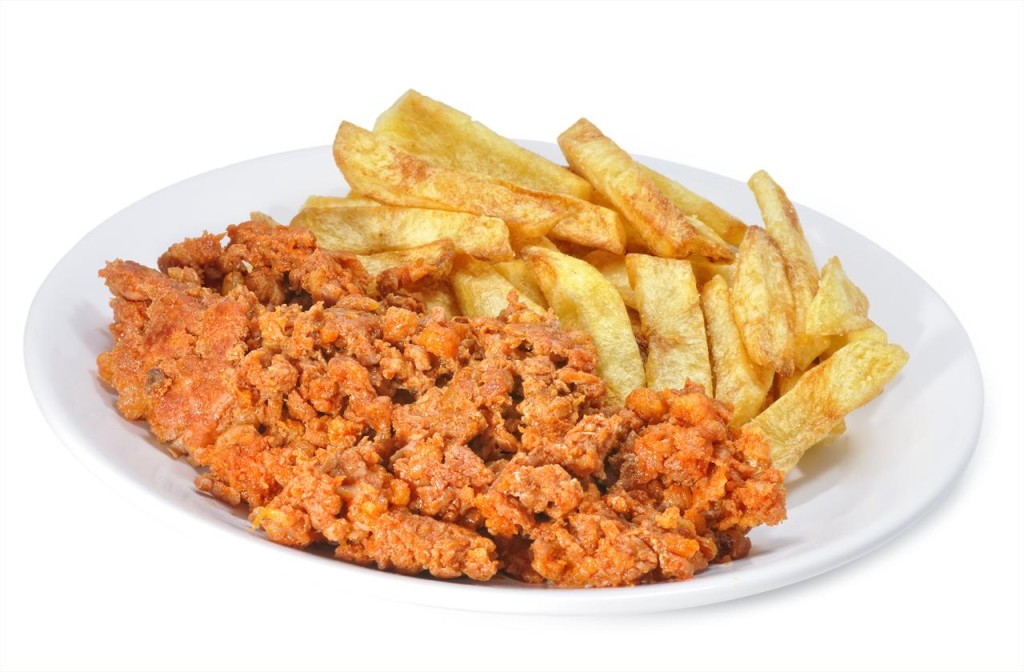
In the meantime there was something locally that caught my eye, but possibly for the wrong reason….. Occasionally I visit a website that lists all the Fiestas held here in Galicia, and believe me there are quite literally hundreds throughout the year (as I have mentioned before the Spanish do not need any excuse to party!). Anyway, one particular festival that stood out for me was the 8th Annual ‘Festa da Zorza’ in the village of Maceda. The reason I noticed this one in particular was simply because of their publicity photo. They say that we eat with our eyes, in which case the plate of Zorza used in this picture might easily serve to put you off!  

Zorza is actually a spicey shredded pork, or perhaps pulled pork as it might be known in the US or UK. The problem is that in this picture it actually looks more like the contents of a tin of cat food (albeit I think that even many cat foods are made to look more appetising these days). This comment is not really meant to be disrespectful in any way, as I’m sure that the pork will taste delicious (indeed pulled pork is one of my favourite dishes), but I just wish they had tried to make it look a little more attractive on the plate. Food is often notoriously difficult to photograph, and very unfortunately, this example only serves to prove the point.

ZorzaWhilst our wines are quietly fermenting in tank (they have already reached the point where they can now be called wine, rather than must), our workload is slowly returning to something that at least resembles normality. Of course we are still obliged to monitor densities around the clock, including weekends, which entails a constant shuttle back and forth. Fortunately it is not a difficult chore, just a little time consuming, and so Angela and I make it slightly more bearable by alternating the shifts! 

In the meantime there was something locally that caught my eye, but possibly for the wrong reason….. Occasionally I visit a website that lists all the Fiestas held here in Galicia, and believe me there are quite literally hundreds throughout the year (as I have mentioned before the Spanish do not need any excuse to party!). Anyway, one particular festival that stood out for me was the 8th Annual ‘Festa da Zorza’ in the village of Maceda. The reason I noticed this one in particular was simply because of their publicity photo. They say that we eat with our eyes, in which case the plate of Zorza used in this picture might easily serve to put you off!  

Zorza is actually a spicey shredded pork, or perhaps pulled pork as it might be known in the US or UK. The problem is that in this picture it actually looks more like the contents of a tin of cat food (albeit I think that even many cat foods are made to look more appetising these days). This comment is not really meant to be disrespectful in any way, as I’m sure that the pork will taste delicious (indeed pulled pork is one of my favourite dishes), but I just wish they had tried to make it look a little more attractive on the plate. Food is often notoriously difficult to photograph, and very unfortunately, this example only serves to prove the point.

Put a ‘lid’ on it!

September 17th, 2013 | Food & Wine

TapasIt’s just another one of those celebrations which has crept up quietly, almost unnoticed – it’s September 29th – World Tapas Day. As celebrations go this is certainly one with great potential, but I’m afraid that I am left wondering to myself, just how many people actually know about it? To be honest I have not noticed any publicity in our region, and only really know about it because I happen to be on the right mailing list. What a shame!

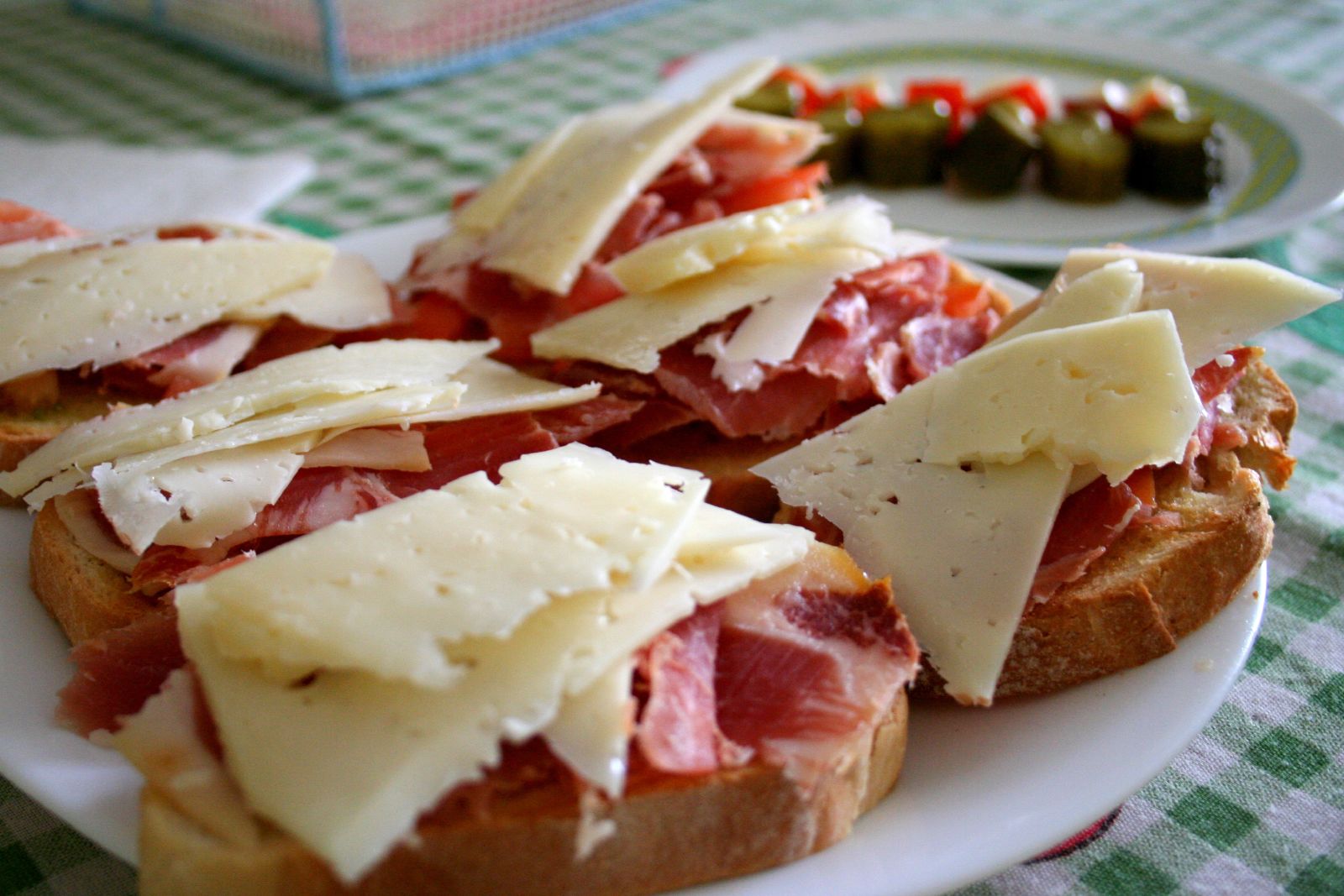
I mentioned tapas in our blog only the other day, when I declared it to be one of the most civilised parts of buying a drink here in Spain – nearly every glass that you buy will be accompanied by some small dish to ‘picar’ – maybe a few olives, perhaps a few potato chips, or maybe even something more elaborate served hot or cold – but always free. Apart from this there are many bars that offer an extensive tapas menu, and these can comprise almost anything, and often will vary from region to region. Perhaps the most common tapa of all would be a simple platter of jamon or local cheeses.

The actual origin of tapas is one of those tales that is open to conjecture, but the most popular version is that a ‘tapa’ was simply a hunk of bread placed over a glass to keep the flies out. The word tapa literally means ‘cover’ or ‘lid’, hence the term ‘tapas’ was born. Original tapas were traditionally the most simple items, that required the minimum of preparation. In the south of Spain for example, a fino sherry would possibly be served with a small dish of almonds, fried in olive oil, sprinkled with salt and served whilst still warm, or perhaps a manzanilla served with a few thin slices of Manchego cheese……. delicious! These days however, tapas can be much more elaborate (especially those selected from a menu, that are not given as a free accompaniment), and the only limit to what can be served is really down to the imagination of the chef.

TapasIt’s just another one of those celebrations which has crept up quietly, almost unnoticed – it’s September 29th – World Tapas Day. As celebrations go this is certainly one with great potential, but I’m afraid that I am left wondering to myself, just how many people actually know about it? To be honest I have not noticed any publicity in our region, and only really know about it because I happen to be on the right mailing list. What a shame!

I mentioned tapas in our blog only the other day, when I declared it to be one of the most civilised parts of buying a drink here in Spain – nearly every glass that you buy will be accompanied by some small dish to ‘picar’ – maybe a few olives, perhaps a few potato chips, or maybe even something more elaborate served hot or cold – but always free. Apart from this there are many bars that offer an extensive tapas menu, and these can comprise almost anything, and often will vary from region to region. Perhaps the most common tapa of all would be a simple platter of jamon or local cheeses.

The actual origin of tapas is one of those tales that is open to conjecture, but the most popular version is that a ‘tapa’ was simply a hunk of bread placed over a glass to keep the flies out. The word tapa literally means ‘cover’ or ‘lid’, hence the term ‘tapas’ was born. Original tapas were traditionally the most simple items, that required the minimum of preparation. In the south of Spain for example, a fino sherry would possibly be served with a small dish of almonds, fried in olive oil, sprinkled with salt and served whilst still warm, or perhaps a manzanilla served with a few thin slices of Manchego cheese……. delicious! These days however, tapas can be much more elaborate (especially those selected from a menu, that are not given as a free accompaniment), and the only limit to what can be served is really down to the imagination of the chef.

Do you want fries with that?

April 26th, 2013 | Food & Wine

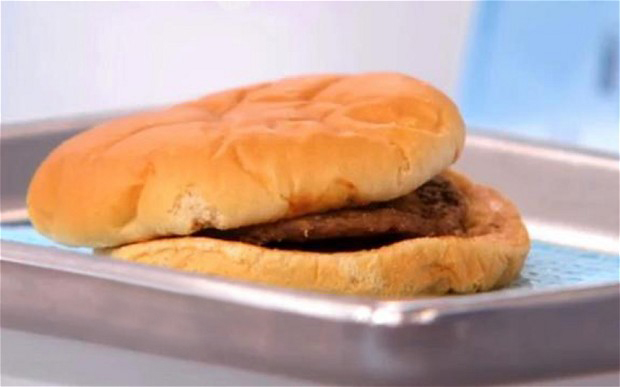
BurgerHave you ever thought that there are just too many experts? Too many studies advising that we should do this or eat that? This is good for you and this is bad for you etc., etc…..  Sometimes I feel like shouting “Stop”, and then just carry on by using my own judgement and common sense. A bit of everything but ‘in moderation’ would seem like the best idea to me.

I have to confess that one of the latest studies made me smile, and I had absolutely no idea when I saw it that it had been commissioned here in Spain. Apparently, according to Spanish ‘experts’, eating to much fast food will make you depressed. Burgers, hot dogs, pizza, doughnuts and croissants can all help to make you feel ‘down’. Forgive me for saying but this seems hardly surprising, and do you really have to be an expert to come up with that conclusion? They continue by adding that people who eat too much fast food are likely to have other bad habits as well. Of course it could simply be that by eating unhealthy food and putting on a bit of excess weight then this could also be a contributory factor.

Anyway, in order to make this post a little more relevant to our line of work, there is the tale of another group of scientists in Chicago who have discovered that drinking to excess can either make you happy, or perhaps even make you sad. Believe me, this isn’t a joke. Although sometimes described as a depressant, alcohol can actually produce a mixture of either stimulant or sedative effects, with some people treating it as a social lubricant whilst others see it as a potential ‘downer’. Again, I don’t claim to be an expert, but I think I could have quite easily worked that out for myself. They go on to say that the way it affects you is all down to your individual genetic make-up, and their ‘discovery’ could explain why some drinkers become angry and upset if they get intoxicated while others become merry and silly.

I guess that the conclusion we should draw from these two most ‘enlightening’ studies is – don’t use a bottle and a half of cab-merlot to wash down your triple cheese burger and double fries – it might be bad for your health (mental or otherwise).

BurgerHave you ever thought that there are just too many experts? Too many studies advising that we should do this or eat that? This is good for you and this is bad for you etc., etc…..  Sometimes I feel like shouting “Stop”, and then just carry on by using my own judgement and common sense. A bit of everything but ‘in moderation’ would seem like the best idea to me.

I have to confess that one of the latest studies made me smile, and I had absolutely no idea when I saw it that it had been commissioned here in Spain. Apparently, according to Spanish ‘experts’, eating to much fast food will make you depressed. Burgers, hot dogs, pizza, doughnuts and croissants can all help to make you feel ‘down’. Forgive me for saying but this seems hardly surprising, and do you really have to be an expert to come up with that conclusion? They continue by adding that people who eat too much fast food are likely to have other bad habits as well. Of course it could simply be that by eating unhealthy food and putting on a bit of excess weight then this could also be a contributory factor.

Anyway, in order to make this post a little more relevant to our line of work, there is the tale of another group of scientists in Chicago who have discovered that drinking to excess can either make you happy, or perhaps even make you sad. Believe me, this isn’t a joke. Although sometimes described as a depressant, alcohol can actually produce a mixture of either stimulant or sedative effects, with some people treating it as a social lubricant whilst others see it as a potential ‘downer’. Again, I don’t claim to be an expert, but I think I could have quite easily worked that out for myself. They go on to say that the way it affects you is all down to your individual genetic make-up, and their ‘discovery’ could explain why some drinkers become angry and upset if they get intoxicated while others become merry and silly.

I guess that the conclusion we should draw from these two most ‘enlightening’ studies is – don’t use a bottle and a half of cab-merlot to wash down your triple cheese burger and double fries – it might be bad for your health (mental or otherwise).

Monthly Archives

Categories

ARE YOU OF LEGAL AGE? This site is intended for those of legal drinking age. By entering, you confirm that you are of legal drinking age in the country where this site is being accessed. ¿ERES MAYOR DE EDAD? Este sitio está destinado a personas en edad legal para beber alcohol. Al ingresar, confirma que tiene la edad legal para beber en el país donde se accede a este sitio.