

Archive for ‘Food & Wine’

Cheese and (white) wine

December 30th, 2011 | Food & Wine

At the end of your Christmas meal (or any good meal for that matter) it could be time to break out the cheeseboard, accompanied by a good glass of red wine….. but then again, red wine might be the wrong choice!

Professional tasters are now saying that the so-called ‘experts’ have been getting it wrong for years. To continue with a red wine after the main course is not necessarily the best advice, as it’s possible that it will simply dominate all but the very strongest of cheeses. Apparently white wine is much more versatile and will actually compliment a much wider range of cheese. The creaminess of many varieties such as camembert and  brie are simply drowned out and overpowered by the tannin in red wines – an opinion that I have already voiced on this blog some time ago.

Sweet white wine such as Sauternes are perfect with blue cheeses such as roquefort, as the flavour enhances its saltiness, in the same way that the fresh, acidic taste of albariño offers a counterpoint to the tangy nuttiness of a parmigiano-reggiano. The grassy, mineral flavours of a lighter style of sauvignon blanc (or again our albariño), can also deliver beautiful flavours when matched with goats’ cheese. It is advised however, that oaked white wines should generally be avoided altogether with cheese.

Red wine can still be served with the cheese course, but you will need to invest in an older (and usually more expensive) wine, such as an older Rioja, as time will have softened the flavours of the tannin. But it will still need to be served with a stronger flavoured cheese such as cheddar. Port and stilton can also remain on the menu but instead of the widespread ruby ports, we are advised to try the lighter style of tawny.

At the same time the wine professionals tell us that some whites can also be considered for foods traditionally matched with reds, such as venison or wild boar……. Of course the ideal solution is to simply stick with a good bottle of Albariño for the whole meal!

At the end of your Christmas meal (or any good meal for that matter) it could be time to break out the cheeseboard, accompanied by a good glass of red wine….. but then again, red wine might be the wrong choice!

Professional tasters are now saying that the so-called ‘experts’ have been getting it wrong for years. To continue with a red wine after the main course is not necessarily the best advice, as it’s possible that it will simply dominate all but the very strongest of cheeses. Apparently white wine is much more versatile and will actually compliment a much wider range of cheese. The creaminess of many varieties such as camembert and  brie are simply drowned out and overpowered by the tannin in red wines – an opinion that I have already voiced on this blog some time ago.

Sweet white wine such as Sauternes are perfect with blue cheeses such as roquefort, as the flavour enhances its saltiness, in the same way that the fresh, acidic taste of albariño offers a counterpoint to the tangy nuttiness of a parmigiano-reggiano. The grassy, mineral flavours of a lighter style of sauvignon blanc (or again our albariño), can also deliver beautiful flavours when matched with goats’ cheese. It is advised however, that oaked white wines should generally be avoided altogether with cheese.

Red wine can still be served with the cheese course, but you will need to invest in an older (and usually more expensive) wine, such as an older Rioja, as time will have softened the flavours of the tannin. But it will still need to be served with a stronger flavoured cheese such as cheddar. Port and stilton can also remain on the menu but instead of the widespread ruby ports, we are advised to try the lighter style of tawny.

At the same time the wine professionals tell us that some whites can also be considered for foods traditionally matched with reds, such as venison or wild boar……. Of course the ideal solution is to simply stick with a good bottle of Albariño for the whole meal!

The end of an era?

December 2nd, 2011 | Food & Wine

Coming from the North of England as I do, one of the staples of my diet as a boy was Fish & Chips. Not that my family would eat them on a daily basis, but perhaps once a week, and nearly always on a Friday – it was a sort of tradition. In those days it was not that expensive, and I clearly remember that chips, for example, could be bought for a few pennies, and that the fish on offer was nearly always cod. The other, most significant feature of a Fish & Chip supper was the wrapping – to carry your meal home from the shop, and to help keep it warm, it was always covered with a layer of greaseproof paper and then completely swathed in old newspapers! (Today’s hygiene inspectors would, no doubt, be handing out fines, left, right and centre)

As you can see from the photo – newspaper has been replaced by polystyrene, and they even provide a plastic fork! In my era it was always newspaper and eating with fingers (this may sound a bit crude and uncivilised, but it sure tasted good!)

So the reason for today’s story is the shocking news that the world famous Harry Ramsden’s chip shop in Guiseley, near Leeds, could be about to close. A ‘cathedral’ of Fish & Chips, which traditionally had a permanent queue at the restaurant door, was built in 1931, replacing a small wooden hut where Ramsden started frying in 1928. He chose his site at the junction of two roads leading from Leeds and Bradford to the Yorkshire Dales. His business made the Guinness Book of Records when seating reached 250 and made the building the largest chippy in the world. In 1952 Ramsden celebrated the restaurant’s 21st anniversary by serving 10,000 portions in one single day.

Unfortunately, a series of takeovers and franchises diluted the unique atmosphere, and to be brutally honest, the quality also plummeted, so much so that the queues have long since dried up. Now the writing is on the wall, and the doors could close later this month…..

This tale might not seem completely relevant to our wine business (except that Albariño does go well with fish), but even so, there are still lessons to be learned for any small business – biggest does not always mean best, and maintaining quality should always be paramount.

Coming from the North of England as I do, one of the staples of my diet as a boy was Fish & Chips. Not that my family would eat them on a daily basis, but perhaps once a week, and nearly always on a Friday – it was a sort of tradition. In those days it was not that expensive, and I clearly remember that chips, for example, could be bought for a few pennies, and that the fish on offer was nearly always cod. The other, most significant feature of a Fish & Chip supper was the wrapping – to carry your meal home from the shop, and to help keep it warm, it was always covered with a layer of greaseproof paper and then completely swathed in old newspapers! (Today’s hygiene inspectors would, no doubt, be handing out fines, left, right and centre)

As you can see from the photo – newspaper has been replaced by polystyrene, and they even provide a plastic fork! In my era it was always newspaper and eating with fingers (this may sound a bit crude and uncivilised, but it sure tasted good!)

So the reason for today’s story is the shocking news that the world famous Harry Ramsden’s chip shop in Guiseley, near Leeds, could be about to close. A ‘cathedral’ of Fish & Chips, which traditionally had a permanent queue at the restaurant door, was built in 1931, replacing a small wooden hut where Ramsden started frying in 1928. He chose his site at the junction of two roads leading from Leeds and Bradford to the Yorkshire Dales. His business made the Guinness Book of Records when seating reached 250 and made the building the largest chippy in the world. In 1952 Ramsden celebrated the restaurant’s 21st anniversary by serving 10,000 portions in one single day.

Unfortunately, a series of takeovers and franchises diluted the unique atmosphere, and to be brutally honest, the quality also plummeted, so much so that the queues have long since dried up. Now the writing is on the wall, and the doors could close later this month…..

This tale might not seem completely relevant to our wine business (except that Albariño does go well with fish), but even so, there are still lessons to be learned for any small business – biggest does not always mean best, and maintaining quality should always be paramount.

The best food book in the world?

September 24th, 2011 | Food & Wine

Modernist Cuisine is no ordinary cook book, indeed it is almost a work of art. Six volumes, extending to some 2,438 pages and weighing in at some 20kg (44lbs), it should perhaps be described more as a food encyclopedia, covering every aspect of food and its preparation.

As you may know I have always been a bit of a ‘foodie’, perhaps even a frustrated chef – I love pottering in the kitchen. Obviously there is a very close relationship between food and wine, and I know for a fact that the majority of wine professionals are also great food connoisseurs. My collection of cookery books is possibly even greater than that of wine books, and this latest addition to my collection is certainly the jewel in the crown.

If you’re looking for a recipe book, then this is probably not for you, but if you simply want to learn more about the science of food and different cooking menthods, then this is a work without equal. The photography and quality of prints is simply stunning, but I have to warn you that it comes with a hefty price tag. So start saving and put your order in now – my copy, that arrived earlier this week, was ordered in May!

Modernist Cuisine is no ordinary cook book, indeed it is almost a work of art. Six volumes, extending to some 2,438 pages and weighing in at some 20kg (44lbs), it should perhaps be described more as a food encyclopedia, covering every aspect of food and its preparation.

As you may know I have always been a bit of a ‘foodie’, perhaps even a frustrated chef – I love pottering in the kitchen. Obviously there is a very close relationship between food and wine, and I know for a fact that the majority of wine professionals are also great food connoisseurs. My collection of cookery books is possibly even greater than that of wine books, and this latest addition to my collection is certainly the jewel in the crown.

If you’re looking for a recipe book, then this is probably not for you, but if you simply want to learn more about the science of food and different cooking menthods, then this is a work without equal. The photography and quality of prints is simply stunning, but I have to warn you that it comes with a hefty price tag. So start saving and put your order in now – my copy, that arrived earlier this week, was ordered in May!


More expensive than albariño!

August 1st, 2011 | Food & Wine

I will start by confessing that the most expensive bottle of wine that I have ever bought in a restaurant, in my entire life, was a Château d’Yquem – but not the 1811 vintage I hasten to add. I’m afraid to say that it was one of those occassions where cost of the wine far outstripped the cost of the food, but at least I do have a very clear recollection of the lunch in question….

About a week ago a French collector bought a bottle of d’Yquem 1811 for £75,000 (USD122,600) in a private sale at the Ritz Hotel in London, and although it is claimed that this is the most expensive wine bought privately, this is not strictly true – unless you exclude wine auctions. At auction the most expensive bottle was a Château Cheval Blanc 1947 that was sold at Christie’s last year for £192,000 (USD314,000). So to say that the d’Yquem was the most expensive, it twisting the truth just a little.

The collector who bought this latest wine (bottled at the time of the Emperor Napoleon) intends to drink it in six years time at a dinner in Paris. In the meantime he plans to put it on display at his restaurant in Bali – I do hope that it travels well. From my own experience I have known bottles that did not travel well across the English Channel, never mind to the other side of the world!

Very old bottles like this are frequently re-corked by the producer, and I have to assume that on the last occassion the wine must have been tasted too. About 12 years ago it was described as being like liquid Crème Brulée.

I will start by confessing that the most expensive bottle of wine that I have ever bought in a restaurant, in my entire life, was a Château d’Yquem – but not the 1811 vintage I hasten to add. I’m afraid to say that it was one of those occassions where cost of the wine far outstripped the cost of the food, but at least I do have a very clear recollection of the lunch in question….

About a week ago a French collector bought a bottle of d’Yquem 1811 for £75,000 (USD122,600) in a private sale at the Ritz Hotel in London, and although it is claimed that this is the most expensive wine bought privately, this is not strictly true – unless you exclude wine auctions. At auction the most expensive bottle was a Château Cheval Blanc 1947 that was sold at Christie’s last year for £192,000 (USD314,000). So to say that the d’Yquem was the most expensive, it twisting the truth just a little.

The collector who bought this latest wine (bottled at the time of the Emperor Napoleon) intends to drink it in six years time at a dinner in Paris. In the meantime he plans to put it on display at his restaurant in Bali – I do hope that it travels well. From my own experience I have known bottles that did not travel well across the English Channel, never mind to the other side of the world!

Very old bottles like this are frequently re-corked by the producer, and I have to assume that on the last occassion the wine must have been tasted too. About 12 years ago it was described as being like liquid Crème Brulée.

The drinks are on Luis

July 30th, 2011 | Food & Wine

I wasn’t quite sure whether today’s post should be made on our blog page or under the recipe heading on our new main menu. In the end I decided that the recipe page should be saved for food ideas that originate from here in Galicia, either traditional or modern interpretations of the traditional.

The featured fish dish was taken from last weekend’s Daily Telegraph colour supplement – to give it it’s full title the recipe is Seared Halibut with grilled and roasted vegetables and romesco sauce – quite a mouthful in more ways than one. Details of the recipe and the full article can be found here.

The real significance of this post is the recommended wine – our very own Castro Martin, described as follows: “Albariño comes in a number of guises, from fresh and salty through to peachy and textured. This falls into the latter camp, which is ideal as its gorgeous, aromatic, creamy nuances are wonderful with a dense fish such as halibut. Just as vital is the variety’s signature tongue-tingling lift of acid to parry the romesco sauce”.

You may notice, if you look at the original article, a bit of a ‘typo’ – instead of Albariño ‘Sobre Lias’ (on the lees), the Telegraph have mistakenly named our wine Albariño ‘Sobre Luis’ (on Luis)!


I wasn’t quite sure whether today’s post should be made on our blog page or under the recipe heading on our new main menu. In the end I decided that the recipe page should be saved for food ideas that originate from here in Galicia, either traditional or modern interpretations of the traditional.

The featured fish dish was taken from last weekend’s Daily Telegraph colour supplement – to give it it’s full title the recipe is Seared Halibut with grilled and roasted vegetables and romesco sauce – quite a mouthful in more ways than one. Details of the recipe and the full article can be found here.

The real significance of this post is the recommended wine – our very own Castro Martin, described as follows: “Albariño comes in a number of guises, from fresh and salty through to peachy and textured. This falls into the latter camp, which is ideal as its gorgeous, aromatic, creamy nuances are wonderful with a dense fish such as halibut. Just as vital is the variety’s signature tongue-tingling lift of acid to parry the romesco sauce”.

You may notice, if you look at the original article, a bit of a ‘typo’ – instead of Albariño ‘Sobre Lias’ (on the lees), the Telegraph have mistakenly named our wine Albariño ‘Sobre Luis’ (on Luis)!


Tea and toast

July 2nd, 2011 | Food & Wine

There is an old saying that goes “a little of what you fancy does you good”, and to prove a point I woke up the other day with a craving for some thick cut marmalade on a slice of hot buttered toast. Fortunately I had all the ingredients in my fridge and cupboards, and savoured every mouthful, accompanied by a mug of piping hot Yorkshire tea. It’s sometimes the really simple pleasures that manage to hit the spot. Another such example – a rare fillet steak with a thick, freshly-made bearnaise sauce. Simple, but truly a match made in heaven….

Fortunately we are all have different tastes and enjoy different things, so when I used to get asked “which wine should I drink?” my reply was always the same – drink the wine that you enjoy.

Referring back to my post of a week or two ago about food and wine matching, I was lucky enough to dine in a good restaurant in Vigo yesterday. They had a special French promotion, which is highly unusual in Spain and so I jumped at the chance of eating (and drinking) some old, familiar favourites. An excellent Chablis 1er Cru Fourchaume 2008 from probably the best co-operative that I know (anywhere in the world) – La Chablisienne, and a drop of Sauternes, Chateau d’Arche, with dessert.

The Chablis was super dry, racy and stylish, with a shot of steely gunflint running through it. People often talk about the influence of the soil on wine, and I swear that in this case, I could actually taste the calcareous kimmerigian clay and chalk that dominates the region. An absolute joy with the shellfish that I was eating. It’s really easy to get excited about wine when a humble meal somehow becomes more memorable for all the right reasons.

Wine transformed

June 10th, 2011 | Food & Wine

I sometimes write about wine and food pairing, quite simply as I am fascinated by the subject. It’s true that there is a lot of snobbery associated with this subject, and quite rightly so. Some of the old fashioned, traditional views just don’t stack up, such as drinking red wine with fish, which can be perfectly acceptable given the right combination….. And thereby lies the secret…. the right combination.
There is no doubt that some of the old rules do still apply, and using them simply as a general guideline can sometimes help steer you towards finding new food and wine matches – it’s just a matter of trial and error, and believe me there will be a lot of errors along the way!
Some combinations just don’t work, and can clash very badly, but the most important thing to remember is that it is actually your perception of the wine that will be modified, and doesn’t necessarily mean that the wine by itself is poor. I read only a day or so ago about a serious taster who assessed some wines at a tasting, marked them down as being pretty mediocre, but then had to amend his score when he enjoyed the very same wines with food – the wines had been transformed.
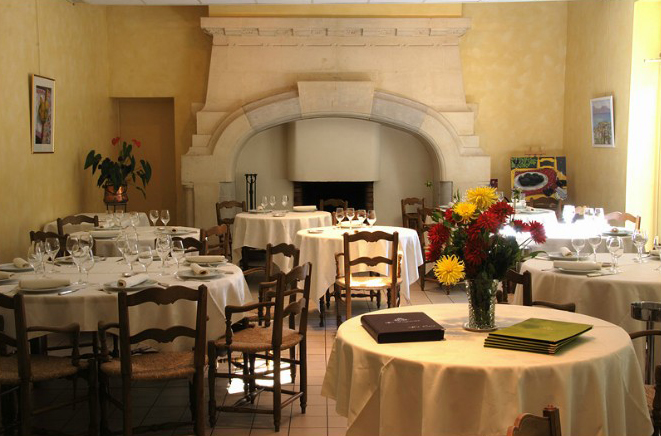
I can quote a very good example of my own from many years ago. I was lucky enough to be eating at the Restaurant Beaugraviere in Mondragon, near Orange at the southern end of the Rhone Valley. It’s a restaurant that specialises in truffles, and in those days was not quite as expensive as it is now (the dining room, shown in my picture has also been upgraded quite a lot). We selected one of their speciality dishes of scrambled egg with truffle, and had pretty much given up on the idea of finding a suitable wine – eggs as we know are notoriously difficult to match. The sommelier however, suggested that we try an old white Chateauneuf-du-Pape (from my fading memory I think it might have been a Chateau Rayas Blanc 1983, but I could be wrong). When we were invited to sample the wine before serving, it came out of the bottle as a heavily coloured rather tired looking wine, that was seriously starting to lose it’s fruit. We were not really impressed, but opted to persevere – and boy, what a transformation! With the eggs the wine was just sensational, which obviously explains why this experience has been etched into my memory.
Just to finish, I once had the very opposite experience with a beef dish, that I decided to enjoy with a good Red Burgundy. The beef was served with a jus, a reduction of the beef stock made with a drop of red wine, giving it a very strong umami flavour. In theory it should have worked – so why was I getting such a harsh, bitter, metallic sensation in my mouth? When I made a few enquiries I finally discovered that the pureed potatoes had been made with a touch of horseradish sauce! Once again my wine had been transformed, but this time not in a good way.
We live and learn.

I sometimes write about wine and food pairing, quite simply as I am fascinated by the subject. It’s true that there is a lot of snobbery associated with this subject, and quite rightly so. Some of the old fashioned, traditional views just don’t stack up, such as drinking red wine with fish, which can be perfectly acceptable given the right combination….. And thereby lies the secret…. the right combination.
There is no doubt that some of the old rules do still apply, and using them simply as a general guideline can sometimes help steer you towards finding new food and wine matches – it’s just a matter of trial and error, and believe me there will be a lot of errors along the way!
Some combinations just don’t work, and can clash very badly, but the most important thing to remember is that it is actually your perception of the wine that will be modified, and doesn’t necessarily mean that the wine by itself is poor. I read only a day or so ago about a serious taster who assessed some wines at a tasting, marked them down as being pretty mediocre, but then had to amend his score when he enjoyed the very same wines with food – the wines had been transformed.
I can quote a very good example of my own from many years ago. I was lucky enough to be eating at the Restaurant Beaugraviere in Mondragon, near Orange at the southern end of the Rhone Valley. It’s a restaurant that specialises in truffles, and in those days was not quite as expensive as it is now (the dining room, shown in my picture has also been upgraded quite a lot). We selected one of their speciality dishes of scrambled egg with truffle, and had pretty much given up on the idea of finding a suitable wine – eggs as we know are notoriously difficult to match. The sommelier however, suggested that we try an old white Chateauneuf-du-Pape (from my fading memory I think it might have been a Chateau Rayas Blanc 1983, but I could be wrong). When we were invited to sample the wine before serving, it came out of the bottle as a heavily coloured rather tired looking wine, that was seriously starting to lose it’s fruit. We were not really impressed, but opted to persevere – and boy, what a transformation! With the eggs the wine was just sensational, which obviously explains why this experience has been etched into my memory.
Just to finish, I once had the very opposite experience with a beef dish, that I decided to enjoy with a good Red Burgundy. The beef was served with a jus, a reduction of the beef stock made with a drop of red wine, giving it a very strong umami flavour. In theory it should have worked – so why was I getting such a harsh, bitter, metallic sensation in my mouth? When I made a few enquiries I finally discovered that the pureed potatoes had been made with a touch of horseradish sauce! Once again my wine had been transformed, but this time not in a good way.
We live and learn.

Monthly Archives

Categories

ARE YOU OF LEGAL AGE? This site is intended for those of legal drinking age. By entering, you confirm that you are of legal drinking age in the country where this site is being accessed. ¿ERES MAYOR DE EDAD? Este sitio está destinado a personas en edad legal para beber alcohol. Al ingresar, confirma que tiene la edad legal para beber en el país donde se accede a este sitio.