

It’s a miracle!

March 21st, 2014 | Odds & Sods

Water to wineBefore I start writing I should point out that it’s not quite April Fool’s day as yet, simply because today’s news is of a new gadget coming to the market that claims to turn water into wine! This new contraption will not come cheap with a price tag of around $499, and then of course the cost of the “ingredients” has to be added to this. By adding grape concentrate and yeast, it apparently takes three days to actually ferment the mixture into wine, at a finished cost of about $2 per bottle. The concentrates will be available as several different varietals, including Cabernet Sauvignon and Chardonnay from Napa Valley, a Pinot Noir from Oregon, a Tuscan blend from Italy, Sauvignon Blanc from Sonoma, plus a red and white from Burgundy.

The technology enclosed within this condiment shaped machine is actually quite impressive,  comprising a fermentation chamber that uses electrical sensors, transducers, heaters and pumps to provide a controlled environment for the fermentation. So this really appears to be wine making in miniature…..  In addition there is also the inevitable phone App that alerts the user when the fermentation has finished and the wine is ready to drink.

The California based makers say the finished product will be up to the standard of a $20 bottle of wine, but as I always say, the proof will be in the tasting – I prefer to reserve my judgement at least until we see some consumer reviews.

 Now where did I put my loaves and fishes?

Water to wineBefore I start writing I should point out that it’s not quite April Fool’s day as yet, simply because today’s news is of a new gadget coming to the market that claims to turn water into wine! This new contraption will not come cheap with a price tag of around $499, and then of course the cost of the “ingredients” has to be added to this. By adding grape concentrate and yeast, it apparently takes three days to actually ferment the mixture into wine, at a finished cost of about $2 per bottle. The concentrates will be available as several different varietals, including Cabernet Sauvignon and Chardonnay from Napa Valley, a Pinot Noir from Oregon, a Tuscan blend from Italy, Sauvignon Blanc from Sonoma, plus a red and white from Burgundy.

The technology enclosed within this condiment shaped machine is actually quite impressive,  comprising a fermentation chamber that uses electrical sensors, transducers, heaters and pumps to provide a controlled environment for the fermentation. So this really appears to be wine making in miniature…..  In addition there is also the inevitable phone App that alerts the user when the fermentation has finished and the wine is ready to drink.

The California based makers say the finished product will be up to the standard of a $20 bottle of wine, but as I always say, the proof will be in the tasting – I prefer to reserve my judgement at least until we see some consumer reviews.

 Now where did I put my loaves and fishes?

St Patrick’s Day Marshmallow!

March 15th, 2014 | Fiestas

Guiness MarshmallowsMonday 17th March is St Patrick’s Day, and no doubt will be celebrated around the world with the consumption of millions of pints of Guiness – indeed, I might even enjoy a can of the black stuff myself, as I always have one or two chilling in my fridge. Of course, it won’t be the same as drinking one in the spectacular Gravity Bar at the Storehouse overlooking Dublin, but at least, owing to the ingenious ‘floating widget’ system in the can, I will have a good ‘creamy’ head on my pint. (It’s all to do with dissolved Nitrogen that produces much smaller bubbles in the beer when opened).

Anyway, today’s post is not really about beer, but is actually about marshmallows! If you can’t sneak a beer into your office to celebrate St Patrick’s Day on Monday, then as an alternative you could simply enjoy Guiness in the form of a marshmallow instead – sweetened with vanilla extract and then rolled in a coating of crushed pretzel! Sounds delicious…… I don’t think. Of course I haven’t tasted them, so I could be completely wrong, but of all the foods that you could flavour with Guiness, then marshmallow would probably not be at the top of my list. I have however, been known to open the odd can to add flavour my beef casseroles or steak pie. Indeed, the last time that I used Guiness for cooking I found myself finishing off the remnants of the can at 8 o’clock in the morning. I just don’t like to see good beer go to waste – at least that’s my story and I’m sticking to it.

Guiness MarshmallowsMonday 17th March is St Patrick’s Day, and no doubt will be celebrated around the world with the consumption of millions of pints of Guiness – indeed, I might even enjoy a can of the black stuff myself, as I always have one or two chilling in my fridge. Of course, it won’t be the same as drinking one in the spectacular Gravity Bar at the Storehouse overlooking Dublin, but at least, owing to the ingenious ‘floating widget’ system in the can, I will have a good ‘creamy’ head on my pint. (It’s all to do with dissolved Nitrogen that produces much smaller bubbles in the beer when opened).

Anyway, today’s post is not really about beer, but is actually about marshmallows! If you can’t sneak a beer into your office to celebrate St Patrick’s Day on Monday, then as an alternative you could simply enjoy Guiness in the form of a marshmallow instead – sweetened with vanilla extract and then rolled in a coating of crushed pretzel! Sounds delicious…… I don’t think. Of course I haven’t tasted them, so I could be completely wrong, but of all the foods that you could flavour with Guiness, then marshmallow would probably not be at the top of my list. I have however, been known to open the odd can to add flavour my beef casseroles or steak pie. Indeed, the last time that I used Guiness for cooking I found myself finishing off the remnants of the can at 8 o’clock in the morning. I just don’t like to see good beer go to waste – at least that’s my story and I’m sticking to it.

Taste and taste again

March 9th, 2014 | Tasting

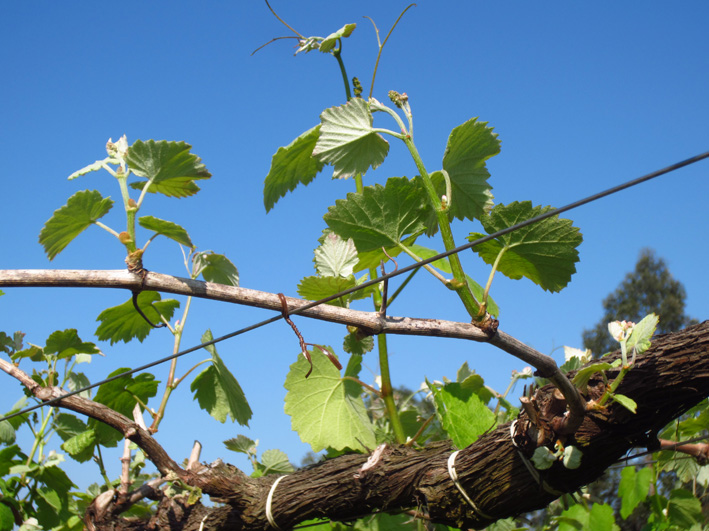
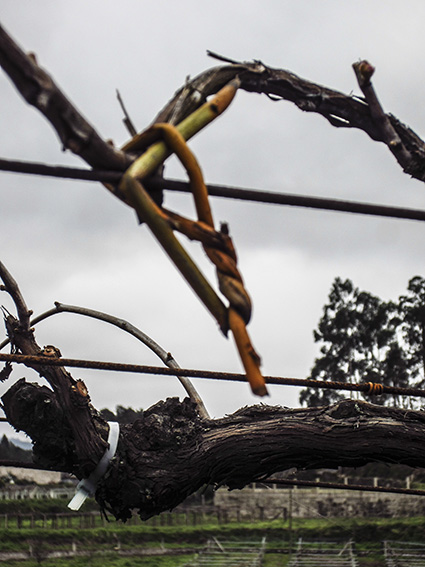
Tasting2It’s probably fair to say that there’s not much happening in the Bodega at this time of year. Of course our team are busy out in the vineyards, as they approach the end of the pruning – and I should add that this year in particular, they deserve a medal. Pruning can be a backbreaking job at the best of times, but with torrential rain nearly all winter, this year has been a nightmare for them. Please don’t forget that with our pergola training system to prune overhead vines means facing skyward – imagine all that rain beating down directly into your face!

Meanwhile, back in the cellar, one of the most important, ongoing jobs that we do, is tasting the tanks. Our 2013 albariños are all still lying, undisturbed on their lees and have to be monitored at very regular intervals. When we age our wines on the lees, there is absolutely no hard and fast rule as to how long this process should take – normally it will be a minimum of at least 5 months, but this can actually be much longer, depending on the wine and the vintage. The object of tasting is to ensure that the lees are clean and not tainted – we are really looking for any signs of ‘reduction’ caused by the sulphur compounds that are formed in the wine during fermentation. Once the available nitrogen in a must or grape juice is exhausted, the yeast will break down and form compounds such as hydrogen sulphide, which we all know as ‘bad egg gas’. Apart from the eggs, a vast number of different sulphur compounds can taint a wine with all manner of unappealing characteristics such as onion, garlic, cabbage and burnt rubber, which is why we have to keep a sharp eye (or keen nose) to make sure that the wine remains clean. We then chose the optimum moment to ‘rack’ the wine into clean tanks, discarding the unwanted yeast deposits.

Tasting2It’s probably fair to say that there’s not much happening in the Bodega at this time of year. Of course our team are busy out in the vineyards, as they approach the end of the pruning – and I should add that this year in particular, they deserve a medal. Pruning can be a backbreaking job at the best of times, but with torrential rain nearly all winter, this year has been a nightmare for them. Please don’t forget that with our pergola training system to prune overhead vines means facing skyward – imagine all that rain beating down directly into your face!

Meanwhile, back in the cellar, one of the most important, ongoing jobs that we do, is tasting the tanks. Our 2013 albariños are all still lying, undisturbed on their lees and have to be monitored at very regular intervals. When we age our wines on the lees, there is absolutely no hard and fast rule as to how long this process should take – normally it will be a minimum of at least 5 months, but this can actually be much longer, depending on the wine and the vintage. The object of tasting is to ensure that the lees are clean and not tainted – we are really looking for any signs of ‘reduction’ caused by the sulphur compounds that are formed in the wine during fermentation. Once the available nitrogen in a must or grape juice is exhausted, the yeast will break down and form compounds such as hydrogen sulphide, which we all know as ‘bad egg gas’. Apart from the eggs, a vast number of different sulphur compounds can taint a wine with all manner of unappealing characteristics such as onion, garlic, cabbage and burnt rubber, which is why we have to keep a sharp eye (or keen nose) to make sure that the wine remains clean. We then chose the optimum moment to ‘rack’ the wine into clean tanks, discarding the unwanted yeast deposits.

Lacón con grelos en Cuntis

March 5th, 2014 | Fiestas

Lacon con grelosAnother day, another food festival, but same old problem – poor advertising photography! Maybe, it’s just me, but I don’t really find this picture very appealing and it certainly wouldn’t attract me into joining the party. Whether you actually like lacón con grelos is another thing, but suffice to say that here in Galicia it s considered a bit of a local delicacy. The lacon (cured ham) I can just about manage to eat, but the grelos (the leaves of a turnip) I find quite stringy and bitter. It’s all just a matter of personal taste.

By the way, just in case you were wondering, Cuntis is the place where the festival is being held. I will not be rushing there…..

Lacon con grelosAnother day, another food festival, but same old problem – poor advertising photography! Maybe, it’s just me, but I don’t really find this picture very appealing and it certainly wouldn’t attract me into joining the party. Whether you actually like lacón con grelos is another thing, but suffice to say that here in Galicia it s considered a bit of a local delicacy. The lacon (cured ham) I can just about manage to eat, but the grelos (the leaves of a turnip) I find quite stringy and bitter. It’s all just a matter of personal taste.

By the way, just in case you were wondering, Cuntis is the place where the festival is being held. I will not be rushing there…..

Is that Spring on the horizon?

March 3rd, 2014 | Weather

SpringAfter more than two months of extreme weather (the rain is still lashing against our window as I write this), we have our fingers crossed that a change could be on the way. I feel that I should be apologising for the number of posts that I have made about the weather, but clearly, this can have a knock-on effect for our grape production later in the year. For example, I think it would be fair to say that there will be no shortage of groundwater in 2014! 

I was relieved to see on several different weather websites that it looks like we might have a dry, sunny period arriving by the middle of this week. They are also predicting a significant step up in temperatures, from the current average of 11-12°C (52-54°F), to a new level of 19-20°C (66-68°F). Now that our pruning is nearing an end, such a temperature change would certainly stimulate some growth activity in our vines.

Being located where we are, adjacent to the Ocean, I am still very aware that forecasts can change rapidly, and so all we can do for now is to wait, and hope that they are correct. I’m not sure that I can stand another weekend of almost non-stop rain – I thought that I had escaped all this when I moved to Spain from the UK!


SpringAfter more than two months of extreme weather (the rain is still lashing against our window as I write this), we have our fingers crossed that a change could be on the way. I feel that I should be apologising for the number of posts that I have made about the weather, but clearly, this can have a knock-on effect for our grape production later in the year. For example, I think it would be fair to say that there will be no shortage of groundwater in 2014! 

I was relieved to see on several different weather websites that it looks like we might have a dry, sunny period arriving by the middle of this week. They are also predicting a significant step up in temperatures, from the current average of 11-12°C (52-54°F), to a new level of 19-20°C (66-68°F). Now that our pruning is nearing an end, such a temperature change would certainly stimulate some growth activity in our vines.

Being located where we are, adjacent to the Ocean, I am still very aware that forecasts can change rapidly, and so all we can do for now is to wait, and hope that they are correct. I’m not sure that I can stand another weekend of almost non-stop rain – I thought that I had escaped all this when I moved to Spain from the UK!

Fairtrade fortnight

February 25th, 2014 | International News

Fairtrade‘Fairtrade Fortnight’ runs from 24th February until 9th March – but what exactly is the meaning of Fairtrade? A definition from the official website says “Fairtrade is about better prices, decent working conditions, local sustainability, and fair terms of trade for farmers and workers in the developing world”. A very reasonable premise that deserves our full support. Of course no one, in any country, wants to see workers being exploited, especially when they have no means of fair representation or redress, but I still can’t help but think that the fair trade concept should apply globally, and not only in developing nations. For example, even here, in the so-called mature western economies, farmers and their workers at the very sharp end of our supply chains are still sometimes exploited. We hear stories of dairy farmers being forced to the brink of bankruptcy by having their milk prices continually squeezed by large retail chains – surely this should not be considered as a fair way to do our trade?

Here in the Rias Baixas wine denomination we are always very conscious of our obligation to pay grape growers a fair price, enough to cover their costs and to provide them with a decent living. Unfortunately, during a period of deep recession, we continuously face strong downward pressure on our prices, and inevitably it becomes a fight for survival at almost every level of the supply chain. In the last couple of years I think I am correct in saying that our denomination has lost as many as 40 or 50 of the original 200 wine cellars. Some might say that this is a form of ‘natural selection’ where only the strong have survived, but the sad fact is that there are still many honest, hard-working Galicians (perhaps grape suppliers to the failed bodegas), who will now be struggling to make ends meet. We are also hearing tales of some grape suppliers that are being paid two or three vintages in arrears, or perhaps not at all – hardly an example of ‘fair trade’.

So when we are asked, or even expected to lower our prices in order to compete, then unfortunately, we run the risk of this knock-on effect. Everyone, at every level is being squeezed. Please don’t get me wrong, at Castro Martin we wholeheartedly support the concept of Fairtrade, but I am simply asking the question – where and when does fair trade begin, and at what border does it (or should it) end? 

Fairtrade‘Fairtrade Fortnight’ runs from 24th February until 9th March – but what exactly is the meaning of Fairtrade? A definition from the official website says “Fairtrade is about better prices, decent working conditions, local sustainability, and fair terms of trade for farmers and workers in the developing world”. A very reasonable premise that deserves our full support. Of course no one, in any country, wants to see workers being exploited, especially when they have no means of fair representation or redress, but I still can’t help but think that the fair trade concept should apply globally, and not only in developing nations. For example, even here, in the so-called mature western economies, farmers and their workers at the very sharp end of our supply chains are still sometimes exploited. We hear stories of dairy farmers being forced to the brink of bankruptcy by having their milk prices continually squeezed by large retail chains – surely this should not be considered as a fair way to do our trade?

Here in the Rias Baixas wine denomination we are always very conscious of our obligation to pay grape growers a fair price, enough to cover their costs and to provide them with a decent living. Unfortunately, during a period of deep recession, we continuously face strong downward pressure on our prices, and inevitably it becomes a fight for survival at almost every level of the supply chain. In the last couple of years I think I am correct in saying that our denomination has lost as many as 40 or 50 of the original 200 wine cellars. Some might say that this is a form of ‘natural selection’ where only the strong have survived, but the sad fact is that there are still many honest, hard-working Galicians (perhaps grape suppliers to the failed bodegas), who will now be struggling to make ends meet. We are also hearing tales of some grape suppliers that are being paid two or three vintages in arrears, or perhaps not at all – hardly an example of ‘fair trade’.

So when we are asked, or even expected to lower our prices in order to compete, then unfortunately, we run the risk of this knock-on effect. Everyone, at every level is being squeezed. Please don’t get me wrong, at Castro Martin we wholeheartedly support the concept of Fairtrade, but I am simply asking the question – where and when does fair trade begin, and at what border does it (or should it) end? 

My kingdom for a course!

February 20th, 2014 | National News

CoursesOver recent years many businesses in Spain have been created on the back of subsidies, the vast majority being drawn from the coffers of the European Community. By far the biggest industry to benefit from this was construction…. but that was before the financial crisis kicked in, when not only did the subsidies dry up, but a huge number of construction companies went bust. The problem was that these businesses were simply building for the sake of building – houses, apartment blocks and even airports that were simply not required…. merely to take advantage of the seemingly boundless European wealth. It  has since transpired that many millions of Euros were illicitly syphoned off (probably now secreted in Swiss bank accounts), and so there are at least a few builders, local mayors and politicians who truly cashed in on this ‘European gravy train’.

Anyway, that was a while ago, and, as I mentioned, these subsidies have long since disappeared. So where is the next free money coming from? Where is the next opportunity to cream off a few Euros? The answer? Company training courses!

OK, so it’s not big business like construction, so there’s not to same opportunity to become rich overnight, but there is still the possibility of cashing in by inflating the odd invoice here and there – or so it is alleged (he added hastily, for legal reasons). Subsequently we are now being bombarded by e-mails, encouraging us to send our employees on every type of course you can possibly imagine. If we took advantage of even one or two of the several daily offers that we receive, then we could easily end up with some of the most highly trained employees in Europe.

Naturally, I have applied for the BBC English course…

CoursesOver recent years many businesses in Spain have been created on the back of subsidies, the vast majority being drawn from the coffers of the European Community. By far the biggest industry to benefit from this was construction…. but that was before the financial crisis kicked in, when not only did the subsidies dry up, but a huge number of construction companies went bust. The problem was that these businesses were simply building for the sake of building – houses, apartment blocks and even airports that were simply not required…. merely to take advantage of the seemingly boundless European wealth. It  has since transpired that many millions of Euros were illicitly syphoned off (probably now secreted in Swiss bank accounts), and so there are at least a few builders, local mayors and politicians who truly cashed in on this ‘European gravy train’.

Anyway, that was a while ago, and, as I mentioned, these subsidies have long since disappeared. So where is the next free money coming from? Where is the next opportunity to cream off a few Euros? The answer? Company training courses!

OK, so it’s not big business like construction, so there’s not to same opportunity to become rich overnight, but there is still the possibility of cashing in by inflating the odd invoice here and there – or so it is alleged (he added hastily, for legal reasons). Subsequently we are now being bombarded by e-mails, encouraging us to send our employees on every type of course you can possibly imagine. If we took advantage of even one or two of the several daily offers that we receive, then we could easily end up with some of the most highly trained employees in Europe!

Naturally, I have applied for the BBC English course…

Extreme weather!

February 15th, 2014 | Weather

PulpoPerhaps people outside North America or Northern Europe might not appreciate how bad this winter’s weather has actually been….. so far. For the last month and a half we have been battered by storms on an almost daily basis. For example, the Atlantic coasts of the western Europe are experiencing two or three damaging weather systems per week – there is no time whatsoever to recover before the next storm strikes, and to say that the soil is saturated is something of an understatement. This winter it has almost become the norm to be soaked by the equivalent of a month’s rain within a period of just a few days…. all previous weather records have been completely blown away (almost literally). Experts are now saying that even when this continuous cycle of bad weather is broken it could take months before some of the floods completely subside. 

Only yesterday morning I was on my way back from the denomination office in Pontevedra when I had to stop my car at the side of the road – the rain on my windscreen was so intense that I simply couldn’t see the road in front of me, even with my wipers working at full speed. Water replaced tarmac, as the roads turned to rivers. Possibly the most intense rain that I have experienced since I arrived in Spain. When I did eventually arrive back at the bodega there was no power, which in this day and age obviously causes problems, but fortunately the break in supply only lasted about an hour. 

Of course we have no idea what the spring and summer might bring, we simply have our fingers crossed that it will be a good growing season for our vineyards, without too many extremes of weather, but then again, who knows…..

PulpoPerhaps people outside North America or Northern Europe might not appreciate how bad this winter’s weather has actually been….. so far. For the last month and a half we have been battered by storms on an almost daily basis. For example, the Atlantic coasts of the western Europe are experiencing two or three damaging weather systems per week – there is no time whatsoever to recover before the next storm strikes, and to say that the soil is saturated is something of an understatement. This winter it has almost become the norm to be soaked by the equivalent of a month’s rain within a period of just a few days…. all previous weather records have been completely blown away (almost literally). Experts are now saying that even when this continuous cycle of bad weather is broken it could take months before some of the floods completely subside. 

Only yesterday morning I was on my way back from the denomination office in Pontevedra when I had to stop my car at the side of the road – the rain on my windscreen was so intense that I simply couldn’t see the road in front of me, even with my wipers working at full speed. Water replaced tarmac, as the roads turned to rivers. Possibly the most intense rain that I have experienced since I arrived in Spain. When I did eventually arrive back at the bodega there was no power, which in this day and age obviously causes problems, but fortunately the break in supply only lasted about an hour. 

Of course we have no idea what the spring and summer might bring, we simply have our fingers crossed that it will be a good growing season for our vineyards, without too many extremes of weather, but then again, who knows…..

Valentines tipple?

February 13th, 2014 | Fiestas

ValentinesIt would be pretty frivolous of me to suggest that Albariño is the most ideal wine to buy your partner for Valentine’s Day. That distinction should probably be credited to rosé Champagne, and being completely honest, I think that I can understand the reasons why….. There’s always something a bit special about opening a good bottle of fizz on a romantic occasion, and for some reason it is often implied that rosé Champagne is especially favoured by the ladies. This notion however, is probably quite outdated, and in an age of more knowledgeable wine consumers I’m not so sure that it’s entirely true anyway. It could simply be that pink is simply considered to be a more romantic colour? Anyway, suffice to say that on February 14th Champagne will be the preferred choice of many to help woo (or perhaps impress) the woman of their dreams.

Possibly the best way to celebrate this special day is over a candlelit dinner, or failing that, perhaps delivering a nice bouquet of flowers (excluding those from your local gas station or supermarket!). Gifts can be many and varied, but in my opinion stuffed toys or novelty knickers are probably best avoided. One marketing suggestion of a Valentine’s gift that dropped into my mailbox only today was some lovely speech recognition software – just the thing to thrill the lady in your life. My guess is that this, or perhaps a new ironing board cover would be especially well received…… if you happen to be fishing for a divorce!

ValentinesIt would be pretty frivolous of me to suggest that Albariño is the most ideal wine to buy your partner for Valentine’s Day. That distinction should probably be credited to rosé Champagne, and being completely honest, I think that I can understand the reasons why….. There’s always something a bit special about opening a good bottle of fizz on a romantic occasion, and for some reason it is often implied that rosé Champagne is especially favoured by the ladies. This notion however, is probably quite outdated, and in an age of more knowledgeable wine consumers I’m not so sure that it’s entirely true anyway. It could simply be that pink is simply considered to be a more romantic colour? Anyway, suffice to say that on February 14th Champagne will be the preferred choice of many to help woo (or perhaps impress) the woman of their dreams.

Possibly the best way to celebrate this special day is over a candlelit dinner, or failing that, perhaps delivering a nice bouquet of flowers (excluding those from your local gas station or supermarket!). Gifts can be many and varied, but in my opinion stuffed toys or novelty knickers are probably best avoided. One marketing suggestion of a Valentine’s gift that dropped into my mailbox only today was some lovely speech recognition software – just the thing to thrill the lady in your life. My guess is that this, or perhaps a new ironing board cover would be especially well received…… if you happen to be fishing for a divorce!

Selling by variety

February 10th, 2014 | Food & Wine

fruit and vegetable varietyYesterday I ate a tomato that had no taste whatsoever and it started me thinking…… In the wine trade, we make, market and sell wine by variety, so why doesn’t this approach apply to every fruit and vegetable – growing and selling them according to their variety, and more importantly, their flavour. Now I know there will be people who will jump on this apparent generalisation, and I do acknowledge that there are already many shops and supermarkets that clearly advertise both the variety and their provenance, but this is not a worldwide concept.

Imagine for a moment that you walked into your favourite wine shop, and the only way you could identify your selection was by the colour, as though it was assumed that every white wine, and every red wine tasted the same (and that the variety of grape really didn’t matter). This thought brings me neatly back to my tomatoes. Why shouldn’t I be able to walk into my local supermarket and knowingly select the variety of tomato that I like and prefer to buy? Why does it have to be a secret?

Of course, I already know the answer to that question – many fruits and veg are grown simply because they are prolific, and not necessarily because they have the best taste (there is even a variety of tomato called ‘moneymaker’). Now, I am not saying for one moment that we should stop growing these abundant croppers, but I am simply saying help us to identify them, and let us make the choice. As with my wine selections, I for one would not mind paying a few cents extra to buy a fruit or veg that I know I am going to appreciate….. it just makes more sense.

For example, in many countries it is very common to display the category of potato that we buy, depending on whether it is required for boiling, baking or frying etc. – but unfortunately not here in Galicia (ironically a big potato producing area). Yes, I can buy bags that are marked ‘for frying’, ‘for boiling’ etc., but the problem is that I do not agree with their selections! I end up with limp, soggy french fries, or hard, waxy boiled potatoes – I can never find what I really want. Very fortunately, I can at least buy my apples and pears by variety, but nearly everything else is pot luck!

OK, so I’ve had my little rant and got it off my chest, but if you stop to think about it for a moment, why shouldn’t the consumer be able to chose, or at least have more information so that they can make an informed selection? It wouldn’t cost any more to tell us what we’re buying…..

fruit and vegetable varietyYesterday I ate a tomato that had no taste whatsoever and it started me thinking…… In the wine trade, we make, market and sell wine by variety, so why doesn’t this approach apply to every fruit and vegetable – growing and selling them according to their variety, and more importantly, their flavour. Now I know there will be people who will jump on this apparent generalisation, and I do acknowledge that there are already many shops and supermarkets that clearly advertise both the variety and their provenance, but this is not a worldwide concept.

Imagine for a moment that you walked into your favourite wine shop, and the only way you could identify your selection was by the colour, as though it was assumed that every white wine, and every red wine tasted the same (and that the variety of grape really didn’t matter). This thought brings me neatly back to my tomatoes. Why shouldn’t I be able to walk into my local supermarket and knowingly select the variety of tomato that I like and prefer to buy? Why does it have to be a secret?

Of course, I already know the answer to that question – many fruits and veg are grown simply because they are prolific, and not necessarily because they have the best taste (there is even a variety of tomato called ‘moneymaker’). Now, I am not saying for one moment that we should stop growing these abundant croppers, but I am simply saying help us to identify them, and let us make the choice. As with my wine selections, I for one would not mind paying a few cents extra to buy a fruit or veg that I know I am going to appreciate….. it just makes more sense.

For example, in many countries it is very common to display the category of potato that we buy, depending on whether it is required for boiling, baking or frying etc. – but unfortunately not here in Galicia (ironically a big potato producing area). Yes, I can buy bags that are marked ‘for frying’, ‘for boiling’ etc., but the problem is that I do not agree with their selections! I end up with limp, soggy french fries, or hard, waxy boiled potatoes – I can never find what I really want. Very fortunately, I can at least buy my apples and pears by variety, but nearly everything else is pot luck!

OK, so I’ve had my little rant and got it off my chest, but if you stop to think about it for a moment, why shouldn’t the consumer be able to chose, or at least have more information so that they can make an informed selection? It wouldn’t cost any more to tell us what we’re buying…..

Monthly Archives

Categories

ARE YOU OF LEGAL AGE? This site is intended for those of legal drinking age. By entering, you confirm that you are of legal drinking age in the country where this site is being accessed. ¿ERES MAYOR DE EDAD? Este sitio está destinado a personas en edad legal para beber alcohol. Al ingresar, confirma que tiene la edad legal para beber en el país donde se accede a este sitio.