

Campeones!

May 24th, 2014 | National News

Champions LeagueMadrid has gone football crazy this week, and so they should. For the benefit of the one, or possibly two people who haven’t heard, this year’s UEFA Champions League final will be fought between Real Madrid (playing to win their tenth title) and Atlético Madrid (trying to win their first). It is of course a unique event in that it is the first time that two teams from the same city have contested the final. Finals between teams from the same country, yes, but from the same city, never.

There will be about 75,000/80,000 Madrileños making the journey to Lisbon, about 75% of these using the main A5 motorway to travel across Spain and Portugal – a distance of around 650km (400 miles). In addition to some 1,000 buses, there will also be 10 special trains, all packed to the rafters no doubt. Possibly the most puzzling statistic is that only 34,000 of the travelling fans actually have tickets to enter the stadium. In the desperate scramble to get hold of tickets one man offered his car in exchange, whilst a young woman actually offered her body (for an hour)….. Now that’s what I call devotion to your team!

Like most of the rest of Spain I will simply be kicking back in front of my TV, with beer in hand. (I’m afraid to admit there are just a few occasions when albariño doesn’t quite cut it, and this is one of them).

Champions LeagueMadrid has gone football crazy this week, and so they should. For the benefit of the one, or possibly two people who haven’t heard, this year’s UEFA Champions League final will be fought between Real Madrid (playing to win their tenth title) and Atlético Madrid (trying to win their first). It is of course a unique event in that it is the first time that two teams from the same city have contested the final. Finals between teams from the same country, yes, but from the same city, never.

There will be about 75,000/80,000 Madrileños making the journey to Lisbon, about 75% of these using the main A5 motorway to travel across Spain and Portugal – a distance of around 650km (400 miles). In addition to some 1,000 buses, there will also be 10 special trains, all packed to the rafters no doubt. Possibly the most puzzling statistic is that only 34,000 of the travelling fans actually have tickets to enter the stadium. In the desperate scramble to get hold of tickets one man offered his car in exchange, whilst a young woman actually offered her body (for an hour)….. Now that’s what I call devotion to your team!

Like most of the rest of Spain I will simply be kicking back in front of my TV, with beer in hand. (I’m afraid to admit there are just a few occasions when albariño doesn’t quite cut it, and this is one of them).

Pear, apple and just a hint of mouse

May 22nd, 2014 | Tasting

MouseThere is a chemical compound that can sometimes develop in wine called 2-acetyltetrahydropyridine, or ACTPY for short. The aroma is described as being like “caged mice and cracker biscuits”, and believe it or not, it is actually very difficult to smell (simply because it is a basic compound). It is much more likely that you will detect it on your palate as it’s release will be triggered by your own pH. Wine is obviously acidic and it is only when you put the wine in your mouth that the pH increases and the compound returns to its aromatic form, allowing it to be tasted.

Owing to the time it takes for this reaction to take place the evolution of the mousey flavour can be delayed…it might take about 30 seconds or so to develop on your palate. If you taste it in a line up of several wines it is important to identify the right wine as the culprit, and make sure that this off flavour isn’t carried over from a previous wine! The sensation can also persist in your mouth for several minutes and therefore it can be difficult to taste other wines afterwards.

There are two main origins of this off-flavour– microbial and chemical. If it’s microbial, it comes from strains of lactic acid bacteria or yeast, and if its origin is chemical, it is associated with the process of hyperoxidation (when hydrogen peroxide is used to remove SO2 from juice or wine). Thankfully, the latter is not a process that we use at Castro Martin. At this time there are no methods for measuring the level of mousiness in wines, and detection is still reliant on tasters, sensitive to this off-flavour. The other bad news is  that there’s also no verified ways to remove the character, other than blending away the affected wine.

As with any microbial and chemical fault in wine, prevention is always better than cure!

MouseThere is a chemical compound that can sometimes develop in wine called 2-acetyltetrahydropyridine, or ACTPY for short. The aroma is described as being like “caged mice and cracker biscuits”, and believe it or not, it is actually very difficult to smell (simply because it is a basic compound). It is much more likely that you will detect it on your palate as it’s release will be triggered by your own pH. Wine is obviously acidic and it is only when you put the wine in your mouth that the pH increases and the compound returns to its aromatic form, allowing it to be tasted.

Owing to the time it takes for this reaction to take place the evolution of the mousey flavour can be delayed…it might take about 30 seconds or so to develop on your palate. If you taste it in a line up of several wines it is important to identify the right wine as the culprit, and make sure that this off flavour isn’t carried over from a previous wine! The sensation can also persist in your mouth for several minutes and therefore it can be difficult to taste other wines afterwards.

There are two main origins of this off-flavour– microbial and chemical. If it’s microbial, it comes from strains of lactic acid bacteria or yeast, and if its origin is chemical, it is associated with the process of hyperoxidation (when hydrogen peroxide is used to remove SO2 from juice or wine). Thankfully, the latter is not a process that we use at Castro Martin. At this time there are no methods for measuring the level of mousiness in wines, and detection is still reliant on tasters, sensitive to this off-flavour. The other bad news is  that there’s also no verified ways to remove the character, other than blending away the affected wine.

As with any microbial and chemical fault in wine, prevention is always better than cure!

Steam clean

May 19th, 2014 | Bodega

Steam cleanOne of the questions that we are most frequently asked about our wine making is whether we use any oak or not. My answer is always a most emphatic “NO”. When it comes to wine, and not just albariño, at Castro Martin we always want to be known as purists – our ultimate goal is quite simply to make a wine that is an honest expression of our grape variety, untainted by flavours of yeast, oak or any other additive for that matter.

Having said all that, I can sometimes understand why people might ask….. a young albariño is always fresh, clean, zesty with a lovely concentration of intense, focused fruit, but then, with a little extended ageing, all that can change. After a year or two in bottle, quite naturally, the wine will start to evolve (this is not to be confused with oxidation, which is something completely different). Older albariño can start to develop secondary aromas and flavours that are perhaps more usually associated with oak aged or barrel fermented wines – it can develop a slightly ‘honeyed’ sweetness, with just a touch of toffee or caramel. Altogether quite different from its original, widely known style. In some ways it’s a bit of a shame that consumers really only know our wine in its young, zesty form, and normally don’t get to experience its older alter ego (unless they find a forgotten bottle at the bottom of their wine cupboard). When stored correctly an older, well-made albariño can actually become quite an interesting wine. 

So why does today’s photo show a barrel being steam cleaned in our bodega, you may ask? OK, so I’ll admit it, we do make a very small amount of barrel aged (not fermented) albariño for a very specific customer. Not necessarily my own personal taste, but if there’s a niche market for this wine, then why not? I should add that we can only oak age wine in certain vintages, when the wine has sufficient body and weight to support the oak. If the vintage is not suitable you may just end up with a glass of oak and acidity – altogether unpleasant.

Steam cleanOne of the questions that we are most frequently asked about our wine making is whether we use any oak or not. My answer is always a most emphatic “NO”. When it comes to wine, and not just albariño, at Castro Martin we always want to be known as purists – our ultimate goal is quite simply to make a wine that is an honest expression of our grape variety, untainted by flavours of yeast, oak or any other additive for that matter.

Having said all that, I can sometimes understand why people might ask….. a young albariño is always fresh, clean, zesty with a lovely concentration of intense, focused fruit, but then, with a little extended ageing, all that can change. After a year or two in bottle, quite naturally, the wine will start to evolve (this is not to be confused with oxidation, which is something completely different). Older albariño can start to develop secondary aromas and flavours that are perhaps more usually associated with oak aged or barrel fermented wines – it can develop a slightly ‘honeyed’ sweetness, with just a touch of toffee or caramel. Altogether quite different from its original, widely known style. In some ways it’s a bit of a shame that consumers really only know our wine in its young, zesty form, and normally don’t get to experience its older alter ego (unless they find a forgotten bottle at the bottom of their wine cupboard). When stored correctly an older, well-made albariño can actually become quite an interesting wine. 

So why does today’s photo show a barrel being steam cleaned in our bodega, you may ask? OK, so I’ll admit it, we do make a very small amount of barrel aged (not fermented) albariño for a very specific customer. Not necessarily my own personal taste, but if there’s a niche market for this wine, then why not? I should add that we can only oak age wine in certain vintages, when the wine has sufficient body and weight to support the oak. If the vintage is not suitable you may just end up with a glass of oak and acidity – altogether unpleasant.

Egg & Sausage

May 16th, 2014 | Fiestas

Egg & ChorizoI just love these local Fiestas! They say that sometimes the simple things in life are the best – so why not celebrate them? Tomorrow in the town of Mos they are holding the 6th annual festival of fried egg, chorizo and corn bread. Simple….

The text in the publicity claims that the food will be sold at “popular prices”, which I guess could mean anything. For example, they could sell each dish at 50 Euros – someone then complains by saying “I thought that you were advertising food at popular prices?” To which the organisers can simply respond, “Well, we like them!”

By the way, the photo used in the publicity is, as always, a bit basic, but you’ve still got to admire a country that can make a party out of sausage and egg!

Egg & ChorizoI just love these local Fiestas! They say that sometimes the simple things in life are the best – so why not celebrate them? Tomorrow in the town of Mos they are holding the 6th annual festival of fried egg, chorizo and corn bread. Simple….

The text in the publicity claims that the food will be sold at “popular prices”, which I guess could mean anything. For example, they could sell each dish at 50 Euros – someone then complains by saying “I thought that you were advertising food at popular prices?” To which the organisers can simply respond, “Well, we like them!”

By the way, the photo used in the publicity is, as always, a bit basic, but you’ve still got to admire a country that can make a party out of sausage and egg!

Rack around the clock

May 15th, 2014 | Bodega

LeesSince the end of the alcoholic fermentation our wines have been sitting quietly, in tank, on their lees. Just in case you don’t know, lees are the exhausted yeast cells that fall to the bottom of the tank at the end of fermentation when their job is done, and the sugar is converted into alcohol. Despite the fact that they are dead, they still contain some nutrients that feed the wine, over time adding to the character, structure and complexity of the finished product. The problem is that the lees cannot simply be left in contact with the wine for an infinite amount of time, and deciding the optimum moment to remove them is best judged by simply tasting the tanks at regular intervals throughout the winter and early spring. It’s really a matter of experience and judgement. If for any reason the lees are not completely healthy, they will simply taint the wine, leaving unpleasant ‘off’ flavours – clearly not something that we want.

Our 2013 vintage has been ‘on the lees’ (sur lie in French or sobre lias in Spanish) for some seven months now, and so we have just embarked on a programme of racking the first few tanks. The process of racking is actually quite straight forward and involves pumping the wine to a clean tank, leaving the lees behind at the bottom of the original tank.

The law does not allow us to simply wash the redundant lees down the drain, quite naturally we are obliged to dispose of them responsibly. Indeed, they actually still have some value! This thick paste still contains wine, and so we actually collect it in large plastic tanks (see photo), ensuring that it is correctly sulphured, and sell it for a nominal amount to our local distillery. You may recall that we also sell our pomace (the residue of grape skins and stalks left after pressing) to our distillery, but they much prefer to buy lees….. and the reason? The answer is quite simple – the skins and stalks are not fermented and contain only grape juice, whereas the lees contain finished wine. This makes the distillation process a whole lot easier for them.

LeesSince the end of the alcoholic fermentation our wines have been sitting quietly, in tank, on their lees. Just in case you don’t know, lees are the exhausted yeast cells that fall to the bottom of the tank at the end of fermentation when their job is done, and the sugar is converted into alcohol. Despite the fact that they are dead, they still contain some nutrients that feed the wine, over time adding to the character, structure and complexity of the finished product. The problem is that the lees cannot simply be left in contact with the wine for an infinite amount of time, and deciding the optimum moment to remove them is best judged by simply tasting the tanks at regular intervals throughout the winter and early spring. It’s really a matter of experience and judgement. If for any reason the lees are not completely healthy, they will simply taint the wine, leaving unpleasant ‘off’ flavours – clearly not something that we want.

Our 2013 vintage has been ‘on the lees’ (sur lie in French or sobre lias in Spanish) for some seven months now, and so we have just embarked on a programme of racking the first few tanks. The process of racking is actually quite straight forward and involves pumping the wine to a clean tank, leaving the lees behind at the bottom of the original tank.

The law does not allow us to simply wash the redundant lees down the drain, quite naturally we are obliged to dispose of them responsibly. Indeed, they actually still have some value! This thick paste still contains wine, and so we actually collect it in large plastic tanks (see photo), ensuring that it is correctly sulphured, and sell it for a nominal amount to our local distillery. You may recall that we also sell our pomace (the residue of grape skins and stalks left after pressing) to our distillery, but they much prefer to buy lees….. and the reason? The answer is quite simple – the skins and stalks are not fermented and contain only grape juice, whereas the lees contain finished wine. This makes the distillation process a whole lot easier for them.

Our new ‘Bio’ closure

May 7th, 2014 | Green Issues

Select Bio 2Finally, the big news of 2014 (so far) – we have just started to bottle some of our 2013 wines with a completely new breed of synthetic closure – NOMACORC SELECT BIO – THE WORLD’S FIRST ZERO CARBON FOOTPRINT CLOSURE. 

We have been using the Select Series for some time now, and this new Select Bio is just the latest product in the evolution of the series. The material used to make this closure includes sugar cane, plant based polymers, meaning that it comes from 100% renewable raw materials. Of course using a plant based source also helps to absorb CO2 from the atmosphere, and the canes used are cultivated in a socially responsible way – having no impact on the food supply chain. Plant based polymers are also perfect for re-cycling in the normal plastic waste streams.

As if all this isn’t enough the Select Bio is also manufactured using 100% renewable energy – closures simply don’t come with ‘greener’ credentials than this one!

I should finish by saying that this new Bio product has all the usual benefits of our previous Nomacorc closure, being taint free and enabling consistent bottle ageing. Oh, and by the way, I forgot to mention that we are the very first Bodega in the whole of Spain to be using this new technology!

Select Bio 2Finally, the big news of 2014 (so far) – we have just started to bottle some of our 2013 wines with a completely new breed of synthetic closure – NOMACORC SELECT BIO – THE WORLD’S FIRST ZERO CARBON FOOTPRINT CLOSURE. 

We have been using the Select Series for some time now, and this new Select Bio is just the latest product in the evolution of the series. The material used to make this closure includes sugar cane, plant based polymers, meaning that it comes from 100% renewable raw materials. Of course using a plant based source also helps to absorb CO2 from the atmosphere, and the canes used are cultivated in a socially responsible way – having no impact on the food supply chain. Plant based polymers are also perfect for re-cycling in the normal plastic waste streams.

As if all this isn’t enough the Select Bio is also manufactured using 100% renewable energy – closures simply don’t come with ‘greener’ credentials than this one!

I should finish by saying that this new Bio product has all the usual benefits of our previous Nomacorc closure, being taint free and enabling consistent bottle ageing. Oh, and by the way, I forgot to mention that we are the very first Bodega in the whole of Spain to be using this new technology!

Our new, second-hand ‘Baby’

May 1st, 2014 | Equipment

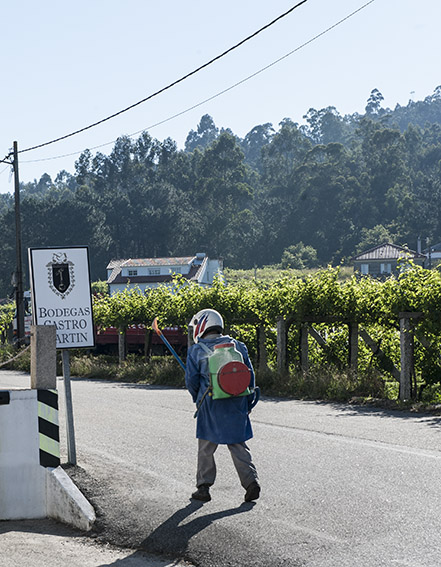
Baby sprayLet’s make one thing clear – spraying the vines is something we don’t like to do, but unfortunately, owing to the vagaries of our climate, it is a necessary evil. Clearly we make every attempt to keep our interventions to the minimum, and always try to use the most environmentally friendly treatments that we can find, but in the end, hand on heart, we are never going to simply sit back and watch our fruit rot on the vines. There’s no doubt that Galicia is a beautiful corner of Spain, but it is also has a very damp climate, which explains why the coastline of our province is just so verdant.

In giving the treatments, one simple, ongoing problem that we have always had is when our tractor has to negotiate the space between the pergolas with crop spraying equipment in tow. Some of the manoeuvres required can be a bit tight, especially around the perimeter of the vineyard. In the past we have tackled some of these tight corners by using a special hose attached to the main reservoir of the equipment, spraying by hand, but obviously this is very time consuming, and of course, we all know the simple equation: Time=Money!

Our solution to this problem has been by making a relatively small outlay, buying a good quality, second-hand ‘Baby’ crop sprayer with 500 litre capacity (the ‘Baby’ sticker was already on the tank when we bought it). With the continued wet weather it had it’s very first outing only a day or two ago, and the good news is that it seems to make the whole task just a little more efficient. Hopefully it will soon pay for itself simply by the time we save.

Baby sprayLet’s make one thing clear – spraying the vines is something we don’t like to do, but unfortunately, owing to the vagaries of our climate, it is a necessary evil. Clearly we make every attempt to keep our interventions to the minimum, and always try to use the most environmentally friendly treatments that we can find, but in the end, hand on heart, we are never going to simply sit back and watch our fruit rot on the vines. There’s no doubt that Galicia is a beautiful corner of Spain, but it is also has a very damp climate, which explains why the coastline of our province is just so verdant.

In giving the treatments, one simple, ongoing problem that we have always had is when our tractor has to negotiate the space between the pergolas with crop spraying equipment in tow. Some of the manoeuvres required can be a bit tight, especially around the perimeter of the vineyard. In the past we have tackled some of these tight corners by using a special hose attached to the main reservoir of the equipment, spraying by hand, but obviously this is very time consuming, and of course, we all know the simple equation: Time=Money!

Our solution to this problem has been by making a relatively small outlay, buying a good quality, second-hand ‘Baby’ crop sprayer with 500 litre capacity (the ‘Baby’ sticker was already on the tank when we bought it). With the continued wet weather it had it’s very first outing only a day or two ago, and the good news is that it seems to make the whole task just a little more efficient. Hopefully it will soon pay for itself simply by the time we save.

It’s Fish & Chips……. in a pie!

April 28th, 2014 | Food & Wine

Fish and Chip PieIn France the English are (not so) affectionately known as ‘Les Rosbifs’, simply I guess, because of our affinity with this Great British dish, although calling someone a ‘Roast Beef’ hardly constitutes an insulting nickname. More derogatory is our nickname for the French…. ‘the Frogs’, which you could probably argue is because of their taste for eating frog’s legs. Anyway, that anecdote has really got nothing to do with today’s story. 

The other dish that the Brit’s are well known for consuming in copious amounts is fish & chips. In days gone by a large proportion of this delicacy would be consumed in the street, packaged and kept warm by wrapping the food in old newspapers! Sounds pretty uncivilised I have to admit, especially by today’s largely obsessive hygiene standards, but when I was a boy, eating fish and chips out of a newspaper, seasoned with a liberal sprinkling of salt and malt vinegar, was always something of a treat. (I should add that there was always a layer of greaseproof paper between the outer wrapping and the food, to prevent the latest news headlines from being reproduced on on the side of your portion of fish!)

So, only today I learned of a very original, new interpretation of this national dish – fish and chips….. but baked in a pie! It has been developed as a ‘ready meal’ by one of the UK’s top (and most respected) high street retail chains, Marks & Spencer. Judging by the photo, it’s not quite as disgusting as it may sound, albeit we do know that food photography is quite notorious for being PhotoShopped (even more than some celebrities). Unfortunately this is not something can I can order from Amazon, and so I will have to wait until the next time I visit the UK to try it – and try it I will. Watch our future blogs for photos and tasting notes! 

(Incidentally, the green layer at the bottom of the pie is ‘mushy peas’, almost like a pea purée, but then that’s another story)

Fish and Chip PieIn France the English are (not so) affectionately known as ‘Les Rosbifs’, simply I guess, because of our affinity with this Great British dish, although calling someone a ‘Roast Beef’ hardly constitutes an insulting nickname. More derogatory is our nickname for the French…. ‘the Frogs’, which you could probably argue is because of their taste for eating frog’s legs. Anyway, that anecdote has really got nothing to do with today’s story. 

The other dish that the Brit’s are well known for consuming in copious amounts is fish & chips. In days gone by a large proportion of this delicacy would be consumed in the street, packaged and kept warm by wrapping the food in old newspapers! Sounds pretty uncivilised I have to admit, especially by today’s largely obsessive hygiene standards, but when I was a boy, eating fish and chips out of a newspaper, seasoned with a liberal sprinkling of salt and malt vinegar, was always something of a treat. (I should add that there was always a layer of greaseproof paper between the outer wrapping and the food, to prevent the latest news headlines from being reproduced on on the side of your portion of fish!)

So, only today I learned of a very original, new interpretation of this national dish – fish and chips….. but baked in a pie! It has been developed as a ‘ready meal’ by one of the UK’s top (and most respected) high street retail chains, Marks & Spencer. Judging by the photo, it’s not quite as disgusting as it may sound, albeit we do know that food photography is quite notorious for being PhotoShopped (even more than some celebrities). Unfortunately this is not something can I can order from Amazon, and so I will have to wait until the next time I visit the UK to try it – and try it I will. Watch our future blogs for photos and tasting notes! 

(Incidentally, the green layer at the bottom of the pie is ‘mushy peas’, almost like a pea purée, but then that’s another story)

Does Trip Advisor really work?

April 25th, 2014 | Food & Wine

Trip AdvisorIn the course of our work Angela and I are lucky enough to travel a bit, and also to eat in some very nice places. Occasionally I have taken the time to share my experiences on Trip Advisor – nearly always positively, giving my honest opinion based on my years in the food and wine industry (plus my degree in hotel management). I would like to think that at least a few people have benefited from my observations, and that the establishments themselves might have gained a small amount of additional business. Otherwise there would be no point in commenting at all.

I have to confess that I quite often use the internet for researching products and services, but I always take care to ensure that the goods that I want to buy, or the restaurant that I want to visit, at least have an extensive cross-section of reviews. A good example of why this matters can best be illustrated if I search Trip Advisor for restaurants in Pontevedra, my home city. The venue that emerges as the best in our city, with five-star reviews across the board, is a small, back street place that I have never heard of. However, if you look carefully, you might notice that each one of the 11 or 12 reviews (giving maximum ratings) have been made in the last couple of weeks, all in Spanish – none from overseas visitors. Of course this automatically rockets this establishment to No.1 on the list, but I can’t help but feel that this result might possibly have been ‘manipulated’ by well meaning family and friends. Old cynic that I am, I will have to go one day to try it for myself….. if only to prove my theory.

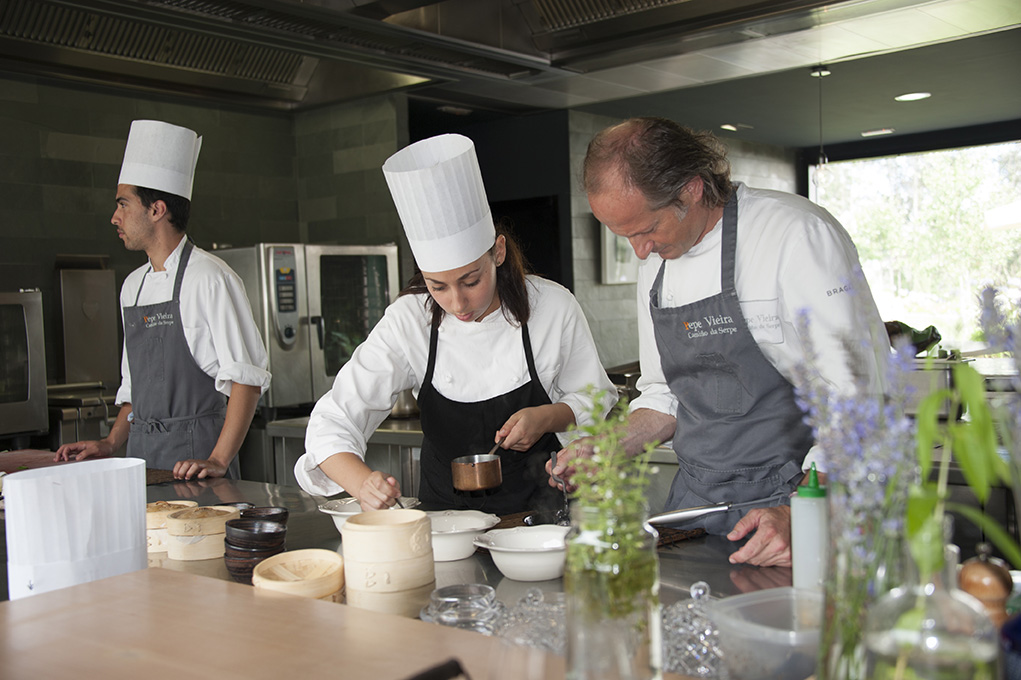
Of course the other weakness of the self-rating system is that different consumers are possibly looking for different things. My favourite restaurant in the area, Pepe Vieira, provides a good example of what I mean. They trade exclusively on tasting menus, several small courses of local produce, cooked and presented in an innovative style, which suits my personal taste perfectly. I always leave the restaurant pleasantly sated, and not feeling like I need to loosen my belt (a feeling that I never seek and don’t really enjoy). For me personally the Pepe Vieira experience merits five-stars, but looking at a few other Trip Advisor reviews, there are certainly some who are less impressed, complaining about the small portions, and not really understanding the concept of a tasting menu. The moral is, if you’re looking for ‘trencherman’s’ portions, then don’t visit this style of restaurant….. it’s horses for courses, as they say. Unfortunately some of these people post their ‘complaint’, giving the establishment only one star, the result of which is to drag down the overall average, thereby distorting the picture for others using the site. 

Trip AdvisorIn the course of our work Angela and I are lucky enough to travel a bit, and also to eat in some very nice places. Occasionally I have taken the time to share my experiences on Trip Advisor – nearly always positively, giving my honest opinion based on my years in the food and wine industry (plus my degree in hotel management). I would like to think that at least a few people have benefited from my observations, and that the establishments themselves might have gained a small amount of additional business. Otherwise there would be no point in commenting at all.

I have to confess that I quite often use the internet for researching products and services, but I always take care to ensure that the goods that I want to buy, or the restaurant that I want to visit, at least have an extensive cross-section of reviews. A good example of why this matters can best be illustrated if I search Trip Advisor for restaurants in Pontevedra, my home city. The venue that emerges as the best in our city, with five-star reviews across the board, is a small, back street place that I have never heard of. However, if you look carefully, you might notice that each one of the 11 or 12 reviews (giving maximum ratings) have been made in the last couple of weeks, all in Spanish – none from overseas visitors. Of course this automatically rockets this establishment to No.1 on the list, but I can’t help but feel that this result might possibly have been ‘manipulated’ by well meaning family and friends. Old cynic that I am, I will have to go one day to try it for myself….. if only to prove my theory.

Of course the other weakness of the self-rating system is that different consumers are possibly looking for different things. My favourite restaurant in the area, Pepe Vieira, provides a good example of what I mean. They trade exclusively on tasting menus, several small courses of local produce, cooked and presented in an innovative style, which suits my personal taste perfectly. I always leave the restaurant pleasantly sated, and not feeling like I need to loosen my belt (a feeling that I never seek and don’t really enjoy). For me personally the Pepe Vieira experience merits five-stars, but looking at a few other Trip Advisor reviews, there are certainly some who are less impressed, complaining about the small portions, and not really understanding the concept of a tasting menu. The moral is, if you’re looking for ‘trencherman’s’ portions, then don’t visit this style of restaurant….. it’s horses for courses, as they say. Unfortunately some of these people post their ‘complaint’, giving the establishment only one star, the result of which is to drag down the overall average, thereby distorting the picture for others using the site. 

A coat of spring paint

April 23rd, 2014 | Bodega

PaintingIt’s the time of year, when the days get a bit longer (and allegedly a bit brighter), that we start to think about the renewal and rejuvenation of the bodega. This year we couldn’t afford Bob the Builder, so we decided to call Pedro the Painter instead (that’s really his name)! Clearly we have to keep the bodega clean at all times, and more especially, after a very cool, damp winter we have to take preventative measures against the growth of mould. One of the most effective methods is simply to redecorate the walls using special mould resistant paints. Large areas of the cellar are actually tiled and so do not pose a problem, but there are still one or two areas that need the occasional lick of paint, and springtime presents us with the perfect opportunity.

Today we are painting the famous ’39 steps’ between the grape reception at the top of the bodega, and the tank room, two floors below (at ground level). I know each single step of this staircase very well, as it keeps me fit during the harvest when I make this climb several hundred times…. or at least, that’s how it feels. Hopefully everything will be finished in the next day or two, so that we have have a thorough, deep clean and return everything to normal in time for some spring bottling.

PaintingIt’s the time of year, when the days get a bit longer (and allegedly a bit brighter), that we start to think about the renewal and rejuvenation of the bodega. This year we couldn’t afford Bob the Builder, so we decided to call Pedro the Painter instead (that’s really his name)! Clearly we have to keep the bodega clean at all times, and more especially, after a very cool, damp winter we have to take preventative measures against the growth of mould. One of the most effective methods is simply to redecorate the walls using special mould resistant paints. Large areas of the cellar are actually tiled and so do not pose a problem, but there are still one or two areas that need the occasional lick of paint, and springtime presents us with the perfect opportunity.

Today we are painting the famous ’39 steps’ between the grape reception at the top of the bodega, and the tank room, two floors below (at ground level). I know each single step of this staircase very well, as it keeps me fit during the harvest when I make this climb several hundred times…. or at least, that’s how it feels. Hopefully everything will be finished in the next day or two, so that we have have a thorough, deep clean and return everything to normal in time for some spring bottling.

Monthly Archives

Categories

ARE YOU OF LEGAL AGE? This site is intended for those of legal drinking age. By entering, you confirm that you are of legal drinking age in the country where this site is being accessed. ¿ERES MAYOR DE EDAD? Este sitio está destinado a personas en edad legal para beber alcohol. Al ingresar, confirma que tiene la edad legal para beber en el país donde se accede a este sitio.