

Where to plant?

May 30th, 2018 | Galicia

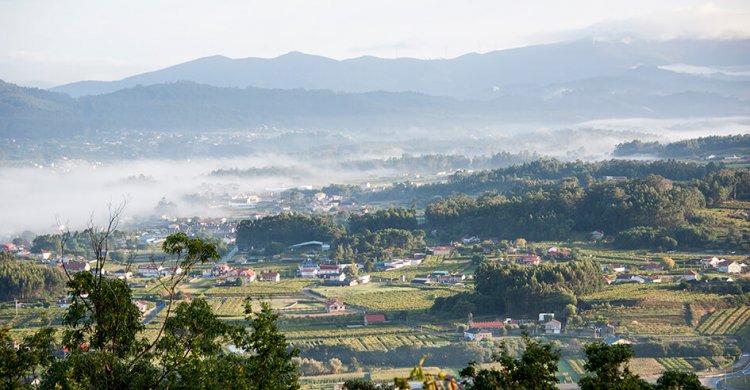
A few weeks ago I took a photo of a guy in the middle of a forest, close to our bodega, cutting trees and making a clearing. Little did I know at that moment that his plan was to plant a small vineyard – but it did start me thinking. Was there any logic whatsoever behind the site that he selected, or was it just a small plot of land where he fancied growing a few grapes? I rather suspect it was the latter.

I have asked myself this question many times, about the seemingly random situation of many of our Rias Baixas vineyards, and how they actually come to be selected. My guess is that, for the vast majority, it is more about convenience than making any type of detailed study to find the best site. This could explain why, in a denomination of only 4,000 hectares, there are nearly 22,000 different vineyard sites!

In the wine business we talk about ‘Terroir’, which many think is simply related to the soil on which a vine is planted, but I can tell you that it is actually much, much more complex than that. Terroir is a combination of factors, including nearly every physical aspect of a vineyard location that you can think of – soil, soil type, drainage, aspect, sun exposure, local rainfall, protection/shade, wind, sea mists etc., etc. All of the individual components that will ultimately determine why the quality of one grape varies from another (assuming that they have been properly cared for).

My photo shows this new planting, bathed in a bit of early morning sun. But what the photo doesn’t tell you is that this location is one of the coldest corners of Ribadumia. The vineyard is on a north facing slope, and apart from this brief touch of sun, it will spend the rest of the day shrouded by trees, with almost no direct sunlight and very little warmth. In a few years I will be interested to explore what it produces.

Blitzed wine?

May 26th, 2018 | Tasting

Yesterday I missed yet another ‘National Day’ – apparently it was National Wine Day (or at least it was in the USA). About 10 days ago I also missed National Tea Day, which, as the world’s greatest tea drinker, came as quite a shock – albeit that every day is National Tea Day for me!

Moving on quickly I read something very interesting yesterday, well, actually quite shocking to me! Putting red wine in a blender to help it breath! Apparently it’s called ‘Hyperdecanting’…..

OK, we live in an age where everything is instant, and few people have the patience to wait for anything. Many prefer to ignore the slow, careful, perhaps more traditional method of decanting, but putting wine into a food blender? Really? Certainly this is something that I would never ever consider myself, even for a half-decent wine, but then we are told that this blitzing is ‘ideal’ for cheaper red wines – it can accentuate the fruit and make them less harsh. Well, I doubt if I will be trying this theory any time soon.

For example, could you ever imagine the sommelier of your favourite restaurant plugging in a blender at the side of your table to aerate your wine – I think not. Simply open the bottle, pour, swirl, wait and savour (or just stick to Coca Cola).

One commentator summed this idea up beautifully – it’s quicker to open a wine with a chainsaw, rather than a corkscrew – but you wouldn’t!!

So what does it cost? Part 2

May 23rd, 2018 | Bottles and bottling

[:en]The shocking fact is that for less expensive wines, the cheapest element of the price that you pay is for the wine itself – the actual 75cl of white, pink or red liquid in your bottle! When you consider the amount of effort that goes into producing a single bottle (from growing the fruit, harvesting, converting it into wine, bottling it and packaging it), the fact that this can actually represent just a tiny fraction of what you pay is really a bit of a scandal (speaking from a wine producers point of view, of course)!

I guess that the same could be said for any number of products that you might find in your weekly shopping basket – we are after all, simple fruit farmers. The only difference being that we take the production one step further by fermenting the fruit into alcohol. And thereby lies the key word….. Alcohol!

The moment that the bottles and pallets leave our door is when the costs start to mount up. Transport and shipping I have already mentioned, but once our wine crosses the Spanish border, it immediately become liable for the duties and taxes of the importing country. It’s only when you start to examine these additional levies a bit more closely, that you see the cost of a bottle really beginning to accelerate.

When goods eventually arrive at their destination then they can also attract further warehousing and handling costs. Depending on the type of customer, they could then attract further, onward distribution costs even before they arrive anywhere near a consumer.

Now we can finally talk profit! Of course the wine producer himself has already extracted a very modest cut, and then the importer will add a further margin before passing the bottles on to a retailer or restaurant. Of course the profits made by shops and restaurants are already well documented, and it is probably better that I don’t comment at all – suffice to say that these can be quite “healthy”.

The net result is that with all the handling, distribution, taxes and duties etc., a very modestly priced wine can end up being quite a bit more expensive. A very frightening calculation (working backwards), is that a bottle sold in the UK for around £5.00 leaves almost nothing at all for the cost of the wine itself![:es]The shocking fact is that for less expensive wines, the cheapest element of the price that you pay is for the wine itself – the actual 75cl of white, pink or red liquid in your bottle! When you consider the amount of effort that goes into producing a single bottle (from growing the fruit, harvesting, converting it into wine, bottling it and packaging it), the fact that this can actually represent just a tiny fraction of what you pay is really a bit of a scandal (speaking from a wine producers point of view, of course)!

I guess that the same could be said for any number of products that you might find in your weekly shopping basket – we are after all, simple fruit farmers. The only difference being that we take the production one step further by fermenting the fruit into alcohol. And thereby lies the key word….. Alcohol!

The moment that the bottles and pallets leave our door is when the costs start to mount up. Transport and shipping I have already mentioned, but once our wine crosses the Spanish border, it immediately become liable for the duties and taxes of the importing country. It’s only when you start to examine these additional levies a bit more closely, that you see the cost of a bottle really beginning to accelerate.

When goods eventually arrive at their destination then they can also attract further warehousing and handling costs. Depending on the type of customer, they could then attract further, onward distribution costs even before they arrive anywhere near a consumer.

Now we can finally talk profit! Of course the wine producer himself has already extracted a very modest cut, and then the importer will add a further margin before passing the bottles on to a retailer or restaurant. Of course the profits made by shops and restaurants are already well documented, and it is probably better that I don’t comment at all – suffice to say that these can be quite “healthy”.

The net result is that with all the handling, distribution, taxes and duties etc., a very modestly priced wine can end up being quite a bit more expensive. A very frightening calculation (working backwards), is that a bottle sold in the UK for around £5.00 leaves almost nothing at all for the cost of the wine itself![:]

Wine’s race to the bottom

May 21st, 2018 | Bodega

Following my latest post about the cost of producing a bottle of wine, I have just read a very interesting article written by an old friend of mine – UK wine journalist Tim Atkin MW. Although he is not actually commenting directly on the production costs of wine he is, in effect, talking about the price pressures often put on producers to reduce their selling price (and certainly their profit margin). If this downward pressure is allowed to continue then, inevitably, the only thing that can and will suffer, is the quality of the liquid in the bottle.

In the final line of his article he says “More than ever, we need a strong independent sector to preserve diversity, quality and individuality.” In this case he is referring to independence in the retail sector, but allow me to say that the very same phrase could easily be applied to the wine producers themselves.

He is a link to Tim’s full article.

So what does it cost? Part 1

May 15th, 2018 | Bottles and bottling

There used to be an advertising campaign on UK TV for bars of chocolate. The slogan was something to the effect that it took 1½ glasses of milk to make one bar of chocolate…. without actually specifying the size of the glass, or the bar of chocolate!

In the world of albariño I can tell you that it takes approximately 1½ kilos of grapes to make one 75cl bottle. Of course this seemingly simple calculation can sometimes be compounded by the price of the grape itself. Even if a bodega owns 100% of its own vineyards (which not too many do in Rias Baixas), the cost of grapes still fluctuates. Of course, yield can be controlled to a certain degree but will always vary a little, and labour cost in the vineyard can change according to the growing season, depending on how much work is required. Then there is also the cost of buying, maintaining and running tractors and other equipment that has to be factored in. On top of this, if you are then obliged to buy additional fruit on the open market, it can become a bit of a lottery. Grape contracts do exist, but some can end up being quite meaningless as market demands can often put a strain on persuading growers to honour them!

So once we have our 1½ kilos bought and paid for, safely in our tanks, then what else needs to be included in the final bottle price? Believe me, it’s a long list! Materials for making the wine, materials for bottling the wine, labour costs, and not to mention the overheads of running the bodega itself – electricity for machinery etc. Next comes the outer packaging, cartons, pallets, pallet wrapping, even before we can even consider moving the wine.

In export we are rarely involved in the cost of transport, but there will always be some element of (expensive) road haulage involved. With pallets weighing in at over 1000kg each (even using our Eco friendly lightweight bottle) the cost of moving them around, especially by road, does not come cheap. Sea container transport does work out much cheaper, but then this is usually limited to customers outside Europe, with the odd exception.

With all these elements quickly adding up the wine is finally on route, and the cheaper part of the final bottle cost has been explained. The really expensive part of the calculation I will save for another day!

Online shop on the way!

May 8th, 2018 | Bodega

[:en]In a small wine cellar like ours no two days are ever the same (thank God!). One day we might be blending or tasting wine, the next we can  be working on a marketing project – such as a new website for example. And that is exactly how it has been this week – preparing blends/samples for a VIP customer on Monday, and working on our new website the following day.

We use WordPress software for our website, and whilst I am reasonably competent in adding news and making the odd page update, setting it up and getting pages to interact correctly is just a bit beyond my capabilities (I am completely self-taught in all aspects of technology – mainly because it didn’t really exist when I was young). For this reason we have enlisted help…. from New Zealand! I don’t actually recall how this originally came about, but we have been working with Meta Digital in Christchurch for several years now.

Whilst the physical distance between Christchurch and Ribadumia is one thing, it is really the time difference that causes the biggest headache – their working day is diametrically opposed to ours. It’s almost like sending messages by Pony Express – fire off an e-mail one day, and then wait until the following day for a reply. It’s no ones fault, it’s just how it is – you either accept it or you don’t.

So the exciting news is that not only will there be a completely new website very soon, but we will also be incorporating an online shop, where our Spanish customers at least, will be able to buy our wines more easily. (We cannot ship overseas because it is prohibitively expensive, not to mention the special packaging that is required by the carriers).

At the risk of sounding too repetitive, please watch this space![:es]In a small wine cellar like ours no two days are ever the same (thank God!). One day we might be blending or tasting wine, the next we can  be working on a marketing project – such as a new website for example. And that is exactly how it has been this week – preparing blends/samples for a VIP customer on Monday, and working on our new website the following day.

We use WordPress software for our website, and whilst I am reasonably competent in adding news and making the odd page update, setting it up and getting pages to interact correctly is just a bit beyond my capabilities (I am completely self-taught in all aspects of technology – mainly because it didn’t really exist when I was young). For this reason we have enlisted help…. from New Zealand! I don’t actually recall how this originally came about, but we have been working with Meta Digital in Christchurch for several years now.

Whilst the physical distance between Christchurch and Ribadumia is one thing, it is really the time difference that causes the biggest headache – their working day is diametrically opposed to ours. It’s almost like sending messages by Pony Express – fire off an e-mail one day, and then wait until the following day for a reply. It’s no ones fault, it’s just how it is – you either accept it or you don’t.

So the exciting news is that not only will there be a completely new website very soon, but we will also be incorporating an online shop, where our Spanish customers at least, will be able to buy more our wines easily. (We cannot ship overseas because it is prohibitively expensive, not to mention the special packaging that is required by the carriers).

At the risk of sounding too repetitive, please watch this space![:]

The Rainbow Paseo

May 3rd, 2018 | Galicia

I mentioned the other day that the Spanish Prime Minister, Mariano Rajoy, likes to spend his summers here in Galicia (being born and raised in Pontevedra). Well, that might not be the case much longer – assuming that he has good taste.

The mayor of local seaside town Sanxenxo (where Sr Rajoy has his apartment), has decided that he wants to paint the town red – together with several other colours of the rainbow. Apparently this has something to do with art, and is the “brainchild” of a local art student (who apparently wants to transform the town into some sort of circus).

Translated, the artist claims that we can “walk alongside a rainbow full of reminiscences and stimulate our senses with this chromatic circle (it will be painted on a long curved wall), filling our steps harmoniously”. Translated, I still don’t know what it means, but my own translation would be “ugly and tasteless”….. but then, that’s art!

We are family!

May 1st, 2018 | Bottles and bottling

For quite a few years now we have noticed that more and more Rias Baixas wine cellars are being taken over by large groups, many from other wine regions of Spain (Rioja producers for example). Clearly it is easier for them to offer a range of wines from around the country, rather than just one local wine, made from a single grape variety – as in the case of our very own albariño. The obvious consequence of this is that there are now fewer and fewer family-owned businesses, and even less that are managed on a day-to-day basis by the actual owners.

It’s no co-incidence that when we created our Castro Martin label some 15 years ago, we decided to call it “Family Estate Selection” (and not simply because the wine is made from the fruit of our family-owned vineyards). The original label placed great emphasis on the grape variety, and then the fact that the wine is made ‘Sobre Lias’ (with extended ageing on the lees), but now we have decided to modify this just a little.

We have recently printed a new label that includes a subtle change – on the front we have replaced the words ‘Sobre Lias’ with the words ‘Family Estate’, the idea being to place more emphasis on being a real family business. Sobre lias is of course, still mentioned, and we have also added the sub zone of our bodega (we are located in the Val de Salnés). It’s simply that in this ever changing world, we believe that being a family producer is still very meaningful!

Donald’s new resort

April 25th, 2018 | Fake News

It’s quite a well-known fact that Mariano Rajoy, the Spanish Prime Minister is Galician, and spends much of his vacation time here in Galicia – or Sanxenxo to be more specific, about 12km from our Bodega. Indeed, when we are there in summer it is not uncommon to see groups of rather sinister looking security guys hanging round on the street corners adjacent to his building.

However, another more closely guarded secret is that U.S. President Donald Trump also spends some time here (although it can be quite difficult to hide the huge outline of Air Force One as it touches down on the tiny Vigo airstrip).

In today’s photo we can see Donald (clearly in some sort of hi-tech disguise) as he breaks ground on his new golf resort in our Province.

(Fake News Alert!)

Addendum: I forgot to mention that this is not a ‘shopped’ photo, but is actually a real Galician woman called Dolores Leis.

Spring is in the air… at last!

April 23rd, 2018 | Photography

[:en]17th March will go down in our 2018 calendar as the day that spring officially started. No big deal really, except that this year the transition from winter to spring happened pretty much from one day to the next. Prior to that date (as with other parts of Europe), the weather had been quite miserable – cold and wet with daytime temperatures barely topping the mid-teens in °C (55-60°F). On 17th all that changed, the sun broke through, the temperature climbed quite dramatically, and the whole complexion of the countryside around us changed – gone were the winter jackets, time to roll up the shirt sleeves. The temperatures are now into the mid-20’s C (75-80°F).

Today’s photo is a slightly different view of our bodega vineyard. I thought that I would change the perspective a little by photographing the pergolas (and their new shoots) from below. The image is further exaggerated by using a 14mm fisheye lens, which also gives the shot a much wider angle.

Time to break out the sun screen![:es]

17th March will go down in our 2018 calendar as the day that spring officially started. No big deal really, except that this year the transition from winter to spring happened pretty much from one day to the next. Prior to that date (as with other parts of Europe), the weather had been quite miserable – cold and wet with daytime temperatures barely topping the mid-teens in °C (55-60°F). On 17th all that changed, the sun broke through, the temperature climbed quite dramatically, and the whole complexion of the countryside around us changed – gone were the winter jackets, time to roll up the shirt sleeves. The temperatures are now into the mid-20’s C (75-80°F).

Today’s photo is a slightly different view of our bodega vineyard. I thought that I would change the perspective a little by photographing the pergolas (and their new shoots) from below. The image is further exaggerated by using a 14mm fisheye lens, which also gives the shot a much wider angle.

Time to break out the sun screen![:]

Monthly Archives

Categories

ARE YOU OF LEGAL AGE? This site is intended for those of legal drinking age. By entering, you confirm that you are of legal drinking age in the country where this site is being accessed. ¿ERES MAYOR DE EDAD? Este sitio está destinado a personas en edad legal para beber alcohol. Al ingresar, confirma que tiene la edad legal para beber en el país donde se accede a este sitio.