Natural wine (and food) – Part 4 – Sulphites

February 25th, 2019 | Bodega

A couple of weeks ago we attended a very interesting seminar – ‘Making wines with low SO2 (sulphur dioxide) content’.

One of the most defining characteristics of a ‘natural’ wine is that it will certainly be low in sulphur – sometimes with no added SO2 whatsoever. Added sulphur has two roles to play in a finished wine: Firstly, it acts as a microbicide, killing bacteria or any remaining yeasts that could eventually lead to spoilage. Secondly, it prevents oxidation of the wine, by preventing or reducing interaction of wine with oxygen.

During fermentation yeast will naturally produce a very small amount of SO2 (and so it will always be present), the question is – is this enough to protect a wine in the medium to long-term? For example, it’s worth noting that premature oxidation is actually a very common fault in ‘natural’ wines.

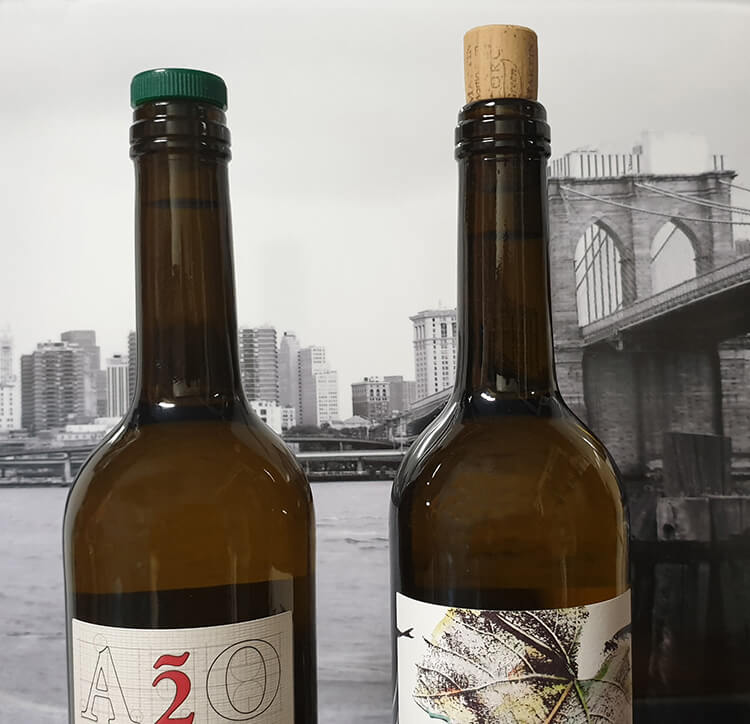
Our seminar talked of this, and offered alternative solutions, products to be used in the grape must to replace SO2, yeast strains that produce very little natural SO2, and pre-bottling additives – all apparently quite natural. We tasted two Spanish white wines from the 2018 vintage made using the low-sulphur products….

When I was a wine buyer, one of the most important issues for me was not only the quality, but mainly the longevity of the wine – looking into its future and trying to imagine how it might evolve. (Bearing in mind that many of my purchasing decisions were made in the producers cellar, tasting raw wine from tanks and barrels). If a wine tasted ready for drinking from the first sip, then the likely hood was that it would not last the course. It is rare that a good or great wine will show it’s true colours during its infancy – and that is where the buyers judgement comes into play.

I say this because of the two 2018 wines in the tasting. They were fine for drinking NOW, very commercial styles, but simply ready to give a bit of ‘instant gratification’. Perhaps perfect for the two wines in question, but not really for our albariño, which can often be consumed two or three years down the road. I’m sorry to say, that we will almost certainly continue with our current policy of adding a little pre-bottling SO2, simply because it works for us, and our export customers (who require an extended shelf-life).


Natural wine (and food) – Part 3

February 18th, 2019 | Bodega

In my last post I raised the question – what steps can we take to make our wine more natural? Of course, the answer to this question is, as always, divided into two parts – grape production and wine making.

We start by examining every process in detail by considering the best and most effective, natural products and operations that we can use, thereby manipulating the must and wine as little as possible. This might seem quite straightforward, but then, unfortunately, some of these processes can have drawbacks and can create potential problems, both to the finished wine and also its evolution in bottle.

Over the years I have written extensively about our vineyard practices, using as many traditional and organic products as possible. Not only are these better for the plants and soils, but the vines will also react naturally, not building any product resistance, as they might do in the case of some more modern systemic treatments. It’s very similar to humans. For example, the difference between using homeopathic medicines as opposed to antibiotics. The former is very natural, and whilst the latter might be more convenient, it can cause long-term problems, forming immunity and rendering treatment useless.

Inside the cellar we already know that white wines are especially prone to oxidation during every stage of their lifetime – from the moment fruit is picked to the moment that it sits in a glass waiting to be consumed. Preservation and longevity are therefore our biggest considerations in everything that we do. What can we do to capture, and ultimately preserve the freshness of the albariño grape variety, whilst at the same time keeping it as ‘natural’ as possible. It ain’t easy, that’s for sure!

Natural wine (and food) – Part 2

February 12th, 2019 | Food & Wine

In a number of countries the latest trends in what we drink can be determined by fashion – what style or varietal is hot, and what are the journalists and influencers writing about? For example, in recent years we have witnessed the success of Prosecco, and the resurgence of rosé wines, and also the steady, unerring growth of natural, organic or biodynamic wines.

As wine producers we obviously have to be aware of these developments, and do what we can to react to the market. Of course, there is always a limit to how much we are able to react as there are always controls, rules and laws that we have to respect. In our case, for example, we can’t make rosé wine from a white grape, but it we look closely perhaps there are some small adjustments that we can make to produce wines that are as ‘natural’ as possible.

In the vineyards we already do almost as much as we can, or as much as nature and our climate will allow, but to be brutally honest it’s highly unlikely that we would ever be able to do enough to achieve fully certified organic or biodynamic status. Indeed, there are exactly ZERO wine cellars in our denomination that are certified as such. It’s really dictated by the vagaries of our wet, cool, humid climate – great for making a fresh, zesty, cool climate albariño, but not much help at all for making biological or biodynamic wine.

So what can we do?…. It’s really all about intervention – the less intervention that we make, the more natural the process. In order to achieve this we can simply examine every step that we take both inside and outside the bodega, and then decide what techniques we can adjust, or possibly eliminate completely. It’s a delicate balance between art and science!

In my next installment I will explain in more detail what we already do, and some of the options and innovations that are open to us.

Natural wine (and food) – Part 1

February 5th, 2019 | Food & Wine

There is no doubt that we need to take care of our planet, in every possible way. These days it’s all about carbon footprint, minimal intervention, and natural products, and this is not unique to the wine industry.

If you think for a moment about the evolution of wine making, then it must be true to say that once-upon-a-time all wines were ‘natural’ (when wine was first produced). Then, over the decades and centuries, as technology has evolved, we have started to make cleaner, more technical wines – the inherent problem being that at least some of the body and character has almost certainly been processed and filtered out.

Of course tradition is important, and this is often protected through the rules and regulations of the controlling bodies – the D.O.’s and A.O.C.’s of this world. On the other hand, I believe that technology still has it’s part to play, but the question is, how much technology? The quality and style of the end product will ultimately be directly determined by the amount of intervention and manipulation that takes place (both in the vineyard and in the wine cellar).

Don’t get me wrong, I really enjoy wines that are allowed to fully express themselves and that are a true and honest representation of their roots and origins, but at the same time I don’t want to be offered a completely opaque wine that leaves a residue of soil at the bottom of my glass! Believe it or not I have atually been presented with such a glass (OK, maybe without the soil), but to be brutally honest, I didn’t really like it one bit. As a former wine buyer I was trained to be open-minded about new and exciting wines, but then there always has to be a limit.

Our current official classifications (that can be certified), are biological, biodynamic and natural. However, wines can also be sustainable, with the least possible amount of intervention – using what I prefer to call ‘mindful winemaking’. And that is just what we do.

Tasting samples

January 28th, 2019 | Competitions

Over the course of a year, we use/send out quite a lot of samples. Many are sent to wine fairs and tastings organised by our own D.O. office, for tastings either here in Spain, or in International Wine Fairs. Others are sent to existing customers who possibly want taste a new vintage. Then of course there are potential customers, who will almost certainly request samples before making any buying decisions.

In Canada and a number of Scandinavian countries, wine import is still government controlled. The State owned shops  will usually send out two or three tenders a year for albariño. This entails much form filling and the sending out of yet more samples for their tasting committees. (The downside is that there is usually only one winner, and no prize at all for coming second).

Wine competitions are by far the biggest sample consumers (assuming that you play the game). The problem is that there are now dozens and dozens of International Wine Competitions – some apparently organised in small, obscure villages in the middle of nowhere, but still claiming to be “International”. The high cost of sending samples is quite apart from the fact that you also have to pay to have your wines tasted (often 100-150€ per entry).

I do often wonder how ‘legit’ some of these competitions and would-be importers really are? Just imagine the scam of writing to hundreds of wine cellars requesting 3 or 4 sample bottles from each, perhaps using the facade of a fake website. That could result in one huge garage sale or maybe just one hell of a party!

Blue (Brexit) Monday…

January 21st, 2019 | Weather

After two or three weeks of sun, we finally had a weekend of rain, and now that we are back at work again, guess what? Yes, the sun has returned again! Ironic, or just plain annoying I ask myself? At this time of year we also experience quite a lot of mist and fog hanging around in the early morning, certainly until the sun has had chance to burn it off. When the Salnes Valley is shrouded like this, it can look quite dramatic as the sun starts to rise over the surrounding hilltops. Of course, the other ‘mist’ that often hangs around during the day at this time of year is not actually mist at all, but rather the smoke generated by grape producers burning their vine cuttings after pruning. (It’s a bit of a waste really, as vine cuttings are really excellent for adding that extra touch of smoked flavour to barbecued food).

Despite this wonderful weather, we are actually busy inside this week as we prepare one or two large orders. I don’t really want to dwell on this, but one is actually destined for the UK, as importers actively start to stock up a little prior to Brexit. Of course, no one knows what will happen as yet, but it will almost certainly change our documentation (for example, it will no longer be Intra-Community), and leaving the EU could also cause additional delays to our shipments as vehicles will take much longer to cross borders into the UK. Who knows? Our Prime Minister certainly doesn’t!

Hace frio…. (it’s cold!)

January 14th, 2019 | Vineyards

The last few months of 2018 were miserable, wet and autumnal, but temperatures did not really dip too much and remained several degrees above freezing. Plants and trees that would normally be dormant at this time of year were still alive and active. Of course, in the case of our vines, not only do the plants need to have a dormant period (helping to reduce bacteria and having a therapeutic effect), but freezing conditions can also help to kill off vineyard insects and pests.

It was not until the New Year (quite literally from the turn of the year) that the skies cleared, to give us almost unbroken sunshine from dawn ’til dusk, and of course, with clear night skies, a drop in temperature. During the day the thermometer has been hitting the mid-teens in Centigrade (around 60°F), whilst at night it has just about reached freezing point – but certainly enough to give us ground frost in rural areas. Although wind has not really been a feature, airflow has been from the north, providing us with a real nip in the air. The upside of this is, however, that it provides our guys with very pleasant conditions for pruning.


Happy New Year!

January 7th, 2019 | Bodega

Whilst we are already a week into the New Year, the Christmas holiday has only just ended here in Spain. Yesterday, 6th January, was Reyes, known outside Spain as Epiphany. which celebrates the baptism of Jesus and is also known for the visit of the Three Kings. Some Spanish households still celebrate Reyes rather than Christmas, and gifts are exchanged on 6th January. This year, as 6th falls on a Sunday, some autonomies of Spain will have an additional ‘festivo’ day today – 7th January – but not here in Galicia, it is a normal working day.

Owing to this extended holiday, some businesses are only returning to full production this week, including ourselves, as many of our team return from their break. Thankfully they will be greeted by a busy month! To start the New Year we have some pretty large orders in the pipeline, that will necessitate at least two bottlings during the month of January. Of course, it’s always nice to start the year with a few orders in the book, but our longer-term goal will be to maintain this momentum throughout the year!

Tasting rediscovered!

December 28th, 2018 | Festivo

As we start to recover from the upheaval of the holiday period (and perhaps a little over indulgence – in my case turkey saturation), we are now putting our feet up for a few days. Our cellar doors still remain closed, taking full advantage of the usual seasonal lull in business.

The other good news is that over the Christmas holidays I have rediscovered wine tasting! Tasting had been such a big part of my life for so many years that I had really started to take it for granted – until earlier this year. In March I embarked on a course of dental treatment, which (I didn’t realise at the time), would extend for a period of more that 8 months. The real problem was that it entailed living with a mouthful of plastic for the duration, unfortunately making tasting much more challenging, and even slightly awkward. Not completely impossible, just difficult.

Shortly before the Christmas break, I received a phone call, just as I was leaving the bodega. Within 20 minutes I was in the dentist’s chair, having the final procedure carried out and the plastic finally removed from my mouth. Normality had been restored, and thankfully, just in time for the holidays!

Once again, I can fully appreciate the nuances of wine, but now with a newly invigorated enthusiasm.

Happy Christmas!

December 25th, 2018 | Food & Wine

First of all I have to wish a very Merry Christmas to anyone who might just be bored enough to read this post on Christmas Day!

As is the tradition in Spain (and in many parts of Europe), the Christmas meal is eaten very late in the evening of 24th December. In our own multi-cultural household we compromise, by having dinner on 24th, but perhaps just a little more to an English timetable, starting at around 8pm. This year we opted for a turkey dinner, but as always, with the typical Spanish seafood starter (often a meal in itself, the main course often being less important).

Wine, of course, plays an important part in our household. In 2018 our aperitif was the limited release of Tio Pepe Fino ‘en rama’ (we drink a lot of fino and manzanilla throughout the year). With the seafood we had an astonishing 2013 Castro Martin Family Estate. This was made more astonishing when we consider that 2013 was not really a great vintage. Prolonged rainfall in the period before picking meant big adjustments to the pressing and winemaking – pressing for example, was limited to minutes, making this vintage almost a ‘first press’ wine. However, there was no hint whatsoever of dilution in this bottle – simply delicious.

The star of the show, as always, was reserved for the main course – a 1992 Corton Charlemagne from Domaine Michel Juillot. The older bottles in my cellar are usually made by people that I know, and have visited regularly over the years – Juillot, however, is not one of them!

The wine itself was bright gold in colour, but not a deep gold. A very full, ripe nose, still showing fruit, but with notes of caramel (to be expected in a 26 years old wine). Full in the mouth, with no hint of oxidation, I was really amazed that this wine was still full of ripe, honeyed apricot fruit, but balanced by a steely elegance, finesse and just a touch of lemon acidity. Of course, this type of wine only serves to prove that pedigree, and a skilled winemaker, can, and will, always make wine that is capable of lasting the course (assuming correct storage).

Monthly Archives

Categories

ARE YOU OF LEGAL AGE? This site is intended for those of legal drinking age. By entering, you confirm that you are of legal drinking age in the country where this site is being accessed. ¿ERES MAYOR DE EDAD? Este sitio está destinado a personas en edad legal para beber alcohol. Al ingresar, confirma que tiene la edad legal para beber en el país donde se accede a este sitio.