Q1). Where does Kiwi Sauvignon Blanc come from?

March 2nd, 2010 | Uncategorized

If your answer was Marlborough, Hawkes Bay or indeed any part of New Zealand, then I’m afraid you’d be wrong. This particular Kiwi Cuvee, as you may imagine, is made from sauvignon blanc, but actually originates from the Loire Valley in France!

The battle of wine origin and name protection has been played out in court on many occassions over recent years, but more often than not with the French as plaintiffs. They have fought long and hard to protect famous names such as Champagne, Chablis et al, pointing to the laws of appellation d’origine as their justification.

Now, with delicious irony, an Australian tribunal has just prevented this French ‘Kiwi’ brand name from being registered down under, citing the obvious reason – that the name is quite simply misleading to consumers (which it clearly is). In their defence, the French argued that the word Kiwi is actually colloquial, and does not relate to a specific geographical place, which I guess is also true.

However, from my own point of view this story has it’s own special significance….

Back in the 80’s and 90’s when I was a wine buyer I used to travel extensively in France. This was the time when ‘new world’ wines were still very much in their infancy, and whilst London was considered to be the ‘shop window of the world’ for these new discoveries, they were (and perhaps still are) largely unknown in France. By way of education, and partly out of mischief, I would sometimes travel to Sancerre and Pouilly-sur-Loire with bottles of new world sauvignon blanc in the boot of my car (trunk to my American readers). As I poured the Chilean, New Zealand or perhaps South African sauvignon for my French suppliers, the reaction was unequivocal and unanimous, the wine was “rubbish” – and that is the polite translation!

It would appear therefore, that in a few short years, the story has gone full circle. The French market share has shrunk so dramatically, that in an attempt to regain lost ground, they have actually started to imitate their new world competitors.

How times change!

Storm Update

March 1st, 2010 | Uncategorized

It would seem that my report of the weekend storm which swept across the north of Europe was more than a little premature. Of course much of my initial blog entry was based on our own personal experience here in Galicia, where with hindsight, we escaped rather lightly.

Almost inevitably with this type of natural disaster, it takes time for the reporting of fatalities and destruction to be collated, especially over such a wide area, and very regrettably, it now emerges that the number of deaths is much higher than I first reported.

Nearly 50 people have lost their lives, the worst hit being the west coast of France, around the Vendee and Charente-Maritime (an area just north of Bordeaux, and the centre of production for Cognac and Pineau des Charentes). Many of the victims were drowned in the rapidly rising waters, whilst others were killed either by falling trees or parts of buildings.

The aftermath of this powerful Atlantic storm, named Xynthia, has been declared a National Disaster in France, where the priority now is to help those with flooded or damaged homes, and to restore electricity to the large areas that have been cut off.

Our thoughts are with them, and also with the people of Chile and Haiti…..

A storm in a tea cup

February 28th, 2010 | Uncategorized

Strong winds, driving rain, a little flooding, a few fallen trees and some very minor structural damage – that’s about the extent of the problem caused by yesterday’s storm.

Having said that, 3 people did lose their lives across Europe – two killed by falling trees, and one woman, here in Galicia, killed when a wall collapsed. During the height of the storm some gusts were recorded at up to 150kph (just over 90mph).

So the alerts and warnings were mainly precautionary, and to be honest you can not blame the Spanish government for being over cautious. Much better to be prepared, and ‘batten down the hatches’ than to be taken completely by surprise, as famously happened in the UK at the end of the 1980’s.

On that occasion a BBC weather forecaster publicly dismissed a severe weather warning that had been isssued by his counterparts in France. That night a mini-hurricane swept across the southeast of England (including London) leaving some fairly major destruction in it’s path.

What is it they say? Better to be safe than sorry.

Red Alert!

February 27th, 2010 | Uncategorized

Close all your doors and windows, don’t venture outside, leave the car at home, lock up your daughters…… well, maybe not the last one. These are some of the warnings that we have received over the last 12 hours, as a rather powerful storm heads towards the northwest of Spain and the Bay of Biscay.

Barely a week ago Funchal, the capital city of Madeira, was ravaged by storms, killing just over 40 people (and possibly more as they still search for the missing). In this case the heavy rain was compounded by mud slides and flash floods that destroyed houses and swept victims away, leaving the area without water, power and communication.

A second weather system, carried by the same jet-stream, is following a similar path across the north Atlantic, and is now gaining strength as it heads towards mainland Portugal and the northwest of Spain. Forecasters are predicting winds of up to 150/160 kph (100 mph), which is obviously a cause for concern. The storm is also rain-wrapped, so there is also a strong possibility of flooding in low lying areas.

Over the last few months we have already experienced more than our average total rainfall for the year, and this was before last Wednesday when we had heavy, torrential rain pretty much non-stop for the whole day and into the night.

Now let’s see what mother nature holds in store for the next 12 hours!

Belated Christmas Cheer

February 26th, 2010 | Uncategorized

At least winter is still upon us, with fresh snow falling everywhere (except at the Olympics in Vancouver). With this in mind it therefore does not seem quite so odd to still make mention of Christmas.

A friend of mine in New Zealand has just faxed me a copy of an article published in the January issue of Decanter magazine, which included their Christmas holiday wine recommendations! Yes, I am puzzled too, and I can only assume that the January issue would probably be released in December, as is often the way with magazines. Anyway, he has only just received his copy down in NZ….

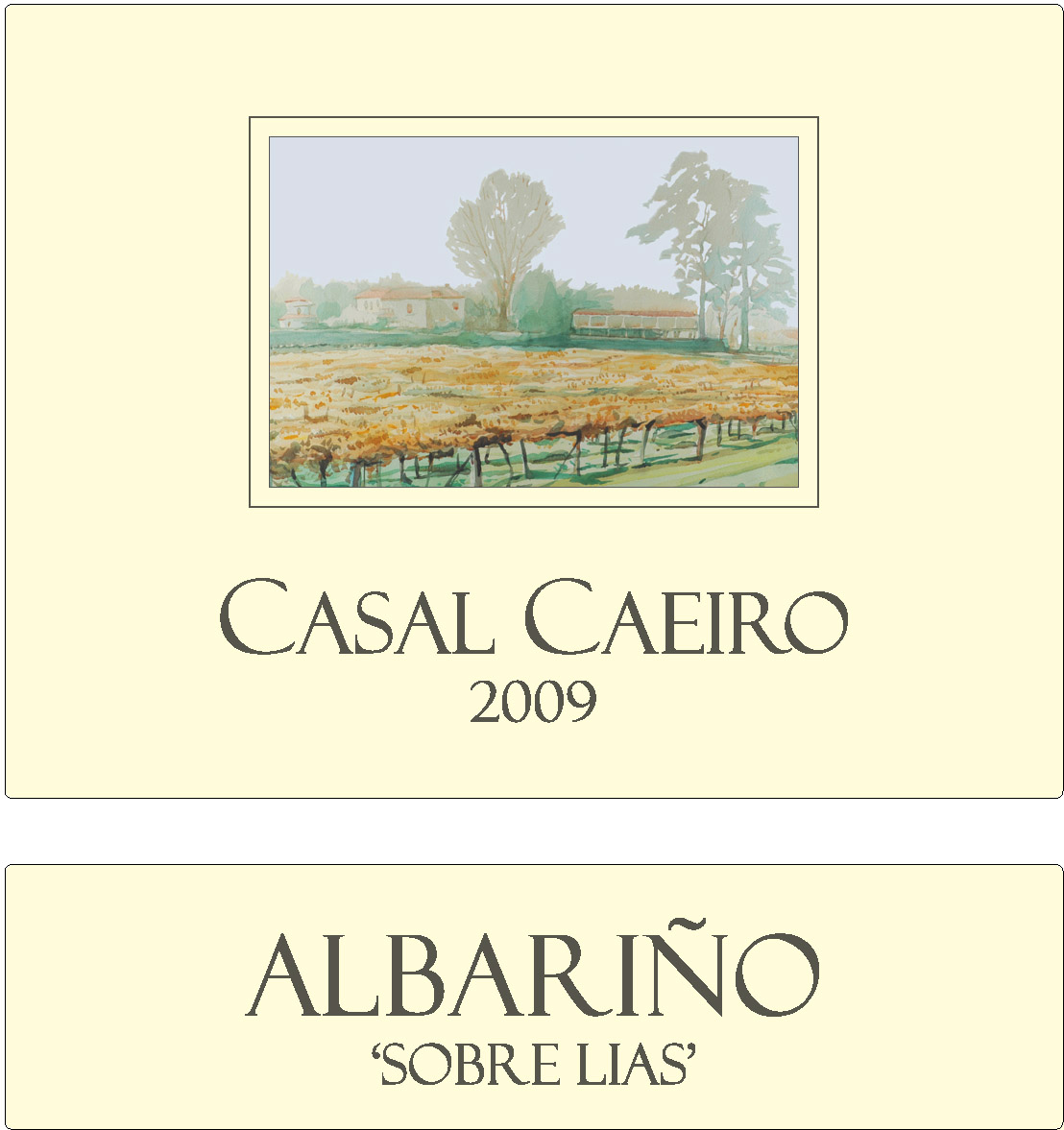
In the Decanter article they recommended one wine for each of the twelve days of Christmas, and I am delighted to say that one of the selected wines was our very own Albariño – receiving four stars and 17.5 out of 20 (one of the highest of their Christmas choices). Their tasting note reads as follows:

“Delightful, fresh and vibrant, but invitingly smooth as well. There’s lot’s of interest here with fragrant apple blossom, green fruit, peel, juicy acidity, minerality and a great tangy finish”.

Perhaps this was their recommendation for Christmas 2010? Remember, only 260 shopping days left, so grab your Albariño now before the last minute rush!

A bit of a pig’s ear

February 24th, 2010 | Uncategorized

Missed it! In the land where every type of food is commemorated in local fiestas, I am ashamed to admit that I sadly missed the annual celebration of our Galician national dish….. Cocido Gallega.

Cocido is a type of local stew or casserole made by cooking various types of meat and vegetables in stock – in many ways similar to the French ‘Pot au Feu’ (except using different meats). Usually a traditional Galician cocido would be made from a selection of salt pork cuts, including the head, ears or tail, together with pieces of cock or chicken. Chorizo and pork belly or bacon, are also added. The selection of vegetables includes potato (a food staple of the Galician diet), grelos, which are actually the leaves of turnips (although cabbage can be used as an alternative to this), and finally garbanzos, or chickpeas to you and me.

Cocido is served in nearly every local Galician restaurant, but not necessarily every day of the week – on the days that it is however, you can guarantee that the place will be packed. To be very honest I believe that there are some people who would eat it every day of the week, given the opportunity!

By complete co-incidence we will be preparing a cocido next week to serve to some Spanish guests here in the Bodega. Whilst we have a large ‘salon’ with dining tables, which can also serve as a meeting room, we do not actually have a kitchen, so the cocido will be prepared outside, and then ‘shipped in’ using one very large cooking pot. The stock, or broth that the cocido is cooked in is often served as a starter, perhaps with a few chickpeas thrown in – the pork, chicken and veg will then make up the main dish.

Cocido Gallega – yum, yum! (well, actually, not for me)

More than just a pretty face!

February 20th, 2010 | Uncategorized

The other day Angela’s beloved desktop laser printer started chewing up the pages she was trying to print. To be very honest I was not surprised for one moment, as she does insist on shoving re-cycled paper into the poor thing. Of course using re-cycled paper should only be applauded, but not when the second-hand sheets are creased, folded or occasionally included the odd staple! So, the obvious solution was to look for some sort of paper jam, but regrettably, this revealed nothing….

Now, I am a great believer in internet forums, and wasted no time in visiting the site for this particular brand of printer – the prognosis was not good – it looked like the fuser film sleeve needed replacing, simply through old age (don’t worry, I had no idea what this was either). I had no doubt that the cost of sending the machine away for repair would be more than it’s replacement value, which left me with only two options. Either scrap the machine, or try to repair it myself, assuming I could find the part – more websites.

I eventually stumbled across a site not surprisingly called ‘fixyourownprinter.com’ in the United States, that could send me the repair kit for only $46 + postage. Believe it or not only 3-4 days later, I had the replacement fuser film sleeve in my hand….. but that was the easy part!

Fortunately the kit included a blow-by-blow DVD, like an idiots guide of how to attempt something really difficult (actually 7.5 out of 10 on their difficulty scale), but as I had absolutely nothing to lose, I thought I would give it a go.

After about an hour or so, I had the printer in pieces, screws and brackets everywhere, covering a fairly large table, and I was filled with trepidation as I realised that I had to put them all back together again!

I shouldn’t have worried, after another hour and a half, I plugged it back in, and presto, one restored printer. Of course my repair comes with a 20/20 guarantee – 20 minutes or 20 printed pages, whichever comes first – but it did fill me with a certain satisfaction, even if it does break down again next week.

How quickly it changes

February 16th, 2010 | Uncategorized

Living on the Atlantic coast as we do, has it’s benefits, and I’m not just talking about the beaches. It helps to moderate our climate, and means that in summer we do not suffer the extremes of temperature that they do a little further inland. The downside of this, as I am sure I have mentioned many times before, is that we have quite a lot of rain….. although in some ways this is no bad thing, as we do need the water to help vegetation. The real problem lies with the unpredictability of our weather. Martime climates are rarely settled, and can change in a heartbeat.

It was only Saturday afternoon when I made the post about my famous ‘fried eggs’ (sunshine with a little light cloud) – a weather forecast for our area taken from the web. By Monday night, just over 48 hours later, this forecast had changed to what you see above – normal pruning weather had been restored.

A sudden change in the weather at this time of year is not however, too much of a disaster, and simply means that the guys that are pruning have to pack their waterproofs. It becomes much more of an issue in summer and autumn.

In summer, on the occassions that we do have to treat our vines, we not only need a bit of dry weather, but for the treatment to be properly distributed, we also need a period that is not too windy. If the treatment that we give does not have time to dry and at least a short contact with the vines, then we might as well pour it down the drain. The real issue being that the best and most eco-friendly applications are always the most expensive, and we simply cannot afford to waste the time and money.

In autumn we have our harvest, when quite naturally, we pray for good weather to gather our crop.

One for the romantics?

February 15th, 2010 | Uncategorized

It has always puzzled me as to why people think that running a small hotel, or a restaurant, is a romantic idea. I can honestly tell you, from my previous life in hotel management (many, many years ago), that it is not. It is tough, physically demanding work – long hours on your feet, working evenings and weekends, quite logically, when all around you are relaxing….

So often I hear stories of people coming into money, either through inheritance, or perhaps a redundancy package, who immediately have the idea of speculating in the hospitality industry. Of course there are those who make a success of it, but for others, perhaps with no prior experience, well, they often fall by the wayside and lose their investment. Who is it once said – “The best way to make a small fortune in the restaurant business, is to start off with a very large fortune”!

I guess the same could be said of the wine industry, in that owning your own vineyard and making a bottle with your own name on it, is a very attractive idea – but please be warned, to do it on a commercial scale is much more than just a hobby, and to do it well takes both a lot of care and experience.

Over the weekend I saw a rather unusual story in the Daily Telegraph that caught my eye. A vineyard for sale near the city of Bath, in the south west of England. They did not state the exact size of the vineyard itself, but mentioned that for an investment of a mere £20,000 the new owner could, in a good year, produce up to 1,000 bottles of Riesling.

The estate agents handling the deal went on to say “we have been surprised by the amount of interest generated by wine enthusiasts who want to grow their own grapes and make their own wine”. Knowing the vagaries of the English climate, allow me to be the first to wish them good luck in their new venture, whoever they may be.
Post Script: Since I first made this post a new article has appeared in a similar vein.

A week of fried eggs

February 13th, 2010 | Uncategorized

I exchanged e-mails with a friend down in Melbourne the other day, who reminded me that it was the first anniversary of ‘Black Saturday’, when more than 100 people died in raging wild fires across the state of Victoria. Angela and I remember it well, as it was the very day that we arrived in Melbourne…. high winds and temperatures of around 50°C (122°F), a surreal experience.

My point is that they were suffering from severe drought conditions, and this latest conversation revealed that they still are. Water is in very short supply.

I joked that they could have some water from Galicia if only we could constuct a pipeline long enough – we have had a very wet winter. It has rained almost continuously since November, and during that whole period we have not enjoyed more than a few dry days back-to-back (and certainly very little in the way of sunshine).

For the last few days however, we have been blessed with some beautiful winter weather – clear skies and cold temperatures, hovering just above freezing at night. As you will see from the forecast, this is set to continue for the next few days, with sunshine and a little cloud (fried eggs), making much more pleasurable conditions for pruning the vineyards.

Monthly Archives

Categories

ARE YOU OF LEGAL AGE? This site is intended for those of legal drinking age. By entering, you confirm that you are of legal drinking age in the country where this site is being accessed. ¿ERES MAYOR DE EDAD? Este sitio está destinado a personas en edad legal para beber alcohol. Al ingresar, confirma que tiene la edad legal para beber en el país donde se accede a este sitio.