Bodega Tetris

June 23rd, 2022 | Bodega

The good news is that we have orders, but the bad news is that we have nowhere to store them!

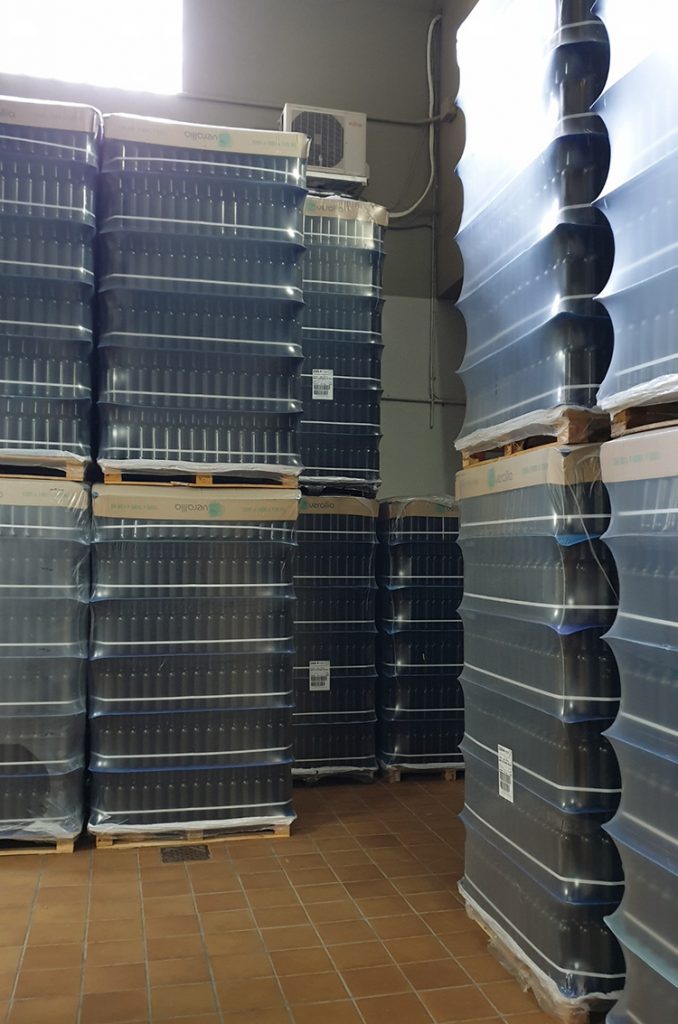
Owing to the current supply chain problems and delays to our orders of dry goods, we are now obliged to hold much more floor stock than usual. One of the items in short supply is bottles (which are possibly more valuable than gold to wine producers at the moment). With this combination of additional stock holding, and preparing large orders, we are simply running out of storage space, and this is also compounded by the fact that we are obliged to bottle even more stock again early next week, thereby adding to the congestion.

Yesterday I was was down in our cellar arranging pallets, trying to make the most of every square centimetre of space. Believe it or not I was actually using a tape measure at one point, calculating the best permutations to maximise the space that we have available. In effect, it was really like a huge game of Tetris as the pallets were slotted into their spaces!

Hopefully, we will be able to get some of these big orders on the road

Catas de Galicia 2022

June 16th, 2022 | Competitions

Back in April the process for selecting Galicia’s best wines was launched by the Xunta de Galicia. Wineries from every Denomination Ribeiro, Valdeorras, Rías Baixas, Monterrei and Ribeira Sacra, were invited to submit their wines, as well as the ‘Viños da Terra’ from other Galician communities. There were special categories for small, boutique wineries, oak-aged wines, sparkling wines, ecological wines and even ‘toasted’ wines (although I have to admit that I am not entirely clear as to what that last category actually represents, I usually associate this with oak-aged).

A blind tasting of the 405 entries was held in Santiago de Compostela last week, judged by a panel of some 20 experts, including our very own winemaker, Angela. As a member of the official tasting panel of the D.O. Rias Baixas Angela was invited to adjudicate at the event, over a period of 4 days. Naturally each session was divided into regions and categories, and each session comprised of between 20 and 30 samples.

Tastings like this might sound like a fairly glamorous experience, but I can tell you, from my previous life as a buyer, intense tastings like this is actually very demanding, both physically and mentally. To do the job well, and professionally, requires total concentration from the very first wine, to the very last – every wine must be given a fair and equal opportunity, even if your palate starts to feel a little jaded.

Green Spain

June 9th, 2022 | Vineyards

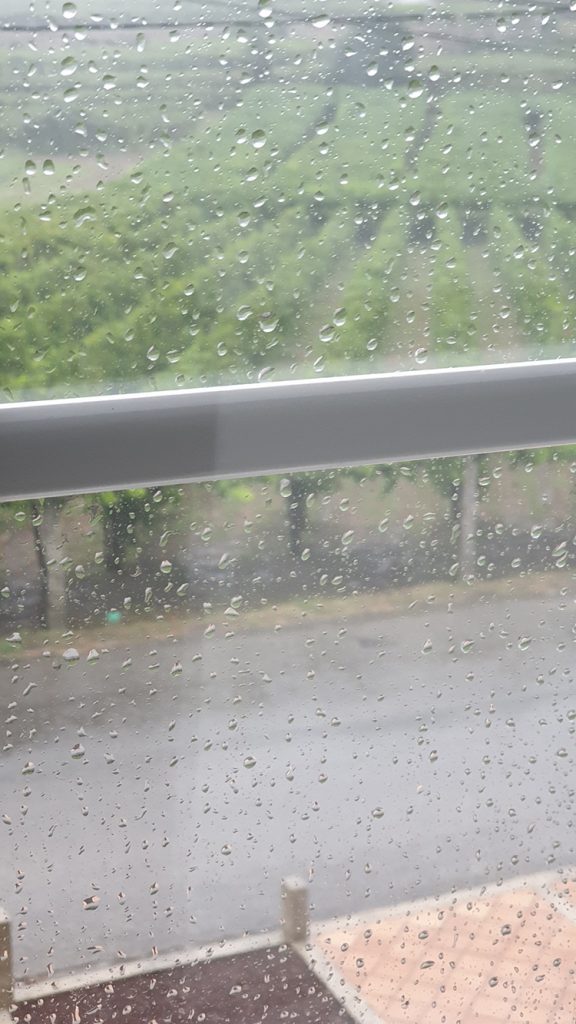
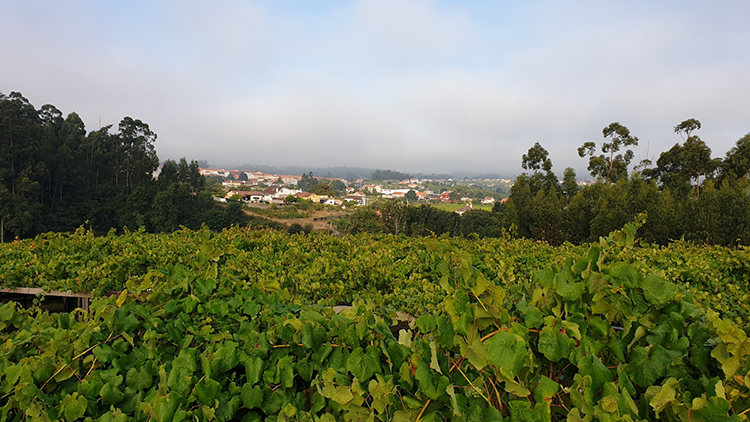
Galicia and the northern coast of this country is often referred to as ‘Green Spain’. This year, however, it should probably be known as ‘Exceptionally Green Spain’! The months of May and June have been alternating between warm sunshine (shorts and t-shirts) and days of persistent rain (raincoats and umbrellas). Great if you’re a plant, but perhaps not so great for grape producers. Whilst our vines are growing like wildfire, these are also the best conditions for spawning disease and infection in the plants. (These are exactly the type of conditions that make it very, very difficult to produce wines that are certified organic or biodynamic – the risks of losing an entire crop are simply too great).

Fortunately for us, our flowering took place during the latter half of May, which was largely dry and sunny, but no sooner had the flowering finished, than the rain returned yet again. Conditions have sometimes been fluctuating on an hourly basis.

Our normally well manicured vineyards are almost looking a bit abandoned, even though we are working around the clock to keep vegetation, both on the vine ‘canopy’ and also the ground below, under control. This wild growth is known as ‘Vine Vigour’, which in 2022, seems like something of an understatement! Let’s see what the summer brings.

Gold!

May 24th, 2022 | Bodega

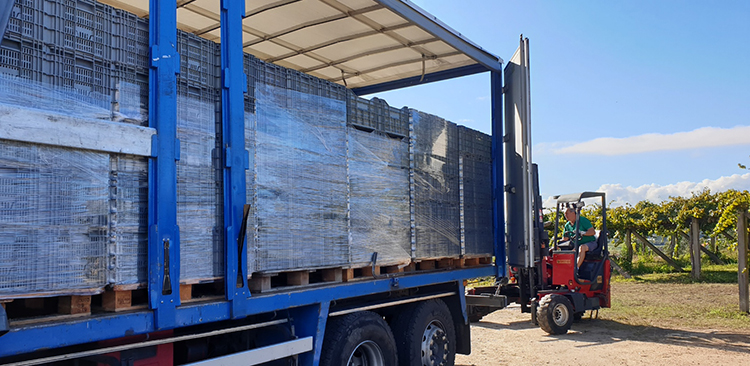
This morning, in the bodega, we received a truck fully laiden with gold. Well, it was actually full of bottles, but at the present time (for a wine cellar), that is almost as valuable.

I have talked before about the ‘perfect storm’ when all the stars aligned to create a supply chain crisis, but since that time we can now add the crisis in Ukraine to the list. Businesses are still playing catch up, the supply of raw materials has dried up (for some sectors), and the sharp increase of energy prices have all added to a system already under extreme pressure.

Since the turn of the year, and possibly even before that, the demand for bottles has increased. This is due, in part, to the soft drinks industry. New taxes have been applied to the use of plastic bottles in packaging, and so may producers are now turning back to glass as an alternative. (I say ‘turning back’ because only a few decades ago the vast majority of soft drinks were sold in glass. In effect, we have gone full circle).

Over recent months, large cellars around Spain have been stocking up on glass, adding further pressure to an already oversubscribed market. Consequently, we have been almost begging our supplier on a daily basis to send us bottles, and today we took a small, but positive step in helping to overcome this major concern. It’s a simple equation: no bottles=no wine, so we hope that this delivery will be the first on many over the coming months.

Guess the destination….

May 16th, 2022 | Customers

We are fortunate enough to sell our wines around the world, usually delivered either by road or by sea (and very occasionally using air freight). Normally wines are delivered to European customers by road, and then to more distant locations by sea (sea containers can often take several weeks to reach their final destination). The biggest drawback of shipping by sea container is the lack of temperature control, when wines can be exposed to extreme heat that can damage wine in various ways, the most obvious being maderisation. Using a refrigerated container is the possibly the only real solution, albeit this can be prohibitively expensive (especially during the current supply chain crisis and shortage of containers). Another, less effective alternative is the use of a thermal blanket, that effectively lines the interior of the container in a thermal, foil type material. This has only limited benefits and does not offer any of the guarantees of the refrigerated alternative.

So, not only can wines be damaged by temperature whilst in transit, but they can also be manhandled and physically damaged, as illustrated in today’s photo. Our picture shows two shipments – one to Belgium, and the other to Brazil. Now, you could be forgiven for thinking that the one on the left is Belgium, and on the right is Brazil… but you would be wrong. The Brazilian cargo arrived in pretty much the same condition that it left our cellar door, whilst the Belgium shipment? Well, we have no idea what happened to it. It would appear that not only were the pallets dismantled, and badly reassembled on a cheap pallet, but the cases on top were damaged, and an entire layer of cases had actually gone missing – we assume that they had been stolen!  I should mention that in all cases that the shipping companies are arranged by our customers, and that once a pallet has been loaded on to a truck or container, we are no longer liable for its journey. The good news is that all shipments are automatically covered by transit insurance, and hence the Belgium incident is now under investigation.

April showers

April 27th, 2022 | Covid 19

After a dry winter, April is living up to it’s reputation – periods of sun interspersed by short, sharp showers. Whilst the rainfall is quite welcome, it has not really been enough to replenish our depleted water table, so far. Similar to last year, one of the characteristics of spring so far have been the cool temperatures. Even in the sunshine, winter jackets are often still required, the clear blue skies are quite deceptive. Of course, from a vineyard point of view these cool temperatures are no bad thing, as the worst possible scenario would be showers and sun accompanied by warm temperatures – an ideal combination for disease in the young vine shoots. The other effect of this persistent cold temperature is that development of the vegetation so far, has been a little slow. It’s still early days, so we shall see how things evolve.

Meanwhile, back in the world of Covid, about a week ago, Spain dropped it’s rules for the compulsory use of masks inside public locations. Individual businesses are still allowed to ask people to wear them, and it is very interesting to note that the majority of people still do, both indoors and outdoors. The Spanish (quite correctly in my view), are still very cautious.

By the way, can you spot our bodega in today’s photo? It is just visible!

Corked?

April 12th, 2022 | Odds & Sods

I am still convinced that the most misused, and misunderstood term in the world of wine is the word “corked”. For example, we sometimes get bottles sent back by customers as “out of condition”, with a simple explanation given that the wine is “corked”. The strange thing is that the closure that we use on our wine is not made of natural cork, it is actually a synthetic closure (that has a zero carbon footprint, and made from polymers of sugar cane). If one of our bottles was actually corked then it is highly unlikely that the taint originated from our closure.

Of course, it is possible that our wine could be corked, because the fungi responsible for cork taint are also commonly found in wood processing, and therefore could enter a cellar via our wooden pallets. However, most pallets are heat treated these days to prevent the spread of wood infestations and mould.

The taint itself is a chemical compound known as TCA (trichloroanisole) which leaves a distinctive damp, musty smell in your glass, reminiscent of a wet kitchen cloth that has been left unattended for a few days in a damp place. Sometimes, the presence of TCA is barely noticeable, but when it is truly present then it will certainly spoil your wine. As a compound TCA is also very potent, just a few nanograms can ruin a tank, and less than a teaspoonful would be enough to wreck a large wine cellar.

As I mentioned before, however, the term corked is often (mis)used for a wide multitude of wine faults. The other day I cringed as I heard the commentary of a TV programme confidently proclaim “if your wine tastes sour that means it’s corked!!” (A sour wine is much more likely to be caused by a problem with the acidity, such as acetic acid that develops if a wine has been left open for too long).

Time to rethink the rules?

April 5th, 2022 | Denomination

Every tank of wine that we sell is tasted by a panel of local experts at our D.O. offices, before the official Rias Baixas ‘tirilla’ (small strip label) can be issued to endorse the quality of our wine.

Naturally, they use the tried and tested criteria for judging – sight, smell, taste etc. However, these days, in a move towards more natural, biological and biodynamic wines, it could be that one or two of these measurements might have to be reconsidered.

For example, at Castro Martin, in a move towards more natural wine making, some of the processes that we used in the past, have now been shelved. In the case of some of our wines, the process of cold-stabilisation and filtration have been discontinued. Even these simple changes can make a significant difference to the finished bottle. Every time that a wine is moved and undergoes these ‘technical’ processes, a small part of the character of a wine is removed (not to mention the risk of oxidation as a wine changes tanks). Of course, there are downsides. A wine that is not cold stabilised can produce tartrate crystals in the bottle, in much the same way that red wine might throw a small deposit. And whilst any deposit in a bottle might be aesthetically unattractive, in the case of both the red and white wines, they are completely harmless.

In the same way, a wine that is not filtered, might not have quite the same level of ‘polish’ when held up to the light. However, by sacrificing a ‘squeaky clean’ appearance, the wine may well actually taste better! It’s really just about aesthetics (perhaps more than the taste).

So, as an example, when we submit a tank to our D.O. for tasting, if it is not absolutely crystal clear in the glass, then there is a chance that the sample could be rejected, even if it is much better on the palate. Maybe this could be time to rethink the rules a little?

The strike is over… we hope!

April 1st, 2022 | National News

As if the problems caused by Covid and the conflict in Ukraine were not enough, for the last two weeks Spain has been crippled by a national truck drivers strike (in protest of recent fuel price increases).

Unfortunately this has completely halted the movement of goods in and out of our bodega – customer orders have not been collected, and supplies of dry goods (cartons, bottles, capsules) have started to dry up. It really could not happen at a worse time of year, as our customers begin to stock up for spring/summer, not to mention that a couple of weeks we have the Easter break.

Stock shortages have been experienced in every sector, shops and supermarkets running out of certain products, whilst their suppliers watch as fresh produce is lost completely. After all the recent problems this is almost the last straw!

To finish on a more positive note, with effect from today, the Spanish Government have reduced tax on fuel, and so trucks have now, suddenly re-appeared on our roads. We have today received deliveries of cartons and labels, and so we can now start work on the small number of orders that have actually been affected by the shortages.

Some rain… at least!

March 15th, 2022 | Bodega

The winter of 2021/22 must surely be classified officially as ‘dry’. Over the last month or so there have been a few light showers, but nothing of any real significance. It is only in the last week that we have experienced some heavy downpours, but to be honest, we would probably need at least another few weeks of this to replenish this winter’s shortfall completely. Having said that, it appears that this might not happen, as the sun has now returned and the immediate forecast does not predict much rainfall.

In the vineyards our pruning is finished and we are now simply tying the last few vines before this year’s vegetation springs into life. The only real benefit of the dry weather has been the slightly more favourable conditions for pruning.

As we get closer to springtime, our thoughts return to the cellar, where our wine has been resting quietly on its lees. Of course, we taste regularly over the winter, but it will soon be time to consider blending and racking, and the launch of our 2021 vintage.

Monthly Archives

Categories

ARE YOU OF LEGAL AGE? This site is intended for those of legal drinking age. By entering, you confirm that you are of legal drinking age in the country where this site is being accessed. ¿ERES MAYOR DE EDAD? Este sitio está destinado a personas en edad legal para beber alcohol. Al ingresar, confirma que tiene la edad legal para beber en el país donde se accede a este sitio.