

Author Archive

Time for tinto

June 5th, 2014 | Fiestas

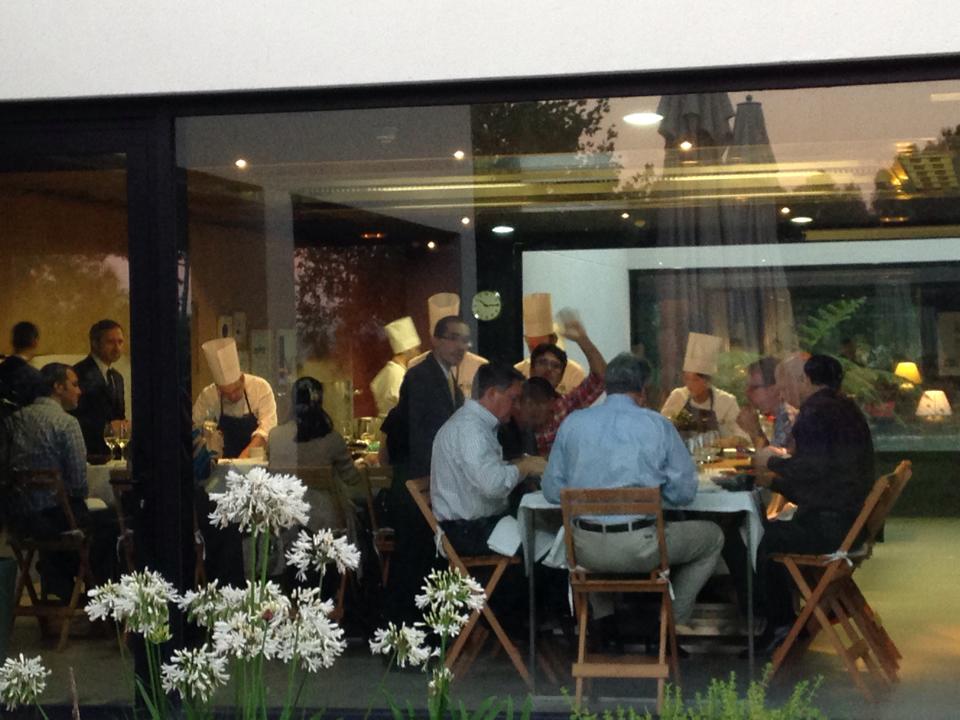
Tinto de BarrantesTomorrow we are closed for a wine festival, not as you might think for Albariño, but rather for our local red wine – Tinto de Barrantes. I have to confess that the actual legality of this wine is somewhat dubious, as I have never seen even one single labelled bottle in any shop or restaurant. Somehow the authorities seem to turn a blind eye to this fact, even allowing it to be celebrated with a street festival and declaring one day of local holiday.

The wine itself is not my favourite, although whenever we have visitors to the bodega and they have the opportunity to taste it, they seem to be quite enamoured. Personally I describe it as being something akin to a partially fermented Beaujolais, with a deep purple colour, very low alcohol, green tannins and a highly volatile acidity – not very nice….. but clearly the locals love it!

Tinto de BarrantesTomorrow we are closed for a wine festival, not as you might think for Albariño, but rather for our local red wine – Tinto de Barrantes. I have to confess that the actual legality of this wine is somewhat dubious, as I have never seen even one single labelled bottle in any shop or restaurant. Somehow the authorities seem to turn a blind eye to this fact, even allowing it to be celebrated with a street festival and declaring one day of local holiday.

The wine itself is not my favourite, although whenever we have visitors to the bodega and they have the opportunity to taste it, they seem to be quite enamoured. Personally I describe it as being something akin to a partially fermented Beaujolais, with a deep purple colour, very low alcohol, green tannins and a highly volatile acidity – not very nice….. but clearly the locals love it!

Summer starts here

June 3rd, 2014 | Bodega

ClockThis week signals our move to a summer timetable – working from 8am to 4pm, instead of the 9am to 5pm that we work in winter. Of course we are at the extreme western edge of Europe, which means that the sun rises just a little later, but on the plus side we do enjoy very long, light summer evenings (now all we need is a bit of sunshine!) However, the real reason for starting a little earlier is based around the summer heat. Clearly, we do not suffer the extreme temperatures that they do in other parts of the country, but it does at least mean that we are able to complete much of our working day in the vineyards before the mercury hits its late afternoon peak. (Note that during periods of excessive heat our vineyard guys do start at 7am).

I should also say that our bodega is fairly unique in that our working day is not split in two – as practised by many other industries around Spain. The tradition is normally to have a break of some two or three hours in the middle of the day, but for many different reasons (not least of all efficiency), we actively chose not to follow this practice.

ClockThis week signals our move to a summer timetable – working from 8am to 4pm, instead of the 9am to 5pm that we work in winter. Of course we are at the extreme western edge of Europe, which means that the sun rises just a little later, but on the plus side we do enjoy very long, light summer evenings (now all we need is a bit of sunshine!) However, the real reason for starting a little earlier is based around the summer heat. Clearly, we do not suffer the extreme temperatures that they do in other parts of the country, but it does at least mean that we are able to complete much of our working day in the vineyards before the mercury hits its late afternoon peak. (Note that during periods of excessive heat our vineyard guys do start at 7am).

I should also say that our bodega is fairly unique in that our working day is not split in two – as practised by many other industries around Spain. The tradition is normally to have a break of some two or three hours in the middle of the day, but for many different reasons (not least of all efficiency), we actively chose not to follow this practice.

Tribune tribute

June 1st, 2014 | Press

Chicago TribuneThere are quite a few famous broadsheet newspapers across America, some of the most well known probably include the New York Times, the L.A. Times, the Chicago Tribune and the Boston Globe. We are very happy therefore, to tell you that in the last few days we received quite a positive mention in the Chicago Tribune. When I saw it, it really made me smile, not only because we had been rated as one of a handful of “Iberian white wine to watch”, but mainly because of the review itself – short, succinct and very much to the point. Indeed, I don’t recall ever seeing a review that somehow managed to capture the essence of our wine in only three words “Lime-y and briny”…….. says it all. The review in full is as follows:

2012 Bodegas Castro Martin Albariño ‘Sobre Lias’: Lime-y and briny, so it says, “Find me shellfish or oysters, por favor“. 

It might not be the most grandiloquent review that we have ever received, but it works for me!

Chicago TribuneThere are quite a few famous broadsheet newspapers across America, some of the most well known probably include the New York Times, the L.A. Times, the Chicago Tribune and the Boston Globe. We are very happy therefore, to tell you that in the last few days we received quite a positive mention in the Chicago Tribune. When I saw it, it really made me smile, not only because we had been rated as one of a handful of “Iberian white wine to watch”, but mainly because of the review itself – short, succinct and very much to the point. Indeed, I don’t recall ever seeing a review that somehow managed to capture the essence of our wine in only three words “Lime-y and briny”…….. says it all. The review in full is as follows:

2012 Bodegas Castro Martin Albariño ‘Sobre Lias’: Lime-y and briny, so it says, “Find me shellfish or oysters, por favor“. 

It might not be the most grandiloquent review that we have ever received, but it works for me!

The scape crappers of New York

May 29th, 2014 | Odds & Sods

The scape crappers of New York (click to enlarge)

The scape crappers of New York (click to enlarge)

Now, I’m the last person that has the right to mock my wife’s English. I’m ashamed to admit that my Spanish is so poor that I still don’t know my ‘month’ from my ‘table’ (sometimes confusing ‘mes’ and ‘mesa’ when I speak Spanish}.

Last night we were watching a programme on TV about the construction of tall buildings (probably Discovery Channel) when Angela suddenly started talking about ‘scape crappers’. Of course she meant skyscrapers – all the right letters, but just arranged in the wrong order!!! I nearly choked on my drink…..

The scape crappers of New York (click to enlarge)

The scape crappers of New York (click to enlarge)

Now, I’m the last person that has the right to mock my wife’s English. I’m ashamed to admit that my Spanish is so poor that I still don’t know my ‘month’ from my ‘table’ (sometimes confusing ‘mes’ and ‘mesa’ when I speak Spanish}.

Last night we were watching a programme on TV about the construction of tall buildings (probably Discovery Channel) when Angela suddenly started talking about ‘scape crappers’. Of course she meant skyscrapers – all the right letters, but just arranged in the wrong order!!! I nearly choked on my drink…..

Eating with your eyes

May 27th, 2014 | Fiestas

Tapas2Over recent months I have been a little critical of some of our local food festivals. Not so much the festivals themselves, but rather the advertising, and more specifically the photography. Of course food is notoriously difficult to photograph, indeed, it requires very specialised techniques. We all know how our rather dull, flaccid looking fast food burger can be transformed into something juicy and wholly appetising on the advertising boards. The people who prepare these shots are the foody equivalent of professional make-up artists – lifting, tweaking, plumping, colouring and generally preening the dish before it appears in front on the lens.

Today I was quite relieved to finally see advertising for a local food festival that had clearly employed such professional  food stylists to shoot their pictures. The local town of Caldas de Reis is celebrating their fourth annual festival of Tapas. Their publicity shot shows a nicely prepared tapas dish, albeit that I have no idea what the dish actually is. At least it looks quite appetising which is more than I can say for the plate of zorza that looked more like cat food (in my post of last October).

Tapas2Over recent months I have been a little critical of some of our local food festivals. Not so much the festivals themselves, but rather the advertising, and more specifically the photography. Of course food is notoriously difficult to photograph, indeed, it requires very specialised techniques. We all know how our rather dull, flaccid looking fast food burger can be transformed into something juicy and wholly appetising on the advertising boards. The people who prepare these shots are the foody equivalent of professional make-up artists – lifting, tweaking, plumping, colouring and generally preening the dish before it appears in front on the lens.

Today I was quite relieved to finally see advertising for a local food festival that had clearly employed such professional  food stylists to shoot their pictures. The local town of Caldas de Reis is celebrating their fourth annual festival of Tapas. Their publicity shot shows a nicely prepared tapas dish, albeit that I have no idea what the dish actually is. At least it looks quite appetising which is more than I can say for the plate of zorza that looked more like cat food (in my post of last October).

Campeones!

May 24th, 2014 | National News

Champions LeagueMadrid has gone football crazy this week, and so they should. For the benefit of the one, or possibly two people who haven’t heard, this year’s UEFA Champions League final will be fought between Real Madrid (playing to win their tenth title) and Atlético Madrid (trying to win their first). It is of course a unique event in that it is the first time that two teams from the same city have contested the final. Finals between teams from the same country, yes, but from the same city, never.

There will be about 75,000/80,000 Madrileños making the journey to Lisbon, about 75% of these using the main A5 motorway to travel across Spain and Portugal – a distance of around 650km (400 miles). In addition to some 1,000 buses, there will also be 10 special trains, all packed to the rafters no doubt. Possibly the most puzzling statistic is that only 34,000 of the travelling fans actually have tickets to enter the stadium. In the desperate scramble to get hold of tickets one man offered his car in exchange, whilst a young woman actually offered her body (for an hour)….. Now that’s what I call devotion to your team!

Like most of the rest of Spain I will simply be kicking back in front of my TV, with beer in hand. (I’m afraid to admit there are just a few occasions when albariño doesn’t quite cut it, and this is one of them).

Champions LeagueMadrid has gone football crazy this week, and so they should. For the benefit of the one, or possibly two people who haven’t heard, this year’s UEFA Champions League final will be fought between Real Madrid (playing to win their tenth title) and Atlético Madrid (trying to win their first). It is of course a unique event in that it is the first time that two teams from the same city have contested the final. Finals between teams from the same country, yes, but from the same city, never.

There will be about 75,000/80,000 Madrileños making the journey to Lisbon, about 75% of these using the main A5 motorway to travel across Spain and Portugal – a distance of around 650km (400 miles). In addition to some 1,000 buses, there will also be 10 special trains, all packed to the rafters no doubt. Possibly the most puzzling statistic is that only 34,000 of the travelling fans actually have tickets to enter the stadium. In the desperate scramble to get hold of tickets one man offered his car in exchange, whilst a young woman actually offered her body (for an hour)….. Now that’s what I call devotion to your team!

Like most of the rest of Spain I will simply be kicking back in front of my TV, with beer in hand. (I’m afraid to admit there are just a few occasions when albariño doesn’t quite cut it, and this is one of them).

Pear, apple and just a hint of mouse

May 22nd, 2014 | Tasting

MouseThere is a chemical compound that can sometimes develop in wine called 2-acetyltetrahydropyridine, or ACTPY for short. The aroma is described as being like “caged mice and cracker biscuits”, and believe it or not, it is actually very difficult to smell (simply because it is a basic compound). It is much more likely that you will detect it on your palate as it’s release will be triggered by your own pH. Wine is obviously acidic and it is only when you put the wine in your mouth that the pH increases and the compound returns to its aromatic form, allowing it to be tasted.

Owing to the time it takes for this reaction to take place the evolution of the mousey flavour can be delayed…it might take about 30 seconds or so to develop on your palate. If you taste it in a line up of several wines it is important to identify the right wine as the culprit, and make sure that this off flavour isn’t carried over from a previous wine! The sensation can also persist in your mouth for several minutes and therefore it can be difficult to taste other wines afterwards.

There are two main origins of this off-flavour– microbial and chemical. If it’s microbial, it comes from strains of lactic acid bacteria or yeast, and if its origin is chemical, it is associated with the process of hyperoxidation (when hydrogen peroxide is used to remove SO2 from juice or wine). Thankfully, the latter is not a process that we use at Castro Martin. At this time there are no methods for measuring the level of mousiness in wines, and detection is still reliant on tasters, sensitive to this off-flavour. The other bad news is  that there’s also no verified ways to remove the character, other than blending away the affected wine.

As with any microbial and chemical fault in wine, prevention is always better than cure!

MouseThere is a chemical compound that can sometimes develop in wine called 2-acetyltetrahydropyridine, or ACTPY for short. The aroma is described as being like “caged mice and cracker biscuits”, and believe it or not, it is actually very difficult to smell (simply because it is a basic compound). It is much more likely that you will detect it on your palate as it’s release will be triggered by your own pH. Wine is obviously acidic and it is only when you put the wine in your mouth that the pH increases and the compound returns to its aromatic form, allowing it to be tasted.

Owing to the time it takes for this reaction to take place the evolution of the mousey flavour can be delayed…it might take about 30 seconds or so to develop on your palate. If you taste it in a line up of several wines it is important to identify the right wine as the culprit, and make sure that this off flavour isn’t carried over from a previous wine! The sensation can also persist in your mouth for several minutes and therefore it can be difficult to taste other wines afterwards.

There are two main origins of this off-flavour– microbial and chemical. If it’s microbial, it comes from strains of lactic acid bacteria or yeast, and if its origin is chemical, it is associated with the process of hyperoxidation (when hydrogen peroxide is used to remove SO2 from juice or wine). Thankfully, the latter is not a process that we use at Castro Martin. At this time there are no methods for measuring the level of mousiness in wines, and detection is still reliant on tasters, sensitive to this off-flavour. The other bad news is  that there’s also no verified ways to remove the character, other than blending away the affected wine.

As with any microbial and chemical fault in wine, prevention is always better than cure!

Steam clean

May 19th, 2014 | Bodega

Steam cleanOne of the questions that we are most frequently asked about our wine making is whether we use any oak or not. My answer is always a most emphatic “NO”. When it comes to wine, and not just albariño, at Castro Martin we always want to be known as purists – our ultimate goal is quite simply to make a wine that is an honest expression of our grape variety, untainted by flavours of yeast, oak or any other additive for that matter.

Having said all that, I can sometimes understand why people might ask….. a young albariño is always fresh, clean, zesty with a lovely concentration of intense, focused fruit, but then, with a little extended ageing, all that can change. After a year or two in bottle, quite naturally, the wine will start to evolve (this is not to be confused with oxidation, which is something completely different). Older albariño can start to develop secondary aromas and flavours that are perhaps more usually associated with oak aged or barrel fermented wines – it can develop a slightly ‘honeyed’ sweetness, with just a touch of toffee or caramel. Altogether quite different from its original, widely known style. In some ways it’s a bit of a shame that consumers really only know our wine in its young, zesty form, and normally don’t get to experience its older alter ego (unless they find a forgotten bottle at the bottom of their wine cupboard). When stored correctly an older, well-made albariño can actually become quite an interesting wine. 

So why does today’s photo show a barrel being steam cleaned in our bodega, you may ask? OK, so I’ll admit it, we do make a very small amount of barrel aged (not fermented) albariño for a very specific customer. Not necessarily my own personal taste, but if there’s a niche market for this wine, then why not? I should add that we can only oak age wine in certain vintages, when the wine has sufficient body and weight to support the oak. If the vintage is not suitable you may just end up with a glass of oak and acidity – altogether unpleasant.

Steam cleanOne of the questions that we are most frequently asked about our wine making is whether we use any oak or not. My answer is always a most emphatic “NO”. When it comes to wine, and not just albariño, at Castro Martin we always want to be known as purists – our ultimate goal is quite simply to make a wine that is an honest expression of our grape variety, untainted by flavours of yeast, oak or any other additive for that matter.

Having said all that, I can sometimes understand why people might ask….. a young albariño is always fresh, clean, zesty with a lovely concentration of intense, focused fruit, but then, with a little extended ageing, all that can change. After a year or two in bottle, quite naturally, the wine will start to evolve (this is not to be confused with oxidation, which is something completely different). Older albariño can start to develop secondary aromas and flavours that are perhaps more usually associated with oak aged or barrel fermented wines – it can develop a slightly ‘honeyed’ sweetness, with just a touch of toffee or caramel. Altogether quite different from its original, widely known style. In some ways it’s a bit of a shame that consumers really only know our wine in its young, zesty form, and normally don’t get to experience its older alter ego (unless they find a forgotten bottle at the bottom of their wine cupboard). When stored correctly an older, well-made albariño can actually become quite an interesting wine. 

So why does today’s photo show a barrel being steam cleaned in our bodega, you may ask? OK, so I’ll admit it, we do make a very small amount of barrel aged (not fermented) albariño for a very specific customer. Not necessarily my own personal taste, but if there’s a niche market for this wine, then why not? I should add that we can only oak age wine in certain vintages, when the wine has sufficient body and weight to support the oak. If the vintage is not suitable you may just end up with a glass of oak and acidity – altogether unpleasant.

Egg & Sausage

May 16th, 2014 | Fiestas

Egg & ChorizoI just love these local Fiestas! They say that sometimes the simple things in life are the best – so why not celebrate them? Tomorrow in the town of Mos they are holding the 6th annual festival of fried egg, chorizo and corn bread. Simple….

The text in the publicity claims that the food will be sold at “popular prices”, which I guess could mean anything. For example, they could sell each dish at 50 Euros – someone then complains by saying “I thought that you were advertising food at popular prices?” To which the organisers can simply respond, “Well, we like them!”

By the way, the photo used in the publicity is, as always, a bit basic, but you’ve still got to admire a country that can make a party out of sausage and egg!

Egg & ChorizoI just love these local Fiestas! They say that sometimes the simple things in life are the best – so why not celebrate them? Tomorrow in the town of Mos they are holding the 6th annual festival of fried egg, chorizo and corn bread. Simple….

The text in the publicity claims that the food will be sold at “popular prices”, which I guess could mean anything. For example, they could sell each dish at 50 Euros – someone then complains by saying “I thought that you were advertising food at popular prices?” To which the organisers can simply respond, “Well, we like them!”

By the way, the photo used in the publicity is, as always, a bit basic, but you’ve still got to admire a country that can make a party out of sausage and egg!

Rack around the clock

May 15th, 2014 | Bodega

LeesSince the end of the alcoholic fermentation our wines have been sitting quietly, in tank, on their lees. Just in case you don’t know, lees are the exhausted yeast cells that fall to the bottom of the tank at the end of fermentation when their job is done, and the sugar is converted into alcohol. Despite the fact that they are dead, they still contain some nutrients that feed the wine, over time adding to the character, structure and complexity of the finished product. The problem is that the lees cannot simply be left in contact with the wine for an infinite amount of time, and deciding the optimum moment to remove them is best judged by simply tasting the tanks at regular intervals throughout the winter and early spring. It’s really a matter of experience and judgement. If for any reason the lees are not completely healthy, they will simply taint the wine, leaving unpleasant ‘off’ flavours – clearly not something that we want.

Our 2013 vintage has been ‘on the lees’ (sur lie in French or sobre lias in Spanish) for some seven months now, and so we have just embarked on a programme of racking the first few tanks. The process of racking is actually quite straight forward and involves pumping the wine to a clean tank, leaving the lees behind at the bottom of the original tank.

The law does not allow us to simply wash the redundant lees down the drain, quite naturally we are obliged to dispose of them responsibly. Indeed, they actually still have some value! This thick paste still contains wine, and so we actually collect it in large plastic tanks (see photo), ensuring that it is correctly sulphured, and sell it for a nominal amount to our local distillery. You may recall that we also sell our pomace (the residue of grape skins and stalks left after pressing) to our distillery, but they much prefer to buy lees….. and the reason? The answer is quite simple – the skins and stalks are not fermented and contain only grape juice, whereas the lees contain finished wine. This makes the distillation process a whole lot easier for them.

LeesSince the end of the alcoholic fermentation our wines have been sitting quietly, in tank, on their lees. Just in case you don’t know, lees are the exhausted yeast cells that fall to the bottom of the tank at the end of fermentation when their job is done, and the sugar is converted into alcohol. Despite the fact that they are dead, they still contain some nutrients that feed the wine, over time adding to the character, structure and complexity of the finished product. The problem is that the lees cannot simply be left in contact with the wine for an infinite amount of time, and deciding the optimum moment to remove them is best judged by simply tasting the tanks at regular intervals throughout the winter and early spring. It’s really a matter of experience and judgement. If for any reason the lees are not completely healthy, they will simply taint the wine, leaving unpleasant ‘off’ flavours – clearly not something that we want.

Our 2013 vintage has been ‘on the lees’ (sur lie in French or sobre lias in Spanish) for some seven months now, and so we have just embarked on a programme of racking the first few tanks. The process of racking is actually quite straight forward and involves pumping the wine to a clean tank, leaving the lees behind at the bottom of the original tank.

The law does not allow us to simply wash the redundant lees down the drain, quite naturally we are obliged to dispose of them responsibly. Indeed, they actually still have some value! This thick paste still contains wine, and so we actually collect it in large plastic tanks (see photo), ensuring that it is correctly sulphured, and sell it for a nominal amount to our local distillery. You may recall that we also sell our pomace (the residue of grape skins and stalks left after pressing) to our distillery, but they much prefer to buy lees….. and the reason? The answer is quite simple – the skins and stalks are not fermented and contain only grape juice, whereas the lees contain finished wine. This makes the distillation process a whole lot easier for them.

Monthly Archives

Categories

ARE YOU OF LEGAL AGE? This site is intended for those of legal drinking age. By entering, you confirm that you are of legal drinking age in the country where this site is being accessed. ¿ERES MAYOR DE EDAD? Este sitio está destinado a personas en edad legal para beber alcohol. Al ingresar, confirma que tiene la edad legal para beber en el país donde se accede a este sitio.