Author Archive

Home brew

March 9th, 2016 | Odds & Sods

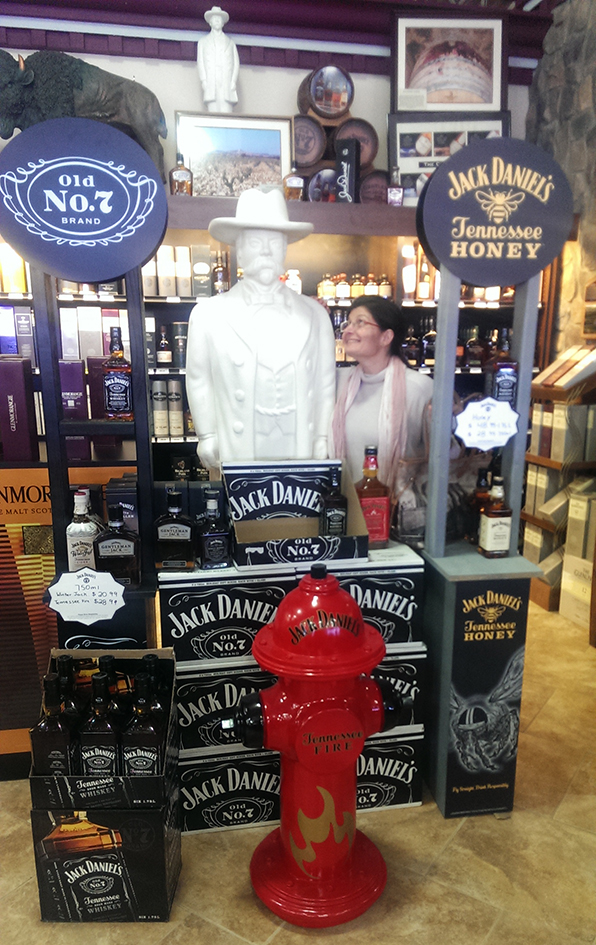
Home brewIt’s quite a romantic idea to serve a wine made by your own fair hand, and even more so if your name appears on the label. I guess that this could be why a handful of celebrities have invested their millions into producing their very own wine…… ‘Pretentious’ I think it’s called. The reality though, is somewhat different to the dream – it’s quite hard work to grow grapes and make wine, even more difficult to sell it, and quite impossible to make a profit (OK, that last part is not strictly true, except to say that there are a lot of bodegas in Galicia struggling to make ends meet at the moment).

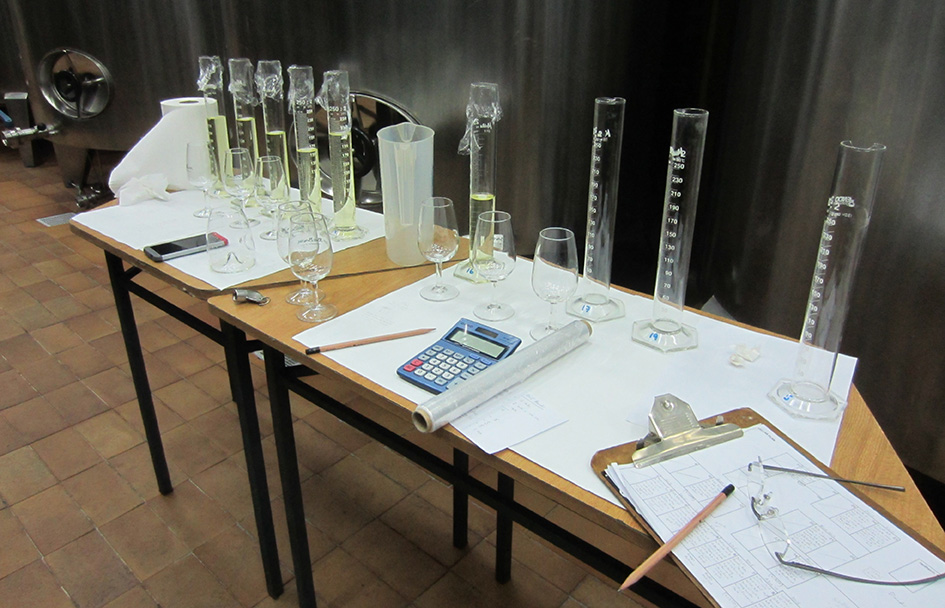
On a much smaller scale you could of course, buy a wine kit and make your own wine in the comfort of your own kitchen. Admittedly not quite as romantic an idea, but potentially a lot more fun (assuming that it works!). I believe that there are many different ways of doing it, although I confess that I have never tried, and I am sure that some kits will achieve better results than others. I did however, see a rather elaborate kit that caught my eye, the only downside being the price – $239 to make 1 gallon of wine. By my calculations that translates to about $63 a litre, or $47 a bottle (75cl)! You could buy a pretty decent bottle for that amount of money, and so you would hope that the result is at least drinkable, otherwise you might end up with a wine making kit that simply resembles a fairly expensive chemistry set.

This particular wine kit is available in different flavours (I am reluctant to say grape varieties), Chilean Merlot, Cabernet Sauvignon, Pinot Noir, Moscato, Australian Chardonnay and Italian Pinot Grigio. The world of wine is at your feet, but only if you are prepared to forego a wonderful Spanish albariño…. Castro Martin – not available in any wine kit!

Biodynamic, organic or sustainable?

March 7th, 2016 | Technical

[:en]White wineBiodynamic, organic or sustainable? What’s the difference? This is a question that causes quite a few headaches, not only for the wine industry in general, but also, more importantly, for the poor confused consumer buying the finished wine. It is also one of the questions that we are most frequently asked by our own importers and customers, and it is a question that we always answer truthfully (even when we know that being economical with the truth might help to widen our potential consumer base).

By far the most complicated to achieve is biodynamic, and for most producers in Rias Baixas is an unattainable status, mostly owing to the damp conditions that we endure in this corner of Spain. To be fully biodynamic doesn’t just mean farming grapes without chemicals, but actually treats the vineyard as an ecosystem, taking into account astrological influences and lunar cycles etc. A true biodynamic wine is also made without any of the common manipulations such as yeast additions or acidity adjustments. Just one obvious reason why Rias Baixas cannot really produce biodynamic wine is because albariño’s naturally occurring yeast flora, by itself, simply cannot sustain a complete alcoholic fermentation.

In the category of organic, there are two types of wine. Those made from organically grown grapes that don’t use any synthetic additives or treatments, or the higher level of completely ‘organic wine’ that uses organic grapes but also doesn’t add sulphites to the wine (although it can include any naturally occurring sulphites).

Sustainable wine (such as our own Castro Martin wines), are made using a range of practices that are not only ecologically sound, but also economically viable and socially responsible. We adopt many of the practices that will be used in organic or biodynamic farming but have a little flexibility to include practices that suit our individual needs. Clearly, we are not going to sit back and watch our fruit rot on the vines if we can take steps to prevent it from happening….. Sustainability also means that we focus on things like water and energy conservation, as well as the use of renewable resources.

As far as selecting your wine is concerned, the simple rule is – if in doubt, read the label![:es]White wineBiodynamic, organic or sustainable? What’s the difference? This is a question that causes quite a few headaches, not only for the wine industry in general, but also, more importantly, for the poor confused consumer buying the finished wine. It is also one of the questions that we are most frequently asked by our own importers and customers, and it is a question that we always answer truthfully (even when we know that being economical with the truth might help to widen our potential consumer base).

By far the most complicated to achieve is biodynamic, and for most producers in Rias Baixas is an unattainable status, mostly owing to the damp conditions that we endure in this corner of Spain. To be fully biodynamic doesn’t just mean farming grapes without chemicals, but actually treats the vineyard as an ecosystem, taking into account astrological influences and lunar cycles etc. A true biodynamic wine is also made without any of the common manipulations such as yeast additions or acidity adjustments. Just one obvious reason why Rias Baixas cannot really produce biodynamic wine is because albariño’s naturally occurring yeast flora, by itself, simply cannot sustain a complete alcoholic fermentation.

In the category of organic, there are two types of wine. Those made from organically grown grapes that don’t use any synthetic additives or treatments, or the higher level of completely ‘organic wine’ that uses organic grapes but also doesn’t add sulphites to the wine (although it can include any naturally occurring sulphites).

Sustainable wine (such as our own Castro Martin wines), are made using a range of practices that are not only ecologically sound, but also economically viable and socially responsible. We adopt many of the practices that will be used in organic or biodynamic farming but have a little flexibility to include practices that suit our individual needs. Clearly, we are not going to sit back and watch our fruit rot on the vines if we can take steps to prevent it from happening….. Sustainability also means that we focus on things like water and energy conservation, as well as the use of renewable resources.

As far as selecting your wine is concerned, the simple rule is –  if in doubt, read the label![:]

Winespeak

March 1st, 2016 | Tasting

Card 2014 2A little while ago I read a very interesting article in the Wall Street Journal, about the vocabulary that we use when describing wine. It occurred to me that, as a wine professional, there are probably some words that we use when describing wine which might not be fully understood by the average wine consumer. Thankfully we have wine journalists who are by far the most gifted when it comes to translating the taste of wine into words that we can all understand. It’s really not that easy, and even when we do it, there might still be some expressions that the amateur drinker might fail to comprehend completely, or at the very least misinterpret as something different.

One such, quite commonly used wine word, is ‘creamy’ (often used in association with the word buttery). Of course, in the context of wine it doesn’t mean that your glass will be opaque, but is actually used to describe a soft, ripe, rich, well-rounded white wine such as an oaked chardonnay. The lactic, dairy flavours (and mouth filling sensations) are the by-product of the wine-making process which produces an organic compound called diacetyl.

A word such as creamy is probably quite easy to grasp when compared to some of the others you might encounter, such as mousy, foxy, rancio, barnyard, gravel or flinty. Although, as in the case of creamy, the adjective used might not simply describe a taste, but might actually represent a sensation in the mouth – almost like a texture. I mentioned gravel and flint in my very short list of examples, and these are elements that we possibly do smell in day-today life, but simply don’t associate with wine. Of course, you could always wet a stone or a piece of flint and smell it, or even try licking it (if it’s clean!). Flinty, for example, is often used to describe a sharp, zippy, fresh, but dry white wine, perhaps with a good lick of acidity – wines such as Pouilly Fumé or perhaps a Chablis. These words come under a general heading that might be described as minerality. (A term that I nearly always use for our Castro Martin Family Estate albariño).

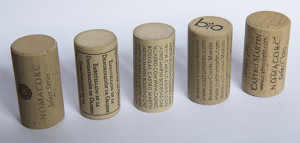
Other odd words include cat’s pee, iodine, leather, rubber, petrol, tar, and then others like chewy, fleshy, dumb, lifted – the list goes on, and that is without mentioning a few common wine faults – reduction, volatility, oxidation, maderisation, corkiness (TCA) and bretty (Brettanomyces).

It’s a whole new language!


The four seasons

February 25th, 2016 | Weather

[:en]vivaldi-the-four-seasonsOf course, like all Brits, I have an obsession with the weather – sad but true. It must be something in our DNA. Having said that our current weather is really something to talk about. The weather pattern is that there simply is no weather pattern, this winter has been totally unpredictable. If you needed to summarise the story so far, possibly the only statement you could make is that it has been wet and exceptionally mild. We have largely escaped the penetrating cold, damp conditions of a typical Galician winter, which is a relief in one way, but maybe not for our vineyards. Winter is the time for them to recover, in readiness for the next growing season.

The most unusual feature of this winter (and more particularly the weather we have at the moment), is that we are experiencing changes on more or less a daily basis, sometimes even within hours. One day wet, the next sunny, one day warm, the next cold, one night down to 4°C, the next 10 or 12°C. To say that it is unpredictable is really something of an understatement. Of course we are not alone in all these odd conditions as other parts of Europe (more especially in the west) have also experienced some fairly extreme weather over the last few months.

Let’s see what the summer of 2016 brings us….. a perfect vintage I hope!

 [:es]vivaldi-the-four-seasonsOf course, like all Brits, I have an obsession with the weather – sad but true. It must be something in our DNA. Having said that our current weather is really something to talk about. The weather pattern is that there simply is no weather pattern, this winter has been totally unpredictable. If you needed to summarise the story so far, possibly the only statement you could make is that it has been wet and exceptionally mild. We have largely escaped the penetrating cold, damp conditions of a typical Galician winter, which is a relief in one way, but maybe not for our vineyards. Winter is the time for them to recover, in readiness for the next growing season.

The most unusual feature of this winter (and more particularly the weather we have at the moment), is that we are experiencing changes on more or less a daily basis, sometimes even within hours. One day wet, the next sunny, one day warm, the next cold, one night down to 4°C, the next 10 or 12°C. To say that it is unpredictable is really something of an understatement. Of course we are not alone in all these odd conditions as other parts of Europe (more especially in the west) have also experienced some fairly extreme weather over the last few months.

Let’s see what the summer of 2016 brings us….. a perfect vintage I hope![:]

Working hours

February 18th, 2016 | Business

CerradoThis morning I had three separate chores to do in the centre of Pontevedra – visiting three separate businesses. The problem was that I had no idea what time they opened, and so I made a quick search on Google. The result was not really what I wanted. One opened at 8am, the second at 9am, and the last one at 9.30am. Clearly I didn’t want to hang around in town waiting for the third business to open, so the only option was to wait at home until just before 9.30. This was really frustrating and I just felt like I was wasting my morning….

It occurred to me that the situation is actually much worse than this, if you examine Spanish business hours in general. Businesses can open at more or less any hour between 8am and 10/10.30am in the morning, and then close again for lunch at any time between 1.30pm and 2.30pm. And guess what? This very same scenario is repeated again in the evening! Shops and offices re-open between 3.30pm and 5.30pm, and then close again at any time up until about 10pm. I have to say that this system doesn’t strike me as being particularly efficient (or convenient). For example, unless you know the opening and closing times of every business that you want to contact or visit, then it can be quite complicated. (Without mentioning the fact that the very same businesses can, and do, vary their hours between winter and summer!)

Weekends are another story…. Many shops still close for the weekend at lunch time on Saturday, which would appear to be a bit of an archaic practice – especially in times of recession when you really need to maximise your income. Shops are closed on Sundays here in the provinces (but much less so in the big cities these days). Here in the ‘sticks’ shops are allowed to open for a limited (and controlled) number of Sundays throughout the year, normally around Christmas or ‘Sale’ periods.

At Castro Martin we only make one small adjustment to our timetable during the year, between winter and summer. In winter we start an hour later at 9am, but this is simply because of daylight hours. On winter mornings our guys cannot prune vines in the dark, hence the fact that we start a little later.

Time for maintenance

February 15th, 2016 | Bodega

[:en]MotorsAt this time of year, when the bodega is quiet, it is clearly the best time to carry out any equipment maintenance. Sometimes it is fairly basic work that we can carry out ‘in house’, whilst on other occasions it is slightly more complicated and we have to leave it to the experts.

One of the most important pieces of equipment that we own are our presses – without presses at harvest time then there would, quite simply, be no wine. Even the breakdown of one of our two presses during the picking can cause us huge problems, creating a severe bottleneck and restricting the smooth flow of grapes through the cellar.

Keeping the presses in good working order is therefore a major priority for us, and therefore this winter we decided to completely overhaul the motors in both machines. Unfortunately the best engineers that we know are not local, actually based in Barcelona on the opposite side of the country. Consequently the two motors were disconnected, packed and dispatched on a holiday for treatment and pampering to the Costa Brava.

A day or two ago they returned, fully overhauled, with many parts replaced, and trussed up in plastic like two giant Christmas turkeys (see photo). It’s now just a small matter of reconnecting and testing, but we are told they should operate like new. Vamos a ver![:es]MotorsAt this time of year, when the bodega is quiet, it is clearly the best time to carry out any equipment maintenance. Sometimes it is fairly basic work that we can carry out ‘in house’, whilst on other occasions it is slightly more complicated and we have to leave it to the experts.

One of the most important pieces of equipment that we own are our presses – without presses at harvest time then there would, quite simply, be no wine. Even the breakdown of one of our two presses during the picking can cause us huge problems, creating a severe bottleneck and restricting the smooth flow of grapes through the cellar.

Keeping the presses in good working order is therefore a major priority for us, and therefore this winter we decided to completely overhaul the motors in both machines. Unfortunately the best engineers that we know are not local, actually based in Barcelona on the opposite side of the country. Consequently the two motors were disconnected, packed and dispatched on a holiday for treatment and pampering to the Costa Brava.

A day or two ago they returned, fully overhauled, with many parts replaced, and trussed up in plastic like two giant Christmas turkeys (see photo). It’s now just a small matter of reconnecting and testing, but we are told they should operate like new. Vamos a ver![:]

The carnival is over

February 11th, 2016 | Fiestas
That albariño looks a bit yellow!

That albariño looks a bit yellow!

The last week in Galicia (and indeed around the world) has been Carnival time. Unfortunately, we are not blessed with the same weather as Rio de Janeiro where the scantily clad samba schools shimmy their way through the hot and humid Sambadrome. Here it’s more a case of sheepskin bikinis, or any costume that will protect you in some way from the cold, damp February chill. Indeed, this year has been worse than most, as yet another storm system swept across western Europe bring high winds and dumping huge amounts of rain. Many Carnival festivities were either cancelled or have at least been postponed, so that all the effort of elaborate costumes and floats does not go totally to waste.

Carnival is also known as Mardi Gras (fat Tuesday), and is a Christian feast – the feast before the ritual fasting period of Lent. Originally it was the day when people filled themselves with fatty foods, or perhaps meat, to sustain them over a 40 day period until Easter. The word carnival itself probably derives from the Italian ‘carne levare’ meaning ‘to remove meat’, and the very first carnival parades were also recorded in medieval Italy – for a long time the Carnival of Venice was considered the most famous.

Education, education, education

February 9th, 2016 | Business

Masterclass EYou may have notice that there have been no posts on our sites for the last week or so, and that’s quite simply because we have been travelling. Now, the hotel where we stayed in London claimed to have free internet – and it did – provided that you didn’t mind waiting half an hour to download a simple document or e-mail…. Completely useless! That’s another story, but does explain why we have been silent.

Of all the travelling that we do and the visits that we make, by far the most productive use of our time is training. We were invited by our UK importer to hold a “Materclass” for their London sales team – an opportunity just too good to refuse. Visiting individual customers and holding small tastings is one thing, but having the opportunity to ‘educate’ a large group of sales people is something else. It’s what I call the ‘cascade effect’. By preaching our message to one small group, this can, potentially, be transmitted down to hundreds of customers at the business end of our supply chain. Of course, it goes without saying that the more knowledge that we pass on to the team, then hopefully, the more confident they will be in going out to push our wines. The long and short of it is that we love doing these presentations, and above all else, our goal is that we will be creating new ambassadors for Castro Martin and our brands.

I think our presentation was well received, but more importantly, our wines showed really well as we tasted our way through them. We can talk and educate until we are blue in the face, but our wines? Well, we let them speak for themselves….

New Fiche/Ficha/Sheet

February 1st, 2016 | Technical

[:en]BCM Fiche

We have just updated the ‘wine information sheets’ on our website, or at least the English versions (Spanish will follow very soon). They can be found on the DOWNLOADS page, that also includes bottle shots, labels, vintage reports and a couple of other, hopefully useful, things.

My only problem is that I never quite know what to call these particular documents. Personally, I have always called them ‘Fiche Technique’, but I guess that could because much of my wine education was made in France. Of course here in Spain that translates into ‘Ficha Técnica’, whilst I believe that in the States they are sometimes called ‘Cheat Sheets’. Whatever your language, these smart new pages are now available for download.[:es]BCM FicheWe have just updated the ‘wine information sheets’ on our website, or at least the English versions (Spanish will follow very soon). They can be found on the DOWNLOADS page, that also includes bottle shots, labels, vintage reports and a couple of other, hopefully useful, things.

My only problem is that I never quite know what to call these particular documents. Personally, I have always called them ‘Fiche Technique’, but I guess that could because much of my wine education was made in France. Of course here in Spain that translates into ‘Ficha Técnica’, whilst I believe that in the States they are sometimes called ‘Cheat Sheets’. Whatever your language, these smart new pages are now available for download.[:]

So near, but yet so far…

January 27th, 2016 | Galicia

Google EarthI installed a city map App on my phone the other day. As soon as it was up and running it started to search for any major cities close to our location – it didn’t find any! The results however, were slightly surprising. Apparently the nearest major city to Barrantes (where our bodega is located) is Lisbon! Somehow I had assumed that it would be Madrid, but actually Lisbon is some 55km nearer (Lisbon 415km, Madrid 470km). One of the facts that didn’t surprise me is that Barcelona is 950km from our door, and I assume that this is the straight line distance. Apart from flying, the journey to Barca is almost an expedition (over 1,150km by road – about 11 hours driving)!

It’s also quite interesting to know that London is only 300km further than Barcelona, which actually corroborates the fact that from Galicia to Cataluña is the widest point of Spain (east to west). Sometimes, when people come to visit us, their geography of the country can be a little confused. When I mention that we are located in northern Spain, many visitors respond by saying “so you must be near Bilbao then?”. This is not the case! Bilbao is actually just under 500km from our door (as the crow flies) and certainly used to be a full days drive – new roads have made it a bit quicker now, albeit still probably six hours.

I guess my point is that Galicia is still a very rural and remote corner of Spain. Getting in and out of our Province is still not easy – roads are improving, air routes are limited, and trains are still quite poor (taking several hours to reach Madrid). Hence the fact that I’m really looking forward to visiting London next week!

Monthly Archives

Categories

ARE YOU OF LEGAL AGE? This site is intended for those of legal drinking age. By entering, you confirm that you are of legal drinking age in the country where this site is being accessed. ¿ERES MAYOR DE EDAD? Este sitio está destinado a personas en edad legal para beber alcohol. Al ingresar, confirma que tiene la edad legal para beber en el país donde se accede a este sitio.