Author Archive

“Oenodynamic”: Hydrodynamic of wine swirling

April 16th, 2018 | Tasting

OK, I know it’s Monday, but let’s talk hydrodynamics (the type of word that can be dropped casually into a conversation about wine to impress your friends)!

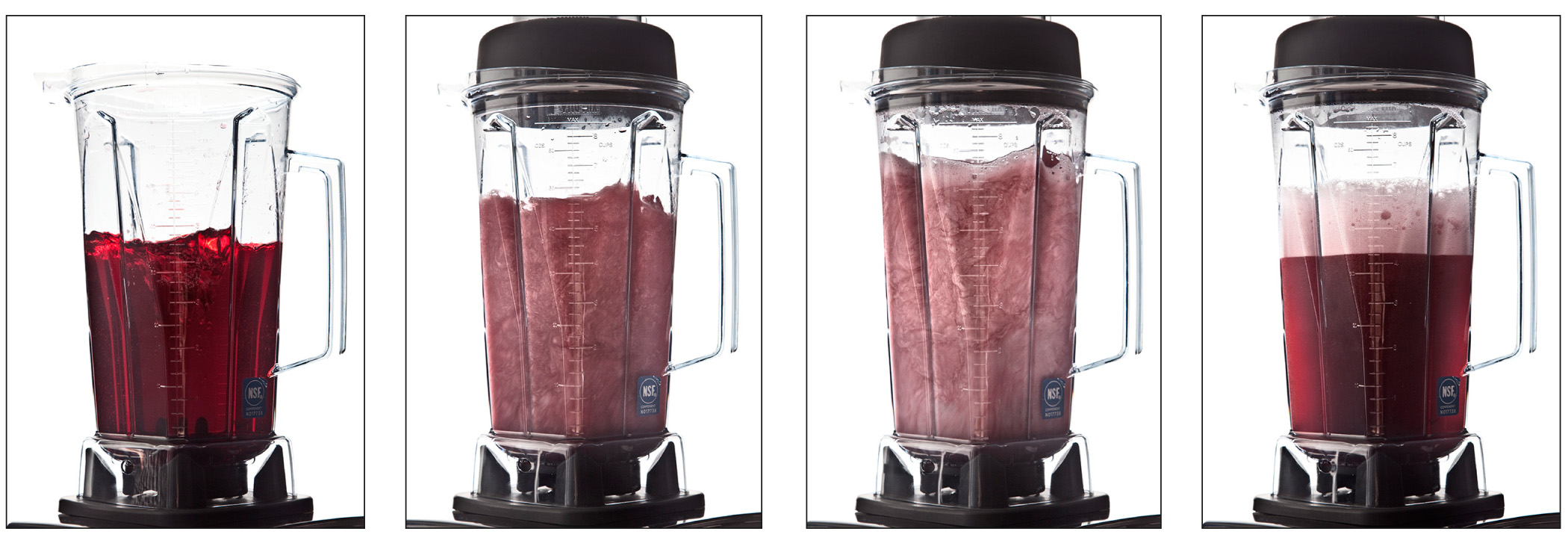
When it comes to serious wine tasting one of the very first steps in the process is the so called ‘swirling’, necessary to release the bouquet of the wine. The theory behind it is that a gentle circular movement of the glass generates a wave propagating along the glass walls, enhancing oxygenation and mixing. In simple terms this action spreads the surface area of wine exposed in order to make the aromas more prominent.

Scientifically speaking this motion is not yet fully understood – it is all to do with fluid dynamics and the wave shapes generated by this simple movement. Suffice to say that it can make a real difference to the olfactory sensation that you will experience.

By the way, please don’t do what I have seen a few would-be ‘wine connoisseurs’ doing at the table – holding their glass stationery and moving their nose back and forth across the glass. Apart from making yourself giddy, this 70’s disco head movement will have no effect on the bouquet of your wine! 

Village life

April 11th, 2018 | Local News

Apart from my early childhood, I have lived nearly all my adult life in cities. Of course, I now live in the small provincial ‘city’ of Pontevedra, and when I first moved here some 16 years ago, the change was quite a shock to my system. For example, the difference between London, where I worked, and the village of Barrantes, where I work now, was…. well, like being on a different planet. It was not simply a question of size, or the conveniences that you take for granted in a big city, but it was actually more to do with the ‘culture’ of village life.

London can be a very impersonal place, where you might not even know the person living next door to you. People could be crammed onto public transport, almost face-to-face and never speak, and to be honest it’s not really the easiest place for making new friends.

Barrantes is the polar opposite! Even people you have never met know who you are, and even personal details about your life. The thing is that people talk – in fact, a few that I know never stop talking. Perhaps even unwittingly they disclose information about themselves, their families, their neighbours and their friends, I think it’s what some might call ‘village gossip’. Perhaps it’s because I’m English, and already stand out from the crowd, but I have introduced myself to many people who actually already know who I am. My fame goes before me.

Bud break 2018

April 9th, 2018 | Vineyards

[:en]After months of complaining about having no rain, things have been turned on their head, whereby we are now complaining about the continued cold, damp weather.

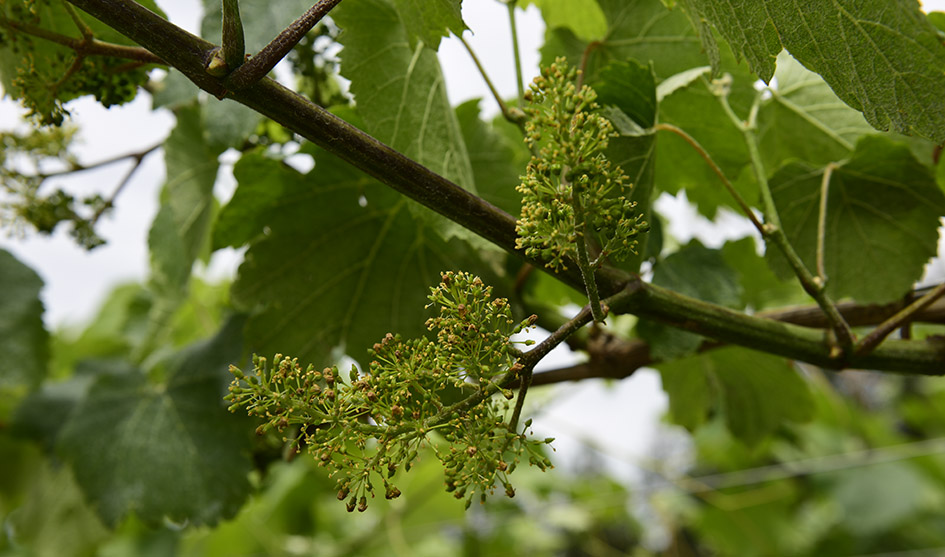
By way of illustrating how cold it has been I thought that it might be interesting to do a comparison of vine development, to see how one or two different vintages compare. Whilst I have hundreds of photos of vines in my folders, I have carefully sorted through them to find photos taken in the very same location, at more or less the same time of year – a sort of odd ‘time lapse’ spread over several years! (It’s important that this selection was taken in exactly the same location, as different parts of each vineyard will develop at different speeds according to their exposure).

I had already noticed that vine development was slow this year, as it is only now that we are really witnessing the first signs of life – bud break. As you will see from the comparative photos (click on image to enlarge), we are probably about one or two weeks behind where we would normally be at this date. Bud break often happens during that last weeks of March, and generally speaking, by early April we can almost be at the point where some folliage starts to emerge. (The first two photos are from two previous vintages, and the final picture is 2018).

Of course, it is still very early days, and should the weather suddenly warm up then we can soon get back on track. It is not really until the flowering that we can make a true determination of when the harvest might be, but the way things stand it’s possible that it could be a late one in 2018. Vamos a ver![:es]After months of complaining about having no rain, things have been turned on their head, whereby we are now complaining about the continued cold, damp weather.

By way of illustrating how cold it has been I thought that it might be interesting to do a comparison of vine development, to see how one or two different vintages compare. Whilst I have hundreds of photos of vines in my folders, I have carefully sorted through them to find photos taken in the very same location, at more or less the same time of year – a sort of odd ‘time lapse’ spread over several years! (It’s important that this selection was taken in exactly the same location, as different parts of each vineyard will develop at different speeds according to their exposure).

I had already noticed that vine development was slow this year, as it is only now that we are really witnessing the first signs of life – bud break. As you will see from the comparative photos (click on image to enlarge), we are probably about one or two weeks behind where we would normally be at this date. Bud break often happens during that last weeks of March, and generally speaking, by early April we can almost be at the point where some folliage starts to emerge. (The first two photos are from two previous vintages, and the final picture is 2018).

Of course, it is still very early days, and should the weather suddenly warm up then we can soon get back on track. It is not really until the flowering that we can make a true determination of when the harvest might be, but the way things stand it’s possible that it could be a late one in 2018. Vamos a ver![:]

Pruning – Part 4

April 4th, 2018 | Video

This is the final video of our four part pruning sequel (albeit that the final part is not so much pruning, but rather burning). Before I start I should say that we don’t always burn the vine cuttings, sometimes they are shredded and ploughed back into the soil. There are two factors that determine whether we do this or not.

The first is quite simple – if there is any trace of disease in the dead wood, then the cuttings will be burned without question. Secondly, is the soil analysis. Every year we have all the soils in our vineyards analised, and then simply treat according to what is required (always natural bio-treatments approved by ecological agriculture). One of the reasons that we don’t need to re-cycle vine cuttings every year (adding more organic material) is because we already feed the soil during the growing cycle. Because we allow grass to grow naturally between the vines, then obviously we have to cut it, and when we do the mulch that is formed often provides enough natural nutrient on its own. In effect, any additional treatments that we use are only by way of a supplement to this natural process.

(Please remember that today’s video was filmed out of sequence, before the onset of the current period of cold, wet weather!)

Just a joke!

April 2nd, 2018 | April Fools

[:en]

You may have gathered yesterday, that it’s very unusual for me to post on a Sunday, except that yesterday was a special day. Just in case you didn’t guess, it was April 1st, April Fool’s Day, and my story of our denomination changing it’s name was just ‘fake news’ (as we tend to call it these days). Although, I have to say that at least part of the story was true. For example, I know from experience that many non-Spanish speakers, do struggle when it comes to pronouncing “Rias Baixas”. Many tend to say it very quickly, just mumble it under their breath, or ignore it completely. This probably explains why we are the only denomination in Spain where the grape variety is perhaps more widely known than the denomination itself. So, in reality, re-vamping the name a little might not be such a bad idea. We are after all, a comparatively young denomination and don’t exactly boast centuries of history.

In the meantime, we are still on Easter break. It’s all a bit odd in that some local towns and cities are working normally, and have already returned after the longish break, whereas Barrantes (where the bodega is located), is still on holiday.

Just as a final footnote – the weather is still horrible, cold and wet with a penetrating damp. Our vineyards are off to a very slow start as Spring has not really sprung as yet![:es]You may have gathered yesterday, that it’s very unusual for me to post on a Sunday, except that yesterday was a special day. Just in case you didn’t guess, it was April 1st, April Fool’s Day, and my story of our denomination changing it’s name was just ‘fake news’ (as we tend to call it these days). Although, I have to say that at least part of the story was true. For example, I know from experience that many non-Spanish speakers, do struggle when it comes to pronouncing “Rias Baixas”. Many tend to say it very quickly, just mumble it under their breath, or ignore it completely. This probably explains why we are the only denomination in Spain where the grape variety is perhaps more widely known than the denomination itself. So, in reality, re-vamping the name a little might not be such a bad idea. We are after all, a comparatively young denomination and don’t exactly boast centuries of history.

In the meantime, we are still on Easter break. It’s all a bit odd in that some local towns and cities are working normally, and have already returned after the longish break, whereas Barrantes (where the bodega is located), is still on holiday.

Just as a final footnote – the weather is still horrible, cold and wet with a penetrating damp. Our vineyards are off to a very slow start as Spring has not really sprung as yet![:]

The ‘Lower Estuaries’

April 1st, 2018 | Denomination

Behind the scenes in certain Galician offices there have been some, more or less, secret discussions. Apparently, for the last couple of years, our denomination have been discussing the idea of renaming our very own wine region – Rias Baixas. Their concern has been that many consumers outside Spain are a bit intimidated by the name, especially when it comes to the pronunciation. Of course, the word Albariño is comparatively simple for most people to wrap their tongue around, but when it come to our ‘lower estuaries’, then it becomes more of a problem.

Their solution, apparently, is a slight revamping, which at first glace, I have to admit, looks a bit odd. The reason is that the new name is pretty much what you might describe as being ‘Spanglish’ – half Spanish and half English (but rolls much more easily off the tongue). In the near future an official announcement will be made, no doubt involving huge wine press coverage and some fanfare.

I do not have the official date, but I can tell you (even though I’m not exactly sure that I’m supposed to), that very soon we will know as the ‘Low Rias’ wine region – complete with brand new logo.

It takes a bit of getting used to, but in the long term, if it makes it easier for the consumer, then it does make some sense.

Pruning – Part 3

March 26th, 2018 | Video

Perhaps you thought that I had given up completely on my series of pruning videos, but I hadn’t, it was simply a delay caused by the Galician weather! If you did see the first two videos then you will have noticed that they were filmed under beautiful blue skies – almost shirt sleeve weather. Since then it has been raining and cold, and simply not conducive to filming outside with a camera (my excuse). Unfortunately our guys had to plough on regardless, rain and all, the only shirker in this story was me.

Incidentally, when I eventually publish the last video (Part 4), you will see that it’s sunny again. And how do I know this? It’s just down to poor continuity – they were filmed out of sequence….

Wine influencers…

March 20th, 2018 | People

So what exactly is a wine ‘influencer’ – who are they, what do they do, and where do they come from? Perhaps, before the internet, this was a simple question to answer. ‘Opinion makers’ were respected journalists (from newspapers or wine magazines) or perhaps very highly regarded authors. These days however, the picture has changed quite a lot, and the definition is no longer quite so clear.

Nowadays, by using social media, almost anyone with a little wine knowledge (sometimes little more than the average man in the street), can become an ‘authority’ on wine. With a plentiful number of web contacts these contributors can quickly build a following, eventually to the point where they can influence wine trends and buying habits.

There is a saying I believe, that too little knowledge can be a dangerous thing (in the hands of the wrong people), and that’s what worries me a bit. Whilst I do applaud many of the latest generation of bloggers and wine ‘influencers’, it’s just that sometimes when reading their posts I will come across wine ‘facts’ that are either misleading or just plain wrong. The problem is that in trying to over-simplify the subject, they are sometimes just publishing ‘fake wine news’ (or should I say fake wine facts). Simplifying the mystery of wine is of course really, really useful, and a great way to learn, but along with this goes a responsibility for making sound, accurate research and ensuring that what is being published to the world as facts, are indeed factual.

An award-winning and well-respected wine writer once told me: “Influencers is a term for those who have more readers than facts, more opinions than experience, and an audience not bright enough to know the difference”. This view might appear to be quite harsh, but I believe that the underlying message is quite simple – get your facts straight before you publish them otherwise your post might only serve to confuse your readers.


Albariño v Rias Baixas

March 14th, 2018 | Rias Baixas

Only a few days ago, during a conversation with another wine professional, I very quickly realised that there is still some confusion surrounding the difference between an ‘Albariño’ (made in Rias Baixas) and a Rias Baixas wine. (If that statement is not already confusing enough!)

In some regions of the world different grape varieties can be blended to create a wine, but then the label might only mention the predominant grape variety. A Sauvignon Blanc for example, might have a small percentage of Semillon in the blend, but then this fact might only be mentioned on the back label. These wines will most likely originate from the ‘new world’ where the strict rules of a D.O., D.O.C., or A.O.C. do not apply, and where perhaps, the mention of a very specific geographical area is not required. Rias Baixas is different.

As far as “Albariño” is concerned the rule of the Rias Baixas denomination is actually quite simple. For a wine to be called Albariño it can only be made from 100% Albarino grapes (originating from within the D.O.) Albariño grapes from within the different sub-zones can be blended together, but every single grape has to be 100% Albariño. Simple!

Our D.O. actually permits six different white grape varieties to be used, but even if only 1% of a second grape variety is added to a blend containing 99% albariño, then the wine cannot be called, or sold as Albariño. A wine of different blended grapes from our denomination can only be known as ‘Rias Baixas’.

Whether the wine is 100% albariño or not, it can still also carry the name of it’s sub-zone of origin (assuming that all the grapes are gathered from within that zone). So, for example, you can have a Rosal Rias Baixas (made from the different grape varieties of Rosal), or you can have an Albariño Val do Salnes, Rias Baixas (made from 100% Albariño grapes ALL originating from Salnes Valley).

International Women’s Day

March 8th, 2018 | Bodega

Maybe it’s my imagination but there appears to be an increasing number of National and International days with every year that passes – some that I hear about, and others that I don’t. For example, did you know that yesterday was National Oreos Day – yes, Oreos the biscuit. So how many people did you wish ‘Happy Oreos Day’ or perhaps you simply ate a celebratory packet with friends (or by yourself!)

Clearly, some of the special days are just a bit tongue in cheek, whilst others are a good deal more serious. One of the most prominent such days is International Women’s Day when we celebrate the social, economic, cultural and political achievements of women.

Here at Bodegas Castro Martin for example, we mostly celebrate the achievements of Angela Martin, our boss (my boss) and our winemaker. Back in 1993 when she assumed the day-to-day management of Castro Martin there were very few women in her position in Galicia. Indeed, she was one of the women pioneers of Rias Baixas, where today, nearly 25 years later, it is quite common to find women winemakers in many of the very top bodegas. Local recognition of her accomplishments came in the year 2000 when she was made a Dama do Albariño, in a ceremony held during our own National Albariño Day in Cambados.

Today, we have only a very small team working full time in our bodega, but even so, nearly half of our team is made up of women. On this day we celebrate them, their efforts and unerring support in helping to put Castro Martin well and truly on the world wine map. So let’s raise a glass of A2O to the ladies of BCM!

Monthly Archives

Categories

ARE YOU OF LEGAL AGE? This site is intended for those of legal drinking age. By entering, you confirm that you are of legal drinking age in the country where this site is being accessed. ¿ERES MAYOR DE EDAD? Este sitio está destinado a personas en edad legal para beber alcohol. Al ingresar, confirma que tiene la edad legal para beber en el país donde se accede a este sitio.