


Archive for ‘Press’

No smoke without fire

August 1st, 2012 | International News
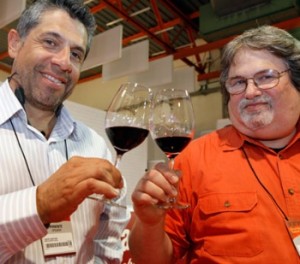
I have been meaning to write about the Wine Advocate Spanish wine ‘scandal’ for some time now. It’s possible that you might not even be aware of what’s been going on, but over the last year or so there has been many a libelous accusation flying about, bismerching the integrity of Mr Robert Parker’s beloved publication.

The problem really began when the number of wine regions covered by this most famous publication became simply too big for one single palate to handle. The solution, in the case of Spain, was to delegate responsibility for the tastings to Mr Parker’s personal friend and colleague, Jay Miller. When you consider the considerable influence wielded by the Wine Advocate around the world it was perhaps a slightly puzzling choice when you consider that Jay Miller had only limited professional experience and had never set foot in Spain in his life!

Armed only with this limited experience Mr Miller enlisted the help of Spain’s only MW, Pancho Campo (no relation to Sancho Panza who was quite a different type of  sidekick!), to be his guide and perhaps translator. To cut a very long story short, it soon became apparent that Mr Campo actually started to auction off the services of Mr Miller to the highest paying denominations. For example, 40,000 euros for a two day visit to a wine region, and then an additional 6,000 euros per winery to secure a visit and “unbiased” tasting of their wines.

Mr Parker claimed that his own code of ethics demanded those tasting on his behalf declare all hospitality, and that expenses for these trips would be borne by the Wine Advocate itself – there was never any mention of visits being funded by the wine regions, let alone by the Bodegas themselves. It is perhaps difficult to comprehend how Parker’s organisation, in a subsequent investigation, continued to deny all knowledge of these practices, but did at least admit that arrangements in Spain created “an appearance of impropriety”. (Carefully worded by a lawyer no doubt).

Suffice to say that the visit of Jay Miller to our own denomination scheduled for April 2011 never took place, and that he subsequently left the Wine Advocate ‘of his own accord’. Sancho Panza? Well, in typical Latin style (a Chilean National) he too denied everything, but resigned as a Master of Wine under the threat of an investigation by this well respected organisation.

As the saying goes, “there’s no smoke without fire”.
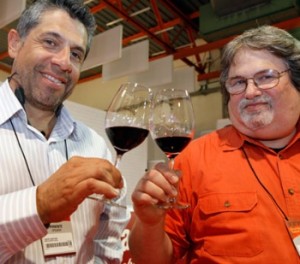
I have been meaning to write about the Wine Advocate Spanish wine ‘scandal’ for some time now. It’s possible that you might not even be aware of what’s been going on, but over the last year or so there has been many a libelous accusation flying about, bismerching the integrity of Mr Robert Parker’s beloved publication.

The problem really began when the number of wine regions covered by this most famous publication became simply too big for one single palate to handle. The solution, in the case of Spain, was to delegate responsibility for the tastings to Mr Parker’s personal friend and colleague, Jay Miller. When you consider the considerable influence wielded by the Wine Advocate around the world it was perhaps a slightly puzzling choice when you consider that Jay Miller had only limited professional experience and had never set foot in Spain in his life!

Armed only with this limited experience Mr Miller enlisted the help of Spain’s only MW, Pancho Campo (no relation to Sancho Panza who was quite a different type of sidekick!), to be his guide and perhaps translator. To cut a very long story short, it soon became apparent that Mr Campo actually started to auction off the services of Mr Miller to the highest paying denominations. For example, 40,000 euros for a two day visit to a wine region, and then an additional 6,000 euros per winery to secure a visit and “unbiased” tasting of their wines.

Mr Parker claimed that his own code of ethics demanded those tasting on his behalf declare all hospitality, and that expenses for these trips would be borne by the Wine Advocate itself – there was never any mention of visits being funded by the wine regions, let alone by the Bodegas themselves. It is perhaps difficult to comprehend how Parker’s organisation, in a subsequent investigation, continued to deny all knowledge of these practices, but did at least admit that arrangements in Spain created “an appearance of impropriety”. (Carefully worded by a lawyer no doubt).

Suffice to say that the visit of Jay Miller to our own denomination scheduled for April 2011 never took place, and that he subsequently left the Wine Advocate ‘of his own accord’. Sancho Panza? Well, in typical Latin style (a Chilean National) he too denied everything, but resigned as a Master of Wine under the threat of an investigation by this well respected organisation.

As the saying goes, “there’s no smoke without fire”.

Research your name!

May 14th, 2012 | Odds & Sods

I think that I made a post a long time ago about the virtues of researching your brand name before putting it on the market, and more especially if you are choosing a name that is not in your own native tongue. I say this because there is an increasing fashion, perhaps not only in Spain, to give your product or service an English name, which I imagine must be seen as being more trendy. (This is quite apart from the slogans that I see appearing on t-shirts in the street, supposedly making some statement or witticism in English, but which are in fact written in total gibberish and make no sense whatsoever!)

Now, I’m not sure if it’s just me and my distorted sense of humour, but I received a mail shot a couple of days ago for a new gourmet magazine – and the name? Clap & Wine! Perhaps someone can explain to me exactly what this is supposed to mean, before my imagination runs away with me completely. The only explanation I can think of is that the authors believe that wine should be ‘applauded’, hence the use of the word clap? On the other hand, and more negative side, there is of course another colloquial meaning for the word clap (Google ‘clap’ in English and see what I mean). Maybe someone should have a quiet word with them and explain?

I think that I made a post a long time ago about the virtues of researching your brand name before putting it on the market, and more especially if you are choosing a name that is not in your own native tongue. I say this because there is an increasing fashion, perhaps not only in Spain, to give your product or service an English name, which I imagine must be seen as being more trendy. (This is quite apart from the slogans that I see appearing on t-shirts in the street, supposedly making some statement or witticism in English, but which are in fact written in total gibberish and make no sense whatsoever!)

Now, I’m not sure if it’s just me and my distorted sense of humour, but I received a mail shot a couple of days ago for a new gourmet magazine – and the name? Clap & Wine! Perhaps someone can explain to me exactly what this is supposed to mean, before my imagination runs away with me completely. The only explanation I can think of is that the authors believe that wine should be ‘applauded’, hence the use of the word clap? On the other hand, and more negative side, there is of course another colloquial meaning for the word clap (Google ‘clap’ in English and see what I mean). Maybe someone should have a quiet word with them and explain?

Michelin Stars – Part 2

March 20th, 2012 | People

In the first part of my post about Michelin I mentioned that the Red Guide might actually be hated by some. If hated is perhaps too strong a word, then certainly its objectivity has been called into question on countless occasions, and also, over the years, it has also been accused of a certain bias.

It is clear however, that at the very least, Michelin has been inconsistent in the midst of its struggle to evolve. Many now consider its rating system to be outdated, a foundation built during the time when cooking was about who made the best Cassoulet or the best Boeuf Bourgignon. Perhaps out of political correctness or a perverse type of over-compensation it not only attempts to include a variety of ethnic restaurants, but also a few casual, more informal restaurants sometimes discovered in very odd locations. 

Perhaps the best example of this was the Australian chef Skye Gyngell who’s cafe style restaurant was located in a south-west London garden centre. However she managed to achieve her notoriety is not the main issue, and was presumably based on some fine cooking. The problem was more the type of clientele that her single (unwanted) Michelin star started to attract….  people who suffer the misfortune of being led by Michelin; people, that is, who are gastronomically clueless and who expect the ‘fine dining experience’; deluded people preoccupied by the status that patronisation of a particular restaurant attaches to them. An army of fine diners that drink whatever is expensive and relish the fact that it takes five flunkies to open their chosen bottle.

Naturally, when these food ‘connoisseurs’ were suddenly confronted with a complete lack of starched table linen, rickety tables, “haphazard service” and “loos in a wooden shed”, they were thrown into a state of shock, and reacted by complaining that their expectations had not been met. One patron complained that they had only been offered one type of cheese, and another that “it simply wasn’t up to Michelin standards”.

Despite having previously held high pressure kitchen positions in Paris and Mayfair, and eight years in charge at the nursery cafe, Skye Gynell sadly resigned, and was quoted as saying upon her departure “if I ever have another restaurant I pray we don’t get a star”.

In the first part of my post about Michelin I mentioned that the Red Guide might actually be hated by some. If hated is perhaps too strong a word, then certainly its objectivity has been called into question on countless occasions, and also, over the years, it has also been accused of a certain bias.

It is clear however, that at the very least, Michelin has been inconsistent in the midst of its struggle to evolve. Many now consider its rating system to be outdated, a foundation built during the time when cooking was about who made the best Cassoulet or the best Boeuf Bourgignon. Perhaps out of political correctness or a perverse type of over-compensation it not only attempts to include a variety of ethnic restaurants, but also a few casual, more informal restaurants sometimes discovered in very odd locations. 

Perhaps the best example of this was the Australian chef Skye Gyngell who’s cafe style restaurant was located in a south-west London garden centre. However she managed to achieve her notoriety is not the main issue, and was presumably based on some fine cooking. The problem was more the type of clientele that her single (unwanted) Michelin star started to attract….  people who suffer the misfortune of being led by Michelin; people, that is, who are gastronomically clueless and who expect the ‘fine dining experience’; deluded people preoccupied by the status that patronisation of a particular restaurant attaches to them. An army of fine diners that drink whatever is expensive and relish the fact that it takes five flunkies to open their chosen bottle.

Naturally, when these food ‘connoisseurs’ were suddenly confronted with a complete lack of starched table linen, rickety tables, “haphazard service” and “loos in a wooden shed”, they were thrown into a state of shock, and reacted by complaining that their expectations had not been met. One patron complained that they had only been offered one type of cheese, and another that “it simply wasn’t up to Michelin standards”.

Despite having previously held high pressure kitchen positions in Paris and Mayfair, and eight years in charge at the nursery cafe, Skye Gynell sadly resigned, and was quoted as saying upon her departure “if I ever have another restaurant I pray we don’t get a star”.

Stars in their eyes

March 19th, 2012 | People

Michelin stars: loved by some, coveted by many, but also hated in equal measure – or so it would seem.

In Denmark for example, some critics are in shock, as one of the world’s best and most creative restaurants, Noma in Copenhagen, has not been awarded its third Michelin star this year. I’m afraid that my attitude is, ‘so what’, and I don’t mean that in the sense that it does or doesn’t deserve it, because I’ve never eaten there. If I did then I’m sure that the fact it doesn’t have its third star would not diminish my enjoyment at all. Indeed, any rating is purely subjective and is the just the opinion of the reviewer.  One of my very favourite restaurants here in Galicia only has one star, but to be honest I’d still queue up in the rain to eat there even if it didn’t. I really like it – full stop.

I am not sure if it’s because we’re somehow reluctant to decide for ourselves or whether it is simply that we feel we require some point of reference, but from my own perspective the famous Red Guide works for food pretty much in the same way as Parker points works for wine. I think the key to how we disseminate the information that they provide can be found in the word itself…… the original objective of these books is merely as a ‘guide’, to help us. They exist only to steer us in the right direction, and should never become the overall determining factor in whether any particular business is deemed to be a success or a failure.

I guess that’s what I mean about having the ability to decide for ourselves, and trust our own judgement. Yes, a guide can be useful to give us an idea, and perhaps lead us to some new experience, but that’s as far as it should go.

Some people like Marmite, some put butter on their Weetabix, whilst others eat peanut butter and jelly sandwiches, but who am I to tell them that this is wrong, or that they shouldn’t enjoy it? I actually quite like peanut butter and banana on toast, but I don’t think that this particular snack would win any Michelin stars!

Michelin stars: loved by some, coveted by many, but also hated in equal measure – or so it would seem.

In Denmark for example, some critics are in shock, as one of the world’s best and most creative restaurants, Noma in Copenhagen, has not been awarded its third Michelin star this year. I’m afraid that my attitude is, ‘so what’, and I don’t mean that in the sense that it does or doesn’t deserve it, because I’ve never eaten there. If I did then I’m sure that the fact it doesn’t have its third star would not diminish my enjoyment at all. Indeed, any rating is purely subjective and is the just the opinion of the reviewer.  One of my very favourite restaurants here in Galicia only has one star, but to be honest I’d still queue up in the rain to eat there even if it didn’t. I really like it – full stop.

I am not sure if it’s because we’re somehow reluctant to decide for ourselves or whether it is simply that we feel we require some point of reference, but from my own perspective the famous Red Guide works for food pretty much in the same way as Parker points works for wine. I think the key to how we disseminate the information that they provide can be found in the word itself…… the original objective of these books is merely as a ‘guide’, to help us. They exist only to steer us in the right direction, and should never become the overall determining factor in whether any particular business is deemed to be a success or a failure.

I guess that’s what I mean about having the ability to decide for ourselves, and trust our own judgement. Yes, a guide can be useful to give us an idea, and perhaps lead us to some new experience, but that’s as far as it should go.

Some people like Marmite, some put butter on their Weetabix, whilst others eat peanut butter and jelly sandwiches, but who am I to tell them that this is wrong, or that they shouldn’t enjoy it? I actually quite like peanut butter and banana on toast, but I don’t think that this particular snack would win any Michelin stars!

Loved by the ‘Gang’

December 23rd, 2011 | Press

The Wine Gang is a group of five of the UK’s most respected wine critics. Tom Cannavan of wine-pages.com, Jane Parkinson of janeparkinson.com, Anthony Rose of The Independent, Joanna Simon of House & Garden and David Williams of The Observer and World of Fine Wine.

Their monthly report gives an honest assessment of a huge variety of different wines, and is 100% independent (they have made a policy decision not to include any advertising on their site in order to ensure that there is no potential for a conflict of interest). In their November report they mad a very kind comment about one of our wines….

“We feel that this new vintage has stepped up a notch in quality. Hurrah. The aromatic apple-pear-peach fruit has real vibrancy, there’s a leafy freshness and the Albariño sea-breeze minerality and acidity underpin it all the way. Bring on the seafood.”

Don’t forget that our Albariño is not only great with your traditional roast Christmas turkey, but also, over the coming months, with turkey rissoles, turkey burgers and turkey curry!

The Wine Gang is a group of five of the UK’s most respected wine critics. Tom Cannavan of wine-pages.com, Jane Parkinson of janeparkinson.com, Anthony Rose of The Independent, Joanna Simon of House & Garden and David Williams of The Observer and World of Fine Wine.

Their monthly report gives an honest assessment of a huge variety of different wines, and is 100% independent (they have made a policy decision not to include any advertising on their site in order to ensure that there is no potential for a conflict of interest). In their November report they mad a very kind comment about one of our wines….

“We feel that this new vintage has stepped up a notch in quality. Hurrah. The aromatic apple-pear-peach fruit has real vibrancy, there’s a leafy freshness and the Albariño sea-breeze minerality and acidity underpin it all the way. Bring on the seafood.”

Don’t forget that our Albariño is not only great with your traditional roast Christmas turkey, but also, over the coming months, with turkey rissoles, turkey burgers and turkey curry!

15 minutes of fame

November 27th, 2011 | Local News

It was Andy Wahol who once said that everyone would experience at least 15 minutes of fame at some point during their lifetime. In the age of pop culture, fly-on-the-wall TV and YouTube, my guess is this notion has even more chance of becoming a reality. Indeed the whole concept of true fame and stardom has become seriously eroded over recent years as would-be “celebrities” clamour to appear on our screens (either computer or TV) – but that’s another story…..

Over the years, Angela and I have both been interviewed on TV and radio at least a couple of times, but always in a professional capacity, rather than for some perculiar hidden talent. Our last main encounter with the press was actually in Australia where, by pure chance, we happened to arrive on a visit at the exact moment that the authorities discovered that the ‘Albariño’ grape that they had planted, was not in fact Albariño at all! Of course this was big news in a serious wine producing country, and so when the press heard that we were in town, it was quite natural that they came knocking at our door looking for comment and interviews.

This week it was the turn of our local TV channel here in the Rias Baixas region – simply looking to do a short feature on our bodega. No particular reason other than, they had no doubt heard, that we were fabulous people making fabulous wines – and above all else, modest too!

It was Andy Wahol who once said that everyone would experience at least 15 minutes of fame at some point during their lifetime. In the age of pop culture, fly-on-the-wall TV and YouTube, my guess is this notion has even more chance of becoming a reality. Indeed the whole concept of true fame and stardom has become seriously eroded over recent years as would-be “celebrities” clamour to appear on our screens (either computer or TV) – but that’s another story…..

Over the years, Angela and I have both been interviewed on TV and radio at least a couple of times, but always in a professional capacity, rather than for some perculiar hidden talent. Our last main encounter with the press was actually in Australia where, by pure chance, we happened to arrive on a visit at the exact moment that the authorities discovered that the ‘Albariño’ grape that they had planted, was not in fact Albariño at all! Of course this was big news in a serious wine producing country, and so when the press heard that we were in town, it was quite natural that they came knocking at our door looking for comment and interviews.

This week it was the turn of our local TV channel here in the Rias Baixas region – simply looking to do a short feature on our bodega. No particular reason other than, they had no doubt heard, that we were fabulous people making fabulous wines – and above all else, modest too!


Monthly Archives

Categories

ARE YOU OF LEGAL AGE? This site is intended for those of legal drinking age. By entering, you confirm that you are of legal drinking age in the country where this site is being accessed. ¿ERES MAYOR DE EDAD? Este sitio está destinado a personas en edad legal para beber alcohol. Al ingresar, confirma que tiene la edad legal para beber en el país donde se accede a este sitio.