

Spanish crumble? Whatever next?

April 30th, 2015 | Food & Wine

Spanish crumbleOne of the great old traditions of British cooking are the puddings, or desserts as they are more commonly called these days. For me there’s something quite emotive about these old recipes, transporting me back to my school days, when pudding was one of the highlights of an otherwise bland school menu. The only positive about school food in those days, is that the diet was constructed around a culture of ‘meat and two veg’ (and/or potatoes), but without any fried food whatsoever, and not a greasy chip in sight. Perhaps unwittingly much healthier than some of the ‘fast food’ dishes offered by schools these days – this type of convenience food was simply not an option, and the only menu choice was take it or leave it!

The puddings were great (possibly because I have a ‘sweet tooth’), and included many an old favourite, such as jam roly-poly, apple crumble, baked custard tart, rice pudding, chocolate sponge and many others. Included within that list you will notice a quintessentially British and very traditional dish – crumble. Crumble can be made with any number of different fruits: apple, rhubarb, peach, pear, gooseberry, apricot or any number of different berry fruits – the possibilities are almost endless, and suffice to say that they are all delicious when made correctly.

I am not sure of the exact origin of the crumble, but I do know that they became very popular during the Second World War when there was food rationing in the UK. Cooks were obliged to economise and cut corners wherever they could, and the simple crumble topping of fat, flour and sugar was apparently easier to ‘eek out’ than the more usual pastry topping.

I think I read recently that crumbles are actually enjoying something of a renaissance, and springing up on many a fashionable restaurant menu. Having said that, I was still quite surprised to find a crumble recipe featured in a recent mailing from ICEX – Food & Wines from Spain –  crumble de frambuesas y melocotones. The wine recommended by ICEX was either riesling or gewürztraminer, which could work (although they would probably require a degree of residual sugar) – I’m afraid to admit that our own albariño is far too dry for this hearty British pudding.Spanish crumbleOne of the great old traditions of British cooking are the puddings, or desserts as they are more commonly called these days. For me there’s something quite emotive about these old recipes, transporting me back to my school days, when pudding was one of the highlights of an otherwise bland school menu. The only positive about school food in those days, is that the diet was constructed around a culture of ‘meat and two veg’ (and/or potatoes), but without any fried food whatsoever, and not a greasy chip in sight. Perhaps unwittingly much healthier than some of the ‘fast food’ dishes offered by schools these days – this type of convenience food was simply not an option, and the only menu choice was take it or leave it!

The puddings were great (possibly because I have a ‘sweet tooth’), and included many an old favourite, such as jam roly-poly, apple crumble, baked custard tart, rice pudding, chocolate sponge and many others. Included within that list you will notice a quintessentially British and very traditional dish – crumble. Crumble can be made with any number of different fruits: apple, rhubarb, peach, pear, gooseberry, apricot or any number of different berry fruits – the possibilities are almost endless, and suffice to say that they are all delicious when made correctly.

I am not sure of the exact origin of the crumble, but I do know that they became very popular during the Second World War when there was food rationing in the UK. Cooks were obliged to economise and cut corners wherever they could, and the simple crumble topping of fat, flour and sugar was apparently easier to ‘eek out’ than the more usual pastry topping.

I think I read recently that crumbles are actually enjoying something of a renaissance, and springing up on many a fashionable restaurant menu. Having said that, I was still quite surprised to find a crumble recipe featured in a recent mailing from ICEX – Food & Wines from Spain –  crumble de frambuesas y melocotones. The wine recommended by ICEX was either riesling or gewürztraminer, which could work (although they would probably require a degree of residual sugar) – I’m afraid to admit that our own albariño is far too dry for this hearty British pudding.

New Rias Baixas campaign

April 27th, 2015 | Denomination

Albariño + SushiIn recent years I have perhaps been a little outspoken, even critical, of some of the advertising campaigns of our denomination. I have always thought that they were a little bit staid and old fashioned, often not representative of our region, and certainly not attention grabbing. For me the whole point of advertising is to grab the attention of the public – of course this can be done in many, many different ways, whether it be something stunningly beautiful, something unusual, something that makes you look twice (a double-take), or as used in a few cases, something controversial or shocking. Whatever approach you chose it has be done to provoke a reaction – to get people talking, if it’s to be successful. I’m afraid that a simple picture of a vineyard with lots of greenery simply doesn’t cut it anymore, even if the view is very pretty.

I was therefore delight to spot some radically new Rias Baixas advertising a month or so ago, with some attention grabbing food shots, and a simple bold headline. I have found two examples so far, there may be more to come. Today’s photo is the Japanese sushi (and nigiri) shot, which as I type this, is actually making my mouth water….. in other words having the desired effect – provoking a reaction. Creating a craving for a glass of fresh, chilled albariño – simple but effective.

There is however one small nagging doubt that I have – is this advert politically correct? Abbreviating the word Japanese to Japo, might just be considered offensive to some. Now I am not a native Spanish speaker, but in the one Spanish dictionary that I referred to, the term “Jap” was listed as “offensive”. I guess the best answer might come from the Japanese themselves, as I’m sure that eventually this new advertising will filter over to their country. I just hope that it doesn’t cause some sort of diplomatic incident!Albariño + SushiIn recent years I have perhaps been a little outspoken, even critical, of some of the advertising campaigns of our denomination. I have always thought that they were a little bit staid and old fashioned, often not representative of our region, and certainly not attention grabbing. For me the whole point of advertising is to grab the attention of the public – of course this can be done in many, many different ways, whether it be something stunningly beautiful, something unusual, something that makes you look twice (a double-take), or as used in a few cases, something controversial or shocking. Whatever approach you chose it has be done to provoke a reaction – to get people talking, if it’s to be successful. I’m afraid that a simple picture of a vineyard with lots of greenery simply doesn’t cut it anymore, even if the view is very pretty.

I was therefore delight to spot some radically new Rias Baixas advertising a month or so ago, with some attention grabbing food shots, and a simple bold headline. I have found two examples so far, there may be more to come. Today’s photo is the Japanese sushi (and nigiri) shot, which as I type this, is actually making my mouth water….. in other words having the desired effect – provoking a reaction. Creating a craving for a glass of fresh, chilled albariño – simple but effective.

There is however one small nagging doubt that I have – is this advert politically correct? Abbreviating the word Japanese to Japo, might just be considered offensive to some. Now I am not a native Spanish speaker, but in the one Spanish dictionary that I referred to, the term “Jap” was listed as “offensive”. I guess the best answer might come from the Japanese themselves, as I’m sure that eventually this new advertising will filter over to their country. I just hope that it doesn’t cause some sort of diplomatic incident!

Stormy weather

April 23rd, 2015 | Weather

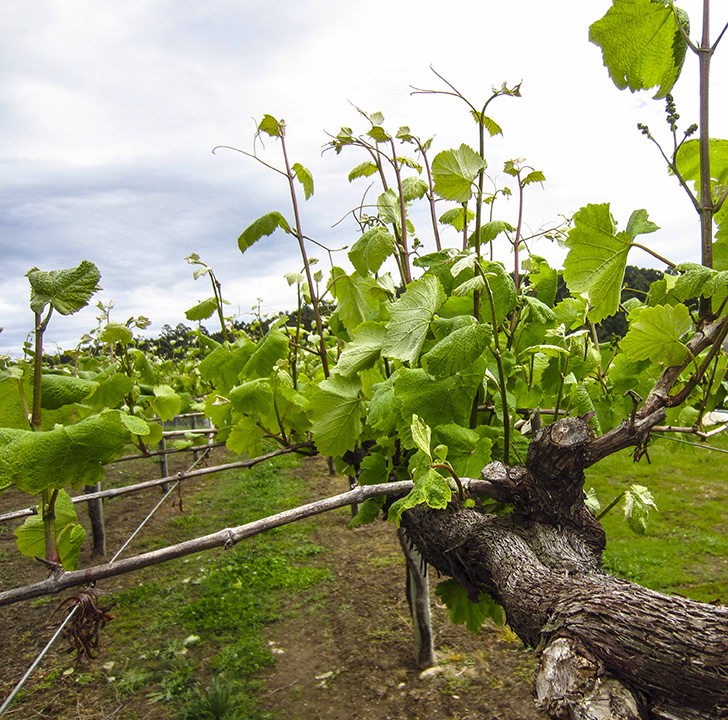
StormsAfter a short burst of warm weather at the beginning of April, the temperature has now fallen back to a daily average of around 16/17°C (60/63°F), accompanied by a mixture of sunshine and showers. Despite these lower temperatures the vines are still evolving quite vigorously, and the grey/brown winter landscape of the vineyards is slowly being transformed into the first pale shades of summer green. Over the last few days thunder has been forecast on several different websites, although until now, nothing has transpired – rain yes, but no thunder and lightning. The forecasters however, are sticking doggedly to their predictions of stormy weather, albeit as we wake up today the sun is still shining defiantly! Let’s see who’s right over the next few days….StormsAfter a short burst of warm weather at the beginning of April, the temperature has now fallen back to a daily average of around 16/17°C (60/63°F), accompanied by a mixture of sunshine and showers. Despite these lower temperatures the vines are still evolving quite vigorously, and the grey/brown winter landscape of the vineyards is slowly being transformed into the first pale shades of summer green. Over the last few days thunder has been forecast on several different websites, although until now, nothing has transpired – rain yes, but no thunder and lightning. The forecasters however, are sticking doggedly to their predictions of stormy weather, albeit as we wake up today the sun is still shining defiantly! Let’s see who’s right over the next few days….

Not a selfie

April 21st, 2015 | Odds & Sods

Barcelona CustomerYet another satisfied customer has kindly sent us their photo, enjoying a bottle of Castro Martin – this time from Barcelona. You will notice that, as in previous images, this young lady is enjoying her bottle with a rather delicious looking fish dish. Of course the fish/albariño combination is no big secret, and really does work rather well, especially with the type of dish that we can see in the picture – poached or possibly lightly pan-fried fish. A delicately flavoured fish with a delicate wine that we know will not overpower, but rather compliment the flavours.

Of course when I received this photo I was tempted to call it a selfie, when quite obviously, it isn’t. The word ‘selfie’ has very quickly become over-used and abused, and is now seemingly used to describe any type of portrait or closeup group photo, regardless of whether one of the subjects is holding the camera or not. OK, so I’m being pedantic here, but let’s face it, if you’re going to invent a new word then at least make an effort to use it correctly!Barcelona CustomerYet another satisfied customer has kindly sent us their photo, enjoying a bottle of Castro Martin – this time from Barcelona. You will notice that, as in previous images, this young lady is enjoying her bottle with a rather delicious looking fish dish. Of course the fish/albariño combination is no big secret, and really does work rather well, especially with the type of dish that we can see in the picture – poached or possibly lightly pan-fried fish. A delicately flavoured fish with a delicate wine that we know will not overpower, but rather compliment the flavours.

Of course when I received this photo I was tempted to call it a selfie, when quite obviously, it isn’t. The word ‘selfie’ has very quickly become over-used and abused, and is now seemingly used to describe any type of portrait or closeup group photo, regardless of whether one of the subjects is holding the camera or not. OK, so I’m being pedantic here, but let’s face it, if you’re going to invent a new word then at least make an effort to use it correctly!

Rule Britannia!

April 17th, 2015 | International News

P&O Cruises BritanniaSince becoming what is known as an Ex-pat, living outside the UK, I think I have probably become more patriotic than ever. So much so that I even bought an England t-shirt for the last World Cup (even though we did so badly that it was very quickly converted into a cleaning cloth)!

A few years ago we were delighted when one of our wines was selected to be served on British Airways (flying the flag, to use an obvious pun), but now I think we can go one better… Our latest customer has a British Flag of some 308 feet or 94 metres long – the longest Union Flag anywhere in the world. We are now being poured on the brand new cruise ship ‘Britannia’, officially launched by H.M. Queen Elizabeth II in March of 2015. It’s quite an impressive little boat, measuring some 1,082 ft long (longer than the height of the Eiffel Tower), and weighing in at 141,000 tons – it can accommodate more than 3,600 passengers on 15 decks in 1,837 cabins. The ship has 13 restaurants where they will be serving our very own, humble albariño, and also boasts it’s own cookery school and wine tasting courses for passengers.

We are thrilled to be on board, flying the flag for Castro Martin across the world.P&O Cruises BritanniaSince becoming what is known as an Ex-pat, living outside the UK, I think I have probably become more patriotic than ever. So much so that I even bought an England t-shirt for the last World Cup (even though we did so badly that it was very quickly converted into a cleaning cloth)!

A few years ago we were delighted when one of our wines was selected to be served on British Airways (flying the flag, to use an obvious pun), but now I think we can go one better… Our latest customer has a British Flag of some 308 feet or 94 metres long – the longest Union Flag anywhere in the world. We are now being poured on the brand new cruise ship ‘Britannia’, officially launched by H.M. Queen Elizabeth II in March of 2015. It’s quite an impressive little boat, measuring some 1,082 ft long (longer than the height of the Eiffel Tower), and weighing in at 141,000 tons – it can accommodate more than 3,600 passengers on 15 decks in 1,837 cabins. The ship has 13 restaurants where they will be serving our very own, humble albariño, and also boasts it’s own cookery school and wine tasting courses for passengers.

We are thrilled to be on board, flying the flag for Castro Martin across the world.

Don’t get the hump

April 14th, 2015 | Local News

Speed bumpsIt seems that there is an ever increasing number of restrictions placed on motorists these days, in attempts to keep us sober, within the speed limit, and generally obeying the law. Well, to be honest I don’t really have a problem with any of that, it’s really more of a frustration that I have relating to the methods of enforcement that they use. The latest speed cameras for example, don’t now simply take a picture at one given moment, and measure your speed on the spot, we now have average speed cameras, measuring you average speed over a given distance. In a way this is not a bad thing, as it now avoids the dangerous scenario where the driver in front suddenly sees a fixed camera and slams on his brakes. However, we do eventually get to know where these static cameras are placed, and slow down accordingly, but usually only for a hundred metres on either side perhaps.

However, speed cameras are not the pet subject of my post today, it is rather speed ramps, speed humps or sleeping policemen as they are sometimes known. Having discovered roundabouts only a few years ago and introduced them at every conceivable juncture, Spanish traffic planners latest discovery is the speed hump….. In towns and villages all around Spain (or at least here in Galicia), you can’t drive a hundred metres without encountering one – almost literally. Take our Provincial capital Pontevedra for example. It is a brilliant place to visit – if you’re on foot. If you’re a motorist then maybe not so much, and my advice would be, have your car suspension checked before you arrive. Nearly the whole of the centre of Pontevedra is pedestrianised, which of course is great for your evening stroll (paseo) around the city, or your window shopping perhaps, but entering and leaving the city will probably be a bit of a bumpy ride. Just to prove that I am not exaggerating, the other day I had occasion to drive from the Consello Regulador offices in the centre of the city, to my computer repair shop a bit further around the ‘ring road’ – a distance of just under 3km (1.86 miles). Sad person that I am, I counted the speed bumps (most of which are large and accommodate pedestrian crossings)……. There were 28!! This works out almost exactly at an average of one crossing every hundred metres. From a motorists perspective perhaps I should be asking the question, if my suspension is eventually damaged, will the local council pay for the repair? I think I already know the answer to that one.Speed bumpsIt seems that there is an ever increasing number of restrictions placed on motorists these days, in attempts to keep us sober, within the speed limit, and generally obeying the law. Well, to be honest I don’t really have a problem with any of that, it’s really more of a frustration that I have relating to the methods of enforcement that they use. The latest speed cameras for example, don’t now simply take a picture at one given moment, and measure your speed on the spot, we now have average speed cameras, measuring you average speed over a given distance. In a way this is not a bad thing, as it now avoids the dangerous scenario where the driver in front suddenly sees a fixed camera and slams on his brakes. However, we do eventually get to know where these static cameras are placed, and slow down accordingly, but usually only for a hundred metres on either side perhaps.

However, speed cameras are not the pet subject of my post today, it is rather speed ramps, speed humps or sleeping policemen as they are sometimes known. Having discovered roundabouts only a few years ago and introduced them at every conceivable juncture, Spanish traffic planners latest discovery is the speed hump….. In towns and villages all around Spain (or at least here in Galicia), you can’t drive a hundred metres without encountering one – almost literally. Take our Provincial capital Pontevedra for example. It is a brilliant place to visit – if you’re on foot. If you’re a motorist then maybe not so much, and my advice would be, have your car suspension checked before you arrive. Nearly the whole of the centre of Pontevedra is pedestrianised, which of course is great for your evening stroll (paseo) around the city, or your window shopping perhaps, but entering and leaving the city will probably be a bit of a bumpy ride. Just to prove that I am not exaggerating, the other day I had occasion to drive from the Consello Regulador offices in the centre of the city, to my computer repair shop a bit further around the ‘ring road’ – a distance of just under 3km (1.86 miles). Sad person that I am, I counted the speed bumps (most of which are large and accommodate pedestrian crossings)……. There were 28!! This works out almost exactly at an average of one crossing every hundred metres. From a motorists perspective perhaps I should be asking the question, if my suspension is eventually damaged, will the local council pay for the repair? I think I already know the answer to that one.

Cheers! Happy Easter!

April 5th, 2015 | People

AsturiasIt seems that we may have started something of a trend amongst our supporters – no sooner had I posted a picture of customers enjoying a glass of Castro Martin, than we received another photo from Asturias (further along the north coast towards Bilbao), of another group, this time enjoying a chilled glass of Casal Caeiro albariño.

Of course now that we are entering the first days of spring, a little sunshine on our faces and generally warmer weather, it could be that our brains switch into ‘summer mode’, and our immediate instinct is to crack open a refreshing glass of chilled white wine. We can put the heavy, ripe, alcoholic reds back in the cupboard until the autumn. OK, I admit that’s a rather simplistic way of looking at things, but we are, after all, albariño producers, so what do you expect?!AsturiasIt seems that we may have started something of a trend amongst our supporters – no sooner had I posted a picture of customers enjoying a glass of Castro Martin, than we received another photo from Asturias (further along the north coast towards Bilbao), of another group, this time enjoying a chilled glass of Casal Caeiro albariño.

Of course now that we are entering the first days of spring, a little sunshine on our faces and generally warmer weather, it could be that our brains switch into ‘summer mode’, and our immediate instinct is to crack open a refreshing glass of chilled white wine. We can put the heavy, ripe, alcoholic reds back in the cupboard until the autumn. OK, I admit that’s a rather simplistic way of looking at things, but we are, after all, albariño producers, so what do you expect?!

Wake up and smell the coffee

April 4th, 2015 | Odds & Sods

CoffeeAnyone who knows me will also know that I am a tea drinker – to be more specific a Yorkshire Tea drinker (made by Taylors of Harrogate). This morning however, my head was nearly turned by the smell of freshly brewed coffee wafting around the building that I was entering. Even though I’m not a big coffee drinker, and only drink the occasional cup at the end of a meal, I have to confess that there is something very special about the smell. There are certain compounds in coffee that make it especially beguiling, almost a ‘welcoming’ smell that evokes a feeling of well-being. These volatile compounds are produced when coffee beans are roasted and are very similar to the compounds that are released during the cooking process. For example, the smell of baking bread derives from the compounds that are produced when a sugar reacts with a protein, and this can be just as enticing as the fresh coffee.

The downside I’m afraid, is that this is all just smell, and does not necessarily translate into flavour. Most of what we taste is actually smell, and if you hold your nose whilst drinking coffee you will probably detect only the sour, bitter flavour that originates from the organic acids. Clearly the secret is not to hold your nose whilst drinking you fresh cup of Joe….. and this applies to wine too!CoffeeAnyone who knows me will also know that I am a tea drinker – to be more specific a Yorkshire Tea drinker (made by Taylors of Harrogate). This morning however, my head was nearly turned by the smell of freshly brewed coffee wafting around the building that I was entering. Even though I’m not a big coffee drinker, and only drink the occasional cup at the end of a meal, I have to confess that there is something very special about the smell. There are certain compounds in coffee that make it especially beguiling, almost a ‘welcoming’ smell that evokes a feeling of well-being. These volatile compounds are produced when coffee beans are roasted and are very similar to the compounds that are released during the cooking process. For example, the smell of baking bread derives from the compounds that are produced when a sugar reacts with a protein, and this can be just as enticing as the fresh coffee.

The downside I’m afraid, is that this is all just smell, and does not necessarily translate into flavour. Most of what we taste is actually smell, and if you hold your nose whilst drinking coffee you will probably detect only the sour, bitter flavour that originates from the organic acids. Clearly the secret is not to hold your nose whilst drinking you fresh cup of Joe….. and this applies to wine too!

Introducing BCM ‘stubbies’

April 1st, 2015 | April Fools

BCM 33cl CanAngela and I have been conscious for some time now that there is a strong demand in the market for more convenient packaging (probably owing to the wide acceptance of screw cap). So, rather than simply taking the more logical step of moving to Stelvin, we have now taken a much more radical step….. wine in a can!

To bottle in screw cap would have required at least some investment in new equipment, and so we decided that rather than just playing ‘catch up’, we would rather become pioneers within the Rias Baixas denomination, and make at least some of our wine in this brand new 33cl presentation. Out of habit I was inclined to say that we ‘bottled’ in 33cl, whereas the correct terminology should perhaps be ‘canned’. No doubt this will become more familiar as time goes by.

To test the market, we have only made a small number of cans – a ‘limited edition’ if you like, but I can tell you that there is already great interest in several markets. Vamos a ver!BCM 33cl CanAngela and I have been conscious for some time now that there is a strong demand in the market for more convenient packaging (probably owing to the wide acceptance of screw cap). So, rather than simply taking the more logical step of moving to Stelvin, we have now taken a much more radical step….. wine in a can!

To bottle in screw cap would have required at least some investment in new equipment, and so we decided that rather than just playing ‘catch up’, we would rather become pioneers within the Rias Baixas denomination, and make at least some of our wine in this brand new 33cl presentation. Out of habit I was inclined to say that we ‘bottled’ in 33cl, whereas the correct terminology should perhaps be ‘canned’. No doubt this will become more familiar as time goes by.

To test the market, we have only made a small number of cans – a ‘limited edition’ if you like, but I can tell you that there is already great interest in several markets. Vamos a ver!

The selfie worth its weight in gold

March 29th, 2015 | Competitions

Customer1You may already know that I am not a great believer when it comes to the real value of wine competitions. Of course it’s nice to receive a medal now and again, but it’s simply that achieving the result can sometimes be a bit of a lottery. There are just so many variables involved during the judging process.

I have always believed that customer references are far more important. The quality of the people buying your wine and their total satisfaction is really what it’s all about. Having great importers is one thing, but then at the other end of the chain, the final consumer is ultimately the one that determines the success or failure of your product. If wine drinkers don’t like your wine then you might as well give up – your wine simply won’t sell – or rather you might well sell the first bottle, but then never the second.

So when a private customer takes the time to write to you simply to tell you how much they have enjoyed your wine, then this is almost as valuable as winning a gold medal in my book. Here we see a couple of our private customers enjoying a bottle of Castro Martin with a plate of oysters. Truly a marriage made in heaven. After all, what is it they say? The customer is always right!Customer1You may already know that I am not a great believer when it comes to the real value of wine competitions. Of course it’s nice to receive a medal now and again, but it’s simply that achieving the result can sometimes be a bit of a lottery. There are just so many variables involved during the judging process.

I have always believed that customer references are far more important. The quality of the people buying your wine and their total satisfaction is really what it’s all about. Having great importers is one thing, but then at the other end of the chain, the final consumer is ultimately the one that determines the success or failure of your product. If wine drinkers don’t like your wine then you might as well give up – your wine simply won’t sell – or rather you might well sell the first bottle, but then never the second.

So when a private customer takes the time to write to you simply to tell you how much they have enjoyed your wine, then this is almost as valuable as winning a gold medal in my book. Here we see a couple of our private customers enjoying a bottle of Castro Martin with a plate of oysters. Truly a marriage made in heaven. After all, what is it they say? The customer is always right!

Monthly Archives

Categories

ARE YOU OF LEGAL AGE? This site is intended for those of legal drinking age. By entering, you confirm that you are of legal drinking age in the country where this site is being accessed. ¿ERES MAYOR DE EDAD? Este sitio está destinado a personas en edad legal para beber alcohol. Al ingresar, confirma que tiene la edad legal para beber en el país donde se accede a este sitio.