

World’s most ridiculous fireworks!

September 5th, 2016 | Fiestas

Well, our local beach resort of Sanxenxo really excelled themselves last night. On the last night of a week long fiesta they celebrated with the usual 20 minute firework display. In fairness, I’ve always thought that there are better ways for local councils to spend their money (as every small town and village lays on their own individual display over the summer months),but last night, well, what can I say?

At 10pm I went out for a walk, or rather a “reccy” to look for a good location to set up my camera and tripod. I thought that this year I would try to shoot my photos at a low angle across the water, and take full advantage of any reflections. I found the perfect spot, only about 5 minutes from our front door, and so I planned to return about 15/20 minutes before the midnight kick-off.

At 11.40 I looked out of the window…. shock, horror! The whole town was shrouded in a thick, damp sea mist – and when I say thick, I mean about maybe 20 or 30 metres visibility. Surely they had to postpone?….. Wrong! Watch my brief video and witness how thousands of Euros worth of fireworks went up in smoke, or should I say, went up in mist. This must be the most stupid, incompetent things I have ever witnessed, but I’m sure you will agree, at least it did sound impressive!

Harvest 2016 update

September 1st, 2016 | Bodega

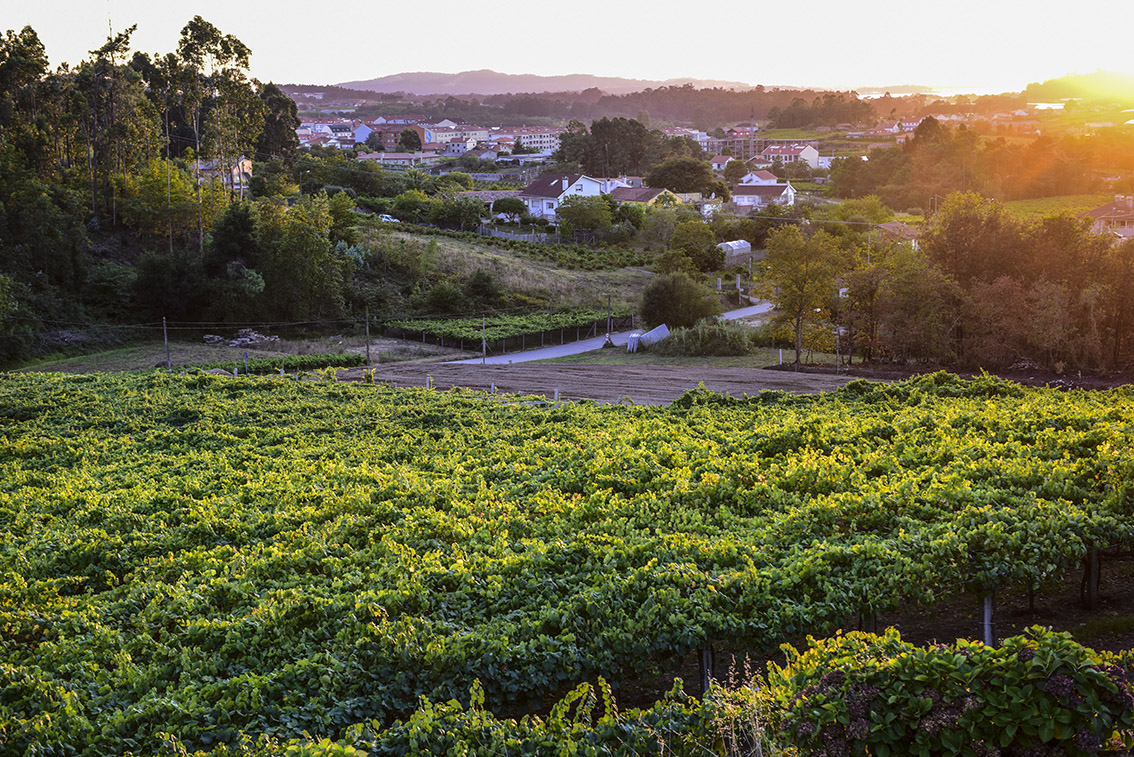
[:en]Pazo vineyardAs the calendar moves into September we are already deep into our planning for the 2016 harvest. The tanks are empty and waiting to receive this year’s new grape must, and so for the final run-up to the picking our attention is now well and truly focused on the vineyards. The summer of 2016 has been long and hot – for more than two months the sun has been shining almost non-stop, and temperatures have regularly hovered around the 30°C (86°F) mark. Ideal conditions you might think – but this is not entirely true. A few good days of rain during the summer certainly would have helped. The problem is that whilst this level of sunshine and dry weather promotes healthy grapes, it also means that the berries are small, skins are thick, but more significantly, the layer of flesh that yields the juice, is thin – a thick and viscose texture perhaps, but with a low liquid content. Of course this usually translates into ripe and fruity wines, but potentially with higher alcohol, lower acidity, and obviously, lower yields. Good in some respects, but not ideal in others.

To be honest, being a fruit farmer (which is essentially what we are), can sometimes be very frustrating. Last year for example, we were forced to pick just a little earlier that we would have liked, as a big storm loomed on the horizon. With hindsight it was a good decision, but we know that we were just so close to having a near perfect vintage. This year it could be (we won’t really know until we have the must safely in our tanks), that we are again left just a little frustrated, but this time for almost the opposite reason – the lack of a bit more rain. However, if yields are down, we also know that small can still be beautiful![:es]Pazo vineyardAs the calendar moves into September we are already deep into our planning for the 2016 harvest. The tanks are empty and waiting to receive this year’s new grape must, and so for the final run-up to the picking our attention is now well and truly focused on the vineyards. The summer of 2016 has been long and hot – for more than two months the sun has been shining almost non-stop, and temperatures have regularly hovered around the 30°C (86°F) mark. Ideal conditions you might think – but this is not entirely true. A few good days of rain during the summer certainly would have helped. The problem is that whilst this level of sunshine and dry weather promotes healthy grapes, it also means that the berries are small, skins are thick, but more significantly, the layer of flesh that yields the juice, is thin – a thick and viscose texture perhaps, but with a low liquid content. Of course this usually translates into ripe and fruity wines, but potentially with higher alcohol, lower acidity, and obviously, lower yields. Good in some respects, but not ideal in others.

To be honest, being a fruit farmer (which is essentially what we are), can sometimes be very frustrating. Last year for example, we were forced to pick just a little earlier that we would have liked, as a big storm loomed on the horizon. With hindsight it was a good decision, but we know that we were just so close to having a near perfect vintage. This year it could be (we won’t really know until we have the must safely in our tanks), that we are again left just a little frustrated, but this time for almost the opposite reason – the lack of a more rain. However, if yields are down, we also know that small can still be beautiful![:]

Savagnin ~ the Australian albariño

August 29th, 2016 | Food & Wine

[:en]Jura - BornardSeveral years ago there was a big scandal in Australia when it was discovered that the ‘Albariño’ that they had planted, was not in fact albariño, but was actually the savagnin blanc grape variety most commonly found in the Jura region of northeast France. The error was committed by Australia’s very own wine research organisation, and was uncovered whilst we were visiting Australia back in 2009. As a result we unwittingly found ourselves at the centre of a good deal of media attention as the Australian wine press clamoured to get the oinion of some ‘authentic’ albariño producers!

The reason I mention this now is because we actually discovered a savagnin on the wine list of a local restaurant, and so, quite naturally we jumped at the chance to try it. The Côtes du Jura Savagnin ‘Les Marnes’ 2011, from Domaine Philippe Bornard, did not disappoint. It’s perhaps an odd thing to say, but this is a wine for Manzanilla and Fino sherry drinkers who enjoy the salty, nutty flavours originating from the flor that grows over the wine in sherry casks. In the Jura they call this the ‘sous voile’ method whereby a layer of yeast covering the wine produces a very similar end result. Although this wine is not completely ‘bright’, and has a rustic, slightly oxidative character, it is still absolutely delicious. Multi-layered – smoky, salty, nutty, but with plenty of stone fruit, a fresh acidity and just a touch of spice. It’s a wine that just keeps coming, is extremely complex, and to be fair, is probably something of an acquired taste that might not appeal to every palate. Suffice to say that we enjoyed it![:es]Jura - BornardSeveral years ago there was a big scandal in Australia when it was discovered that the ‘Albariño’ that they had planted, was not in fact albariño, but was actually the savagnin blanc grape variety most commonly found in the Jura region of northeast France. The error was committed by Australia’s very own wine research organisation, and was uncovered whilst we were visiting Australia back in 2009. As a result we unwittingly found ourselves at the centre of a good deal of media attention as the Australian wine press clamoured to get the oinion of some ‘authentic’ albariño producers!

The reason I mention this now is because we actually discovered a savagnin on the wine list of a local restaurant, and so, quite naturally we jumped at the chance to try it. The Côtes du Jura Savagnin ‘Les Marnes’ 2011, from Domaine Philippe Bornard, did not disappoint. It’s perhaps an odd thing to say, but this is a wine for Manzanilla and Fino sherry drinkers who enjoy the salty, nutty flavours originating from the flor that grows over the wine in sherry casks. In the Jura they call this the ‘sous voile’ method whereby a layer of yeast covering the wine produces a very similar end result. Although this wine is not completely ‘bright’, and has a rustic, slightly oxidative character, it is still absolutely delicious. Multi-layered – smoky, salty, nutty, but with plenty of stone fruit, a fresh acidity and just a touch of spice. It’s a wine that just keeps coming, is extremely complex, and to be fair, is probably something of an acquired taste that might not appeal to every palate. Suffice to say that we enjoyed it!


 [:]

A long, hot summer….so far

August 22nd, 2016 | Vineyards

Vuelta 2016The summer months are usually occupied with controlling he canopy in the vineyards. In case you don’t understand the expression ‘canopy management’, the very simplified explanation is that we trim the vines, cut back some of the leading shoots, remove leaves, and if necessary, remove some bunches (green harvesting). If allowed to grow, the leading shoot of each vine will grow unabated, producing more leaves (not bunches), and simply draining energy from the plant. By trimming them this simply re-directs more energy to the fruit, and therefore should help increase sugar levels. Removing leaves is, believe it or not, slightly more complicated – it is super important to remove the right leaves, in the right places and in the right quantities. Obviously the objective of this ‘thinning’ is to give fruit a better exposure by allowing more light to pass through the canopy. The only danger is that if too many leaves are removed, then during a hot summer, over exposure can actually ‘cook’ the fruit (even when using factor 50 – sorry, that is just my warped sense of humour). Also, if during prolonged periods of excessive heat too few leaves will only add to the stress on the plant.

The reason I mention this is that since the middle of June the weather in Rias Baixas has been very hot and almost completely dry. For more than two months our average daily temperatures have remained in the mid-to-high 20’s C (mid 70’s to mid 80’s F). During July we regularly experienced daytime temperatures of 30°C (86°F) and sometimes even higher. As far as rainfall is concerned, there has been very little. July, only a couple of cloudy days and one day of drizzle – August, one day of drizzle, and only one other wet morning.

It’s still a little early to know how this extended hot weather will effect the vintage, in all honesty, an odd day of rain at this stage, wouldn’t hurt too much.

(By the way, it’s obvious that my photo today has nothing to do with vines, or the weather for that matter, except to say that the Vuelta a España passed through Galicia today – in 31°C of heat!)

Wine list for cats?

August 18th, 2016 | Oddballs

Apollo PeakSeveral months ago I wrote (unbelievably) about a wine for cats called Nyan Nyan Nouveau, well, guess what? There’s more! Pinot Meow and MosCATo….. I jest not, this is all, unfortunately, quite true.

Meow meow was made in Japan, from grapes (that can actually be toxic to cats – maybe it was produced by a dog lover?!), but this new cat drink, made in Denver, has had no grape anywhere near it. Which sort of begs the question, why do they call it wine at all? It is apparently made both alcohol-free and grape-free, using organic catnip and water, coloured with organic beet juice (the “white” variety coloured with golden beets). It is apparently designed so that cats can now join there owners in a glass of “wine”.

The brand is called Apollo’s Peak and is already sold in pet stores around Colorado. It will also be available at CatCon in LA.

CatCon? Really? Catcon? (OMG).

Summer rushin’

August 15th, 2016 | Bodega

Summer rushin'Today we start a short break in our bodega. At this time of year we always try to take a brief holiday – there is not a lot happening and so we close our doors for a few days, to re-charge our batteries before the busiest period of the year. The harvest and wine making.

In the period leading up to our closure, quite naturally, we give our customers notice, and invite them to order any additional stock that they might require (even though we are only closed for 6 or 7 working days). This sometimes provokes a slight rush, albeit that the summer months are already quite busy – and this year was no exception. During our last week of opening we were still bottling, labelling and thankfully, loading pallets on to trucks. Maybe we should plan more closures to keep the orders piling in!

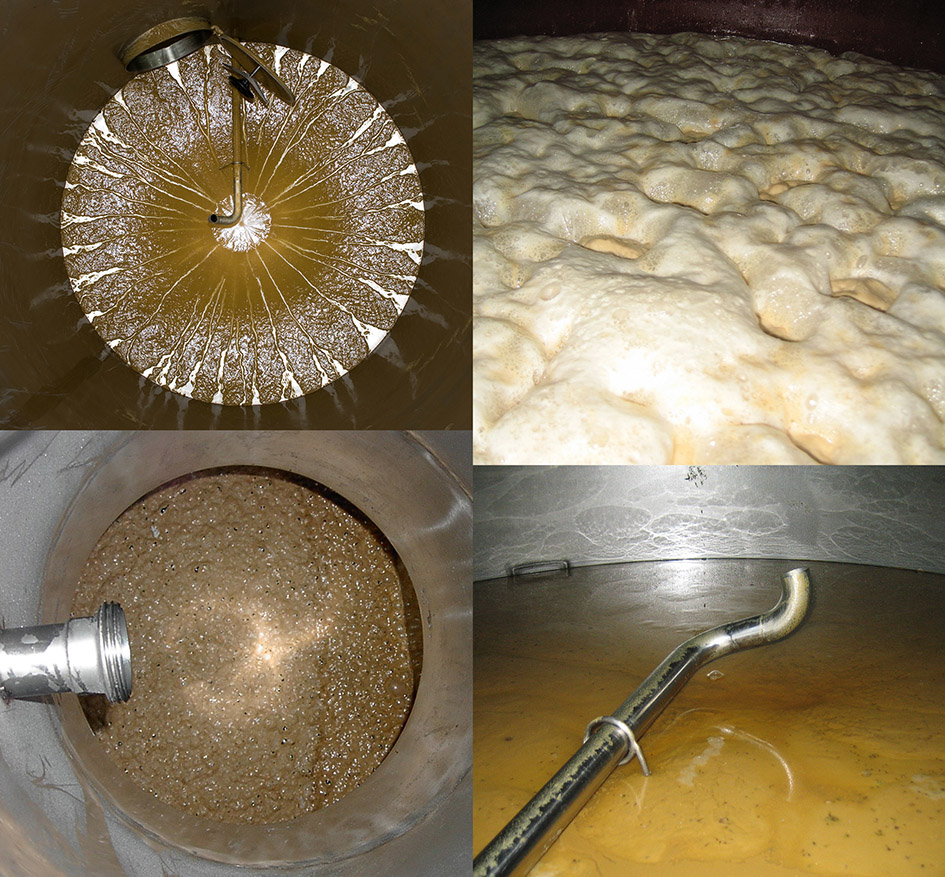
One other important reason for bottling is quite simply that we need to empty tanks for the harvest. Of course emptying tanks happens as a matter of course as the wine is sold, but then we also have to calculate the tank capacity that we will need for the harvest, and make sure that we have the space available. Imagine if we were pressing grapes and suddenly discovered that we didn’t have enough space to receive the grape must (juice)! Nothing is left to chance and this all has to be planned months in advance – even trying to anticipate the volumes that we might sell during the coming year. However, not everything can be calculated, whilst we will always have an idea of the yields that our vines might produce, it is never really an exact science, and can change dramatically until the very moment that our grapes enter the presses. Vamos a ver, as we say.

Fiesta time!

August 5th, 2016 | Fiestas

Tunnel 2016It’s already that time of year again, as we celebrate the LXIV (64th I think) Annual Albariño Festival in our local town of Cambados. If you have read my posts over recent years you will probably know that I am not a great fan of the Festival itself, most especially in the evenings, when it tends to get a little boisterous (and that is being VERY polite). Great if your in your 20’s and want to test your drinking capacity, but certainly not what you would describe as a tasting. It’s just a party, or as some might prefer, celebration.

If you’re a serious professional and want to actually taste (or even just a consumer interested in knowing more and comparing wines), then the place for you is the Tunnel of Wine. Not so much a tunnel, but actually just tables laid out with the wines where you can taste as little or as much as you want, at your own pace. Held in the Salón José Peña in Cambados, it is open for the duration of the Festival, for a couple of hours in the morning and then a couple of hours each evening.

I know I probably say this every year, but for me at least, it is the best opportunity of the year to taste the vast majority of albariños of the vintage under one roof. Yesterday I tackled the first half of the room, about 70 odd wines in two hours, and today I will go back to finish the rest. Of course, the secret (as with all serious tastings), is to make copious notes of each individual wine, and secondly to spit! You might think that spitting is an obvious thing, but I can tell you that yesterday, in a room full of people, I don’t think I actually saw one other person spitting…. Enough said.

Spitting and making notes does however, attract attention, the result being that I was interviewed by one of our local papers, asking my opinion. They quoted me perfectly in this respect, that it is simply the best albariño tasting of the year.

A life at sea

August 1st, 2016 | Business

The WorldCastro Martin already proudly sells wine to cruise ships, including the famous Cunard ‘Queens’, and the new P&O flagship Britannia. In addition to this our wines are now sailing on board a completely unique type of ‘cruise’ ship – The World – a Residence at Sea.

To explain this format in simple terms ‘The World’, at 644ft, is the largest private residential ship on the planet, providing floating luxury accommodation for those who can afford it (and want it). Guests, or should I say residents, of this huge floating home simply spend their whole time sailing around the world, again, and again, and again! The accommodation for each resident is not so much a cabin, but is actually a self contained apartment , with pretty much all the amenities of home – except perhaps the underground parking.

As you might imagine, the ship is loaded from top to bottom with different forms of entertainment – fitness, yoga, swimming, diving, kayaks, golf (the water hazards are quite impressive), and even a full-sized tennis court. Apart from numerous bars and restaurants it also caters for a wide multitude of hobbies (including wine tasting), boasts a cinema and theatre, and also has it’s own library. I am sure that this lifestyle will appeal to some, if not many, enjoying a different view from your window every day, but I’m afraid to admit that it certainly wouldn’t work for me.

On the plus side they do stock a great albariño!

In the middle of the Med

July 27th, 2016 | Business

Farsons wine shopNot only do our wines appear on various cruise ships around the Mediterranean, but now they are also available on dry land, in the middle of the Med on the island of Malta. Historically one of Europe’s most strategic islands, located between Sicily and the North African coast. Over the centuries it has fallen under the rule of many a different regime and/or country including the Romans, Phoenecians. Moors, Spanish, French and the British, before finally achieving independence in 1964.

Our new customer – the Farsons Group, is not only a wine import company, but also owns a large brewery, manages some very well-known food franchises, and is an important food importer and distributor on the island. We are naturally quite delighted that such an important business has decided to represent our wines.

Of course , with it’s warm Mediterranean climate Malta is the perfect place to enjoy a chilled glass of albariño this summer (or any summer for that matter)!

Closures and oxidation

July 25th, 2016 | Bottles and bottling

[:en]

As this video explains, grape producers and wine makers invest an enormous amount of time and money (not to mention the love and attention), to grow the best fruit and make the best wine, and then entrust it’s entire future to one very small, and yet vital element – the closure. They say that a chain is only as string as it’s weakest link, but in the wine business we should be saying that our wine is only as good as the closure that we chose. So why do some people try to save a few cents by using a mediocre quality cork? The future of your wine depends on it!

Here at Castro Martin we have invested an enormous amount of time and effort in studying this, by testing various types of Nomacorc closures, and then monitoring carefully the almost imperceptible amounts of oxygen that penetrate the cork (using NomaSense equipment). Each type of closure allows different levels of OTR (Oxygen Transmission Rate), and by making various tests we can actually chose the perfect closure for our wine. The wine maker is, in effect, given a further opportunity to actually have an important influence over how their wine evolves (assuming that other storage conditions are constant).

I think this video explains the story quite well.
[:es]

As this video explains, grape producers and wine makers invest an enormous amount of time and money (not to mention the love and attention), to grow the best fruit and make the best wine, and then entrust it’s entire future to one very small, and yet vital element – the closure. They say that a chain is only as string as it’s weakest link, but in the wine business we should be saying that our wine is only as good as the closure that we chose. So why do some people try to save a few cents by using a mediocre quality cork? The future of your wine depends on it!

Here at Castro Martin we have invested an enormous amount of time and effort in studying this, by testing various types of Nomacorc closures, and then monitoring carefully the almost imperceptible amounts of oxygen that penetrate the cork (using NomaSense equipment). Each type of closure allows different levels of OTR (Oxygen Transmission Rate), and by making various tests we can actually chose the perfect closure for our wine. The wine maker is, in effect, given a further opportunity to actually have an important influence over how their wine evolves (assuming that other storage conditions are constant).

I think this video explains the story quite well.[:]

Monthly Archives

Categories

ARE YOU OF LEGAL AGE? This site is intended for those of legal drinking age. By entering, you confirm that you are of legal drinking age in the country where this site is being accessed. ¿ERES MAYOR DE EDAD? Este sitio está destinado a personas en edad legal para beber alcohol. Al ingresar, confirma que tiene la edad legal para beber en el país donde se accede a este sitio.