

Author Archive

100 Soo Hoo Khoon Peng points?

January 6th, 2013 | International News

If your wine is awarded 100 points by Soo Hoo Khoon Peng, is that something that will change the future of your wine cellar? Let me explain. Soo Hoo Khoon Peng is a Singaporean wine importer who has not only paid USD 15million to buy The Wine Advocate franchise from Robert M. Parker Jnr., but who has also taken over both editorial control and control of the business as a whole. This being the case, then every serious wine consumer is probably asking themselves the question “can this be the beginning of the end of the Parker empire?”

There are some serious wine journalists around who have already speculated that Parker’s influence may be in decline, and that many people simply cannot afford to pay attention to his comments – the reason being that his scoring system has, single-handedly, made some wines so expensive that they are now well beyond the reach of many a mere mortal on the street, or perhaps I should say, in their local wine store. It is also said that the only people now interested in his rating system are the property owners themselves, who can sit back and watch the value of their property and vineyards increase by millions virtually overnight.

Apparently Mr Parker himself will be staying on, drawing a salary from the new owners to judge the wines of Bordeaux and the Rhône. After all, without any input whatsoever, the value of the Wine Advocate brand would evaporate very quickly. Personally I have the feeling that Parker has made the decision to quit while he’s still ahead, a step towards retirement if you will, and with USD 10million in his back pocket, who can blame him? Also, whilst I can appreciate that his scoring system may have helped many a consumer make his or her wine selection, I can’t help but feel that his influence has long been out of control. After all, like art, taste in wine is purely subjective, and the hugely complex faculties of taste and smell cannot, and should not, be over-simplified and reduced to a simple scoring system.

In the past Parker has sometimes been referred to as “the Emperor of Wine”, and so we have to ask ourselves, if his influence really is in decline, who will take over the mantle? Certainly as far as the U.S. market is concerned, a good candidate might be Stephen Tanzer, who I should tell you, is more a man after my own taste. The one thing that I have always hated about Parker ratings is that he was, and still is, swayed by the power and concentration of a wine, so much so that the very vinification of Bordeaux wines has changed dramatically during his reign. Over-extracted wines became the norm, and subtlety and finesse were often lost somewhere in the background, becoming almost insignificant. As a result, some Bordeaux and Rhône wines virtually required tasting with a fork!

By contrast, Mr Tanzer who runs the International Wine Cellar, appears to favour finesse in wine, rather like myself. As a wine buyer working for a wholesale company buying wine largely for distribution to the restaurant trade, I was always on the look out for wines with finesse and structure that would marry with food, rather than dominate them. Any influential, like-minded wine critic will therefore be a breath of fresh air as far as I’m concerned. Like me, Stephen Tanzer is also a great lover of Burgundy, at one time almost my second home as I spent at least two or three weeks a year scouring the cellars of the area, tasting literally hundreds of fine wines from top producers…… (And I used to get paid too!)

I am very encouraged to learn that  Mr Tanzer is apparently an aficionado of cooler-climate wines, “I like white wines that are minerally, saline and energetic,” he says. A perfect description of Castro Martin albariño.

If your wine is awarded 100 points by Soo Hoo Khoon Peng, is that something that will change the future of your wine cellar? Let me explain. Soo Hoo Khoon Peng is a Singaporean wine importer who has not only paid USD 15million to buy The Wine Advocate franchise from Robert M. Parker Jnr., but who has also taken over both editorial control and control of the business as a whole. This being the case, then every serious wine consumer is probably asking themselves the question “can this be the beginning of the end of the Parker empire?”

There are some serious wine journalists around who have already speculated that Parker’s influence may be in decline, and that many people simply cannot afford to pay attention to his comments – the reason being that his scoring system has, single-handedly, made some wines so expensive that they are now well beyond the reach of many a mere mortal on the street, or perhaps I should say, in their local wine store. It is also said that the only people now interested in his rating system are the property owners themselves, who can sit back and watch the value of their property and vineyards increase by millions virtually overnight.

Apparently Mr Parker himself will be staying on, drawing a salary from the new owners to judge the wines of Bordeaux and the Rhône. After all, without any input whatsoever, the value of the Wine Advocate brand would evaporate very quickly. Personally I have the feeling that Parker has made the decision to quit while he’s still ahead, a step towards retirement if you will, and with USD 10million in his back pocket, who can blame him? Also, whilst I can appreciate that his scoring system may have helped many a consumer make his or her wine selection, I can’t help but feel that his influence has long been out of control. After all, like art, taste in wine is purely subjective, and the hugely complex faculties of taste and smell cannot, and should not, be over-simplified and reduced to a simple scoring system.

In the past Parker has sometimes been referred to as “the Emperor of Wine”, and so we have to ask ourselves, if his influence really is in decline, who will take over the mantle? Certainly as far as the U.S. market is concerned, a good candidate might be Stephen Tanzer, who I should tell you, is more a man after my own taste. The one thing that I have always hated about Parker ratings is that he was, and still is, swayed by the power and concentration of a wine, so much so that the very vinification of Bordeaux wines has changed dramatically during his reign. Over-extracted wines became the norm, and subtlety and finesse were often lost somewhere in the background, becoming almost insignificant. As a result, some Bordeaux and Rhône wines virtually required tasting with a fork!

By contrast, Mr Tanzer who runs the International Wine Cellar, appears to favour finesse in wine, rather like myself. As a wine buyer working for a wholesale company buying wine largely for distribution to the restaurant trade, I was always on the look out for wines with finesse and structure that would marry with food, rather than dominate them. Any influential, like-minded wine critic will therefore be a breath of fresh air as far as I’m concerned. Like me, Stephen Tanzer is also a great lover of Burgundy, at one time almost my second home as I spent at least two or three weeks a year scouring the cellars of the area, tasting literally hundreds of fine wines from top producers…… (And I used to get paid too!)

I am very encouraged to learn that  Mr Tanzer is apparently an aficionado of cooler-climate wines, “I like white wines that are minerally, saline and energetic,” he says. A perfect description of Castro Martin albariño.

Château la Pompe

January 1st, 2013 | Retail

In my former life as a wine buyer I often travelled around the wine regions of southern France, and very occasionally found myself visiting the odd wine co-operative. They nearly always had a shop area where locals could pop in and buy a few bottles of quaffing wine to drink with their meals. (Twenty odd years ago it was inconceivable that a French family would sit down to eat without a bottle of table wine alongside the water bottle on their dining table. In today’s France this is perhaps not quite such a common occurrence as the government recommends drinking only “in moderation”, with compulsory warnings on every bottle).

In the corner of many of these co-operative wine shops there was often a corner reserved for the pumps. Large hoses protruding from the wall with metal nozzles on the end, looking pretty much the same as petrol pumps. The difference was that they were not delivering your average 98 octane or lead-free…… they were pumping red, white or rosé to pour at your table!

Locals would arrive with large plastic containers or bottles in hand and fill them with their favourite local table wine. Forget the thoughtfully designed labels or fancy shaped bottles, this was wine for quaffing.

So, although this idea has been around for some time now, it is only in the last year or two that it has turned up in the aisles of French supermarkets, and whilst it is not uncommon to top up your car at the supermarket fuel pumps, you can now top up your bottles at the wine pumps too. Now, all you need to remember is to top up your olive oil!

In my former life as a wine buyer I often travelled around the wine regions of southern France, and very occasionally found myself visiting the odd wine co-operative. They nearly always had a shop area where locals could pop in and buy a few bottles of quaffing wine to drink with their meals. (Twenty odd years ago it was inconceivable that a French family would sit down to eat without a bottle of table wine alongside the water bottle on their dining table. In today’s France this is perhaps not quite such a common occurrence as the government recommends drinking only “in moderation”, with compulsory warnings on every bottle).

In the corner of many of these co-operative wine shops there was often a corner reserved for the pumps. Large hoses protruding from the wall with metal nozzles on the end, looking pretty much the same as petrol pumps. The difference was that they were not delivering your average 98 octane or lead-free…… they were pumping red, white or rosé to pour at your table!

Locals would arrive with large plastic containers or bottles in hand and fill them with their favourite local table wine. Forget the thoughtfully designed labels or fancy shaped bottles, this was wine for quaffing.

So, although this idea has been around for some time now, it is only in the last year or two that it has turned up in the aisles of French supermarkets, and whilst it is not uncommon to top up your car at the supermarket fuel pumps, you can now top up your bottles at the wine pumps too. Now, all you need to remember is to top up your olive oil!

Impress your friends this New Year

December 28th, 2012 | Fiestas

You may have read on our blog a week or two ago that our denomination is now producing sparkling Rias Baixas wines (but not here at Castro Martin). Of course, this is the time of year that we often ‘push the boat out’ and open a bottle of fizz that we might not normally drink, especially during these times of austerity. So whether you decide to drink a bottle of Champagne, Cava or even sparkling Rias Baixas over the holiday period, why not impress your friends and family by opening the bottle with a sabre!!!

OK, so a sabre is not necessarily the type of thing that you will have laying around the house, but any type of heavy knife will pretty much do the trick. As with all these things, not only is there a technique, but there is also a secret to doing this successfully – make sure that the bottle is extremely well chilled before you try. Put the bottle in your freezer for at least one hour – this will have the effect of reducing the pressure inside, and make the whole process a little safer.

Take the bottle out, and at the last moment remove the foil and wire completely. Tilt the bottle at an angle of 45° with the seam of the bottle on top. With the back of your knife blade run it sharply and smoothly up, along the whole length of the seam, so that the blade strikes the lip at the top of the bottle. If you’ve done it properly, the neck of the bottle will snap cleanly (yes, you will remove a small section of the glass too), and after the applause have subsided, you can enjoy your wine.

As a footnote, it is obvious that you should not point the bottle at anyone whilst doing this, and I would recommend that others stand well back, just to be on the safe side. Also, you should probably only attempt this with good quality wines, as they will use better quality, heavy bottles. Do not try this with your £4.99 bottle of Asti Spumante!

You may have read on our blog a week or two ago that our denomination is now producing sparkling Rias Baixas wines (but not here at Castro Martin). Of course, this is the time of year that we often ‘push the boat out’ and open a bottle of fizz that we might not normally drink, especially during these times of austerity. So whether you decide to drink a bottle of Champagne, Cava or even sparkling Rias Baixas over the holiday period, why not impress your friends and family by opening the bottle with a sabre!!!

OK, so a sabre is not necessarily the type of thing that you will have laying around the house, but any type of heavy knife will pretty much do the trick. As with all these things, not only is there a technique, but there is also a secret to doing this successfully – make sure that the bottle is extremely well chilled before you try. Put the bottle in your freezer for at least one hour – this will have the effect of reducing the pressure inside, and make the whole process a little safer.

Take the bottle out, and at the last moment remove the foil and wire completely. Tilt the bottle at an angle of 45° with the seam of the bottle on top. With the back of your knife blade run it sharply and smoothly up, along the whole length of the seam, so that the blade strikes the lip at the top of the bottle. If you’ve done it properly, the neck of the bottle will snap cleanly (yes, you will remove a small section of the glass too), and after the applause have subsided, you can enjoy your wine.

As a footnote, it is obvious that you should not point the bottle at anyone whilst doing this, and I would recommend that others stand well back, just to be on the safe side. Also, you should probably only attempt this with good quality wines, as they will use better quality, heavy bottles. Do not try this with your £4.99 bottle of Asti Spumante!

Happy Christmas

December 25th, 2012 | Fiestas

Whilst we appreciate that not everyone celebrates Christmas, Angela and I would still like to send Seasons Greetings to all our friends and customers around the world. We would also like to take this opportunity to wish you a happy, healthy and prosperous New Year for 2013.

Whilst we appreciate that not everyone celebrates Christmas, Angela and I would still like to send Seasons Greetings to all our friends and customers around the world. We would also like to take this opportunity to wish you a happy, healthy and prosperous New Year for 2013.

Soggy Holidays!

December 22nd, 2012 | Fiestas

There is good news and bad news here in Galicia as Christmas approaches. The good news is, firstly, that the world didn’t end on Friday as predicted in the Mayan Calendar, and then secondly the local seafood prices have remained more stable this year. The latter is actually quite important news in Galicia as seafood forms an important part of the traditional Christmas menu for us. Under normal circumstances supply and demand would push prices through the roof at this time of year, but possibly, owing to the the deep recession that we have, the demand this Christmas has been somewhat subdued. In previous years some of the most sought after seafood has achieved quite astronomical levels – percebes (sea barnacles) for example, were changing hands at around 200 Euros per kilo! This year however, whilst the market has softened a little, it is still possible to pay between 100-150 Euros for percebes in some local towns. Fresh camarónes (shrimp) are still commanding prices of around the 100 Euro/kg mark, cigalas (crayfish) can be found at around 80 Euros, and nécoras (crab) are between 50-60 Euros/kg. 

The bad news is that our Christmas holidays have been, and will probably continue to be, extremely wet – perhaps not quite as wet as other parts of Europe, but we have still experienced some significant rainfall. For the first two weeks of this month it rained almost non-stop, producing more than double the volume for the entire month of December last year. Only last week we suffered torrential, horizontal rain, driven by winds of over 90kph (56mph), but having said that the poor people of New York and the U.S. east coast will probably dismiss that as insignificant.

I should finish by saying that the vineyard in the newspaper picture is not ours – our soil is pretty wet, but I’m happy to say that we are not flooded.

There is good news and bad news here in Galicia as Christmas approaches. The good news is, firstly, that the world didn’t end on Friday as predicted in the Mayan Calendar, and then secondly the local seafood prices have remained more stable this year. The latter is actually quite important news in Galicia as seafood forms an important part of the traditional Christmas menu for us. Under normal circumstances supply and demand would push prices through the roof at this time of year, but possibly, owing to the the deep recession that we have, the demand this Christmas has been somewhat subdued. In previous years some of the most sought after seafood has achieved quite astronomical levels – percebes (sea barnacles) for example, were changing hands at around 200 Euros per kilo! This year however, whilst the market has softened a little, it is still possible to pay between 100-150 Euros for percebes in some local towns. Fresh camarónes (shrimp) are still commanding prices of around the 100 Euro/kg mark, cigalas (crayfish) can be found at around 80 Euros, and nécoras (crab) are between 50-60 Euros/kg. 

The bad news is that our Christmas holidays have been, and will probably continue to be, extremely wet – perhaps not quite as wet as other parts of Europe, but we have still experienced some significant rainfall. For the first two weeks of this month it rained almost non-stop, producing more than double the volume for the entire month of December last year. Only last week we suffered torrential, horizontal rain, driven by winds of over 90kph (56mph), but having said that the poor people of New York and the U.S. east coast will probably dismiss that as insignificant.

I should finish by saying that the vineyard in the newspaper picture is not ours – our soil is pretty wet, but I’m happy to say that we are not flooded.

Christmas spirit

December 20th, 2012 | Fiestas

It’s only a couple of years ago that the shelves and window ledges in our office were covered in beautiful, colourful Christmas cards. These days, I am almost afraid to admit, that our shelves are bare, but should quickly add that this is nothing to do with our popularity. The simple truth is that they have been replaced by e-cards, or Christmas messages sent over the internetweb-thingy. I must confess that for the last couple of years we are guilty of doing the very same ourselves. My best guess is that as companies tighten their purse strings and cut costs in these difficult times, that there is a considerable saving to be made in postal charges. Even sending a single card across Europe will cost nearly one GB Pound, or one Euro, and that’s excluding the cost of the card itself.

With the aid of a bit of Photoshop it is now quite simple to put together a nice picture with a friendly seasonal greeting – press the button on our computer keyboard, and presto, it is sent!

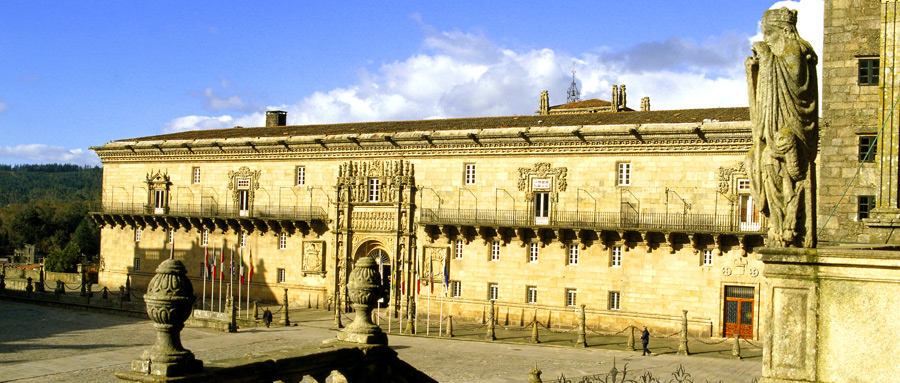
The reason I mention Photoshop is because it is now apparent that not everybody has access to this wonderful software. Take for example the main picture in today’s posting – an e-card received from our local Xunta (government office). Now, at this festive time of year you might think that they could select a slightly more joyful picture to send out, rather than the slightly bleak picture of their offices that they used. It look’s like a prison building with a bit of holly stuck in front of it. Not even a flake of snow to be seen!

Finally, there is the poor Pulpo guy, who was made to stick his head through a poster and have his picture taken disguised as an Octopus. He certainly doesn’t look too thrilled about it, and again the Christmas spirit is not exactly shining through…..

It’s only a couple of years ago that the shelves and window ledges in our office were covered in beautiful, colourful Christmas cards. These days, I am almost afraid to admit, that our shelves are bare, but should quickly add that this is nothing to do with our popularity. The simple truth is that they have been replaced by e-cards, or Christmas messages sent over the internetweb-thingy. I must confess that for the last couple of years we are guilty of doing the very same ourselves. My best guess is that as companies tighten their purse strings and cut costs in these difficult times, that there is a considerable saving to be made in postal charges. Even sending a single card across Europe will cost nearly one GBPound, or one Euro, and that’s excluding the cost of the card itself.

With the aid of a bit of Photoshop it is now quite simple to put together a nice picture with a friendly seasonal greeting – press the button on our computer keyboard, and presto, it is sent!

The reason I mention Photoshop is because it is now apparent that not everybody has access to this wonderful software. Take for example the main picture in today’s posting – an e-card received from our local Xunta (government office). Now, at this festive time of year you might think that they could select a slightly more joyful picture to send out, rather than the slightly bleak picture of their offices that they used. It look’s like a prison building with a bit of holly stuck in front of it. Not even a flake of snow to be seen!

Finally, there is the poor Pulpo guy, who was made to stick his head through a poster and have his picture taken disguised as an Octopus. He certainly doesn’t look too thrilled about it, and again the Christmas spirit is not exactly shining through…..

Your Christmas Tipple

December 18th, 2012 | Food & Wine

I remember once, many years ago, going to a summer evening dinner party at a friend’s house in London. He lived in a very good area, in a very nice house, and I thought he knew a bit about wine, so accordingly, I turned up at his door with a nice bottle in my hand. In fact, more than 20 years on, I still remember what the wine was….. a Pouilly Fumé from Domaine de Ladoucette (sorry, I don’t remember the vintage). To cut yet another long story short, it turned out that some of his guests enjoyed rather good ‘spritzers’ as an aperitif – he had diluted this beautiful wine with sparkling water and served it pre-dinner!

You might know that I am a bit of a purist when it comes to wine. For example, I prefer my Chablis (and my Albariño) without oak, and cringe at the thought of adding orange juice to Champagne. I don’t really like Cava, and I have to say that I think I would even baulk at the idea of adding OJ to Spain’s favourite sparkling wine. I just don’t believe in mixing a good wine with anything. What’s the point?

However, the other day I discovered a new product (new to me at least) that takes this idea to a new level – Chocovine! Yes, as the name implies it is a blend of red wine, cream and chocolate! Created in Holland it is apparently very popular, and its’ website claims that it is the number one selling chocolate wine in the United States. This claim makes me wonder, how many chocolate wines are there on the market? Perhaps I have been living with my head in a bucket, but I have never seen or heard of this product before.

Now, I do know that a robust red Zinfandel, or perhaps a powerful Cabernet Sauvignon might sit well with a bittersweet chocolate dessert, but the idea of actually blending them together makes my stomach turn. I’ll just stick to a nice glass of Sauternes with my Christmas dessert, or perhaps even a nice moscatel from Spain.

I remember once, many years ago, going to a summer evening dinner party at a friend’s house in London. He lived in a very good area, in a very nice house, and I thought he knew a bit about wine, so accordingly, I turned up at his door with a nice bottle in my hand. In fact, more than 20 years on, I still remember what the wine was….. a Pouilly Fumé from Domaine de Ladoucette (sorry, I don’t remember the vintage). To cut yet another long story short, it turned out that some of his guests enjoyed rather good ‘spritzers’ as an aperitif – he had diluted this beautiful wine with sparkling water and served it pre-dinner!

You might know that I am a bit of a purist when it comes to wine. For example, I prefer my Chablis (and my Albariño) without oak, and cringe at the thought of adding orange juice to Champagne. I don’t really like Cava, and I have to say that I think I would even baulk at the idea of adding OJ to Spain’s favourite sparkling wine. I just don’t believe in mixing a good wine with anything. What’s the point?

However, the other day I discovered a new product (new to me at least) that takes this idea to a new level – Chocovine! Yes, as the name implies it is a blend of red wine, cream and chocolate! Created in Holland it is apparently very popular, and its’ website claims that it is the number one selling chocolate wine in the United States. This claim makes me wonder, how many chocolate wines are there on the market? Perhaps I have been living with my head in a bucket, but I have never seen or heard of this product before.

Now, I do know that a robust red Zinfandel, or perhaps a powerful Cabernet Sauvignon might sit well with a bittersweet chocolate dessert, but the idea of actually blending them together makes my stomach turn. I’ll just stick to a nice glass of Sauternes with my Christmas dessert, or perhaps even a nice moscatel from Spain.

Planning? What planning?

December 14th, 2012 | Odds & Sods

Outside Spain there’s a bit of a standing joke about the pace of life over here – the fact that if you need something to be done, then it will probably be done “mañana” (tomorrow). Unfortunately there is a element of truth behind this old adage, and trying to get things done can be very frustrating. Sometimes there just appears to be a complete lack of urgency….

On the other hand the Spanish people are very spontaneous, which can make life fun and very exciting, albeit that this too can have its down side. This apparent spontaneity can sometimes be borne out of a lack of planning, leaving things very much to the last minute. I believe that I once wrote about receiving invitations in the post, for meetings or courses, perhaps as little as one or two days before the actual event. I am not sure why this is, but I’m afraid to say that it usually gives the impression of either being very informal or perhaps not particularly well organised.

So the point of my story? Well, for the last ten years or so, since I arrived here in Spain, I have always had a year planner pinned to my wall. Until this year it has been a gift from the business manager at our local bank, but to cut a long story short they will not be giving them in 2013. Not a problem, I will just go out and buy one, or so I thought. Unfortunately this proved to be much more complicated than it sounds. After walking all around the city of Pontevedra and visiting every major stationery store, I almost gave up completely. The word for a planner in Spanish is a “planning” and no matter how I tried to describe it (I began to think that my Spanish was much worse than it really is), I just got blank looks all around. I was offered every type of calendar known to man, but with not one single planner in sight. Could it be that planning in advance is simply not the ‘norm’ here, or maybe it’s just that everyone uses computer planners these days and I’m just completely out-of-date? The search continues…..

Outside Spain there’s a bit of a standing joke about the pace of life over here – the fact that if you need something to be done, then it will probably be done “mañana” (tomorrow). Unfortunately there is a element of truth behind this old adage, and trying to get things done can be very frustrating. Sometimes there just appears to be a complete lack of urgency….

On the other hand the Spanish people are very spontaneous, which can make life fun and very exciting, albeit that this too can have its down side. This apparent spontaneity can sometimes be borne out of a lack of planning, leaving things very much to the last minute. I believe that I once wrote about receiving invitations in the post, for meetings or courses, perhaps as little as one or two days before the actual event. I am not sure why this is, but I’m afraid to say that it usually gives the impression of either being very informal or perhaps not particularly well organised.

So the point of my story? Well, for the last ten years or so, since I arrived here in Spain, I have always had a year planner pinned to my wall. Until this year it has been a gift from the business manager at our local bank, but to cut a long story short they will not be giving them in 2013. Not a problem, I will just go out and buy one, or so I thought. Unfortunately this proved to be much more complicated than it sounds. After walking all around the city of Pontevedra and visiting every major stationery store, I almost gave up completely. The word for a planner in Spanish is a “planning” and no matter how I tried to describe it (I began to think that my Spanish was much worse than it really is), I just got blank looks all around. I was offered every type of calendar known to man, but with not one single planner in sight. Could it be that planning in advance is simply not the ‘norm’ here, or maybe it’s just that everyone uses computer planners these days and I’m just completely out-of-date? The search continues…..

This is not Anfield

December 11th, 2012 | Odds & Sods

Those of you who know me (or perhaps those who have been reading our blog for some time), will probably already know that I am a fanatical Liverpool FC supporter. There have been photos of me on this blog sporting at least a few of my extensive collection of Liverpool shirts (including one No.9 ‘Torres’ shirt, now sadly mothballed). Although I wear these shirt quite regularly, usually on my early morning run, only a very few people ever get to see them.

I have therefore taken one of my most prized shirts, signed by the entire team, and put it on display in the wine cellar. From a few seasons ago this shirt includes the signatures of Steven Gerrard, Fernando Torres (before his defection), Xabi Alonso & Alvaro Arbeloa (both now regulars with Real Madrid), Javier Mascherano (now Barcelona CF), and Pepe Reina, so there is at least a strong Spanish connection with this shirt. In my collection I also have a shirt of the legendary Liverpool No.7, Kenny Dalgish, not only signed, but dedicated to me with a personalised message. At the moment this is not in my display.

Symbolically, the shirt I have displayed is above the staircase, and includes an Anfield Road street sign. It is symbolic in that there is a famous sign above the stairs at the Anfield Stadium. In the players tunnel, the players touch it on their way out onto the pitch to bring them luck – and in recent seasons we need as much luck as we can get!

Although nothing to do with wine, this is my little English shrine within the Bodega, and now reminds me of a very powerful poem that I learned as a boy. Written by the famous war poet Rupert Brooke, his poem ‘The soldier’ contains the immortal line…. “there is some corner of a foreign field that is forever England”.

Those of you who know me (or perhaps those who have been reading our blog for some time), will probably already know that I am a fanatical Liverpool FC supporter. There have been photos of me on this blog sporting at least a few of my extensive collection of Liverpool shirts (including one No.9 ‘Torres’ shirt, now sadly mothballed). Although I wear these shirt quite regularly, usually on my early morning run, only a very few people ever get to see them.

I have therefore taken one of my most prized shirts, signed by the entire team, and put it on display in the wine cellar. From a few seasons ago this shirt includes the signatures of Steven Gerrard, Fernando Torres (before his defection), Xabi Alonso & Alvaro Arbeloa (both now regulars with Real Madrid), Javier Mascherano (now Barcelona CF), and Pepe Reina, so there is at least a strong Spanish connection with this shirt. In my collection I also have a shirt of the legendary Liverpool No.7, Kenny Dalgish, not only signed, but dedicated to me with a personalised message. At the moment this is not in my display.

Symbolically, the shirt I have displayed is above the staircase, and includes an Anfield Road street sign. It is symbolic in that there is a famous sign above the stairs at the Anfield Stadium. In the players tunnel, the players touch it on their way out onto the pitch to bring them luck – and in recent seasons we need as much luck as we can get!

Although nothing to do with wine, this is my little English shrine within the Bodega, and now reminds me of a very powerful poem that I learned as a boy. Written by the famous war poet Rupert Brooke, his poem ‘The soldier’ contains the immortal line…. “there is some corner of a foreign field that is forever England”.

Christmas Fizz

December 7th, 2012 | Bottles and bottling

I wrote a few days ago about our denomination’s new sparkling albariño, and whilst there will be a few bottles on the market before Christmas, it’s very unlikely to be appearing in your local supermarket any time soon (if at all). Not because it isn’t a good product, but more because it is likely to be very much a niche product – a curiosity that will never be produced in any great volume.

In stark contrast to this small, limited production it is quite clear that there must be some sparkling wines appearing on the Christmas market which are produced in some quite serious volumes. The reason behind this sweeping statement is actually quite simple…… their price! Picking out recent examples from the UK market (sold by a supermarket which shall remain nameless), they are promoting sparkling wines from as little as £3.29 a bottle, and a handful of others all under £5.00. When you consider that all sparkling wines sold in the UK attracts a higher level of excise duty, £2.43 a bottle to be precise, you might begin to understand where I am going with this. The Value Added Tax on a £5.00 bottle is £0.83, which added to the duty, makes £3.26, leaving only £1.74 for the wine itself (on the £3.29 bottle the residue after tax is only £0.31). Now, when I use the word ‘wine’ this does not actually mean just the liquid in the bottle, the £1.74 (or £0.31) has to account for the liquid, the bottle, the cork, the label, the capsule, the carton, the shipping, the warehousing, the distribution, and oh! I nearly forgot, perhaps a bit of profit for the producer and the retailer. These numbers do not really add up for the £5.00 bottle, and therefore even less so for the £3.29 bottle. The latter must be what is known as a “loss leader” – a product perhaps sold at a loss merely to attract custom and get people into the store on the basis that they will buy other, more profitable items. Also known as “cross town deal” – a deal so good that customers will go out of their way, or possibly make a special journey just to take advantage of it.

I’m very sorry to admit that personally I am never tempted by these offers, especially when it comes to Champagne or sparkling wine. I’m a great believer in the old adage ‘you get what you pay for’, and if an offer is too good to be true, then there really must be a reason.

I wrote a few days ago about our denomination’s new sparkling albariño, and whilst there will be a few bottles on the market before Christmas, it’s very unlikely to be appearing in your local supermarket any time soon (if at all). Not because it isn’t a good product, but more because it is likely to be very much a niche product – a curiosity that will never be produced in any great volume.

In stark contrast to this small, limited production it is quite clear that there must be some sparkling wines appearing on the Christmas market which are produced in some quite serious volumes. The reason behind this sweeping statement is actually quite simple…… their price! Picking out recent examples from the UK market (sold by a supermarket which shall remain nameless), they are promoting sparkling wines from as little as £3.29 a bottle, and a handful of others all under £5.00. When you consider that all sparkling wines sold in the UK attracts a higher level of excise duty, £2.43 a bottle to be precise, you might begin to understand where I am going with this. The Value Added Tax on a £5.00 bottle is £0.83, which added to the duty, makes £3.26, leaving only £1.74 for the wine itself (on the £3.29 bottle the residue after tax is only £0.31). Now, when I use the word ‘wine’ this does not actually mean just the liquid in the bottle, the £1.74 (or £0.31) has to account for the liquid, the bottle, the cork, the label, the capsule, the carton, the shipping, the warehousing, the distribution, and oh! I nearly forgot, perhaps a bit of profit for the producer and the retailer. These numbers do not really add up for the £5.00 bottle, and therefore even less so for the £3.29 bottle. The latter must be what is known as a “loss leader” – a product perhaps sold at a loss merely to attract custom and get people into the store on the basis that they will buy other, more profitable items. Also known as “cross town deal” – a deal so good that customers will go out of their way, or possibly make a special journey just to take advantage of it.

I’m very sorry to admit that personally I am never tempted by these offers, especially when it comes to Champagne or sparkling wine. I’m a great believer in the old adage ‘you get what you pay for’, and if an offer is too good to be true, then there really must be a reason.

Monthly Archives

Categories

ARE YOU OF LEGAL AGE? This site is intended for those of legal drinking age. By entering, you confirm that you are of legal drinking age in the country where this site is being accessed. ¿ERES MAYOR DE EDAD? Este sitio está destinado a personas en edad legal para beber alcohol. Al ingresar, confirma que tiene la edad legal para beber en el país donde se accede a este sitio.