



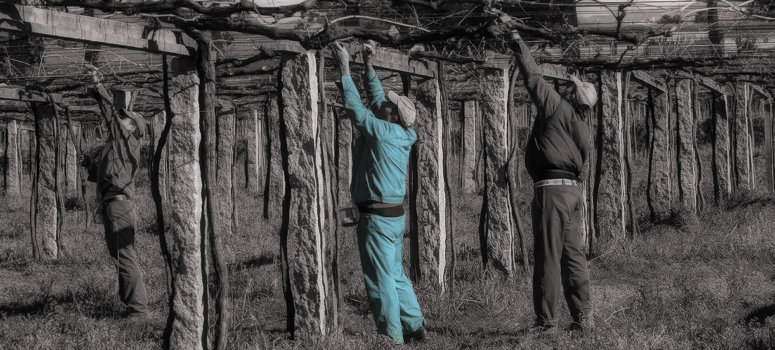
Viticultura
Bodegas Castro Martín está en la subzona más al norte de la Denominación de Origen Rías Baixas, denominada subzona del «Val do Salnes”. El Valle del Salnés o Val do Salnes, es conocido como el corazón del albariño y en ella se encuentra cerca del 65% del total de plantaciones de esta Denominación de Origen. Los vinos del Salnés son considerados como unos de los mejores de la D.O. Cosechados en la subregión más al norte de la denominación y con una clara influencia del océano Atlántico, presentan una vivaz y fresca acidez que le da al Albariño su distintivo carácter y frescura además de sus limpios y elegantes aromas.
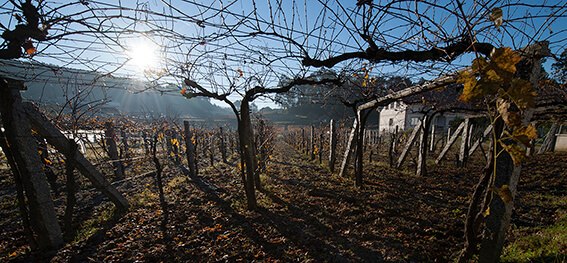
En el mismo corazón del Valle del Salnés, nuestros viñedos disfrutan de una localización geográfica privilegiada, con suelos arenosos ricos en minerales, que yacen sobre una base de granito y cuarzo, ideales para nuestra variedad de uva albariña.
Las grandes plantaciones de viñedo son muy escasas en el Salnés, y al igual que la mayoría de los viticultores, nuestros viñedos se encuentran en diferentes localizaciones, todas ellas a menos de 5 kilómetros de la Bodega. Cada zona imprime en su propio carácter a nuestros vinos, por lo que tenemos especial cuidado en separar las uvas en la vendimia y elaborar su mosto cada uno por separado. Nuestros viñedos más importantes son El Pazo de Barrantes y el Iglesario de Castrelo, que son las que proveen la uva de nuestro Vino de Pago o “Family Estate”. Pero además de estas dos plantaciones también tenemos la Finca de Cunchidos, la Finca de Caeiro y la Finca de Botoris.
En nuestros viñedos propios procuramos no abonar en exceso, realizando periódicos análisis de tierra y controlando la acidez excesiva del suelo mediante adición de sales de calcio, potasio o magnesio. Así mismo se aplican el mínimo número de tratamientos químicos posibles y en caso necesario, los menos perjudiciales para el medio ambiente. Tratamos de llevar a cabo una producción integrada en la medida de lo posible como la lucha biológica, utilizando, por ejemplo, feromonas (confusión sexual) y trampas biológicas para el control de insectos, caldo bordolés (mezcla para prevenir mildiu y oidio).
 Desafortunadamente, como muchos otros productores de la zona, no somos autosuficientes en la producción de uva, por lo que nos vemos en la necesidad de comprar uva a viticultores de la zona. Sin embargo, realizamos una exhaustiva selección de nuestros proveedores, compartiendo con ellos una relación de muchos años, incluso desde la fundación de la bodega. Todos ellos se encuentran situados en el Valle del Salnés. Nosotros no sólo realizamos un estricto control de la selección de uvas provenientes de estos viticultores, sino que además procuramos aconsejarles en el mejor y más adecuado manejo de sus explotaciones vitícolas. La bodega paga a sus viticultores de acuerdo a la calidad de las uvas que producen; calidad que se controla mediante una toma de muestras en la que se mide el grado de azúcar, acidez, pH y el estado sanitario de sus uvas.
El tamaño tan reducido de los viñedos, la necesidad de hacerse con uva mediante la compra a cosecheros y los altos costes de mano de obra, nos dan a entender que el vino Albariño, no parece ser un vino barato.
Existen otras áreas en el mundo (Australia y Norteamérica, por ejemplo) en dónde se ha intentado plantar la variedad albariño, pero cuando recordamos nuestros suelos individuales, nuestro clima marítimo de influencia atlántica y la experiencia acumulada a través de muchas generaciones, parece claro que el Albariño de Rías Baixas conservará siempre su estilo único y distintivo. Después de todo es el AUTÉNTICO albariño.