



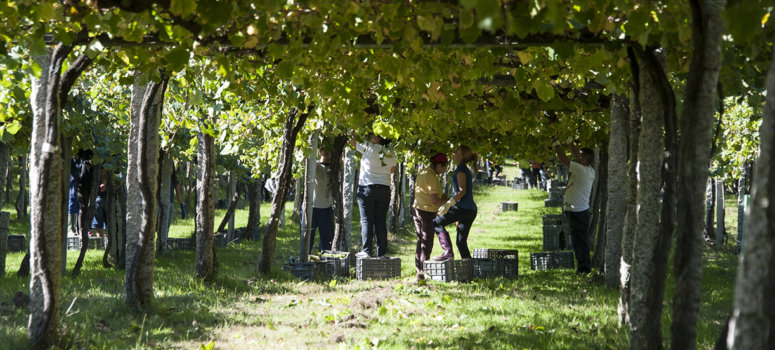
Cosechas
2022 – 40.904.676 kilos Recolectados:
2021 – 43.809.134 kilos Recolectados:
2020 – 34.470.166 kilos Recolectados:
2019 – 32.401.591 kilos Recolectados:
2018 – 38.595.306 kilos Recolectados:
2017 – 39.339.272 kilos Recolectados:
Tras un atípico y seco invierno, 2017 destacó por una floración muy temprana (mayo). La época del desarrollo vegetativo de la vid (junio, julio y agosto), se caracterizó por un tiempo impredecible -mayoritariamente seco, pero no particularmente caluroso-. A principios de Septiembre, la fruta estaba sorprendentemente madura y sana, y con una calidad muy superior a lo que se esperaba tras un verano algo “mediocre”. Estas inmejorables condiciones también consiguieron un nuevo record de rendimiento, siendo 2017, la segunda cosecha más grande de la Denominación. A pesar de esta tan generosa cosecha, lo más sorprendente de la misma fue su calidad: no sólo recolectamos una fruta abundante y sana, sino que también muy bien equilibrada. Madura y abundante con una buena acidez y un grado alcohólico probable en torno a los 12,5%Vol.
2016 – 23,624,086 kilos Recolectados:
El invierno de la cosecha de 2016 (como en 2015), era bastante impredecible – seco en Noviembre y Diciembre, húmedo en enero, y luego bastante inestable durante toda la primavera hasta el tiempo de floración. Una vez terminada la floración, el clima cambió por completo y permaneció caliente y seco durante todo el verano, prácticamente hasta el comienzo de la cosecha a principios de Septiembre (cuando tuvimos un solitario día de lluvia). Debido al calor prolongado del verano, tanto los rendimientos como la acidez fueron levemente inferiores a lo habitual, resultando vinos maduros, con un tacto más alcohólico, pero todavía combinados con una buena frescura que los define con un equilibrio excelente.
2015 – 31,917,611 kilos Recolectados:
El invierno de 2015 fue en gran parte cambiante. Unos cuantos destellos cálidos, algunos días de escarcha clara, y nuestra cuota habitual del gris y húmedo clima gallego. A mediados de Mayo el clima mejoró significativamente, llevándonos a un verano cálido y seco. Caracterizándose por las escasas precipitaciones y períodos prolongados de sol. Septiembre comenzó seco, pero poco antes de nuestra cosecha se auguró una gran tormenta, por lo que decidimos recoger la uva unos días antes de lo que nos hubiera gustado. Los vinos resultantes son más bajos en alcohol (alrededor del 12%), florales, afrutados y con toda la acidez fresca típica de nuestra región.
2014 – 24,180,221 kilos Recolectados:
Después de un invierno muy tempestuoso, con largos períodos de viento fuerte y lluvia torrencial, el verano de 2014 será recordado como fresco y cambiante. Cualquier período de sol era de corta duración y el termómetro permanecía obstinadamente más bajo que lo normal. Agosto mostró una ligera mejoría que se prolongó hasta la primera semana de Septiembre, momento a partir del cual se presentó nuevamente la lluvia. La fruta fue recogida sorprendentemente saludable durante la tercera semana del mes. Un período de sequía muy adecuado para la vendimia. La uva produjo un vino bien equilibrado, con muchas de las características típicas de un Salnés albariño – fresco y afrutado con una acidez limpia y marcada.
2013 – 33,743,486 kilos Recolectados:
El invierno frío y húmedo de 2013 fue bastante prolongado, dando como resultado una floración tardía. Finalmente, el clima caliente llegó a finales de Junio y continuó durante la mayor parte del verano, siendo Agosto y principios de Septiembre particularmente seco. A tan sólo una semana de la cosecha llegó un período de lluvia torrencial, que añadió exceso de agua a la fruta potencialmente muy buena. A pesar de utilizar ciclos suaves y muy cortos de prensado para compensar este hecho, el vino 2013 resultante es extremadamente afrutado, y tal vez carezca ligeramente de la concentración habitual.
2012 – 17,567,877 kilos Recolectados:
La primera parte del año fue inusualmente cálida y seca. Después de Pascua llegó un período de tiempo inestable que estableció el patrón para todo el verano. Una cosecha posiblemente mediocre fué salvada por el mes cálido y seco de Septiembre. Siguiendo la enorme cosecha de 2011, las viñas, tal vez agotadas, produjeron la cosecha más pequeña registrada en casi 10 años. Sin embargo, en el mundo del vino pequeño a menudo significa muy alta calidad, y para 2012 creemos que este ha sido el caso.
2011 – 41,787,783 kilos Recolectados:
Una primavera muy caliente dió lugar a una floración temprana durante la primera mitad de Mayo. El verano fue seco en gran parte, fresco y nublado. A pesar de ello y debido a la cálida primavera la cosecha de 2011 fue uno de las vendimias más tempranas jamás registradas. Los volúmenes fueron enormes. El verano fresco dió lugar a vinos de alcohol bajo y con una acidez levemente más alta de lo habitual. En realidad no ha sido una gran vendimia, aunque sí el momento en donde las prácticas de vinificación determinarán la calidad final del vino en última instancia.
2010 – 31,686,516 kilos Recolectados:
Una primavera muy húmeda hasta el momento de la floración, seguido por unos meses de Julio, Agosto y Septiembre prácticamente sin lluvia. Nos proporcionó la mayor cosecha de la historia a pesar de la “cosecha verde”. Como resultado se obtuvo un vino muy bueno, bien equilibrado, aunque debido al volumen, tal vez no exactamente tan concentrado como nuestro caldo 2009.
2009 – 23,624,086 kilos Recolectados:
Otro verano inestable rescatado por el calor de Agosto que se prolongó hasta la cosecha, nos proporcionó un vino con excelente equilibrio entre sus dos principales características, la fruta y la acidez – tal vez incluso el equilibrio perfecto. Podría considerarse que 2009 proporcionara a nuestra bodega uno de sus mejores vinos.
2008 – 19,897,377 kilos Recolectados:
Un inusual bajón de temperatura primaveral tardío y cargado de humedad, nos proporcionó una floración ligeramente desigual que caracterizó la vendimia 2008 como muy dificultosa. El clima inestable continuó durante todo el verano. Solamente Julio ofreció un período de calor sostenido. Las buenas habilidades del enólogo cobran ciertamente su máximo protagonismo, dando como resultado un buen vino, con una acidez fresca y marcada típica de la uva albariño.
2007 – 18,736,895 kilos Recolectados:
Tras un verano húmedo la vendimia ha sido recuperada por un Septiembre caliente. Los volúmenes bajaron casi un 40% con respecto a 2006, produciendo mostos de uva muy untuosos y, por consiguiente, vinos ricos y concentrados. La escasa cantidad es casi inevitablemente compensada por la alta calidad.
2006 – 30,610,100 kilos Recolectados:
Después de un verano de incendios forestales tan intensos, la cosecha de 2006 resultó ser la más grande en el registro. Aunque con estos altos rendimientos los vinos tal vez no sean tan concentrados como en otros años, igualmente disfrutan de un buen equilibrio, con atractivos sabores de fruta madura.
2005 – 21,886,913 kilos recolectados:
Tras una campaña casi de “manual” finalmente recogimos una abundante cosecha. Si el año pasado el vino era maduro y ligeramente “atípico”, este año 2005, es una cosecha mucho más equilibrada. Desde lo viñedos nos llegaron las uvas con uno niveles de acidez perfectos.
2004 – 22,754,758 kilos recolectados:
Los viticultores estaban preocupados por un agosto húmedo. Pero con temperaturas de hasta 30ºC durante las primeras tres semanas de septiembre, los niveles de azúcar aumentaron dramáticamente y se produjo una vendimia record. El resultado: un vino maduro, frutal y con cuerpo, y de alguna manera un albariño algo atípico, pero con un estilo de fácil consumo.
2003 – 16,420,298 kilos recolectados:
Después de un mes de agosto extremadamente caluroso aún tuvimos de nuevo una gran cosecha. No tan rica como la cosecha 2001, pero con una mayor intensidad frutal y más redondo que el año 2002. Menos acidez que el año 2002 y consecuentemente una alta probabilidad de conseguir un vino con mejor equilibrio.
2002 – 13,253,242 kilos recolectados:
Ligeramente inferior que la anterior cosecha 2001, pero sigue siendo un volumen respetable. No fue un verano muy caluroso, pero con suficiente insolación para producir una fruta sana y con unos buenos niveles de azúcar. Los indicativos iniciales auguran que la calidad va a ser muy buena.
2001 – 16,811,166 kilos recolectados:
El sueño de todo productor: la mayor cosecha de alta calidad y sanidad en la uva en 15 años. Los niveles de azúcar fueron altos, pero desafortunadamente, también lo fueron los precios. Sin embargo, tras algunas cosechas irregulares, las bodegas están satisfechas de tener por fin sus tanques llenos.
2000 – 8,499,771 kilos recolectados:
Una cosecha difícil, con reducidos rendimientos debidos a la lluvia y viento en la etapa de floración. Con algunas incidencias de mildiu, este fue ciertamente el año para el enólogo, nuestro reto de producir un buen vino.
1999 – 12,473,602 kilos recolectados:
Una “cosecha” entre cosechas para la bodega. Después de la reducida cosecha de1998 fuimos bendecidos con una buena cosecha tanto en cantidad como en calidad, tan buena que nuestro vino ganó muchos premios, incluyendo el Acio de Ouro en la Cata de vinos de calidad de Galicia, organizado por la Xunta de Galicia.
1998 – 3,469,487 kilos recolectados:
Como los números indican fue una muy escasa cosecha. Después de tres abundantes cosechas sucesivas, las ya debilitadas viñas fueron golpeadas por una helada tardía en primavera, quemando los jóvenes brotes de las plantas. Muchas de estas cepas no tuvieron la suficiente fuerza para rebrotar de nuevo, por lo que finalmente se produjo una fuerte merma en la cosecha. Pero por otra parte, como frecuentemente suele ocurrir, terminó siendo una reducida cosecha pero de gran calidad.
1997 – 8,174,465 kilos recolectados:
A pesar de los problemas durante el verano (algunas uvas se perdieron por ataques de mildiu) la cosecha se salvó, finalmente, por el excelente tiempo a finales de agosto y principios de septiembre. Un alto grado de azúcar y una equilibrada acidez natural al final, produjeron un vino de calidad.
1996 – 9,776,117 kilos recolectados:
Una cosecha “esperada”: Cuando la paciencia da resultados. Una lenta y tardía maduración hicieron que la recolección se retrasara hasta casi octubre. El resultado final fue un vino bueno, si bien con una acidez ligeramente alta.
1995 – 9,892,747 kilos recolectados:
Una muy buena cosecha, caracterizada por una recolección relativamente temprana (a partir del 5 de septiembre). Una calidad excelente de uvas que produjeron un vino de extraordinario equilibrio y finura.
Notas de Autor
Muchas regiones vitivinícolas de España utilizan sus propias calificaciones oficiales de cosecha para indicar el grado de calidad:
D : Deficiente
R : Regular
B : Bien
MB : Muy Bien
E : Excelente
En un área como Galicia, en dónde no sólo nos encontramos con una amplia diferenciación geográfica entre el norte y el sur, con numerosos microclimas diferentes unos de otros, preferimos no aplicar este sistema como tal, sino sustituirlo con un informe detallado de la vendimia especialmente dirigido a nuestros clientes